
Alzheimer's Therapeutics Market Size and Forecast (2026–2034), Global and Regional Growth, Trend, Share and Industry Analysis Report Coverage: By Drug Class (Cholinesterase Inhibitors, NMDA Receptor Antagonists, Amyloid Immunotherapies, Combination Therapies, and Others (Neuroprotective & Anti-inflammatory Therapies, etc.)), By Type of Treatment (Symptomatic Treatment and Disease Modifying Therapies), By Route of Administration (Oral, Injectable, and Transdermal), By Distribution Channel (Hospital Pharmacies, Retail Pharmacies, and Online Pharmacies) and Geography
2026-07-30
Healthcare
Swetal (Research Analyst)
Description
Alzheimer's Therapeutics Market
Overview
The global
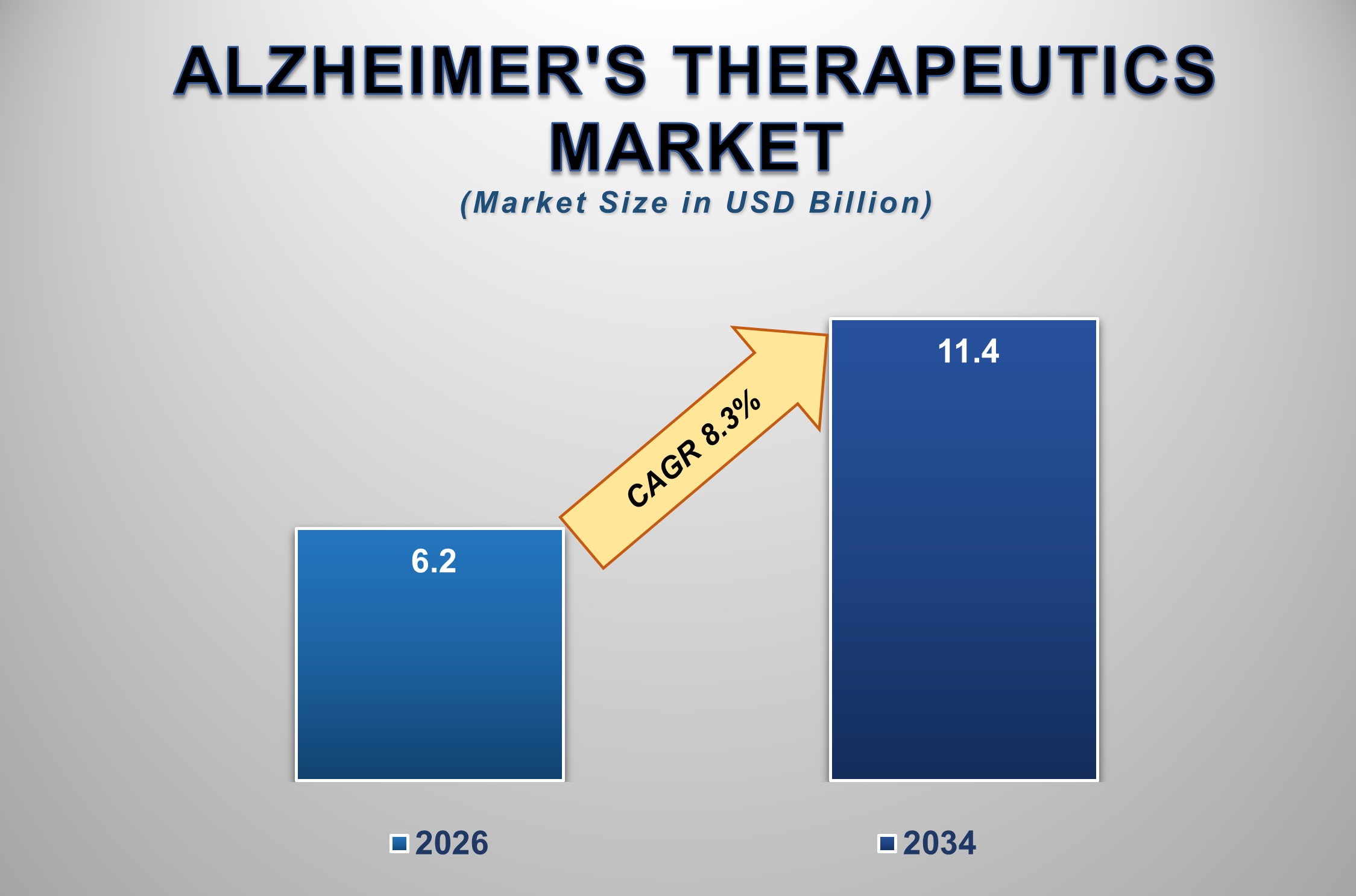
Alzheimer’s therapeutics market was valued at USD 6.2 billion in 2026 and is
projected to reach USD 11.4 billion by 2034, expanding at a CAGR of 8.3% during
the forecast period. The market for Alzheimer’s therapeutics is witnessing
constant growth as the incidence of Alzheimer's disease continues to increase
and people seek more remedies to enhance their cognitive performance as well as
halt the progress of the disease. Although existing medications, such as
cholinesterase inhibitors and NMDA receptor antagonists, continue to be
popular, there is now an increased emphasis on finding more disease-modifying
therapies that address specific elements of the condition like amyloid-beta and
tau proteins.
Ongoing
developments in neuroscience studies, a rising number of clinical trials, and
developments in biologics, monoclonal antibodies, and personalized medicine are
driving innovation within the market. Drug makers and biotech companies are
concentrating on the development of next-generation drugs with enhanced
efficacy and safety, whereas the growing efforts from the regulatory side and
healthcare sector investments will help bolster future market growth in spite
of issues pertaining to therapy expenses and drug discovery difficulties.
Alzheimer's Therapeutics Market
Drivers and Opportunities
Rising
Prevalence of Alzheimer's Disease and Aging Population Is Driving Market Growth
Increasing instances of Alzheimer's disease as
a result of the rapidly aging population around the globe are the key factors
responsible for the growing need for more effective treatments for this
disease. The higher the life expectancy, the larger the number of patients
vulnerable to neurodegenerative diseases is, which creates numerous issues for
health care institutions and other services related to long-term care.
According to the information provided by the Alzheimer's Association, at
present, over 7 million Americans are affected by Alzheimer's disease, while in
2050, the number of such people is expected to increase up to 13 million
because of the increasing aging population. Such disease burden is one of the
reasons for the development of medicines that can modify the course of the
disease and diagnostic and preventive methods, as well as the development of
precision medicine techniques and new drugs for Alzheimer's disease.
Advancements in
Disease-Modifying Therapies and Biomarker-Based Diagnosis Fueling Market
Expansion
Due to innovations
in the area of Alzheimer’s research, there have been changes in treatment
approaches ranging from symptom treatments to changing the disease mechanisms.
There have been attempts by companies in the pharmaceutical and biotechnology
industries to develop medications that target mechanisms in the disease, such
as the development of amyloid-beta plaques, tau proteins, and
neuroinflammation. In contrast, innovations in diagnostic processes involving
biomarkers that use blood markers, cerebrospinal fluid (CSF), and neuroimaging
methods help in diagnosing the disease early.
Expansion of
Precision Medicine and Novel Therapeutic Approaches Presents Significant
Opportunities
There are many growth opportunities in the Alzheimer’s therapeutics market due to the rise in focus on precision medicine, which is resulting in highly personalized and targeted therapeutic solutions for the condition. The development in genomics, genetic profiling, selection of patients through biomarkers, and use of artificial intelligence for analyzing data is helping to identify those patients who would benefit the most from the therapy, resulting in improved results and fewer unnecessary treatments. On the other hand, there is growing research in the pharma industry in the field of innovative therapeutic solutions, which include gene therapies, RNA-based therapies, antisense oligonucleotides, stem cell therapies, neuroprotective drugs, and combination therapies targeting different disease pathways.
Alzheimer's Therapeutics Market Scope
|
Report Attributes |
Description |
|
Market Size in
2026 |
USD 6.2
Billion |
|
Market Forecast
in 2034 |
USD 11.4
Billion |
|
CAGR % 2026-2034 |
8.3% |
|
Base Year |
2025 |
|
Historic Data |
2021-2025 |
|
Forecast Period |
2026-2034 |
|
Report USP |
Pricing and
Cost Structure Analysis, Product Innovation Benchmarking, Whitespace
Assessment, Company Share, Company Heatmap, Growth Factors and more |
|
Segments Covered |
●
By Drug
Class ●
By Type
of Treatment ●
By Route
of Administration ●
By
Distribution Channel |
|
Regional Scope |
●
North
America ●
Europe ●
APAC ●
Latin
America ●
Middle
East and Africa |
|
Country Scope |
●
U.S. ●
Canada ●
U.K. ●
Germany ●
France ●
Italy ●
Spain ●
Russia ●
China ●
India ●
Japan ●
South
Korea ●
Australia
●
Mexico ●
Brazil ●
Saudi
Arabia ●
UAE ●
South
Africa |
Alzheimer's Therapeutics Market
Report Segmentation Analysis
The global
Alzheimer’s therapeutics market industry analysis is segmented by drug class,
by type of treatment, by route of administration, by distribution channel, and
by region.
Cholinesterase
Inhibitors Segment Is Expected to Dominate the Alzheimer's Therapeutics Market
During the Forecast Period
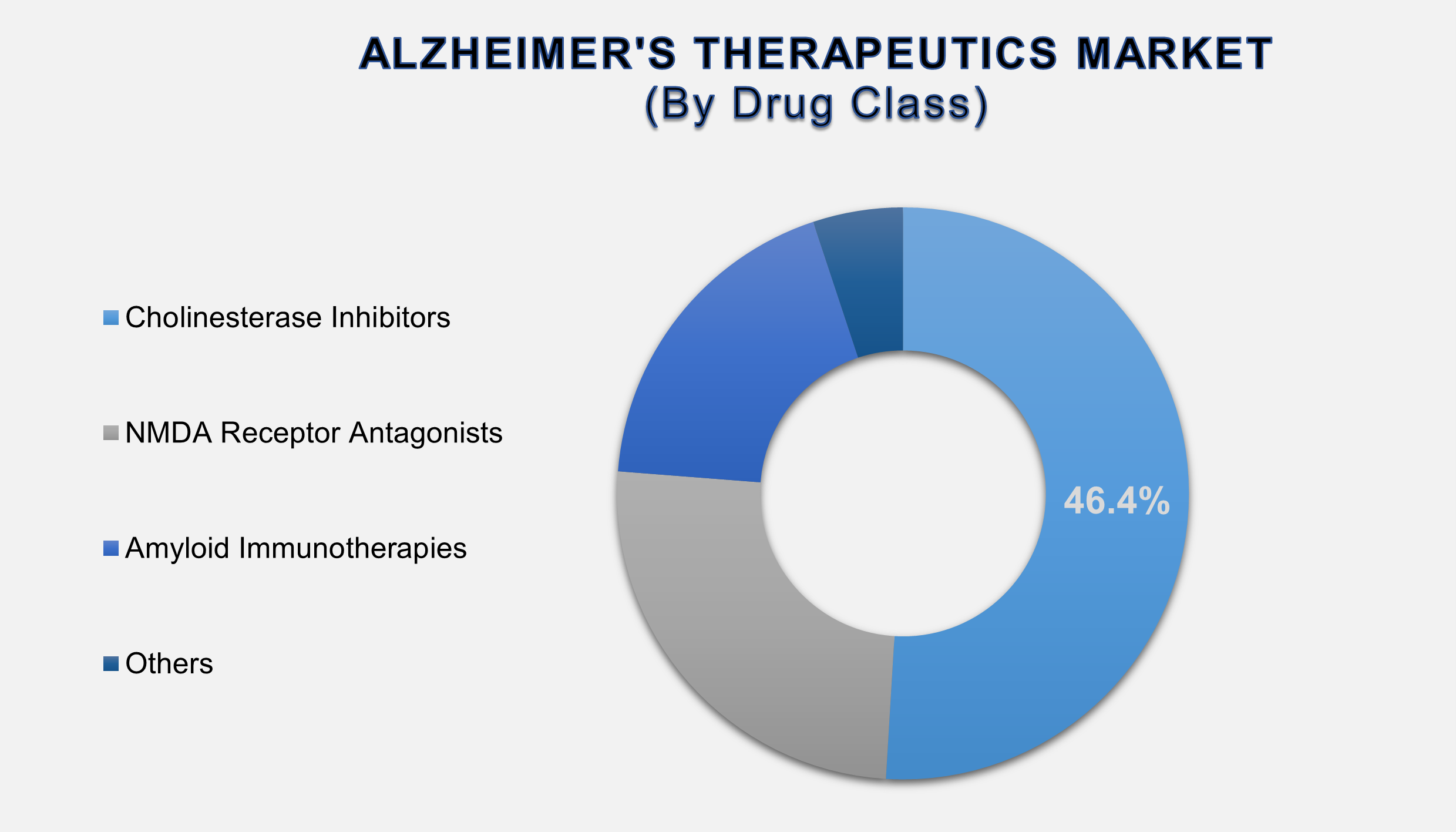
Cholinesterase inhibitors are likely to lead the market for Alzheimer's therapeutics due to their importance as the initial line of treatment for mild to moderate Alzheimer's disease. Cholinesterase inhibitors are being used extensively by doctors due to their proven efficacy and acceptance, along with strong recommendations made under treatment guidelines. Innovation and commercialization activities have been boosting the segment. In March 2025, for example, Alpha Cognition Inc. launched its product, ZUNVEYL (benzgalantamine), for the treatment of mild to moderate Alzheimer's disease. With the development of novel cholinesterase inhibitors, there will be more options available to patients that will also help in maintaining patient compliance.
Symptomatic
Treatment Segment Is Expected to Lead the Alzheimer's Therapeutics Market by
Type of Treatment
The symptomatic
treatment category will be dominant in the therapeutics of the Alzheimer's
disease market owing to the prevalent use of available drugs that help
alleviate the cognitive and behavioral symptoms of the disease. The approved
cholinesterase inhibitors and NMDA receptor antagonists are highly effective in
the management of mild to moderate and moderate to severe cases of Alzheimer's
disease, making the segment a leader in the therapeutics of the disease.
Furthermore, the
existence of a high number of patients already using these therapies,
familiarity of physicians with the existing treatment options, availability of
products in the market, and affordable prices relative to novel
disease-modifying drugs will further drive the segment. While disease-modifying
agents will also see growth during the forecast period, their usage will lag
behind that of symptomatic treatments due to the restrictive eligibility
requirements, expensive nature of the therapies, and special diagnostic tests
required.
Oral Segment Is
Expected to Dominate the Route of Administration Segment
The oral
administration mode is anticipated to lead the Alzheimer's therapeutic market
by the route of administration on account of ease of administration,
user-friendliness, and better compliance among patients. The majority of
commonly used symptomatic drugs such as cholinesterase inhibitors and NMDA
receptor antagonists are available in oral form; therefore, they become the
first choice of treatment for long-term disease management.
In addition, the abundance of approved oral drugs, well-established prescription patterns, and lower cost of administration will further drive the growth of this mode of administration. However, the increasing usage of injectables, owing to the advent of disease-modifying monoclonal antibodies through injection mode, is a major challenge for the segment due to the need for infusions, costly treatments, and special monitoring requirements.
Hospital
Pharmacies Segment Is Expected to Dominate the Distribution Channel Segment
The hospital
pharmacy category is anticipated to gain the largest share of the Alzheimer's
therapeutics market due to the increasing adoption of hospital diagnosis,
commencement of treatment, and administration of advanced treatments. Novel
approved disease-modifying agents, such as monoclonal antibodies, usually need
intravenous administration, monitoring, and other clinical facilities; hence,
hospital pharmacies become the preferred mode of distribution. Hospitals also
contribute immensely to carrying out diagnostic tests before the administration
of treatments.
Apart from this, hospitals provide appropriate storage and administration of expensive biological products along with treatment monitoring and the multidisciplinary treatment process. In addition to good reimbursement options, specialized neurology units and growing utilization of advanced treatments in tertiary care centers also bolster the supremacy of the hospital pharmacy category. Despite being important channels for dispensing oral symptomatic drugs, the retail and online pharmacy categories are likely to remain behind hospital pharmacies in terms of market size over the course of the forecast period.
The following
segments are part of an in-depth analysis of the global Alzheimer's
therapeutics market:
|
Market Segments |
|
|
By
Drug Class |
●
Cholinesterase
Inhibitors ●
NMDA
Receptor Antagonists ●
Amyloid
Immunotherapies ●
Combination
Therapies ●
Others
(Neuroprotective & Anti-inflammatory Therapies, etc.) |
|
By
Type of Treatment |
●
Symptomatic
Treatment ●
Disease
Modifying Therapies |
|
By
Route of Administration |
●
Oral ●
Injectable ●
Transdermal |
|
By
Distribution Channel |
●
Hospital
Pharmacies ●
Retail
Pharmacies ●
Online
Pharmacies |
Alzheimer's Therapeutics Market Share
Analysis by Region
North America is
projected to hold the largest share of the global Alzheimer's therapeutics
market over the forecast period
North America holds the maximum market share in the global market owing to the prevalence of Alzheimer's disease, well-established healthcare facilities, an excellent research scenario, and early adoption of innovative treatments. The presence of major pharmaceuticals and biotechnology firms, favorable reimbursement policies, and high investments in neuroscience research also favor market growth. Moreover, the increased use of biomarker diagnostic tests, PET scans, and memory care centers allows for timely diagnosis and provision of advanced treatments.
The region is
further aided by an effective regulatory regime that helps in the
commercialization of innovative Alzheimer's medications. For example, in April
2026, the U.S. FDA approved Auvelity (AXS-05), an Alzheimer's medication
developed by Axsome Therapeutics for the treatment of agitation linked with
Alzheimer's disease. In May 2026, Eisai Co., Ltd. and Biogen Inc. stated that
the FDA granted a six-month extension on the review of its supplemental BLA for
the once-weekly subcutaneous formulation of LEQEMBI (lecanemab-irmb). Thus, the
ongoing clinical innovations and healthcare investment will aid in retaining
North America's dominance in the global Alzheimer's therapeutics market during
the forecast period.
Alzheimer's
Therapeutics Market Competition Landscape Analysis
The industry for
Alzheimer's medicines is faced with stiff competition due to the initiatives by
the key companies in the pharma and biotech industries towards developing new
products to address symptoms and treat conditions associated with the disease. R&D
is taking place on monoclonal antibodies, small molecules, gene therapy, and
other types of treatment targeting amyloid beta, tau proteins, and
neuroinflammation. Companies are establishing themselves in the industry
through collaboration, licensing, development of clinical trials, regulation,
and launches of their products. Furthermore, diagnostic tests, precision
medicine, and investment in neuroscience research open up a wide range of
growth opportunities in the global Alzheimer's drugs market.
Global
Alzheimer's Therapeutics Market Recent Developments News:
●
In June 2026 –
Acumen Pharmaceuticals, Inc., a
clinical-stage biopharmaceutical company developing novel therapeutics that
target soluble amyloid beta oligomers (AβOs) for the treatment of Alzheimer’s
disease (AD), announced the nomination of two development candidates in its
Enhanced Brain Delivery (EBD) program as treatments for AD.
●
In June
2026 -
Biogen Inc. announced new data across its Alzheimer’s disease portfolio
at the Alzheimer’s Association International Conference (AAIC) 2026, taking
place July 12-15 in London, UK.
●
In May
2026 - Eli Lilly launched the Alzheimer's drug Donanemab in India. The
drug has received marketing authorisation from India's Central Drugs Standard
Control Organization for patients with mild
cognitive impairment or mild dementia stages of Alzheimer's
●
In May
2026 - Shanghai Fosun Pharmaceutical
(Group) Co., Ltd. and AriBio Co., Ltd., a biopharmaceutical company focused on neurodegenerative diseases, jointly announced the signing of an exclusive global
option agreement for the development, registration, manufacturing, and commercialization of AR1001, an innovative drug
candidate for the treatment of Alzheimer’s disease (AD).
The Global
Alzheimer's Therapeutics Market is dominated by a few large companies, such as
●
AbbVie Inc.
●
AC Immune SA
●
Alector, Inc.
●
Alzheon, Inc.
●
Anavex Life Sciences Corp.
●
Athira Pharma, Inc.
●
BioArctic AB
●
Biogen Inc.
●
Cassava Sciences, Inc.
●
CervoMed Inc.
●
Cognition Therapeutics, Inc.
●
Denali Therapeutics Inc.
●
Eisai Co., Ltd.
●
Eli Lilly and Company
●
F. Hoffmann-La Roche Ltd
●
H. Lundbeck A/S
●
INmune Bio, Inc.
●
Otsuka Pharmaceutical Co., Ltd.
●
Prothena Corporation plc
●
Takeda Pharmaceutical Company Limited
● Other Prominent Players
Frequently Asked Questions
Swetal (Research Analyst)
Swetal is a Research Analyst with 4+ years of experience specializing in healthcare market research, medical devices, healthcare IT, and medical technology industry analysis. Her expertise includes competitive intelligence, secondary research, market trend forecasting, and healthcare business insights across global healthcare ecosystems.
She contributes to advanced market research reports by analyzing regulatory frameworks, emerging healthcare technologies, competitive landscapes, and innovation trends shaping the medical industry. With a strong focus on accurate market intelligence, strategic insights, and healthcare industry trends, Swetal supports businesses in making informed, data-backed decisions in a rapidly transforming healthcare environment.
1.
Global
Alzheimer’s Therapeutics Market Introduction and Market Overview
1.1. Objectives of the Study
1.2. Market Segmentation
1.2.1.Drug Class of the Global Alzheimer’s
Therapeutics Market
1.2.2.Type of Treatment of the Global Alzheimer’s
Therapeutics Market
1.2.3.Route of Administration of the Global
Alzheimer’s Therapeutics Market
1.2.4.Distribution Channel of Global Alzheimer’s
Therapeutics Market
1.2.5.Region of Global Alzheimer’s
Therapeutics Market
1.3. Competition Coverage List of
Market Participants
1.4. Market Definition: Alzheimer’s
Therapeutics Market
2.
Executive Summary
2.1. Global Alzheimer’s Therapeutics
Market Estimation & Forecast
2.1.1.Global Alzheimer’s Therapeutics
Market Size (US$ Million) Estimates & Historical Trend Analysis (2021 -
2025)
2.1.2.Global Alzheimer’s Therapeutics
Overall Market Size (US$ Million), Growth Rate (Y-o-Y), Market CAGR (%), Market
forecast (2026 - 2034)
2.2. Snapshot of Global Alzheimer’s
Therapeutics Market
2.3. Global Alzheimer’s Therapeutics
Market Revenue Share (%) 2025
2.4. REGIONAL OUTLINE: Revenue CAGR,
by Region
2.5. Key Competitors & Key
Insights
3.
Market Overview (Qualitative
Analysis)
3.1. Demand Side Trends
3.2. Supply Side Trends /
Manufacturing Trends
3.3. Demand and Opportunity
Assessment, 2026 - 2034
3.4. Market Dynamics
3.4.1.Drivers
3.4.2.Limitations
3.4.3.Opportunities
3.4.4.Impact Analysis of Drivers and
Restraints
3.5. Key Developments
3.6. Regulatory Landscape
3.7. Pricing Analysis
3.8. Supply Chain Analysis
3.9. Porter’s Five Forces Analysis
3.9.1.Bargaining Power of Suppliers
3.9.2.Bargaining Power of Buyers
3.9.3.Threat of Substitutes
3.9.4.Threat of New Entrants
3.9.5.Competitive Rivalry
3.10. PEST Analysis
3.10.1. Political Factors
3.10.2. Economic Factors
3.10.3. Social Factors
3.10.4. Technology Factors
4.
Global Alzheimer’s Therapeutics
Market Estimates & Forecast Trend Analysis, by Drug Class
4.1. Global Alzheimer’s Therapeutics
Market Assessments & Key Findings, by Drug Class
4.2. Global Alzheimer’s Therapeutics
Market Revenue (US$ Million) Estimates and Forecasts, by Drug Class, 2021 -
2034
4.2.1.Cholinesterase Inhibitors
4.2.2.NMDA Receptor Antagonists
4.2.3.Amyloid Immunotherapies
4.2.4.Combination Therapies
4.2.5.Others (Neuroprotective &
Anti-inflammatory Therapies, etc.)
5.
Global Alzheimer’s Therapeutics
Market Estimates & Forecast Trend Analysis, by Type of Treatment
5.1. Global Alzheimer’s Therapeutics
Market Assessments & Key Findings, by Type of Treatment
5.2. Global Alzheimer’s Therapeutics
Market Revenue (US$ Million) Estimates and Forecasts, by Type of Treatment, 2021
- 2034
5.2.1.Symptomatic Treatment
5.2.2.Disease Modifying Therapies
6.
Global Alzheimer’s Therapeutics
Market Estimates & Forecast Trend Analysis, by Route of Administration
6.1. Global Alzheimer’s Therapeutics
Market Assessments & Key Findings, by Route of Administration
6.2. Global Alzheimer’s Therapeutics
Market Revenue (US$ Million) Estimates and Forecasts, by Route of
Administration, 2021 - 2034
6.2.1.Oral
6.2.2.Injectable
6.2.3.Transdermal
7.
Global Alzheimer’s Therapeutics
Market Estimates & Forecast Trend Analysis, by Distribution Channel
7.1. Global Alzheimer’s Therapeutics
Market Assessments & Key Findings, by Distribution Channel
7.2. Global Alzheimer’s Therapeutics
Market Revenue (US$ Million) Estimates and Forecasts, by Distribution Channel, 2021
- 2034
7.2.1.Hospital Pharmacies
7.2.2.Retail Pharmacies
7.2.3.Online Pharmacies
8.
Global Alzheimer’s Therapeutics
Market Estimates & Forecast Trend Analysis, by Region
8.1. Global Alzheimer’s Therapeutics
Market Assessments & Key Findings, by Region
8.2. Global Alzheimer’s Therapeutics
Market Revenue (US$ Million) Estimates and Forecasts, by Region, 2021 - 2034
8.2.1.North America
8.2.2.Europe
8.2.3.Asia Pacific
8.2.4.Middle East & Africa
8.2.5.Latin America
9.
North
America Alzheimer’s Therapeutics Market: Estimates & Forecast Trend Analysis
9.1.
North
America Alzheimer’s Therapeutics Market Assessments & Key Findings
9.1.1.North America Alzheimer’s
Therapeutics Market Introduction
9.1.2.North America Alzheimer’s
Therapeutics Market Size Estimates and Forecast (US$ Million) (2021 - 2034)
9.1.2.1. By Drug Class
9.1.2.2. By Type of Treatment
9.1.2.3. By Route of Administration
9.1.2.4. By Distribution Channel
9.1.2.5. By Country
9.1.2.5.1. The U.S.
9.1.2.5.2. Canada
10. Europe Alzheimer’s
Therapeutics Market: Estimates &
Forecast Trend Analysis
10.1. Europe Alzheimer’s Therapeutics
Market Assessments & Key Findings
10.1.1. Europe Alzheimer’s Therapeutics
Market Introduction
10.1.2. Europe Alzheimer’s Therapeutics
Market Size Estimates and Forecast (US$ Million) (2021 - 2034)
10.1.2.1. By Drug Class
10.1.2.2. By Type of Treatment
10.1.2.3. By Route of Administration
10.1.2.4. By Distribution Channel
10.1.2.5. By Country
10.1.2.5.1.
Germany
10.1.2.5.2.
Italy
10.1.2.5.3.
U.K.
10.1.2.5.4.
France
10.1.2.5.5.
Spain
10.1.2.5.6.
Switzerland
10.1.2.5.7. Rest
of Europe
11. Asia Pacific Alzheimer’s
Therapeutics Market: Estimates &
Forecast Trend Analysis
11.1. Asia Pacific Market Assessments
& Key Findings
11.1.1. Asia Pacific Alzheimer’s
Therapeutics Market Introduction
11.1.2. Asia Pacific Alzheimer’s
Therapeutics Market Size Estimates and Forecast (US$ Million) (2021 - 2034)
11.1.2.1. By Drug Class
11.1.2.2. By Type of Treatment
11.1.2.3. By Route of Administration
11.1.2.4. By Distribution Channel
11.1.2.5. By Country
11.1.2.5.1. China
11.1.2.5.2. Japan
11.1.2.5.3. India
11.1.2.5.4. Australia
11.1.2.5.5. South Korea
11.1.2.5.6. Rest of Asia Pacific
12. Middle East & Africa Alzheimer’s
Therapeutics Market: Estimates &
Forecast Trend Analysis
12.1. Middle East & Africa Market
Assessments & Key Findings
12.1.1. Middle
East & Africa Alzheimer’s
Therapeutics Market Introduction
12.1.2. Middle
East & Africa Alzheimer’s
Therapeutics Market Size Estimates and Forecast (US$ Million) (2021 - 2034)
12.1.2.1. By Drug Class
12.1.2.2. By Type of Treatment
12.1.2.3. By Route of Administration
12.1.2.4. By Distribution Channel
12.1.2.5. By Country
12.1.2.5.1. South Africa
12.1.2.5.2. UAE
12.1.2.5.3. Saudi Arabia
12.1.2.5.4. Rest of MEA
13. Latin America
Alzheimer’s Therapeutics Market:
Estimates & Forecast Trend Analysis
13.1. Latin America Market Assessments
& Key Findings
13.1.1. Latin America Alzheimer’s
Therapeutics Market Introduction
13.1.2. Latin America Alzheimer’s
Therapeutics Market Size Estimates and Forecast (US$ Million) (2021 - 2034)
13.1.2.1. By Drug Class
13.1.2.2. By Type of Treatment
13.1.2.3. By Route of Administration
13.1.2.4. By Distribution Channel
13.1.2.5. By Country
13.1.2.5.1. Brazil
13.1.2.5.2. Mexico
13.1.2.5.3. Argentina
13.1.2.5.4. Rest of LATAM
14. Competition Landscape
14.1. Global Alzheimer’s Therapeutics
Market Product Mapping
14.2. Global Alzheimer’s Therapeutics
Market Concentration Analysis, by Leading Players / Innovators / Emerging
Players / New Entrants
14.3. Global Alzheimer’s Therapeutics
Market Tier Structure Analysis
14.4. Global Alzheimer’s Therapeutics
Market Concentration & Company Market Shares (%) Analysis, 2025
15. Company Profiles
15.1. AbbVie Inc.
15.1.1. Company Overview & Key Stats
15.1.2. Financial Performance & KPIs
15.1.3. Product Portfolio
15.1.4. SWOT Analysis
15.1.5. Business Strategy & Recent Developments
* Similar details would be provided
for all the players mentioned below
15.2.
AC Immune SA
15.3.
Alector, Inc.
15.4.
Alzheon, Inc.
15.5.
Anavex Life Sciences Corp.
15.6.
Athira Pharma, Inc.
15.7.
BioArctic AB
15.8.
Biogen Inc.
15.9.
Cassava Sciences, Inc.
15.10.
CervoMed Inc.
15.11.
Cognition Therapeutics, Inc.
15.12.
Denali Therapeutics Inc.
15.13.
Eisai Co., Ltd.
15.14.
Eli Lilly and Company
15.15.
F. Hoffmann-La Roche Ltd
15.16.
H. Lundbeck A/S
15.17.
INmune Bio, Inc.
15.18.
Otsuka Pharmaceutical Co., Ltd.
15.19.
Prothena Corporation plc
15.20. Takeda Pharmaceutical Company Limited
15.21. Other Prominent Players
16. Research
Findings & Conclusion
17. Assumption & Acronyms Used
18. Research
Methodology
18.1. External Transportations /
Databases
18.2. Internal Proprietary Database
18.3. Primary Research
18.4. Secondary Research
18.5. Assumptions
18.6. Limitations
18.7. Report FAQs
Our Research Methodology
"Insight without rigor is just noise."
We follow a comprehensive, multi-phase research framework designed to deliver accurate, strategic, and decision-ready intelligence. Our process integrates primary and secondary research , both quantitative and qualitative , along with dual modeling techniques ( top-down and bottom-up) and a final layer of validation through our proprietary in-house repository.
PRIMARY RESEARCH
Primary research captures real-time, firsthand insights from the market to understand behaviors, motivations, and emerging trends.
1. Quantitative Primary Research
Objective: Generate statistically significant data directly from market participants.
Approaches:- Structured surveys with customers, distributors, and field agents
- Mobile-based data collection for point-of-sale audits and usage behavior
- Phone-based interviews (CATI) for market sizing and product feedback
- Online polling around industry events and digital campaigns
- Purchase frequency by customer type
- Channel performance across geographies
- Feature demand by application or demographic
2. Qualitative Primary Research
Objective: Explore decision-making drivers, pain points, and market readiness.
Approaches:- In-depth interviews (IDIs) with executives, product managers, and key decision-makers
- Focus groups among end users and early adopters
- Site visits and observational research for consumer products
- Informal field-level discussions for regional and cultural nuances
SECONDARY RESEARCH
This phase helps establish a macro-to-micro understanding of market trends, size, regulation, and competitive dynamics, sourced from credible and public domain information.
1. Quantitative Secondary Research
Objective: Model market value and segment-level forecasts based on published data.
Sources include:- Financial reports and investor summaries
- Government trade data, customs records, and regulatory statistics
- Industry association publications and economic databases
- Channel performance and pricing data from marketplace listings
- Revenue splits, pricing trends, and CAGR estimates
- Supply-side capacity and volume tracking
- Investment analysis and funding benchmarks
2. Qualitative Secondary Research
Objective: Capture strategic direction, innovation signals, and behavioral trends.
Sources include:- Company announcements, roadmaps, and product pipelines
- Publicly available whitepapers, conference abstracts, and academic research
- Regulatory body publications and policy briefs
- Social and media sentiment scanning for early-stage shifts
- Strategic shifts in market positioning
- Unmet needs and white spaces
- Regulatory triggers and compliance impact
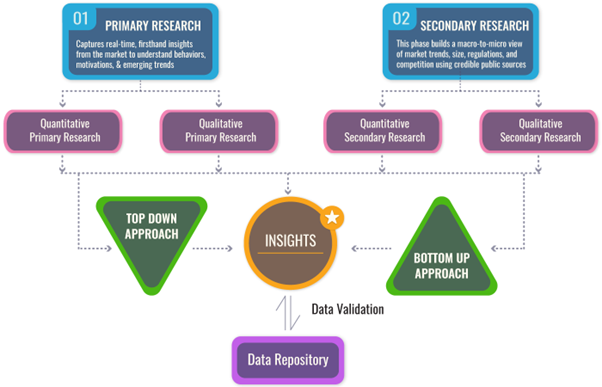
DUAL MODELING: TOP-DOWN + BOTTOM-UP
To ensure robust market estimation, we apply two complementary sizing approaches:
Top-Down Modeling:- Start with broader industry value (e.g., global or regional TAM)
- Apply filters by segment, geography, end-user, or use case
- Adjust with primary insights and validation benchmarks
- Ideal for investor-grade market scans and opportunity mapping
- Aggregate from the ground up using sales volumes, pricing, and unit economics
- Use internal modeling templates aligned with stakeholder data
- Incorporate distributor-level or region-specific inputs
- Most accurate for emerging segments and granular sub-markets
DATA VALIDATION: IN-HOUSE REPOSITORY
We close the loop with proprietary data intelligence built from ongoing projects, industry monitoring, and historical benchmarking. This repository includes:
- Multi-sector market and pricing models
- Key trendlines from past interviews and forecasts
- Benchmarked adoption rates, churn patterns, and ROI indicators
- Industry-specific deviation flags and cross-check logic
- Catches inconsistencies early
- Aligns projections across studies
- Enables consistent, high-trust deliverables