

Automobile Market Size and Forecast (2026–2034), Global and Regional Growth, Trend, Share and Industry Analysis Report Coverage; By Vehicle Type (Passenger Cars, Commercial Vehicles, Two-Wheelers, Three-Wheelers); By Propulsion (Internal Combustion Engine Vehicles, Battery Electric Vehicles, Hybrid Electric Vehicles, Plug-in Hybrid Electric Vehicles, Fuel Cell Electric Vehicles); By Distribution Channel (Authorized Dealerships, Independent Dealers, Online Sales Platforms); By End User (Individual Buyers, Commercial Fleet Operators, Government Organizations, Corporate Enterprises); and Geography
2026-07-27
Automotive & Transportation (Mobility)
Ekta Chaurasia (Team Lead)
Description
Automobile Market Overview
The global Automobile
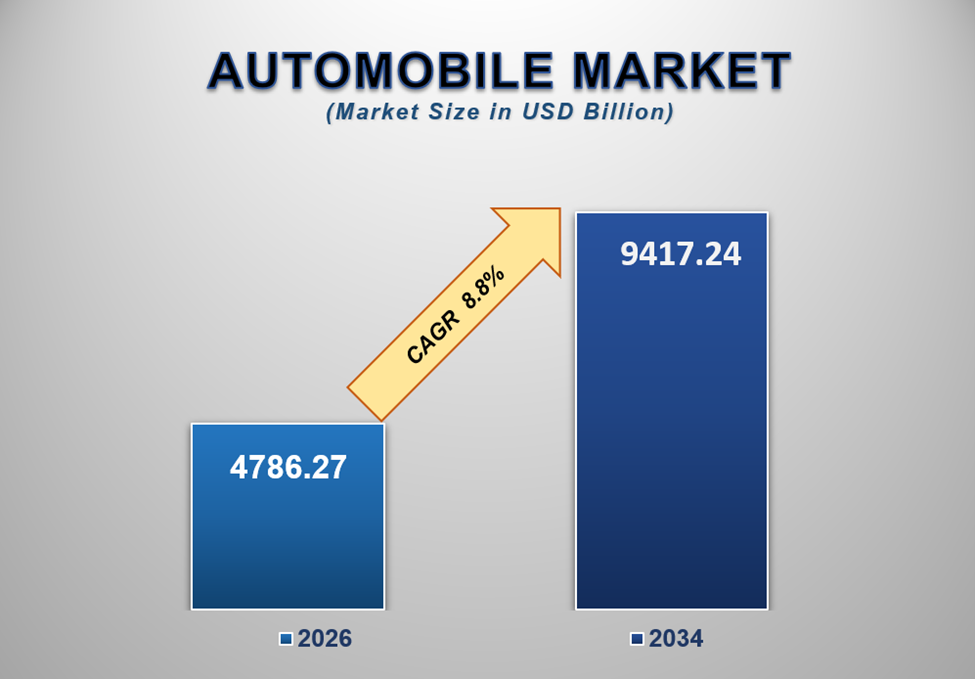
Market was valued at USD 4,786.27 billion in 2026 and is expected to
reach USD 9,417.24 billion by 2034, growing at a CAGR of 8.8%
during the forecast period. The market is expanding steadily due to increasing
vehicle ownership, rising urbanization, rapid technological advancements,
continuous expansion of electric mobility, supportive government policies, and
growing investments in intelligent transportation infrastructure. Improvements
in manufacturing technologies, connected vehicle ecosystems, and consumer
demand for safer, cleaner, and more efficient mobility solutions continue to
reshape the global automotive landscape.
The automobile
industry remains one of the world's largest industrial sectors, influencing
economic growth, employment generation, international trade, and technological
development. Automobiles have evolved beyond basic transportation into
sophisticated mobility solutions that integrate digital technologies,
intelligent safety systems, sustainable powertrains, and connected services.
Continuous innovation across manufacturing, design, software, and propulsion
technologies is transforming how vehicles are produced, sold, and utilized
globally.
Consumer
expectations have changed significantly over the past decade. Modern buyers
increasingly seek vehicles offering fuel efficiency, advanced safety features,
seamless digital connectivity, enhanced driving comfort, and lower
environmental impact. These changing preferences are encouraging manufacturers
to introduce diverse product portfolios spanning economy vehicles, premium
automobiles, luxury models, sport utility vehicles (SUVs), electric vehicles,
and commercial transportation solutions.
Urbanization
remains one of the strongest contributors to automobile demand. Expanding
metropolitan areas require efficient personal and commercial transportation
systems to support daily commuting, logistics, and public mobility. Growing
middle-class populations in emerging economies are also increasing first-time
vehicle ownership, while mature markets continue to witness replacement demand
driven by technological upgrades and sustainability objectives.
Electrification
has become a defining trend within the automobile industry. Governments across
numerous countries are promoting cleaner transportation through emission
regulations, tax incentives, purchase subsidies, and investments in charging
infrastructure. In response, automotive manufacturers are accelerating the
development of battery electric vehicles (BEVs), hybrid electric vehicles
(HEVs), plug-in hybrid electric vehicles (PHEVs), and hydrogen-powered fuel
cell vehicles. These advancements are reducing dependence on conventional
fossil fuels while supporting long-term climate goals.
The integration
of digital technologies is fundamentally redefining vehicle functionality.
Connected cars equipped with cloud computing, artificial intelligence, Internet
of Things (IoT) connectivity, advanced driver assistance systems (ADAS),
over-the-air software updates, predictive maintenance capabilities, and
intelligent infotainment platforms are enhancing user experience while
improving operational safety. Software-driven vehicle architectures are
increasingly allowing manufacturers to deliver new features and performance
improvements remotely throughout a vehicle's lifecycle.
Commercial
transportation also plays a significant role in market expansion. Rising
e-commerce activities, industrial production, infrastructure development, and
international trade are increasing demand for commercial vehicles, including
delivery vans, heavy-duty trucks, buses, and specialized transportation fleets.
Fleet operators increasingly prioritize vehicles with advanced telematics,
route optimization, predictive maintenance, and fuel-efficient powertrains to
improve operational productivity and reduce ownership costs.
Automotive
manufacturing is undergoing rapid modernization through the adoption of
Industry 4.0 technologies. Robotics, automation, digital twins, additive
manufacturing, machine vision, predictive analytics, and intelligent quality
control systems are enabling manufacturers to improve production efficiency,
reduce waste, optimize supply chains, and maintain consistent product quality.
Smart manufacturing facilities also provide greater flexibility for producing
multiple vehicle platforms while responding quickly to changing market demand.
Sustainability
has become central to future automotive development. Manufacturers are
investing in lightweight materials, recyclable vehicle components, renewable
energy-powered production facilities, circular economy initiatives, battery
recycling programs, and environmentally responsible supply chains. These
efforts aim to reduce the overall carbon footprint of vehicle production while
improving long-term resource efficiency.
As governments continue encouraging clean mobility, consumers embrace advanced vehicle technologies, and manufacturers accelerate digital transformation, the automobile market is expected to experience sustained global expansion throughout the forecast period.
Automobile Market Drivers and
Opportunities
Rising Global
Vehicle Ownership and Urban Expansion Continue to Fuel Market Growth
The continuous
increase in vehicle ownership remains one of the most significant growth
drivers for the automobile market.
Rapid
urbanization, population growth, expanding road infrastructure, and improving
household incomes have strengthened demand for personal transportation across
both developed and emerging economies. Consumers increasingly view automobiles
as essential assets that provide convenience, mobility, and flexibility for
work, education, healthcare, and leisure activities.
Growing
financing availability, attractive leasing programs, and wider product
availability across multiple price categories have further improved vehicle
accessibility. Automotive manufacturers continue expanding production capacity
while introducing models tailored to regional consumer preferences.
Commercial
transportation demand has also increased considerably due to expanding
logistics, construction, agriculture, mining, manufacturing, and e-commerce
industries. Businesses continue modernizing vehicle fleets to improve
operational efficiency, reduce fuel consumption, and enhance fleet management
capabilities.
These long-term demographic and economic trends are expected to maintain healthy market growth throughout the forecast period.
Electrification
and Connected Mobility Are Transforming the Automotive Industry
The transition
toward cleaner and smarter transportation is fundamentally changing the
structure of the global automobile market.
Governments
worldwide continue implementing stringent emission regulations while supporting
electric vehicle adoption through subsidies, tax incentives, charging
infrastructure investments, and carbon reduction initiatives. Automotive
manufacturers are responding by significantly expanding electric vehicle
production and investing in battery research, power electronics, and
sustainable manufacturing technologies.
Simultaneously,
connected vehicle technologies are becoming standard across numerous vehicle
categories. Artificial intelligence, cloud connectivity, IoT-enabled
diagnostics, advanced driver assistance systems, digital dashboards, predictive
maintenance, and real-time navigation solutions are improving safety,
efficiency, and overall driving experience.
Software-defined vehicles capable of receiving over-the-air updates are allowing manufacturers to introduce new features, security improvements, and performance enhancements without requiring physical service visits, creating entirely new opportunities for customer engagement and lifecycle management.
Autonomous
Mobility, Smart Manufacturing, and Emerging Markets Present Strong Future
Opportunities
Future market
growth will be strongly influenced by continuous innovation across autonomous driving,
intelligent manufacturing, and sustainable mobility.
Autonomous
driving technologies continue progressing through advancements in machine
learning, computer vision, LiDAR, radar systems, high-performance computing,
and sensor fusion. Although fully autonomous transportation is still evolving,
advanced driver assistance systems are becoming increasingly sophisticated
across mainstream vehicle segments.
Smart
manufacturing technologies are improving productivity through robotics,
industrial automation, predictive maintenance, digital twin simulation, and
artificial intelligence-driven production optimization. These technologies
reduce operational costs while enabling greater manufacturing flexibility.
Emerging
economies present substantial opportunities due to expanding middle-income
populations, improving transportation infrastructure, rapid industrialization,
and increasing automobile ownership rates. Many governments are also investing
in domestic automotive manufacturing ecosystems to strengthen local production
and reduce import dependence.
Additional
opportunities are expected to emerge through hydrogen-powered mobility, battery
recycling technologies, vehicle subscription services, shared mobility
platforms, sustainable materials, and intelligent transportation systems that
support future urban mobility ecosystems.
Automobile Market Scope
|
Report Attributes |
Description |
|
Market Size in 2026 |
USD 4,786.27 Billion |
|
Market Forecast in 2034 |
USD 9,417.24 Billion |
|
CAGR % 2026-2034 |
8.8% |
|
Base Year |
2025 |
|
Historic Data |
2021-2025 |
|
Forecast Period |
2026-2034 |
|
Report USP |
Production, Consumption,
Company Share, Company Heatmap, Company Production, Service Type, Growth
Factors and more |
|
Segments Covered |
●
By Vehicle Type ●
By Propulsion ●
By Distribution Channel ●
By End User |
|
Regional Scope |
● North America |
|
Country Scope |
U.S. |
Automobile Market Report Segmentation
Analysis
The global automobile market is segmented based on vehicle type, propulsion, distribution channel, end user, and geography. Growing investments in vehicle electrification, expansion of connected mobility solutions, increasing demand for commercial transportation, and continuous advancements in automotive manufacturing technologies are shaping growth across every segment. Each category contributes uniquely to the industry's transformation as manufacturers focus on sustainability, digitalization, operational efficiency, and evolving consumer preferences.
Passenger
Cars Segment Is Expected to Dominate the Market During the Forecast Period
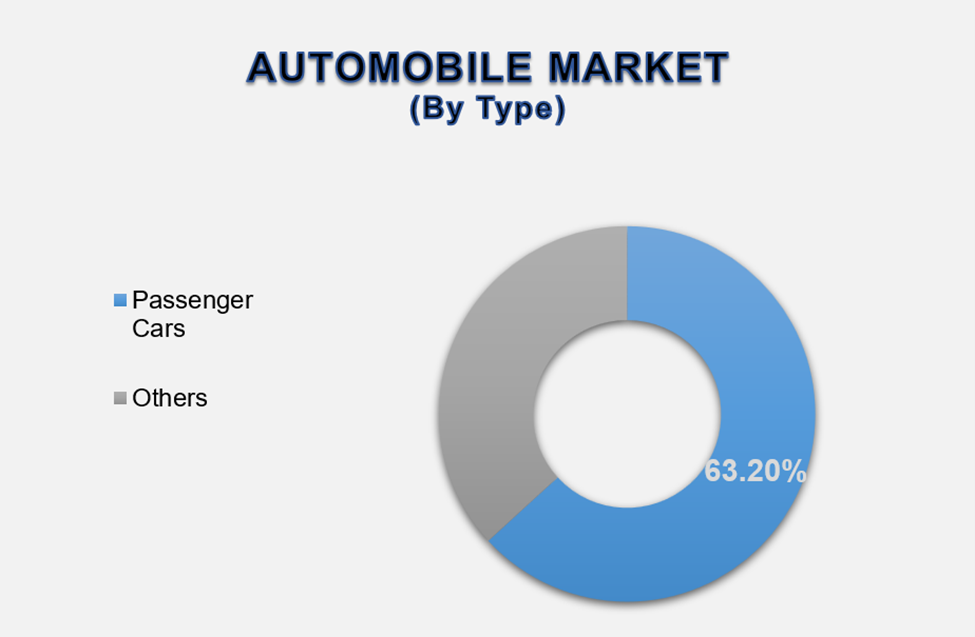
The Passenger
Cars segment accounted for approximately 63.2% of the global
automobile market in 2026, making it the leading vehicle category.
Passenger cars
continue to dominate the global automobile market due to rising household
incomes, rapid urbanization, expanding middle-class populations, and growing
demand for personal mobility solutions. Consumers increasingly prefer passenger
vehicles because they offer greater convenience, flexibility, privacy, and
accessibility for daily commuting, family transportation, and recreational
travel.
The growing
popularity of compact SUVs, crossover utility vehicles, premium sedans,
hatchbacks, and electric passenger cars has significantly diversified consumer
purchasing options. Manufacturers are continuously introducing vehicles
equipped with advanced driver assistance systems (ADAS), connected infotainment
platforms, enhanced fuel efficiency, and improved safety technologies to
strengthen market competitiveness.
Electrification
is further accelerating growth within the passenger car segment. Automotive
manufacturers are expanding battery electric and hybrid vehicle portfolios to
comply with tightening emission standards while addressing consumer demand for
environmentally sustainable transportation. Government incentives supporting
electric vehicle purchases continue boosting sales across developed and
emerging markets.
In addition, flexible financing programs, subscription-based ownership models, certified pre-owned vehicle programs, and digital retail platforms have improved vehicle accessibility, allowing passenger cars to maintain their dominant market position.
Internal
Combustion Engine (ICE) Vehicles Segment Is Expected to Lead the Market by
Propulsion
The Internal
Combustion Engine (ICE) Vehicles segment remains the largest propulsion
category globally.
Although
electric mobility is expanding rapidly, ICE vehicles continue to account for
the largest share of the global vehicle fleet due to their extensive fueling
infrastructure, affordability, widespread manufacturing capabilities, and
well-established maintenance ecosystems. Gasoline and diesel-powered vehicles
remain particularly dominant in developing economies where charging
infrastructure is still under expansion.
Continuous
improvements in engine efficiency, lightweight vehicle design, emission control
systems, turbocharging technologies, and fuel optimization have enabled ICE
vehicles to remain competitive despite increasing environmental regulations.
However, hybrid and battery electric vehicle adoption is expected to grow at a considerably faster pace during the forecast period as governments intensify decarbonization initiatives and automotive manufacturers accelerate investments in zero-emission mobility.
Authorized
Dealerships Segment Is Expected to Dominate the Market by Distribution Channel
The Authorized
Dealerships segment holds the largest share within the distribution channel
category.
Authorized
dealerships remain the preferred purchasing channel because they provide customers
with comprehensive sales support, certified vehicle quality, financing
assistance, warranty coverage, insurance services, genuine spare parts, and
professional after-sales maintenance. Buyers continue to value direct
interactions with trained sales professionals, particularly when purchasing
high-value assets such as automobiles.
Automotive
manufacturers are simultaneously enhancing dealership operations through
digital technologies, allowing customers to schedule test drives online,
configure customized vehicles, compare financing options, and complete
significant portions of the purchasing process digitally.
Although online vehicle retailing continues expanding rapidly, dealership networks remain essential for vehicle delivery, servicing, maintenance, and customer relationship management.
The
Individual Buyers Segment Is Expected to Lead the Market by End User
The Individual
Buyers segment represents the largest end-user category in the automobile
market.
Growing personal
vehicle ownership remains one of the strongest contributors to global
automobile demand. Rising disposable incomes, improved financing availability,
increasing urbanization, and greater awareness of advanced vehicle technologies
continue encouraging consumers to purchase new automobiles.
Modern buyers
increasingly prioritize fuel economy, digital connectivity, advanced safety
systems, comfort, low maintenance costs, and environmental sustainability when
selecting vehicles. This shift in purchasing behavior has encouraged
manufacturers to introduce diversified product portfolios spanning economy,
premium, luxury, electric, and hybrid vehicle categories.
The growing
availability of personalized financing options, extended warranties, vehicle
subscription services, and trade-in programs further supports demand among
individual consumers, ensuring the segment maintains its leadership throughout
the forecast period.
The following
segments are part of an in-depth analysis of the global Automobile Market:
|
Market Segments |
|
|
By Vehicle Type |
●
Passenger Cars ●
Commercial Vehicles ●
Two-Wheelers ●
Three-Wheelers |
|
By
Propulsion |
●
Internal Combustion Engine (ICE) Vehicles ●
Battery Electric Vehicles (BEV) ●
Hybrid Electric Vehicles (HEV) ●
Plug-in Hybrid Electric Vehicles (PHEV) ●
Fuel Cell Electric Vehicles (FCEV) |
|
By Distribution Channel |
●
Authorized Dealerships ●
Independent Dealers ●
Online Sales Platforms |
|
By End User |
●
Individual Buyers ●
Commercial Fleet Operators ●
Government Organizations ●
Corporate Enterprises |
Automobile Market Share Analysis By
Region
Asia-Pacific accounted for approximately 48.1% of the global automobile
market in 2026, making it the largest regional market.
The region
continues to lead the global automobile industry owing to its massive
manufacturing capabilities, expanding consumer base, rapid urbanization,
increasing disposable incomes, and strong government support for automotive
production. Countries such as China, India, Japan, and South Korea
collectively contribute a significant share of global vehicle production,
exports, and domestic sales. Continuous investments in electric vehicle
manufacturing, battery production, smart factories, and connected mobility
technologies further strengthen the region's leadership.
China remains
the world's largest automobile producer and consumer, supported by extensive
manufacturing infrastructure, government incentives for new energy vehicles,
and a well-developed automotive supply chain. India is witnessing strong market
expansion due to rising middle-class income, growing passenger vehicle demand,
improving road infrastructure, and increasing localization of automobile
manufacturing. Japan and South Korea continue to lead in automotive innovation
through advanced engineering, hybrid technologies, autonomous driving research,
and high-quality vehicle production.
Europe represents the second-largest regional market, supported by its
established automotive manufacturing ecosystem and strong focus on premium
vehicles, sustainability, and technological innovation. Germany, France, Italy,
and the United Kingdom remain major contributors to regional growth through
continuous investments in electric mobility, battery production, lightweight
materials, and intelligent manufacturing systems. Strict environmental
regulations and ambitious carbon neutrality targets continue accelerating the
adoption of electric and hybrid vehicles across the region.
North America continues to maintain a substantial market share, driven by high
consumer purchasing power, strong demand for SUVs and pickup trucks, advanced
automotive technologies, and growing investments in electric vehicle
production. The United States remains one of the largest automotive markets
globally, with increasing deployment of connected vehicles, autonomous driving
technologies, and domestic battery manufacturing facilities. Canada also
contributes through automotive component manufacturing and electric mobility
initiatives.
Latin America is experiencing gradual market growth as economic recovery,
industrial expansion, and improving consumer confidence stimulate vehicle
demand. Brazil and Mexico remain the primary automotive manufacturing and
export hubs within the region, attracting investments from international
automobile manufacturers seeking competitive production capabilities.
The Middle East & Africa region is steadily expanding as governments invest in transportation infrastructure, diversify national economies, and encourage local automotive assembly operations. Growing urban populations, rising commercial transportation activities, and increasing demand for passenger vehicles are expected to create long-term opportunities for automobile manufacturers operating in the region.
Automobile Market Competition
Landscape Analysis
The global
automobile market is highly competitive and characterized by continuous product
innovation, technological advancement, strategic partnerships, and substantial
investments in next-generation mobility solutions. Competition extends across
traditional automotive manufacturers, emerging electric vehicle companies, component
suppliers, software developers, battery manufacturers, and mobility technology
providers.
Leading
manufacturers continue investing heavily in research and development to
strengthen their product portfolios through electrification, autonomous driving
technologies, connected vehicle ecosystems, artificial intelligence, advanced
safety systems, and intelligent manufacturing processes. The integration of
software-defined vehicle architectures has become a major competitive
differentiator, enabling manufacturers to deliver continuous feature upgrades,
cybersecurity improvements, predictive maintenance services, and enhanced
customer experiences throughout the vehicle lifecycle.
Strategic
collaborations have become increasingly common across the automotive value
chain. Vehicle manufacturers are partnering with battery producers,
semiconductor companies, cloud computing providers, telecommunications firms,
and charging infrastructure developers to accelerate innovation and improve
production efficiency. Joint ventures focused on battery manufacturing,
autonomous driving platforms, hydrogen mobility, and smart transportation
ecosystems are expected to reshape industry competition over the coming decade.
Manufacturing
modernization also remains a key area of competition. Companies are
implementing Industry 4.0 technologies, robotics, digital twins, machine
learning, predictive analytics, and automated quality inspection systems to
improve productivity while reducing manufacturing costs. Flexible production
facilities capable of manufacturing multiple vehicle platforms allow companies
to respond more efficiently to changing market demand.
Sustainability
has become another critical competitive factor. Automotive manufacturers are
investing in carbon-neutral production facilities, renewable energy
utilization, battery recycling, lightweight materials, circular economy
initiatives, and environmentally responsible supply chains to meet regulatory
requirements and evolving consumer expectations.
As vehicle electrification, digitalization, and intelligent mobility continue advancing, companies that successfully combine technological innovation, manufacturing excellence, software capabilities, and sustainable business practices are expected to strengthen their competitive positions within the global automobile market.
Global
Automobile Market Recent Developments
●
April 2026: Several global automobile manufacturers announced expansion of
electric vehicle production facilities to meet growing international demand and
accelerate electrification strategies.
●
February 2026: Multiple automotive companies introduced next-generation
software-defined vehicle platforms capable of supporting advanced connectivity,
over-the-air software updates, and intelligent driver assistance systems.
● November 2025: Leading manufacturers expanded investments in battery manufacturing plants and localized supply chains to improve production efficiency and strengthen long-term electric vehicle competitiveness.
The Global
Automobile Market is Dominated by a Few Large Companies, Such As
●
Toyota Motor Corporation
●
Volkswagen AG
●
Hyundai Motor Company
●
General Motors Company
●
Ford Motor Company
●
Honda Motor Co., Ltd.
●
Stellantis N.V.
●
Mercedes-Benz Group AG
●
BMW AG
●
Tesla, Inc.
●
BYD Company Limited
●
Nissan Motor Co., Ltd.
●
SAIC Motor Corporation Limited
●
Geely Automobile Holdings
Limited
●
Tata Motors Limited
●
Renault Group
●
Kia Corporation
●
Suzuki Motor Corporation
●
Volvo Car AB
● Others
Frequently Asked Questions
Ekta Chaurasia (Team Lead)
Ekta Chaurasia is a highly experienced Team Lead at M2Square Consultancy with over 7 years of expertise in market research, strategic consulting, competitive benchmarking, and business intelligence solutions. She specializes in ICT, semiconductors & electronics, automotive & transportation, and industrial machinery markets.
She leads end-to-end global research projects focused on market trends, industry analysis, growth forecasting, customer insights, and strategic decision-making. Known for her analytical leadership and industry expertise, Ekta helps businesses uncover growth opportunities, evaluate competitive landscapes, and stay ahead in rapidly evolving markets through accurate and insight-driven research.
1.
Global Automobile Market
Introduction and Market Overview
1.1. Objectives of the Study
1.2. Global Automobile Market Scope and Market Estimation
1.2.1.
Global Automobile Market Size
(US$ Million), Market CAGR (%), Market Forecast (2026 - 2034)
1.2.2.
Global Automobile Market
Revenue Share (%) and Growth Rate (Y-o-Y) Analysis (2021 - 2034)
1.3. Market Segmentation
1.3.1.
Vehicle Type of Global
Automobile Market
1.3.2.
Propulsion of Global Automobile
Market
1.3.3.
Distribution Channel of Global
Automobile Market
1.3.4.
End User of Global Automobile
Market
1.3.5.
Region of Global Automobile
Market
1.4. Competition Coverage List of Market Participants
1.5. Market Definition: Automobile Market
2.
Executive Summary
2.1. Demand Side Trends
2.2. Key Market Trends
2.3. Market Demand (US$ Million) Analysis 2021 – 2025 and Forecast, 2026
– 2034
2.4. Demand and Opportunity Assessment
2.5. Key Developments
2.6. Overview of Regulatory Landscape, Compliance Framework, and Industry
Standards
2.7. Market Entry Strategies
2.8. Market Dynamics
2.8.1.
Drivers
2.8.2.
Limitations
2.8.3.
Opportunities
2.8.4.
Impact Analysis of Drivers and
Restraints
2.9. Porter's Five Forces Analysis
2.10.
PEST Analysis
3.
Global Automobile Market
Estimates & Historical Trend Analysis (2021 - 2025)
4.
Global Automobile Market
Estimates & Forecast Trend Analysis, by Vehicle Type
4.1. Global Automobile Market Revenue (US$ Million) Estimates and
Forecasts, by Vehicle Type, 2021 - 2034
4.1.1.
Passenger Cars
4.1.2.
Commercial Vehicles
4.1.3.
Two-Wheelers
4.1.4.
Three-Wheelers
5.
Global Automobile Market
Estimates & Forecast Trend Analysis, by Propulsion
5.1. Global Automobile Market Revenue (US$ Million) Estimates and
Forecasts, by Propulsion, 2021 - 2034
5.1.1.
Internal Combustion Engine
(ICE) Vehicles
5.1.2.
Battery Electric Vehicles (BEV)
5.1.3.
Hybrid Electric Vehicles (HEV)
5.1.4.
Plug-in Hybrid Electric
Vehicles (PHEV)
5.1.5.
Fuel Cell Electric Vehicles
(FCEV)
6.
Global Automobile Market
Estimates & Forecast Trend Analysis, by Distribution Channel
6.1. Global Automobile Market Revenue (US$ Million) Estimates and
Forecasts, by Distribution Channel, 2021 - 2034
6.1.1.
Authorized Dealerships
6.1.2.
Independent Dealers
6.1.3.
Online Sales Platforms
7.
Global Automobile Market
Estimates & Forecast Trend Analysis, by End User
7.1. Global Automobile Market Revenue (US$ Million) Estimates and
Forecasts, by End User, 2021 - 2034
7.1.1.
Individual Buyers
7.1.2.
Commercial Fleet Operators
7.1.3.
Government Organizations
7.1.4.
Corporate Enterprises
8.
Global Automobile Market
Estimates & Forecast Trend Analysis, by Region
8.1. Global Automobile Market Revenue (US$ Million) Estimates and
Forecasts, by Region, 2021 - 2034
8.1.1.
North America
8.1.2.
Europe
8.1.3.
Asia Pacific
8.1.4.
Middle East & Africa
8.1.5.
Latin America
9.
North America Automobile
Market: Estimates & Forecast Trend Analysis
9.1. North America Automobile Market Assessments & Key Findings
9.1.1.
North America Automobile Market
Introduction
9.1.2.
North America Automobile Market
Size Estimates and Forecast (US$ Million) (2021 - 2034)
9.1.2.1.
By Vehicle Type
9.1.2.2.
By Propulsion
9.1.2.3.
By Distribution Channel
9.1.2.4.
By End User
9.1.2.5.
By Country
9.1.2.5.1.
The U.S.
9.1.2.5.2.
Canada
10. Europe Automobile Market: Estimates & Forecast Trend Analysis
10.1.
Europe Automobile Market
Assessments & Key Findings
10.1.1.
Europe Automobile Market
Introduction
10.1.2.
Europe Automobile Market Size
Estimates and Forecast (US$ Million) (2021 - 2034)
10.1.2.1.
By Vehicle Type
10.1.2.2.
By Propulsion
10.1.2.3.
By Distribution Channel
10.1.2.4.
By End User
10.1.2.5.
By Country
10.1.2.5.1.
Germany
10.1.2.5.2.
Italy
10.1.2.5.3.
U.K.
10.1.2.5.4.
France
10.1.2.5.5.
Spain
10.1.2.5.6.
Switzerland
10.1.2.5.7.
Rest of Europe
11. Asia Pacific Automobile Market: Estimates & Forecast Trend Analysis
11.1.
Asia Pacific Automobile Market
Assessments & Key Findings
11.1.1.
Asia Pacific Automobile Market
Introduction
11.1.2.
Asia Pacific Automobile Market
Size Estimates and Forecast (US$ Million) (2021 - 2034)
11.1.2.1.
By Vehicle Type
11.1.2.2.
By Propulsion
11.1.2.3.
By Distribution Channel
11.1.2.4.
By End User
11.1.2.5.
By Country
11.1.2.5.1.
China
11.1.2.5.2.
Japan
11.1.2.5.3.
India
11.1.2.5.4.
Australia
11.1.2.5.5.
South Korea
11.1.2.5.6.
Rest of Asia Pacific
12. Middle East & Africa Automobile Market: Estimates & Forecast
Trend Analysis
12.1.
Middle East & Africa
Automobile Market Assessments & Key Findings
12.1.1.
Middle East & Africa Automobile
Market Introduction
12.1.2.
Middle East & Africa
Automobile Market Size Estimates and Forecast (US$ Million) (2021 - 2034)
12.1.2.1.
By Vehicle Type
12.1.2.2.
By Propulsion
12.1.2.3.
By Distribution Channel
12.1.2.4.
By End User
12.1.2.5.
By Country
12.1.2.5.1.
UAE
12.1.2.5.2.
Saudi Arabia
12.1.2.5.3.
South Africa
12.1.2.5.4.
Rest of MEA
13. Latin America Automobile Market: Estimates & Forecast Trend
Analysis
13.1.
Latin America Automobile Market
Assessments & Key Findings
13.1.1.
Latin America Automobile Market
Introduction
13.1.2.
Latin America Automobile Market
Size Estimates and Forecast (US$ Million) (2021 - 2034)
13.1.2.1.
By Vehicle Type
13.1.2.2.
By Propulsion
13.1.2.3.
By Distribution Channel
13.1.2.4.
By End User
13.1.2.5.
By Country
13.1.2.5.1.
Brazil
13.1.2.5.2.
Mexico
13.1.2.5.3.
Argentina
13.1.2.5.4.
Rest of LATAM
14. Competition Landscape
14.1.
Global Automobile Market
Product Mapping
14.2.
Global Automobile Market
Concentration Analysis, by Leading Players / Innovators / Emerging Players /
New Entrants
14.3.
Global Automobile Market Tier
Structure Analysis
14.4.
Global Automobile Market
Concentration & Company Market Shares (%) Analysis, 2025
15. Company Profiles
15.1.
Toyota Motor Corporation
15.1.1.
Company Overview & Key
Stats
15.1.2.
Financial Performance &
KPIs
15.1.3.
Product Portfolio
15.1.4.
SWOT Analysis
15.1.5.
Business Strategy & Recent
Developments
*Similar details would be provided for all
the players mentioned below
15.2.
Volkswagen AG
15.3.
Hyundai Motor Company
15.4.
General Motors Company
15.5.
Ford Motor Company
15.6.
Honda Motor Co., Ltd.
15.7.
Stellantis N.V.
15.8.
Mercedes-Benz Group AG
15.9.
BMW AG
15.10.
Tesla, Inc.
15.11.
BYD Company Limited
15.12.
Nissan Motor Co., Ltd.
15.13.
SAIC Motor Corporation Limited
15.14.
Geely Automobile Holdings
Limited
15.15.
Tata Motors Limited
15.16.
Renault Group
15.17.
Kia Corporation
15.18.
Suzuki Motor Corporation
15.19.
Volvo Car AB
15.20.
Others
16. Research Findings & Conclusion
17. Assumption & Acronyms Used
18. Research Methodology
18.1.
External Databases
18.2.
Internal Proprietary Database
18.3.
Primary Research
18.4.
Secondary Research
18.5.
Assumptions
18.6.
Limitations
18.7.
Report FAQs
Our Research Methodology
"Insight without rigor is just noise."
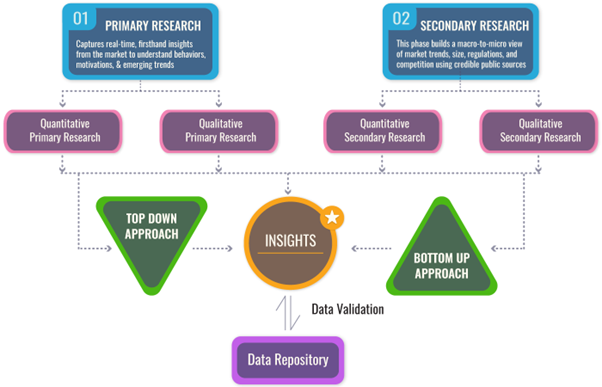
We follow a comprehensive, multi-phase research framework designed to deliver accurate, strategic, and decision-ready intelligence. Our process integrates primary and secondary research , both quantitative and qualitative , along with dual modeling techniques ( top-down and bottom-up) and a final layer of validation through our proprietary in-house repository.
PRIMARY RESEARCH
Primary research captures real-time, firsthand insights from the market to understand behaviors, motivations, and emerging trends.
1. Quantitative Primary Research
Objective: Generate statistically significant data directly from market participants.
Approaches:- Structured surveys with customers, distributors, and field agents
- Mobile-based data collection for point-of-sale audits and usage behavior
- Phone-based interviews (CATI) for market sizing and product feedback
- Online polling around industry events and digital campaigns
- Purchase frequency by customer type
- Channel performance across geographies
- Feature demand by application or demographic
2. Qualitative Primary Research
Objective: Explore decision-making drivers, pain points, and market readiness.
Approaches:- In-depth interviews (IDIs) with executives, product managers, and key decision-makers
- Focus groups among end users and early adopters
- Site visits and observational research for consumer products
- Informal field-level discussions for regional and cultural nuances
SECONDARY RESEARCH
This phase helps establish a macro-to-micro understanding of market trends, size, regulation, and competitive dynamics, sourced from credible and public domain information.
1. Quantitative Secondary Research
Objective: Model market value and segment-level forecasts based on published data.
Sources include:- Financial reports and investor summaries
- Government trade data, customs records, and regulatory statistics
- Industry association publications and economic databases
- Channel performance and pricing data from marketplace listings
- Revenue splits, pricing trends, and CAGR estimates
- Supply-side capacity and volume tracking
- Investment analysis and funding benchmarks
2. Qualitative Secondary Research
Objective: Capture strategic direction, innovation signals, and behavioral trends.
Sources include:- Company announcements, roadmaps, and product pipelines
- Publicly available whitepapers, conference abstracts, and academic research
- Regulatory body publications and policy briefs
- Social and media sentiment scanning for early-stage shifts
- Strategic shifts in market positioning
- Unmet needs and white spaces
- Regulatory triggers and compliance impact
DUAL MODELING: TOP-DOWN + BOTTOM-UP
To ensure robust market estimation, we apply two complementary sizing approaches:
Top-Down Modeling:- Start with broader industry value (e.g., global or regional TAM)
- Apply filters by segment, geography, end-user, or use case
- Adjust with primary insights and validation benchmarks
- Ideal for investor-grade market scans and opportunity mapping
- Aggregate from the ground up using sales volumes, pricing, and unit economics
- Use internal modeling templates aligned with stakeholder data
- Incorporate distributor-level or region-specific inputs
- Most accurate for emerging segments and granular sub-markets
DATA VALIDATION: IN-HOUSE REPOSITORY
We close the loop with proprietary data intelligence built from ongoing projects, industry monitoring, and historical benchmarking. This repository includes:
- Multi-sector market and pricing models
- Key trendlines from past interviews and forecasts
- Benchmarked adoption rates, churn patterns, and ROI indicators
- Industry-specific deviation flags and cross-check logic
- Catches inconsistencies early
- Aligns projections across studies
- Enables consistent, high-trust deliverables