

Belt Loader Market Size and Forecast (2025–2033), Global and Regional Growth, Trend, Share and Industry Analysis Report Coverage: By Ownership (New Delivery, Resale, Lease/Rent), By System (Self-Propelled, Electric, Towable, Diesel, Others), By Weight (0–1000 Kg, 1000–5000 Kg, >5000 Kg), and Geography
2026-02-25
Automotive & Transportation (Mobility)
Ekta Chaurasia (Team Lead)
Description
Belt Loader Market Overview
The global Belt Loader Market was valued at USD 1.5 billion in 2025 and is projected to reach USD 2.6 billion by 2033, expanding at a CAGR of 7.3% during the forecast period. This steady growth is primarily driven by rising global air passenger traffic, continuous airport infrastructure expansion, and increasing demand for efficient ground support equipment (GSE) to reduce aircraft turnaround time. Belt loaders play a critical role in airport ground operations by enabling the safe and efficient loading and unloading of baggage, cargo, and mail into aircraft holds, making them indispensable assets for airlines, airports, and ground handling service providers.
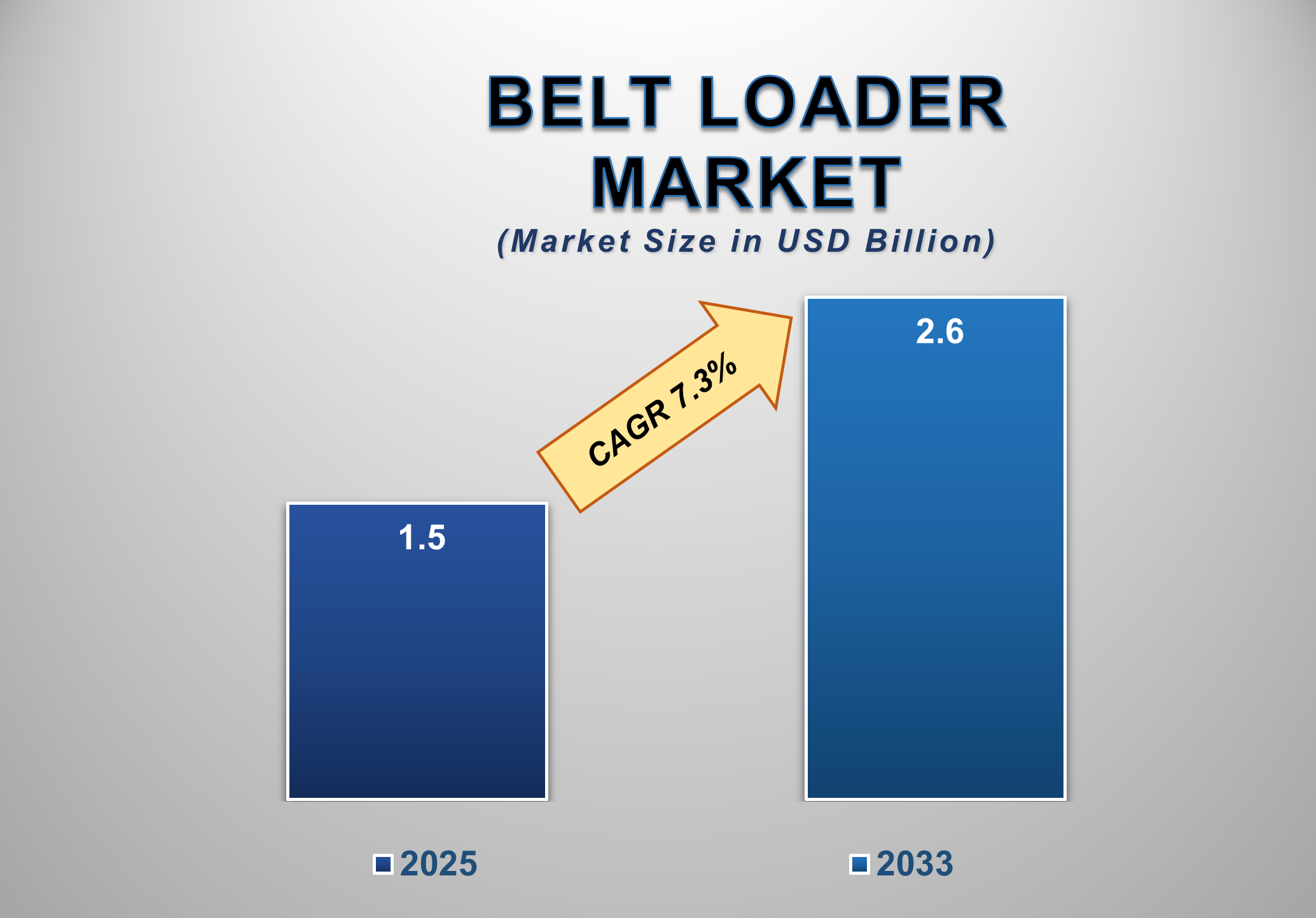
The market is witnessing strong
demand from both commercial aviation and cargo operations, supported by
increasing aircraft fleet sizes and the rapid growth of low-cost carriers
worldwide. Additionally, airport operators are increasingly prioritizing operational
efficiency, worker safety, and compliance with stringent aviation regulations,
which has led to higher adoption of technologically advanced and ergonomically
designed belt loaders. The growing shift toward electric and low-emission
ground support equipment is also reshaping the market, as airports seek to meet
sustainability targets and reduce carbon footprints.
Belt Loader Market
Drivers and Opportunities
Rising Air Passenger
Traffic and Aircraft Fleet Expansion Are Driving the Belt Loader Market Growth
The continuous increase in global air passenger traffic remains
one of the primary drivers of the belt loader market. Rising disposable
incomes, urbanization, and increasing affordability of air travel, particularly
through low-cost carriers, have significantly boosted passenger volumes
worldwide. According to aviation authorities, global passenger traffic is
expected to surpass pre-pandemic levels, leading to higher aircraft movements
and increased demand for efficient ground handling operations. Belt loaders are
essential equipment in ensuring fast and safe baggage handling, directly
impacting aircraft turnaround times and airline operational efficiency. In
parallel, the expansion of commercial aircraft fleets is further accelerating
market growth. Airlines across North America, Europe, and the Asia Pacific are
investing heavily in fleet modernization and expansion to meet growing travel
demand and improve fuel efficiency. Each additional aircraft introduced into
service increases the requirement for ground support equipment, including belt
loaders, across airports and airline hubs. Moreover, the growth of air cargo
operations, driven by e-commerce and express logistics, has further increased
the utilization of belt loaders for handling cargo aircraft and freighters.
Airports are also under pressure to improve on-time performance
and reduce congestion, which has resulted in increased procurement of advanced
belt loaders capable of handling higher loads with improved reliability. As
airlines and ground handling companies focus on operational optimization, the
demand for modern belt loaders is expected to remain strong, reinforcing market
growth throughout the forecast period.
Airport Infrastructure Modernization and Automation Is
Accelerating Market Adoption
Another significant driver fueling the belt loader market is the
ongoing modernization and expansion of airport infrastructure globally.
Governments and airport authorities are investing heavily in new terminal
construction, runway expansions, and apron upgrades to accommodate rising air
traffic. These infrastructure development projects often include large-scale
procurement of ground support equipment, including belt loaders, to support
increased operational capacity. Modern airports are increasingly adopting
automated and semi-automated ground handling systems to enhance efficiency and
minimize manual labor. Advanced belt loaders equipped with ergonomic controls,
adjustable heights, and enhanced safety features are being preferred over
conventional models. Additionally, airports are increasingly emphasizing
equipment standardization to streamline maintenance and reduce operational
complexity, further supporting demand for new belt loader deliveries.
Sustainability initiatives are also influencing procurement
decisions. Many airports have committed to achieving carbon neutrality,
prompting a shift toward electric and low-emission belt loaders. Electric belt
loaders not only reduce greenhouse gas emissions but also lower noise levels
and maintenance costs, making them attractive alternatives to diesel-powered
equipment. This transition toward environmentally friendly GSE solutions is
expected to significantly contribute to market growth, particularly in developed
regions and large international airports.
Electrification of Ground Support Equipment Is Creating
Significant Opportunities in the Belt Loader Market
The growing emphasis on sustainability and decarbonization within the aviation industry presents a major opportunity for the belt loader market. Airports and airlines are increasingly adopting electric ground support equipment as part of their environmental strategies to reduce emissions and comply with stringent regulatory standards. Electric belt loaders offer several advantages, including zero tailpipe emissions, lower operating costs, reduced maintenance requirements, and quieter operation compared to traditional diesel-powered units. This transition is particularly pronounced in developed markets such as North America and Europe, where regulatory pressure and sustainability commitments are stronger. However, emerging economies in the Asia Pacific are also rapidly adopting electric GSE solutions as part of new airport development projects. Manufacturers that focus on developing advanced electric belt loaders with longer battery life, faster charging capabilities, and improved load handling are well-positioned to capitalize on this growing opportunity. Additionally, the increasing adoption of leasing and rental models for ground support equipment is creating new growth avenues for manufacturers and service providers. Airlines and ground handlers are increasingly opting for flexible ownership models to reduce capital expenditure, further expanding the addressable market for belt loader suppliers. As sustainability and operational efficiency continue to dominate procurement decisions, electrification is expected to remain a key opportunity area in the belt loader market
Belt Loader Market Scope
|
Report Attributes |
Description |
|
Market Size in 2025 |
USD 1.5 Billion |
|
Market Forecast in 2035 |
USD 2.6 Billion |
|
CAGR % 2025-2035 |
7.3% |
|
Base Year |
2024 |
|
Historic Data |
2020-2024 |
|
Forecast Period |
2025-2035 |
|
Report USP |
Production, Consumption,
Company Share, Company Heatmap, Company Production Capacity, Growth Factors,
and more |
|
Segments Covered |
●
By Ownership, By
System, By Weight |
|
Regional Scope |
●
North America, ●
Europe, ●
APAC, ●
Latin America ●
Middle East and
Africa |
|
Country Scope |
1)
U.S. 2)
Canada 3)
Germany 4)
UK 5)
France 6)
Spain 7)
Italy 8)
Switzerland 9)
China 10)
Japan 11)
India 12)
Australia 13)
South Korea 14)
Brazil 15)
Mexico 16)
Argentina 17)
South Africa 18)
Saudi Arabia 19)
UAE |
Belt Loader Market Report
Segmentation Analysis
The Global Belt Loader Market
Industry Analysis Is Segmented By Ownership, By System, By Weight, By
Geography, and By Region.
New Delivery Segment Accounted for the Largest Market Share
in the Global Belt Loader Market
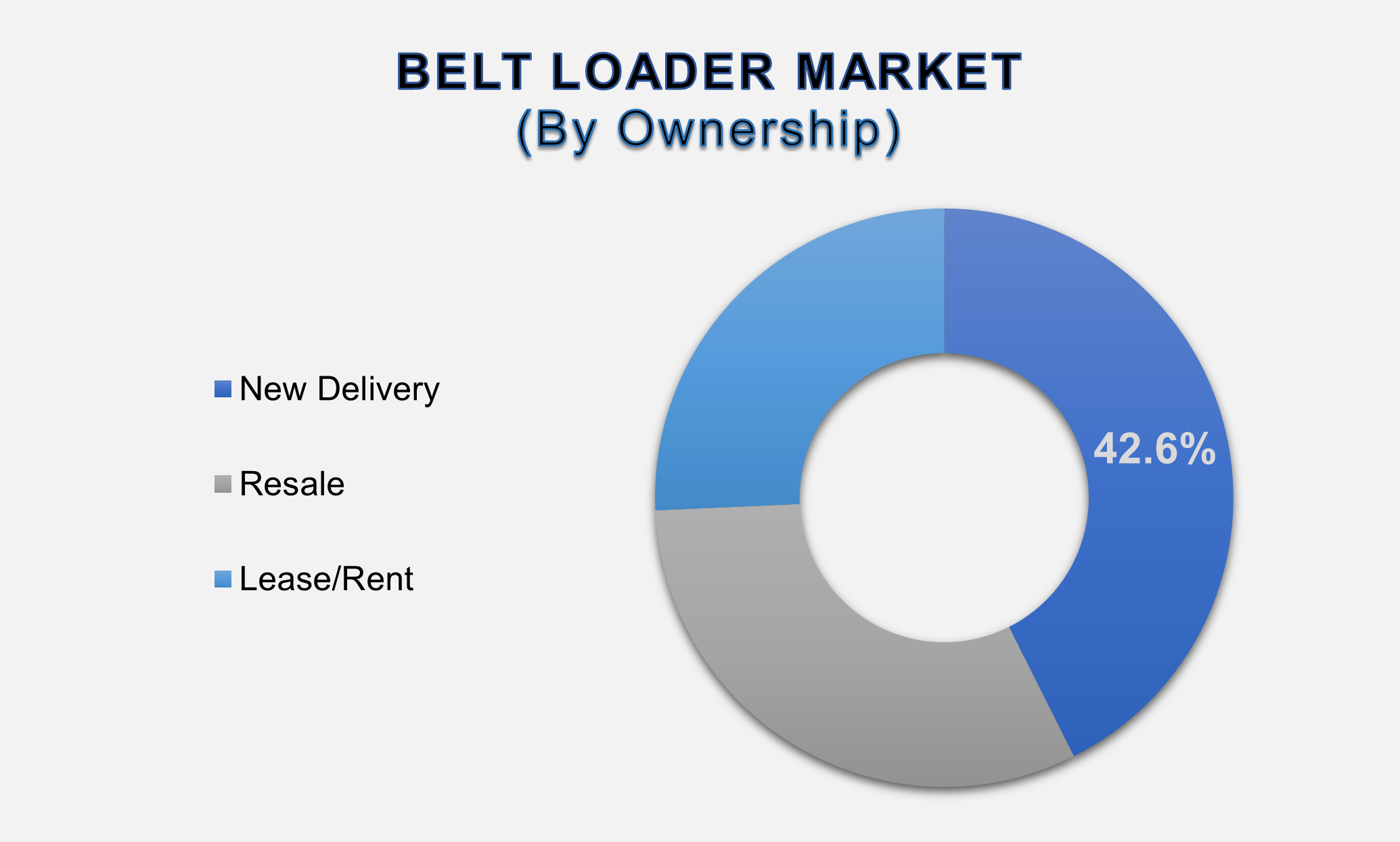
The new delivery segment accounted for the largest market share of 42.6% in 2025 and continues to dominate the global belt loader market. This dominance is primarily attributed to ongoing airport expansion projects, fleet modernization initiatives, and the replacement of aging ground support equipment. Airports and airlines increasingly prefer new belt loaders equipped with advanced safety features, improved ergonomics, and enhanced reliability to meet modern operational standards. Newly delivered belt loaders also comply with the latest emission regulations and sustainability requirements, making them more attractive than refurbished or resale equipment. Additionally, manufacturers are offering customized solutions tailored to specific aircraft types and airport layouts, further driving demand for new equipment. As airports continue to invest in long-term infrastructure development, the new delivery segment is expected to maintain its leading position throughout the forecast period.
Self-Propelled
System Segment Held the Leading Share Owing to Operational Efficiency
The
self-propelled system segment holds a significant share of the global belt
loader market, driven by its superior maneuverability, operational flexibility,
and reduced dependency on towing vehicles. Self-propelled belt loaders enable
faster positioning and repositioning during aircraft turnaround operations,
contributing to improved ground handling efficiency. These systems are
particularly favored at large and busy airports where minimizing ground time is
critical. Additionally, self-propelled belt loaders are increasingly being
integrated with electric powertrains, aligning with sustainability goals and
reducing operating costs. The combination of performance efficiency and
environmental benefits is expected to sustain strong demand for self-propelled
belt loaders in the coming years.
0–1000
Kg Weight Segment Dominated Due to High Usage in Narrow-Body Aircraft
Operations
The
0–1000 kg weight segment accounted for a substantial share of the market in
2025, primarily due to its widespread use in narrow-body and regional aircraft
operations. These belt loaders are ideal for handling passenger baggage and
light cargo, making them suitable for most commercial flights operated by
low-cost and regional carriers. Their compact size, ease of operation, and
lower acquisition costs make them a preferred choice for airports with
high-frequency short-haul flights. As narrow-body aircraft continue to dominate
airline fleets globally, the demand for belt loaders in the 0–1000 kg capacity
range is expected to remain strong during the forecast period.
The following segments are
part of an in-depth analysis of the global Belt Loader market:
|
Market Segments |
|
|
By Ownership |
●
New Delivery ●
Resale ●
Lease/Rent |
|
By System |
●
Self-Propelled ●
Electric ●
Towable ●
Diesel ●
Others |
|
By Weight |
●
0-1000 Kg ●
1000–5000 kg ●
<5000 Kg |
Belt Loader Market Share
Analysis by Region
North America is
anticipated to hold the biggest portion of the Belt Loader Market globally
throughout the forecast period.
North America accounted for the
largest share of 45.9% of the global belt loader market in 2025, driven by high
air traffic volumes, a well-established aviation infrastructure, and early
adoption of advanced ground support equipment. The presence of major
international airports, extensive airline networks, and strong investment in
airport modernization projects has significantly contributed to market growth
in the region. Additionally, stringent safety regulations and sustainability
initiatives have accelerated the replacement of legacy equipment with modern
belt loaders, further supporting regional dominance.
The Asia Pacific region is
expected to witness the highest CAGR during the forecast period, fueled by
rapid growth in air passenger traffic, expanding airline fleets, and
large-scale airport construction projects across countries such as China,
India, and Southeast Asian nations. Governments in the region are investing
heavily in aviation infrastructure to support economic growth and tourism,
leading to increased procurement of ground support equipment. The rising
adoption of electric belt loaders and flexible ownership models is further
expected to boost market growth across the Asia Pacific.
Belt Loader Market
Competition Landscape Analysis
The global belt loader market is
moderately consolidated, with key players focusing on product innovation,
geographic expansion, and strategic partnerships. Leading companies are
investing in electric and hybrid belt loaders to align with sustainability trends
while expanding their service networks to strengthen customer relationships.
Competitive strategies include mergers, acquisitions, and long-term contracts
with airports and ground handling companies.
Global Belt Loader Market
Recent Developments News:
- In September 2024 – Wollard International unveiled
its new M100e belt loader at the Europe GSE Expo. Designed for heavy-duty
operations, it has a drawbar rating of 8,000–12,000 pounds and can
function for two full shifts on a single charge.
- In September 2024 – Power Stow introduced a new
tail loader, a specialized belt loader designed to bridge the gap between
baggage carts and belt loaders. It improves operational efficiency by
handling heavy lifting and complex maneuvering during baggage handling.
- In July 2024 – CVC DIF, a subsidiary of CVC Capital
Partners, acquired HiSERV, a leading Germany-based aviation ground support
equipment (GSE) leasing company. HiSERV provides GSE leasing, maintenance,
and repair services across European airports.
- In March 2024 – Mallaghan partnered with Delta Air
Lines to supply the airline with its advanced SkyBelt belt loaders,
designed for higher operational efficiency.
- In April 2023 – Delta Air Lines announced that
nearly all ground support equipment (tugs, belt loaders, tractors) at its
major hub in Boston Logan International Airport is now electric, marking a
significant step toward achieving net-zero ground operations.
The Global Belt Loader Market Is
Dominated by a Few Large Companies, such as
●
TLD Group
●
Mallaghan Engineering
●
Mulag
●
Tug Technologies
●
Charlatte America
●
Fast Global Solutions
●
JBT AeroTech
●
Tronair
●
Aircraft GSE
●
Weihai Guangtai
●
Sovam
●
NMC-Wollard
●
LAS-1 Company
●
Aviaco GSE
●
Nepean
●
TBD
●
TREPEL
●
Power Force
●
SMI
●
SACI
● Others
Frequently Asked Questions
Ekta Chaurasia (Team Lead)
Ekta Chaurasia is a highly experienced Team Lead at M2Square Consultancy with over 7 years of expertise in market research, strategic consulting, competitive benchmarking, and business intelligence solutions. She specializes in ICT, semiconductors & electronics, automotive & transportation, and industrial machinery markets.
She leads end-to-end global research projects focused on market trends, industry analysis, growth forecasting, customer insights, and strategic decision-making. Known for her analytical leadership and industry expertise, Ekta helps businesses uncover growth opportunities, evaluate competitive landscapes, and stay ahead in rapidly evolving markets through accurate and insight-driven research.
1. Global Belt Loader Market
Introduction and Market Overview
1.1.
Objectives
of the Study
1.2.
Global
Belt Loader Market Scope and Market Estimation
1.2.1.Global Belt Loader Overall
Market Size (US$ Bn), Market CAGR (%), Market forecast (2025 - 2033)
1.2.2.Global Belt Loader Market
Revenue Share (%) and Growth Rate (Y-o-Y) from 2020 - 2033
1.3.
Market
Segmentation
1.3.1.Ownership of Global Belt
Loader Market
1.3.2.System of Global Belt
Loader Market
1.3.3.Weight of Global Belt
Loader Market
1.3.4.Region of Global Belt
Loader Market
2. Executive
Summary
2.1.
Demand
Side Trends
2.2.
Key
Market Trends
2.3.
Market
Demand (US$ Bn) Analysis 2020 – 2024 and Forecast, 2025 – 2033
2.4.
Demand
and Opportunity Assessment
2.5.
Key
Developments
2.6.
Overview
of Tariff, Regulatory Landscape and Standards
2.7.
Market
Entry Strategies
2.8.
Market
Dynamics
2.8.1.Drivers
2.8.2.Limitations
2.8.3.Opportunities
2.8.4.Impact Analysis of Drivers
and Restraints
2.9.
Porter’s
Five Forces Analysis
2.10.
PEST
Analysis
3. Global
Belt Loader Market Estimates
& Historical Trend Analysis (2020 - 2024)
4. Global
Belt Loader Market Estimates
& Forecast Trend Analysis, by Ownership
4.1.
Global
Belt Loader Market Revenue (US$ Bn) Estimates and Forecasts, by Ownership, 2020
- 2033
4.1.1.New Delivery
4.1.2.Resale
4.1.3.Lease/Rent
5. Global
Belt Loader Market Estimates
& Forecast Trend Analysis, by System
5.1.
Global
Belt Loader Market Revenue (US$ Bn) Estimates and Forecasts, by System, 2020 - 2033
5.1.1.Self-Propelled
5.1.2.Electric
5.1.3.Towable
5.1.4.Diesel
5.1.5.Others
6. Global
Belt Loader Market Estimates
& Forecast Trend Analysis, by Weight
6.1.
Global
Belt Loader Market Revenue (US$ Bn) Estimates and Forecasts, by Weight, 2020 -
2033
6.1.1.0-1000 Kg
6.1.2.1000 – 5000 Kg
6.1.3.<5000 Kg
7. Global
Belt Loader Market Estimates
& Forecast Trend Analysis, by Region
7.1.
Global
Belt Loader Market Revenue (US$ Bn) Estimates and Forecasts, by Region, 2020 - 2033
7.1.1.North America
7.1.2.Europe
7.1.3.Asia Pacific
7.1.4.Middle East & Africa
7.1.5.Latin America
8. North America Belt
Loader Market: Estimates & Forecast
Trend Analysis
8.1.
North
America Belt Loader Market Assessments & Key Findings
8.1.1.North America Belt Loader
Market Introduction
8.1.2.North America Belt Loader
Market Size Estimates and Forecast (US$ Billion) (2020 - 2033)
8.1.2.1. By Ownership
8.1.2.2. By System
8.1.2.3. By Weight
8.1.2.4.
By
Country
8.1.2.4.1. The U.S.
8.1.2.4.2. Canada
9. Europe Belt
Loader Market: Estimates & Forecast
Trend Analysis
9.1.
Europe
Belt Loader Market Assessments & Key Findings
9.1.1.Europe Belt Loader Market
Introduction
9.1.2.Europe Belt Loader Market
Size Estimates and Forecast (US$ Billion) (2020 - 2033)
9.1.2.1. By Ownership
9.1.2.2. By System
9.1.2.3. By Weight
9.1.2.4.
By
Country
9.1.2.4.1.
Germany
9.1.2.4.2.
Italy
9.1.2.4.3.
U.K.
9.1.2.4.4.
France
9.1.2.4.5.
Spain
9.1.2.4.6.
Switzerland
9.1.2.4.7. Rest
of Europe
10. Asia Pacific Belt
Loader Market: Estimates & Forecast
Trend Analysis
10.1.
Asia
Pacific Market Assessments & Key Findings
10.1.1.
Asia
Pacific Belt Loader Market Introduction
10.1.2.
Asia
Pacific Belt Loader Market Size Estimates and Forecast (US$ Billion) (2020 - 2033)
10.1.2.1. By Ownership
10.1.2.2. By System
10.1.2.3. By Weight
10.1.2.4.
By
Country
10.1.2.4.1. China
10.1.2.4.2. Japan
10.1.2.4.3. India
10.1.2.4.4. Australia
10.1.2.4.5. South Korea
10.1.2.4.6. Rest of Asia Pacific
11. Middle East & Africa Belt
Loader Market: Estimates & Forecast
Trend Analysis
11.1.
Middle
East & Africa Market Assessments & Key Findings
11.1.1.
Middle East & Africa Belt Loader Market Introduction
11.1.2.
Middle East & Africa Belt Loader Market Size Estimates
and Forecast (US$ Billion) (2020 - 2033)
11.1.2.1. By Ownership
11.1.2.2. By System
11.1.2.3. By Weight
11.1.2.4.
By
Country
11.1.2.4.1. UAE
11.1.2.4.2. Saudi
Arabia
11.1.2.4.3. South
Africa
11.1.2.4.4. Rest
of MEA
12. Latin America
Belt Loader Market: Estimates &
Forecast Trend Analysis
12.1.
Latin
America Market Assessments & Key Findings
12.1.1.
Latin
America Belt Loader Market Introduction
12.1.2.
Latin
America Belt Loader Market Size Estimates and Forecast (US$ Billion) (2020 - 2033)
12.1.2.1. By Ownership
12.1.2.2. By System
12.1.2.3. By Weight
12.1.2.4.
By
Country
12.1.2.4.1. Brazil
12.1.2.4.2. Argentina
12.1.2.4.3. Mexico
12.1.2.4.4. Rest
of LATAM
13. Country Wise Market:
Introduction
14.
Competition
Landscape
14.1.
Global
Belt Loader Market Product Mapping
14.2.
Global
Belt Loader Market Concentration Analysis, by Leading Players / Innovators /
Emerging Players / New Entrants
14.3.
Global
Belt Loader Market Tier Structure Analysis
14.4.
Global
Belt Loader Market Concentration & Company Market Shares (%) Analysis, 2024
15.
Company
Profiles
15.1.
TLD Group
15.1.1.
Company
Overview & Key Stats
15.1.2.
Financial
Performance & KPIs
15.1.3.
Product
Portfolio
15.1.4.
SWOT
Analysis
15.1.5.
Business
Strategy & Recent Developments
* Similar details would be provided for all the players
mentioned below
15.2. Mallaghan
Engineering
15.3. Mulag
15.4. Tug
Technologies
15.5. Charlatte
America
15.6. Fast
Global Solutions
15.7. JBT
AeroTech
15.8. Tronair
15.9. Aircraft
GSE
15.10. Weihai
Guangtai
15.11. Sovam
15.12. NMC-Wollard
15.13. LAS-1
Company
15.14. Aviaco
GSE
15.15. Nepean
15.16. TBD
15.17. TREPEL
15.18. Power
Force
15.19. SMI
15.20. SACI
15.21. Others
16. Research
Methodology
16.1.
External
Transportations / Databases
16.2.
Internal
Proprietary Database
16.3.
Primary
Research
16.4.
Secondary
Research
16.5.
Assumptions
16.6.
Limitations
16.7.
Report
FAQs
17. Research
Findings & Conclusion
Our Research Methodology
"Insight without rigor is just noise."
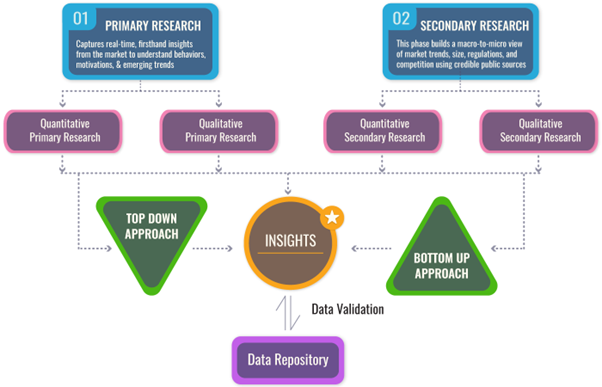
We follow a comprehensive, multi-phase research framework designed to deliver accurate, strategic, and decision-ready intelligence. Our process integrates primary and secondary research , both quantitative and qualitative , along with dual modeling techniques ( top-down and bottom-up) and a final layer of validation through our proprietary in-house repository.
PRIMARY RESEARCH
Primary research captures real-time, firsthand insights from the market to understand behaviors, motivations, and emerging trends.
1. Quantitative Primary Research
Objective: Generate statistically significant data directly from market participants.
Approaches:- Structured surveys with customers, distributors, and field agents
- Mobile-based data collection for point-of-sale audits and usage behavior
- Phone-based interviews (CATI) for market sizing and product feedback
- Online polling around industry events and digital campaigns
- Purchase frequency by customer type
- Channel performance across geographies
- Feature demand by application or demographic
2. Qualitative Primary Research
Objective: Explore decision-making drivers, pain points, and market readiness.
Approaches:- In-depth interviews (IDIs) with executives, product managers, and key decision-makers
- Focus groups among end users and early adopters
- Site visits and observational research for consumer products
- Informal field-level discussions for regional and cultural nuances
SECONDARY RESEARCH
This phase helps establish a macro-to-micro understanding of market trends, size, regulation, and competitive dynamics, sourced from credible and public domain information.
1. Quantitative Secondary Research
Objective: Model market value and segment-level forecasts based on published data.
Sources include:- Financial reports and investor summaries
- Government trade data, customs records, and regulatory statistics
- Industry association publications and economic databases
- Channel performance and pricing data from marketplace listings
- Revenue splits, pricing trends, and CAGR estimates
- Supply-side capacity and volume tracking
- Investment analysis and funding benchmarks
2. Qualitative Secondary Research
Objective: Capture strategic direction, innovation signals, and behavioral trends.
Sources include:- Company announcements, roadmaps, and product pipelines
- Publicly available whitepapers, conference abstracts, and academic research
- Regulatory body publications and policy briefs
- Social and media sentiment scanning for early-stage shifts
- Strategic shifts in market positioning
- Unmet needs and white spaces
- Regulatory triggers and compliance impact
DUAL MODELING: TOP-DOWN + BOTTOM-UP
To ensure robust market estimation, we apply two complementary sizing approaches:
Top-Down Modeling:- Start with broader industry value (e.g., global or regional TAM)
- Apply filters by segment, geography, end-user, or use case
- Adjust with primary insights and validation benchmarks
- Ideal for investor-grade market scans and opportunity mapping
- Aggregate from the ground up using sales volumes, pricing, and unit economics
- Use internal modeling templates aligned with stakeholder data
- Incorporate distributor-level or region-specific inputs
- Most accurate for emerging segments and granular sub-markets
DATA VALIDATION: IN-HOUSE REPOSITORY
We close the loop with proprietary data intelligence built from ongoing projects, industry monitoring, and historical benchmarking. This repository includes:
- Multi-sector market and pricing models
- Key trendlines from past interviews and forecasts
- Benchmarked adoption rates, churn patterns, and ROI indicators
- Industry-specific deviation flags and cross-check logic
- Catches inconsistencies early
- Aligns projections across studies
- Enables consistent, high-trust deliverables