

Cardiovascular Health Supplement Market Size and Forecast (2026–2034), Report Coverage: By Type (Natural Supplements, Synthetic Supplements), By Ingredient (Omega-3 Fatty Acids, Vitamins and Minerals, Coenzyme Q10, Herbs and Botanicals, Plant Sterols and Stanols, Amino Acids, Soluble Fibers and Other Ingredients), By Form (Tablets, Capsules, Softgels, Powders, Liquids, Gummies and Other Forms), By Distribution Channel (Pharmacies and Drugstores, Supermarkets and Hypermarkets, Specialty Health Stores, Online Retail and Other Channels) and Geography (North America, Europe, Asia Pacific, Latin America, Middle East and Africa).
2026-11-04
Healthcare
Swetal (Research Analyst)
Description
Cardiovascular Health Supplement Market Overview
The global cardiovascular health supplement market is gaining attention as consumers increasingly prioritize preventive wellness, nutritional adequacy and long-term heart health. Cardiovascular health supplements include dietary products formulated with nutrients, fatty acids, vitamins, minerals, botanical extracts and other ingredients marketed for cardiovascular-related nutritional support. The category encompasses products containing omega-3 fatty acids, coenzyme Q10 (CoQ10), selected vitamins and minerals, plant sterols, soluble fibers and botanical ingredients. Demand is influenced by growing consumer awareness of cardiovascular risk factors, changing dietary habits, interest in healthy aging and the wider availability of specialized nutritional products through pharmacies, health stores and online retail platforms.
The global cardiovascular health supplement market was valued at USD 13.01 billion in 2026 and is projected to reach USD 26.3 billion by 2034, registering a compound annual growth rate (CAGR) of 9.2% during the forecast period. The market is supported by product innovation, increased consumer interest in ingredient-specific formulations and the expansion of digital distribution channels. Consumers can choose from single-ingredient products, combination supplements and different delivery formats according to their nutritional preferences and purchasing habits. However, product suitability and benefits vary by ingredient, formulation, dosage, and individual health circumstances. Supplements should not be regarded as substitutes for prescribed cardiovascular medication or professional medical care.
The market includes a wide variety of formulations intended for consumers interested in cardiovascular wellness. Omega-3 products are commonly marketed around fatty-acid intake, while CoQ10 formulations are positioned around cellular energy processes and antioxidant functions. Vitamins, minerals, plant sterols, soluble fibers and selected botanical ingredients contribute to a broad range of product offerings. Manufacturers compete through ingredient quality, formulation consistency, serving convenience, product transparency, pricing and brand reputation.
The expansion of the cardiovascular supplement category also reflects the development of the wider nutraceutical industry. Consumers can access specialized products through traditional retail outlets and online platforms, while brands use digital channels to communicate ingredient information and develop repeat-purchase relationships. At the same time, increasing competition makes transparent labeling and responsible marketing important. Manufacturers must ensure that product claims comply with applicable regulations and that ingredient-specific benefits are supported by appropriate evidence.
Market Drivers and Opportunities
Increasing Consumer Awareness of Cardiovascular Wellness and Preventive Nutrition
Growing awareness of cardiovascular wellness is a major factor supporting demand for cardiovascular health supplements. Consumers are increasingly exposed to information about dietary quality, physical activity, cholesterol levels, blood pressure and other factors associated with cardiovascular health. This awareness has encouraged interest in nutritional products that can complement balanced diets and broader wellness routines.
Consumers may seek supplements containing omega-3 fatty acids, CoQ10, vitamins, minerals and other ingredients when evaluating their nutritional intake. The growing availability of ingredient-focused products allows manufacturers to serve consumers who prefer specialized formulations instead of general-purpose multivitamins. Product information, brand familiarity and the ability to understand ingredient quantities can influence purchasing decisions.
An aging population also contributes to the relevance of cardiovascular wellness products. Older consumers may pay closer attention to nutritional adequacy and long-term health management, although supplement requirements differ according to individual circumstances. Consumers with existing health conditions or those taking prescription medicines may need professional advice before using particular supplements. This makes accurate warnings, appropriate serving instructions and transparent ingredient declarations especially important.
Digital health content, wellness publications, pharmacy communication and nutrition education also influence how consumers discover supplement products. However, exposure to health information does not necessarily mean that every consumer needs a cardiovascular supplement. Manufacturers that provide realistic product information and avoid unsupported claims can build credibility among consumers seeking informed nutritional choices.
Product Innovation and Expansion of Supplement Distribution Channels
Product innovation is strengthening competition in the cardiovascular health supplement market. Manufacturers are developing formulations that differ by ingredient source, concentration, dosage format and intended nutritional positioning. Omega-3 supplements may use fish oil, krill oil or algae-derived oils, while CoQ10 products can vary by formulation and serving size. Vitamins, minerals and selected botanical ingredients provide additional options for companies seeking to diversify their product portfolios.
Dosage-form innovation also influences consumer access. Softgels are widely used for oil-based ingredients, while tablets and capsules accommodate many vitamins, minerals and botanical formulations. Powders and liquids provide alternatives for consumers who prefer not to swallow solid dosage forms, and gummies offer a chewable format. Product development must account for ingredient stability, formulation compatibility, accurate serving information and packaging requirements.
Distribution expansion has made specialized supplements more accessible. Pharmacies and drugstores provide established retail routes, while specialty health stores offer a more focused assortment of wellness products. Supermarkets allow consumers to purchase supplements alongside regular groceries. Online retail enables product comparison and access to specialized formulations that may not be available locally. Direct-to-consumer channels can also help manufacturers communicate product information and support repeat purchases.
The growing range of products creates opportunities for differentiation but also increases the importance of quality assurance. Consumers may find it difficult to evaluate supplement quality from marketing claims alone. Companies that maintain consistent ingredient specifications, appropriate manufacturing controls, clear labeling and responsible communication can strengthen their competitive position.
Opportunities in Specialized Formulations, Alternative Ingredients and Personalized Nutrition
The cardiovascular health supplement market offers opportunities for manufacturers to develop specialized products that address distinct nutritional interests. Ingredient combinations, alternative sourcing and convenient dosage forms can help brands differentiate their offerings. Products containing omega-3 fatty acids, CoQ10, selected vitamins and minerals, plant sterols and botanical ingredients may appeal to consumers seeking specific formulations, provided the intended uses and claims are appropriately supported.
Plant-based and alternative-source ingredients provide another development opportunity. Algae-derived omega-3 products can serve consumers seeking a non-fish source, while selected plant-derived ingredients support specialized supplement portfolios. Manufacturers can also explore improved formulation technologies and convenient product formats. These developments require careful assessment of ingredient quality, stability, safety and regulatory compliance.
Personalized nutrition and digital product education may create additional commercial opportunities. Online tools can help consumers compare ingredient quantities, dosage formats and product characteristics. Such tools should provide general product information rather than diagnose medical conditions or replace professional advice. Clear information about ingredient interactions and the limitations of supplement use can support more responsible purchasing decisions.
Emerging markets also offer potential as online retail, pharmacy networks and consumer access to packaged wellness products expand. Localized pricing, accessible product sizes and distribution partnerships can help manufacturers reach broader audiences. The strongest opportunities will depend on credible formulations, transparent communication, product quality and convenient access rather than product novelty alone.
Cardiovascular Health Supplement Market Scope
Cardiovascular Health Supplement Market Report Segmentation Analysis
The global cardiovascular health supplement market industry analysis is segmented by type, ingredient, form, distribution channel and region. Each segment reflects differences in ingredient origin, formulation, consumer preference and purchasing behavior. Market share percentages for individual segments have not been inserted because a verified segment-share dataset was not supplied for this report.
Natural Supplements Segment Analysis
The natural supplements segment includes cardiovascular-focused products made with ingredients derived from plants, marine sources, fermentation processes, and other biological materials. Products may contain fish-oil omega-3 fatty acids, algae-derived oils, botanical extracts and other ingredients marketed for nutritional support. Consumer interest in ingredient origin and product transparency can influence demand in this category.
Natural supplements can appeal to consumers who prefer plant-derived or marine-derived ingredients. Manufacturers may differentiate their products through sourcing information, standardized formulations, quality testing and clear labeling. However, natural origin does not automatically establish safety or effectiveness. Product quality and suitability depend on ingredient identity, dosage, manufacturing standards and the evidence supporting the intended use.
Synthetic Supplements Segment Analysis
The synthetic supplements segment includes products formulated using ingredients produced through chemical synthesis or other controlled manufacturing processes. Depending on the formulation, this category may include selected vitamins, minerals, amino acids and other nutrients used in cardiovascular-focused products.
Synthetic ingredients can provide consistency in composition and support scalable manufacturing. Companies compete through formulation quality, price, serving convenience and brand recognition. Consumers may select these products because of familiarity, accessibility, or specific formulation requirements. Manufacturers must provide accurate ingredient information and ensure that any health-related claims comply with applicable requirements.
Omega-3 Fatty Acids Segment Analysis
Omega-3 fatty acids are an important ingredient category within cardiovascular health supplements. Products may contain EPA, DHA or other omega-3 fatty acids sourced from fish oil, krill oil or algae oil. Product formulations vary in fatty-acid composition, concentration, source and serving size.
Manufacturers compete through ingredient quality, sourcing transparency, product concentration, freshness and dosage format. Softgels and liquids are commonly used to deliver oil-based ingredients. Consumers may compare products according to the actual quantity of EPA and DHA rather than relying only on general descriptions of fish oil or omega-3 content.
Alternative sourcing, including algae-derived oils, provides opportunities to serve consumers who prefer non-fish ingredients. Quality controls and clear serving information remain important across the segment. The potential benefits of omega-3 products depend on the formulation, dosage and individual circumstances, and consumers should not interpret all products as interchangeable.
Vitamins and Minerals Segment Analysis
Vitamins and minerals are used in cardiovascular-focused supplements as individual nutrients or as components of combination formulations. Products may contain selected B vitamins, vitamin D, magnesium and other nutrients, depending on the intended formulation and applicable requirements.
The segment benefits from familiarity with established supplement formats and the availability of products through pharmacies, supermarkets and online retailers. Manufacturers can differentiate products through serving size, ingredient combinations, dosage format and brand reputation. However, nutrient requirements vary, and higher intake is not automatically beneficial for every consumer. Clear labeling and appropriate serving instructions are therefore important.

Coenzyme Q10 Segment Analysis
Coenzyme Q10 is a compound involved in cellular energy processes and is commonly included in specialized nutritional supplements. CoQ10 products differ in formulation, serving size, ingredient source and delivery format. Manufacturers may position products around healthy aging, cellular energy and cardiovascular-related nutritional interests.
Product differentiation can involve capsule design, softgel formats, ingredient combinations and formulation technologies. Claims concerning absorption or superior effectiveness require appropriate evidence. Consumers should consider individual health circumstances and potential interactions with medicines before adding a supplement to their routine.
Herbs and Botanicals Segment Analysis
Herbs and botanicals include selected plant-derived ingredients used in cardiovascular-focused nutritional formulations. Depending on the product, examples may include garlic extract, hawthorn, grape-seed extract and other botanical ingredients. Consumer interest in plant-derived products supports the availability of specialized formulations, although evidence and safety profiles differ among ingredients.
Standardized extracts, ingredient identification, consistent manufacturing and clear labeling are important factors in this segment. Companies must also consider possible interactions and the regulatory status of each ingredient in the intended market. Natural positioning should not be used to imply that a product is automatically safe or suitable for every consumer.
Plant Sterols and Stanols Segment Analysis
Plant sterols and stanols are used in certain nutritional products formulated around dietary cholesterol-related goals. They may be offered as standalone supplements or incorporated into other food and nutrition products, depending on the market and product classification.
Manufacturers can differentiate products through formulation, serving format and transparent ingredient information. Consumer education is important because plant sterols and stanols are not replacements for prescribed cholesterol-lowering medicines or professional medical care. Product claims must remain consistent with the applicable evidence and regulations.
Amino Acids and Soluble Fibers Segment Analysis
Selected amino acids and soluble fibers are included in some cardiovascular-focused products. Amino-acid formulations may be marketed around circulation-related nutritional interests, while soluble fibers may be used in products associated with dietary fiber intake and cholesterol-related dietary approaches.
Product formats include powders, capsules and combination supplements. Ingredient quantities, serving size, taste, solubility and ease of use influence consumer acceptance. Manufacturers should provide clear information about formulation and intended use while avoiding unsupported claims concerning the prevention or treatment of cardiovascular disease.
Tablets and Capsules Segment Analysis
Tablets and capsules remain established formats for vitamins, minerals, botanical extracts and combination formulations. These formats provide standardized serving sizes and can be packaged in bottles or blister packs. Consumers may evaluate products according to ease of swallowing, number of units per serving, ingredient composition and price.
Manufacturers can differentiate products through formulation consistency, packaging convenience and brand reputation. Product stability, accurate serving information and appropriate warnings are important considerations, particularly for supplements that may be used alongside prescription medicines.
Softgels, Powders, Liquids and Gummies Segment Analysis
Softgels are commonly used for oil-based ingredients, including omega-3 formulations. Powders and liquids provide alternative formats for consumers who prefer not to swallow tablets or capsules, while gummies offer a chewable option. Each format has distinct formulation and packaging requirements.
Softgel products require attention to oil quality, freshness and storage. Powders may be evaluated according to taste, solubility and measuring convenience. Liquid products require appropriate packaging and stability controls. Gummies must balance palatability with serving-size requirements and the quantity of ingredients that can be incorporated into each unit.
Pharmacies and Drugstores Segment Analysis
Pharmacies and drugstores are important distribution channels for cardiovascular health supplements because they already stock vitamins, minerals and other health-related products. Consumers may prefer these outlets when purchasing established brands or specialized formulations. Product information and clear warnings can help shoppers evaluate their options, although the level of advice available varies by outlet.
Manufacturers can strengthen pharmacy distribution through recognized branding, reliable supply, suitable packaging and compliance with local product requirements.
Supermarkets, Specialty Stores and Online Retail Segment Analysis
Supermarkets and hypermarkets provide convenient access to mainstream supplements during routine shopping. Specialty health stores offer a more targeted assortment, including premium and ingredient-specific products. Online retail expands access to specialized formulations and allows consumers to compare product information, serving sizes and prices.
Direct-to-consumer platforms can support product education, subscriptions and repeat purchasing. However, manufacturers must ensure that online listings and promotional content accurately represent the product. Clear ingredient information, responsible claims and dependable fulfillment remain important across these channels.
The following segments are part of an in-depth analysis of the global Cardiovascular Health Supplement Market:
Cardiovascular Health Supplement Market Regional Share Analysis
North America
North America is an important market for cardiovascular health supplements because of its established dietary supplement industry, developed retail infrastructure and wide availability of specialized nutritional products. The United States offers a broad selection of omega-3 supplements, CoQ10 formulations, vitamins, minerals and botanical products through pharmacies, specialty stores and online platforms. Consumers may evaluate products according to ingredient quantities, brand reputation, pricing and available quality information.
Canada contributes through its pharmacy networks, health-food retailers and digital commerce channels. Mexico provides additional opportunities through modern retail and online distribution. Regional competition includes multinational supplement manufacturers and specialist brands. Market development will depend on consumer confidence, product availability, regulatory compliance and the ability of companies to differentiate their formulations responsibly.
Europe
Europe represents an established market for nutritional supplements, supported by pharmacy networks, specialty health retailers and online shopping. The United Kingdom, Germany, France, Italy, Spain and the Netherlands are relevant markets for assessing cardiovascular supplement demand.
Consumers may evaluate products according to formulation, ingredient origin, quality standards and transparent labeling. Manufacturers must comply with applicable European and national requirements governing supplement composition and health claims. Online retail and specialist outlets provide opportunities for niche products, while established retailers support access to mainstream brands.
Asia Pacific
Asia Pacific offers opportunities as consumer health awareness, modern retail and digital commerce continue to develop. China, India, Japan, South Korea and Australia are relevant markets within the region. Demand varies according to purchasing power, dietary habits, product awareness and local supplement regulations.
India provides opportunities through pharmacy networks, specialty retailers and online platforms. Japan and South Korea offer developed consumer markets where product presentation, formulation and brand reputation can influence purchasing decisions. Australia has established retail channels for nutritional supplements. Regional manufacturers can expand through localized product offerings, appropriate pricing and reliable distribution.
Latin America
Latin America offers opportunities through expanding pharmacy distribution, modern grocery retail and online supplement sales. Brazil is a significant market for packaged wellness products, while Argentina provides additional opportunities through health-focused retailers and digital channels.
Regional performance depends on affordability, consumer awareness, product availability and local regulatory requirements. Manufacturers may need to adapt pack sizes, pricing and distribution strategies to reach consumers across different income groups. Partnerships with established retailers and distributors can help improve market access.
Middle East and Africa
The Middle East and Africa region provides opportunities through pharmacies, supermarkets, specialty wellness retailers and e-commerce platforms. The United Arab Emirates and Saudi Arabia are relevant markets for imported and premium nutritional supplements. South Africa represents an important market for packaged wellness products and pharmacy distribution.
Market development varies according to income levels, healthcare access, consumer awareness and distribution infrastructure. Import costs and regulatory differences can affect product availability. Companies that establish reliable distribution and communicate product information clearly may be better positioned to expand across the region.
Cardiovascular Health Supplement Market Competition Landscape Analysis
The global cardiovascular health supplement market is characterized by competition among multinational healthcare companies, established supplement manufacturers, specialist nutraceutical brands and direct-to-consumer businesses. Companies compete through ingredient quality, formulation design, product availability, brand recognition, pricing and distribution reach.
Established manufacturers can leverage supplier networks, quality-control systems, broad product portfolios and relationships with pharmacies and major retailers. Specialist companies can focus on omega-3 products, CoQ10, botanical ingredients or other targeted formulations. The growth of online retail has also created opportunities for smaller brands to reach consumers directly.
Product innovation remains an important competitive factor. Manufacturers can introduce different ingredient combinations, alternative ingredient sources and convenient delivery formats. However, differentiation must be supported by quality and accurate product information. Claims concerning cardiovascular benefits, absorption or clinical effectiveness require appropriate substantiation and must comply with applicable regulations.
Quality assurance and consumer trust are particularly important because some consumers may use supplements alongside prescription medicines or to address specific nutritional concerns. Companies need to maintain appropriate controls over ingredient identity, purity, serving quantities, product stability, packaging and labeling. Clear warnings and responsible communication can help distinguish credible products in a crowded market.
The competitive environment is also influenced by distribution. Companies with access to pharmacies, specialty retailers, supermarkets and online platforms can reach a wider range of consumers. Direct-to-consumer sales provide opportunities for product education and repeat purchasing, while retail partnerships can improve brand visibility and availability.
Global Cardiovascular Health Supplement Market Recent Developments News
In October 2026 – GNC relaunched its omega-3 portfolio under the GNC Omega platform, including Triple Strength Fish Oil Ultra. The range emphasizes product potency, sourcing transparency, quality information and softgel options, reflecting continued competition in the omega-3 supplement category.
In October 2026 – Qunol announced its entry into Canada with Qunol Ultra CoQ10 100 mg, initially available through Amazon.ca. The launch expanded the brand's geographic availability and highlighted continued consumer-facing investment in CoQ10 products.
In July 2026 – Viactiv introduced CoQ10 CARDIO Complete Soft Chews as part of its expansion into women's wellness. The chewable format illustrates manufacturers' efforts to offer alternatives to conventional capsules and tablets.
The Global Cardiovascular Health Supplement Market is Dominated by a Few Large Companies, Such As
Abbott Laboratories
Bayer AG
Nestlé Health Science
Sanofi
Amway Corporation
Herbalife Ltd.
Haleon plc
NOW Health Group, Inc.
GNC Holdings, LLC
Thorne HealthTech, Inc.
Nordic Naturals
Pharmavite LLC
The Nature's Bounty Company
Life Extension
Jamieson Wellness Inc.
Others
Frequently Asked Questions
Swetal (Research Analyst)
Swetal is a Research Analyst with 4+ years of experience specializing in healthcare market research, medical devices, healthcare IT, and medical technology industry analysis. Her expertise includes competitive intelligence, secondary research, market trend forecasting, and healthcare business insights across global healthcare ecosystems.
She contributes to advanced market research reports by analyzing regulatory frameworks, emerging healthcare technologies, competitive landscapes, and innovation trends shaping the medical industry. With a strong focus on accurate market intelligence, strategic insights, and healthcare industry trends, Swetal supports businesses in making informed, data-backed decisions in a rapidly transforming healthcare environment.
Global Cardiovascular Health Supplement Market Introduction and Market Overview
Objectives of the Study
Global Cardiovascular Health Supplement Market Scope and Market Estimation
Global Cardiovascular Health Supplement Market Size (US$ Million), Market CAGR (%), Market Forecast (2026 - 2034)
Global Cardiovascular Health Supplement Market Revenue Share (%) and Growth Rate (Y-o-Y) Analysis (2021 - 2034)
Market Segmentation
By Type
Natural Supplements
Synthetic Supplements
By Ingredient
Omega-3 Fatty Acids
Vitamins and Minerals
Coenzyme Q10
Herbs and Botanicals
Plant Sterols and Stanols
Amino Acids
Soluble Fibers
Other Ingredients
By Form
Tablets
Capsules
Softgels
Powders
Liquids
Gummies
Other Forms
By Distribution Channel
Pharmacies and Drugstores
Supermarkets and Hypermarkets
Specialty Health Stores
Online Retail
Other Channels
By Region: North America, Europe, Asia Pacific, Middle East & Africa, Latin America
Competition Coverage List of Market Participants
Market Definition: Cardiovascular Health Supplement Market
Executive Summary
Demand Side Trends
Key Market Trends
Market Demand (US$ Million) Analysis 2021 – 2025 and Forecast, 2026 – 2034
Demand and Opportunity Assessment
Key Developments
Overview of Regulatory Landscape, Compliance Framework, and Industry Standards
Market Entry Strategies
Market Dynamics
Drivers
Limitations
Opportunities
Impact Analysis of Drivers and Restraints
Porter's Five Forces Analysis
PEST Analysis
Global Cardiovascular Health Supplement Market Estimates & Historical Trend Analysis (2021 – 2025)
Global Cardiovascular Health Supplement Market Estimates & Forecast Trend Analysis, by Type
Global Cardiovascular Health Supplement Market Revenue (US$ Million) Estimates and Forecasts, by Type, 2021 - 2034
Natural Supplements
Synthetic Supplements
Global Cardiovascular Health Supplement Market Estimates & Forecast Trend Analysis, by Ingredient
Global Cardiovascular Health Supplement Market Revenue (US$ Million) Estimates and Forecasts, by Ingredient, 2021 - 2034
Omega-3 Fatty Acids
Vitamins and Minerals
Coenzyme Q10
Herbs and Botanicals
Plant Sterols and Stanols
Amino Acids
Soluble Fibers
Other Ingredients
Global Cardiovascular Health Supplement Market Estimates & Forecast Trend Analysis, by Form
Global Cardiovascular Health Supplement Market Revenue (US$ Million) Estimates and Forecasts, by Form, 2021 - 2034
Tablets
Capsules
Softgels
Powders
Liquids
Gummies
Other Forms
Global Cardiovascular Health Supplement Market Estimates & Forecast Trend Analysis, by Distribution Channel
Global Cardiovascular Health Supplement Market Revenue (US$ Million) Estimates and Forecasts, by Distribution Channel, 2021 - 2034
Pharmacies and Drugstores
Supermarkets and Hypermarkets
Specialty Health Stores
Online Retail
Other Channels
Global Cardiovascular Health Supplement Market Estimates & Forecast Trend Analysis, by Region
Revenue (US$ Million) Estimates and Forecasts, by Region, 2021 - 2034
North America
Europe
Asia Pacific
Middle East & Africa
Latin America
North America Cardiovascular Health Supplement Market Estimates & Forecast Trend Analysis
Assessments & Key Findings
Introduction
North America Cardiovascular Health Supplement Market Size Estimates and Forecast
North America Cardiovascular Health Supplement Market Estimates & Forecasts, by Type
North America Cardiovascular Health Supplement Market Estimates & Forecasts, by Ingredient
North America Cardiovascular Health Supplement Market Estimates & Forecasts, by Form
North America Cardiovascular Health Supplement Market Estimates & Forecasts, by Distribution Channel
North America Cardiovascular Health Supplement Market Estimates & Forecasts, by Country
The U.S.
Canada
Europe Cardiovascular Health Supplement Market Estimates & Forecast Trend Analysis
Assessments & Key Findings
Introduction
Europe Cardiovascular Health Supplement Market Size Estimates and Forecast
Europe Cardiovascular Health Supplement Market Estimates & Forecasts, by Type
Europe Cardiovascular Health Supplement Market Estimates & Forecasts, by Ingredient
Europe Cardiovascular Health Supplement Market Estimates & Forecasts, by Form
Europe Cardiovascular Health Supplement Market Estimates & Forecasts, by Distribution Channel
Europe Cardiovascular Health Supplement Market Estimates & Forecasts, by Country
Germany
Italy
The U.K.
France
Spain
Switzerland
Rest of Europe
Asia Pacific Cardiovascular Health Supplement Market Estimates & Forecast Trend Analysis
Assessments & Key Findings
Introduction
Asia Pacific Cardiovascular Health Supplement Market Size Estimates and Forecast
Asia Pacific Cardiovascular Health Supplement Market Estimates & Forecasts, by Type
Asia Pacific Cardiovascular Health Supplement Market Estimates & Forecasts, by Ingredient
Asia Pacific Cardiovascular Health Supplement Market Estimates & Forecasts, by Form
Asia Pacific Cardiovascular Health Supplement Market Estimates & Forecasts, by Distribution Channel
Asia Pacific Cardiovascular Health Supplement Market Estimates & Forecasts, by Country
China
Japan
India
Australia
South Korea
Rest of Asia Pacific
Middle East & Africa Cardiovascular Health Supplement Market Estimates & Forecast Trend Analysis
Assessments & Key Findings
Introduction
Middle East & Africa Cardiovascular Health Supplement Market Size Estimates and Forecast
Middle East & Africa Cardiovascular Health Supplement Market Estimates & Forecasts, by Type
Middle East & Africa Cardiovascular Health Supplement Market Estimates & Forecasts, by Ingredient
Middle East & Africa Cardiovascular Health Supplement Market Estimates & Forecasts, by Form
Middle East & Africa Cardiovascular Health Supplement Market Estimates & Forecasts, by Distribution Channel
Middle East & Africa Cardiovascular Health Supplement Market Estimates & Forecasts, by Country
UAE
Saudi Arabia
South Africa
Rest of Middle East & Africa
Latin America Cardiovascular Health Supplement Market Estimates & Forecast Trend Analysis
Assessments & Key Findings
Introduction
Latin America Cardiovascular Health Supplement Market Size Estimates and Forecast
Latin America Cardiovascular Health Supplement Market Estimates & Forecasts, by Type
Latin America Cardiovascular Health Supplement Market Estimates & Forecasts, by Ingredient
Latin America Cardiovascular Health Supplement Market Estimates & Forecasts, by Form
Latin America Cardiovascular Health Supplement Market Estimates & Forecasts, by Distribution Channel
Latin America Cardiovascular Health Supplement Market Estimates & Forecasts, by Country
Brazil
Mexico
Argentina
Rest of Latin America
Global Cardiovascular Health Supplement Market Competition Landscape Analysis
Product Mapping
Concentration by Leading Players, Innovators, Emerging Players, New Entrants
Tier Structure Analysis
Concentration & Company Market Shares (%) Analysis, 2026
Company Profiles
Abbott Laboratories
Company Overview & Key Stats
Financial Performance & KPIs
Product Portfolio
SWOT Analysis
Business Strategy & Recent Developments
Bayer AG
Nestlé Health Science
Sanofi
Amway Corporation
Herbalife Ltd.
Haleon plc
NOW Health Group, Inc.
GNC Holdings, LLC
Thorne HealthTech, Inc.
Nordic Naturals
Pharmavite LLC
The Nature's Bounty Company
Life Extension
Jamieson Wellness Inc.
Others
Research Findings & Conclusion
Assumptions & Acronyms Used
Research Methodology
External Databases
Internal Proprietary Database
Primary Research
Secondary Research
Assumptions
Limitations
Report FAQ
Our Research Methodology
"Insight without rigor is just noise."
We follow a comprehensive, multi-phase research framework designed to deliver accurate, strategic, and decision-ready intelligence. Our process integrates primary and secondary research , both quantitative and qualitative , along with dual modeling techniques ( top-down and bottom-up) and a final layer of validation through our proprietary in-house repository.
PRIMARY RESEARCH
Primary research captures real-time, firsthand insights from the market to understand behaviors, motivations, and emerging trends.
1. Quantitative Primary Research
Objective: Generate statistically significant data directly from market participants.
Approaches:- Structured surveys with customers, distributors, and field agents
- Mobile-based data collection for point-of-sale audits and usage behavior
- Phone-based interviews (CATI) for market sizing and product feedback
- Online polling around industry events and digital campaigns
- Purchase frequency by customer type
- Channel performance across geographies
- Feature demand by application or demographic
2. Qualitative Primary Research
Objective: Explore decision-making drivers, pain points, and market readiness.
Approaches:- In-depth interviews (IDIs) with executives, product managers, and key decision-makers
- Focus groups among end users and early adopters
- Site visits and observational research for consumer products
- Informal field-level discussions for regional and cultural nuances
SECONDARY RESEARCH
This phase helps establish a macro-to-micro understanding of market trends, size, regulation, and competitive dynamics, sourced from credible and public domain information.
1. Quantitative Secondary Research
Objective: Model market value and segment-level forecasts based on published data.
Sources include:- Financial reports and investor summaries
- Government trade data, customs records, and regulatory statistics
- Industry association publications and economic databases
- Channel performance and pricing data from marketplace listings
- Revenue splits, pricing trends, and CAGR estimates
- Supply-side capacity and volume tracking
- Investment analysis and funding benchmarks
2. Qualitative Secondary Research
Objective: Capture strategic direction, innovation signals, and behavioral trends.
Sources include:- Company announcements, roadmaps, and product pipelines
- Publicly available whitepapers, conference abstracts, and academic research
- Regulatory body publications and policy briefs
- Social and media sentiment scanning for early-stage shifts
- Strategic shifts in market positioning
- Unmet needs and white spaces
- Regulatory triggers and compliance impact
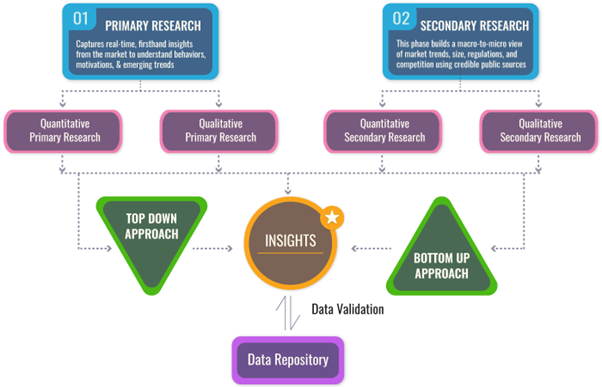
DUAL MODELING: TOP-DOWN + BOTTOM-UP
To ensure robust market estimation, we apply two complementary sizing approaches:
Top-Down Modeling:- Start with broader industry value (e.g., global or regional TAM)
- Apply filters by segment, geography, end-user, or use case
- Adjust with primary insights and validation benchmarks
- Ideal for investor-grade market scans and opportunity mapping
- Aggregate from the ground up using sales volumes, pricing, and unit economics
- Use internal modeling templates aligned with stakeholder data
- Incorporate distributor-level or region-specific inputs
- Most accurate for emerging segments and granular sub-markets
DATA VALIDATION: IN-HOUSE REPOSITORY
We close the loop with proprietary data intelligence built from ongoing projects, industry monitoring, and historical benchmarking. This repository includes:
- Multi-sector market and pricing models
- Key trendlines from past interviews and forecasts
- Benchmarked adoption rates, churn patterns, and ROI indicators
- Industry-specific deviation flags and cross-check logic
- Catches inconsistencies early
- Aligns projections across studies
- Enables consistent, high-trust deliverables