China Antiepileptic Drugs Market Size and Forecast (2026–2034), Regional Growth, Trend, Share and Industry Analysis Report Coverage: By Drug Class (Sodium Channel Modulators, GABA-Enhancing Agents, Calcium Channel Modulators, and Others); By Route of Administration (Oral, Intravenous, Intramuscular, and Others); By Formulation (Tablets and Capsules, Oral Liquids and Suspensions, Injectable Formulations, and Others); By Distribution Channel (Hospital Pharmacies, Retail Pharmacies, and Online Pharmacies)
2026-11-09
Healthcare
Swetal (Research Analyst)
Description
China Antiepileptic Drugs Market Overview
The China antiepileptic drugs market is projected to expand from USD 1.10 billion in 2026 to USD 1.72 billion by 2034, registering a CAGR of 6.1% during 2026–2034. The market for antiepileptic drugs in China is powered by the necessity of epilepsy control and treatment, improved accessibility of neurological treatment and an increased number of both innovative and generic drugs. In addition, the market consists of traditional antiepileptic drugs like levetiracetam, sodium valproate, lamotrigine and oxcarbazepine. These drugs are used for the treatment of different seizures. Generic drugs are provided by domestic producers of pharmaceuticals, while multinational pharmaceutical companies provide branded medicines and specialized products. Government measures aimed at increased access to health care, development of hospitals and specialists, and domestic pharmaceutical capabilities also contribute to market development. However, market growth is hindered by price pressure, competition from generics, regulatory issues, and geographical variations in specialized neurological care. Innovation in seizure control and management as well as treatment compliance provide opportunities for antiepileptic drug manufacturers to increase their presence in the China market.

China Antiepileptic Drugs Market Growth Drivers
Rising Prevalence of Epilepsy and Neurological Disorders
The increasing prevalence of epilepsy in China is fueling the demand for antiepileptic drugs that are used for long-term seizure prevention and management. According to news published by News-Medical on January 19, 2026, the China Neurological Disorders Report 2024 revealed that epilepsy has been affecting over nine million patients in China, although the patterns of neurological diseases differ according to age and geographical regions. The large number of patients will continue to create demand for currently available drugs like levetiracetam, sodium valproate, lamotrigine, and oxcarbazepine. In addition, the development of diagnostic facilities and availability of neurological specialists may encourage the use of these drugs. Thus, there is an opportunity for pharmaceutical companies to increase the availability of affordable drugs and manufacture better-tolerated and effective drugs. However, the increase in the total burden of neurological diseases does not imply the same trend for the increase in epilepsy prevalence.
Growing Adoption of Newer Antiepileptic Medications
Increasing use of new antiepileptic drugs in China is driving market growth as healthcare practitioners look for better-tolerated, less interactive, and effective drugs for controlling seizures. Increased focus on personalized treatment is prompting doctors to choose drugs according to the type of seizures, patient conditions, presence of other medical conditions, and effectiveness of current medication. Better diagnosis of neurological conditions, availability of specialists, and awareness of treatment options are also contributing to the adoption of new drugs. This trend offers a lot of opportunity for pharmaceutical companies to grow their product lines and fill unmet needs, whereas the availability of low-cost options helps price-sensitive patients to benefit from these products. As treatment strategies continue to change, the need for effective and better-tolerated drugs is expected to drive the development of the antiepileptic drugs market in China.
China Antiepileptic Drugs Market Restraint
Adverse Effects and Treatment-Related Safety Concerns
Side effects that may be linked to antiepileptic medicines could impact the expansion of the market due to the complexity of selecting treatment options, non-compliance issues, and the necessity of clinical monitoring. Some of the medications may lead to side effects such as dizziness, tiredness, cognitive problems, or even mood changes. Moreover, some of the antiepileptic medications need to be carefully handled due to their interactions with other drugs and contraindications to pregnancy, as well as the possible negative effect on the functioning of the liver. All these aspects could influence the need for doctors to change the dosage or even stop the therapy. Therefore, the issues of tolerability and safety increase the importance of consultations with patients.
China Antiepileptic Drugs Market Opportunities
Development of Novel Antiepileptic Therapies
The creation of new antiepileptic drugs provides a substantial opportunity for market players to fulfill the need for effective treatment in patients whose seizures are not well controlled by current medication or those who suffer from side effects from available drugs. Studies on new modes of action, delivery methods of drugs, and therapies that are more tolerable could lead to increased choice of treatment and personalized approaches in epilepsy management. New possibilities in the field of clinical research and improved knowledge about seizures are also giving room for the creation of therapies for hard-to-treat epilepsy and certain patient groups. Drug developers can benefit from research and development activities through the enrichment of their pipelines and differentiation.
Expansion of Generic Drug Manufacturing
The emergence of generic antiepileptic drug manufacturing is a chance for pharmaceutical firms to make treatments affordable and accessible to patients suffering from epilepsy. With the patent expiry of existing drugs, pharmaceutical firms will be able to develop cost-effective drugs that increase competition and offer a wider range of treatments to healthcare professionals. Investment in production capabilities, formulation development, and quality assurance can assist manufacturers in satisfying the demand from hospitals, pharmacies, and the public healthcare system. Manufacturers of generic drugs can also take advantage of the chance to venture into price-sensitive markets and enhance drug supply through efficient production and distribution channels. Competitiveness can only be maintained through regulation, quality, reliability, and cost control.
China Antiepileptic Drugs Market Scope
China Antiepileptic Drugs Market Report Segmentation Analysis
The Sodium Channel Modulators Segment Is Expected to Dominate the China Antiepileptic Drugs Market During the Forecast Period
It can be anticipated that sodium channel modulators will contribute to a considerable share of China's anti-epilepsy market owing to their existing involvement in treating focal and other seizures. This is possible due to their ability to normalize neural activity by controlling voltage-gated sodium channels. The drugs reduce electrical discharges that occur during seizures. The existing involvement of sodium channel modulators in the treatment, the availability of various dosages, and knowledge of neurologists about them are the factors that ensure their demand in the future. Individualized treatment of epilepsy as well as the development of generics also contribute to the use of sodium channel modulators. However, sodium channel modulators are appropriate only in certain cases. Some medications require careful monitoring for side effects and drug interactions.

Oral Segment Is Expected to Dominate the China Antiepileptic Drugs Market During the Forecast Period
Oral dosage forms are anticipated to capture the largest share in China's antiepileptic market, owing to the appropriateness of oral medications in managing long-term epilepsies and as outpatient treatments. Oral tablets, capsules, and oral solutions provide easy administration and continued treatment even outside the hospital environment and are generally appropriate for seizure management. Availability of oral dosage forms in a wide variety of antiepileptics helps doctors treat their patients in accordance with age and the type of seizures. Increasing focus on home-based treatment, treatment adherence, and cost-efficient disease management is expected to boost the usage of oral medications. These factors are likely to continue to maintain the dominance of the segment.
Tablets and Capsules Segment Is Expected to Dominate the China Antiepileptic Drugs Market During the Forecast Period
The tablets and capsules will account for the majority share in the China antiepileptic drug market in the forecast period due to ease of use and efficacy for managing seizures in the long term. The products are largely consumed in maintenance therapy for their ease of administration, ability to offer regular doses, and suitability in outpatient care. There are different brands and generic drugs available in the form of tablets and capsules, which makes them highly flexible for healthcare professionals to choose depending on the clinical needs of the patient. Furthermore, manufacturing capability, availability in pharmacies, and cost-effectiveness make them highly accessible. Nonetheless, the oral solutions also find importance for use in pediatric patients or in cases when people have trouble swallowing solid dosage forms.
The Hospital Pharmacies Segment Is Expected to Dominate the China Antiepileptic Drugs Market During the Forecast Period
Hospitals' pharmacies will be the leading players in the China antiepileptic drug market, owing to the involvement of hospitals in epilepsy diagnosis and initial treatment. Patients usually go through the hospital clinics to get prescriptions for the medications that they require. They also consult their neurologists on which type of seizures and antiepileptic drug they should use. Through such clinics, hospital pharmacies are able to deliver the necessary medications and make adjustments whenever it is needed to help manage the condition. There are also more specialists in the hospitals, who are likely to contribute to higher prescription needs. On top of that, hospital buying systems and existing relationships with pharmaceutical companies help in the distribution of antiepileptic drugs.
The following segments are part of an in-depth analysis of the China Antiepileptic Drugs Market:
China Antiepileptic Drugs Market Competition Landscape Analysis
In the China Antiepileptic Drugs Market, multinational pharmaceutical companies compete with their domestic counterparts based on a range of strategies, such as product line, pricing, effectiveness, and delivery systems. In addition to the existence of branded medications from international players such as UCB, Sanofi, Novartis, and GSK, Chinese pharmaceutical companies are engaging in the generic drug market segments, providing cost-saving drugs and building capacity to supply these products in China. In addition, competitive rivalry is high in the segment of frequently prescribed drugs, where many manufacturers are vying for their products' inclusion in the formulary of hospitals as well as obtaining contracts for procurement of their products. With China's procurement practices focused on maximizing quantities and low prices, companies have been forced to enhance efficiencies in production and maintain product quality and cost-effectiveness. On the other hand, rising demand for effective seizure treatments is presenting many opportunities for manufacturers in terms of expanding their product portfolios.
China Antiepileptic Drugs Market Recent Developments News:
In March 2026, SK Biopharmaceuticals announced the commercial launch of cenobamate in China under the brand name Yifurui, following its approval by the National Medical Products Administration (NMPA) in December 2025 for partial-onset seizures in adults. Initial prescriptions began simultaneously at major hospitals across the country, marking the start of commercialization through its China partner, Ignis Therapeutics. A distribution agreement with Sinopharm Holdings is intended to support access to hospitals and pharmacies nationwide. The launch highlights the expansion of innovative treatment options for adults with focal epilepsy and the importance of local partnerships and distribution networks in commercializing newer antiepileptic drugs in China.
In October 2025, H. Lundbeck announced that its investigational drug bexicaserin received Breakthrough Therapy Designation from China's Center for Drug Evaluation for the treatment of seizures associated with developmental and epileptic encephalopathies (DEEs), a group of severe, often childhood-onset epilepsies characterized by drug-resistant seizures. Bexicaserin is an oral, selective 5-HT2C receptor agonist being developed to address unmet treatment needs among children and adults with these conditions. The designation may facilitate closer regulatory engagement and support accelerated development and review, although it does not constitute marketing approval. This development highlights growing pharmaceutical investment in novel mechanisms and specialized therapies for patients whose seizures remain inadequately controlled by existing treatments.
The China Antiepileptic Drugs Market is dominated by a few large companies, such as
UCB
Sanofi
Novartis
GlaxoSmithKline (GSK)
Eisai
Pfizer
Jiangsu Nhwa Pharmaceutical
Wuhan Humanwell Healthcare
Beijing Sihuan Pharmaceutical
Zhejiang Puli Pharmaceutical
Zhejiang Jingxin Pharmaceutical
Northeast Pharmaceutical Group
Topfond Pharmaceutical
Zhejiang Huahai Pharmaceutical
Shenzhen Salubris Pharmaceuticals
Yangtze River Pharmaceutical Group
Sichuan KeriDe Pharmaceutical
Zhejiang Saimo Pharmaceutical
Guangdong Hewei Pharmaceutical
Chongqing Shenghuaxi Pharmaceutical
Other Prominent Players
Frequently Asked Questions
Swetal (Research Analyst)
Swetal is a Research Analyst with 4+ years of experience specializing in healthcare market research, medical devices, healthcare IT, and medical technology industry analysis. Her expertise includes competitive intelligence, secondary research, market trend forecasting, and healthcare business insights across global healthcare ecosystems.
She contributes to advanced market research reports by analyzing regulatory frameworks, emerging healthcare technologies, competitive landscapes, and innovation trends shaping the medical industry. With a strong focus on accurate market intelligence, strategic insights, and healthcare industry trends, Swetal supports businesses in making informed, data-backed decisions in a rapidly transforming healthcare environment.
China Antiepileptic Drugs Market Introduction and Market Overview
Objectives of the Study
Market Segmentation
Drug Class of the China Antiepileptic Drugs Market
Route of Administration of the China Antiepileptic Drugs Market
Formulation of China Antiepileptic Drugs Market
Distribution Channel of the China Antiepileptic Drugs Market
Competition Coverage List of Market Participants
Market Definition: Antiepileptic Drugs Market
Executive Summary
China Antiepileptic Drugs Market Estimation & Forecast
China Antiepileptic Drugs Market Size (US$ Million) Estimates & Historical Trend Analysis (2021 - 2025)
China Peptide Cancer Vaccine Overall Market Size (US$ Million), Growth Rate (Y-o-Y), Market CAGR (%), Market Forecast (2026 - 2034)
Snapshot of China Antiepileptic Drugs Market
China Antiepileptic Drugs Market Revenue Share (%) 2025
Key Competitors & Key Insights
Market Overview (Qualitative Analysis)
Demand Side Trends
Supply Side Trends / Manufacturing Trends
Demand and Opportunity Assessment, 2026 - 2034
Market Dynamics
Drivers
Limitations
Opportunities
Impact Analysis of Drivers and Restraints
Key Developments
Regulatory Landscape
Pricing Analysis
Supply Chain Analysis
Porter’s Five Forces Analysis
Bargaining Power of Suppliers
Bargaining Power of Buyers
Threat of Substitutes
Threat of New Entrants
Competitive Rivalry
PEST Analysis
Political Factors
Economic Factors
Social Factors
Technology Factors
China Antiepileptic Drugs Market Estimates & Forecast Trend Analysis, by Drug Class
China Antiepileptic Drugs Market Assessments & Key Findings, by Drug Class
China Antiepileptic Drugs Market Revenue (US$ Million) Estimates and Forecasts, by Drug Class, 2021 - 2034
Sodium Channel Modulators
GABA-Enhancing Agents
Calcium Channel Modulators
Others
China Antiepileptic Drugs Market Estimates & Forecast Trend Analysis, by Route of Administration
China Antiepileptic Drugs Market Assessments & Key Findings, by Route of Administration
China Antiepileptic Drugs Market Revenue (US$ Million) Estimates and Forecasts, by Route of Administration, 2021 - 2034
Oral
Intravenous
Intramuscular
Others
China Antiepileptic Drugs Market Estimates & Forecast Trend Analysis, by Formulation
China Antiepileptic Drugs Market Assessments & Key Findings, by Formulation
China Antiepileptic Drugs Market Revenue (US$ Million) Estimates and Forecasts, by Formulation, 2021 - 2034
Tablets and Capsules
Oral Liquids and Suspensions
Injectable Formulations
Others
China Antiepileptic Drugs Market Estimates & Forecast Trend Analysis, by Distribution Channel
China Antiepileptic Drugs Market Assessments & Key Findings, by Distribution Channel
China Antiepileptic Drugs Market Revenue (US$ Million) Estimates and Forecasts, by Distribution Channel, 2021 - 2034
Hospital Pharmacies
Retail Pharmacies
Online Pharmacies
Competition Landscape
China Antiepileptic Drugs Market Product Mapping
China Antiepileptic Drugs Market Concentration Analysis, by Leading Players / Innovators / Emerging Players / New Entrants
China Antiepileptic Drugs Market Tier Structure Analysis
China Antiepileptic Drugs Market Concentration & Company Market Shares (%) Analysis, 2025
Company Profiles
UCB
Company Overview & Key Stats
Financial Performance & KPIs
Product Portfolio
SWOT Analysis
Business Strategy & Recent Developments
* Similar details would be provided for all the players mentioned below
Sanofi
Novartis
GlaxoSmithKline (GSK)
Eisai
Pfizer
Jiangsu Nhwa Pharmaceutical
Wuhan Humanwell Healthcare
Beijing Sihuan Pharmaceutical
Zhejiang Puli Pharmaceutical
Zhejiang Jingxin Pharmaceutical
Northeast Pharmaceutical Group
Topfond Pharmaceutical
Zhejiang Huahai Pharmaceutical
Shenzhen Salubris Pharmaceuticals
Yangtze River Pharmaceutical Group
Sichuan KeriDe Pharmaceutical
Zhejiang Saimo Pharmaceutical
Guangdong Hewei Pharmaceutical
Chongqing Shenghuaxi Pharmaceutical
Other Prominent Players
Research Findings & Conclusion
Assumption & Acronyms Used
Research Methodology
External Transportations / Databases
Internal Proprietary Database
Primary Research
Secondary Research
Assumptions
Limitations
Report FAQs
Our Research Methodology
"Insight without rigor is just noise."
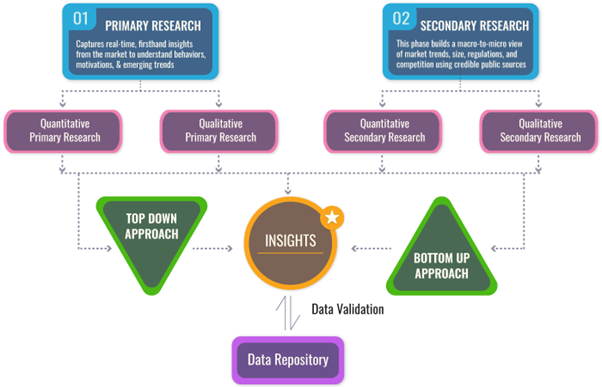
We follow a comprehensive, multi-phase research framework designed to deliver accurate, strategic, and decision-ready intelligence. Our process integrates primary and secondary research , both quantitative and qualitative , along with dual modeling techniques ( top-down and bottom-up) and a final layer of validation through our proprietary in-house repository.
PRIMARY RESEARCH
Primary research captures real-time, firsthand insights from the market to understand behaviors, motivations, and emerging trends.
1. Quantitative Primary Research
Objective: Generate statistically significant data directly from market participants.
Approaches:- Structured surveys with customers, distributors, and field agents
- Mobile-based data collection for point-of-sale audits and usage behavior
- Phone-based interviews (CATI) for market sizing and product feedback
- Online polling around industry events and digital campaigns
- Purchase frequency by customer type
- Channel performance across geographies
- Feature demand by application or demographic
2. Qualitative Primary Research
Objective: Explore decision-making drivers, pain points, and market readiness.
Approaches:- In-depth interviews (IDIs) with executives, product managers, and key decision-makers
- Focus groups among end users and early adopters
- Site visits and observational research for consumer products
- Informal field-level discussions for regional and cultural nuances
SECONDARY RESEARCH
This phase helps establish a macro-to-micro understanding of market trends, size, regulation, and competitive dynamics, sourced from credible and public domain information.
1. Quantitative Secondary Research
Objective: Model market value and segment-level forecasts based on published data.
Sources include:- Financial reports and investor summaries
- Government trade data, customs records, and regulatory statistics
- Industry association publications and economic databases
- Channel performance and pricing data from marketplace listings
- Revenue splits, pricing trends, and CAGR estimates
- Supply-side capacity and volume tracking
- Investment analysis and funding benchmarks
2. Qualitative Secondary Research
Objective: Capture strategic direction, innovation signals, and behavioral trends.
Sources include:- Company announcements, roadmaps, and product pipelines
- Publicly available whitepapers, conference abstracts, and academic research
- Regulatory body publications and policy briefs
- Social and media sentiment scanning for early-stage shifts
- Strategic shifts in market positioning
- Unmet needs and white spaces
- Regulatory triggers and compliance impact
DUAL MODELING: TOP-DOWN + BOTTOM-UP
To ensure robust market estimation, we apply two complementary sizing approaches:
Top-Down Modeling:- Start with broader industry value (e.g., global or regional TAM)
- Apply filters by segment, geography, end-user, or use case
- Adjust with primary insights and validation benchmarks
- Ideal for investor-grade market scans and opportunity mapping
- Aggregate from the ground up using sales volumes, pricing, and unit economics
- Use internal modeling templates aligned with stakeholder data
- Incorporate distributor-level or region-specific inputs
- Most accurate for emerging segments and granular sub-markets
DATA VALIDATION: IN-HOUSE REPOSITORY
We close the loop with proprietary data intelligence built from ongoing projects, industry monitoring, and historical benchmarking. This repository includes:
- Multi-sector market and pricing models
- Key trendlines from past interviews and forecasts
- Benchmarked adoption rates, churn patterns, and ROI indicators
- Industry-specific deviation flags and cross-check logic
- Catches inconsistencies early
- Aligns projections across studies
- Enables consistent, high-trust deliverables