

China Telemedicine Market Size and Forecast (2026–2034), Regional Growth, Trend, Share and Industry Analysis Report Coverage: By Components (Product {Hardware, Software, and Others}, and Services {Tele-consulting, Tele-monitoring, Tele-education}), By Modality (Store and forward, Real-time, and Others); By Application (Teleradiology, Telepsychiatry, Telepathology, Teledermatology, Telecardiology, and Others) and By End User (Hospitals & Health Systems, Clinics & Physician Practices, Patients/Homecare, Payers, and Others)
2026-09-17
Healthcare
Swetal (Research Analyst)
Description
China
Telemedicine Market Overview
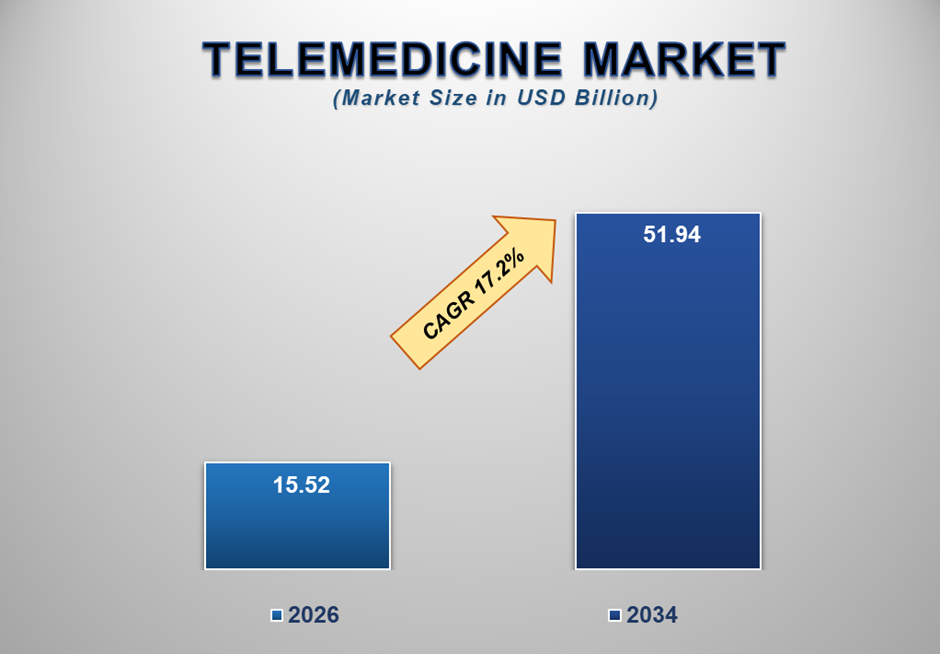
The China telemedicine market is projected to expand from USD 15.52 billion in 2026 to USD 51.94 billion by 2034, registering a CAGR of 17.2% during 2026–2034. The telemedicine sector in China is growing rapidly due to systemic issues with healthcare, strong technological integration, and active government support. The primary driver of this growth is the initiative that has been launched by the government, the "Internet Plus Healthcare" initiative, which aims to minimize the differences in access to medical care between the highly loaded urban hospitals and rural areas where such access is extremely limited. In addition, the current growth of the telemedicine sector is reinforced by demographic changes such as a fast-growing aging population that is aged and the burden of chronic diseases that require constant remote monitoring of patients. The technological aspect of this development is related to the improvement of the efficiency of service provision due to 5G deployment, increased smartphone penetration, and AI-based tools provided by Chinese platforms (Ping A Good Doctor, JD Health, Alibaba Health, etc.). However, the market continues to face serious challenges in the operations of the telemedicine sector that are attributed to the following issues: fragmented regional reimbursement policies, unclear regulatory standardization in different provinces, and high costs of starting remote consultations.
China Telemedicine Market Drivers and Impact Analysis
|
Key Drivers |
Impact |
|
Government "Internet Plus
Healthcare" Policy Push |
Mandates
digital health integration, expands public insurance (BMI) coverage for
online follow-ups, and promotes internet hospitals to optimize national
resource allocation. |
|
Regional Healthcare Disparities |
Addresses acute resource imbalances between
Tier 1/2 urban centers and underserved Tier 3/4 or rural regions by
connecting top specialists remotely. |
|
Rapidly Aging Population & Chronic
Disease Burden |
Accelerates
the continuous need for remote monitoring, long-term care management, and
routine prescription renewals for conditions like hypertension and diabetes. |
|
High Mobile & Digital Payment
Penetration |
Leverages near-universal smartphone
adoption, super-apps (WeChat, Alipay), and integrated digital payment
ecosystems to make virtual care seamlessly accessible. |
|
Technological Advancement in 5G, AI &
IoT |
Enables
real-time remote consultations, AI-powered preliminary triage, automated
image processing, and continuous vital sign tracking. |
|
Commercial Insurance & Platform
Partnerships |
Expands digital platform offerings through
corporate wellness programs and private health insurance bundles to offset
public reimbursement limits. |
|
Physician Multi-Site Practice Realignment |
Allows
doctors to legally consult across multiple internet hospital platforms,
expanding specialist capacity and improving virtual care coverage. |
High Mobile & Digital Payment Penetration
The expansion of
telemedicine in China has been fostered by high mobile and digital payment
penetration. Widespread mobile phone ownership and extensive use of super apps
are some of the reasons behind reduced obstacles to adopting digital health
solutions. With a few taps of their fingers, users can consult a doctor, book
an appointment, validate public insurance co-payments, and pay for
prescriptions via the app of their choice without having to deal with the
process of billing. Thus, this ICT development is turning regular app users
into customers of digital health services.
Commercial
Insurance & Platform Partnerships
Commercial insurance & platform partnerships extend financial coverage and user reach beyond the limits of public Basic Medical Insurance (BMI). Major digital health platforms (like Ping a Good Doctor, JD Health, and AliHealth) work together with commercial health insurers and corporate enterprise customers to produce a package of e-conference services, smart monitoring systems, and tele-wellness services. These partnerships help digital health platforms to benefit from each service in high demand (e.g., getting a specialist’s consultation or second opinion via e-mail or home delivery of medicines) while letting insurers decrease the costs of insurance companies through long-term patient monitoring. Such partnerships also contribute to reducing the acquisition cost of the platform, thus providing the platform with stable income.
China Telemedicine Market Restraint
and Impact Analysis
|
Key Restraints |
Impact |
|
Strict Regulatory Scope Restrictions |
PRC
regulations generally prohibit initial online diagnoses, limiting virtual
consultations primarily to approved follow-ups and chronic disease management. |
|
Fragmented Public Insurance Reimbursement |
Provincial and municipal variations in Basic
Medical Insurance (BMI) inclusion create inconsistent pricing, claim caps,
and payment approvals for online care. |
|
Data Privacy & Cybersecurity Compliance |
Stringent
data localization, cross-border data transfer restrictions, and Personal
Information Protection Law (PIPL) rules increase operational and compliance
burdens. |
|
Quality Control & Diagnostic Liabilities |
High risk of misdiagnosis via remote
channels, lack of standardized clinical guidelines across provinces, and
physician reluctance due to medical liability concerns. |
Strict
Regulatory Scope Restrictions
The constraints
imposed by regulatory limitations are a significant barrier to the market by
limiting the scope of operations and monetization potential of virtual care.
According to the regulations of the National Health Commission (NHC), online
platforms may not make the first medical diagnosis, and telehealth services are
limited to follow-up consultations related to common, stable, and chronic
diseases, serving only patients who have already been treated offline at least
once. In addition, strict prescription compliance legislation prohibits the
issuance of numerous high-risk medications online, such as narcotic
painkillers, and strictly enforces the policy of "prescription
first," which prohibits any independent issuance and evaluation of prescriptions
by AI tools. These limitations prevent health tech platforms from taking
advantage of high-acuity incident care or initial patient triaging, thus
limiting the potential clinical market.
Data Privacy
& Cybersecurity Compliance
The implications of
data privacy and cybersecurity compliance bring high financial, technological,
and operational challenges that obstruct digital health platforms. Within the
strict regulatory regime of China, which is based on its Personal Information
Protection Law (PIPL), Data Security Law (DSL), and Cybersecurity Law (CSL),
health-related data is classified as "sensitive personal data" and
possibly a strategic national security asset. Internet hospitals and
telemedicine facilities are obliged to comply with local data residency
regulations so that no unauthorized transfer of patients’ records can take
place, to pass a very stringent level of Multi-Level Protection Scheme (MLPS
Level 3) certification, and to follow specific consent protocols. The risk of
facing huge penalties (up to 5 percent of annual revenue), the personal
responsibility of the executives, or the possibility of the platform license
being withdrawn creates enormous compliance costs and hampers cross-border
cooperation or use of third-party cloud storage services.
China Telemedicine Market
Opportunities and Impact Analysis
|
Key Opportunities |
Impact |
|
AI Integration & Autonomous Triage |
Scaling
generative AI, clinical decision support tools, and intelligent triaging to
handle high patient volumes and streamline administrative workflows. |
|
Prescription E-Commerce & Last-Mile
Delivery |
Integrating virtual consultations with
online drug fulfillment and direct-to-home pharmacy delivery networks for
seamless care cycles. |
|
Smart Home & Wearable Medical IoT |
Expanding
connected home-care devices (smart glucose monitors, remote ECGs, and
connected blood pressure cuffs) for continuous remote monitoring. |
|
Public-Private Internet Hospital
Partnerships |
Expanding joint operations between public
Tier-3A hospitals and tech platforms (e.g., JD Health, Ping A Good Doctor) to
commercialize specialized services. |
AI Integration
& Autonomous Triage
The integration of
AI and autonomous triage offers a tremendous growth opportunity by solving
major clinical hurdles and ensuring the right patient routing in Chinese
healthcare. Medical LLMs in conjunction with advanced natural language
processing absolutely automate the collection of patient history and
understanding of early symptoms, as well as match patients with the suitable
specialist in advance of consultations. This automation significantly relieves
the intake burden on hard-working physicians in leading state hospitals,
diminishes the risk of misallocation, and shortens the time of consultation. In
addition, the use of AI decision-support systems helps junior and district
doctors work like prominent specialists with respect to diagnostics, which makes
it possible for the first time to provide equal healthcare services as well as
opens up prospects for B2B and SaaS monetization.
Smart Home &
Wearable Medical IoT
Smart home and
wearable medical IoT result in an unstoppable data channel, facilitating the
process of telehealth transition from infrequent reactive visits to regular
management based on real-time data. The spread of commercially available
medical-grade wearable technology (for example, ECG, Blood Oxygen Level, and
Blood Pressure tracking smartwatches by leading brands such as Huawei, Xiaomi,
and Lepu), and connected home diagnostic devices (for example, glucose meters,
tele-spirometers, and remote ECG monitors) allows for an uninterrupted database
of patients’ vital signs being sent to online hospitals. Such a stream of data
makes it possible to trigger AI-generated early warnings about worsening health
conditions and also makes it easy to automate the monitoring of chronic
diseases while giving advisors complete historical information for virtual
consultations. Hence, the urgent combination of these features raises the
effectiveness of patient treatment, causing positive changes for the elderly
and chronic illness population of China while creating great opportunities for
different digital health ecosystems to generate new revenues from their
business.
China Telemedicine Market Scope
|
Report Attributes |
Description |
|
Market Size in 2026 |
USD
15.52 Billion |
|
Market Forecast in 2034 |
USD 51.94 Billion |
|
CAGR % 2026-2034 |
17.2% |
|
Market Concentration |
Highly Concentrated |
|
Base Year |
2025 |
|
Historic Data |
2021-2025 |
|
Forecast Period |
2026-2034 |
|
Report USP |
Production, Consumption, company share,
company heatmap, company production capacity, growth factors, and more |
|
Geography |
China |
|
Segments Covered |
●
By
Component ●
By
Modality ●
By
Application ●
By End
User |
|
Key Demand Side Trends |
●
Demand for
Virtual Chronic Disease Management ●
Surge in
Preventive Healthcare & Tele-Wellness ●
Preference
for Integrated One-Stop Health Ecosystems |
|
Key Supply Side Trends |
●
Dominance of
Hybrid "Offline + Online" Internet Hospitals ●
Deployment
of Deep-Tech & Medical AI Models ●
Expansion
into Downstream Pharma Ecosystems |
|
Major Players |
●
Mindray ●
United
Imaging Healthcare ●
Yuwell
Medical ●
Lepu Medical ●
Neusoft
Medical Systems ●
EDAN
Instruments |
China Telemedicine Market Report
Segmentation Analysis
Services Segment
Is Expected to Dominate the China Telemedicine Market During the Forecast
Period
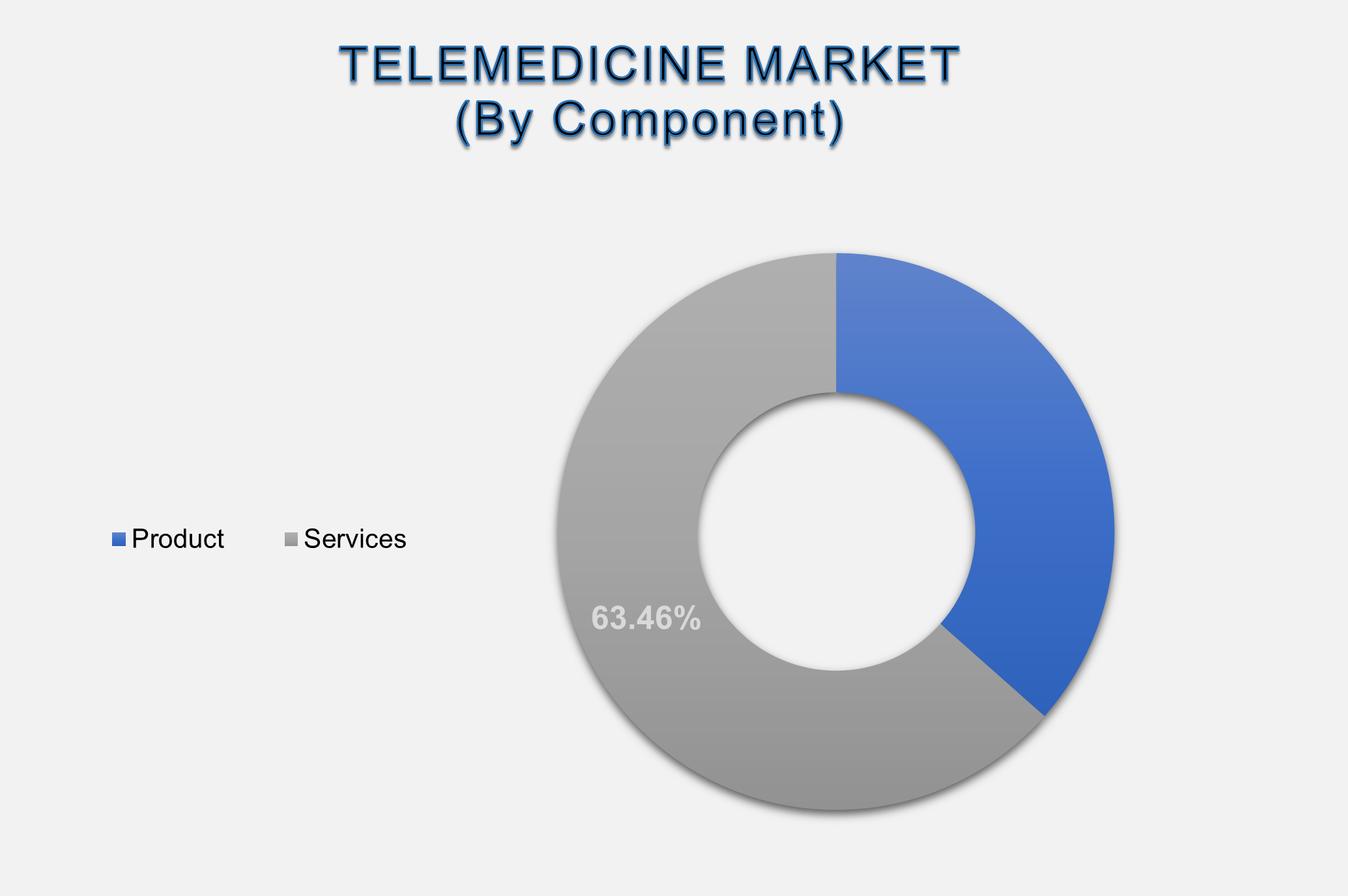
The services segment is predicted to lead the China telemedicine market due to high transaction volume and recurring revenue derived from remote consultation, tele-triage, and chronic disease management. The segment’s dominance is backed by the national policy initiative in China to include online medical services, such as online follow-up consultations and e-prescription renewals, in provincial Basic Medical Insurance (BMI) reimbursement lists. Moreover, digital health companies, such as Ping a Good Doctor, JD Health, and AliHealth, are offering integrated medical services that include health consultations, e-pharmacy services, and corporate wellness plans. While the segment of software is projected to record the highest CAGR due to technical innovations in medical AI and digital VC platforms, services will have the biggest market share, with high user frequency, continuous home health monitoring of the aging population, and continuous internet hospital operations as major factors contributing to the overall high efficiency and implementation of the online services.
The Store and
Forward Segment Is Expected to Grow in China Telemedicine Market
The
store-and-forward segment is likely to witness considerable growth in the
Chinese telemedicine market, owing to its highly operationally efficient nature
in bridging the gaps among specialists in different regional areas and reducing
the workload of physicians. This method has the capacity to capture real-time
medical information and images (for example, teleradiology images, pathology
slides, and skin photos), as well as patient history in remote areas and Tier
3/4 hospitals and transmit them to leading urban specialists for diagnosis at
off-peak time. In addition, the swift integration of AI diagnostic tools, which
perform initial filtering of incoming clinical reports based on their priority
of severity and assist in preliminary diagnosis, increases the speed of
diagnostics for overloaded specialists. Since asynchronous processes do not
require as much bandwidth as synchronous video and integrate well into the
process of sending referrals to primary care establishments, the
store-and-forward model is extensively adopted by public internet hospitals and
regional healthcare consortia to provide cost-efficient diagnostics across
China.
Teleradiology
Segment Is Expected to Witness Steady Growth in China Telemedicine Market
The teleradiology
sector is poised for consistent growth in the China Telemedicine Industry due
to the ongoing imbalance between supply and demand, which is due to the rising
demand for medical imaging and the insufficient number of local radiologists in
China. To mitigate this problem, the Chinese government is implementing
healthcare initiatives that support regional diagnostics consortia, allowing
large cities and main hospitals to evaluate and analyze various images sent by
clinics in rural areas. The rapid adoption of cloud-based PACS networks and AI
systems capable of pre-screening complicated scans also stimulates the market,
as this will improve the effectiveness of diagnostics in oncology, cardiology,
and emergency medicine. Overall, due to the aging population, which requires
regular diagnostic testing due to the increased prevalence of chronic diseases,
teleradiology is regarded as an important element in the development of
telemedical care in the China market.
The Hospital and
Health System Segment Is Expected to Grow in China Telemedicine Market
The hospitals and
health systems sector is projected to see significant growth in the Chinese
telemedicine market due to government-driven digital transformations and
aggressive development of public internet hospitals. Under central healthcare
initiatives, public Tier-3A hospitals are creating digital channels to handle
increasing patient numbers, increase patient turnover, and increase doctors'
reach to other areas. By directly incorporating telemedicine tools into
hospital EHR and HIS, health systems will easily perform pre-admission triage
and post-discharge follow-up, e-prescriptions, and cross-provincial
consultations. Additionally, as internet hospitals commissioned by public
health systems are eligible for local BMI reimbursements and receive greater
trust from patients than independent third-party apps, hospital-based digital
ecosystems are the backbone of virtual care solutions' growth in China.
The following
segments are part of an in-depth analysis of the China telemedicine market:
|
Market Segments |
|
|
By
Components |
●
Product o
Hardware o
Software o
Others ●
Services o
Tele-consulting o
Tele-monitoring o
Tele-education |
|
By
Modality |
●
Store and
forward ●
Real-time ●
Others |
|
By
Application |
●
Teleradiology ●
Telepsychiatry ●
Telepathology ●
Teledermatology ●
Telecardiology ●
Others |
|
By End
User |
●
Hospitals
& Health Systems ●
Clinics
& Physician Practices ●
Patients/Homecare ●
Payers ●
Others |
China Telemedicine Market Competition
Landscape Analysis
The competitive
landscape of the China Telemedicine Market consists of an energetic two-tier
model comprising both consumer-oriented platforms with technological assistance
and state-backed Internet Hospital Networks that are competing with each other
for market dominance. Market participants actively use such techniques as an
asynchronous store-and-forward approach, synchronous high-definition video
consultations, RPM through IoT-connected gadgets, AI-assisted triage,
cloud-based PACS networks, and EHR integration to overcome regional specialist
shortages and improve clinical efficiency. Diversification through service
provision in online primary care, tele-radiology, tele-dermatology,
tele-psychiatry, and chronic condition management, as well as specialized B2B
hospital consultations and health consortiums, as well as technology
integrations and expansion into other provinces, are still widespread among
market players, which try to increase their digital patient pool. Such trends
as a closed-loop "payer-provider-pharmacy" approach, AI-based medical
Large Language Models (LLMs), and virtual hospital branches are also assisting
in market development. Partnerships with e-commerce logistics chains,
commercial health insurers, local public health authorities, and pharmaceutical
companies allow platforms to increase users and make e-pharmacy revenue higher.
In addition to that, positive government regulations regarding "Internet
Plus Healthcare," BMI reimbursement for virtual services in all provinces,
fast 5G infrastructure deployment, and growing acceptance of digital health
solutions by the elderly population.
China Telemedicine Market Recent
Developments News:
●
In September
2026, Westlake University and its partners announced that China's National
Medical Products Administration (NMPA) approved Mprosevir, the country's first
"Class 1" innovative drug developed using a dual-screening strategy
combining AI and DNA-encoded library (DEL) technology.
●
In October
2025, Ant Group’s AI healthcare platform AQ launched new features for chronic
disease management and elderly care in China, including photo-based smart data
recognition, AI-powered blood pressure tracking with Yuwell, and family health
record sharing.
●
In November
2025, Medtronic announced the establishment of its first Digital Healthcare
Innovation Hub in Beijing, China, incorporating real-time monitoring and
telehealth tools to co-develop localized, data-driven medical technologies.
The China
Telemedicine Market is dominated by a few large companies, such as
●
Mindray
●
Yuwell Medical
●
EDAN
Instruments
●
Contec Medical
Systems
●
Guangdong
Transtek Medical Electronics
●
Viatom
Technology
●
SonoScape
Medical
●
Lepu Medical
●
Comen Medical
●
Biolight
Meditech
●
Heal Force
●
United Imaging
Healthcare
●
Neusoft
Medical Systems
●
Cofoe Medical
Technology
●
Hunan Beyond
Medical Technology
●
Vistel Medical
●
SCIAN / HONSUN
●
Shenzhen Ocent
Monitor
●
Inbca Medical
● Other Prominent Players
Frequently Asked Questions
Swetal (Research Analyst)
Swetal is a Research Analyst with 4+ years of experience specializing in healthcare market research, medical devices, healthcare IT, and medical technology industry analysis. Her expertise includes competitive intelligence, secondary research, market trend forecasting, and healthcare business insights across global healthcare ecosystems.
She contributes to advanced market research reports by analyzing regulatory frameworks, emerging healthcare technologies, competitive landscapes, and innovation trends shaping the medical industry. With a strong focus on accurate market intelligence, strategic insights, and healthcare industry trends, Swetal supports businesses in making informed, data-backed decisions in a rapidly transforming healthcare environment.
1.
China
Telemedicine Market Introduction and Market Overview
1.1. Objectives of the Study
1.2. Market Segmentation
1.2.1.Components of the China
Telemedicine Market
1.2.2.Modality of the China
Telemedicine Market
1.2.3.Application of the China
Telemedicine Market
1.2.4.End User of China Telemedicine
Market
1.3. Competition Coverage List of
Market Participants
1.4. Market Definition: Telemedicine Market
2.
Executive Summary
2.1. China Telemedicine Market
Estimation & Forecast
2.1.1.China Telemedicine Market Size
(US$ Million) Estimates & Historical Trend Analysis (2021 - 2025)
2.1.2.China Telemedicine Overall
Market Size (US$ Million), Growth Rate (Y-o-Y), Market CAGR (%), Market
forecast (2026 - 2034)
2.2. Snapshot of China Telemedicine
Market
2.3. China Telemedicine Market
Revenue Share (%) 2025
2.4. Key Competitors & Key
Insights
3.
Market Overview (Qualitative
Analysis)
3.1. Demand Side Trends
3.2. Supply Side Trends /
Manufacturing Trends
3.3. Demand and Opportunity
Assessment, 2026 - 2034
3.4. Market Dynamics
3.4.1.Drivers
3.4.2.Limitations
3.4.3.Opportunities
3.4.4.Impact Analysis of Drivers and
Restraints
3.5. Key Developments
3.6. Regulatory Landscape
3.7. Pricing Analysis
3.8. Supply Chain Analysis
3.9. Porter’s Five Forces Analysis
3.9.1.Bargaining Power of Suppliers
3.9.2.Bargaining Power of Buyers
3.9.3.Threat of Substitutes
3.9.4.Threat of New Entrants
3.9.5.Competitive Rivalry
3.10. PEST Analysis
3.10.1. Political Factors
3.10.2. Economic Factors
3.10.3. Social Factors
3.10.4. Technology Factors
4.
China Telemedicine Market
Estimates & Forecast Trend Analysis, by Components
4.1. China Telemedicine Market
Assessments & Key Findings, by Components
4.2. China Telemedicine Market
Revenue (US$ Million) Estimates and Forecasts, by Components, 2021 - 2034
4.2.1. Product
4.2.1.1.
Hardware
4.2.1.2.
Software
4.2.1.3.
Others
4.2.2. Services
4.2.2.1.
Tele-consulting
4.2.2.2.
Tele-monitoring
4.2.2.3.
Tele-education
5.
China Telemedicine Market
Estimates & Forecast Trend Analysis, by Modality
5.1. China Telemedicine Market
Assessments & Key Findings, by Modality
5.2. China Telemedicine Market
Revenue (US$ Million) Estimates and Forecasts, by Modality, 2021 - 2034
5.2.1.Store and forward
5.2.2.Real-time
5.2.3.Others
6.
China Telemedicine Market
Estimates & Forecast Trend Analysis, by Application
6.1. China Telemedicine Market
Assessments & Key Findings, by Application
6.2. China Telemedicine Market
Revenue (US$ Million) Estimates and Forecasts, by Application, 2021 - 2034
6.2.1.Teleradiology
6.2.2.Telepsychiatry
6.2.3.Telepathology
6.2.4.Teledermatology
6.2.5.Telecardiology
6.2.6.Others
7.
China Telemedicine Market
Estimates & Forecast Trend Analysis, by End User
7.1. China Telemedicine Market
Assessments & Key Findings, by End User
7.2. China Telemedicine Market
Revenue (US$ Million) Estimates and Forecasts, by End User, 2021 - 2034
7.2.1.Hospitals & Health Systems
7.2.2.Clinics & Physician
Practices
7.2.3.Patients/Homecare
7.2.4.Payers
7.2.5.Others
8. Competition Landscape
8.1. China Telemedicine Market Product
Mapping
8.2. China Telemedicine Market
Concentration Analysis, by Leading Players / Innovators / Emerging Players /
New Entrants
8.3. China Telemedicine Market Tier
Structure Analysis
8.4. China Telemedicine Market
Concentration & Company Market Shares (%) Analysis, 2025
9. Company Profiles
9.1. Mindray
9.1.1.Company Overview & Key Stats
9.1.2.Financial Performance & KPIs
9.1.3.Product Portfolio
9.1.4.SWOT Analysis
9.1.5.Business Strategy & Recent
Developments
* Similar details would be provided
for all the players mentioned below
9.2.
Yuwell Medical
9.3.
EDAN Instruments
9.4.
Contec Medical Systems
9.5.
Guangdong Transtek Medical
Electronics
9.6.
Viatom Technology
9.7.
SonoScape Medical
9.8.
Lepu Medical
9.9.
Comen Medical
9.10.
Biolight Meditech
9.11.
Heal Force
9.12.
United Imaging Healthcare
9.13.
Neusoft Medical Systems
9.14.
Cofoe Medical Technology
9.15.
Hunan Beyond Medical Technology
9.16.
Vistel Medical
9.17.
SCIAN / HONSUN
9.18.
Shenzhen Ocent Monitor
9.19.
Inbca Medical
9.20. Other Prominent Players
10. Research
Findings & Conclusion
11. Assumptions & Acronyms Used
12. Research
Methodology
12.1. External Transportation /
Databases
12.2. Internal Proprietary Database
12.3. Primary Research
12.4. Secondary Research
12.5. Assumptions
12.6. Limitations
12.7. Report FAQs
Our Research Methodology
"Insight without rigor is just noise."
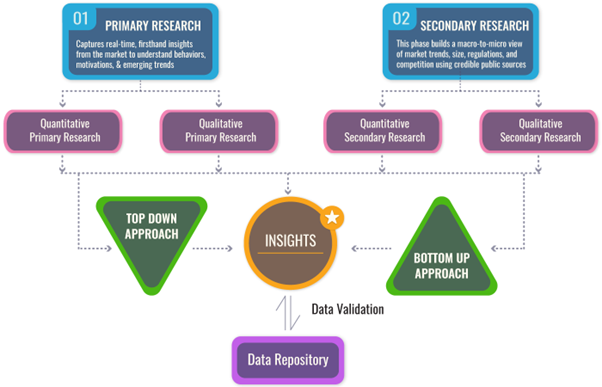
We follow a comprehensive, multi-phase research framework designed to deliver accurate, strategic, and decision-ready intelligence. Our process integrates primary and secondary research , both quantitative and qualitative , along with dual modeling techniques ( top-down and bottom-up) and a final layer of validation through our proprietary in-house repository.
PRIMARY RESEARCH
Primary research captures real-time, firsthand insights from the market to understand behaviors, motivations, and emerging trends.
1. Quantitative Primary Research
Objective: Generate statistically significant data directly from market participants.
Approaches:- Structured surveys with customers, distributors, and field agents
- Mobile-based data collection for point-of-sale audits and usage behavior
- Phone-based interviews (CATI) for market sizing and product feedback
- Online polling around industry events and digital campaigns
- Purchase frequency by customer type
- Channel performance across geographies
- Feature demand by application or demographic
2. Qualitative Primary Research
Objective: Explore decision-making drivers, pain points, and market readiness.
Approaches:- In-depth interviews (IDIs) with executives, product managers, and key decision-makers
- Focus groups among end users and early adopters
- Site visits and observational research for consumer products
- Informal field-level discussions for regional and cultural nuances
SECONDARY RESEARCH
This phase helps establish a macro-to-micro understanding of market trends, size, regulation, and competitive dynamics, sourced from credible and public domain information.
1. Quantitative Secondary Research
Objective: Model market value and segment-level forecasts based on published data.
Sources include:- Financial reports and investor summaries
- Government trade data, customs records, and regulatory statistics
- Industry association publications and economic databases
- Channel performance and pricing data from marketplace listings
- Revenue splits, pricing trends, and CAGR estimates
- Supply-side capacity and volume tracking
- Investment analysis and funding benchmarks
2. Qualitative Secondary Research
Objective: Capture strategic direction, innovation signals, and behavioral trends.
Sources include:- Company announcements, roadmaps, and product pipelines
- Publicly available whitepapers, conference abstracts, and academic research
- Regulatory body publications and policy briefs
- Social and media sentiment scanning for early-stage shifts
- Strategic shifts in market positioning
- Unmet needs and white spaces
- Regulatory triggers and compliance impact
DUAL MODELING: TOP-DOWN + BOTTOM-UP
To ensure robust market estimation, we apply two complementary sizing approaches:
Top-Down Modeling:- Start with broader industry value (e.g., global or regional TAM)
- Apply filters by segment, geography, end-user, or use case
- Adjust with primary insights and validation benchmarks
- Ideal for investor-grade market scans and opportunity mapping
- Aggregate from the ground up using sales volumes, pricing, and unit economics
- Use internal modeling templates aligned with stakeholder data
- Incorporate distributor-level or region-specific inputs
- Most accurate for emerging segments and granular sub-markets
DATA VALIDATION: IN-HOUSE REPOSITORY
We close the loop with proprietary data intelligence built from ongoing projects, industry monitoring, and historical benchmarking. This repository includes:
- Multi-sector market and pricing models
- Key trendlines from past interviews and forecasts
- Benchmarked adoption rates, churn patterns, and ROI indicators
- Industry-specific deviation flags and cross-check logic
- Catches inconsistencies early
- Aligns projections across studies
- Enables consistent, high-trust deliverables