

Cloud Kitchen Market Size and Forecast (2020-2033), Global and Regional Growth, Trend, Share, and Industry Analysis Report Coverage: By Type (Independent, Commissary/Shared Kitchen, Kitchen Pods), By Product Type (Burger/Sandwich, Pizza/Pasta, Chicken, Seafood, Mexican/Asian Food, Others), By Nature (Franchised, Standalone) And Geography
2025-12-03
Consumer Products
Jaya Bundele (Research Analyst)
Description
Cloud Kitchen Market Overview
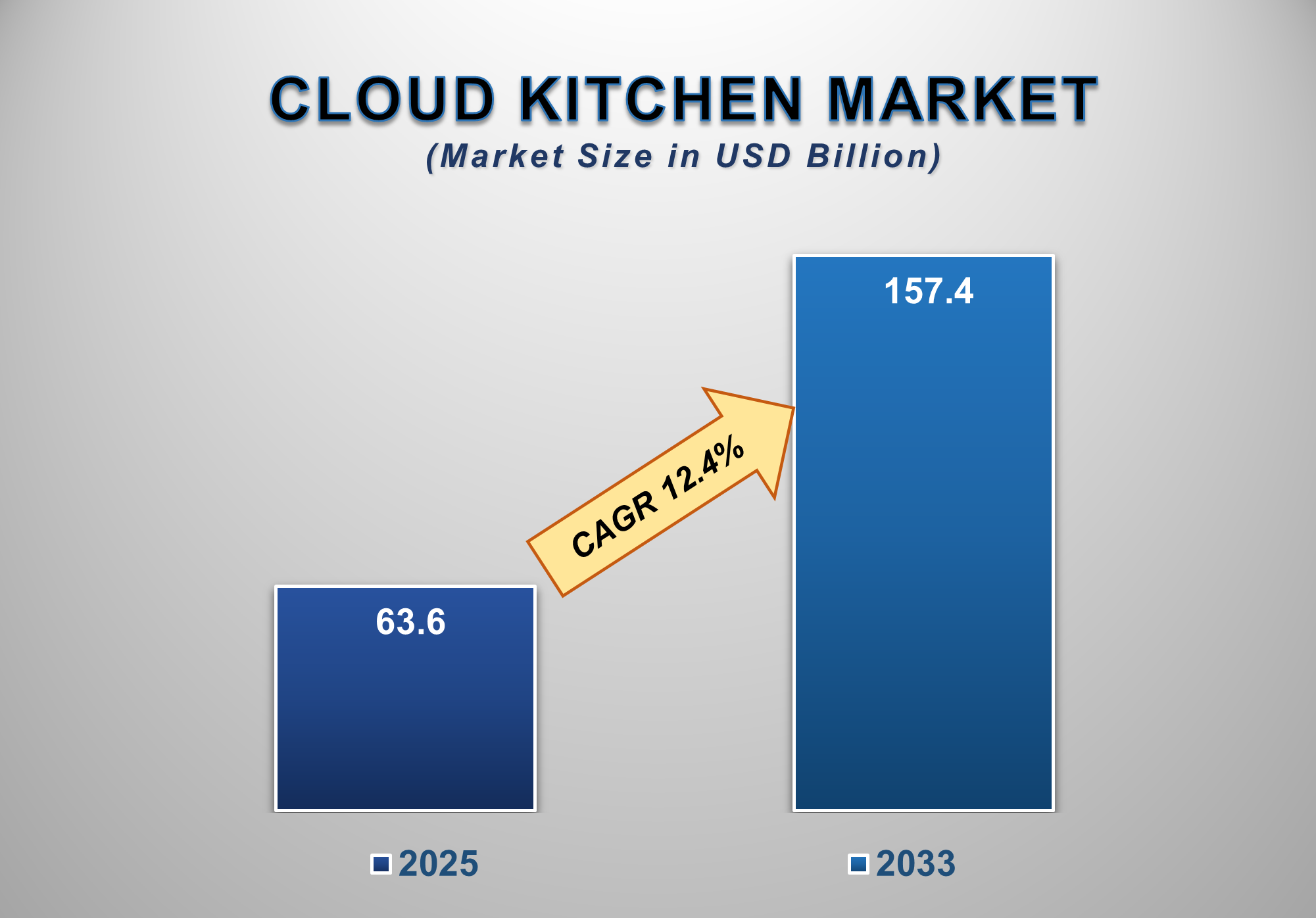
The Cloud Kitchen Market is poised for explosive growth from 2025 to 2033, driven by the paradigm shift in consumer dining habits, the relentless expansion of online food delivery platforms, and the increasing demand for operational efficiency in the food service sector. The market is projected to be valued at approximately USD 63.6 billion in 2025 and is forecasted to reach nearly USD 157.4 billion by 2033, exhibiting a compound annual growth rate (CAGR) of 12.4% during this period.
A cloud kitchen, also known as a ghost kitchen
or virtual kitchen, is a food preparation facility that operates solely for
delivery, with no physical storefront or dine-in area. The market's robust
expansion is primarily fueled by the post-pandemic normalization of food
delivery, rising smartphone penetration, and the growing convenience offered by
food aggregator apps like Uber Eats, DoorDash, and Zomato.
The model offers significant economic advantages
over traditional restaurants, including lower startup costs, reduced overheads
(no prime real estate or front-of-house staff), and the ability to host
multiple brands from a single location, optimizing space and resources.
Furthermore, the ability to rapidly test new culinary concepts and menus with
minimal risk is a key factor attracting entrepreneurs and established
restaurant chains alike. North America and Europe are mature markets with high
adoption rates, while the Asia-Pacific region is expected to witness the
fastest growth due to its vast urban population, burgeoning middle class, and
deep penetration of food delivery services.
Cloud
Kitchen Market Drivers and Opportunities
Proliferation of Online Food Delivery
Services and Evolving Consumer Preferences are
the Primary Market Drivers
The unprecedented growth of online food delivery
(OFD) platforms is the most powerful engine for the cloud kitchen market. The
convenience of ordering food via a few taps on a smartphone has become
ingrained in modern urban life. This consumer shift is complemented by changing
lifestyles, with busier schedules and a growing preference for at-home dining
experiences. Cloud kitchens are intrinsically designed to serve this
delivery-first ecosystem, operating with optimized workflows for packaging and
speed, directly aligning with the core demands of both consumers and delivery
platforms. The symbiotic relationship between food aggregators, which
constantly seek to expand their restaurant portfolio and delivery reach, and
cloud kitchens, which rely on these platforms for order volume, creates a
self-reinforcing cycle of market expansion.
Operational Efficiency and Lower Barrier to
Entry for Food Brands are Driving Adoption
The significant economic benefits of the cloud
kitchen model are a critical catalyst for its adoption. Compared to traditional
restaurants, cloud kitchens eliminate costs associated with premium real
estate, dine-in ambience, and extensive front-of-house staffing. This lower
capital expenditure and operational overhead make it feasible for new brands to
launch and for existing chains to expand their geographic footprint rapidly and
cost-effectively. The multi-branding strategy, where a single kitchen operates
several virtual restaurant brands, allows for maximizing the utility of the
kitchen space, diversifying menu offerings, and capturing a larger share of the
delivery market. This operational efficiency directly translates to higher
profitability potential and a lower risk profile, attracting significant
investment from venture capitalists and established food service operators.
Integration of Advanced Technologies and
Expansion into Untapped Cuisines and Regions Present Significant Opportunities
The strategic integration of technology and the
exploration of new culinary and geographic frontiers are creating substantial
growth opportunities for the cloud kitchen market. Key opportunities lie in
leveraging data analytics and artificial intelligence (AI) to optimize menu
engineering, predict demand, manage inventory, and personalize marketing
campaigns. The development of automated kitchen equipment and robotics for
tasks like frying and flipping burgers can further enhance consistency and
efficiency. Geographically, rapidly growing economies in the Asia-Pacific, Latin America, and the Middle East offer
vast, unsaturated markets. Furthermore, there is immense potential in
specializing in underserved cuisines or
dietary trends, such as health-conscious meals, plant-based options, or
specific ethnic foods, delivered from a focused cloud kitchen. The emergence of
hybrid models, combining a small dine-in space with a delivery-optimized
kitchen ("phygital" model), and the growth of delivery-only grocery
and convenience items represent additional, innovative avenues for market
expansion and revenue diversification.
Cloud Kitchen Market Scope
|
Report Attributes |
Description |
|
Market Size in 2025 |
USD 63.3 Billion |
|
Market Forecast in 2033 |
USD 157.4 Billion |
|
CAGR % 2025-2033 |
12.4% |
|
Base Year |
2024 |
|
Historic Data |
2020-2024 |
|
Forecast Period |
2025-2033 |
|
Report USP |
Product Portfolio,
Technological Analysis, Company Market Share, Company Heatmap, Pricing
Analysis, Growth Factors and more |
|
Segments Covered |
●
By Cycle Type ●
By Patient Age ●
By End-user |
|
Regional Scope |
●
North America, ●
Europe, ●
APAC, ●
Latin America ●
Middle East and
Africa |
|
Country Scope |
1)
U.S. 2)
Canada 3)
Germany 4)
UK 5)
France 6)
Spain 7)
Italy 8)
Switzerland 9)
China 10)
Japan 11)
India 12)
Australia 13)
South Korea 14)
Brazil 15)
Mexico 16)
Argentina 17)
South Africa 18)
Saudi Arabia 19)
UAE |
Cloud Kitchen Market Report Segmentation Analysis
The global
Cloud Kitchen Market industry analysis is segmented by Type, by Product Type,
by Nature, and by Region.
The
Commissary/Shared Kitchen segment is anticipated to command the largest market
share in 2025
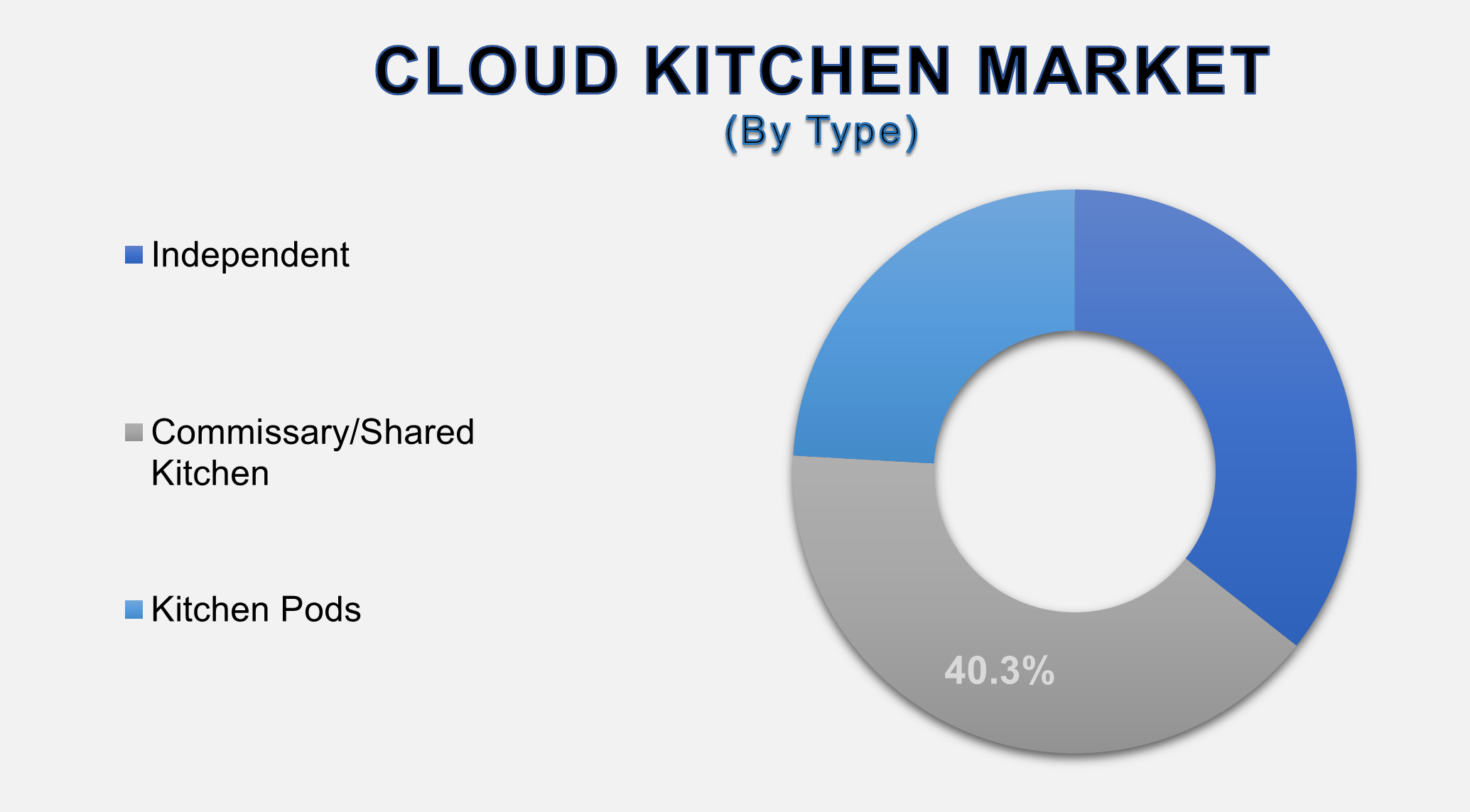
The Type segment is categorised into Independent,
Commissary/Shared Kitchen, and Kitchen Pods. The dominance of the
Commissary/Shared Kitchen segment is attributed to its superior economic model
and scalability. These facilities house multiple food preparation stations for
different brands under one roof, sharing resources like utilities, storage, and
sometimes even staff. This model drastically reduces the individual operational
cost for each brand, making it highly attractive for small entrepreneurs and for
large chains looking to test new markets or concepts. The shared infrastructure
allows for greater efficiency and higher density of food production in urban
areas, catering directly to the multi-branding strategy that is central to the
cloud kitchen value proposition. While independent kitchens offer brand
control, the cost-sharing and collaborative advantages of commissary kitchens
secure their position as the segment with the
largest market share.
The Burger/Sandwich segment is projected to grow at a
significant CAGR.
The Product Type segment includes Burger/Sandwich,
Pizza/Pasta, Chicken, Seafood, Mexican/Asian Food, and Others. The
Burger/Sandwich segment's projected significant growth is driven by its
inherent suitability for the delivery model. These items have high consumer
demand, are familiar to a global audience, and generally maintain their quality
and integrity during transit better than more delicate cuisines. The simplicity
of their preparation allows for speed and consistency, which are critical for
high-volume delivery operations. Furthermore, the burger and sandwich space is
highly competitive and innovative, with numerous virtual brands specializing in
gourmet, ethnic-fusion, or health-conscious variations, all of which can be
efficiently produced and tested from a cloud kitchen environment. This
combination of delivery resilience and continuous menu innovation makes this
product type a fast-growing driver of the cloud kitchen market.
The Franchised segment is projected to witness the highest
growth rate.
The Nature segment is divided into Franchised and
Standalone. The Franchised segment's position as the fastest-growing channel is
a result of the powerful synergy between the cloud kitchen model and franchise
expansion strategies. Established restaurant brands are increasingly using
franchised cloud kitchens as a low-risk, capital-efficient method to enter new
neighborhoods or cities without the overhead of a full-scale restaurant. For
franchisees, the model offers a lower initial investment and operational cost.
The franchisor provides brand recognition, standardized recipes, and supply
chain support, which de-risks the venture for the kitchen operator. This
partnership model allows for rapid, asset-light geographic expansion, enabling
brands to achieve widespread market penetration and compete effectively in the
crowded food delivery landscape, thereby propelling the growth of this segment.
The
following segments are part of an in-depth analysis of the global Cloud Kitchen
Market:
|
Market
Segments |
|
|
By Type |
●
Independent ●
Commissary/Shared
Kitchen ●
Kitchen Pods |
|
By Product
Type |
●
Burger/Sandwich ●
Pizza/Pasta ●
Chicken ●
Seafood ●
Mexican/Asian Food ●
Others |
|
By Nature |
●
Franchised ●
Standalone |
Cloud Kitchen Market Share Analysis by Region
The
Asia-Pacific region is anticipated to hold the largest portion of the Cloud
Kitchen Market globally throughout the forecast period.
Asia-Pacific's dominance is driven by a perfect storm of
favorable conditions: a massive, densely populated urban youth demographic,
incredibly high penetration of smartphones and food delivery apps, and a strong
culture of eating out and ordering in. Countries like India, China, and
Indonesia have seen an explosion of local food aggregators (e.g., Zomato, Swiggy,
and Meituan) that have cultivated a robust delivery
ecosystem. The cost-effectiveness of the cloud kitchen model is particularly
appealing in these price-sensitive markets, allowing for a proliferation of
brands catering to diverse tastes. Supportive infrastructure developments and a
vast pool of culinary talent further contribute to the region's leadership. The
growing middle class with increasing disposable income is continuously
expanding the addressable market for delivered food.
India alone is a key growth engine within the APAC region.
The country's huge population, rapid urbanization, and the widespread adoption
of digital payments have created an ideal environment for cloud kitchens. The
relatively low cost of setting up a kitchen compared to a restaurant has led to
an entrepreneurial boom in the space. Major international brands are partnering
with local kitchen operators to gain a foothold, while homegrown virtual brands
are proliferating at an astonishing rate. The competitive delivery fees and
frequent promotions by aggregators keep the market highly dynamic and fuel
consistent order volume, making India a critical and rapidly expanding market
for cloud kitchen services.
Cloud Kitchen Market Competition Landscape Analysis
The global
cloud kitchen market is highly competitive and fragmented, featuring a diverse
mix of large, well-funded aggregator-owned kitchens (e.g., Rebel Foods, Kitchen
United), franchised outlets of major QSR chains, and a multitude of independent
operators and startups. Competition is based on delivery speed, food quality
and consistency, brand strength, operational efficiency, and effective digital
marketing. Key strategies include geographic expansion, technological
integration for kitchen automation and data analytics, and the continuous
launch of new virtual brands to capture emerging food trends. The market is
also seeing consolidation as larger players acquire successful smaller brands
to scale their portfolio quickly.
Global Cloud Kitchen Market Recent Developments News:
- In February 2025, Rebel Foods announced a
partnership with a major global beverage brand to launch a co-branded
virtual restaurant chain focused on snack combos across its kitchens in
Southeast Asia.
- In December 2024, Kitchen United secured a new
round of funding to expand its network of commissary kitchens across the
United States, focusing on suburban locations.
- In October 2024, DoorDash launched its own private-label virtual kitchen brand,
"DashCorner Kitchens," offering a rotating menu of trending
dishes available only on its platform.
- In August 2024, Wow! Momo reported a successful
pilot of AI-driven demand forecasting in its cloud kitchens, leading to a
15% reduction in food waste and improved inventory management.
The Global Cloud Kitchen Market Is Dominated by a
Few Large Companies, such as
●
Rebel Foods
●
Kitchen United
●
Zuul
●
Travis Kalanick's
CloudKitchens
●
Starbucks (testing the
model)
●
DoorDash Kitchens
●
Ghost Kitchen Brands
●
The Local Culinary
●
Keatz
●
Kitopi
●
Frankie's
●
Dahmakan
●
Swiggy (Access to its
own kitchens)
●
Zomato (Access to its
own kitchens)
●
Starbucks
●
Wow! Momo Foods
● Other Prominent Players
Frequently Asked Questions
Jaya Bundele (Research Analyst)
Jaya Bundele is a skilled Research Analyst with 4+ years of experience in market intelligence, consumer insights, competitive analysis, and industry forecasting across the consumer goods, agriculture, and food & beverage sectors. She specializes in market sizing, trend analysis, growth opportunity mapping, and strategic secondary research for global and regional markets.
Her expertise lies in transforming complex industry data into actionable business strategies that help organizations identify emerging trends, understand customer behavior, and gain a competitive edge. With a strong focus on data-driven insights, business intelligence, and future market trends, Jaya delivers high-quality research solutions aligned with evolving industry demands and market dynamics.
1. Global Cloud Kitchen
Market Introduction and Market Overview
1.1.
Objectives
of the Study
1.2.
Global
Cloud Kitchen Market Scope and Market Estimation
1.2.1.Global Electronic Toll
Collection Overall Market Size (US$ Bn), Market CAGR (%), Market forecast (2025
- 2033)
1.2.2.Global Cloud Kitchen
Market Revenue Share (%) and Growth Rate (Y-o-Y) from 2020 - 2033
1.3.
Market
Segmentation
1.3.1.Type of Global Cloud
Kitchen Market
1.3.2.Product Type of Global Cloud
Kitchen Market
1.3.3.Nature of Global Cloud
Kitchen Market
1.3.4.Region of Global Cloud
Kitchen Market
2.
Executive Summary
2.1.
Demand
Side Trends
2.2.
Key
Market Trends
2.3.
Market
Demand (US$ Bn) Analysis 2020 – 2024 and forecast, 2025 – 2033
2.4.
Demand
and Opportunity Assessment
2.5.
Key
Developments
2.6.
Market
Entry Strategies
2.7.
Market
Dynamics
2.7.1.Drivers
2.7.2.Limitations
2.7.3.Opportunities
2.7.4.Impact Analysis of Drivers
and Restraints
2.8.
Porter’s
Five Forces Analysis
2.9.
PEST
Analysis
3. Global
Cloud Kitchen Market Estimates
& Historical Trend Analysis (2020 - 2024)
4. Global
Cloud Kitchen Market Estimates
& Forecast Trend Analysis, by Type
4.1.
Global
Cloud Kitchen Market Revenue (US$ Bn) Estimates and Forecasts, by Type, 2020 -
2033
4.1.1.Independent
4.1.2.Commissary/Shared Kitchen
4.1.3.Kitchen Pods
5. Global
Cloud Kitchen Market Estimates
& Forecast Trend Analysis, by Product Type
5.1.
Global
Cloud Kitchen Market Revenue (US$ Bn) Estimates and Forecasts, by Product Type,
2020 - 2033
5.1.1.Burger/Sandwich
5.1.2.Pizza/Pasta
5.1.3.Chicken
5.1.4.Seafood
5.1.5.Mexican/Asian Food
5.1.6.Others
6. Global
Cloud Kitchen Market Estimates
& Forecast Trend Analysis, by Nature
6.1.
Global
Cloud Kitchen Market Revenue (US$ Bn) Estimates and Forecasts, by Nature 2020 -
2033
6.1.1.Franchised
6.1.2.Standalone
7. Global
Cloud Kitchen Market Estimates
& Forecast Trend Analysis, by region
7.1.
Global
Cloud Kitchen Market Revenue (US$ Bn) Estimates and Forecasts, by region, 2020
- 2033
7.1.1.North America
7.1.2.Europe
7.1.3.Asia Pacific
7.1.4.Middle East & Africa
7.1.5.Latin America
8. North America Cloud
Kitchen Market: Estimates &
Forecast Trend Analysis
8.1. North America Cloud
Kitchen Market Assessments & Key Findings
8.1.1.North America Cloud
Kitchen Market Introduction
8.1.2.North America Cloud
Kitchen Market Size Estimates and Forecast (US$ Billion) (2020 - 2033)
8.1.2.1.
By Type
8.1.2.2.
By Product Type
8.1.2.3.
By Nature
8.1.2.4. By Country
8.1.2.4.1. The U.S.
8.1.2.4.2. Canada
9. Europe Cloud
Kitchen Market: Estimates &
Forecast Trend Analysis
9.1. Europe Cloud Kitchen
Market Assessments & Key Findings
9.1.1.Europe Cloud Kitchen
Market Introduction
9.1.2.Europe Cloud Kitchen
Market Size Estimates and Forecast (US$ Billion) (2020 - 2033)
9.1.2.1.
By Type
9.1.2.2.
By Product Type
9.1.2.3.
By Nature
9.1.2.4. By Country
9.1.2.4.1.
Germany
9.1.2.4.2.
Italy
9.1.2.4.3.
U.K.
9.1.2.4.4.
France
9.1.2.4.5.
Spain
9.1.2.4.6.
Switzerland
9.1.2.4.7. Rest
of Europe
10. Asia Pacific Cloud
Kitchen Market: Estimates &
Forecast Trend Analysis
10.1. Asia Pacific Market
Assessments & Key Findings
10.1.1.
Asia
Pacific Cloud Kitchen Market Introduction
10.1.2.
Asia
Pacific Cloud Kitchen Market Size Estimates and Forecast (US$ Billion) (2020 - 2033)
10.1.2.1.
By Type
10.1.2.2.
By Product Type
10.1.2.3.
By Nature
10.1.2.4. By Country
10.1.2.4.1. China
10.1.2.4.2. Japan
10.1.2.4.3. India
10.1.2.4.4. Australia
10.1.2.4.5. South Korea
10.1.2.4.6. Rest of Asia Pacific
11. Middle East & Africa Cloud
Kitchen Market: Estimates &
Forecast Trend Analysis
11.1. Middle East & Africa
Market Assessments & Key Findings
11.1.1. Middle
East & Africa
Cloud Kitchen Market Introduction
11.1.2. Middle
East & Africa
Cloud Kitchen Market Size Estimates and Forecast (US$ Billion) (2020 - 2033)
11.1.2.1.
By Type
11.1.2.2.
By Product Type
11.1.2.3.
By Nature
11.1.2.4. By Country
11.1.2.4.1. UAE
11.1.2.4.2. Saudi
Arabia
11.1.2.4.3. South
Africa
11.1.2.4.4. Rest
of MEA
12. Latin America
Cloud Kitchen Market: Estimates &
Forecast Trend Analysis
12.1. Latin America Market
Assessments & Key Findings
12.1.1. Latin America Cloud
Kitchen Market Introduction
12.1.2. Latin America Cloud
Kitchen Market Size Estimates and Forecast (US$ Billion) (2020 - 2033)
12.1.2.1.
By Type
12.1.2.2.
By Product Type
12.1.2.3.
By Nature
12.1.2.4. By Country
12.1.2.4.1. Brazil
12.1.2.4.2. Argentina
12.1.2.4.3. Mexico
12.1.2.4.4. Rest
of LATAM
13.
Country
Wise Market: Introduction
14.
Competition
Landscape
14.1. Global Cloud Kitchen
Market Product Mapping
14.2. Global Cloud Kitchen
Market Concentration Analysis, by Leading Players / Innovators / Emerging
Players / New Entrants
14.3. Global Cloud Kitchen
Market Tier Structure Analysis
14.4. Global Cloud Kitchen
Market Concentration & Company Market Shares (%) Analysis, 2024
15.
Company
Profiles
15.1.
Rebel Foods
15.1.1.
Company
Overview & Key Stats
15.1.2.
Financial
Performance & KPIs
15.1.3.
Product
Portfolio
15.1.4.
SWOT
Analysis
15.1.5.
Business
Strategy & Recent Developments
* Similar details would be provided for all the players
mentioned below
15.2.
Kitchen United
15.3.
Zuul
15.4.
Travis Kalanick's CloudKitchens
15.5.
Starbucks (testing the model)
15.6.
DoorDash Kitchens
15.7.
Ghost Kitchen Brands
15.8.
The Local Culinary
15.9.
Keatz
15.10.
Kitopi
15.11.
Frankie's
15.12.
Dahmakan
15.13.
Swiggy (Access to its own kitchens)
15.14.
Zomato (Access to its own kitchens)
15.15.
Starbucks
15.16.
Wow! Momo Foods
15.17.
Other Prominent Players
16. Research
Methodology
16.1. External Transportations /
Databases
16.2. Internal Proprietary
Database
16.3. Primary Research
16.4. Secondary Research
16.5. Assumptions
16.6. Limitations
16.7. Report FAQs
17. Research
Findings & Conclusion
Our Research Methodology
"Insight without rigor is just noise."
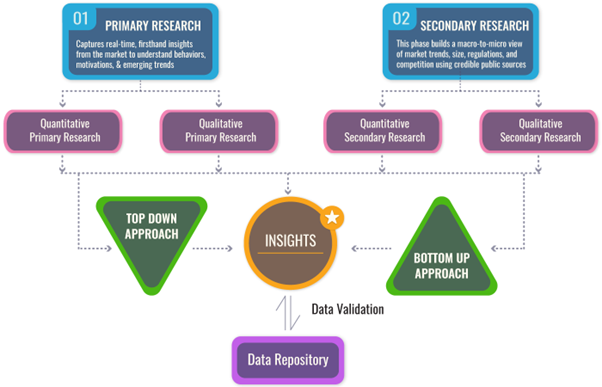
We follow a comprehensive, multi-phase research framework designed to deliver accurate, strategic, and decision-ready intelligence. Our process integrates primary and secondary research , both quantitative and qualitative , along with dual modeling techniques ( top-down and bottom-up) and a final layer of validation through our proprietary in-house repository.
PRIMARY RESEARCH
Primary research captures real-time, firsthand insights from the market to understand behaviors, motivations, and emerging trends.
1. Quantitative Primary Research
Objective: Generate statistically significant data directly from market participants.
Approaches:- Structured surveys with customers, distributors, and field agents
- Mobile-based data collection for point-of-sale audits and usage behavior
- Phone-based interviews (CATI) for market sizing and product feedback
- Online polling around industry events and digital campaigns
- Purchase frequency by customer type
- Channel performance across geographies
- Feature demand by application or demographic
2. Qualitative Primary Research
Objective: Explore decision-making drivers, pain points, and market readiness.
Approaches:- In-depth interviews (IDIs) with executives, product managers, and key decision-makers
- Focus groups among end users and early adopters
- Site visits and observational research for consumer products
- Informal field-level discussions for regional and cultural nuances
SECONDARY RESEARCH
This phase helps establish a macro-to-micro understanding of market trends, size, regulation, and competitive dynamics, sourced from credible and public domain information.
1. Quantitative Secondary Research
Objective: Model market value and segment-level forecasts based on published data.
Sources include:- Financial reports and investor summaries
- Government trade data, customs records, and regulatory statistics
- Industry association publications and economic databases
- Channel performance and pricing data from marketplace listings
- Revenue splits, pricing trends, and CAGR estimates
- Supply-side capacity and volume tracking
- Investment analysis and funding benchmarks
2. Qualitative Secondary Research
Objective: Capture strategic direction, innovation signals, and behavioral trends.
Sources include:- Company announcements, roadmaps, and product pipelines
- Publicly available whitepapers, conference abstracts, and academic research
- Regulatory body publications and policy briefs
- Social and media sentiment scanning for early-stage shifts
- Strategic shifts in market positioning
- Unmet needs and white spaces
- Regulatory triggers and compliance impact
DUAL MODELING: TOP-DOWN + BOTTOM-UP
To ensure robust market estimation, we apply two complementary sizing approaches:
Top-Down Modeling:- Start with broader industry value (e.g., global or regional TAM)
- Apply filters by segment, geography, end-user, or use case
- Adjust with primary insights and validation benchmarks
- Ideal for investor-grade market scans and opportunity mapping
- Aggregate from the ground up using sales volumes, pricing, and unit economics
- Use internal modeling templates aligned with stakeholder data
- Incorporate distributor-level or region-specific inputs
- Most accurate for emerging segments and granular sub-markets
DATA VALIDATION: IN-HOUSE REPOSITORY
We close the loop with proprietary data intelligence built from ongoing projects, industry monitoring, and historical benchmarking. This repository includes:
- Multi-sector market and pricing models
- Key trendlines from past interviews and forecasts
- Benchmarked adoption rates, churn patterns, and ROI indicators
- Industry-specific deviation flags and cross-check logic
- Catches inconsistencies early
- Aligns projections across studies
- Enables consistent, high-trust deliverables