
Dermatological Therapeutics Market Size and Forecast (2026–2034), Global and Regional Growth, Trend, Share and Industry Analysis Report Coverage: By Drug Class (Topical Corticosteroids, Retinoids, Anti-infectives (Antibiotics & Antifungals), Calcineurin Inhibitors, Biologics & Biosimilars, Small-molecule Inhibitors (PDE-4, JAK, TYK2), Immunomodulators, Others (Vitamin D Analogues, Keratolytics, etc.)), By Disease (Acne Vulgaris, Psoriasis, Atopic Dermatitis / Eczema, Alopecia Areata, Hidradenitis Suppurativa, Seborrheic Dermatitis, Rosacea, Vitiligo, Skin Infections, and Others (Contact Dermatitis, Actinic Keratosis & Rare Skin Disorders, etc.)), By Route of Administration (Topical, Oral, and Injectable), By Distribution Channel (Hospital Pharmacies, Retail Pharmacies & Drugstores, Dermatology & Aesthetic Clinics, and Online Pharmacies) and Geography
2026-07-30
Healthcare
Swetal (Research Analyst)
Description
Dermatological Therapeutics Market
Overview
The global
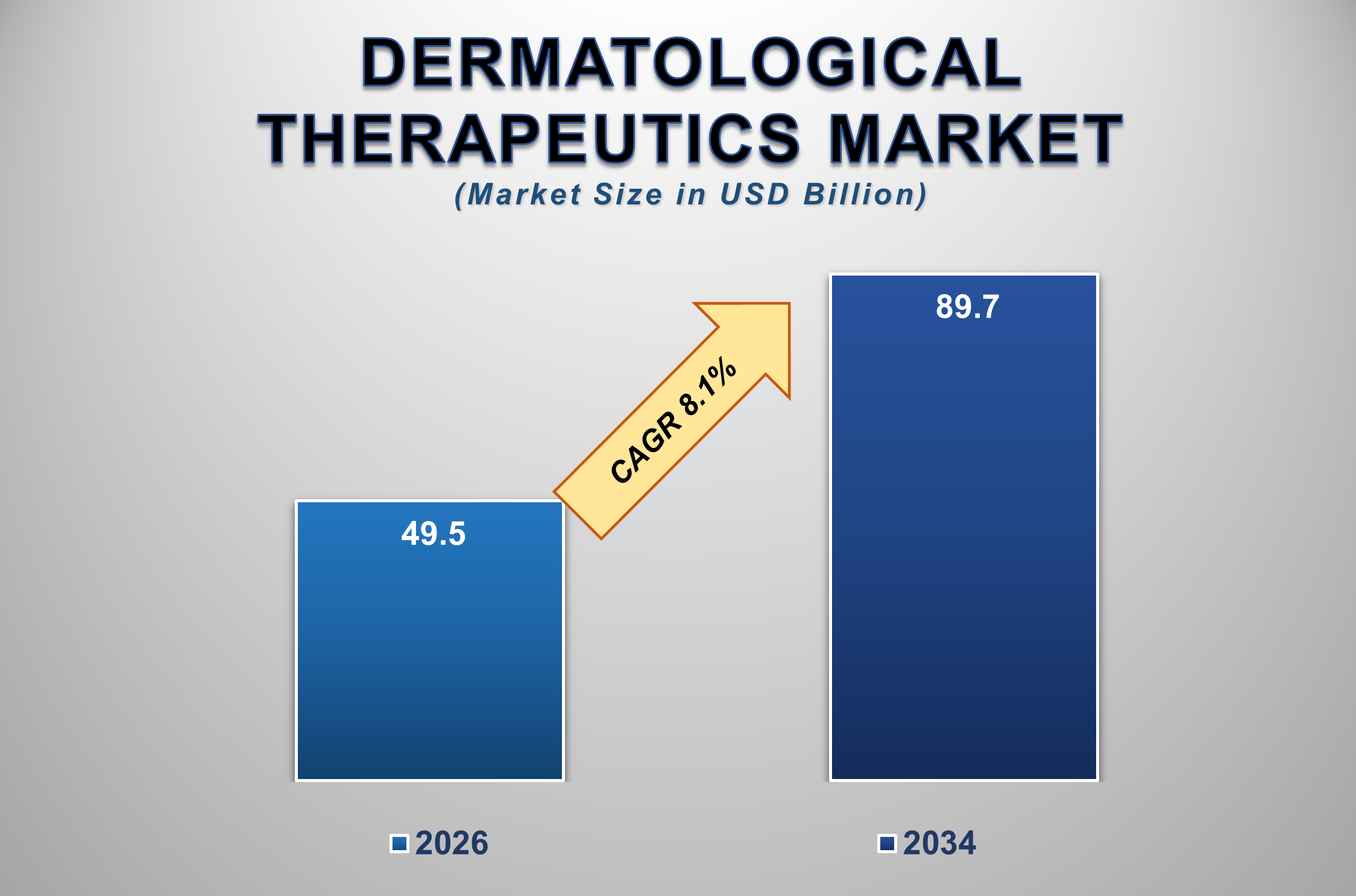
dermatological therapeutics market was valued at USD 49.5 billion in 2026 and
is projected to reach USD 89.7 billion by 2034, expanding at a CAGR of 8.1%
during the forecast period. The market is witnessing robust growth due to the
prevalence of chronic dermatological diseases such as acne, psoriasis, rosacea,
atopic dermatitis, and alopecia areata, increased awareness of skin diseases,
and the availability of dermatological solutions. Significant innovation is
underway in the dermatological therapeutics market, driven by the discovery of
biologics, small molecules, and advanced topical solutions. Trends toward
personalization, improvements in the healthcare infrastructure of developing
countries, and the rise of teledermatology are additional drivers of growth. In
addition, clinical trials, favorable regulatory support, and collaboration
among pharmaceutical companies are encouraging the launch of innovations in the
market. With the rising prevalence of dermatological conditions and patient demand
for effective solutions across the globe, the dermatological therapeutics
market is expected to witness robust growth in the coming years.
The dermatological therapeutics market is undergoing rapid change owing to advances in immunology, biotechnology, and precision medicine, reshaping the treatment landscape for skin ailments. Drug manufacturers are investing more in R&D to develop new therapeutic agents, including biological products, biosimilar drugs, and small-molecule drugs, while also enhancing existing topical and oral treatments. Rising healthcare spending, a growing number of specialty dermatology clinics, and increased demand for efficacious medicines with a better safety profile are driving the market forward. In addition, greater availability of prescription drugs from online pharmacies, increased efforts toward early diagnosis, and improved reimbursement in developed regions are improving treatment accessibility. With a promising clinical pipeline, continued approvals, and growing interest in addressing unmet therapeutic needs, the market is expected to experience steady growth in the coming years.
Dermatological Therapeutics Market
Drivers and Opportunities
Rising
Prevalence of Chronic Skin Disorders Is Driving Market Growth
The growing global
incidence of chronic skin diseases is a key factor that will propel the
dermatological therapeutics market. According to the WHO Global Action Plan on
Skin Diseases 2026-2035, skin diseases are one of the most prevalent and
disabling illnesses in the world, with 4.69 billion new cases of skin diseases
reported every year, thus making skin diseases one of the top ten leading
causes of disability in the world. The rising prevalence of skin diseases such
as acne, psoriasis, atopic dermatitis, eczema, rosacea, and chronic hand eczema
(CHE) is increasing the need for more advanced and efficient solutions for the
treatment of such diseases, which include topical treatment, biologics,
systemic treatment, and immunotherapy. Moreover, increasing awareness regarding
the effect of chronic skin diseases on patients' quality of life, it is driving
more people to recognize the importance of treating skin diseases. Following
this trend, in June 2026, LEO Pharma A/S launched an extensive scientific program
at the European Society of Contact Dermatitis (ESCD) Congress 2026, showcasing
clinical insights into the burden of disease, symptoms, and unmet treatment
needs of patients with CHE. Such scientific research and developments in
dermatology would drive further innovations and increased use of dermatological
treatments, which in turn is expected to drive the global dermatological
therapeutics market.
Advancements in
Targeted Therapies and Biologics Fueling Market Expansion
The development of
the dermatological therapeutics market may be associated with the rapid
progress made in developing targeted and biologic drugs. Pharmaceutical
companies continuously work on creating innovative monoclonal antibodies and
immune drugs that are more effective and safe and ensure the treatment of
atopic dermatitis and psoriasis for a long time. Thus, in January 2026, Sanofi
and Kyowa Kirin shared the results of Phase 3 clinical trials SHORE and COAST 2
of their drug, amlitelimab. The fully humanized non-T cell-depleting monoclonal
antibody targeting the OX40-ligand (OX40L) proved to be extremely effective and
tolerable for patients aged 12 years and older with moderate-to-severe atopic
dermatitis. Moreover, in February 2026, Vanda Pharmaceuticals announced that
the FDA had approved the BLA of imsidolimab to treat GPP (generalized pustular
psoriasis). All these advancements in targeted drugs cause significant changes
in the methods used in dermatology therapy.
Expansion in
Emerging Markets and Digital Dermatology Present Significant Opportunities
The emerging
economies of the Asia Pacific, Latin America, the Middle East, and Africa have
been contributing significantly towards the development of the market for
dermatological therapeutics due to enhanced healthcare infrastructures, higher
income levels, increasing penetration of health insurance, and heightened
awareness about skin conditions. The governments of many developing countries
are concentrating on strengthening their healthcare infrastructures as well as
providing easy access to healthcare services so that the chronic diseases of
the skin such as psoriasis, atopic dermatitis, acne, and vitiligo can be
diagnosed and treated at the earliest possible time.
Concurrently, rapid proliferation of digital health technology is revolutionizing the process of providing dermatological care. Teledermatology technologies make it possible for patients to receive a dermatologist’s consultation through online means and overcome geographical barriers as well as the problem of shortages of specialists and provide more timely diagnoses and prescription medication. The development of e-pharmacies and services for remote prescription of medications makes access to prescription and over-the-counter dermatological drugs easier and contributes to better medication adherence and patient satisfaction. Furthermore, technologies of artificial intelligence-based diagnosis and remote monitoring of patients improve clinical decision-making and patient care. With growing maturity of digital health environments and higher penetration of the Internet worldwide, pharmaceutical companies have an opportunity to enhance patient engagement and market penetration and promote dermatological treatments in emerging and high-growth markets.
Dermatological Therapeutics Market
Scope
|
Report Attributes |
Description |
|
Market Size in
2026 |
USD 49.5
Billion |
|
Market Forecast
in 2034 |
USD 89.7
Billion |
|
CAGR % 2026-2034 |
8.1% |
|
Base Year |
2025 |
|
Historic Data |
2021-2025 |
|
Forecast Period |
2026-2034 |
|
Report USP |
Pipeline &
Innovation Insights, Disease Epidemiology, Consumer Analysis, Whitespace
Assessment, Company Share, Company Heatmap, Growth Factors and more |
|
Segments Covered |
●
By Drug
Class ●
By
Disease ●
By Route
of Administration ●
By
Distribution Channel |
|
Regional Scope |
●
North
America ●
Europe ●
APAC ●
Latin
America ●
Middle
East and Africa |
|
Country Scope |
●
U.S. ●
Canada ●
U.K. ●
Germany ●
France ●
Italy ●
Spain ●
Russia ●
China ●
India ●
Japan ●
South
Korea ●
Australia
●
Mexico ●
Brazil ●
Saudi
Arabia ●
UAE ●
South
Africa
|
Dermatological Therapeutics Market
Report Segmentation Analysis
The global
dermatological therapeutics market industry analysis is segmented by drug
class, by disease, by route of administration, by distribution channel, and by
region.
Topical
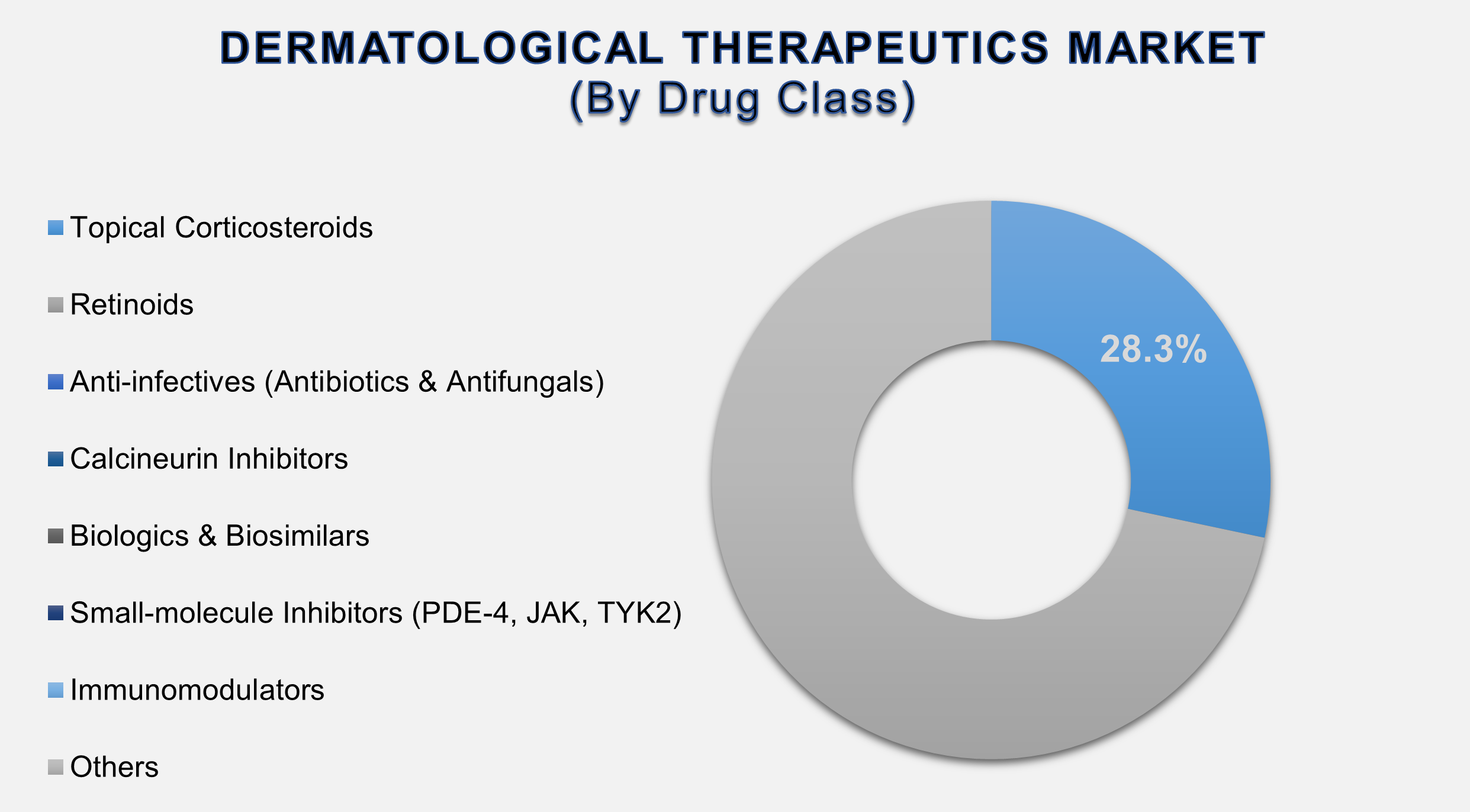
Corticosteroids Segment Is Expected to Dominate the Dermatological Therapeutics
Market During the Forecast Period
The continuous
investments in advanced topical treatments for those patients who show
insufficient response to topical corticosteroids are pushing the boundaries of
the dermatological drug market in terms of expanding the range of topical
treatments available for dermatology. A significant amount of clinical research
conducted by pharmaceutical companies aims to enhance treatment outcomes,
increase the safety of the treatments, and improve the level of compliance to
treat inflammatory skin conditions like atopic dermatitis. For example, in
October 2025, Incyte Company reported favorable Phase 3b TRuE-AD4 study results
revealing the superiority of Opzelura (ruxolitinib cream) in improving the
severity of the disease and its associated itching in adults suffering from
moderate atopic dermatitis with inadequate response to topical corticosteroids
and topical calcineurin inhibitors. Thus, there is a tendency toward
improvement of corticosteroid-based treatment approaches, including the
combination therapy, which strengthens the role of topical corticosteroids in
dermatology.
Acne Vulgaris
Segment Is Expected to Lead the Dermatological Therapeutics Market by Disease
Acne vulgaris is
projected to dominate the dermatological therapeutics market based on the
disease because of its higher prevalence across the globe, rising prevalence in
the adolescent and adult populations, and rising demand for treatment solutions
from prescription and OTC medicines. The increasing awareness about skin care,
the increasing number of consultations with dermatologists, and the constant
development of new products like topical retinoids, antibiotics, hormonal
therapies, and biologics for the management of severe acne are driving the
market. Apart from these, factors like lifestyle changes, hormonal disorders,
pollution, and stress are contributing to the rising population with acne
vulgaris who require treatment. There have been significant research and
development efforts from pharmaceutical companies to develop better therapies,
which have a safer side effects profile and higher compliance, along with the
development of teledermatology and online pharmacy platforms for providing more
avenues for the treatment of acne.
Topical Segment
Is Expected to Dominate the Route of Administration Segment
The topical route
of administration is forecasted to be one of the major dermatological
therapeutics market routes of administration since it is widely used as the
first-line treatment for various skin disorders, including acne, atopic
dermatitis, psoriasis, fungal infection, rosacea, and eczema. The use of
topical formulations like creams, ointments, gels, lotions, foam, and spray,
among many others, helps in administering the medicine directly to the affected
area of the body; hence, systemic absorption of the medicine is not required,
and therefore, side effects are reduced. With the existence of various
prescription and OTC medicines available in the market along with the patient's
preference towards noninvasive and convenient means of applying medications,
there will be an increasing demand for the route. Moreover, with the emergence
of new topical drug delivery technologies and new topical medicines for
treating chronic skin conditions, the route of administration will definitely
secure its place as the dominating market segment.
The following
segments are part of an in-depth analysis of the global dermatological
therapeutics market:
|
Market Segments |
|
|
By
Drug Class |
●
Topical
Corticosteroids ●
Retinoids ●
Anti-infectives
(Antibiotics & Antifungals) ●
Calcineurin
Inhibitors ●
Biologics
& Biosimilars ●
Small-molecule
Inhibitors (PDE-4, JAK, TYK2) ●
Immunomodulators ●
Others
(Vitamin D Analogues, Keratolytics, etc.) |
|
By
Disease |
●
Acne
Vulgaris ●
Psoriasis ●
Atopic
Dermatitis / Eczema ●
Alopecia
Areata ●
Hidradenitis
Suppurativa ●
Seborrheic
Dermatitis ●
Rosacea ●
Vitiligo ●
Skin
Infections ●
Others
(Contact Dermatitis, Actinic Keratosis & Rare Skin Disorders, etc.) |
|
By
Route of Administration |
●
Topical ●
Oral ●
Injectable |
|
By
Distribution Channel |
●
Hospital
Pharmacies ●
Retail
Pharmacies & Drugstores ●
Dermatology
& Aesthetic Clinics ●
Online
Pharmacies |
Dermatological Therapeutics Market
Share Analysis by Region
North America is
projected to hold the largest share of the global dermatological therapeutics
market over the forecast period
North America
accounted for approximately 41.25% of the global dermatological therapeutics
market in 2026, making it the largest regional market. North America is
expected to account for a major share of the global dermatological therapeutics
market in the forecast period due to the high incidence rate of skin disorders,
well-developed healthcare infrastructure, availability of key players, and fast
adoption of dermatological therapeutics. North America has the advantage of
good reimbursement policies, active research and development activities, and
rising expenditure by consumers on both prescription and aesthetic
dermatological therapies. Product launches and channel expansion continue to
drive the growth in the market. As an example, Bausch Health Companies Inc.
announced in April 2026 that Biafine Skin Recovery Emulsion was now available
for convenient online purchase throughout the US through certain digital
channels under its dermatology division called Ortho Dermatologics. This will
increase access for consumers to clinically proven skincare products and show
the trend towards e-commerce and direct-to-consumer channel expansion in
dermatologicals, which will further solidify North America's position in the
global dermatological therapeutics market.
Asia Pacific is
forecasted to show the fastest growth in the global dermatological therapeutics
market due to the region's rapidly growing population and the growing
prevalence of skin disorders across Asia due to environmental changes and
increasing levels of urbanization and industrialization of developing
economies. These changes are coupled with community shifts in lifestyle and
increasing healthcare investments across various nations, including China,
India, Japan, and South Korea, in their dermatological care. The expansion of
government-funded dermatological care is increasing the accessibility of
advanced topical and biologic therapies in the region. Rapid growth in the
availability of dermatology clinics is further expanding the market. Asia Pacific
region is also becoming popular for pharmaceutical investments, therapeutic and
clinical research, and local manufacturing. Further growth in e-pharmacies and
teledermatology is improving patient access to dermatological care.
Dermatological
Therapeutics Market Competition Landscape Analysis
The dermatological
therapeutics market requires companies to be ever vigilant and adaptive to new
competition, particularly among the leading pharmaceutical and biotechnology
companies. These markets focus heavily on innovation and product development
and utilize collaborations as strategic advantages. Chronic dermatological
diseases, including atopic dermatitis, psoriasis, acne, and skin infections,
are receiving advanced topical formulations and therapeutics as manufacturers
invest in specialized and novel drug delivery systems and therapeutics. Chronic
dermatological diseases are the focus of research due to the growing unmet need
for these diseases. Chronic dermatological diseases are also the focus of
research due to the growing unmet need for these diseases. Additionally,
growing digital technologies, particularly in health and dermatology, along
with enhanced patient engagement technologies and services, support
manufacturers in capturing increased needs for dermatological services.
Global
Dermatological Therapeutics Market Recent Developments News:
● In April 2026 – LEO Pharma, a global leader in medical dermatology delivering innovative solutions for skin health, announced that it has entered into a definitive agreement to acquire Replay, a gene therapy company focused on developing transformative treatments for rare genetic dermatological conditions. The acquisition adds deep expertise and a next-generation gene therapy platform to LEO Pharma’s pipeline through Replay’s high‑payload herpes simplex virus (HSV) delivery vector.
● In March 2026 – Takeda announced new data from the two pivotal Phase 3 studies of zasocitinib (TAK-279), a next-generation, highly selective oral tyrosine kinase 2 (TYK2) inhibitor, in adults with moderate-to-severe plaque psoriasis (PsO). Presented as a late-breaking abstract at the 2026 American Academy of Dermatology (AAD) Annual Meeting, these data show that convenient once-daily oral zasocitinib demonstrated rapid and durable skin clearance with a safety profile consistent with Phase 2b studies.
● In May 2026 – Bristol Myers Squibb announced that the European Commission has granted approval to Sotyktu (deucravacitinib), alone or in combination with methotrexate, for the treatment of active psoriatic arthritis (PsA) in adults who have had an inadequate response or who have been intolerant to a prior disease-modifying antirheumatic (DMARD) therapy. Sotyktu, a once-daily oral, selective tyrosine kinase 2 (TYK2) inhibitor, is the first TYK2 inhibitor to be approved for the treatment of active PsA in the European Union (EU).
● In November 2025 – Arcutis Biotherapeutics, Inc., a commercial-stage biopharmaceutical company focused on developing meaningful innovations in immuno-dermatology, announced the FDA acceptance of a supplemental New Drug Application (sNDA) for ZORYVE (roflumilast) cream 0.3%, a once-daily, advanced targeted topical phosphodiesterase-4 (PDE4) inhibitor, to expand the indication for the topical treatment of plaque psoriasis to include children 2 to 5 years old. The FDA has set a PDUFA target action date of June 29, 2026, for this application.
The Global
Dermatological Therapeutics Market is dominated by
a few large companies, such as
●
AbbVie Inc.
●
Amgen Inc.
●
Arcutis Biotherapeutics
●
Bausch Health Companies Inc.
●
Bayer AG
●
Bristol-Myers Squibb
●
Eli Lilly and Company
●
Galderma S.A.
●
Glenmark Pharmaceuticals Ltd.
●
Johnson & Johnson Services Inc.
●
LEO Pharma A/S
●
Merck & Co. Inc.
●
Novartis AG
●
Pfizer Inc.
●
Regeneron Pharmaceuticals Inc.
●
Sanofi
●
Sun Pharmaceutical Industries Ltd.
●
Teva Pharmaceutical Industries Ltd.
●
Viatris Inc.
● Other Prominent Players
Frequently Asked Questions
Swetal (Research Analyst)
Swetal is a Research Analyst with 4+ years of experience specializing in healthcare market research, medical devices, healthcare IT, and medical technology industry analysis. Her expertise includes competitive intelligence, secondary research, market trend forecasting, and healthcare business insights across global healthcare ecosystems.
She contributes to advanced market research reports by analyzing regulatory frameworks, emerging healthcare technologies, competitive landscapes, and innovation trends shaping the medical industry. With a strong focus on accurate market intelligence, strategic insights, and healthcare industry trends, Swetal supports businesses in making informed, data-backed decisions in a rapidly transforming healthcare environment.
1.
Global
Dermatological Therapeutics Market Introduction and Market Overview
1.1. Objectives of the Study
1.2. Market Segmentation
1.2.1.Drug Class of the Global Dermatological
Therapeutics Market
1.2.2.Diseases of the Global Dermatological
Therapeutics Market
1.2.3.Route of Administration of
Global Dermatological Therapeutics Market
1.2.4.Distribution Channel of Global Dermatological
Therapeutics Market
1.2.5.Region of Global Dermatological
Therapeutics Market
1.3. Competition Coverage List of
Market Participants
1.4. Market Definition: Dermatological
Therapeutics Market
2.
Executive Summary
2.1. Global Dermatological
Therapeutics Market Estimation & Forecast
2.1.1.Global Dermatological
Therapeutics Market Size (US$ Million) Estimates & Historical Trend
Analysis (2021 - 2025)
2.1.2.Global Dermatological
Therapeutics Overall Market Size (US$ Million), Growth Rate (Y-o-Y), Market
CAGR (%), Market forecast (2026 - 2034)
2.2. Snapshot of Global Dermatological
Therapeutics Market
2.3. Global Dermatological
Therapeutics Market Revenue Share (%) 2025
2.4. REGIONAL OUTLINE: Revenue CAGR,
by Region
2.5. Key Competitors & Key
Insights
3.
Market Overview (Qualitative
Analysis)
3.1. Demand Side Trends
3.2. Supply Side Trends /
Manufacturing Trends
3.3. Demand and Opportunity
Assessment, 2026 - 2034
3.4. Market Dynamics
3.4.1.Drivers
3.4.2.Limitations
3.4.3.Opportunities
3.4.4.Impact Analysis of Drivers and
Restraints
3.5. Key Developments
3.6. Regulatory Landscape
3.7. Pricing Analysis
3.8. Supply Chain Analysis
3.9. Porter’s Five Forces Analysis
3.9.1.Bargaining Power of Suppliers
3.9.2.Bargaining Power of Buyers
3.9.3.Threat of Substitutes
3.9.4.Threat of New Entrants
3.9.5.Competitive Rivalry
3.10. PEST Analysis
3.10.1. Political Factors
3.10.2. Economic Factors
3.10.3. Social Factors
3.10.4. Technology Factors
4.
Global Dermatological
Therapeutics Market Estimates & Forecast Trend Analysis, by Drug Class
4.1. Global Dermatological
Therapeutics Market Assessments & Key Findings, by Drug Class
4.2. Global Dermatological
Therapeutics Market Revenue (US$ Million) Estimates and Forecasts, by Drug
Class, 2021 - 2034
4.2.1.Topical Corticosteroids
4.2.2.Retinoids
4.2.3.Anti-infectives (Antibiotics
& Antifungals)
4.2.4.Calcineurin Inhibitors
4.2.5.Biologics & Biosimilars
4.2.6.Small-molecule Inhibitors
(PDE-4, JAK, TYK2)
4.2.7.Immunomodulators
4.2.8.Others (Vitamin D Analogues,
Keratolytics, etc.)
5.
Global Dermatological
Therapeutics Market Estimates & Forecast Trend Analysis, by Disease
5.1. Global Dermatological
Therapeutics Market Assessments & Key Findings, by Disease
5.2. Global Dermatological
Therapeutics Market Revenue (US$ Million) Estimates and Forecasts, by Disease, 2021
- 2034
5.2.1.Acne Vulgaris
5.2.2.Psoriasis
5.2.3.Atopic Dermatitis / Eczema
5.2.4.Alopecia Areata
5.2.5.Hidradenitis Suppurativa
5.2.6.Seborrheic Dermatitis
5.2.7.Rosacea
5.2.8.Vitiligo
5.2.9.Skin Infections
5.2.10. Others (Contact Dermatitis,
Actinic Keratosis & Rare Skin Disorders, etc.)
6.
Global Dermatological
Therapeutics Market Estimates & Forecast Trend Analysis, by Route of
Administration
6.1. Global Dermatological
Therapeutics Market Assessments & Key Findings, by Route of Administration
6.2. Global Dermatological
Therapeutics Market Revenue (US$ Million) Estimates and Forecasts, by Route of
Administration, 2021 - 2034
6.2.1.Topical
6.2.2.Oral
6.2.3.Injectable
7.
Global Dermatological
Therapeutics Market Estimates & Forecast Trend Analysis, by Distribution
Channel
7.1. Global Dermatological
Therapeutics Market Assessments & Key Findings, by Distribution Channel
7.2. Global Dermatological
Therapeutics Market Revenue (US$ Million) Estimates and Forecasts, by Distribution
Channel, 2021 - 2034
7.2.1.Hospital Pharmacies
7.2.2.Retail Pharmacies &
Drugstores
7.2.3.Dermatology & Aesthetic
Clinics
7.2.4.Online Pharmacies
8.
Global Dermatological
Therapeutics Market Estimates & Forecast Trend Analysis, by Region
8.1. Global Dermatological
Therapeutics Market Assessments & Key Findings, by Region
8.2. Global Dermatological
Therapeutics Market Revenue (US$ Million) Estimates and Forecasts, by Region, 2021
- 2034
8.2.1.North America
8.2.2.Europe
8.2.3.Asia Pacific
8.2.4.Middle East & Africa
8.2.5.Latin America
9.
North
America Dermatological Therapeutics Market: Estimates & Forecast Trend Analysis
9.1.
North
America Dermatological Therapeutics Market Assessments & Key Findings
9.1.1.North America Dermatological
Therapeutics Market Introduction
9.1.2.North America Dermatological
Therapeutics Market Size Estimates and Forecast (US$ Million) (2021 - 2034)
9.1.2.1. By Drug Class
9.1.2.2. By Disease
9.1.2.3. By Route of Administration
9.1.2.4. By Distribution Channel
9.1.2.5. By Country
9.1.2.5.1. The U.S.
9.1.2.5.2. Canada
10. Europe Dermatological
Therapeutics Market: Estimates &
Forecast Trend Analysis
10.1. Europe Dermatological
Therapeutics Market Assessments & Key Findings
10.1.1. Europe Dermatological Therapeutics
Market Introduction
10.1.2. Europe Dermatological
Therapeutics Market Size Estimates and Forecast (US$ Million) (2021 - 2034)
10.1.2.1. By Drug Class
10.1.2.2. By Disease
10.1.2.3. By Route of Administration
10.1.2.4. By Distribution Channel
10.1.2.5. By Country
10.1.2.5.1.
Germany
10.1.2.5.2.
Italy
10.1.2.5.3.
U.K.
10.1.2.5.4.
France
10.1.2.5.5.
Spain
10.1.2.5.6.
Switzerland
10.1.2.5.7. Rest
of Europe
11. Asia Pacific Dermatological
Therapeutics Market: Estimates &
Forecast Trend Analysis
11.1. Asia Pacific Market Assessments
& Key Findings
11.1.1. Asia Pacific Dermatological
Therapeutics Market Introduction
11.1.2. Asia Pacific Dermatological
Therapeutics Market Size Estimates and Forecast (US$ Million) (2021 - 2034)
11.1.2.1. By Drug Class
11.1.2.2. By Disease
11.1.2.3. By Route of Administration
11.1.2.4. By Distribution Channel
11.1.2.5. By Country
11.1.2.5.1. China
11.1.2.5.2. Japan
11.1.2.5.3. India
11.1.2.5.4. Australia
11.1.2.5.5. South Korea
11.1.2.5.6. Rest of Asia Pacific
12. Middle East & Africa Dermatological
Therapeutics Market: Estimates &
Forecast Trend Analysis
12.1. Middle East & Africa Market
Assessments & Key Findings
12.1.1. Middle
East & Africa Dermatological
Therapeutics Market Introduction
12.1.2. Middle
East & Africa Dermatological
Therapeutics Market Size Estimates and Forecast (US$ Million) (2021 - 2034)
12.1.2.1. By Drug Class
12.1.2.2. By Disease
12.1.2.3. By Route of Administration
12.1.2.4. By Distribution Channel
12.1.2.5. By Country
12.1.2.5.1. South Africa
12.1.2.5.2. UAE
12.1.2.5.3. Saudi Arabia
12.1.2.5.4. Rest of MEA
13. Latin America
Dermatological Therapeutics Market:
Estimates & Forecast Trend Analysis
13.1. Latin America Market Assessments
& Key Findings
13.1.1. Latin America Dermatological
Therapeutics Market Introduction
13.1.2. Latin America Dermatological
Therapeutics Market Size Estimates and Forecast (US$ Million) (2021 - 2034)
13.1.2.1. By Drug Class
13.1.2.2. By Disease
13.1.2.3. By Route of Administration
13.1.2.4. By Distribution Channel
13.1.2.5. By Country
13.1.2.5.1. Brazil
13.1.2.5.2. Mexico
13.1.2.5.3. Argentina
13.1.2.5.4. Rest of LATAM
14. Competition Landscape
14.1. Global Dermatological
Therapeutics Market Product Mapping
14.2. Global Dermatological Therapeutics
Market Concentration Analysis, by Leading Players / Innovators / Emerging
Players / New Entrants
14.3. Global Dermatological
Therapeutics Market Tier Structure Analysis
14.4. Global Dermatological
Therapeutics Market Concentration & Company Market Shares (%) Analysis, 2025
15. Company Profiles
15.1. AbbVie Inc.
15.1.1. Company Overview & Key Stats
15.1.2. Financial Performance & KPIs
15.1.3. Product Portfolio
15.1.4. SWOT Analysis
15.1.5. Business Strategy & Recent
Developments
* Similar details would be provided
for all the players mentioned below
15.2.
Amgen Inc.
15.3.
Arcutis Biotherapeutics
15.4.
Bausch Health Companies Inc.
15.5.
Bayer AG
15.6.
Bristol-Myers Squibb
15.7.
Eli Lilly and Company
15.8.
Galderma S.A.
15.9.
Glenmark Pharmaceuticals Ltd.
15.10.
Johnson & Johnson Services
Inc.
15.11.
LEO Pharma A/S
15.12.
Merck & Co. Inc.
15.13.
Novartis AG
15.14.
Pfizer Inc.
15.15.
Regeneron Pharmaceuticals Inc.
15.16.
Sanofi
15.17.
Sun Pharmaceutical Industries
Ltd.
15.18.
Teva Pharmaceutical Industries
Ltd.
15.19. Viatris Inc.
15.20. Other Prominent Players
16. Research
Findings & Conclusion
17. Assumption & Acronyms Used
18. Research
Methodology
18.1. External Transportations / Databases
18.2. Internal Proprietary Database
18.3. Primary Research
18.4. Secondary Research
18.5. Assumptions
18.6. Limitations
18.7. Report FAQs
Our Research Methodology
"Insight without rigor is just noise."
We follow a comprehensive, multi-phase research framework designed to deliver accurate, strategic, and decision-ready intelligence. Our process integrates primary and secondary research , both quantitative and qualitative , along with dual modeling techniques ( top-down and bottom-up) and a final layer of validation through our proprietary in-house repository.
PRIMARY RESEARCH
Primary research captures real-time, firsthand insights from the market to understand behaviors, motivations, and emerging trends.
1. Quantitative Primary Research
Objective: Generate statistically significant data directly from market participants.
Approaches:- Structured surveys with customers, distributors, and field agents
- Mobile-based data collection for point-of-sale audits and usage behavior
- Phone-based interviews (CATI) for market sizing and product feedback
- Online polling around industry events and digital campaigns
- Purchase frequency by customer type
- Channel performance across geographies
- Feature demand by application or demographic
2. Qualitative Primary Research
Objective: Explore decision-making drivers, pain points, and market readiness.
Approaches:- In-depth interviews (IDIs) with executives, product managers, and key decision-makers
- Focus groups among end users and early adopters
- Site visits and observational research for consumer products
- Informal field-level discussions for regional and cultural nuances
SECONDARY RESEARCH
This phase helps establish a macro-to-micro understanding of market trends, size, regulation, and competitive dynamics, sourced from credible and public domain information.
1. Quantitative Secondary Research
Objective: Model market value and segment-level forecasts based on published data.
Sources include:- Financial reports and investor summaries
- Government trade data, customs records, and regulatory statistics
- Industry association publications and economic databases
- Channel performance and pricing data from marketplace listings
- Revenue splits, pricing trends, and CAGR estimates
- Supply-side capacity and volume tracking
- Investment analysis and funding benchmarks
2. Qualitative Secondary Research
Objective: Capture strategic direction, innovation signals, and behavioral trends.
Sources include:- Company announcements, roadmaps, and product pipelines
- Publicly available whitepapers, conference abstracts, and academic research
- Regulatory body publications and policy briefs
- Social and media sentiment scanning for early-stage shifts
- Strategic shifts in market positioning
- Unmet needs and white spaces
- Regulatory triggers and compliance impact
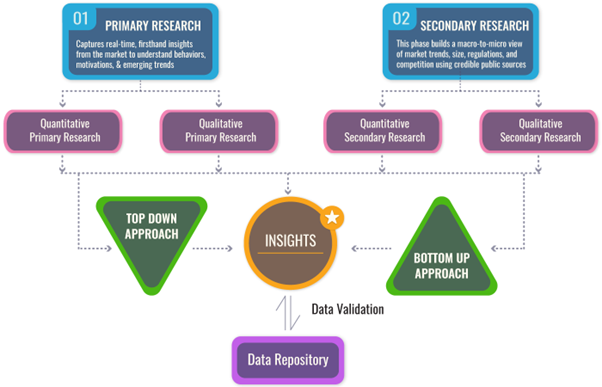
DUAL MODELING: TOP-DOWN + BOTTOM-UP
To ensure robust market estimation, we apply two complementary sizing approaches:
Top-Down Modeling:- Start with broader industry value (e.g., global or regional TAM)
- Apply filters by segment, geography, end-user, or use case
- Adjust with primary insights and validation benchmarks
- Ideal for investor-grade market scans and opportunity mapping
- Aggregate from the ground up using sales volumes, pricing, and unit economics
- Use internal modeling templates aligned with stakeholder data
- Incorporate distributor-level or region-specific inputs
- Most accurate for emerging segments and granular sub-markets
DATA VALIDATION: IN-HOUSE REPOSITORY
We close the loop with proprietary data intelligence built from ongoing projects, industry monitoring, and historical benchmarking. This repository includes:
- Multi-sector market and pricing models
- Key trendlines from past interviews and forecasts
- Benchmarked adoption rates, churn patterns, and ROI indicators
- Industry-specific deviation flags and cross-check logic
- Catches inconsistencies early
- Aligns projections across studies
- Enables consistent, high-trust deliverables