

Dermatology Devices Market Size and Forecast (2026–2034), Global and Regional Growth, Trend, Share and Industry Analysis Report Coverage; By Product Type (Diagnostic Devices, Treatment Devices); By Application (Skin Cancer Diagnosis, Acne Treatment, Psoriasis Treatment, Skin Rejuvenation, Hair Removal, Wrinkle Reduction, Tattoo Removal, Others); By End User (Hospitals, Dermatology Clinics, Cosmetic Centers, Ambulatory Surgical Centers, Research Institutes, Others); By Technology (Laser-Based Devices, Light Therapy Devices, Radiofrequency Devices, Dermatoscopes, Imaging Systems, Cryotherapy Devices, Others), and Geography
2026-06-22
Healthcare
Swetal (Research Analyst)
Description
Dermatology Devices Market Overview
The global Dermatology
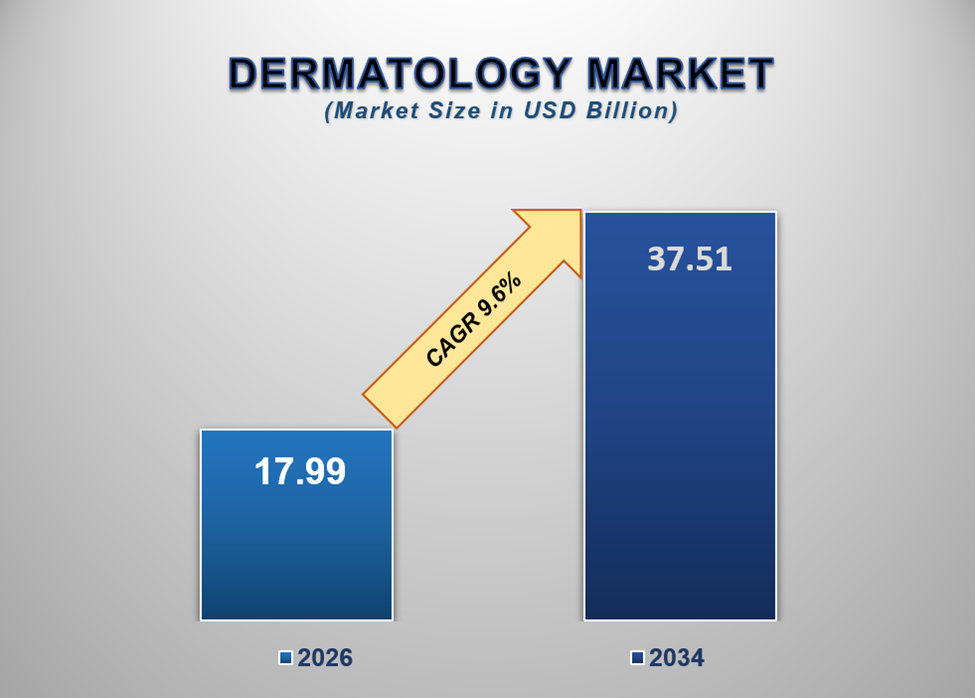
Devices Market was valued at USD 17.99 billion in 2026 and is
projected to reach USD 37.51 billion by 2034, expanding at a CAGR of 9.6%
during the forecast period. The market is experiencing robust growth due to
the increasing prevalence of skin disorders, rising demand for aesthetic and
cosmetic procedures, growing awareness regarding early skin disease diagnosis,
technological advancements in dermatological equipment, and increasing
healthcare expenditures across developed and emerging economies.
Dermatology
devices have become an integral part of modern healthcare and aesthetic
medicine, enabling healthcare professionals to diagnose, monitor, and treat a
wide range of skin conditions with greater precision, safety, and
effectiveness. These devices encompass various technologies, including lasers,
imaging systems, dermatoscopes, cryotherapy equipment, radiofrequency systems,
and advanced light-based treatment platforms.
The growing
global burden of skin diseases is one of the primary factors supporting market
expansion. Skin disorders such as acne, eczema, psoriasis, rosacea, vitiligo,
fungal infections, and skin cancers affect millions of individuals worldwide.
The increasing incidence of these conditions has significantly increased the
demand for advanced diagnostic and therapeutic dermatology solutions.
Skin cancer
represents a particularly important growth driver for the market. Rising
exposure to ultraviolet radiation, environmental pollution, lifestyle changes,
and aging populations have contributed to an increase in skin cancer cases
globally. Early diagnosis plays a critical role in improving treatment
outcomes, driving demand for sophisticated diagnostic devices such as digital
dermatoscopes and imaging systems.
The aesthetic
dermatology sector is also experiencing remarkable growth. Consumers are
increasingly seeking minimally invasive cosmetic procedures aimed at improving
skin appearance, reducing signs of aging, eliminating unwanted hair, removing
tattoos, and addressing pigmentation concerns. Dermatology devices provide
effective treatment options with reduced downtime and improved patient
satisfaction compared to traditional surgical procedures.
Technological
innovation continues to transform the dermatology device landscape. Modern
systems increasingly incorporate artificial intelligence, machine learning
algorithms, high-resolution imaging capabilities, automated lesion analysis,
and personalized treatment planning features. These advancements improve
diagnostic accuracy while enhancing treatment precision.
Furthermore,
growing awareness regarding personal appearance, increasing disposable incomes,
expanding medical tourism activities, and the rising influence of social media
platforms are encouraging greater adoption of aesthetic dermatology procedures
worldwide.
Healthcare
providers are also increasingly investing in advanced dermatology equipment to
improve service offerings, attract patients, and enhance clinical outcomes.
This trend is particularly evident in specialized dermatology clinics, cosmetic
centers, and multi-specialty hospitals.
As demand for both medical and aesthetic dermatology services continues to rise, the dermatology devices market is expected to experience sustained growth through 2034.
Dermatology Devices Market Drivers
and Opportunities
Rising
Prevalence of Skin Disorders Is Driving Market Growth
One of the most
significant factors contributing to market growth is the increasing incidence
of skin-related diseases and conditions worldwide.
Skin disorders
affect individuals across all age groups and represent one of the most common
healthcare concerns globally. Conditions such as acne, psoriasis, eczema,
dermatitis, fungal infections, and skin cancer require accurate diagnosis and
effective treatment solutions.
The increasing
prevalence of chronic skin conditions is creating substantial demand for
advanced dermatological equipment capable of supporting early diagnosis,
disease monitoring, and personalized treatment planning. Dermatologists are
increasingly utilizing sophisticated imaging systems, dermatoscopes, and
digital diagnostic platforms to improve clinical outcomes.
Additionally,
aging populations are contributing to higher rates of skin-related health
issues, including age-related pigmentation disorders, wrinkles, skin laxity,
and various dermatological diseases.
Growing
awareness regarding the importance of early diagnosis and preventive healthcare
is encouraging more individuals to seek professional dermatological
evaluations, further strengthening market demand.
As skin disease incidence continues to rise globally, demand for advanced dermatology devices is expected to increase significantly.
Growing
Demand for Aesthetic and Cosmetic Procedures Is Accelerating Market Expansion
The rapid growth
of the aesthetic medicine industry is another major driver of the dermatology
devices market.
Consumers
increasingly prioritize personal appearance, skin health, and anti-aging
treatments. As a result, demand for minimally invasive cosmetic procedures has
increased substantially over the past decade.
Dermatology
devices are widely utilized for skin resurfacing, wrinkle reduction, hair
removal, pigmentation correction, body contouring, acne scar treatment, and
tattoo removal. These procedures offer effective results with shorter recovery
periods compared to traditional surgical interventions.
Social media
influence, celebrity endorsements, increasing beauty consciousness, and rising
disposable incomes are further encouraging individuals to pursue cosmetic
dermatology treatments.
The younger
population is also increasingly seeking preventive aesthetic procedures aimed
at maintaining skin quality and delaying visible signs of aging. This trend is
expanding the addressable market for dermatology devices.
Furthermore,
medical spas, cosmetic centers, and aesthetic clinics are rapidly expanding
service offerings to meet growing consumer demand, creating significant
opportunities for device manufacturers.
As aesthetic medicine continues gaining mainstream acceptance, the dermatology devices market is expected to benefit considerably.
Artificial
Intelligence and Advanced Imaging Technologies Present Significant
Opportunities
Emerging
technologies are creating transformative opportunities within the dermatology
devices market.
Artificial
intelligence is increasingly being integrated into dermatology diagnostics to
improve lesion detection, skin cancer screening, image analysis, and clinical
decision-making. AI-powered systems can assist healthcare professionals by
identifying suspicious skin abnormalities with greater accuracy and efficiency.
Advanced imaging
technologies such as three-dimensional skin mapping, multispectral imaging,
optical coherence tomography, and high-resolution digital dermoscopy are
enhancing diagnostic capabilities while supporting more personalized treatment
approaches.
Teledermatology
is another rapidly growing area creating new opportunities for device
manufacturers. Remote consultation platforms increasingly utilize digital
imaging devices and AI-assisted diagnostic tools to improve healthcare
accessibility, particularly in underserved regions.
Additionally,
the development of portable and handheld dermatology devices is enabling
point-of-care diagnostics and expanding market penetration beyond traditional
clinical settings.
The integration
of digital health technologies, cloud-based analytics, and connected diagnostic
platforms is expected to further accelerate innovation within the market.
Organizations
investing in intelligent, data-driven dermatology solutions are likely to
benefit from significant growth opportunities over the coming years.
Dermatology Devices Market Scope
|
Report Attributes |
Description |
|
Market Size in 2026 |
USD 17.99 Billion |
|
Market Forecast in 2034 |
USD 37.51 Billion |
|
CAGR % 2026-2034 |
9.6% |
|
Base Year |
2025 |
|
Historic Data |
2021-2025 |
|
Forecast Period |
2026-2034 |
|
Report USP |
Production, Consumption,
Company Share, Company Heatmap, Company Production, Service Type, Growth
Factors and more |
|
Segments Covered |
∙ By Product Type |
|
Regional Scope |
● North America |
|
Country Scope |
U.S. |
Dermatology
Devices Market Report Segmentation Analysis
The global dermatology devices market industry analysis is segmented by product type, by application, by end user, by technology, and by region.
The Treatment
Devices Segment Is Expected to Dominate the Market During the Forecast Period
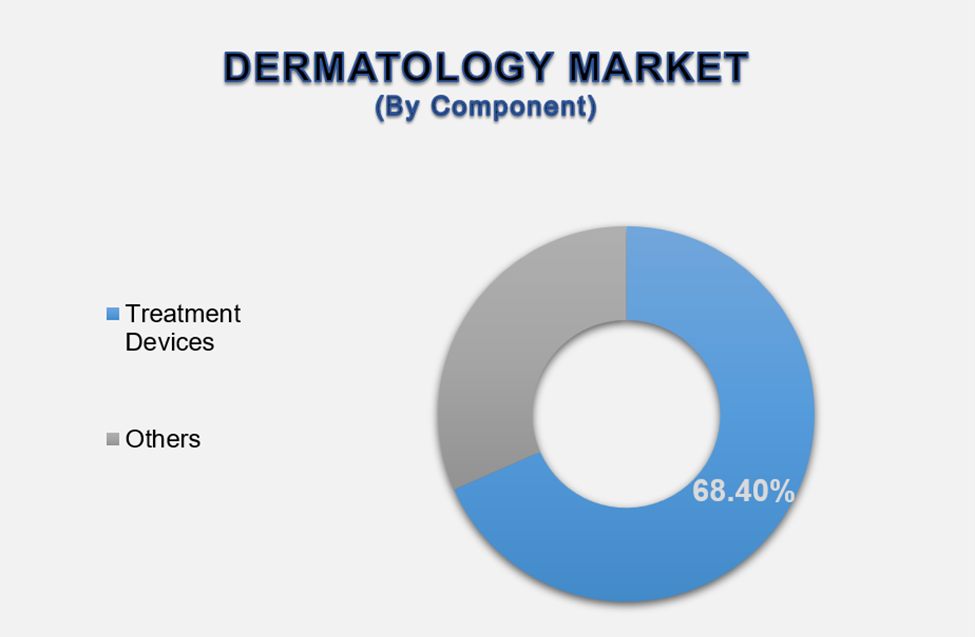
The treatment devices segment accounted for approximately 68.4% of the global market, making it the largest product category.
Treatment
devices dominate the market due to the growing volume of both medical and
aesthetic dermatology procedures performed globally. These devices include
laser systems, radiofrequency platforms, cryotherapy units, light therapy
equipment, and various energy-based treatment technologies.
The increasing
demand for minimally invasive cosmetic procedures is significantly contributing
to segment growth. Patients increasingly prefer non-surgical treatments that
deliver effective outcomes with reduced recovery times and minimal
complications.
Treatment
devices are utilized across a broad range of applications, including skin
rejuvenation, hair removal, acne treatment, scar reduction, tattoo removal,
vascular lesion treatment, and wrinkle reduction. Their versatility and
clinical effectiveness continue to drive widespread adoption among
dermatologists and aesthetic practitioners.
Furthermore,
continuous technological advancements are improving treatment precision, safety
profiles, and patient outcomes, encouraging healthcare providers to upgrade
existing equipment and invest in advanced systems.
As demand for both therapeutic and cosmetic dermatology procedures continues rising, treatment devices are expected to maintain their dominant market position.
Skin
Rejuvenation Segment Is Expected to Lead the Market by Application
Skin
rejuvenation represents the largest application segment within the dermatology
devices market.
The increasing
desire to maintain youthful skin appearance and address age-related cosmetic
concerns has driven significant growth in skin rejuvenation procedures.
Dermatology devices are widely used to improve skin texture, reduce wrinkles,
treat pigmentation disorders, and stimulate collagen production.
Laser
resurfacing systems, radiofrequency devices, intense pulsed light technologies,
and other energy-based treatment platforms play a central role in modern skin
rejuvenation procedures.
Consumers are
increasingly seeking preventive aesthetic treatments rather than waiting for
advanced signs of aging to develop. This shift is expanding the potential
patient base for skin rejuvenation services.
Additionally,
technological innovations have improved treatment safety and effectiveness
while reducing discomfort and recovery times, making these procedures more
attractive to patients.
The growing popularity of non-invasive cosmetic treatments is expected to support continued growth of the skin rejuvenation segment.
Dermatology
Clinics Segment Is Expected to Dominate the Market by End User
Dermatology
clinics account for the largest share of the dermatology devices market due to
their specialized focus on skin health and aesthetic treatments.
These clinics
offer a broad range of diagnostic, therapeutic, and cosmetic services supported
by advanced dermatology equipment. Patients often prefer specialized
dermatology centers because they provide expert care, access to advanced
technologies, and personalized treatment plans.
The increasing
number of private dermatology practices and aesthetic clinics worldwide is
contributing significantly to market growth. Many clinics continuously invest
in new technologies to remain competitive and meet evolving patient
expectations.
Additionally,
dermatology clinics frequently perform high volumes of cosmetic procedures,
creating strong demand for advanced treatment devices.
As awareness regarding skin health and aesthetic treatments continues increasing, dermatology clinics are expected to remain the leading end-user segment.
The
Laser-Based Devices Segment Is Expected to Lead the Market by Technology
Laser-based
devices represent the dominant technology segment within the dermatology
devices market.
Laser
technologies are extensively utilized across numerous dermatological
applications, including hair removal, skin resurfacing, pigmentation treatment,
scar reduction, vascular lesion treatment, tattoo removal, and wrinkle
reduction.
These devices
offer high precision, predictable outcomes, minimal invasiveness, and broad
clinical applicability. Continuous advancements in laser technologies are
improving treatment effectiveness while enhancing patient safety and comfort.
The growing
demand for aesthetic procedures remains a major factor supporting segment
growth. Laser treatments are increasingly preferred due to their ability to
deliver noticeable results with relatively short recovery periods.
Additionally,
healthcare providers continue investing in next-generation laser platforms
capable of supporting multiple treatment applications through a single system.
These advantages are expected to sustain the leadership position of laser-based devices throughout the forecast period.
The following
segments are part of an in-depth analysis of the global Dermatology Devices
market:
|
Market Segments |
|
|
By Product Type |
∙ Diagnostic Devices |
|
By
Technology |
∙ Laser-Based Devices |
|
By Application |
∙ Skin Cancer
Diagnosis |
|
By End User |
∙ Hospitals |
Dermatology
Devices Market Share Analysis By Region
North America is
projected to dominate the global dermatology devices market, accounting for
approximately 39.1% of total market revenue in 2026.
The region
benefits from advanced healthcare infrastructure, high adoption of aesthetic
procedures, substantial healthcare expenditures, and a strong presence of
leading dermatology device manufacturers. The United States remains the largest
contributor due to growing consumer spending on cosmetic treatments and
increasing awareness regarding skin cancer screening.
Europe
represents another significant market driven by aging populations, growing
aesthetic treatment adoption, and increasing investments in healthcare
technology. Germany, France, Italy, and the United Kingdom remain key
contributors to regional growth.
Asia-Pacific is
expected to witness the fastest growth during the forecast period. Rising
disposable incomes, expanding medical tourism activities, increasing beauty
consciousness, and growing healthcare investments are fueling market expansion
across the region.
Countries such
as China, India, Japan, and South Korea are experiencing rapid growth in
aesthetic medicine and dermatology services, creating substantial opportunities
for device manufacturers.
Meanwhile, Latin America and the Middle East & Africa are witnessing increasing adoption of dermatological technologies due to improving healthcare infrastructure and growing demand for cosmetic procedures.
Dermatology
Devices Market Competition Landscape Analysis
The global
dermatology devices market is highly competitive and characterized by
continuous technological innovation, product development, strategic
collaborations, and expanding clinical applications.
Leading
manufacturers are focusing on developing advanced laser systems, AI-enabled
diagnostic platforms, multi-functional treatment devices, and minimally
invasive technologies designed to improve patient outcomes and operational
efficiency.
Companies are
increasingly investing in research and development activities aimed at
enhancing treatment precision, expanding indications, and reducing procedural
downtime. Artificial intelligence integration, digital imaging advancements,
and personalized treatment planning capabilities are emerging as key
competitive differentiators.
Strategic
partnerships with healthcare providers, dermatology clinics, research
institutions, and aesthetic medicine organizations are also becoming
increasingly important for market expansion.
As demand for dermatological and aesthetic treatments continues growing globally, competition among industry participants is expected to intensify throughout the forecast period.
Global
Dermatology Devices Market Recent Developments News:
∙ In April 2026, several dermatology
technology companies introduced advanced AI-powered skin imaging systems
designed to improve diagnostic accuracy.
∙ In February 2026, aesthetic clinics
increased investments in next-generation laser treatment platforms to expand
service offerings.
∙ In November 2025, manufacturers launched
multi-application dermatology devices capable of supporting both medical and
cosmetic procedures.
∙ In August 2025, healthcare providers
expanded teledermatology initiatives utilizing digital imaging and remote
diagnostic technologies.
∙ In June 2025, companies accelerated development of portable dermatology diagnostic devices aimed at improving point-of-care screening capabilities.
The Global
Dermatology Devices Market is Dominated by a Few Large Companies, Such As
∙ Candela Corporation
∙ Cynosure LLC
∙ Cutera, Inc.
∙ Lumenis Be Ltd.
∙ Alma Lasers Ltd.
∙ Fotona d.o.o.
∙ Sciton, Inc.
∙ Solta Medical, Inc.
∙ Venus Concept Inc.
∙ Bausch Health Companies Inc.
∙ Sisram Medical Ltd.
∙ Canfield Scientific, Inc.
∙ HEINE Optotechnik GmbH & Co. KG
∙ Michelson Diagnostics Ltd.
∙ Derma Medical Systems, Inc.
∙ Others
Frequently Asked Questions
Swetal (Research Analyst)
Swetal is a Research Analyst with 4+ years of experience specializing in healthcare market research, medical devices, healthcare IT, and medical technology industry analysis. Her expertise includes competitive intelligence, secondary research, market trend forecasting, and healthcare business insights across global healthcare ecosystems.
She contributes to advanced market research reports by analyzing regulatory frameworks, emerging healthcare technologies, competitive landscapes, and innovation trends shaping the medical industry. With a strong focus on accurate market intelligence, strategic insights, and healthcare industry trends, Swetal supports businesses in making informed, data-backed decisions in a rapidly transforming healthcare environment.
1.
Global Dermatology
Devices Market Introduction and Market Overview
1.1. Objectives of the Study
1.2. Global Dermatology Devices Market Scope and Market Estimation
1.2.1.
Global Dermatology Devices
Market Size (US$ Million), Market CAGR (%), Market Forecast (2026 - 2034)
1.2.2.
Global Dermatology Devices
Market Revenue Share (%) and Growth Rate (Y-o-Y) from 2021 - 2034
1.3. Market Segmentation
1.3.1.
Product Type of Global
Dermatology Devices Market
1.3.2.
Application of Global
Dermatology Devices Market
1.3.3.
End User of Global Dermatology
Devices Market
1.3.4.
Technology of Global
Dermatology Devices Market
1.3.5.
Region of Global Dermatology
Devices Market
2.
Executive Summary
2.1. Demand Side Trends
2.2. Key Market Trends
2.3. Market Demand (US$ Million) Analysis 2021 – 2025 and Forecast, 2026
– 2034
2.4. Demand and Opportunity Assessment
2.5. Key Developments
2.6. Overview of Tariff, Regulatory Landscape and Standards
2.7. Market Entry Strategies
2.8. Market Dynamics
2.8.1.
Drivers
2.8.2.
Limitations
2.8.3.
Opportunities
2.8.4.
Impact Analysis of Drivers and
Restraints
2.9. Porter’s Five Forces Analysis
2.10.
PEST Analysis
3.
Global Dermatology
Devices Market Estimates & Historical Trend Analysis (2021 - 2025)
4.
Global Dermatology
Devices Market Estimates & Forecast Trend Analysis, by Product Type
4.1. Global Dermatology Devices Market Revenue (US$ Million) Estimates
and Forecasts, by Product Type, 2021 - 2034
4.1.1.
Diagnostic Devices
4.1.2.
Treatment Devices
5.
Global Dermatology
Devices Market Estimates & Forecast Trend Analysis, by Application
5.1. Global Dermatology Devices Market Revenue (US$ Million) Estimates
and Forecasts, by Application, 2021 - 2034
5.1.1.
Skin Cancer Diagnosis
5.1.2.
Acne Treatment
5.1.3.
Psoriasis Treatment
5.1.4.
Skin Rejuvenation
5.1.5.
Hair Removal
5.1.6.
Wrinkle Reduction
5.1.7.
Tattoo Removal
5.1.8.
Others
6.
Global Dermatology
Devices Market Estimates & Forecast Trend Analysis, by End User
6.1. Global Dermatology Devices Market Revenue (US$ Million) Estimates
and Forecasts, by End User, 2021 - 2034
6.1.1.
Hospitals
6.1.2.
Dermatology Clinics
6.1.3.
Cosmetic Centers
6.1.4.
Ambulatory Surgical Centers
6.1.5.
Research Institutes
6.1.6.
Others
7.
Global Dermatology
Devices Market Estimates & Forecast Trend Analysis, by Technology
7.1. Global Dermatology Devices Market Revenue (US$ Million) Estimates
and Forecasts, by Technology, 2021 - 2034
7.1.1.
Laser-Based Devices
7.1.2.
Light Therapy Devices
7.1.3.
Radiofrequency Devices
7.1.4.
Dermatoscopes
7.1.5.
Imaging Systems
7.1.6.
Cryotherapy Devices
7.1.7.
Others
8.
Global Dermatology
Devices Market Estimates & Forecast Trend Analysis, by Region
8.1. Global Dermatology Devices Market Revenue (US$ Million) Estimates
and Forecasts, by Region, 2021 - 2034
8.1.1.
North America
8.1.2.
Europe
8.1.3.
Asia Pacific
8.1.4.
Middle East & Africa
8.1.5.
Latin America
9.
North America
Dermatology Devices Market: Estimates & Forecast Trend Analysis
9.1. North America Dermatology Devices Market Assessments & Key
Findings
9.1.1.
North America Dermatology
Devices Market Introduction
9.1.2.
North America Dermatology
Devices Market Size Estimates and Forecast (US$ Million) (2021 - 2034)
9.1.2.1.
By Product Type
9.1.2.2.
By Application
9.1.2.3.
By End User
9.1.2.4.
By Technology
9.1.2.5.
By Country
9.1.2.5.1.
The U.S.
9.1.2.5.2.
Canada
10. Europe Dermatology Devices Market: Estimates & Forecast Trend
Analysis
10.1.
Europe Dermatology Devices
Market Assessments & Key Findings
10.1.1.
Europe Dermatology Devices
Market Introduction
10.1.2.
Europe Dermatology Devices
Market Size Estimates and Forecast (US$ Million) (2021 - 2034)
10.1.2.1.
By Product Type
10.1.2.2.
By Application
10.1.2.3.
By End User
10.1.2.4.
By Technology
10.1.2.5.
By Country
10.1.2.5.1.
Germany
10.1.2.5.2.
Italy
10.1.2.5.3.
U.K.
10.1.2.5.4.
France
10.1.2.5.5.
Spain
10.1.2.5.6.
Switzerland
10.1.2.5.7.
Rest of Europe
11. Asia Pacific Dermatology Devices Market: Estimates & Forecast
Trend Analysis
11.1.
Asia Pacific Dermatology
Devices Market Assessments & Key Findings
11.1.1.
Asia Pacific Dermatology
Devices Market Introduction
11.1.2.
Asia Pacific Dermatology
Devices Market Size Estimates and Forecast (US$ Million) (2021 - 2034)
11.1.2.1.
By Product Type
11.1.2.2.
By Application
11.1.2.3.
By End User
11.1.2.4.
By Technology
11.1.2.5.
By Country
11.1.2.5.1.
China
11.1.2.5.2.
Japan
11.1.2.5.3.
India
11.1.2.5.4.
Australia
11.1.2.5.5.
South Korea
11.1.2.5.6.
Rest of Asia Pacific
12. Middle East & Africa Dermatology Devices Market: Estimates &
Forecast Trend Analysis
12.1.
Middle East & Africa
Dermatology Devices Market Assessments & Key Findings
12.1.1.
Middle East & Africa
Dermatology Devices Market Introduction
12.1.2.
Middle East & Africa
Dermatology Devices Market Size Estimates and Forecast (US$ Million) (2021 -
2034)
12.1.2.1.
By Product Type
12.1.2.2.
By Application
12.1.2.3.
By End User
12.1.2.4.
By Technology
12.1.2.5.
By Country
12.1.2.5.1.
UAE
12.1.2.5.2.
Saudi Arabia
12.1.2.5.3.
South Africa
12.1.2.5.4.
Rest of MEA
13. Latin America Dermatology Devices Market: Estimates & Forecast
Trend Analysis
13.1.
Latin America Dermatology
Devices Market Assessments & Key Findings
13.1.1.
Latin America Dermatology
Devices Market Introduction
13.1.2.
Latin America Dermatology
Devices Market Size Estimates and Forecast (US$ Million) (2021 - 2034)
13.1.2.1.
By Product Type
13.1.2.2.
By Application
13.1.2.3.
By End User
13.1.2.4.
By Technology
13.1.2.5.
By Country
13.1.2.5.1.
Brazil
13.1.2.5.2.
Mexico
13.1.2.5.3.
Argentina
13.1.2.5.4.
Rest of LATAM
14. Competition Landscape
14.1.
Global Dermatology Devices
Market Product Mapping
14.2.
Global Dermatology Devices
Market Concentration Analysis, by Leading Players / Innovators / Emerging
Players / New Entrants
14.3.
Global Dermatology Devices
Market Tier Structure Analysis
14.4.
Global Dermatology Devices
Market Concentration & Company Market Shares (%) Analysis, 2025
15. Company Profiles
15.1.
Candela Corporation
15.1.1.
Company Overview & Key
Stats
15.1.2.
Financial Performance &
KPIs
15.1.3.
Product Portfolio
15.1.4.
SWOT Analysis
15.1.5.
Business Strategy & Recent
Developments
*Similar details would be provided for all
the players mentioned below
15.2.
Cynosure LLC
15.3.
Cutera, Inc.
15.4.
Lumenis Be Ltd.
15.5.
Alma Lasers Ltd.
15.6.
Fotona d.o.o.
15.7.
Sciton, Inc.
15.8.
Solta Medical, Inc.
15.9.
Venus Concept Inc.
15.10.
Bausch Health Companies Inc.
15.11.
Sisram Medical Ltd.
15.12.
Canfield Scientific, Inc.
15.13.
HEINE Optotechnik GmbH &
Co. KG
15.14.
Michelson Diagnostics Ltd.
15.15.
Derma Medical Systems, Inc.
15.16.
Others
16. Research Findings & Conclusion
17. Assumption & Acronyms Used
18. Research Methodology
18.1.
External Databases
18.2.
Internal Proprietary Database
18.3.
Primary Research
18.4.
Secondary Research
18.5.
Assumptions
18.6.
Limitations
18.7.
Report FAQs
Our Research Methodology
"Insight without rigor is just noise."
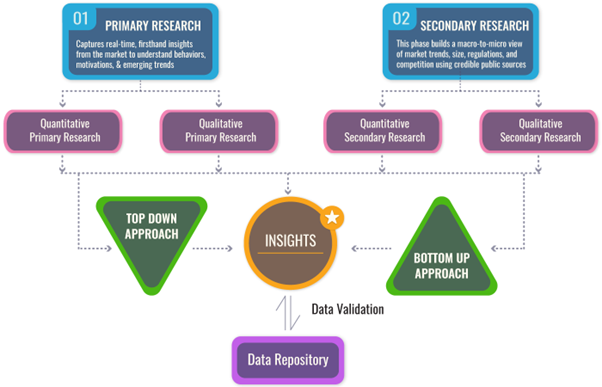
We follow a comprehensive, multi-phase research framework designed to deliver accurate, strategic, and decision-ready intelligence. Our process integrates primary and secondary research , both quantitative and qualitative , along with dual modeling techniques ( top-down and bottom-up) and a final layer of validation through our proprietary in-house repository.
PRIMARY RESEARCH
Primary research captures real-time, firsthand insights from the market to understand behaviors, motivations, and emerging trends.
1. Quantitative Primary Research
Objective: Generate statistically significant data directly from market participants.
Approaches:- Structured surveys with customers, distributors, and field agents
- Mobile-based data collection for point-of-sale audits and usage behavior
- Phone-based interviews (CATI) for market sizing and product feedback
- Online polling around industry events and digital campaigns
- Purchase frequency by customer type
- Channel performance across geographies
- Feature demand by application or demographic
2. Qualitative Primary Research
Objective: Explore decision-making drivers, pain points, and market readiness.
Approaches:- In-depth interviews (IDIs) with executives, product managers, and key decision-makers
- Focus groups among end users and early adopters
- Site visits and observational research for consumer products
- Informal field-level discussions for regional and cultural nuances
SECONDARY RESEARCH
This phase helps establish a macro-to-micro understanding of market trends, size, regulation, and competitive dynamics, sourced from credible and public domain information.
1. Quantitative Secondary Research
Objective: Model market value and segment-level forecasts based on published data.
Sources include:- Financial reports and investor summaries
- Government trade data, customs records, and regulatory statistics
- Industry association publications and economic databases
- Channel performance and pricing data from marketplace listings
- Revenue splits, pricing trends, and CAGR estimates
- Supply-side capacity and volume tracking
- Investment analysis and funding benchmarks
2. Qualitative Secondary Research
Objective: Capture strategic direction, innovation signals, and behavioral trends.
Sources include:- Company announcements, roadmaps, and product pipelines
- Publicly available whitepapers, conference abstracts, and academic research
- Regulatory body publications and policy briefs
- Social and media sentiment scanning for early-stage shifts
- Strategic shifts in market positioning
- Unmet needs and white spaces
- Regulatory triggers and compliance impact
DUAL MODELING: TOP-DOWN + BOTTOM-UP
To ensure robust market estimation, we apply two complementary sizing approaches:
Top-Down Modeling:- Start with broader industry value (e.g., global or regional TAM)
- Apply filters by segment, geography, end-user, or use case
- Adjust with primary insights and validation benchmarks
- Ideal for investor-grade market scans and opportunity mapping
- Aggregate from the ground up using sales volumes, pricing, and unit economics
- Use internal modeling templates aligned with stakeholder data
- Incorporate distributor-level or region-specific inputs
- Most accurate for emerging segments and granular sub-markets
DATA VALIDATION: IN-HOUSE REPOSITORY
We close the loop with proprietary data intelligence built from ongoing projects, industry monitoring, and historical benchmarking. This repository includes:
- Multi-sector market and pricing models
- Key trendlines from past interviews and forecasts
- Benchmarked adoption rates, churn patterns, and ROI indicators
- Industry-specific deviation flags and cross-check logic
- Catches inconsistencies early
- Aligns projections across studies
- Enables consistent, high-trust deliverables