

Dermatology Imaging Devices Market Size and Forecast (2025–2033), Global and Regional Growth, Trend, Share, and Industry Analysis Report Coverage: By Modality (Digital Photographic Imaging, Optical Coherence Tomography, Dermatoscope, High Frequency Ultrasound, Others), By Application (Skin Cancers, Inflammatory Dermatoses, Psoriasis, Eczema, Plastic/Reconstructive Surgery, Others), By End Use (Hospitals, Dermatology Centers, Specialty Clinics, Others), and Geography
2025-12-16
Healthcare
Swetal (Research Analyst)
Description
Dermatology
Imaging Devices Market Overview
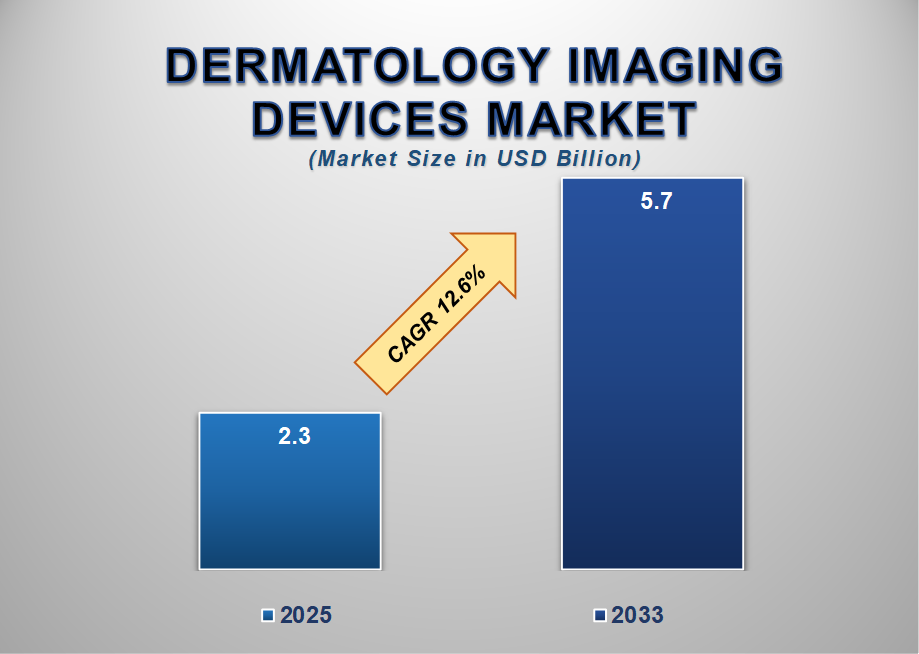
The Global Dermatology Imaging Devices Market Size is projected to reach USD 5.7 billion by 2033 from USD 2.3 billion in 2025, growing at a CAGR of 12.6% during the forecast period. The market growth is primarily driven by the increasing incidence of skin cancer and other dermatological conditions globally, as well as heightened public awareness of early diagnosis and screening methods.
Advancements in imaging technology, including optical coherence tomography (OCT), high-frequency ultrasound, and artificial intelligence-enabled dermatoscopes, are enhancing diagnostic speed and accuracy. These tools support non-invasive diagnostics and streamlined clinical workflows, contributing to their growing adoption in hospitals, dermatology centers, and specialty clinics. Additionally, the market is benefiting from the rising acceptance of teledermatology solutions, which offer remote skin assessment, particularly in underserved regions.
Dermatology
Imaging Devices Market Drivers and Opportunities
Advancements in Non-Invasive
Dermatological Diagnostics Are Driving Market Growth
Increasing adoption of
noninvasive diagnostic technologies is a critical driver of the dermatology
imaging devices market. With the rising incidence of skin disorders like
melanoma, eczema, and psoriasis, there is a notable need for diagnostic devices
that reduce the need for traditional biopsy procedures. Advanced modalities
such as optical coherence tomography (OCT) and high-frequency ultrasound offer
real-time imaging that enables early detection, potentially improving patient
outcomes. These advancements are particularly crucial in oncology, where early
identification of malignant lesions is essential. Artificial intelligence
(AI)-powered diagnostic tools are also gaining traction, helping dermatologists
detect skin anomalies more accurately and efficiently. As a result, hospitals
and dermatology centers are increasingly integrating AI-enhanced imaging
systems into clinical practice. This shift toward minimally invasive screening
techniques, combined with a focus on preventive healthcare, is augmenting the
demand for dermatology imaging devices across both developed and developing
markets.
Rise in Teledermatology and
Digital Healthcare Innovation Is Boosting Market Expansion
Digital healthcare platforms,
particularly those offering teledermatology services, are reshaping the way
dermatology imaging devices are used. The post-pandemic era has witnessed
widespread adoption of virtual consultations, which require high-definition
imaging tools for remote diagnosis. Portable dermatoscopes and mobile-enabled
imaging systems are supporting dermatologists in capturing and analyzing skin
conditions in real time. These solutions enable clinicians to reach patients in
rural and underserved areas, providing timely care and reducing health system
burden. The trend is further supported by the integration of cloud-based image
storage and AI-based diagnostic support systems, making dermatological
assessment more efficient. Moreover, the growing penetration of digital imaging
platforms in private and public healthcare settings is prompting major
manufacturers to invest in cloud-compatible imaging solutions. As the demand
for convenience, rapid care delivery, and integrated healthcare systems rises,
the dermatology imaging devices market is expected to see accelerated growth,
especially in outpatient settings and clinics focusing on aesthetic
dermatology.
Emerging Economies’ Focus on
Healthcare Infrastructure Is Poised to Create Significant Opportunities in the
Dermatology Imaging Devices Market Worldwide
The growing focus on expanding
healthcare infrastructure in emerging economies such as India, China, Brazil,
and Southeast Asian countries is opening new avenues for the dermatology
imaging devices market. Rapid urbanization, increasing disposable incomes, and
heightened health awareness are driving demand for early diagnosis and
treatment of skin diseases. Furthermore, the global rise in melanoma cases
linked to UV exposure is driving government initiatives and investments in
awareness campaigns and diagnostic programs. Multinational companies are also
expanding their footprint in developing markets by introducing cost-effective
and portable imaging devices. The growing medical tourism sector in regions
such as APAC and LATAM is further promoting the use of advanced dermatological
imaging tools in both general and aesthetic practices. The rise of specialized
dermatology clinics in urban areas, coupled with government-backed healthcare
reforms, forms a robust foundation for future market growth. Manufacturers who
tailor their strategies and products to address affordability, portability, and
local regulatory requirements in developing regions are likely to capitalize
significantly on these opportunities.
Dermatology Imaging Devices Market Scope
|
Report Attributes |
Description |
|
Market Size in 2025 |
USD 2.3 Billion |
|
Market Forecast in 2033 |
USD 5.7 Billion |
|
CAGR % 2025-2033 |
12.6% |
|
Base Year |
2024 |
|
Historic Data |
2020-2024 |
|
Forecast Period |
2025-2033 |
|
Report USP |
Production, Consumption,
Company Share, Company Heatmap, Company Production Capacity, Growth Factors,
and more |
|
Segments Covered |
●
By Modality, By
Application, By End Use |
|
Regional Scope |
●
North America ●
Europe ●
APAC ●
Latin America ●
Middle East and
Africa |
|
Country Scope |
1)
U.S. 2)
Canada 3)
Germany 4)
UK 5)
France 6)
Spain 7)
Italy 8)
Switzerland 9)
China 10)
Japan 11)
India 12)
Australia 13)
South Korea 14)
Brazil 15)
Mexico 16)
Argentina 17)
South Africa 18)
Saudi Arabia 19)
UAE |
Dermatology Imaging Devices Market Report Segmentation
Analysis
The global Dermatology Imaging
Devices Market is segmented into Modality, Application, End Use, and Geography.
Digital Photographic Imaging
Segment Accounted for the Largest Market Share in the Global Dermatology
Imaging Devices Market
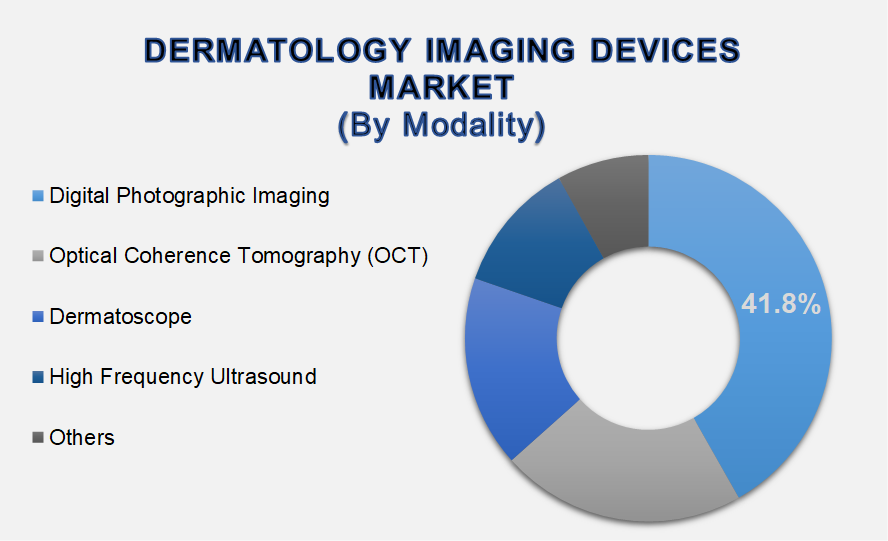
The Digital Photographic Imaging
segment accounted for the largest market share in 2025, driven by its wide
implementation in both diagnostic and aesthetic dermatology. This segment is
segmented into standalone digital cameras, smartphone-integrated systems, and
software-enhanced imaging platforms. Its extensive adoption is attributed to
high-resolution imaging, cost-effectiveness, and ease of use across hospitals,
clinics, and research institutions. Additionally, digital imaging plays a
pivotal role in teledermatology and public screening programs, making it an
essential component in dermatology practices globally.
Skin Cancers Segment Dominated
the Market Based on Application in 2025
The Skin Cancers segment
accounted for the largest share in the global Dermatology Imaging Devices
Market Application. This segment is segmented into melanoma, non-melanoma skin
cancer, precancerous lesions, and others. The increasing prevalence of melanoma
and non-melanoma cancers, combined with enhanced patient awareness and the
adoption of early diagnostic measures, drives demand. Advanced imaging systems
capable of detecting subtle morphological changes significantly aid clinicians
in identifying suspicious lesions and preventing disease progression.
The Hospitals Segment Held the
Leading Share in the Global Dermatology Imaging Devices Market
The Hospitals segment accounted
for the largest market share in 2025. This segment is segmented into public
hospitals, private hospitals, and multispecialty centers. Hospitals are the
preferred end-use setting due to their access to advanced imaging tools,
skilled healthcare professionals, and integrated patient management systems.
The availability of reimbursement policies further supports the procurement and
use of premium imaging systems in these institutions.
The following segments are
part of an in-depth analysis of the global Dermatology Imaging Devices Market:
|
Market
Segments |
|
|
By Modality |
●
Digital Photographic
Imaging ●
Optical Coherence
Tomography (OCT) ●
Dermatoscope ●
High-Frequency
Ultrasound ●
Others |
|
By Application |
●
Skin Cancers ●
Inflammatory
Dermatoses o
Skin psoriasis o
Eczema (Atopic
dermatitis) o
Others ●
Plastic and
Reconstructive Surgery ●
Others |
|
By End Use |
●
Hospitals ●
Dermatology Centers ●
Specialty Clinics |
Dermatology
Imaging Devices Market Share Analysis by Region
The North America region is
projected to hold the largest share of the global Dermatology Imaging Devices
Market over the forecast period.
North America accounted for the
largest share of the global dermatology imaging devices market in 2025, with
37% of total revenue. This dominance is attributed to advanced healthcare
infrastructure, high prevalence of skin-related conditions, and strong adoption
of AI-enabled imaging technologies. The region also benefits from favorable
reimbursement policies and growing collaborations between imaging software
providers and dermatology clinics. The U.S. leads the regional market owing to
significant investments in research and technological innovation.
Asia-Pacific (APAC) is projected
to register the highest CAGR during the forecast period. The market growth is
driven by rising skin cancer rates, increasing disposable incomes, growing
adoption of teledermatology, and improving access to healthcare infrastructure.
Countries such as China, India, Japan, and South Korea are expected to witness
substantial growth driven by efforts to expand dermatology services and the
launch of affordable imaging devices tailored to local needs.
Dermatology
Imaging Devices Market Competition Landscape Analysis
The
dermatology imaging devices market is moderately fragmented, with key players
including Canfield Scientific, Heine Optotechnik, Caliber I.D., DermLite, and
FotoFinder Systems. These companies focus on continuous innovation, integrating
AI and cloud-based platforms into imaging solutions to enhance diagnostic
accuracy and usability. Strategic partnerships with dermatology centers,
investments in portable imaging devices, and expansion into emerging markets
are core competitive strategies.
Global
Dermatology Imaging Devices Market Recent Developments News:
- In February 2024 – The European Society of
Radiology (ESR) and GE HealthCare renewed their partnership for the
European Congress of Radiology (ECR), held from February 28 to March 3 in
Vienna. The event centered on the theme "Next Generation Radiology,"
highlighting innovations and future directions in medical imaging.
- In January 2024 – GE HealthCare completed the
acquisition of MIM Software, a recognized provider of medical imaging
analytics and AI-driven solutions for oncology, diagnostics, and urology.
The acquisition strengthens GE HealthCare’s portfolio with advanced
digital workflow and image analysis tools, supporting global efforts to
enhance precision and efficiency in patient care.
- In July 2023 – Canfield Scientific participated in the 25th World
Congress of Dermatology in Singapore (July 4–7), showcasing its advanced
imaging and analysis systems, including IntelliStudio, VEOS, DermaGraphix,
and VECTRA WB360. The in-person demonstrations highlighted the devices’
capabilities in supporting clinical dermatology and aesthetic practice.
The Global Dermatology Imaging Devices Market is
dominated by a few large companies, such as
●
Canfield Scientific
●
Heine Optotechnik
●
Caliber I.D.
●
DermLite
●
FotoFinder Systems
●
3Gen
●
Amirez
●
MoleMap
●
Michelson Diagnostics
●
Visia
●
Skin Analytics
●
Dermascan
●
Roche
●
Dermatools
●
Firefly Global
●
DermEngine
●
Cortex Technology
●
Derma Medical Systems
●
Nikon
●
Canon
● Other Prominent Players
Frequently Asked Questions
Swetal (Research Analyst)
Swetal is a Research Analyst with 4+ years of experience specializing in healthcare market research, medical devices, healthcare IT, and medical technology industry analysis. Her expertise includes competitive intelligence, secondary research, market trend forecasting, and healthcare business insights across global healthcare ecosystems.
She contributes to advanced market research reports by analyzing regulatory frameworks, emerging healthcare technologies, competitive landscapes, and innovation trends shaping the medical industry. With a strong focus on accurate market intelligence, strategic insights, and healthcare industry trends, Swetal supports businesses in making informed, data-backed decisions in a rapidly transforming healthcare environment.
1. Global Dermatology Imagine
Devices Market Introduction and Market Overview
1.1.
Objectives
of the Study
1.2.
Global
Dermatology Imagine Devices Market Scope and Market Estimation
1.2.1.Global Dermatology Imagine
Devices Market Overall Market Size (US$ Bn), Market CAGR (%), Market forecast (2025
- 2033)
1.2.2.Global Dermatology Imagine
Devices Market Revenue Share (%) and Growth Rate (Y-o-Y) from 2020 - 2033
1.3.
Market
Segmentation
1.3.1.Modality of Global Dermatology
Imagine Devices Market
1.3.2.Application of Global
Dermatology Imagine Devices Market
1.3.3.End Use of Global Dermatology
Imagine Devices Market
1.3.4.Region of Global Dermatology
Imagine Devices Market
2. Executive
Summary
2.1.
Demand
Side Trends
2.2.
Key
Market Trends
2.3.
Market
Demand (US$ Bn) Analysis 2020 – 2024 and Forecast, 2025 – 2033
2.4.
Demand
and Opportunity Assessment
2.5.
Demand
Supply Scenario
2.6.
Market
Dynamics
2.6.1.Drivers
2.6.2.Limitations
2.6.3.Opportunities
2.6.4.Impact Analysis of Drivers
and Restraints
2.7.
Emerging
Trends for Dermatology Imagine Devices Market
2.8.
Porter’s
Five Forces Analysis
2.9.
PEST
Analysis
2.10.
Key
Regulation
3. Global
Dermatology Imagine Devices Market
Estimates & Historical Trend Analysis (2020 - 2024)
4.
Global Dermatology Imagine
Devices Market Estimates
& Forecast Trend Analysis, by Modality
4.1.
Global
Dermatology Imagine Devices Market Revenue (US$ Bn) Estimates and Forecasts, by
Modality, 2020 - 2033
4.1.1.Digital Photographic
Imaging
4.1.2.Optical Coherence
Tomography (OCT)
4.1.3.Dermatoscope
4.1.4.High Frequency Ultrasound
4.1.5.Others
5.
Global Dermatology Imagine
Devices Market Estimates
& Forecast Trend Analysis, by Application
5.1.
Global
Dermatology Imagine Devices Market Revenue (US$ Bn) Estimates and Forecasts, by
Application, 2020 - 2033
5.1.1.Skin Cancers
5.1.2.Inflammatory Dermatoses
5.1.2.1.
Skin
psoriasis
5.1.2.2.
Eczema
(Atopic dermatitis)
5.1.2.3.
Others
5.1.3.Plastic and Reconstructive
Surgery
5.1.4.Others
6.
Global Dermatology Imagine
Devices Market Estimates
& Forecast Trend Analysis, by End Use
6.1.
Global
Dermatology Imagine Devices Market Revenue (US$ Bn) Estimates and Forecasts, by
End Use, 2020 - 2033
6.1.1.Hospitals
6.1.2.Dermatology Centers
6.1.3.Specialty Clinics
7. Global
Dermatology Imagine Devices Market
Estimates & Forecast Trend Analysis, by region
1.1.
Global
Dermatology Imagine Devices Market Revenue (US$ Bn) Estimates and Forecasts, by
region, 2020 - 2033
1.1.1.North America
1.1.2.Europe
1.1.3.Asia Pacific
1.1.4.Middle East & Africa
1.1.5.Latin America
8. North America Dermatology
Imagine Devices Market: Estimates &
Forecast Trend Analysis
8.1.
North
America Dermatology Imagine Devices Market Assessments & Key Findings
8.1.1.North America Dermatology
Imagine Devices Market Introduction
8.1.2.North America Dermatology
Imagine Devices Market Size Estimates and Forecast (US$ Billion) (2020 - 2033)
8.1.2.1. By Modality
8.1.2.2. By Application
8.1.2.3. By End Use
8.1.2.4.
By
Country
8.1.2.4.1.
The
U.S.
8.1.2.4.2.
Canada
9. Europe Dermatology
Imagine Devices Market: Estimates &
Forecast Trend Analysis
9.1.
Europe
Dermatology Imagine Devices Market Assessments & Key Findings
9.1.1.Europe Dermatology Imagine
Devices Market Introduction
9.1.2.Europe Dermatology Imagine
Devices Market Size Estimates and Forecast (US$ Billion) (2020 - 2033)
9.1.2.1. By Modality
9.1.2.2. By Application
9.1.2.3. By End Use
9.1.2.4.
By
Country
9.1.2.4.1. Germany
9.1.2.4.2. Italy
9.1.2.4.3. U.K.
9.1.2.4.4. France
9.1.2.4.5. Spain
9.1.2.4.6. Switzerland
9.1.2.4.7.
Rest of Europe
10. Asia Pacific Dermatology
Imagine Devices Market: Estimates &
Forecast Trend Analysis
10.1.
Asia
Pacific Market Assessments & Key Findings
10.1.1.
Asia
Pacific Dermatology Imagine Devices Market Introduction
10.1.2.
Asia
Pacific Dermatology Imagine Devices Market Size Estimates and Forecast (US$ Billion)
(2020 - 2033)
10.1.2.1. By Modality
10.1.2.2. By Application
10.1.2.3. By End Use
10.1.2.4.
By
Country
10.1.2.4.1. China
10.1.2.4.2. Japan
10.1.2.4.3. India
10.1.2.4.4. Australia
10.1.2.4.5. South Korea
10.1.2.4.6.
Rest
of Asia Pacific
11. Middle East & Africa Dermatology
Imagine Devices Market: Estimates &
Forecast Trend Analysis
11.1.
Middle
East & Africa Market Assessments & Key Findings
11.1.1.
Middle East & Africa Dermatology Imagine Devices Market
Introduction
11.1.2.
Middle East & Africa Dermatology Imagine Devices Market
Size Estimates and Forecast (US$ Billion) (2020 - 2033)
11.1.2.1. By Modality
11.1.2.2. By Application
11.1.2.3. By End Use
11.1.2.4.
By
Country
11.1.2.4.1. South
Africa
11.1.2.4.2. UAE
11.1.2.4.3. Saudi
Arabia
11.1.2.4.4.
Rest of MEA
12. Latin America
Dermatology Imagine Devices Market:
Estimates & Forecast Trend Analysis
12.1.
Latin
America Market Assessments & Key Findings
12.1.1.
Latin
America Dermatology Imagine Devices Market Introduction
12.1.2.
Latin
America Dermatology Imagine Devices Market Size Estimates and Forecast (US$ Billion)
(2020 - 2033)
12.1.2.1. By Modality
12.1.2.2. By Application
12.1.2.3. By End Use
12.1.2.4.
By
Country
12.1.2.4.1. Brazil
12.1.2.4.2. Mexico
12.1.2.4.3. Argentina
12.1.2.4.4.
Rest of LATAM
13. Country Wise Market:
Introduction
14.
Competition
Landscape
14.1.
Global
Dermatology Imagine Devices Market Product Mapping
14.2.
Global
Dermatology Imagine Devices Market Concentration Analysis, by Leading Players /
Innovators / Emerging Players / New Entrants
14.3.
Global
Dermatology Imagine Devices Market Tier Structure Analysis
14.4.
Global
Dermatology Imagine Devices Market Concentration & Company Market Shares
(%) Analysis, 2023
15.
Company
Profiles
15.1. Canfield
Scientific
15.1.1.
Company
Overview & Key Stats
15.1.2.
Financial
Performance & KPIs
15.1.3.
Product
Portfolio
15.1.4.
SWOT
Analysis
15.1.5.
Business
Strategy & Recent Developments
* Similar details would be provided for all
the players mentioned below
15.2. Heine
Optotechnik
15.3. Caliber I.D.
15.4. DermLite
15.5. FotoFinder
Systems
15.6. 3Gen
15.7. Amirez
15.8. MoleMap
15.9. Michelson
Diagnostics
15.10. Visia
15.11. Skin
Analytics
15.12. Dermascan
15.13. Roche
15.14. Dermatools
15.15. Firefly
Global
15.16. DermEngine
15.17. Cortex
Technology
15.18. Derma Medical
Systems
15.19. Nikon
15.20. Canon
15.21. Other
Prominent Players
16. Research
Methodology
16.1.
External
Transportations / Databases
16.2.
Internal
Proprietary Database
16.3.
Primary
Research
16.4.
Secondary
Research
16.5.
Assumptions
16.6.
Limitations
16.7.
Report
FAQs
17. Research
Findings & Conclusion
Our Research Methodology
"Insight without rigor is just noise."
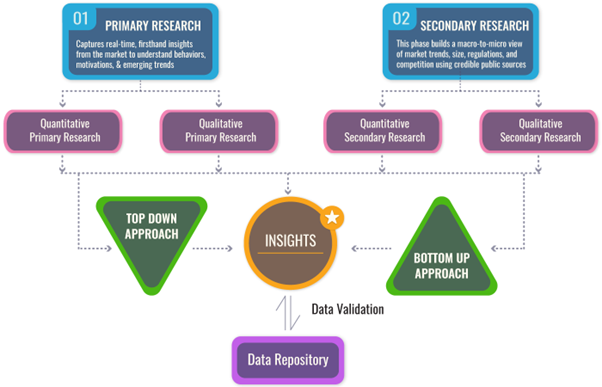
We follow a comprehensive, multi-phase research framework designed to deliver accurate, strategic, and decision-ready intelligence. Our process integrates primary and secondary research , both quantitative and qualitative , along with dual modeling techniques ( top-down and bottom-up) and a final layer of validation through our proprietary in-house repository.
PRIMARY RESEARCH
Primary research captures real-time, firsthand insights from the market to understand behaviors, motivations, and emerging trends.
1. Quantitative Primary Research
Objective: Generate statistically significant data directly from market participants.
Approaches:- Structured surveys with customers, distributors, and field agents
- Mobile-based data collection for point-of-sale audits and usage behavior
- Phone-based interviews (CATI) for market sizing and product feedback
- Online polling around industry events and digital campaigns
- Purchase frequency by customer type
- Channel performance across geographies
- Feature demand by application or demographic
2. Qualitative Primary Research
Objective: Explore decision-making drivers, pain points, and market readiness.
Approaches:- In-depth interviews (IDIs) with executives, product managers, and key decision-makers
- Focus groups among end users and early adopters
- Site visits and observational research for consumer products
- Informal field-level discussions for regional and cultural nuances
SECONDARY RESEARCH
This phase helps establish a macro-to-micro understanding of market trends, size, regulation, and competitive dynamics, sourced from credible and public domain information.
1. Quantitative Secondary Research
Objective: Model market value and segment-level forecasts based on published data.
Sources include:- Financial reports and investor summaries
- Government trade data, customs records, and regulatory statistics
- Industry association publications and economic databases
- Channel performance and pricing data from marketplace listings
- Revenue splits, pricing trends, and CAGR estimates
- Supply-side capacity and volume tracking
- Investment analysis and funding benchmarks
2. Qualitative Secondary Research
Objective: Capture strategic direction, innovation signals, and behavioral trends.
Sources include:- Company announcements, roadmaps, and product pipelines
- Publicly available whitepapers, conference abstracts, and academic research
- Regulatory body publications and policy briefs
- Social and media sentiment scanning for early-stage shifts
- Strategic shifts in market positioning
- Unmet needs and white spaces
- Regulatory triggers and compliance impact
DUAL MODELING: TOP-DOWN + BOTTOM-UP
To ensure robust market estimation, we apply two complementary sizing approaches:
Top-Down Modeling:- Start with broader industry value (e.g., global or regional TAM)
- Apply filters by segment, geography, end-user, or use case
- Adjust with primary insights and validation benchmarks
- Ideal for investor-grade market scans and opportunity mapping
- Aggregate from the ground up using sales volumes, pricing, and unit economics
- Use internal modeling templates aligned with stakeholder data
- Incorporate distributor-level or region-specific inputs
- Most accurate for emerging segments and granular sub-markets
DATA VALIDATION: IN-HOUSE REPOSITORY
We close the loop with proprietary data intelligence built from ongoing projects, industry monitoring, and historical benchmarking. This repository includes:
- Multi-sector market and pricing models
- Key trendlines from past interviews and forecasts
- Benchmarked adoption rates, churn patterns, and ROI indicators
- Industry-specific deviation flags and cross-check logic
- Catches inconsistencies early
- Aligns projections across studies
- Enables consistent, high-trust deliverables