

France Telemedicine Market Size and Forecast (2026–2034), Regional Growth, Trend, Share and Industry Analysis Report Coverage: By Components (Product {Hardware, Software, and Others}, and Services {Tele-consulting, Tele-monitoring, Tele-education}), By Modality (Store and forward, Real-time, and Others); By Application (Teleradiology, Telepsychiatry, Telepathology, Teledermatology, Telecardiology, and Others) and By End User (Hospitals & Health Systems, Clinics & Physician Practices, Patients/Homecare, Payers, and Others)
2026-09-17
Healthcare
Swetal (Research Analyst)
Description
France
Telemedicine Market Overview
The France
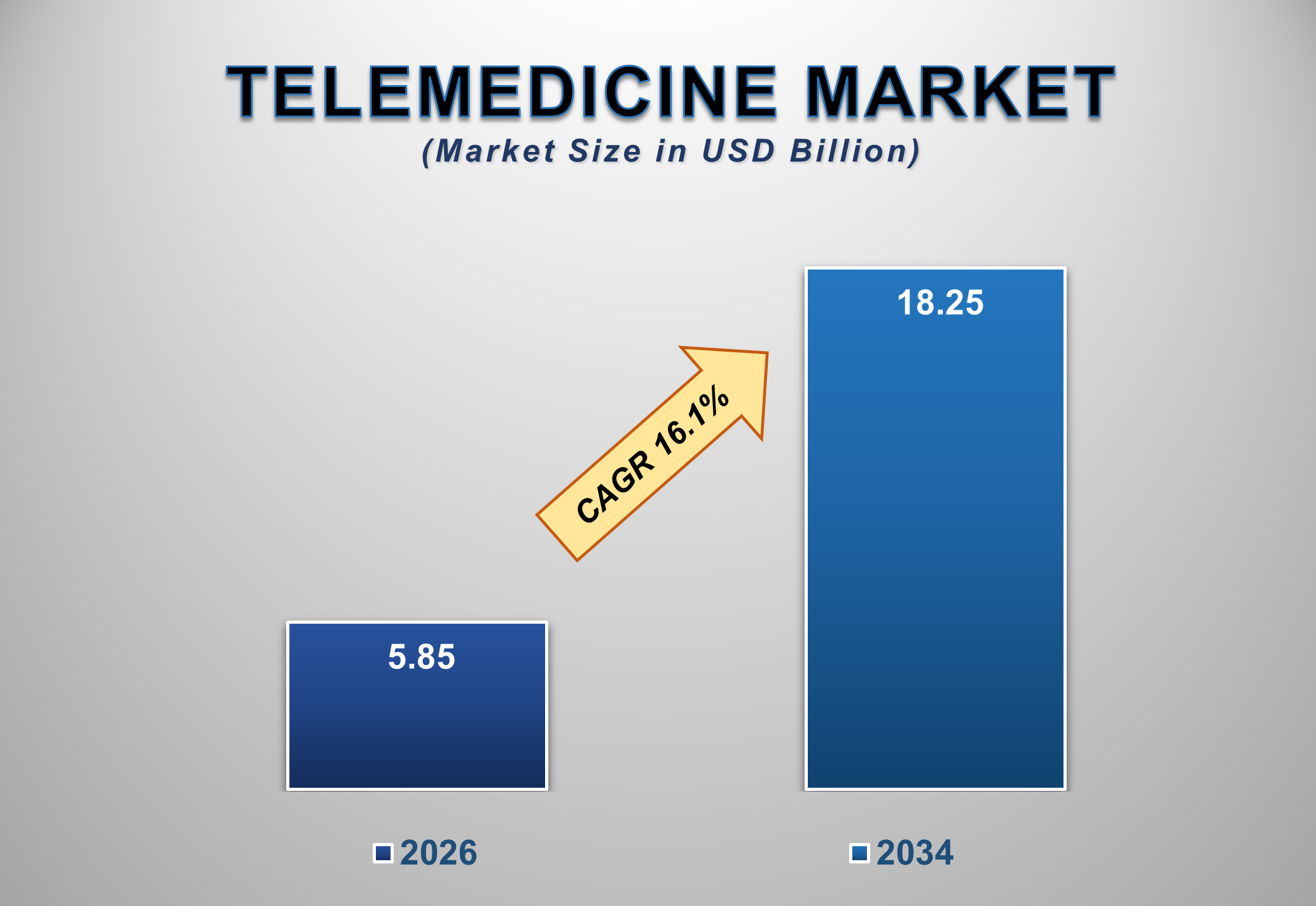
telemedicine market is projected to expand from USD 5.85 billion in 2026 to USD
18.25 billion by 2034, registering a CAGR of 16.1% during 2026–2034. The French
telemedicine
market is moving away from its origins as a
pandemic-related service into being an increasingly integrated part of the
national healthcare system. This change is supported by growing patient
acceptance of telemedicine technologies as well as adequate telemedicine
infrastructure, reimbursement systems, and government initiatives aimed at
ensuring access to care. Teleconsultation, telemonitoring, tele-expertise, and
other remote care solutions are now being adopted to help solve physician
shortages, overcome geographical barriers, assist in managing chronic diseases,
and reduce barriers for people with aging and mobility issues. At the same
time, the growth of the said market is aided by the increased activity of
telemedicine service providers and specialists using developments in
telemedicine technologies. There have been many government initiatives in this
field to promote equal access to telemedicine services, integration of
telemedicine into healthcare pathways, education and training of specialists,
and regulation of telemedicine in accordance with government standards. Simultaneously,
there has been increased attention paid to security and confidentiality of
data, as well as quality of healthcare services, which will change the state of
competition in this market.
France
Telemedicine Market Drivers and Impact Analysis
|
Key
Drivers |
Impact |
|
Rising Patient Preference for Convenient
& Flexible Care |
Increases adoption of teleconsultations by
reducing travel, waiting times, and geographic access barriers. |
|
Growing Chronic Disease & Aging
Population |
Expands demand for virtual follow-ups,
chronic disease management, medication monitoring, and remote patient
monitoring. |
|
Healthcare Access & Regional Specialist
Gaps |
Enables remote access to physicians and
specialists, particularly for patients in rural and underserved areas. |
|
Increasing Provider Adoption of Virtual Care |
Integrates telemedicine into routine
clinical workflows and broadens the range of services delivered remotely. |
|
Expansion of Remote Patient Monitoring &
Connected Devices |
Shifts telemedicine beyond episodic
consultations toward continuous, data-driven monitoring and proactive care
management. |
|
Government Support & Integration into
Healthcare Delivery |
Strengthens adoption through reimbursement
frameworks, digital-health initiatives, regulatory support, and integration
with conventional care pathways. |
|
Growing Demand for Mental & Behavioral
Healthcare |
Supports continued use of telepsychiatry and
virtual psychological services by improving privacy, convenience, and access
to specialists. |
|
Advancement of EHR, Cloud & Digital
Health Infrastructure |
Improves interoperability, clinical workflow
integration, scalability, data exchange, and patient engagement across
virtual-care platforms. |
|
Increasing Focus on Home-Based &
Preventive Care |
Encourages remote consultations, monitoring,
and follow-up services that reduce reliance on hospital and clinic visits. |
|
Rising Digital Health Literacy &
Smartphone Penetration |
Facilitates patient engagement with teleconsultation
platforms, mobile health applications, connected devices, and digital care
pathways. |
Growing Chronic
Disease & Aging Population
The demand for
monitoring patients continuously, conveniently, and affordably is growing due
to the surge in chronic illnesses and the aging population in France. According
to the Inserm Foundation, 15 million people suffer from
cardiovascular-neurological diseases, cardiovascular risks, or diabetes, making
it one of the largest populations in need of regular monitoring. In total,
there are about 20 million people affected by chronic diseases in France.
Teleconsultation, remote surveillance, and other digital solutions are becoming
more popular due to the increase in the number of older people and those with
mobility limitations needing to communicate with health professionals
regularly. The use of telemedicine for managing chronic illnesses is gaining
momentum in France’s healthcare system.
Growing Demand
for Mental & Behavioral Healthcare
The surging prevalence of mental health problems, as well as the growing awareness of behavioral health as a chief public health concern, has also stimulated the need for easy-to-use mental health services in France. For example, in June 2025, the WHO announced that France had noted mental health to be its “Grande cause” of 2025, which means a national priority, and this requires the involvement of everybody. The WHO, with the Ministry of Health in France, organized a big mental health meeting in Paris from 16 to 17 June 2025, which gathered delegates from 31 countries to enhance the provision of mental health services. This ongoing focus of policymakers, along with problems with access to mental health specialists, creates good opportunities for telepsychiatry, virtual consultations in psychology, digital behavioral health programs, and distance mental health monitoring. Thus, the increasing demand for mental healthcare and behavioral health care indicates growth in the French telemedicine market.
France Telemedicine Market Restraint
and Impact Analysis
|
Key
Restraints |
Impact |
|
Regulatory & Reimbursement Restrictions |
Limits flexibility in telemedicine delivery
through reimbursement, eligibility, and care-pathway requirements,
potentially slowing wider adoption. |
|
Data Privacy & Cybersecurity Concerns |
Increases compliance requirements and
technology costs while creating concerns around the protection of sensitive
patient health data. |
|
Digital Divide & Limited Digital
Literacy |
Restricts adoption among elderly, digitally
underserved, and less technologically confident populations, particularly in
areas with weaker digital infrastructure. |
|
Interoperability & Healthcare System
Integration Challenges |
Creates difficulties in connecting
telemedicine platforms with EHRs, hospitals, pharmacies, and other healthcare
systems, affecting workflow efficiency and continuity of care. |
Regulatory &
Reimbursement Restrictions
The surging
prevalence of mental health problems, as well as the growing awareness of
behavioral health as a chief public health concern, has also stimulated the
need for easy-to-use mental health services in France. For example, in June
2025, the WHO announced that France had identified mental health as its “Grande
cause” of 2025, which means a national priority and requires the involvement of
everybody. The WHO, with the Ministry of Health in France, organized a major
mental health meeting in Paris from 16 to 17 June 2025, which gathered
delegates from 31 countries to enhance the provision of mental health services.
This ongoing focus of policymakers, along with problems with access to mental
health specialists, creates good opportunities for telepsychiatry, virtual
consultations in psychology, digital behavioral health programs, and distance
mental health monitoring. Thus, the increasing demand for mental and behavioral
healthcare indicates growth in the French telemedicine market.
Data Privacy
& Cybersecurity Concerns
The growth of
telemedicine in France may be hampered by issues concerning data security and
cybersecurity. As telemedicine technologies collect and manage sensitive data
related to patients, including medical records, test results, and
prescriptions, healthcare organizations and technology firms must take as many
precautions as possible to secure patient data from cyber threats. Numerous
security measures are required to ensure compliance with different
data-protection and healthcare legislation. New trends in medical devices,
cloud technologies, and remote patient monitoring may increase the risk of
cybersecurity attacks. It should be noted that concerns related to the security
of patient data and the necessity of ensuring patient confidentiality may slow
down the implementation of telemedicine services.
France Telemedicine Market
Opportunities and Impact Analysis
|
Key
Opportunities |
Impact |
|
Expansion of Remote Patient Monitoring |
Creates opportunities for connected devices,
digital medical devices, and chronic disease monitoring solutions, extending
telemedicine into continuous care. |
|
Growing Demand in Underserved & Rural
Areas |
Enables teleconsultation and teleexpertise
providers to address geographic gaps in healthcare access and improve
specialist availability. |
|
Integration of Telemedicine into Routine
Care Pathways |
Creates opportunities for platforms that
connect teleconsultation, EHRs, clinical workflows, and follow-up services,
strengthening continuity between virtual and in-person care. |
|
Growth of Chronic Disease &
Post-Hospitalization Monitoring |
Expands opportunities for disease-specific
virtual-care solutions across areas such as heart failure, diabetes,
respiratory conditions, oncology, and cardiac arrhythmia. |
Expansion of
Remote Patient Monitoring
The expansion of
remote patient monitoring (RPM) presents great opportunities for the
telemedicine market in France, as it allows healthcare workers to continuously
monitor the state of people’s health beyond conventional clinical environments.
The growth in the adoption of connected medical devices, wearable sensors, home
monitoring systems, and digital health platforms enables healthcare workers to
control such parameters as blood pressure, blood glucose, heart rate, oxygen
saturation, and other vital indicators remotely. This is especially useful in
connection with chronic disease control and offering support to elderly
patients while effectively minimizing unnecessary hospital treatments. Thus,
while healthcare professionals keep implementing RPM in their regular
activities, the growth of remote monitoring technology will speed up
telemedicine expansion in France.
Growing Demand
in Underserved & Rural Areas
Healthcare
professionals are significantly limited in rural and less-developed regions,
creating opportunities for the telemedicine market in France due to increased
teleconsultation, tele-expertise, assisted teleconsultation, and remote
monitoring. For instance, the French health ministry aims to ensure equal
access to healthcare across the country, focusing on disadvantaged territories,
which serves as a core component of the nation’s telemedicine roadmap.
Furthermore, the French authorities have identified 153 territories with
insufficient medical care availability, thus creating opportunities for the
digital healthcare market to deliver other services aside from traditional
healthcare facilities. The country’s medical bodies also believe telemedicine is
exceptionally important for people living far away from care or who otherwise
lack mobility, thus providing the possibility for the creation of
teleconsultation centers in rural areas, the launch of teleconsultation booths,
tele-expertise networks, and the development of remote monitoring solutions.
France Telemedicine Market Scope
|
Report Attributes |
Description |
|
Market Size in 2026 |
USD 5.85 Billion |
|
Market Forecast in 2034 |
USD 18.25 Billion |
|
CAGR % 2026-2034 |
16.1% |
|
Market Concentration |
Moderately Concentrated |
|
Base Year |
2025 |
|
Historic Data |
2021-2025 |
|
Forecast Period |
2026-2034 |
|
Report USP |
Production, Consumption, company share,
company heatmap, company production capacity, growth factors, and more |
|
Geography |
France |
|
Segments Covered |
●
By Component ●
By
Modality ●
By
Application ●
By End
User |
|
Key Demand Side Trends |
●
Increasing
demand for remote patient monitoring ●
Greater
demand from elderly and mobility-constrained populations ●
Increasing
specialist access |
|
Key Supply Side Trends |
●
Expansion of
specialized telemedicine platforms ●
Integration
of connected medical devices ●
Shift toward
reimbursable and regulated solutions |
|
Major Players |
●
Abbott ●
Medtronic ●
Boston
Scientific ●
BIOTRONIK ●
MicroPort
Scientific ●
Glooko |
France Telemedicine Market Report
Segmentation Analysis
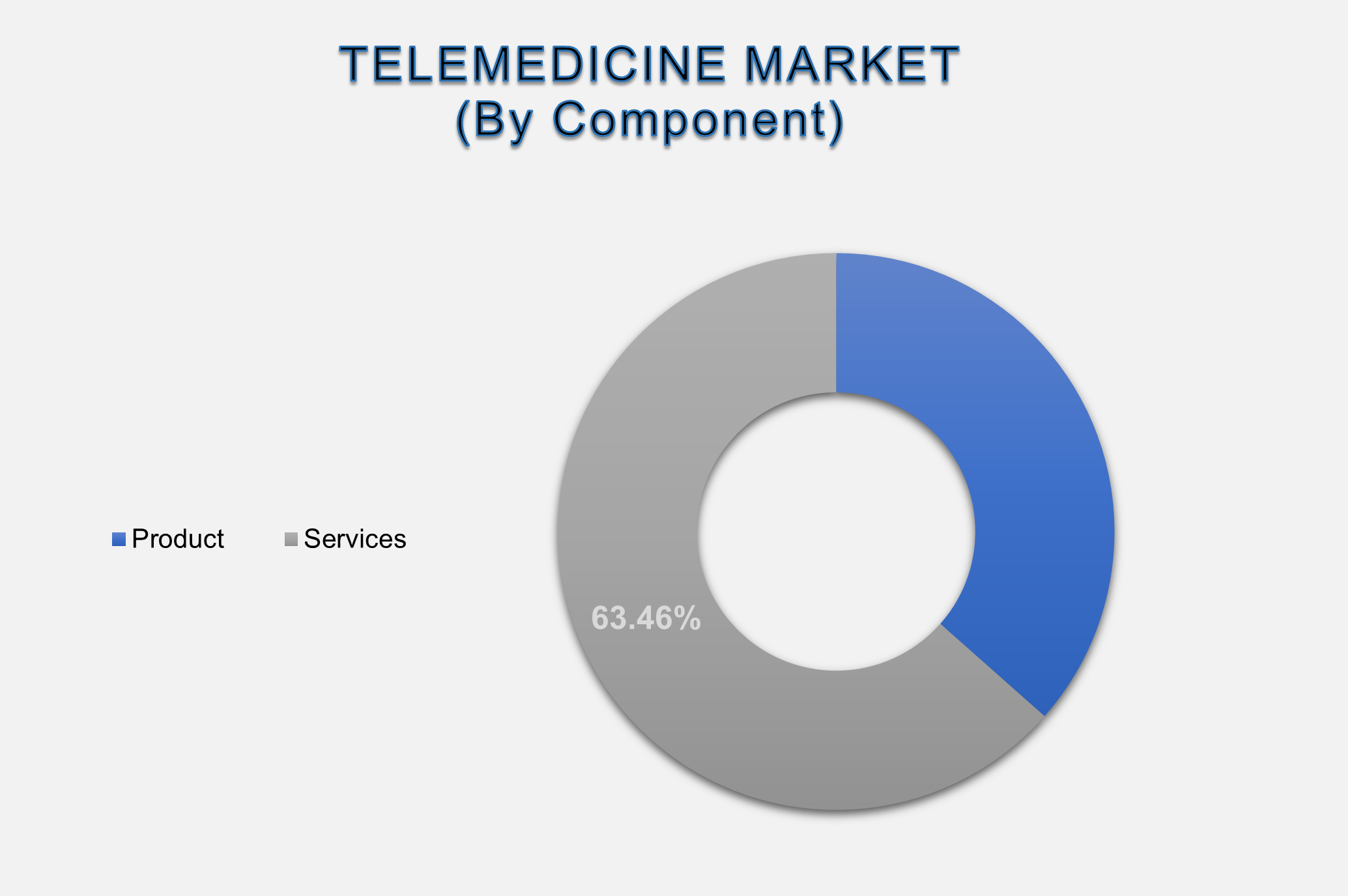
The Services
Segment Is Expected to Dominate the France Telemedicine Market During the
Forecast Period
During the forecast period, it is anticipated that the services sector will lead the French telemedicine industry as a result of an increasing acceptance of teleconsultation, tele-expertise, remote assistance, remote patient monitoring, and virtual care services connected to hospital workflows. For example, in January 2026, Bordeaux University Hospital (CHU), Bouygues Telecom Business, and Ericsson announced a 5MART HO5PITAL project aimed at deploying 5G technology at 18 hospital buildings and making possible several digitally powered health care applications. Beginning in 2027, the project is expected to provide connected ambulances capable of remote medical expertise, connected surgical glasses, 3D surgical modeling, telemedicine, remote assistance, and real-time sharing of data. This project indicates a gradual transition from independent telemedicine systems to connected care solutions that allow for remote but steady care to be provided with the help of different connectivity services. The application of private 5G technology, edge computing, network slicing, and secure connectivity solutions at CHU Bordeaux aims to support vital telemedicine systems and optimize patient journeys, along with boosting the efficiency of operations. As hospitals and telemedicine companies use more remote patient monitoring services and specialist assistance rather than opting for telemedicine equipment only, the services sector is believed to increase its share in the telemedicine market of France during the forecast period.
Store and
Forward Segment Is Expected to Grow in the France Telemedicine Market
The French
telemedicine industry is likely to see a gradual increase in the growth of the
store-and-forward segment because of the growing interest of healthcare
providers in using asynchronous means to collect, send, access, and exchange
patient data. In particular, the method works well in such areas as imaging,
dermatology, pathology, diagnostic reports, patient records, and specialist
consultation, as physicians will have the time to analyze the provided
information before making a recommendation. Store-and-forward technology is
being seen as an excellent addition to real-time teleconsulting because of its
ability to reduce constraints in appointment scheduling, improve access to
specialist knowledge, support professionals' collaboration, and enable follow-up
care. Integrating asynchronous communication into healthcare systems is
supported by the development of tele-expertise and digital health pathways in
France. As companies keep using better methods of providing care, we can expect
store-and-forward solutions to couple with secure messaging, digital patient
records, diagnostic image sharing, and remote consultations in the future.
Teleradiology
Segment Is Expected to Witness Steady Growth in France Telemedicine Market
The teleradiology
sector is anticipated to experience steady growth in the French telemedicine
arena as health institutions make more use of digital technologies in the
process of sending, receiving, and interpreting medical images and acquiring
specialist radiology services. Teleradiology can assist facilities in solving
issues of radiologist shortages and inequitably distributed radiologists,
decrease wait times for diagnosis, and ensure the availability of expert
medical image interpretation, particularly for hospitals and medical establishments
that may not have on-site radiologists. The French digital health policy
acknowledges teleradiology as a well-known telemedicine use case along with a
series of other specialty applications. The segment is also supported by the
increasing integration of PACS, RIS, cloud-based imaging systems, reliable
image transfer, and interoperable health information technologies, allowing
radiologists to interpret diagnostic images remotely and work with colleagues
in health care. France’s public health authorities’ programs on digital health
also encourage the interoperability of health information systems and secure
data exchange. As the demand for medical images increases and health care
practitioners seek ways to provide better access to radiology services and at
the same time optimize the use of resources, teleradiology is likely to stay
one of the major and rapidly growing application areas of telemedicine in
France.
The Hospital and
Health System Segment Is Expected to Grow in the France Telemedicine Market
The French telemedicine sector is likely to observe persistent maturation in its hospital and health systems segment, with hospitals widely utilizing digital health technologies. The use of teleconsultation, tele-expertise, teleradiology, remote patient monitoring, and connected-care systems is aimed at enhancing access to experts, optimizing the use of medical resources, and improving continuity of care. The national digital health strategy of France is also a supportive factor for the introduction of telemedicine in hospitals through the Agence du Numérique en Santé, which emphasizes the utilization of telemedicine technologies and devices in hospitals as well as in other healthcare facilities. Moreover, the Ministry of Health of France underscored the importance of telemedicine as a factor contributing to enhanced medical access, the geolocation of healthcare services, patients' travel paths, and the organization of health systems, particularly given the pressure on the medical system. While hospitals are increasingly tending towards connecting patients with specialists, expanding medical service beyond patients’ physical presence at hospitals, and integrating remote healthcare into the usual medical practices, the increase in the degree of digitalization of the hospitals’ systems is expected to contribute to the sustainable demand for telemedical systems, medical devices, remote monitoring services, and other IT infrastructure, which will foster the growth in the hospitals and health systems segment.
The following
segments are part of an in-depth analysis of the France telemedicine market:
|
Market Segments |
|
|
By
Components |
●
Product o
Hardware o
Software o
Others ●
Services o
Tele-consulting o
Tele-monitoring o
Tele-education |
|
By
Modality |
●
Store and forward ●
Real-time ●
Others |
|
By
Application |
●
Teleradiology ●
Telepsychiatry ●
Telepathology ●
Teledermatology ●
Telecardiology ●
Others |
|
By End
User |
●
Hospitals
& Health Systems ●
Clinics
& Physician Practices ●
Patients/Homecare ●
Payers ●
Others |
France Telemedicine Market Competition
Landscape Analysis
The telemedicine
market in France is marked by a highly dynamic and diverse competitive
environment, which consists of established digital health platform services,
teleconsultation service providers, assisted telemedicine service companies,
remote monitoring specialists, and tech service providers. The main players in
the industry compete based on their network of doctors, clients' consultation
experience, various digital platforms, connected devices for medicine,
respective services, remote monitoring of patients, and integration with
healthcare workflows. Some of the biggest names in telemedicine, such as
Doctolib, Qare, Livi, Medadom, Maiia, Medaviz, MédecinDirect, and Tessan,
promote their businesses using different strategies for providing consultations
ranging from scheduled and on-demand teleconsultation forms to interconnected
teleconsultation centres and integrated digital care services. The competition
is also evolving beyond basic video consultations to integrated digital
healthcare ecosystems with a focus on such aspects as patient experience,
compatibility of telemedicine, security of data, access to specialists,
accessible treatment of chronic diseases, as well as integration with hospitals
and pharmacies. As telemedicine becomes adopted in daily healthcare, those
companies that have scalable business models, strong networks, and
differentiating services will gain a competitive advantage in the market of
telemedicine services in France.
France Telemedicine Market Recent
Developments News:
●
In March 2026,
Verdane and Bpifrance announced an investment and strategic partnership with
Medadom, a French teleconsultation provider, to expand access to healthcare
services across France and Europe. The partnership is expected to support the
expansion of Medadom’s teleconsultation offering into additional care verticals
while strengthening its technology platform and medical governance
●
In August
2026, France’s Digital Health Ségur program entered its second deployment
phase, expanding digital-health standards, interoperability requirements, and
support across hospitals, physician practices, medical imaging, and social
care. The initiative is expected to strengthen the integration of shared health
records, secure data exchange, and digital tools into clinical workflows,
supporting the development of connected and telemedicine-enabled care models in
France.
●
In January
2026, Corilus and Sofia Développement announced a strategic combination to
create a European healthcare software platform serving outpatient healthcare
professionals in France and Belgium. The combined platform plans to accelerate
its product roadmap through AI-powered tools and telehealth capabilities,
strengthening digital solutions for outpatient care and supporting the
integration of telehealth into everyday healthcare workflows.
The France
Telemedicine Market is dominated by a few large companies, such as
●
Abbott
●
Medtronic
●
Boston
Scientific
●
BIOTRONIK
●
MicroPort
Scientific
●
Glooko
●
Withings
●
Visiomed
●
Promotal
●
H4D
●
Tessan
●
Axomove
●
Biosency
●
Be Ys Health
Solutions
●
Implicity
●
Cureety
●
Resilience
●
Continuum Plus
Santé
●
CareLine
Solutions
●
myDiabby
Healthcare
● Other Prominent Players
Frequently Asked Questions
Swetal (Research Analyst)
Swetal is a Research Analyst with 4+ years of experience specializing in healthcare market research, medical devices, healthcare IT, and medical technology industry analysis. Her expertise includes competitive intelligence, secondary research, market trend forecasting, and healthcare business insights across global healthcare ecosystems.
She contributes to advanced market research reports by analyzing regulatory frameworks, emerging healthcare technologies, competitive landscapes, and innovation trends shaping the medical industry. With a strong focus on accurate market intelligence, strategic insights, and healthcare industry trends, Swetal supports businesses in making informed, data-backed decisions in a rapidly transforming healthcare environment.
1.
France
Telemedicine Market Introduction and Market Overview
1.1. Objectives of the Study
1.2. Market Segmentation
1.2.1.Components of the France
Telemedicine Market
1.2.2.Modality of the France
Telemedicine Market
1.2.3.Application of France
Telemedicine Market
1.2.4.End User of France Telemedicine
Market
1.3. Competition Coverage List of
Market Participants
1.4. Market Definition: Telemedicine Market
2.
Executive Summary
2.1. France Telemedicine Market
Estimation & Forecast
2.1.1.France Telemedicine Market Size
(US$ Million) Estimates & Historical Trend Analysis (2021 - 2025)
2.1.2.France Telemedicine Overall
Market Size (US$ Million), Growth Rate (Y-o-Y), Market CAGR (%), Market
forecast (2026 - 2034)
2.2. Snapshot of France Telemedicine
Market
2.3. France Telemedicine Market
Revenue Share (%) 2025
2.4. Key Competitors & Key
Insights
3.
Market Overview (Qualitative
Analysis)
3.1. Demand Side Trends
3.2. Supply Side Trends /
Manufacturing Trends
3.3. Demand and Opportunity
Assessment, 2026 - 2034
3.4. Market Dynamics
3.4.1.Drivers
3.4.2.Limitations
3.4.3.Opportunities
3.4.4.Impact Analysis of Drivers and
Restraints
3.5. Key Developments
3.6. Regulatory Landscape
3.7. Pricing Analysis
3.8. Supply Chain Analysis
3.9. Porter’s Five Forces Analysis
3.9.1.Bargaining Power of Suppliers
3.9.2.Bargaining Power of Buyers
3.9.3.Threat of Substitutes
3.9.4.Threat of New Entrants
3.9.5.Competitive Rivalry
3.10. PEST Analysis
3.10.1. Political Factors
3.10.2. Economic Factors
3.10.3. Social Factors
3.10.4. Technology Factors
4.
France Telemedicine Market
Estimates & Forecast Trend Analysis, by Components
4.1. France Telemedicine Market
Assessments & Key Findings, by Components
4.2. France Telemedicine Market
Revenue (US$ Million) Estimates and Forecasts, by Components, 2021 - 2034
4.2.1. Product
4.2.1.1.
Hardware
4.2.1.2.
Software
4.2.1.3.
Others
4.2.2. Services
4.2.2.1.
Tele-consulting
4.2.2.2.
Tele-monitoring
4.2.2.3.
Tele-education
5.
France Telemedicine Market
Estimates & Forecast Trend Analysis, by Modality
5.1. France Telemedicine Market
Assessments & Key Findings, by Modality
5.2. France Telemedicine Market
Revenue (US$ Million) Estimates and Forecasts, by Modality, 2021 - 2034
5.2.1.Store and forward
5.2.2.Real-time
5.2.3.Others
6.
France Telemedicine Market
Estimates & Forecast Trend Analysis, by Application
6.1. France Telemedicine Market
Assessments & Key Findings, by Application
6.2. France Telemedicine Market
Revenue (US$ Million) Estimates and Forecasts, by Application, 2021 - 2034
6.2.1.Teleradiology
6.2.2.Telepsychiatry
6.2.3.Telepathology
6.2.4.Teledermatology
6.2.5.Telecardiology
6.2.6.Others
7.
France Telemedicine Market
Estimates & Forecast Trend Analysis, by End User
7.1. France Telemedicine Market
Assessments & Key Findings, by End User
7.2. France Telemedicine Market
Revenue (US$ Million) Estimates and Forecasts, by End User, 2021 - 2034
7.2.1.Hospitals & Health Systems
7.2.2.Clinics & Physician
Practices
7.2.3.Patients/Homecare
7.2.4.Payers
7.2.5.Others
8. Competition Landscape
8.1. France Telemedicine Market Product
Mapping
8.2. France Telemedicine Market
Concentration Analysis, by Leading Players / Innovators / Emerging Players /
New Entrants
8.3. France Telemedicine Market Tier
Structure Analysis
8.4. France Telemedicine Market
Concentration & Company Market Shares (%) Analysis, 2025
9. Company Profiles
9.1. Abbott
9.1.1.Company Overview & Key Stats
9.1.2.Financial Performance & KPIs
9.1.3.Product Portfolio
9.1.4.SWOT Analysis
9.1.5.Business Strategy & Recent
Developments
* Similar details would be provided
for all the players mentioned below
9.2.
Medtronic
9.3.
Boston Scientific
9.4.
BIOTRONIK
9.5.
MicroPort Scientific
9.6.
Glooko
9.7.
Withings
9.8.
Visiomed
9.9.
Promotal
9.10.
H4D
9.11.
Tessan
9.12.
Axomove
9.13.
Biosency
9.14.
Be Ys Health Solutions
9.15.
Implicity
9.16.
Cureety
9.17.
Resilience
9.18.
Continuum Plus Santé
9.19.
CareLine Solutions
9.20.
myDiabby Healthcare
9.21. Other Prominent Players
10. Research
Findings & Conclusion
11. Assumption & Acronyms Used
12. Research
Methodology
12.1. External Transportations /
Databases
12.2. Internal Proprietary Database
12.3. Primary Research
12.4. Secondary Research
12.5. Assumptions
12.6. Limitations
12.7. Report FAQs
Our Research Methodology
"Insight without rigor is just noise."
We follow a comprehensive, multi-phase research framework designed to deliver accurate, strategic, and decision-ready intelligence. Our process integrates primary and secondary research , both quantitative and qualitative , along with dual modeling techniques ( top-down and bottom-up) and a final layer of validation through our proprietary in-house repository.
PRIMARY RESEARCH
Primary research captures real-time, firsthand insights from the market to understand behaviors, motivations, and emerging trends.
1. Quantitative Primary Research
Objective: Generate statistically significant data directly from market participants.
Approaches:- Structured surveys with customers, distributors, and field agents
- Mobile-based data collection for point-of-sale audits and usage behavior
- Phone-based interviews (CATI) for market sizing and product feedback
- Online polling around industry events and digital campaigns
- Purchase frequency by customer type
- Channel performance across geographies
- Feature demand by application or demographic
2. Qualitative Primary Research
Objective: Explore decision-making drivers, pain points, and market readiness.
Approaches:- In-depth interviews (IDIs) with executives, product managers, and key decision-makers
- Focus groups among end users and early adopters
- Site visits and observational research for consumer products
- Informal field-level discussions for regional and cultural nuances
SECONDARY RESEARCH
This phase helps establish a macro-to-micro understanding of market trends, size, regulation, and competitive dynamics, sourced from credible and public domain information.
1. Quantitative Secondary Research
Objective: Model market value and segment-level forecasts based on published data.
Sources include:- Financial reports and investor summaries
- Government trade data, customs records, and regulatory statistics
- Industry association publications and economic databases
- Channel performance and pricing data from marketplace listings
- Revenue splits, pricing trends, and CAGR estimates
- Supply-side capacity and volume tracking
- Investment analysis and funding benchmarks
2. Qualitative Secondary Research
Objective: Capture strategic direction, innovation signals, and behavioral trends.
Sources include:- Company announcements, roadmaps, and product pipelines
- Publicly available whitepapers, conference abstracts, and academic research
- Regulatory body publications and policy briefs
- Social and media sentiment scanning for early-stage shifts
- Strategic shifts in market positioning
- Unmet needs and white spaces
- Regulatory triggers and compliance impact
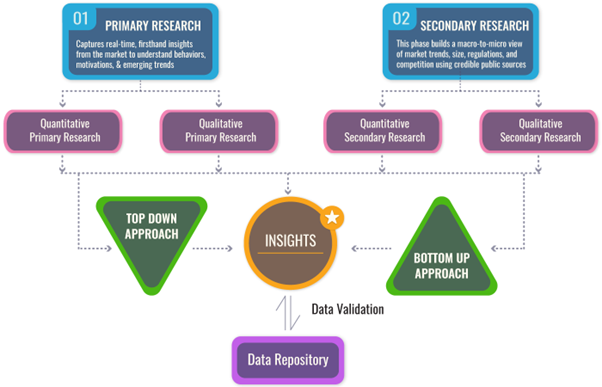
DUAL MODELING: TOP-DOWN + BOTTOM-UP
To ensure robust market estimation, we apply two complementary sizing approaches:
Top-Down Modeling:- Start with broader industry value (e.g., global or regional TAM)
- Apply filters by segment, geography, end-user, or use case
- Adjust with primary insights and validation benchmarks
- Ideal for investor-grade market scans and opportunity mapping
- Aggregate from the ground up using sales volumes, pricing, and unit economics
- Use internal modeling templates aligned with stakeholder data
- Incorporate distributor-level or region-specific inputs
- Most accurate for emerging segments and granular sub-markets
DATA VALIDATION: IN-HOUSE REPOSITORY
We close the loop with proprietary data intelligence built from ongoing projects, industry monitoring, and historical benchmarking. This repository includes:
- Multi-sector market and pricing models
- Key trendlines from past interviews and forecasts
- Benchmarked adoption rates, churn patterns, and ROI indicators
- Industry-specific deviation flags and cross-check logic
- Catches inconsistencies early
- Aligns projections across studies
- Enables consistent, high-trust deliverables