

Furniture Market Size and Forecast (2026 – 2034), Global and Regional Growth, Trend, Share and Industry Analysis Report Coverage; By Product Type (Living Room Furniture, Bedroom Furniture, Kitchen & Dining Furniture, Office Furniture, and Others); By Material (Wood, Metal, Plastic, Glass, and Others); By Distribution Channel (Offline Retail Stores and Online Retail Stores); By End-use (Residential and Commercial) and Geography
2026-03-12
Consumer Products
Jaya Bundele (Research Analyst)
Description
Furniture Market Overview
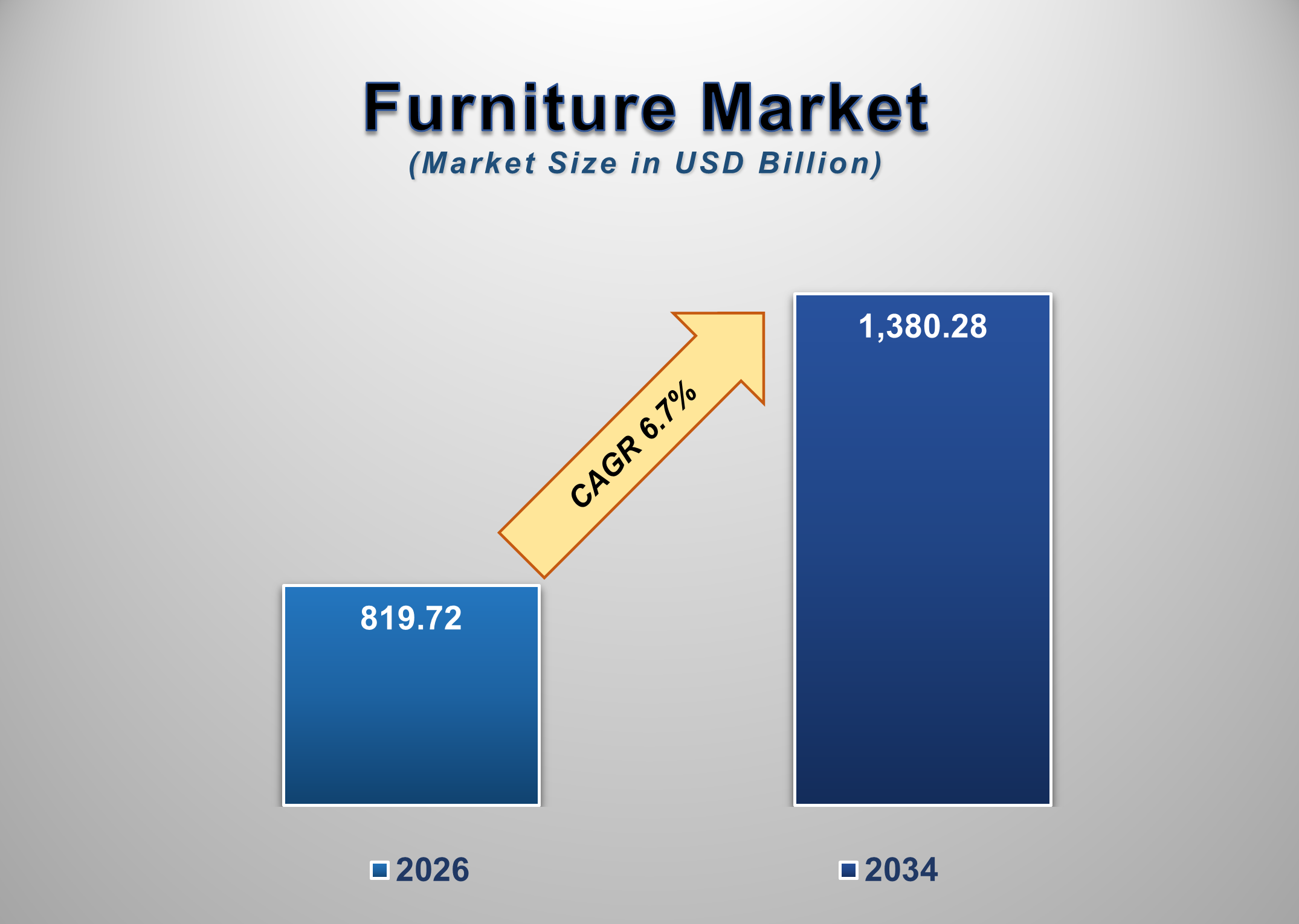
The global Furniture Market is witnessing steady expansion driven by growing urbanization, rising disposable incomes, and increasing investments in residential and commercial infrastructure development. The market is estimated to reach USD 819.72 billion in 2026 and is projected to grow to USD 1,380.28 billion by 2034, registering a compound annual growth rate (CAGR) of 6.7% during the forecast period. The expansion of housing construction, rising demand for aesthetically appealing interiors, and evolving consumer lifestyles are key factors supporting the growth of the furniture industry worldwide.
Furniture refers to movable objects designed to support human activities such as seating, sleeping, dining, and storage. It includes a wide variety of products such as sofas, beds, tables, cabinets, wardrobes, chairs, and desks that are used in homes, offices, hospitality spaces, and commercial establishments. Modern furniture designs increasingly combine functionality, comfort, and aesthetics to meet the changing preferences of consumers and businesses.
In recent years, consumers have become more focused on interior aesthetics and space optimization, leading to increased demand for modern and multifunctional furniture. Urban households, particularly in metropolitan areas, are adopting compact and modular furniture designs that maximize utility in limited living spaces. Similarly, commercial establishments such as corporate offices, hotels, and co-working spaces are investing in ergonomic and visually appealing furniture solutions to enhance employee productivity and customer experiences.
Furthermore, technological advancements and innovations in furniture manufacturing are transforming the industry landscape. Smart furniture, modular designs, and sustainable materials are increasingly popular as consumers seek products that combine functionality with environmental responsibility. As global housing development and commercial infrastructure projects continue to expand, the furniture market is expected to experience sustained growth across multiple regions.
Furniture Market Drivers and Opportunities
Rapid Urbanization and Residential Construction are Driving Market Growth
One of the major factors driving the global furniture market is the rapid pace of urbanization and residential construction activities worldwide. Urban population growth has increased demand for housing units, apartments, and residential complexes, all of which require furniture for living, sleeping, dining, and storage. As more people migrate to urban areas in search of employment opportunities and improved living standards, the demand for home furniture continues to rise.
Developing economies are witnessing significant expansion in real estate development projects, including affordable housing initiatives and smart city programs. Governments and private developers are investing heavily in residential infrastructure to accommodate growing urban populations. Each newly constructed residential unit creates demand for various furniture products such as beds, wardrobes, sofas, dining tables, and storage cabinets.
In addition, changing consumer lifestyles and increasing awareness of interior design trends are encouraging homeowners to invest in stylish and functional furniture. Modern consumers are seeking furniture products that complement their home décor while providing comfort and durability. This growing emphasis on home aesthetics is driving continuous product innovation and contributing to the steady expansion of the furniture market.
Growing Commercial Infrastructure and Office Spaces Boost Market Demand
The increasing development of commercial infrastructure, including corporate offices, hospitality establishments, educational institutions, and healthcare facilities, is another major factor fueling the growth of the furniture market. Businesses require specialized furniture solutions such as office desks, ergonomic chairs, conference tables, storage units, and reception furniture to create efficient and comfortable working environments.
The expansion of multinational corporations, co-working spaces, and startup ecosystems has increased the demand for modern office furniture that enhances employee productivity and collaboration. Companies are increasingly adopting ergonomic furniture designs to improve workplace comfort and reduce the risk of musculoskeletal health issues among employees.
Furthermore, the hospitality sector, including hotels, resorts, and restaurants, relies heavily on high-quality furniture to create attractive and comfortable environments for guests. Restaurants require dining furniture, hotels require bedroom and lounge furniture, and commercial spaces require reception and seating arrangements. As global tourism and hospitality industries continue to recover and expand, demand for commercial furniture is expected to increase significantly.
Emergence of Smart and Sustainable Furniture Creates Market Opportunities
The growing focus on sustainability and technological integration is creating new opportunities for innovation in the furniture market. Consumers are increasingly interested in environmentally friendly furniture products that are manufactured using sustainable materials such as recycled wood, bamboo, and eco-friendly fabrics. Furniture manufacturers are responding to this demand by adopting sustainable production practices and reducing the environmental impact of their operations.
In addition to sustainability, the concept of smart furniture is gaining popularity among modern consumers. Smart furniture integrates technology into traditional furniture products to enhance functionality and convenience. Examples include adjustable smart beds, wireless charging desks, automated lighting furniture, and space-saving modular furniture systems designed for compact urban living environments.
Advancements in manufacturing technologies such as computer-aided design (CAD), 3D printing, and automated woodworking machines are also enabling furniture companies to develop innovative product designs with improved precision and efficiency. These technological developments are expected to open new growth avenues for furniture manufacturers and retailers in the coming years.
Furniture Market Report Segmentation Analysis
The global furniture market industry analysis is segmented based on product type, material type, distribution channel, end-use industry, and geographical region.
Living Room Furniture Segment Holds Significant Market Share
Based on product type, the furniture market is segmented into living room furniture, bedroom furniture, kitchen & dining furniture, office furniture, and others. The living room furniture segment accounts for a significant share of the market because it includes essential products such as sofas, coffee tables, entertainment units, and recliners that are widely used in residential and hospitality settings.
Consumers often prioritize living room furniture purchases, as these products form the centerpiece of interior décor. Manufacturers are continuously introducing innovative designs and premium materials to enhance product appeal and comfort.
Wood Segment Dominates the Material Market
Based on material type, the market is categorized into wood, metal, plastic, glass, and others. Among these, wood remains the most widely used material due to its durability, natural aesthetics, and versatility in furniture manufacturing.
Wooden furniture products are commonly used in residential homes, offices, and hospitality establishments. High-quality hardwood materials such as oak, teak, walnut, and mahogany are particularly valued for their strength and long lifespan.
Residential Segment Leads End-Use Market
Based on end-use, the market is segmented into residential and commercial sectors. The residential segment dominates the furniture market due to the large volume of household furniture purchases worldwide.
Homeowners invest in furniture products to improve comfort, functionality, and aesthetic appeal within living spaces. Rising disposable incomes and increasing home renovation activities are also contributing to the growth of residential furniture demand.
Furniture Market Share Analysis by Region
North America currently holds a significant share of the global furniture market due to high consumer spending on home décor and well-developed retail distribution networks. The presence of major furniture manufacturers and strong demand for premium furniture products further support market growth in the region.
Europe also represents an important market for furniture products, driven by strong design traditions and consumer interest in high-quality and sustainable furniture. Countries such as Germany, Italy, and France are known for their furniture manufacturing expertise and innovative design capabilities.
The Asia-Pacific region is expected to witness the fastest market growth during the forecast period. Rapid urbanization, expanding middle-class populations, and increasing housing construction activities in countries such as China, India, and Southeast Asian nations are driving significant demand for furniture products.
Global Furniture Market Recent Developments News
● In March 2025, IKEA announced the expansion of its sustainable furniture product lines using recycled and eco-friendly materials.
● In October 2024, Steelcase launched a new range of ergonomic office furniture solutions designed for hybrid work environments.
● In July 2024, Ashley Furniture expanded its global manufacturing capacity to meet increasing demand for residential furniture products.
Competitive Landscape
Major companies operating in the global Furniture Market include:
● IKEA
● Ashley Furniture Industries
● Steelcase Inc.
● Herman Miller Inc.
● HNI Corporation
● Haworth Inc.
● La-Z-Boy Inc.
● Okamura Corporation
● Kimball International
● KOKUYO Co., Ltd.
● Inter IKEA Systems B.V.
● Godrej Interio
● Nilkamal Limited
● Durian Furniture
● Natuzzi S.p.A.
● Other Prominent Players
Frequently Asked Questions
Jaya Bundele (Research Analyst)
Jaya Bundele is a skilled Research Analyst with 4+ years of experience in market intelligence, consumer insights, competitive analysis, and industry forecasting across the consumer goods, agriculture, and food & beverage sectors. She specializes in market sizing, trend analysis, growth opportunity mapping, and strategic secondary research for global and regional markets.
Her expertise lies in transforming complex industry data into actionable business strategies that help organizations identify emerging trends, understand customer behavior, and gain a competitive edge. With a strong focus on data-driven insights, business intelligence, and future market trends, Jaya delivers high-quality research solutions aligned with evolving industry demands and market dynamics.
Global Furniture Market
Our Research Methodology
"Insight without rigor is just noise."
We follow a comprehensive, multi-phase research framework designed to deliver accurate, strategic, and decision-ready intelligence. Our process integrates primary and secondary research , both quantitative and qualitative , along with dual modeling techniques ( top-down and bottom-up) and a final layer of validation through our proprietary in-house repository.
PRIMARY RESEARCH
Primary research captures real-time, firsthand insights from the market to understand behaviors, motivations, and emerging trends.
1. Quantitative Primary Research
Objective: Generate statistically significant data directly from market participants.
Approaches:- Structured surveys with customers, distributors, and field agents
- Mobile-based data collection for point-of-sale audits and usage behavior
- Phone-based interviews (CATI) for market sizing and product feedback
- Online polling around industry events and digital campaigns
- Purchase frequency by customer type
- Channel performance across geographies
- Feature demand by application or demographic
2. Qualitative Primary Research
Objective: Explore decision-making drivers, pain points, and market readiness.
Approaches:- In-depth interviews (IDIs) with executives, product managers, and key decision-makers
- Focus groups among end users and early adopters
- Site visits and observational research for consumer products
- Informal field-level discussions for regional and cultural nuances
SECONDARY RESEARCH
This phase helps establish a macro-to-micro understanding of market trends, size, regulation, and competitive dynamics, sourced from credible and public domain information.
1. Quantitative Secondary Research
Objective: Model market value and segment-level forecasts based on published data.
Sources include:- Financial reports and investor summaries
- Government trade data, customs records, and regulatory statistics
- Industry association publications and economic databases
- Channel performance and pricing data from marketplace listings
- Revenue splits, pricing trends, and CAGR estimates
- Supply-side capacity and volume tracking
- Investment analysis and funding benchmarks
2. Qualitative Secondary Research
Objective: Capture strategic direction, innovation signals, and behavioral trends.
Sources include:- Company announcements, roadmaps, and product pipelines
- Publicly available whitepapers, conference abstracts, and academic research
- Regulatory body publications and policy briefs
- Social and media sentiment scanning for early-stage shifts
- Strategic shifts in market positioning
- Unmet needs and white spaces
- Regulatory triggers and compliance impact
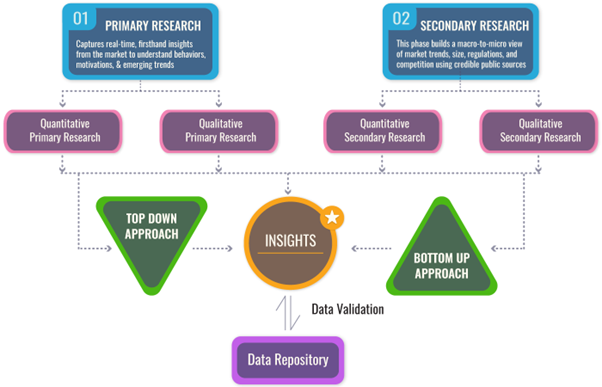
DUAL MODELING: TOP-DOWN + BOTTOM-UP
To ensure robust market estimation, we apply two complementary sizing approaches:
Top-Down Modeling:- Start with broader industry value (e.g., global or regional TAM)
- Apply filters by segment, geography, end-user, or use case
- Adjust with primary insights and validation benchmarks
- Ideal for investor-grade market scans and opportunity mapping
- Aggregate from the ground up using sales volumes, pricing, and unit economics
- Use internal modeling templates aligned with stakeholder data
- Incorporate distributor-level or region-specific inputs
- Most accurate for emerging segments and granular sub-markets
DATA VALIDATION: IN-HOUSE REPOSITORY
We close the loop with proprietary data intelligence built from ongoing projects, industry monitoring, and historical benchmarking. This repository includes:
- Multi-sector market and pricing models
- Key trendlines from past interviews and forecasts
- Benchmarked adoption rates, churn patterns, and ROI indicators
- Industry-specific deviation flags and cross-check logic
- Catches inconsistencies early
- Aligns projections across studies
- Enables consistent, high-trust deliverables