

Gastroesophageal Reflux Disease (GERD) Devices Market Size and Forecast (2026–2034), Global and Regional Growth, Trend, Share and Industry Analysis Report Coverage; By Device Type, By Procedure, By Application, By End User, By Technology, By Distribution Channel; and Geography
2026-09-25
Healthcare
Swetal (Research Analyst)
Description
Gastroesophageal Reflux Disease
(GERD) Devices Market Overview
The global Gastroesophageal
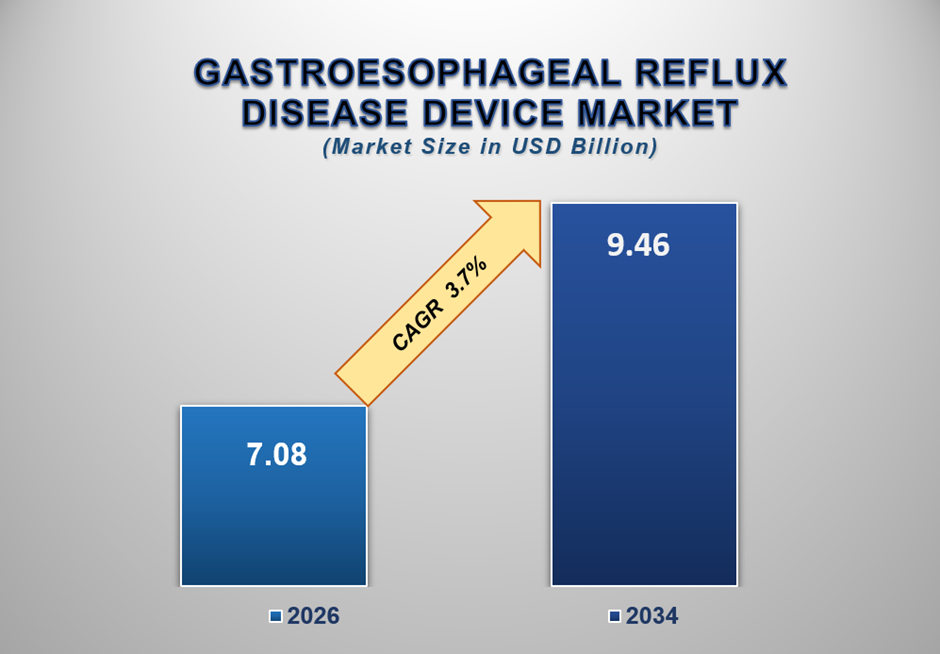
Reflux Disease (GERD) Devices Market is estimated at USD 7.08 billion in
2026 and is projected to reach approximately USD 9.46 billion by 2034,
representing a mathematically implied CAGR of approximately 3.7% during
2026–2034. The market encompasses diagnostic, monitoring, endoscopic,
surgical and other device-based technologies used to establish objective
evidence of reflux, assess esophageal function and manage GERD when lifestyle
modification and pharmacological therapy are insufficient.
GERD device
demand is increasingly being shaped by the movement from symptom-based
diagnosis toward objective physiological assessment. Heartburn and
regurgitation are not sufficient to establish GERD in every patient,
particularly among individuals whose symptoms continue despite proton-pump
inhibitor therapy. Consequently, the clinical pathway increasingly combines
upper gastrointestinal endoscopy with ambulatory reflux monitoring, pH testing,
impedance assessment, and esophageal manometry when appropriate. Medtronic's
current reflux portfolio, for example, includes Bravo wireless pH monitoring,
Digitrapper pH-impedance testing and ManoScan high-resolution manometry,
illustrating how the device market extends beyond the treatment procedure
itself.
The distinction
between diagnostic devices and therapeutic devices is commercially
important. Diagnostic systems help determine whether symptoms are genuinely
associated with acid or non-acid reflux and whether esophageal motility or
another gastrointestinal disorder may be contributing to symptoms. Therapeutic
devices, by contrast, seek to reduce reflux mechanically or through tissue
modification. This creates a multi-stage device ecosystem in which diagnostic
accuracy directly influences the pool of patients considered suitable for
endoscopic or surgical intervention.
Minimally
invasive treatment is another important structural trend. Traditional surgical
fundoplication remains relevant for appropriately selected patients, but the
treatment landscape now includes magnetic sphincter augmentation, endoscopic
fundoplication and radiofrequency-based approaches. The attractiveness of these
technologies is linked to their potential to reduce procedural invasiveness,
preserve anatomy where possible and provide an alternative for selected
patients who do not want indefinite dependence on acid-suppressive medication.
Current market segmentation research identifies fundoplication, magnetic
sphincter augmentation and radiofrequency thermal ablation among the principal
procedure categories.
The market is
also benefiting from advances in wireless and catheter-free reflux
monitoring. Conventional catheter-based monitoring can be uncomfortable and
may interfere with normal daily activities, while wireless systems can provide
extended monitoring under more representative conditions. Medtronic's Bravo
system is designed for gastroesophageal pH measurement and monitoring and can
provide recordings for up to 96 hours, allowing physicians to evaluate reflux
exposure over a longer period.
Another
important development is the growing emphasis on patient selection before
intervention. Device-based GERD treatment is not appropriate for every
patient experiencing heartburn. Objective reflux evidence, anatomical
assessment, symptom profile, esophageal motility and the presence of conditions
such as hiatal hernia can influence the choice of intervention. For example,
Johnson & Johnson's LINX Reflux Management System is indicated for selected
patients with objectively diagnosed GERD and is designed to augment the lower
esophageal sphincter using a flexible magnetic ring. Its U.S. labeling was
expanded in 2024 to include patients with Barrett's esophagus experiencing GERD
symptoms.
The GERD devices
industry is therefore evolving from a relatively procedure-focused market
toward a diagnosis-to-treatment continuum. Hospitals and specialized
gastroenterology centers increasingly require interconnected capabilities for
endoscopic assessment, reflux monitoring, motility testing and intervention.
This trend supports manufacturers that can provide complementary product
portfolios rather than relying on a single procedure or device category.
Regional demand
is influenced by differences in GERD prevalence, obesity, healthcare
expenditure, endoscopy infrastructure, specialist availability and
reimbursement. North America remains an important commercial market because of
its established gastroenterology infrastructure and relatively high adoption of
advanced reflux diagnostics and minimally invasive procedures. Europe also has
a mature specialist base, while Asia Pacific presents considerable expansion
potential as healthcare infrastructure develops, GERD diagnosis improves and
advanced gastrointestinal procedures become more accessible.
At the same
time, the market faces constraints related to procedure cost, reimbursement
variability, clinical training requirements and differences in treatment
guidelines. Many advanced devices require specialized physicians, dedicated
equipment and appropriate patient-selection protocols. This limits rapid
adoption in healthcare systems where reimbursement for device-assisted
interventions is weak, or advanced gastroenterology services remain
concentrated in major urban hospitals.
The competitive
environment is consequently shifting toward technologies that can demonstrate
not only procedural effectiveness but also durability, safety, patient comfort
and economic value. Manufacturers are investing in clinical evidence, physician
education and post-market surveillance because long-term outcomes are
particularly important for implantable or tissue-modifying GERD technologies.
Gastroesophageal Reflux Disease
(GERD) Devices Market Drivers and Opportunities
Rising Burden
of GERD and Increasing Need for Objective Diagnosis
The expanding
population experiencing chronic reflux symptoms remains a fundamental demand
driver for GERD-related medical devices. GERD is not limited to occasional
heartburn; persistent reflux can affect quality of life and, in some patients,
can be associated with complications such as erosive esophagitis and Barrett's
esophagus. As more patients seek specialist evaluation, healthcare providers
require diagnostic technologies capable of distinguishing genuine reflux
disease from other conditions that produce similar symptoms.
A particularly
important opportunity comes from patients with persistent symptoms despite
acid-suppressive medication. Continued symptoms do not necessarily mean
that acid reflux is the underlying cause. Objective reflux monitoring therefore
becomes valuable before escalating treatment or considering an invasive
intervention. Medtronic notes that a substantial proportion of patients with
ongoing symptoms while taking PPIs may not actually have GERD, reinforcing the
clinical role of objective testing rather than symptom-based treatment alone.
This creates a
direct commercial connection between diagnostic devices and therapeutic device
adoption. As physicians become more selective about identifying patients who
genuinely have pathological reflux, demand can increase for pH monitoring,
impedance systems, manometry and advanced endoscopy before treatment decisions
are made.
Shift Toward
Minimally Invasive and Anatomy-Preserving Treatment
The preference
for less invasive interventions is reshaping the therapeutic side of the GERD
devices market. Patients and physicians increasingly consider procedural
burden, recovery time, preservation of normal anatomy and long-term quality of
life alongside symptom control. This has created space for endoscopic and
minimally invasive approaches alongside established laparoscopic procedures.
Magnetic
sphincter augmentation is an example of this shift. The LINX system uses a
flexible ring of magnetic beads around the lower esophageal sphincter to
reinforce the anti-reflux barrier while allowing normal swallowing. Its
continuing post-market clinical surveillance, including a registry designed to
evaluate long-term safety and effectiveness, demonstrates the industry's focus
on generating longer-duration evidence for device-based treatment.
Endoscopic
approaches are also attracting attention because they can provide therapeutic
intervention without conventional open surgery. The market includes endoscopic
fundoplication and radiofrequency technologies, with manufacturers working to
establish clearer patient-selection criteria and longer-term clinical evidence.
Innovation in
Reflux Monitoring, Endoscopic Therapy and Device-Based Care
Technological
innovation represents a major opportunity because GERD management increasingly
depends on quantifiable physiological data. Wireless pH monitoring,
impedance-pH testing, high-resolution manometry and improved endoscopic
visualization can help physicians construct a more precise picture of the
patient's disease.
Wireless
monitoring is particularly relevant because extended recording can capture
reflux patterns that shorter assessments may miss. The Bravo system, for
example, supports pH monitoring for up to 96 hours and enables patients to
maintain relatively normal daily activities during testing.
There is also
renewed commercial activity around radiofrequency therapy. In June 2026, The
Reflux Company announced a manufacturing partnership with Nissha Medical
Technologies to support the planned relaunch of the Stretta procedure.
Stretta uses endoscopically delivered radiofrequency energy to modify tissue
around the lower esophageal sphincter and is positioned as a minimally invasive
alternative that does not require an implant or permanent anatomical
alteration.
This development
demonstrates an important opportunity for the market: established technologies
with accumulated clinical evidence can regain commercial momentum when
manufacturing, distribution and access barriers are addressed.
Gastroesophageal Reflux Disease
Devices Market Scope
|
Report Attributes |
Description |
|
Market Size in 2026 |
USD 7.08 Billion |
|
Market Forecast in 2034 |
USD 9.46 Billion |
|
CAGR % 2026-2034 |
3.7% |
|
Base Year |
2025 |
|
Historic Data |
2021-2025 |
|
Forecast Period |
2026-2034 |
|
Report USP |
Production, Consumption,
Company Share, Company Heatmap, Company Production, Service Type, Growth
Factors and more |
|
Segments Covered |
By Device Type By Procedure |
|
Regional Scope |
● North America |
|
Country Scope |
U.S. |
Gastroesophageal Reflux Disease
(GERD) Devices Market ScopeGastroesophageal Reflux Disease (GERD) Devices
Market Report Segmentation Analysis
The GERD devices
market is segmented according to the clinical function and technological
characteristics of the devices, the procedures in which they are used,
healthcare settings and purchasing channels. Unlike conventional pharmaceutical
markets, device adoption is strongly influenced by physician training,
procedure availability, hospital infrastructure and the diagnostic pathway
preceding treatment.
By Device
Type
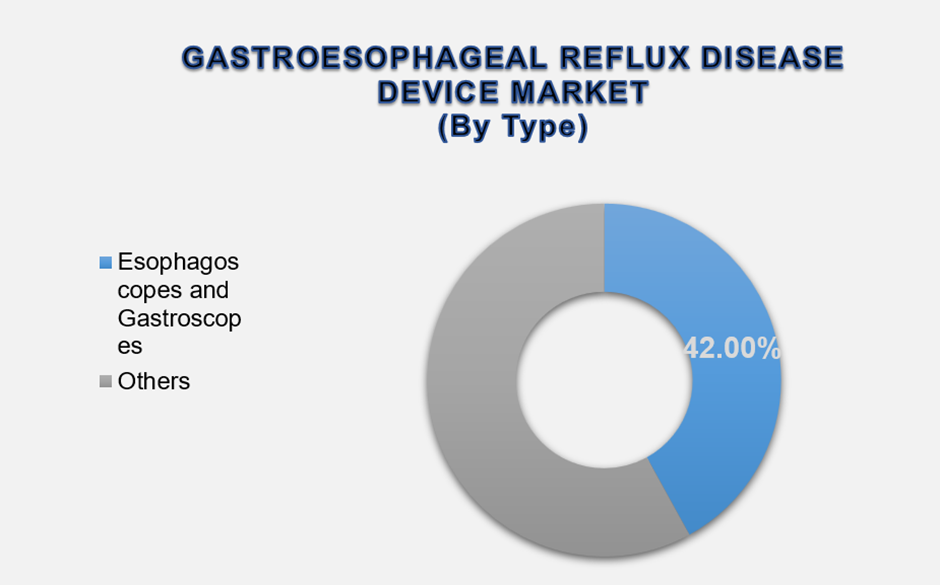
Esophagoscopes
and Gastroscopes represent a foundational device
category because direct visualization of the upper gastrointestinal tract
remains important in evaluating patients with persistent or complicated reflux
symptoms. Current market research estimates that esophagoscopes and gastroscopes
account for approximately 42.0% of product-type revenue in 2026, making
this the single numerical segment highlighted in this report.
The importance
of endoscopic visualization extends beyond confirming reflux itself. Endoscopy
can identify erosive esophagitis, strictures, anatomical abnormalities and
other conditions that may influence subsequent treatment. However, because
reflux may exist without visible erosive changes, endoscopy frequently needs to
be complemented by physiological testing.
pH monitoring
systems are consequently becoming increasingly important for patients whose
endoscopic findings do not adequately explain symptoms. Manometry systems
provide another layer of information by evaluating esophageal motor function
and helping physicians distinguish reflux-related symptoms from swallowing or
motility disorders.
Fundoplication
devices, sphincter augmentation systems and radiofrequency ablation devices
occupy the therapeutic side of the market. Their adoption is closely linked to
patient selection and the availability of physicians experienced in advanced
reflux procedures.
By Procedure
Diagnostic
procedures remain an important gateway to device-based GERD treatment because
objective confirmation can reduce inappropriate escalation of therapy.
Endoscopy, wireless pH monitoring, catheter-based pH-impedance monitoring and
high-resolution manometry may be combined depending on the clinical question.
Fundoplication
continues to represent an established anti-reflux intervention, while magnetic
sphincter augmentation provides an alternative mechanical approach for selected
patients. Radiofrequency thermal ablation represents a different mechanism by
modifying tissue around the gastroesophageal junction rather than permanently
implanting a device.
Endoscopic
anti-reflux procedures are also gaining attention because they can potentially
reduce procedural invasiveness. However, their long-term adoption depends on
evidence concerning durability, retreatment rates, safety and patient-reported
outcomes.
By
Application
The market can
be divided into diagnosis, treatment, monitoring and post-treatment assessment.
Diagnosis generates demand for endoscopy, pH monitoring and manometry systems,
particularly in patients whose symptoms are persistent, atypical or refractory
to conventional medication.
Treatment
represents the higher-value procedural component, covering surgical and
endoscopic approaches intended to restore or strengthen the anti-reflux
barrier. Monitoring provides an ongoing role for reflux measurement
technologies by allowing physicians to evaluate treatment response and clarify
persistent symptoms.
Post-treatment
assessment is becoming increasingly relevant as healthcare providers focus on
longitudinal outcomes rather than simply procedural completion. This favors
technologies capable of producing standardized and reproducible measurements.
By End User
Hospitals remain
central to the market because they combine gastroenterology, surgery,
diagnostic imaging, endoscopy and anesthesia capabilities. Complex anti-reflux
interventions also require multidisciplinary patient evaluation, particularly
when patients have anatomical abnormalities or multiple gastrointestinal
disorders.
Ambulatory
surgical centers are gaining relevance where procedures can be performed safely
without prolonged hospitalization. Their expansion can support device
utilization by offering lower-cost procedural settings and potentially
improving operating-room efficiency.
Specialty
gastroenterology clinics and diagnostic centers are particularly important for
reflux monitoring, endoscopy and physiological testing. The expansion of
specialized outpatient pathways creates opportunities for compact and
workflow-efficient diagnostic systems.
By Technology
Minimally
invasive technology represents one of the most important technological
directions in GERD treatment. Patients and clinicians increasingly seek
interventions that reduce tissue disruption while maintaining clinically
meaningful reflux control.
Endoscopic
technology supports both diagnosis and therapy, making it particularly valuable
because the same broader procedural ecosystem can support multiple stages of
GERD management.
Implantable
technologies such as magnetic sphincter augmentation occupy a specialized
therapeutic niche. Their commercial adoption depends heavily on long-term
evidence, patient selection, surgeon training and reimbursement.
Wireless
monitoring technology is another important development because it can improve
patient tolerance and enable longer monitoring periods. Catheter-based systems
remain relevant because impedance and pH testing can provide information about
acid and non-acid reflux events.
By
Distribution Channel
Direct sales
remain particularly important for high-value hospital equipment, implantable
systems and specialized diagnostic platforms because these products require
clinical training, installation, technical support and physician education.
Distributors are
important in markets where manufacturers do not maintain large direct sales
organizations. They can provide access to regional hospitals, gastroenterology
clinics and diagnostic facilities.
Online channels have a more limited role for specialized capital equipment and regulated therapeutic devices but can support selected accessories, consumables and non-implantable products.
The following segments are part of an in-depth analysis of the Gastroesophageal Reflux Disease (GERD) Devices Market:
|
Market Segments |
|
|
By Device Type |
●
Esophagoscopes and Gastroscopes ●
pH Monitoring Systems ●
Manometry Systems ●
Fundoplication Devices ●
Sphincter Augmentation Devices ●
Radiofrequency Ablation Devices ●
Other GERD Devices |
|
By
Procedure |
●
Diagnostic Procedures ●
Fundoplication Procedures ●
Radiofrequency Thermal Ablation ●
Magnetic Sphincter Augmentation ●
Endoscopic Anti-Reflux Procedures ●
Other Procedures |
|
By Application |
●
Diagnosis ●
Treatment ●
Monitoring ●
Post-Treatment Assessment |
|
By End User |
●
Hospitals ●
Ambulatory Surgical Centers ●
Diagnostic Centers ●
Specialty Gastroenterology Clinics ●
Others |
|
By Technology |
●
Minimally Invasive Technology ●
Endoscopic Technology ●
Implantable Technology ●
Energy-Based Technology ●
Wireless Monitoring Technology ●
Catheter-Based Technology |
|
By Distribution
Channel |
●
Direct Sales ●
Distributors ●
Online Channels ●
Others |
Gastroesophageal Reflux Disease
(GERD) Devices Market Share Analysis By Region
North America
represents a highly developed market for GERD devices due to established
gastroenterology services, widespread endoscopy infrastructure, advanced
reimbursement mechanisms and comparatively high adoption of minimally invasive
gastrointestinal procedures. The region is also home to major manufacturers and
clinical research programs evaluating anti-reflux technologies.
The United
States is particularly important because the GERD treatment pathway
increasingly incorporates objective reflux monitoring before invasive
intervention. The availability of wireless pH testing, high-resolution
manometry and advanced endoscopy supports a more differentiated
diagnosis-to-treatment pathway. Johnson & Johnson's LINX system and
Medtronic's reflux diagnostic portfolio are examples of technologies operating
within this mature clinical environment.
Europe
represents another mature market, supported by specialist gastroenterology
centers and increasing use of physiological reflux testing. Germany, the U.K.,
France, Italy and Spain are important markets because of their established
hospital systems and specialist procedural capacity.
Asia Pacific is
expected to provide significant long-term growth potential as awareness of GERD
increases and advanced gastrointestinal diagnostic and therapeutic capabilities
expand. China, Japan, South Korea and India are particularly important because
of their large patient populations and growing healthcare infrastructure.
Latin America
remains an emerging market where adoption is influenced by healthcare
expenditure, availability of specialist physicians and access to advanced
endoscopic equipment. Brazil and Mexico represent important commercial markets
because of their larger healthcare systems.
The Middle East
and Africa market is developing through investment in specialized hospitals,
medical tourism infrastructure and advanced diagnostic services. Gulf countries
are positioned to adopt premium gastrointestinal technologies relatively
quickly, while broader regional expansion remains dependent on specialist
availability and healthcare investment.
Gastroesophageal
Reflux Disease (GERD) Devices Market Competition Landscape Analysis
The competitive
landscape consists of diversified medical-device companies, gastrointestinal
diagnostic technology manufacturers and specialized anti-reflux device
developers. Competition is increasingly based on clinical evidence, procedural
effectiveness, physician familiarity, reimbursement, product reliability and
the ability to support the entire GERD care pathway.
Johnson &
Johnson MedTech / Ethicon has a significant
position in therapeutic GERD devices through the LINX Reflux Management System.
The company's 2024 U.S. labeling amendment expanded LINX use to patients with
Barrett's esophagus experiencing GERD symptoms, while long-term post-market surveillance
continues through the RETHINK REFLUX registry.
Medtronic has a broad gastroenterology portfolio covering reflux diagnostics
and esophageal function testing. Its current products include Bravo wireless pH
monitoring, Digitrapper pH-impedance testing and ManoScan high-resolution
manometry, providing the company with exposure to several stages of the GERD
diagnostic pathway.
The Reflux
Company is pursuing renewed commercial activity
around Stretta radiofrequency therapy. Its June 2026 manufacturing agreement
with Nissha Medical Technologies is intended to support the relaunch of Stretta
and demonstrates continued commercial interest in non-implant, minimally
invasive GERD intervention.
Other relevant
participants include Olympus Corporation, Fujifilm Holdings Corporation,
PENTAX Medical, Laborie, KARL STORZ, Merit Medical, Diversatek, EndoGastric
Solutions, Cook Medical, Boston Scientific, Stryker and other specialized
gastrointestinal-device companies.
Competitive
differentiation is expected to depend on evidence of durable symptom control
increasingly, patient quality of life, procedural efficiency, reduced
complication rates and compatibility with established diagnostic pathways.
Global
Gastroesophageal Reflux Disease (GERD) Devices Market Recent Developments News
June 2026 –
The Reflux Company and Nissha Medical Technologies:
The Reflux Company announced a manufacturing partnership with Nissha Medical
Technologies to support the planned relaunch of Stretta, a minimally invasive
endoscopic radiofrequency treatment for GERD. The development is relevant
because it could broaden availability of a non-implant therapeutic option.
2026 –
Medtronic: Medtronic continues to expand the
clinical positioning of its reflux diagnostic portfolio, including the Bravo
calibration-free reflux testing system, Digitrapper pH-Z system and ManoScan
high-resolution manometry. The company's current materials emphasize objective
reflux diagnosis and longer monitoring periods, including up to 96 hours with
Bravo.
2026 – GERD
diagnostic pathway development: Current market
research increasingly positions reflux monitoring, endoscopy and manometry as
interconnected technologies rather than isolated device categories. This
reflects the clinical need to differentiate true GERD from other causes of
persistent heartburn and reflux-like symptoms.
Ongoing –
LINX clinical surveillance: Johnson & Johnson
continues long-term post-market evaluation of LINX through the RETHINK REFLUX
registry, with surveillance extending toward 2032 and designed to evaluate
safety, explantation, hiatal hernia recurrence, effectiveness and healthcare utilization.
The Global
Gastroesophageal Reflux Disease (GERD) Devices Market is Dominated by a Few
Large Companies, Such As
●
Johnson & Johnson MedTech /
Ethicon
●
Medtronic
●
Olympus Corporation
●
Fujifilm Holdings Corporation
●
PENTAX Medical
●
Laborie
●
Merit Medical
●
Diversatek
●
EndoGastric Solutions
●
KARL STORZ
●
Boston Scientific
●
Cook Medical
●
Stryker
●
The Reflux Company
● Others
Frequently Asked Questions
Swetal (Research Analyst)
Swetal is a Research Analyst with 4+ years of experience specializing in healthcare market research, medical devices, healthcare IT, and medical technology industry analysis. Her expertise includes competitive intelligence, secondary research, market trend forecasting, and healthcare business insights across global healthcare ecosystems.
She contributes to advanced market research reports by analyzing regulatory frameworks, emerging healthcare technologies, competitive landscapes, and innovation trends shaping the medical industry. With a strong focus on accurate market intelligence, strategic insights, and healthcare industry trends, Swetal supports businesses in making informed, data-backed decisions in a rapidly transforming healthcare environment.
1.
Global Gastroesophageal
Reflux Disease (GERD) Devices Market Introduction and Market Overview
1.1. Objectives of the Study
1.2. Global Gastroesophageal Reflux Disease (GERD) Devices Market Scope
and Market Estimation
1.2.1.
Global Gastroesophageal Reflux
Disease (GERD) Devices Market Size (US$ Million), Market CAGR (%), Market
Forecast (2026 - 2034)
1.2.2.
Global Gastroesophageal Reflux
Disease (GERD) Devices Market Revenue Share (%) and Growth Rate (Y-o-Y)
Analysis (2021 - 2034)
1.3. Market Segmentation
1.3.1.
By Device Type of Global
Gastroesophageal Reflux Disease (GERD) Devices Market
1.3.2.
By Procedure of Global
Gastroesophageal Reflux Disease (GERD) Devices Market
1.3.3.
By Application of Global
Gastroesophageal Reflux Disease (GERD) Devices Market
1.3.4.
By End User of Global
Gastroesophageal Reflux Disease (GERD) Devices Market
1.3.5.
By Technology of Global
Gastroesophageal Reflux Disease (GERD) Devices Market
1.3.6.
By Distribution Channel of
Global Gastroesophageal Reflux Disease (GERD) Devices Market
1.3.7.
Region of Global
Gastroesophageal Reflux Disease (GERD) Devices Market
1.4. Competition Coverage List of Market Participants
1.5. Market Definition: Gastroesophageal Reflux Disease (GERD) Devices
Market
2.
Executive Summary
2.1. Demand Side Trends
2.2. Key Market Trends
2.3. Market Demand (US$ Million) Analysis 2021 – 2025 and Forecast, 2026
– 2034
2.4. Demand and Opportunity Assessment
2.5. Key Developments
2.6. Overview of Regulatory Landscape, Compliance Framework, and Industry
Standards
2.7. Market Entry Strategies
2.8. Market Dynamics
2.8.1.
Drivers
2.8.2.
Limitations
2.8.3.
Opportunities
2.8.4.
Impact Analysis of Drivers and Restraints
2.9. Porter's Five Forces Analysis
2.10.
PEST Analysis
3.
Global Gastroesophageal
Reflux Disease (GERD) Devices Market Estimates & Historical Trend Analysis
(2021 – 2025)
4.
Global Gastroesophageal
Reflux Disease (GERD) Devices Market Estimates & Forecast Trend Analysis,
by Device Type
4.1. Global Gastroesophageal Reflux Disease (GERD) Devices Market Revenue
(US$ Million) Estimates and Forecasts, by Device Type, 2021 - 2034
4.1.1.
Esophagoscopes and Gastroscopes
4.1.2.
pH Monitoring Systems
4.1.3.
Manometry Systems
4.1.4.
Fundoplication Devices
4.1.5.
Sphincter Augmentation Devices
4.1.6.
Radiofrequency Ablation Devices
4.1.7.
Other GERD Devices
5.
Global Gastroesophageal
Reflux Disease (GERD) Devices Market Estimates & Forecast Trend Analysis,
by Procedure
5.1. Global Gastroesophageal Reflux Disease (GERD) Devices Market Revenue
(US$ Million) Estimates and Forecasts, by Procedure, 2021 - 2034
5.1.1.
Diagnostic Procedures
5.1.2.
Fundoplication Procedures
5.1.3.
Radiofrequency Thermal Ablation
5.1.4.
Magnetic Sphincter Augmentation
5.1.5.
Endoscopic Anti-Reflux
Procedures
5.1.6.
Other Procedures
6.
Global Gastroesophageal
Reflux Disease (GERD) Devices Market Estimates & Forecast Trend Analysis,
by Application
6.1. Global Gastroesophageal Reflux Disease (GERD) Devices Market Revenue
(US$ Million) Estimates and Forecasts, by Application, 2021 - 2034
6.1.1.
Diagnosis
6.1.2.
Treatment
6.1.3.
Monitoring
6.1.4.
Post-Treatment Assessment
7.
Global Gastroesophageal
Reflux Disease (GERD) Devices Market Estimates & Forecast Trend Analysis,
by End User
7.1. Global Gastroesophageal Reflux Disease (GERD) Devices Market Revenue
(US$ Million) Estimates and Forecasts, by End User, 2021 - 2034
7.1.1.
Hospitals
7.1.2.
Ambulatory Surgical Centers
7.1.3.
Diagnostic Centers
7.1.4.
Specialty Gastroenterology
Clinics
7.1.5.
Others
8.
Global Gastroesophageal
Reflux Disease (GERD) Devices Market Estimates & Forecast Trend Analysis,
by Technology
8.1. Global Gastroesophageal Reflux Disease (GERD) Devices Market Revenue
(US$ Million) Estimates and Forecasts, by Technology, 2021 - 2034
8.1.1.
Minimally Invasive Technology
8.1.2.
Endoscopic Technology
8.1.3.
Implantable Technology
8.1.4.
Energy-Based Technology
8.1.5.
Wireless Monitoring Technology
8.1.6.
Catheter-Based Technology
9.
Global Gastroesophageal
Reflux Disease (GERD) Devices Market Estimates & Forecast Trend Analysis,
by Distribution Channel
9.1. Global Gastroesophageal Reflux Disease (GERD) Devices Market Revenue
(US$ Million) Estimates and Forecasts, by Distribution Channel, 2021 - 2034
9.1.1.
Direct Sales
9.1.2.
Distributors
9.1.3.
Online Channels
9.1.4.
Others
10. Global Gastroesophageal Reflux Disease (GERD) Devices Market
Estimates & Forecast Trend Analysis, by Region
10.1.
Global Gastroesophageal Reflux
Disease (GERD) Devices Market Revenue (US$ Million) Estimates and Forecasts, by
Region, 2021 - 2034
10.1.1.
North America
10.1.2.
Europe
10.1.3.
Asia Pacific
10.1.4.
Middle East & Africa
10.1.5.
Latin America
11. North America Gastroesophageal Reflux Disease (GERD) Devices Market:
Estimates & Forecast Trend Analysis
11.1.
North America Gastroesophageal
Reflux Disease (GERD) Devices Market Assessments & Key Findings
11.1.1.
North America Gastroesophageal
Reflux Disease (GERD) Devices Market Introduction
11.1.2.
North America Gastroesophageal
Reflux Disease (GERD) Devices Market Size Estimates and Forecast (US$ Million)
(2021 - 2034)
11.1.2.1.
By Device Type
11.1.2.2.
By Procedure
11.1.2.3.
By Application
11.1.2.4.
By End User
11.1.2.5.
By Technology
11.1.2.6.
By Distribution Channel
11.1.2.7.
By Country
11.1.2.7.1.
The U.S.
11.1.2.7.2.
Canada
12. Europe Gastroesophageal Reflux Disease (GERD) Devices Market:
Estimates & Forecast Trend Analysis
12.1.
Europe Gastroesophageal Reflux
Disease (GERD) Devices Market Assessments & Key Findings
12.1.1.
Europe Gastroesophageal Reflux
Disease (GERD) Devices Market Introduction
12.1.2.
Europe Gastroesophageal Reflux
Disease (GERD) Devices Market Size Estimates and Forecast (US$ Million) (2021 -
2034)
12.1.2.1.
By Device Type
12.1.2.2.
By Procedure
12.1.2.3.
By Application
12.1.2.4.
By End User
12.1.2.5.
By Technology
12.1.2.6.
By Distribution Channel
12.1.2.7.
By Country
12.1.2.7.1.
Germany
12.1.2.7.2.
Italy
12.1.2.7.3.
The U.K.
12.1.2.7.4.
France
12.1.2.7.5.
Spain
12.1.2.7.6.
Switzerland
12.1.2.7.7.
Rest of Europe
13. Asia Pacific Gastroesophageal Reflux Disease (GERD) Devices Market: Estimates
& Forecast Trend Analysis
13.1.
Asia Pacific Gastroesophageal
Reflux Disease (GERD) Devices Market Assessments & Key Findings
13.1.1.
Asia Pacific Gastroesophageal
Reflux Disease (GERD) Devices Market Introduction
13.1.2.
Asia Pacific Gastroesophageal
Reflux Disease (GERD) Devices Market Size Estimates and Forecast (US$ Million)
(2021 - 2034)
13.1.2.1.
By Device Type
13.1.2.2.
By Procedure
13.1.2.3.
By Application
13.1.2.4.
By End User
13.1.2.5.
By Technology
13.1.2.6.
By Distribution Channel
13.1.2.7.
By Country
13.1.2.7.1.
China
13.1.2.7.2.
Japan
13.1.2.7.3.
India
13.1.2.7.4.
Australia
13.1.2.7.5.
South Korea
13.1.2.7.6.
Rest of Asia Pacific
14. Middle East & Africa Gastroesophageal Reflux Disease (GERD)
Devices Market: Estimates & Forecast Trend Analysis
14.1.
Middle East & Africa
Gastroesophageal Reflux Disease (GERD) Devices Market Assessments & Key
Findings
14.1.1.
Middle East & Africa
Gastroesophageal Reflux Disease (GERD) Devices Market Introduction
14.1.2.
Middle East & Africa
Gastroesophageal Reflux Disease (GERD) Devices Market Size Estimates and
Forecast (US$ Million) (2021 - 2034)
14.1.2.1.
By Device Type
14.1.2.2.
By Procedure
14.1.2.3.
By Application
14.1.2.4.
By End User
14.1.2.5.
By Technology
14.1.2.6.
By Distribution Channel
14.1.2.7.
By Country
14.1.2.7.1.
UAE
14.1.2.7.2.
Saudi Arabia
14.1.2.7.3.
South Africa
14.1.2.7.4.
Rest of Middle East &
Africa
15. Latin America Gastroesophageal Reflux Disease (GERD) Devices Market:
Estimates & Forecast Trend Analysis
15.1.
Latin America Gastroesophageal
Reflux Disease (GERD) Devices Market Assessments & Key Findings
15.1.1.
Latin America Gastroesophageal
Reflux Disease (GERD) Devices Market Introduction
15.1.2.
Latin America Gastroesophageal
Reflux Disease (GERD) Devices Market Size Estimates and Forecast (US$ Million)
(2021 - 2034)
15.1.2.1.
By Device Type
15.1.2.2.
By Procedure
15.1.2.3.
By Application
15.1.2.4.
By End User
15.1.2.5.
By Technology
15.1.2.6.
By Distribution Channel
15.1.2.7.
By Country
15.1.2.7.1.
Brazil
15.1.2.7.2.
Mexico
15.1.2.7.3.
Argentina
15.1.2.7.4.
Rest of Latin America
16. Competition Landscape
16.1.
Global Gastroesophageal Reflux
Disease (GERD) Devices Market Product Mapping
16.2.
Global Gastroesophageal Reflux
Disease (GERD) Devices Market Concentration Analysis, by Leading Players /
Innovators / Emerging Players / New Entrants
16.3.
Global Gastroesophageal Reflux
Disease (GERD) Devices Market Tier Structure Analysis
16.4.
Global Gastroesophageal Reflux
Disease (GERD) Devices Market Concentration & Company Market Shares (%)
Analysis, 2026
17. Company Profiles
17.1.
Johnson & Johnson MedTech /
Ethicon
17.1.1.
Company Overview & Key
Stats
17.1.2.
Financial Performance &
KPIs
17.1.3.
Product Portfolio
17.1.4.
SWOT Analysis
17.1.5.
Business Strategy & Recent
Developments
*Similar details would be provided for all
the players mentioned below
17.2.
Medtronic
17.3.
Olympus Corporation
17.4.
Fujifilm Holdings Corporation
17.5.
PENTAX Medical
17.6.
Laborie
17.7.
Merit Medical
17.8.
Diversatek
17.9.
EndoGastric Solutions
17.10.
KARL STORZ
17.11.
Boston Scientific
17.12.
Cook Medical
17.13.
Stryker
17.14.
The Reflux Company
17.15.
Others
18. Research Findings & Conclusion
19. Assumptions & Acronyms Used
20. Research Methodology
20.1.
External Databases
20.2.
Internal Proprietary Database
20.3.
Primary Research
20.4.
Secondary Research
20.5.
Assumptions
20.6.
Limitations
20.7.
Report FAQ
Our Research Methodology
"Insight without rigor is just noise."
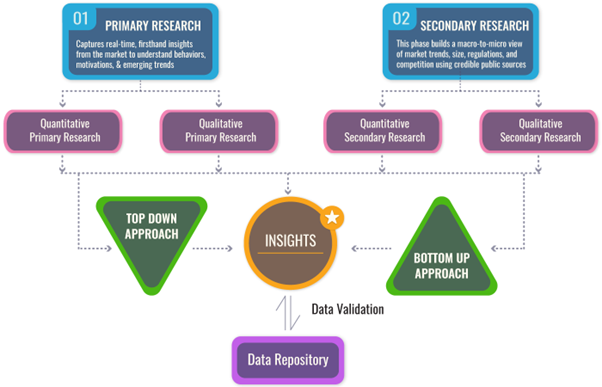
We follow a comprehensive, multi-phase research framework designed to deliver accurate, strategic, and decision-ready intelligence. Our process integrates primary and secondary research , both quantitative and qualitative , along with dual modeling techniques ( top-down and bottom-up) and a final layer of validation through our proprietary in-house repository.
PRIMARY RESEARCH
Primary research captures real-time, firsthand insights from the market to understand behaviors, motivations, and emerging trends.
1. Quantitative Primary Research
Objective: Generate statistically significant data directly from market participants.
Approaches:- Structured surveys with customers, distributors, and field agents
- Mobile-based data collection for point-of-sale audits and usage behavior
- Phone-based interviews (CATI) for market sizing and product feedback
- Online polling around industry events and digital campaigns
- Purchase frequency by customer type
- Channel performance across geographies
- Feature demand by application or demographic
2. Qualitative Primary Research
Objective: Explore decision-making drivers, pain points, and market readiness.
Approaches:- In-depth interviews (IDIs) with executives, product managers, and key decision-makers
- Focus groups among end users and early adopters
- Site visits and observational research for consumer products
- Informal field-level discussions for regional and cultural nuances
SECONDARY RESEARCH
This phase helps establish a macro-to-micro understanding of market trends, size, regulation, and competitive dynamics, sourced from credible and public domain information.
1. Quantitative Secondary Research
Objective: Model market value and segment-level forecasts based on published data.
Sources include:- Financial reports and investor summaries
- Government trade data, customs records, and regulatory statistics
- Industry association publications and economic databases
- Channel performance and pricing data from marketplace listings
- Revenue splits, pricing trends, and CAGR estimates
- Supply-side capacity and volume tracking
- Investment analysis and funding benchmarks
2. Qualitative Secondary Research
Objective: Capture strategic direction, innovation signals, and behavioral trends.
Sources include:- Company announcements, roadmaps, and product pipelines
- Publicly available whitepapers, conference abstracts, and academic research
- Regulatory body publications and policy briefs
- Social and media sentiment scanning for early-stage shifts
- Strategic shifts in market positioning
- Unmet needs and white spaces
- Regulatory triggers and compliance impact
DUAL MODELING: TOP-DOWN + BOTTOM-UP
To ensure robust market estimation, we apply two complementary sizing approaches:
Top-Down Modeling:- Start with broader industry value (e.g., global or regional TAM)
- Apply filters by segment, geography, end-user, or use case
- Adjust with primary insights and validation benchmarks
- Ideal for investor-grade market scans and opportunity mapping
- Aggregate from the ground up using sales volumes, pricing, and unit economics
- Use internal modeling templates aligned with stakeholder data
- Incorporate distributor-level or region-specific inputs
- Most accurate for emerging segments and granular sub-markets
DATA VALIDATION: IN-HOUSE REPOSITORY
We close the loop with proprietary data intelligence built from ongoing projects, industry monitoring, and historical benchmarking. This repository includes:
- Multi-sector market and pricing models
- Key trendlines from past interviews and forecasts
- Benchmarked adoption rates, churn patterns, and ROI indicators
- Industry-specific deviation flags and cross-check logic
- Catches inconsistencies early
- Aligns projections across studies
- Enables consistent, high-trust deliverables