
Germany Biochip Market Size and Forecast (2026–2034), Regional Growth, Trend, Share and Industry Analysis Report Coverage: By Type (DNA Chips, Protein Chips, Lab-on-a-Chip (LOC), Cell Arrays, Others); By Product (Consumables, Instruments, Software and Services); By Application (Disease Diagnostics, Drug Discovery and Development, Genomics, Agricultural Biotechnology, Others); By End User (Biotechnology and Pharmaceutical Companies, Hospitals and Diagnostic Centers, Academic and Research Institutes, Others)
2026-11-17
Healthcare
Swetal (Research Analyst)
Description
Germany Biochip Market Overview
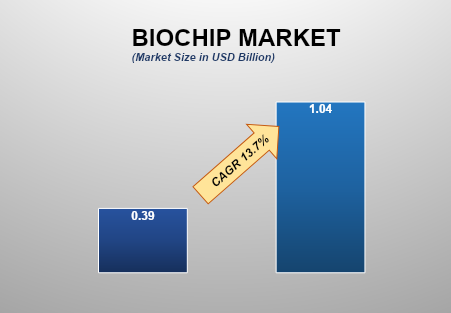
The Germany biochip market is projected to expand from USD 0.39 billion in 2026 to USD 1.04 billion by 2034, registering a CAGR of 13.7% during 2026–2034. Germany's biochip market is supported by its well-developed biotechnology, pharmaceuticals, medical diagnostics, and life sciences industries, as well as its extensive research and development capabilities in the areas of molecular biology, genomics, proteomics, and precision medicine. The increasing uptake of biochips in clinical diagnostics, drug discovery, disease detection, genetic testing, and pharmaceutical research is leading to increased demand for the latest advanced technologies such as microarrays, lab-on-chip, and tissue-on-chip. Germany's biotechnology ecosystem, advanced laboratory facilities, and partnerships between industry and research institutes help technology commercialization. However, the high cost of development and equipment, the complexity of technical processes, and the necessity for regulatory approval can hinder the use of this technology, particularly among small laboratories and health facilities. Germany is a good market due to its domestic research capabilities in customized DNA and protein microarrays and advanced biochip technologies, as exemplified by the research projects carried out at Fraunhofer IGB. Therefore, manufacturers of specialized biochip platforms and integrated analytical solutions will benefit from those opportunities.
Germany Biochip Market Growth Drivers
Increasing Demand for Advanced Genomic and Proteomic Analysis
The advancement of genetic medicine and RNA-based therapeutics in Germany creates an increasing need for genomic analysis and nucleic acid characterization, as well as new molecular research technologies. For instance, in July 2026, Grünenthal GmbH joined the Cluster for Nucleic Acid Therapeutics Munich (CNATM), which is an innovative network of universities, research institutions, and biotechnology companies based in Germany. By collaborating with CNATM, Grünenthal plans to enhance its drug discovery capabilities using oligonucleotides, such as antisense oligonucleotides (ASOs) and small interfering RNA (siRNA), with a focus on molecular design, targeted delivery, and cellular activity in neural tissues. This indicates the growing importance of advanced genetic research in Germany and is likely to lead to an increased demand for biochip-based technologies used in gene expression profiling and nucleic acid analysis. Moreover, booming research activity can give rise to new opportunities for biochip manufacturers offering high-throughput genomic and proteomic analysis platforms for pharmaceutical organizations and biotechnology research laboratories.
Growing Application of Microfluidic Platforms in Pharmaceutical Research
The rise of microfluidics technology in drug development and biotechnology processes has led to a surge in the demand for biochips that are capable of conducting complex biological activities in a small and controlled environment. The microfluidics systems provide the unique feature of easy control of small amounts of liquids, automatic processing of samples, cytological analysis of cells, and testing of a few compounds simultaneously in controlled conditions. The microfluidic processes are significant in reducing the quantity of samples and reagents used in experiments, increasing the throughput of tests, and enabling reproducibility of tests. Hence, microfluidic biochips are widely used in the fields of drug development, toxicity testing, and disease modeling. Because of the increasing focus on quick drug development and advances in in vitro testing, more pharmaceutical companies and laboratories resort to the use of microfluidic systems for their research purposes.
Germany Biochip Market Restraint
Reproducibility and Standardization Challenges in Biochip Manufacturing
The challenges in the biochip industry stem from the lack of consistency and reliability in the performance of biochip devices. This is in part due to the complexities involved in the biochip design and fabrication processes as well as the different biological sample preparation methods utilized in bioassays. In particular, the dimensions of biochips, surface modifications, and fluid delivery methods can have a profound effect on the results of biochip-based experiments. Another difficulty in ensuring uniform performance of biochips is the lack of comprehensive manufacturing protocols aimed at standardizing fabrication and testing methodologies in the biochip industry. Naturally, the implications of these challenges involve the need for biochip manufacturers to spend more resources on fine-tuning the biochip production process and improving the quality-control systems. The complications caused by the lack of consistency in the biochip performance are partly responsible for the slow adoption of biochip technologies in clinical settings.
Germany Biochip Market Opportunities
Commercialization of Multi-Organ-on-Chip Systems
The increased need for sophisticated technologies for preclinical testing is opening the way to commercializing multi-organ-on-chip devices which allow simulating the harmony of several human organs in laboratory conditions. This type of interconnected microfluidic platform provides a unique opportunity to conduct studies on drug absorption, distribution, metabolism, toxicity, and reactions of specific organs utilizing various tissue models of biochips. As this industry is experiencing growing interest from pharmaceutical companies in creating models of human-affine diseases, estimating drug safety, and minimizing experiments on animals, manufacturers are receiving a chance to design robust and efficient multi-organ microfluidic biochips. The joint use of microfluidics with cell culture technology, biosensors, and real-time monitoring systems makes it possible to widen the scope of research work performed with the help of these biochips.
Development of Application-Specific Biochips for Oncology and Biomarker Research
Increasing demand for focused research in the oncology sector will result in increased possibilities for the production of specialized biochips used for detecting, quantifying, and analyzing cancer-specific biomarkers, gene alteration, and protein expression patterns. The commercially available DNA-, protein-, and tissue-based biochips can aid in tumor profiling, discovery of disease-associated molecular signatures, evaluation of drug responsiveness, and systematic assessment of prospective therapy targets. The rising focus on precision oncology and choosing treatment on the basis of biomarker-driven results is making manufacturers strive for new biochip technologies featuring higher sensitivity, multiplexing capability, and applicability to sophisticated biological samples. There will be more possibilities in the area of producing personalized biochips for liquid biopsy purposes, creation of companion diagnostics, and patient medicines, as manufacturers will be able to meet the demands of the changing needs of the pharmaceutical companies, developers, and specialized laboratories.
Germany Biochip Market Scope
Germany Biochip Market Report Segmentation Analysis
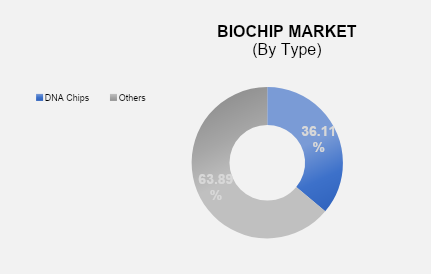
DNA Chips Segment Is Expected to Dominate the Germany Biochip Market During the Forecast Period
The segment of DNA chips will continue to dominate the Germany Biochip Market, thanks to their vast applications in gene expression analysis, genotyping, mutation discovery, and genetic profiling. DNA microarrays are being increasingly accepted to examine genetic variations and detect genes responsible for diseases due to the presence of developed molecular biology and pharmaceutical research in the country. As a result of increasing research activities in oncology and genetic disorders, there is a growing need for high-density DNA chips that enable the simultaneous examination of multiple genetic targets. Furthermore, their huge processing capacity of data with low sample size makes them to be highly important in the field of pharmaceutical research, as well as in the process of discovery of biomarkers and diagnostic developments. The growth of demand for DNA chips across German biotechnology firms, research institutions, and diagnostic laboratories will also be supported by the presence of available microarray instruments, reagents, and analytical technologies.
Consumables Segment Is Expected to Dominate the Germany Biochip Market During the Forecast Period
According to projections, the consumables segment has a high likelihood of dominating the Germany Biochip Market as there are constant needs for the reagents, assay kits, microarray slides, cartridges, sample preparation materials, and several other disposable components required for the analysis through biochip. There are consistently being carried out research activities in the areas of genomics, proteomics, molecular diagnostics, and pharmaceutical industry, which leads to generation of ongoing need for consumables.
The increased use of protein chips, DNA chips, and microfluidic platforms will lead to the increased demand for reagents specific to the respective application and their respective disposable components. Unlike capital equipment, which is replaced less frequently, disposables are responsible for the repeat purchases over the lifetime of the equipment for biochip testing systems. This repeat requirement is driven by increasing testing volume as well as ongoing research and experiment needs in laboratories and directs its impact on the market advantage of the segment in Germany.
Disease Diagnostics Segment Is Expected to Dominate the Germany Biochip Market During the Forecast Period
The Germany Biochip Market's leading segment will likely be disease diagnostics, thanks to the increasing utilization of biochip technologies for the discovery of genetic diseases, cancer markers, infectious diseases, and other kinds of molecular disruptions in the population. The well-established clinical laboratory setup of the country and strong use of molecular diagnostics techniques contribute to using DNA chips, protein chips, and lab-on-chips for the analysis of various biological markers. The rise in demand for early disease discovery, accurate molecular diagnostic processes, and accurate personalized diagnostics is pushing diagnostic laboratories and medical providers toward the adoption of biochip technologies. The new opportunity to conduct high-throughput analysis, in addition to the reduction in samples needed for the analysis and the possibility to detect several diseases at once, makes this technology feasible for clinical diagnostics.
Biotechnology and Pharmaceutical Companies Segment Is Expected to Dominate the Germany Biochip Market During the Forecast Period
The segment comprising biotechnology and pharmaceutical companies is set to lead the Germany Biochip market thanks to the country’s highly developed pharmaceutical manufacturing base and increasing activities in biotech research. Biochip technology is extensively used in drug development activities as well as identifying targets, gene expression profiling, biomarker analyses, screening compounds, and conducting preclinical toxicity analyses. In addition, with the growing emphasis on precision medicine, molecular drug development, and RNA therapies, the demand for sophisticated DNA chips, protein chips, and microfluidic devices capable of generating rigorous biological information is increasing. Biochips also allow researchers in the pharmaceutical sphere to carry out multiplex tests using smaller amounts of samples and reagents, which in turn makes the research more effective and makes it possible for scientists to evaluate potential drugs quickly. The growing investments in biotechnology innovations and advanced drug development procedures are expected to keep the interest in specialized products of the biochip industry among German pharmaceutical and biotech companies.
The following segments are part of an in-depth analysis of the Germany Biochip Market:
Germany Biochip Market Competition Landscape Analysis
Germany’s biochip market is a mix of international biotechnology and diagnostic companies and domestic manufacturers who focus on their niche technologies. Some of the popular names in the competition include Agilent Technologies, Thermo Fisher Scientific, Illumina, Bio-Rad Laboratories, QIAGEN, Roche, and Merck KGaA who win the competition by introducing new DNA microarrays, genomic analysis platforms, and molecular diagnostic technologies. Domestic companies like microfluidic ChipShop GmbH, TissUse GmbH, and Dynamic42 GmbH focus on specialized microfluidic technologies, organ-on-chip systems, and advanced tissue models making the competitive landscape much more diverse. Multinational companies have a wider range of products, have been in the business longer, and have already established networks of clients. The competition is fought on the basis of chip designs customized for particular applications. Competitiveness is achieved through product innovation, integration of analytical functions, development of specialized research platforms, and collaboration with biotech and pharma companies.
Germany Biochip Market Recent Developments News:
In September 2026, the Berlin Institute of Health (BIH) at Charité, in collaboration with Roche Diagnostics, ZEISS, Bruker Daltonics, Hamilton Germany, and other technology partners, launched its Spatial Diagnostics Platform. The platform integrates high-resolution 3D microscopy, genomic and proteomic analysis, and AI-driven evaluation to support diagnostics for cancer, inflammatory conditions, and rare genetic diseases. The development highlights growing integration of molecular analysis, imaging, and advanced analytical technologies in Germany's precision diagnostics ecosystem.
In April 2026, Festo SE & Co. KG, together with experts from TU Darmstadt, developed an automated organ-on-chip demonstration integrating bioprinting and microfluidic chip technologies. The system uses a bioprinter to deposit human cell material onto a microfluidic chip, enabling the growth of organ-like tissue structures. The development demonstrates the potential for automation in organ-on-chip manufacturing and pharmaceutical research, supporting more standardized production of advanced biological testing platforms.
The Germany Biochip Market is dominated by a few large companies, such as
Agilent Technologies, Inc.
Thermo Fisher Scientific Inc.
Illumina, Inc.
Standard BioTools Inc.
Bio-Rad Laboratories, Inc.
Revvity, Inc.
Abbott Laboratories
Bio-Techne Corporation
QIAGEN N.V.
Roche Holding AG
Merck KGaA
microfluidic ChipShop GmbH
TissUse GmbH
Dynamic42 GmbH
ibidi GmbH
cellasys GmbH
VitrofluidiX GmbH
XanTec bioanalytics GmbH
CanChip GmbH
Biametrics GmbH
Other Prominent Players
Frequently Asked Questions
Swetal (Research Analyst)
Swetal is a Research Analyst with 4+ years of experience specializing in healthcare market research, medical devices, healthcare IT, and medical technology industry analysis. Her expertise includes competitive intelligence, secondary research, market trend forecasting, and healthcare business insights across global healthcare ecosystems.
She contributes to advanced market research reports by analyzing regulatory frameworks, emerging healthcare technologies, competitive landscapes, and innovation trends shaping the medical industry. With a strong focus on accurate market intelligence, strategic insights, and healthcare industry trends, Swetal supports businesses in making informed, data-backed decisions in a rapidly transforming healthcare environment.
Germany Biochip Market Introduction and Market Overview
Objectives of the Study
Market Segmentation
Type of the Germany Biochip Market
Products of the Germany Biochip Market
Application of the Germany Biochip Market
End User of the Germany Biochip Market
Competition Coverage List of Market Participants
Market Definition: Biochip Market
Executive Summary
Germany Biochip Market Estimation & Forecast
Germany Biochip Market Size (US$ Million) Estimates & Historical Trend Analysis (2021 - 2025)
Germany Peptide Cancer Vaccine Overall Market Size (US$ Million), Growth Rate (Y-o-Y), Market CAGR (%), Market Forecast (2026 - 2034)
Snapshot of Germany Biochip Market
Germany Biochip Market Revenue Share (%) 2025
Key Competitors & Key Insights
Market Overview (Qualitative Analysis)
Demand Side Trends
Supply Side Trends / Manufacturing Trends
Demand and Opportunity Assessment, 2026 - 2034
Market Dynamics
Drivers
Limitations
Opportunities
Impact Analysis of Drivers and Restraints
Key Developments
Regulatory Landscape
Pricing Analysis
Supply Chain Analysis
Porter’s Five Forces Analysis
Bargaining Power of Suppliers
Bargaining Power of Buyers
Threat of Substitutes
Threat of New Entrants
Competitive Rivalry
PEST Analysis
Political Factors
Economic Factors
Social Factors
Technology Factors
Germany Biochip Market Estimates & Forecast Trend Analysis, by Type
Germany Biochip Market Assessments & Key Findings, by Type
Germany Biochip Market Revenue (US$ Million) Estimates and Forecasts, by Type, 2021 - 2034
Protein Chips
Lab-on-a-Chip (LOC)
Cell Arrays
Others
Germany Biochip Market Estimates & Forecast Trend Analysis, by Product
Germany Biochip Market Assessments & Key Findings, by Product
Germany Biochip Market Revenue (US$ Million) Estimates and Forecasts, by Product, 2021 - 2034
Consumables
Instruments
Software and Services
Germany Biochip Market Estimates & Forecast Trend Analysis, by Application
Germany Biochip Market Assessments & Key Findings, by Application
Germany Biochip Market Revenue (US$ Million) Estimates and Forecasts, by Application, 2021 - 2034
Disease Diagnostics
Drug Discovery and Development
Genomics
Agricultural Biotechnology
Others
Germany Biochip Market Estimates & Forecast Trend Analysis, by End User
Germany Biochip Market Assessments & Key Findings, by End User
Germany Biochip Market Revenue (US$ Million) Estimates and Forecasts, by End User, 2021 - 2034
Biotechnology and Pharmaceutical Companies
Hospitals and Diagnostic Center
Academic and Research Institutes
Others
Competition Landscape
Germany Biochip Market Product Mapping
Germany Biochip Market Concentration Analysis, by Leading Players / Innovators / Emerging Players / New Entrants
Germany Biochip Market Tier Structure Analysis
Germany Biochip Market Concentration & Company Market Shares (%) Analysis, 2025
Company Profiles
Agilent Technologies, Inc.
Company Overview & Key Stats
Financial Performance & KPIs
Product Portfolio
SWOT Analysis
Business Strategy & Recent Developments
* Similar details would be provided for all the players mentioned below
Thermo Fisher Scientific Inc.
Illumina, Inc.
Standard BioTools Inc.
Bio-Rad Laboratories, Inc.
Revvity, Inc.
Abbott Laboratories
Bio-Techne Corporation
QIAGEN N.V.
Roche Holding AG
Merck KGaA
microfluidic ChipShop GmbH
TissUse GmbH
Dynamic42 GmbH
ibidi GmbH
cellasys GmbH
VitrofluidiX GmbH
XanTec bioanalytics GmbH
CanChip GmbH
Biametrics GmbH
Other Prominent Players
Research Findings & Conclusion
Assumptions & Acronyms Used
Research Methodology
External Transportation / Databases
Internal Proprietary Database
Primary Research
Secondary Research
Assumptions
Limitations
Report FAQs
Our Research Methodology
"Insight without rigor is just noise."
We follow a comprehensive, multi-phase research framework designed to deliver accurate, strategic, and decision-ready intelligence. Our process integrates primary and secondary research , both quantitative and qualitative , along with dual modeling techniques ( top-down and bottom-up) and a final layer of validation through our proprietary in-house repository.
PRIMARY RESEARCH
Primary research captures real-time, firsthand insights from the market to understand behaviors, motivations, and emerging trends.
1. Quantitative Primary Research
Objective: Generate statistically significant data directly from market participants.
Approaches:- Structured surveys with customers, distributors, and field agents
- Mobile-based data collection for point-of-sale audits and usage behavior
- Phone-based interviews (CATI) for market sizing and product feedback
- Online polling around industry events and digital campaigns
- Purchase frequency by customer type
- Channel performance across geographies
- Feature demand by application or demographic
2. Qualitative Primary Research
Objective: Explore decision-making drivers, pain points, and market readiness.
Approaches:- In-depth interviews (IDIs) with executives, product managers, and key decision-makers
- Focus groups among end users and early adopters
- Site visits and observational research for consumer products
- Informal field-level discussions for regional and cultural nuances
SECONDARY RESEARCH
This phase helps establish a macro-to-micro understanding of market trends, size, regulation, and competitive dynamics, sourced from credible and public domain information.
1. Quantitative Secondary Research
Objective: Model market value and segment-level forecasts based on published data.
Sources include:- Financial reports and investor summaries
- Government trade data, customs records, and regulatory statistics
- Industry association publications and economic databases
- Channel performance and pricing data from marketplace listings
- Revenue splits, pricing trends, and CAGR estimates
- Supply-side capacity and volume tracking
- Investment analysis and funding benchmarks
2. Qualitative Secondary Research
Objective: Capture strategic direction, innovation signals, and behavioral trends.
Sources include:- Company announcements, roadmaps, and product pipelines
- Publicly available whitepapers, conference abstracts, and academic research
- Regulatory body publications and policy briefs
- Social and media sentiment scanning for early-stage shifts
- Strategic shifts in market positioning
- Unmet needs and white spaces
- Regulatory triggers and compliance impact
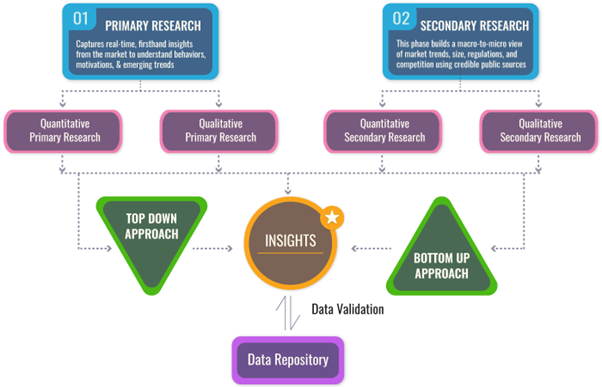
DUAL MODELING: TOP-DOWN + BOTTOM-UP
To ensure robust market estimation, we apply two complementary sizing approaches:
Top-Down Modeling:- Start with broader industry value (e.g., global or regional TAM)
- Apply filters by segment, geography, end-user, or use case
- Adjust with primary insights and validation benchmarks
- Ideal for investor-grade market scans and opportunity mapping
- Aggregate from the ground up using sales volumes, pricing, and unit economics
- Use internal modeling templates aligned with stakeholder data
- Incorporate distributor-level or region-specific inputs
- Most accurate for emerging segments and granular sub-markets
DATA VALIDATION: IN-HOUSE REPOSITORY
We close the loop with proprietary data intelligence built from ongoing projects, industry monitoring, and historical benchmarking. This repository includes:
- Multi-sector market and pricing models
- Key trendlines from past interviews and forecasts
- Benchmarked adoption rates, churn patterns, and ROI indicators
- Industry-specific deviation flags and cross-check logic
- Catches inconsistencies early
- Aligns projections across studies
- Enables consistent, high-trust deliverables