

Gluten-free Chocolate Market Size and Forecast (2026 - 2034), Report Coverage: By Product Type (Dark Chocolate, Milk Chocolate, White Chocolate, Chocolate Chips and Baking Chocolate, Chocolate Bars and Tablets, Truffles and Filled Chocolates, Other Gluten-free Chocolate Products), By Nature (Conventional, Organic), By Format (Bars and Tablets, Baking Chips and Chunks, Truffles and Pralines, Chocolate Coatings and Couverture, Chocolate Spreads and Other Formats), By Distribution Channel (Supermarkets and Hypermarkets, Convenience Stores, Specialty Stores, Online Retail, Direct-to-Consumer and Other Channels) and Geography (North America, Europe, Asia Pacific, Latin America, Middle East and Africa), and Geography
2026-11-04
Consumer Products
Aishwarya Panbude (Research Analyst)
Description
Gluten-free Chocolate Market Overview
The global gluten-free chocolate market is witnessing sustained expansion as consumers increasingly seek confectionery products that accommodate dietary restrictions without compromising taste, texture, product quality, or the overall chocolate-eating experience. Gluten-free chocolate has evolved from a specialist food category into a broader confectionery segment serving consumers with celiac disease, gluten sensitivity, wheat-related dietary restrictions, and those who prefer products with clearly communicated ingredient and allergen information. The market encompasses chocolate products formulated without gluten-containing ingredients and manufactured under suitable controls to reduce the risk of cross-contact during production, processing, storage, and packaging.
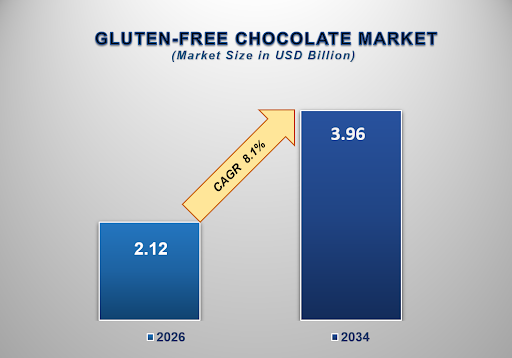
The global Gluten-free Chocolate Market was valued at USD 2.12 billion in 2026 and is projected to reach USD 3.96 billion by 2034, registering a compound annual growth rate (CAGR) of 8.1% from 2026 to 2034. Growth is supported by rising awareness of gluten-related dietary conditions, the increasing availability of free-from confectionery, the expansion of specialty food retailing and the development of products that combine gluten-free suitability with familiar chocolate varieties. Manufacturers are extending their product ranges across dark chocolate, milk chocolate, white chocolate, chocolate bars, baking ingredients, filled chocolates, and premium confectionery formats to appeal to consumers with different tastes, consumption occasions, and purchasing preferences.
The market's expansion also reflects changing expectations concerning food labeling and product transparency. Consumers who must avoid gluten often evaluate more than the ingredient list alone. They may consider manufacturing practices, allergen declarations, certification, packaging information and the reliability of the brand's communication. These factors create opportunities for companies that can establish consistent product quality and communicate gluten-free suitability clearly. For manufacturers, maintaining confidence requires attention to ingredient sourcing, formulation, production scheduling, cleaning procedures and quality assurance rather than simply removing wheat-based ingredients from a recipe.
The gluten-free chocolate category benefits from the versatility of chocolate as both a standalone confectionery product and an ingredient used in desserts, bakery products, snacks and gifting assortments. Chocolate itself can be produced without gluten-containing ingredients, but certain formulations may incorporate biscuit pieces, wafer inclusions, cereal ingredients, malt-based components, cookie crumbs, or other additions that contain gluten. As a result, the gluten-free chocolate category includes both naturally gluten-free formulations and products deliberately developed, tested and labeled to meet gluten-free requirements.
Product innovation is increasingly centered on retaining conventional chocolate characteristics while meeting dietary requirements. Manufacturers are working across cocoa percentages, sweetness levels, milk content, plant-based ingredients, fillings, and inclusions to offer products that resemble mainstream confectionery in taste and presentation. Dark chocolate can appeal to consumers who prefer pronounced cocoa flavor, while milk chocolate remains relevant for consumers seeking a familiar, creamy profile. White chocolate, filled chocolates, baking chips and couverture formats extend the market into dessert preparation, home baking, professional food service, and specialty confectionery.
The competitive landscape includes multinational chocolate manufacturers, specialist gluten-free food producers, premium chocolate makers, organic confectionery brands and companies focused on allergen-conscious products. Large manufacturers can benefit from established sourcing networks, production scale, broad retail relationships, and marketing capabilities. Smaller specialist brands can compete through distinctive formulations, carefully managed manufacturing processes, transparent sourcing, organic positioning, and closer engagement with dietary-restricted consumer communities. Competition therefore involves a combination of taste, product safety, availability, price, certification, brand credibility and the ability to respond to changing consumer preferences.
Distribution is another important contributor to market development. Supermarkets and hypermarkets allow consumers to compare brands and purchase gluten-free chocolate alongside regular grocery items. Specialty retailers provide a more focused selection of free-from products, while online retail expands access to niche brands, dietary-specific assortments and products that may not be stocked locally. Direct-to-consumer channels can also help brands communicate ingredient information, offer curated selections and develop repeat-purchase relationships with customers.
Over the forecast period, the market is expected to benefit from a combination of mainstream retail integration, premium product development, growing interest in dietary transparency and the wider availability of gluten-free confectionery. However, performance will vary according to regional awareness, purchasing power, certification requirements, product pricing and the strength of local distribution networks. Companies that balance reliable gluten-free production practices with appealing taste, accessible formats and effective distribution will be better positioned to build long-term consumer loyalty.
Market Definition
The gluten-free chocolate market comprises the production, processing, marketing and distribution of chocolate products formulated without gluten-containing ingredients and intended for consumers seeking or requiring gluten-free confectionery. The category includes dark chocolate, milk chocolate, white chocolate, chocolate bars, tablets, baking chips, chocolate chunks, filled chocolates, truffles, pralines, chocolate coatings, couverture and other chocolate-based products that satisfy applicable gluten-free requirements.
The market includes products made using cocoa solids, cocoa butter, sugar, milk ingredients, permitted flavorings, emulsifiers, plant-based ingredients and other suitable components. Certain products may also contain nuts, fruit, caramel, cream-based fillings or other inclusions, provided the formulation and manufacturing process meet the relevant gluten-free requirements. Products intended for gluten-sensitive consumers may carry gluten-free labeling or certification where applicable, depending on the manufacturer, product composition, and regulatory framework of the target market.
A critical distinction exists between chocolate that does not intentionally contain gluten and chocolate that has been verified or manufactured under controls appropriate to a gluten-free claim. Although cocoa and many conventional chocolate ingredients do not inherently contain gluten, additional ingredients and manufacturing conditions can create contamination risks. Products containing cookie pieces, malt-based ingredients, cereal inclusions, or other gluten-containing components generally require reformulation to qualify as gluten-free. Manufacturers must therefore consider the entire production process, including raw-material selection, equipment handling, cleaning, storage, packaging, and product testing where appropriate.
The market is driven by consumers with diagnosed celiac disease, individuals with gluten sensitivity or other dietary restrictions, and consumers who voluntarily choose gluten-free products. These consumer groups do not necessarily have identical purchasing motivations. For consumers with celiac disease, avoiding gluten is a medical necessity. Others may select gluten-free chocolate because of broader dietary preferences, product availability, perceived suitability or household requirements. Market participants must avoid treating all gluten-free consumers as one uniform group and instead consider their differing expectations regarding assurance, taste, ingredients and price.
For this report, the market is assessed across product type, nature, product format, distribution channel and geographical region. The scope focuses on gluten-free chocolate products rather than the entire gluten-free food industry or all chocolate confectionery. Gluten-free cookies, cakes, ice creams and other products are excluded unless they form part of a chocolate product category specifically covered by the market definition.
Market Drivers and Opportunities
1. Increasing Awareness of Celiac Disease and Gluten-related Dietary Requirements Drives Demand for Reliable Chocolate Alternatives
Growing awareness of celiac disease, gluten sensitivity and gluten-related dietary restrictions is an important driver of the gluten-free chocolate market. Consumers who need to avoid gluten require food products that fit their dietary requirements while allowing them to participate in familiar eating occasions, including celebrations, gifting, snacking and dessert consumption. Chocolate is particularly relevant because it is widely consumed across age groups and is commonly associated with personal treats, social occasions and seasonal events.
For consumers following a strict gluten-free diet, the suitability of a chocolate product depends on its complete formulation and production controls. A chocolate bar may appear suitable based on its primary cocoa and sugar ingredients but become unsuitable when cookie fragments, wafer pieces, malt-derived ingredients or other gluten-containing components are introduced. Cross-contact may also occur when products are manufactured on shared equipment without adequate controls. Consequently, awareness of gluten-related conditions encourages consumers to pay closer attention to ingredient declarations, allergen information, product claims and manufacturing practices.
This creates a commercial incentive for chocolate manufacturers to develop clearly differentiated gluten-free products and straightforwardly communicate their suitability. Packaging that presents ingredient information clearly, appropriate gluten-free claims and relevant certification details can make product selection easier for consumers who regularly assess food labels. Companies that provide consistent information across packaging, websites, and retail listings may be better positioned to establish trust and encourage repeat purchases.
Demand is also influenced by the need for dietary inclusion within households and social settings. Families may prefer purchasing chocolate products that can be shared by people following different diets, while restaurants, cafés, hotels and event organizers may seek confectionery options that accommodate a wider range of dietary needs. Gluten-free chocolate can serve these occasions when product suitability is verified and communicated appropriately.
The commercial opportunity extends beyond specialist health-food stores. As awareness increases, consumers may expect to find suitable products in mainstream supermarkets, online grocery platforms, confectionery aisles, and seasonal gifting displays. Manufacturers that combine reliable gluten-free practices with recognizable chocolate formats can reach consumers who want a familiar product rather than a highly specialized alternative.
Nevertheless, gluten-free labeling must be supported by appropriate compliance measures. Consumers who depend on gluten-free products may be particularly sensitive to misleading claims or inconsistent ingredient disclosures. Manufacturers therefore need to treat product integrity as a fundamental requirement rather than a promotional feature. Strong quality assurance, responsible labeling and dependable product availability can help convert awareness into sustained demand.
2. Product Innovation and Expansion of Mainstream Retail Availability Strengthen Market Penetration
Product innovation is another major driver of the gluten-free chocolate market. Consumers increasingly expect dietary-specific products to deliver the same range of flavors, textures, formats and consumption experiences available in conventional confectionery. A limited selection of plain chocolate bars may satisfy basic needs, but a wider assortment can encourage repeat purchases and expand consumption occasions. Manufacturers are therefore developing gluten-free chocolate across dark, milk and white varieties, alongside filled bars, chocolate chips, baking products, premium assortments and other confectionery formats.
Formulation development plays a significant role in differentiating products. Chocolate makers can experiment with cocoa intensity, sweetness, nuts, fruit, caramel, suitable crunchy inclusions and plant-based ingredients while maintaining gluten-free requirements. The challenge is to preserve product quality and avoid introducing gluten through additional ingredients or manufacturing processes. Companies that successfully manage these requirements can create products that appeal to both consumers who require gluten-free food and shoppers who simply enjoy the flavor or positioning of the product.
The expansion of mainstream retail availability further supports market growth. When gluten-free chocolate is stocked alongside conventional chocolate, consumers can access suitable alternatives during regular shopping trips rather than relying exclusively on specialist outlets. Supermarkets and hypermarkets can support product discovery through shelf placement, labeling, seasonal displays and a broader selection of price points. Convenience stores provide access to smaller, portable products, while specialty retailers can offer more targeted assortments.
E-commerce is particularly relevant for niche and premium gluten-free chocolate brands. Online platforms can provide detailed product descriptions, ingredient information, allergen statements and customer reviews, helping shoppers assess suitability before purchase. Digital retail also enables smaller producers to reach customers outside their immediate geographical markets, subject to shipping, product-handling and regulatory requirements. Subscription services, gift boxes, and curated assortments may offer additional ways to encourage repeat purchases and introduce consumers to new products.
Innovation also creates opportunities to serve overlapping preferences. Some consumers seek chocolate that is simultaneously gluten-free, dairy-free, vegan, organic, or made with specific cocoa-sourcing practices. These preferences are not interchangeable, and a product's compliance with one requirement does not automatically establish compliance with another. However, manufacturers can address multiple preferences through carefully designed formulations and clear labeling, potentially broadening the appeal of their portfolios.
The market's long-term development will depend on manufacturers' ability to combine product variety with affordability and consistency. Premium innovation can improve product differentiation, but high prices may restrict adoption among consumers who purchase chocolate frequently. A balanced portfolio that includes everyday products, specialty offerings and premium formats can help manufacturers address different purchasing budgets and occasions.
3. Opportunities: Premium, Organic, Plant-based and Application-specific Gluten-free Chocolate Products
The gluten-free chocolate market offers opportunities for manufacturers to develop differentiated products that respond to specific consumer preferences while maintaining clear gluten-free standards. Premium and artisanal chocolate is one such opportunity. Consumers seeking distinctive cocoa flavors, carefully selected ingredients, origin-specific cocoa, refined textures or specialized gifting products may be willing to consider products positioned above conventional confectionery price points. Gluten-free suitability can be incorporated into this value proposition when supported by appropriate production controls and accurate claims.
Organic gluten-free chocolate presents another potential area of development. Some consumers evaluate products according to ingredient sourcing, farming practices, certification and the perceived simplicity of the formulation. Combining organic positioning with gluten-free requirements may help brands serve a more specialized customer base. However, organic certification and gluten-free compliance address different product attributes, and manufacturers must satisfy the relevant requirements for each claim.
Plant-based and dairy-free chocolate also provides opportunities for portfolio expansion. Dark chocolate formulations may already be dairy-free depending on their ingredients, while milk-style and white chocolate alternatives can be developed using suitable plant-based ingredients. Manufacturers can create products that address gluten-free and dairy-free preferences together, provided that ingredient selection, production controls and labeling accurately reflect the product's characteristics. This can be relevant for consumers with multiple dietary restrictions as well as those who choose plant-based foods for personal reasons.
A further opportunity lies in chocolate ingredients intended for home baking and professional food preparation. Gluten-free chocolate chips, chunks, coatings and couverture can be used in brownies, cakes, cookies, desserts and other recipes. These formats serve both household consumers and commercial users who need ingredients compatible with gluten-free product preparation. Food-service businesses may value dependable ingredient specifications, consistent performance during melting and baking, suitable packaging sizes and clear documentation.
Seasonal confectionery and gifting provide additional avenues for growth. Valentine's Day, Easter, festive holidays, birthdays and corporate gifting generate demand for products with distinctive packaging and varied formats. Manufacturers can introduce gluten-free assortments, filled chocolates and limited-edition flavors designed for these occasions. The commercial benefit depends on maintaining reliable production and avoiding unverified dietary claims, particularly when assorted boxes contain products made with different ingredients.
Emerging brands may also benefit from direct-to-consumer sales and targeted digital communication. Websites and online stores can explain ingredient selection, manufacturing standards, product certifications and storage recommendations in greater detail than limited packaging space allows. Digital channels also enable brands to gather feedback, test new flavors and build relationships with customers who have specific dietary needs.
For manufacturers, the strongest opportunities are likely to emerge where product differentiation addresses a clear consumer requirement. Premiumization, organic positioning, plant-based formulations and baking applications can broaden the market, but they must be supported by appealing flavor, consistent quality, credible claims and competitive pricing. Businesses that treat gluten-free suitability as a product-design and quality-management requirement can build stronger foundations for sustainable growth.
Gluten-free Chocolate Market Scopes
Report Segmentation Analysis
1. By Product Type
The gluten-free chocolate market is segmented by product type into dark chocolate, milk chocolate, white chocolate, chocolate chips and baking chocolate, chocolate bars and tablets, truffles and filled chocolates, and other gluten-free chocolate products. These categories reflect differences in cocoa composition, taste, intended use, product design and consumer purchasing behavior.
Dark Chocolate: Dark chocolate is an important category because its formulation can emphasize cocoa solids, cocoa butter and sugar without requiring milk ingredients, depending on the recipe. It appeals to consumers who prefer stronger cocoa flavors and provides a versatile base for plain bars, nut inclusions, fruit combinations, and premium assortments. Manufacturers can differentiate gluten-free dark chocolate through cocoa percentage, origin, texture, sweetness, and sourcing practices. However, additional ingredients and manufacturing controls must still be assessed before a gluten-free claim is made.
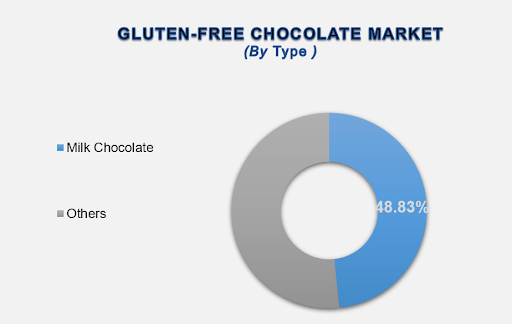
Milk Chocolate: Milk chocolate combines cocoa ingredients with milk components and sweeteners to create a creamy texture and familiar flavor profile. It serves a broad consumer base, including shoppers who prefer sweeter confectionery and traditional chocolate bars. Gluten-free milk chocolate can be offered in plain bars, filled formats, bite-sized products and assorted packs. Product developers must review inclusions, flavoring systems and processing conditions to ensure that gluten-containing ingredients are not introduced during production.
White Chocolate: White chocolate generally uses cocoa butter, milk ingredients and sweeteners rather than cocoa solids as its defining components. It supports products with a creamy flavor and can be combined with fruit, nuts, caramel, and other suitable inclusions. Gluten-free white chocolate is relevant to premium confectionery, dessert decoration, baking and mixed chocolate assortments. Its market potential depends on formulation quality, consumer preference and the availability of products that maintain a suitable texture and flavor while meeting gluten-free requirements.
Chocolate Chips and Baking Chocolate: This segment includes chocolate chips, chunks, drops and other products intended for baking or recipe preparation. These ingredients are used in cookies, brownies, cakes, muffins, dessert bars and other baked products. Gluten-free chocolate chips can serve consumers preparing gluten-free recipes at home as well as professional bakers developing specialty products. Consistent melting behavior, size, cocoa composition, packaging and ingredient transparency are important purchasing considerations.
Chocolate Bars and Tablets: Bars and tablets are portable, familiar formats that can be sold in individual packs, multipacks and premium gift assortments. They are suitable for everyday snacking and can be offered in different cocoa intensities, flavors and sizes. Manufacturers may differentiate products through texture, portion size, packaging design and ingredient combinations. Retail shelf placement and clear gluten-free communication can help consumers identify suitable products during routine shopping.
Truffles and Filled Chocolates: Truffles and filled chocolates offer more complex flavor and texture experiences through centers such as caramel, ganache, nut pastes, fruit preparations and other confectionery fillings. They are particularly relevant to gifting, celebrations and premium retail. Their production requires careful ingredient review because fillings, wafers, biscuit pieces, coatings and flavoring ingredients may introduce gluten risks. Assortments also need clear information where individual products differ in composition or allergen status.
Other Gluten-free Chocolate Products: This category includes specialized chocolate confectionery and products that do not fall neatly within the other defined categories. Examples may include chocolate-coated nuts, chocolate-covered fruit, selected chocolate confectionery bites and other chocolate-based treats, provided the products meet the report's gluten-free definition. Product variety, packaging, portion size and intended consumption occasion can influence demand in this segment.
2. By Nature
The market is divided by nature into conventional and organic gluten-free chocolate. This classification reflects differences in ingredient sourcing, production standards, certification and consumer positioning rather than the presence or absence of gluten alone.
Conventional: Conventional gluten-free chocolate represents products manufactured using ingredients and processes that meet the applicable gluten-free requirements without necessarily carrying organic certification. This segment can accommodate a wide range of price points and product formats, from everyday chocolate bars to premium filled chocolates and baking ingredients. Its broad potential distribution through supermarkets, convenience stores and online platforms can support accessibility. Manufacturers compete through flavor, product consistency, packaging, brand familiarity and pricing while maintaining suitable gluten-free controls.
Organic: Organic gluten-free chocolate combines gluten-free suitability with ingredients that meet the relevant organic production and certification standards. Consumers in this segment may be interested in ingredient sourcing, farming practices, processing standards and the transparency of product claims. Organic chocolate may also be positioned around premium quality, carefully selected cocoa and specialized formulations. Manufacturers must manage organic certification and gluten-free requirements separately, ensuring that the product meets the standards applicable to both claims. Price sensitivity and the availability of certified ingredients can influence market penetration.
3. By Format
The format segmentation covers bars and tablets, baking chips and chunks, truffles and pralines, chocolate coatings and couverture, chocolate spreads and other formats. This classification focuses on how chocolate is presented, consumed or used in food preparation.
Bars and Tablets: Bars and tablets provide a standardized format for everyday consumption, sharing and gifting. They can be produced in different sizes and cocoa varieties, with or without suitable inclusions. Individually wrapped products support portability and portion control, while multipacks can encourage household purchasing. Clear packaging and gluten-free labeling can help consumers distinguish suitable products from conventional alternatives.
Baking Chips and Chunks: Baking chips and chunks are designed for incorporation into baked goods and desserts. They are used by home bakers, specialty bakeries and food-service operators preparing gluten-free recipes. Product consistency, heat stability, flavor retention and packaging sizes can influence purchasing decisions. Manufacturers can serve this category by supplying products with clear ingredient specifications and appropriate handling information.
Truffles and Pralines: These formats emphasize filled centers, layered textures and premium presentation. They can be marketed as individual treats, seasonal assortments or gift products. Their production may involve multiple components, making ingredient verification and cross-contact controls especially important. Premium packaging, flavor variety and consistent quality can strengthen their appeal among consumers seeking specialty gluten-free confectionery.
Chocolate Coatings and Couverture: Chocolate coatings and couverture are used in professional confectionery, baking, dessert preparation and food manufacturing. They can be used for enrobing, molding, decoration and finishing applications. Gluten-free suitability is relevant where these ingredients are incorporated into products intended for gluten-free consumers. Commercial buyers may prioritize technical performance, reliable supply, consistent specifications and documentation alongside price.
Chocolate Spreads: Chocolate spreads are used on bread, pancakes, waffles, pastries and other foods, as well as in dessert recipes. Gluten-free chocolate spreads can appeal to households looking for versatile products for breakfast, snacking and baking. Manufacturers must assess all ingredients, including thickeners, flavorings and inclusions, and consider how the product is packaged and used. Product texture, spreadability, sweetness and packaging convenience contribute to consumer acceptance.
Other Formats: Other formats may include chocolate drops, decorative pieces, selected chocolate-coated snacks and specialized products for confectionery or food-service applications. These products help manufacturers extend the use of gluten-free chocolate beyond conventional bars. Their market relevance depends on product functionality, ingredient compliance, distribution and demand from retail and commercial customers.
4. By Distribution Channel
The distribution channel segmentation comprises supermarkets and hypermarkets, convenience stores, specialty stores, online retail, direct-to-consumer sales and other channels. Each channel contributes differently to product discovery, assortment depth, consumer education and repeat purchasing.
Supermarkets and Hypermarkets: Supermarkets and hypermarkets offer broad product visibility and convenient access during regular grocery shopping. Their assortment may include mainstream gluten-free chocolate brands, premium products, baking ingredients and seasonal confectionery. Shelf organization, clear labels, promotional displays and availability across store locations can influence purchase decisions. Retailers may also benefit from stocking products that meet several consumer preferences, provided claims such as gluten-free, organic and dairy-free are clearly differentiated.
Convenience Stores: Convenience stores serve consumers seeking small, portable products for immediate consumption. Individual chocolate bars, bite-sized packs and selected confectionery products are relevant formats for this channel. Product availability, recognizable branding, pack size and price are important considerations. Retailers may have less shelf space for specialist products than supermarkets, making concise packaging information and strong product recognition particularly valuable.
Specialty Stores: Specialty stores include health-food retailers, free-from shops, organic food stores and specialist confectionery outlets. These retailers can provide consumers with a more targeted assortment of gluten-free products and greater opportunities to compare specialized brands. Their customers may place greater emphasis on ingredient transparency, certification, dietary suitability and product provenance. Specialty retailers can also help smaller manufacturers introduce new products to consumers who actively seek gluten-free alternatives.
Online Retail: Online retail enables consumers to access a wider selection of gluten-free chocolate products, including niche brands, premium assortments and items not available in nearby stores. Product listings can provide detailed ingredient information, allergen declarations, product images and packaging specifications. Online platforms also allow consumers to compare prices and reviews. However, product descriptions must remain accurate, and shipping and storage practices should protect product quality during transit.
Direct-to-Consumer: Direct-to-consumer sales allow manufacturers to sell through their own websites and digital storefronts. This channel can support brand storytelling, product education, subscriptions, customized gift boxes and repeat-purchase programs. It may be particularly useful for small brands with specialized formulations or customers who seek detailed information about production and sourcing. Success depends on digital visibility, fulfillment efficiency, shipping costs and the ability to maintain product quality throughout delivery.
Other Channels: Other channels include selected food-service suppliers, cafés, hotels, restaurants, bakeries, institutional buyers and corporate gifting providers. These channels can create demand for gluten-free chocolate ingredients and finished products used in desserts, beverages, catering and special events. Commercial customers may require dependable supply, consistent product specifications and clear information about gluten-free suitability. Manufacturers that understand the requirements of professional buyers can expand beyond direct consumer purchases.
Market Share Analysis by Region
The gluten-free chocolate market is assessed across North America, Europe, Asia Pacific, Latin America, and the Middle East and Africa. Regional demand varies according to consumer awareness, dietary requirements, food-labeling practices, purchasing power, chocolate consumption, product availability and the development of specialty retail channels. The supplied market figures do not include regional revenue shares, so no unverified regional percentages have been assigned in this report.
North America
North America represents an important market for gluten-free chocolate because of its established packaged-food sector, broad retail infrastructure, and availability of specialty dietary products. Consumers can access gluten-free chocolate through supermarkets, specialty food stores, online retailers and direct-to-consumer platforms. The market includes multinational confectionery companies as well as specialist brands focused on allergen-conscious and free-from products.
The United States is a key market within the region because of its large consumer base and extensive confectionery distribution network. Product selection can range from conventional chocolate bars and baking chips to premium dark chocolate, organic assortments, and products developed for consumers with multiple dietary preferences. Clear labeling and manufacturing controls are particularly important for shoppers who must avoid gluten rather than simply prefer gluten-free products.
Canada contributes through its packaged-food retail network, specialty food businesses, and online grocery channels. Demand can be supported by the availability of gluten-free products across mainstream and specialist retailers, although market performance varies by product price, consumer awareness and local distribution. Mexico provides additional potential as modern retail, online shopping and access to specialty food products develop. Regional growth will depend on the availability of suitable products, affordability, effective labeling and reliable supply.
Europe
Europe is an important region for specialty confectionery and free-from food products. The market benefits from established chocolate consumption, a developed retail sector and a range of national and international confectionery brands. Consumers can access gluten-free chocolate through supermarkets, specialty shops, organic food retailers, confectionery stores and e-commerce platforms.
The United Kingdom, Germany, France, Italy, Spain and the Netherlands represent relevant markets for assessing regional demand. Product preferences differ by country, including variations in chocolate formats, cocoa intensity, sweetness, gifting habits and price expectations. Manufacturers may adapt packaging, flavors, product sizes and promotional approaches to local preferences while maintaining compliance with applicable labeling requirements.
European consumers may evaluate gluten-free suitability alongside other product attributes such as organic sourcing, ethical cocoa procurement, recyclable packaging, and ingredient transparency. These preferences can support premium and differentiated product offerings, but they also increase the importance of substantiating marketing claims. Retailers and manufacturers must ensure that dietary information is clear and that product handling and production practices are appropriate for the claims made.
Regional opportunities include expanding gluten-free chocolate ranges, improving the availability of baking products, introducing seasonal assortments, and strengthening online distribution. Competition from established chocolate brands can be significant, making differentiation through product quality, formulation, trusted labeling and consumer communication important.
Asia Pacific
Asia Pacific offers opportunities for gluten-free chocolate as urban retail networks expand, online grocery purchasing develops and consumers encounter a wider variety of international confectionery products. Demand is influenced by local chocolate consumption patterns, household purchasing power, dietary awareness, product pricing and the availability of suitable products in mainstream retail.
China, India, Japan, South Korea and Australia represent relevant markets within the region. These countries differ in consumer preferences, retail structures, food-labeling requirements and the maturity of specialty food categories. In larger urban centers, supermarkets, premium food retailers and e-commerce platforms can provide access to imported and domestic gluten-free chocolate products. Online retail is particularly useful where niche products are not consistently stocked in physical stores.
India presents opportunities for brands seeking to expand specialty confectionery offerings through modern grocery retail, online marketplaces and premium food channels. Price sensitivity, regional taste preferences, product awareness and distribution costs may influence adoption. Manufacturers may need to offer different pack sizes and price points to address both premium consumers and shoppers seeking more accessible products.
Japan and South Korea provide markets where product presentation, packaging, flavor quality and product consistency can be important purchase considerations. Australia also has an established packaged-food and specialty dietary product environment, with opportunities for gluten-free chocolate across mainstream retail and online channels. Across Asia Pacific, manufacturers that combine clear labeling with localized flavors, accessible pricing and reliable availability can improve market reach.
Latin America
Latin America provides opportunities for gluten-free chocolate through its established cocoa and confectionery industries, expanding modern retail channels and growing availability of specialty food products. Regional market development is influenced by household income, product affordability, local manufacturing capabilities, distribution infrastructure and consumer awareness of gluten-related dietary requirements.
Brazil and Argentina are relevant markets for regional assessment. In Brazil, supermarkets, specialty retailers and digital commerce can support the distribution of gluten-free chocolate products, while domestic confectionery production provides a foundation for product development. Manufacturers may explore locally relevant flavors, smaller pack sizes and products designed for everyday consumption as well as seasonal gifting.
Argentina offers opportunities through established chocolate consumption and specialty confectionery retail. Market access depends on pricing, the availability of suitable ingredients, the ability to maintain consistent production and the reach of retail networks. Economic conditions and fluctuations in input costs can affect consumer purchasing power and manufacturers' pricing strategies.
Regional growth may be supported by wider distribution, more visible product labeling and increased availability of gluten-free products across mainstream retail. However, brands must account for differences in local regulation, consumer expectations and purchasing behavior. Partnerships with distributors and retailers can help manufacturers improve product availability while managing logistical complexity.
Middle East and Africa
The Middle East and Africa region presents a developing opportunity for gluten-free chocolate through supermarkets, premium grocery stores, specialty food retailers, hospitality businesses and online platforms. Demand varies considerably across countries because of differences in income levels, retail development, dietary awareness and access to imported confectionery.
The United Arab Emirates and Saudi Arabia are relevant markets for premium chocolate and specialty food distribution. Modern supermarkets, shopping centers, hospitality businesses and e-commerce platforms can provide routes to consumers seeking imported, premium or dietary-specific products. Chocolate is also associated with gifting, celebrations and hospitality, creating opportunities for suitable gluten-free assortments and premium packaging.
In Africa, South Africa represents an important market for packaged confectionery and specialty food retail. Gluten-free chocolate can be distributed through supermarkets, selected health-food stores and online channels. Market penetration depends on affordability, availability, consumer awareness and the range of products offered by retailers.
Regional opportunities include premium chocolate assortments, clearly labeled products, hospitality-oriented offerings and the expansion of online specialty food distribution. Import costs, storage conditions, product availability and differences in local food regulations may affect competitiveness. Manufacturers and distributors will need to balance premium positioning with consumer affordability and dependable supply.
Competitive Landscape
The gluten-free chocolate market includes large international chocolate manufacturers, established confectionery groups, specialist gluten-free brands, premium chocolate producers and companies focused on allergen-conscious food products. Competition is shaped by product taste, ingredient quality, manufacturing controls, labeling credibility, distribution reach, price and brand recognition. Companies may compete through conventional chocolate portfolios that include suitable gluten-free products, dedicated gluten-free product ranges or specialty confectionery developed for consumers with particular dietary requirements.
Large manufacturers benefit from established cocoa sourcing networks, production facilities, packaging capabilities and relationships with supermarkets and distributors. Their scale can support broad product availability and multiple price points. Specialist brands, meanwhile, may differentiate through dedicated production environments, focused dietary positioning, organic or ethical sourcing, and direct relationships with consumers.
Product innovation is a recurring competitive strategy. Manufacturers can expand into new cocoa varieties, filled chocolates, baking formats, seasonal assortments and products combining gluten-free suitability with other dietary preferences. However, product claims need to be supported by appropriate formulation and manufacturing practices. A gluten-free product is not automatically dairy-free, vegan, organic or suitable for every allergen-restricted diet. Clear product information is therefore important to competitive credibility.
Major Companies in the Gluten-free Chocolate Market
The following companies are relevant participants in the broader chocolate and gluten-free confectionery landscape. Their individual portfolios differ, and the inclusion of a company does not imply that every product it sells is gluten-free or that each company derives a material share of revenue from gluten-free chocolate.
The Hershey Company
Chocoladefabriken Lindt & Sprungli AG
Ferrero Group
Mondelez International, Inc.
Endangered Species Chocolate
Taza Chocolate
NibMor
Enjoy Life Foods
Dr. Schar AG
Alter Eco
Pascha Chocolate Co.
Theo Chocolate
Hu Products
No Whey! Foods
Nature's Path Foods
Competitive Strategies
Product Portfolio Expansion: Companies can broaden their gluten-free chocolate offerings across bars, baking products, filled confectionery and seasonal formats. A wider portfolio enables brands to serve everyday consumption, home baking, gifting and specialty retail. Product development must maintain taste and texture while ensuring that new inclusions and ingredients do not compromise gluten-free suitability.
Quality Assurance and Product Transparency: Reliable ingredient verification, production controls and accurate labeling are essential for companies serving consumers who must avoid gluten. Manufacturers may strengthen internal quality systems, supplier review, cleaning procedures, testing protocols and documentation to support their product claims. Transparent communication can help consumers make informed decisions and reduce uncertainty during purchase.
Distribution Expansion: Access to mainstream supermarkets, specialty retailers and online platforms can improve brand visibility. Large companies may use established distribution networks, while smaller producers may prioritize specialty shops and direct-to-consumer sales. A combination of channels can help brands reach both regular chocolate shoppers and consumers who actively search for gluten-free products.
Premiumization and Differentiation: Brands can differentiate through cocoa quality, unique flavor combinations, product texture, ethical sourcing, organic certification and premium packaging. These attributes may support higher-value offerings, particularly in gifting and specialty retail. However, premium positioning must be matched by product quality and credible claims, while accessible products remain important for consumers who purchase chocolate regularly.
Strategic Partnerships: Partnerships with retailers, ingredient suppliers, specialty food distributors, bakeries and food-service operators can support product development and market access. Collaborations can help manufacturers introduce gluten-free chocolate ingredients into new applications, improve availability and respond to demand from professional buyers. The effectiveness of such partnerships depends on product specifications, quality requirements and dependable supply.
Recent Developments News
1. Woolworths Introduces a Gluten-free Chocolate Mudcake in Australia — August 2026
Australian supermarket retailer Woolworths announced the introduction of a gluten-free version of its chocolate mudcake in August 2026. The product was designed to offer a gluten-free alternative to an established chocolate bakery item and was announced as a permanent addition to the retailer's bakery range. This development illustrates how retailers can extend familiar chocolate products to consumers seeking gluten-free alternatives rather than limiting the category to packaged chocolate bars. It also highlights the potential for gluten-free chocolate applications in bakery and celebration products.
2. Tate's Bake Shop Expands Its Gluten-free Chocolate Cookie Range — January 2026
Tate's Bake Shop announced the addition of gluten-free Double Chocolate Chip and Oatmeal Raisin cookies to its existing gluten-free product range in January 2026. Although these products are cookies rather than standalone chocolate bars, the launch demonstrates how chocolate flavors and ingredients can contribute to the broader gluten-free indulgence category. For chocolate manufacturers and ingredient suppliers, such developments reinforce the importance of supplying suitable chocolate ingredients and inclusions for gluten-free bakery applications.
3. Ghirardelli Introduces a Gluten-free Double Chocolate Brownie Mix — March 2025
Ghirardelli announced the launch of its Gluten-Free Double Chocolate Brownie Mix in March 2025. The product extends the brand's chocolate-focused offering into home baking for consumers seeking gluten-free alternatives. This type of product expands the role of chocolate beyond conventional confectionery and highlights the importance of baking mixes and dessert applications within the broader gluten-free chocolate ecosystem. The launch also demonstrates how established chocolate brands can use their existing flavor recognition to introduce products into specialized dietary categories.
Implications for the Market
These developments point to a broader movement toward making gluten-free chocolate experiences available through familiar product formats. Retailers and branded food manufacturers are extending gluten-free choices into bakery, dessert preparation and everyday indulgence, creating opportunities for chocolate ingredients and finished products. The commercial opportunity is not limited to the introduction of new chocolate bars; it also includes chocolate-based products that enable consumers to enjoy traditional recipes and celebrations while accommodating gluten-free requirements.
Research Findings and Conclusion
The global gluten-free chocolate market is projected to expand from USD 2.12 billion in 2026 to USD 3.96 billion by 2034, registering a CAGR of 8.1% over the forecast period. The market's growth outlook is supported by increasing awareness of gluten-related dietary requirements, the expansion of specialty food offerings, product innovation and the availability of gluten-free chocolate across mainstream and digital retail channels.
Product development is a central factor shaping market competitiveness. Dark chocolate, milk chocolate, white chocolate, chocolate bars, baking chips, filled chocolates and other formats allow manufacturers to serve different taste preferences and consumption occasions. At the same time, organic, plant-based and premium product positioning creates opportunities for differentiation, provided that gluten-free claims and any additional dietary or sourcing claims are independently supported by the applicable standards.
Distribution will remain important to market expansion. Supermarkets and hypermarkets can improve accessibility, specialty stores can serve consumers looking for targeted dietary products, and e-commerce can connect niche manufacturers with geographically dispersed customers. Direct-to-consumer channels also offer opportunities for brands to communicate product information, introduce new varieties and encourage repeat purchasing.
The market nevertheless faces challenges involving ingredient costs, manufacturing controls, cross-contact prevention, labeling accuracy and price competitiveness. Consumers who depend on gluten-free products require confidence that claims are reliable, while manufacturers must preserve the flavor and texture expected from chocolate. Companies that integrate product safety, consistent quality, clear communication and effective distribution into their strategies are better positioned to build lasting consumer relationships.
Overall, the gluten-free chocolate market offers opportunities across conventional and premium confectionery, specialist dietary products, baking ingredients and chocolate-based desserts. Future growth will depend on how effectively manufacturers respond to consumer requirements while maintaining affordability, product appeal and dependable gluten-free practices. The supplied forecast indicates a positive outlook through 2034, with innovation and wider availability expected to remain important competitive considerations.
Frequently Asked Questions
Aishwarya Panbude (Research Analyst)
Aishwarya Panbude is a skilled Research Analyst with 4+ years of experience in market intelligence, consumer insights, competitive analysis, and industry forecasting across the consumer goods, agriculture, and food & beverage sectors. She specializes in market sizing, trend analysis, growth opportunity mapping, and strategic secondary research for global and regional markets.
Her expertise lies in transforming complex industry data into actionable business strategies that help organizations identify emerging trends, understand customer behavior, and gain a competitive edge. With a strong focus on data-driven insights, business intelligence, and future market trends, Aishwarya delivers high-quality research solutions aligned with evolving industry demands and market dynamics.
Global Gluten-free Chocolate Market Introduction and Market Overview
Objectives of the Study
Global Gluten-free Chocolate Market Scope and Market Estimation
Global Gluten-free Chocolate Market Size (US$ Million), Market CAGR (%), Market Forecast (2026 - 2034)
Global Gluten-free Chocolate Market Revenue Share (%) and Growth Rate (Y-o-Y) Analysis (2021 - 2034)
Market Segmentation
By Product Type
Dark Chocolate
Milk Chocolate
White Chocolate
Chocolate Chips and Baking Chocolate
Chocolate Bars and Tablets
Truffles and Filled Chocolates
Other Gluten-free Chocolate Products
By Nature
Conventional
Organic
By Format
Bars and Tablets
Baking Chips and Chunks
Truffles and Pralines
Chocolate Coatings and Couverture
Chocolate Spreads and Other Formats
By Distribution Channel
Supermarkets and Hypermarkets
Convenience Stores
Specialty Stores
Online Retail
Direct-to-Consumer
Other Channels
By Region
North America
Europe
Asia Pacific
Middle East & Africa
Latin America
Competition Coverage List of Market Participants
Market Definition: Gluten-free Chocolate Market
Executive Summary
Demand Side Trends
Key Market Trends
Market Demand (US$ Million) Analysis 2021 – 2025 and Forecast, 2026 – 2034
Demand and Opportunity Assessment
Key Developments
Overview of Regulatory Landscape, Compliance Framework, and Industry Standards
Market Entry Strategies
Market Dynamics
Drivers
Limitations
Opportunities
Impact Analysis of Drivers and Restraints
Porter's Five Forces Analysis
PEST Analysis
Global Gluten-free Chocolate Market Estimates & Historical Trend Analysis (2021 – 2025)
Global Gluten-free Chocolate Market Estimates & Forecast Trend Analysis, by Product Type
Global Gluten-free Chocolate Market Revenue (US$ Million) Estimates and Forecasts, by Product Type, 2021 - 2034
Dark Chocolate
Milk Chocolate
White Chocolate
Chocolate Chips and Baking Chocolate
Chocolate Bars and Tablets
Truffles and Filled Chocolates
Other Gluten-free Chocolate Products
Global Gluten-free Chocolate Market Estimates & Forecast Trend Analysis, by Nature
Global Gluten-free Chocolate Market Revenue (US$ Million) Estimates and Forecasts, by Nature, 2021 - 2034
Conventional
Organic
Global Gluten-free Chocolate Market Estimates & Forecast Trend Analysis, by Format
Global Gluten-free Chocolate Market Revenue (US$ Million) Estimates and Forecasts, by Format, 2021 - 2034
Bars and Tablets
Baking Chips and Chunks
Truffles and Pralines
Chocolate Coatings and Couverture
Chocolate Spreads and Other Formats
Global Gluten-free Chocolate Market Estimates & Forecast Trend Analysis, by Distribution Channel
Global Gluten-free Chocolate Market Revenue (US$ Million) Estimates and Forecasts, by Distribution Channel, 2021 - 2034
Supermarkets and Hypermarkets
Convenience Stores
Specialty Stores
Online Retail
Direct-to-Consumer
Other Channels
Global Gluten-free Chocolate Market Estimates & Forecast Trend Analysis, by Region
Global Gluten-free Chocolate Market Revenue (US$ Million) Estimates and Forecasts, by Region, 2021 - 2034
North America
Europe
Asia Pacific
Middle East & Africa
Latin America
North America Gluten-free Chocolate Market Estimates & Forecast Trend Analysis
Assessments & Key Findings
North America Gluten-free Chocolate Market Introduction
North America Gluten-free Chocolate Market Size (US$ Million) Estimates and Forecast, 2021 - 2034
North America Gluten-free Chocolate Market Estimates & Forecast Trend Analysis, by Product Type
North America Gluten-free Chocolate Market Estimates & Forecast Trend Analysis, by Nature
North America Gluten-free Chocolate Market Estimates & Forecast Trend Analysis, by Format
North America Gluten-free Chocolate Market Estimates & Forecast Trend Analysis, by Distribution Channel
North America Gluten-free Chocolate Market Estimates & Forecast Trend Analysis, by Country
The U.S.
Canada
Europe Gluten-free Chocolate Market Estimates & Forecast Trend Analysis
Assessments & Key Findings
Europe Gluten-free Chocolate Market Introduction
Europe Gluten-free Chocolate Market Size (US$ Million) Estimates and Forecast, 2021 - 2034
Europe Gluten-free Chocolate Market Estimates & Forecast Trend Analysis, by Product Type
Europe Gluten-free Chocolate Market Estimates & Forecast Trend Analysis, by Nature
Europe Gluten-free Chocolate Market Estimates & Forecast Trend Analysis, by Format
Europe Gluten-free Chocolate Market Estimates & Forecast Trend Analysis, by Distribution Channel
Europe Gluten-free Chocolate Market Estimates & Forecast Trend Analysis, by Country
Germany
Italy
The U.K.
France
Spain
Switzerland
Rest of Europe
Asia Pacific Gluten-free Chocolate Market Estimates & Forecast Trend Analysis
Assessments & Key Findings
Asia Pacific Gluten-free Chocolate Market Introduction
Asia Pacific Gluten-free Chocolate Market Size (US$ Million) Estimates and Forecast, 2021 - 2034
Asia Pacific Gluten-free Chocolate Market Estimates & Forecast Trend Analysis, by Product Type
Asia Pacific Gluten-free Chocolate Market Estimates & Forecast Trend Analysis, by Nature
Asia Pacific Gluten-free Chocolate Market Estimates & Forecast Trend Analysis, by Format
Asia Pacific Gluten-free Chocolate Market Estimates & Forecast Trend Analysis, by Distribution Channel
Asia Pacific Gluten-free Chocolate Market Estimates & Forecast Trend Analysis, by Country
China
Japan
India
Australia
South Korea
Rest of Asia Pacific
Middle East & Africa Gluten-free Chocolate Market Estimates & Forecast Trend Analysis
Assessments & Key Findings
Middle East & Africa Gluten-free Chocolate Market Introduction
Middle East & Africa Gluten-free Chocolate Market Size (US$ Million) Estimates and Forecast, 2021 - 2034
Middle East & Africa Gluten-free Chocolate Market Estimates & Forecast Trend Analysis, by Product Type
Middle East & Africa Gluten-free Chocolate Market Estimates & Forecast Trend Analysis, by Nature
Middle East & Africa Gluten-free Chocolate Market Estimates & Forecast Trend Analysis, by Format
Middle East & Africa Gluten-free Chocolate Market Estimates & Forecast Trend Analysis, by Distribution Channel
Middle East & Africa Gluten-free Chocolate Market Estimates & Forecast Trend Analysis, by Country
UAE
Saudi Arabia
South Africa
Rest of Middle East & Africa
Latin America Gluten-free Chocolate Market Estimates & Forecast Trend Analysis
Assessments & Key Findings
Latin America Gluten-free Chocolate Market Introduction
Latin America Gluten-free Chocolate Market Size (US$ Million) Estimates and Forecast, 2021 - 2034
Latin America Gluten-free Chocolate Market Estimates & Forecast Trend Analysis, by Product Type
Latin America Gluten-free Chocolate Market Estimates & Forecast Trend Analysis, by Nature
Latin America Gluten-free Chocolate Market Estimates & Forecast Trend Analysis, by Format
Latin America Gluten-free Chocolate Market Estimates & Forecast Trend Analysis, by Distribution Channel
Latin America Gluten-free Chocolate Market Estimates & Forecast Trend Analysis, by Country
Brazil
Mexico
Argentina
Rest of Latin America
Competition Landscape
Global Gluten-free Chocolate Market Product Mapping
Global Gluten-free Chocolate Market Concentration by Leading Players, Innovators, Emerging Players, and New Entrants
Global Gluten-free Chocolate Market Tier Structure Analysis
Global Gluten-free Chocolate Market Concentration & Company Market Shares (%) Analysis, 2026
Company Profiles
The Hershey Company
Company Overview & Key Stats
Financial Performance & KPIs
Product Portfolio
SWOT Analysis
Business Strategy & Recent Developments
Chocoladefabriken Lindt & Sprüngli AG
Ferrero Group
Mondelēz International, Inc.
Endangered Species Chocolate
Taza Chocolate
NibMor
Enjoy Life Foods
Dr. Schär AG
Alter Eco
Pascha Chocolate Co.
Theo Chocolate
Hu Products
No Whey! Foods
Nature's Path Foods
Research Findings & Conclusion
Assumptions & Acronyms Used
Research Methodology
External Databases
Internal Proprietary Database
Primary Research
Secondary Research
Assumptions
Limitations
Report FAQ
Our Research Methodology
"Insight without rigor is just noise."
We follow a comprehensive, multi-phase research framework designed to deliver accurate, strategic, and decision-ready intelligence. Our process integrates primary and secondary research , both quantitative and qualitative , along with dual modeling techniques ( top-down and bottom-up) and a final layer of validation through our proprietary in-house repository.
PRIMARY RESEARCH
Primary research captures real-time, firsthand insights from the market to understand behaviors, motivations, and emerging trends.
1. Quantitative Primary Research
Objective: Generate statistically significant data directly from market participants.
Approaches:- Structured surveys with customers, distributors, and field agents
- Mobile-based data collection for point-of-sale audits and usage behavior
- Phone-based interviews (CATI) for market sizing and product feedback
- Online polling around industry events and digital campaigns
- Purchase frequency by customer type
- Channel performance across geographies
- Feature demand by application or demographic
2. Qualitative Primary Research
Objective: Explore decision-making drivers, pain points, and market readiness.
Approaches:- In-depth interviews (IDIs) with executives, product managers, and key decision-makers
- Focus groups among end users and early adopters
- Site visits and observational research for consumer products
- Informal field-level discussions for regional and cultural nuances
SECONDARY RESEARCH
This phase helps establish a macro-to-micro understanding of market trends, size, regulation, and competitive dynamics, sourced from credible and public domain information.
1. Quantitative Secondary Research
Objective: Model market value and segment-level forecasts based on published data.
Sources include:- Financial reports and investor summaries
- Government trade data, customs records, and regulatory statistics
- Industry association publications and economic databases
- Channel performance and pricing data from marketplace listings
- Revenue splits, pricing trends, and CAGR estimates
- Supply-side capacity and volume tracking
- Investment analysis and funding benchmarks
2. Qualitative Secondary Research
Objective: Capture strategic direction, innovation signals, and behavioral trends.
Sources include:- Company announcements, roadmaps, and product pipelines
- Publicly available whitepapers, conference abstracts, and academic research
- Regulatory body publications and policy briefs
- Social and media sentiment scanning for early-stage shifts
- Strategic shifts in market positioning
- Unmet needs and white spaces
- Regulatory triggers and compliance impact
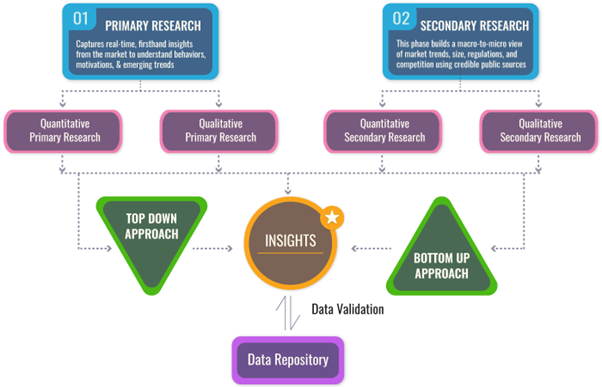
DUAL MODELING: TOP-DOWN + BOTTOM-UP
To ensure robust market estimation, we apply two complementary sizing approaches:
Top-Down Modeling:- Start with broader industry value (e.g., global or regional TAM)
- Apply filters by segment, geography, end-user, or use case
- Adjust with primary insights and validation benchmarks
- Ideal for investor-grade market scans and opportunity mapping
- Aggregate from the ground up using sales volumes, pricing, and unit economics
- Use internal modeling templates aligned with stakeholder data
- Incorporate distributor-level or region-specific inputs
- Most accurate for emerging segments and granular sub-markets
DATA VALIDATION: IN-HOUSE REPOSITORY
We close the loop with proprietary data intelligence built from ongoing projects, industry monitoring, and historical benchmarking. This repository includes:
- Multi-sector market and pricing models
- Key trendlines from past interviews and forecasts
- Benchmarked adoption rates, churn patterns, and ROI indicators
- Industry-specific deviation flags and cross-check logic
- Catches inconsistencies early
- Aligns projections across studies
- Enables consistent, high-trust deliverables