

Hovercraft Market Size and Forecast (2026–2034), Global and Regional Growth, Trends, Share and Industry Analysis Report Coverage; By Type, Application, Passenger Capacity, Propulsion System, End User and Geography
2026-11-02
Aerospace & Defense
Ekta Chaurasia (Team Lead)
Description
Hovercraft Market Overview
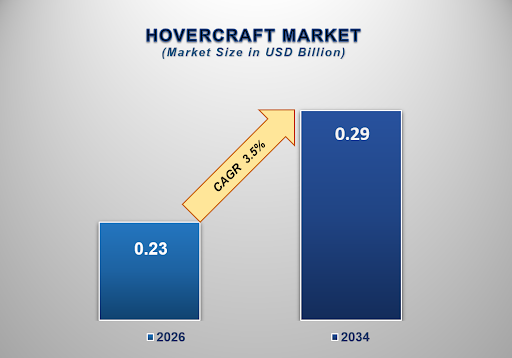
The global Hovercraft Market is estimated at USD 0.23 billion in 2026 and is projected to reach USD 0.29 billion by 2034, growing at a CAGR of 3.5% during the forecast period. Hovercraft serve specialized transportation needs because they can travel across water and suitable land surfaces without depending on conventional wheels or continuous hull contact. This capability makes them useful in shallow water, marshes, mudflats, sandy shorelines and selected icy environments.
The market includes the design, manufacturing, maintenance and deployment of air cushion vehicles for defense, passenger transportation, emergency response, recreation and industrial operations. Vehicle configurations range from compact recreational craft to larger platforms designed to carry personnel, equipment and supplies. Demand depends on operating conditions, payload, range, fuel efficiency, maintenance requirements and the availability of trained operators.
Hovercraft use lift fans to create an air cushion beneath the hull, while propulsion systems provide forward movement. A flexible skirt helps retain the cushion across different surfaces. Although this design provides amphibious mobility, skirt wear, engine maintenance, fan performance and component availability influence lifecycle costs.
Defense and maritime security remain important applications because hovercraft can transport personnel and equipment across beaches, tidal flats and shallow coastal zones. Civilian uses include rescue missions, access to remote communities, environmental monitoring and specialized tourism. Commercial viability varies according to route demand, maintenance expenditure and the availability of alternative transport.
Product development increasingly focuses on improving reliability, maneuverability, component durability and operating efficiency. Modern navigation systems, electronic monitoring and improved materials can support safer operations and more predictable maintenance. However, equipment requirements differ between recreational craft and vehicles designed for demanding defense or rescue missions.
Environmental considerations are creating interest in more efficient propulsion systems. Electric and hybrid technologies may suit smaller craft or shorter routes, while larger vehicles face challenges involving power demand, battery weight, payload and range. Their adoption will depend on whether the technology can meet operational requirements without significantly increasing ownership costs.
Regional demand is influenced by coastline characteristics, island geography, maritime security priorities and emergency-response needs. Governments and commercial operators evaluate hovercraft when conventional boats or land vehicles cannot provide the required access efficiently. Manufacturing capability, procurement budgets, and after-sales support also influence adoption.
India's indigenous Air Cushion Vehicle programme illustrates the importance of domestic manufacturing in this sector. The Indian Coast Guard's induction of the first vehicle in a six-vehicle programme in June 2026 demonstrates how specialized maritime requirements can support local engineering and production.
Hovercraft Market Drivers and Opportunities
Growing Maritime Security Requirements Are Supporting Demand for Specialized Hovercraft.
Coast guards and maritime security organizations require vehicles capable of operating near coastlines, river mouths, tidal zones and shallow-water approaches. Hovercraft can access selected areas that restrict conventional boats or road vehicles, making them suitable for patrol, personnel movement, surveillance support and specialized logistics.
Procurement decisions depend on payload, endurance, maneuverability, communications equipment and operating reliability. Buyers also consider crew training, spare-parts availability and maintenance costs before adding hovercraft to their fleets.
Domestic manufacturing programmes can create opportunities for local engineering companies and component suppliers. In-house technical expertise and dependable servicing may help public agencies maintain operational readiness throughout a vehicle's service life.
Emergency Response and Difficult Terrain Are Creating Specialized Hovercraft Applications.
Flooding, marshland and remote coastal areas can disrupt conventional transportation. Hovercraft can help emergency teams reach certain locations, transport supplies and evacuate people where ordinary vehicles face access limitations.
Their value often lies in readiness rather than daily utilization. Emergency agencies must balance acquisition and maintenance expenses against the ability to respond quickly during floods, coastal incidents and other difficult situations.
Reliable storage, operator training, maintenance planning and rapid deployment arrangements are essential to successful use. Manufacturers that provide technical support alongside the vehicle can appeal to public agencies and specialist rescue organizations.
Advances in Propulsion, Materials and Digital Controls Are Creating Opportunities for Product Differentiation.
Manufacturers can improve competitiveness through durable skirt materials, corrosion-resistant structures, efficient engines and better control systems. Digital monitoring may also help identify developing faults and reduce unexpected maintenance interruptions.
Electric and hybrid propulsion could benefit smaller vehicles operating on short, predictable routes. Larger crafts require more substantial power and endurance, making the transition more complex. Technology selection must therefore reflect the intended mission rather than follow a single industry-wide approach.
Additional opportunities exist in tourism, environmental surveys, infrastructure inspection, and specialized cargo transport. Adoption will depend on whether hovercraft provide a clear operational advantage and acceptable long-term costs.
Hovercraft Market Scope
Hovercraft Market Report Segmentation Analysis
The Hovercraft Market is segmented by vehicle type, application, passenger capacity, propulsion system and end user. These categories reflect different operational needs, from defense missions requiring specialized equipment to recreational applications prioritizing affordability and ease of operation.
Commercial Applications Represent the Leading Segment in a Published Market Estimate.
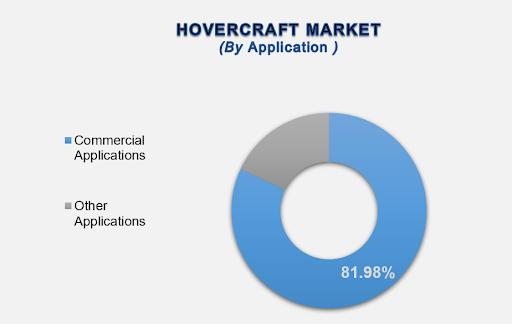
Commercial hovercraft support passenger movement, tourism, specialized transportation and selected civilian operations. They are useful on routes where shallow water or difficult shorelines restrict conventional transport, although commercial success depends on demand, operating costs and maintenance requirements.
A published market estimate identifies commercial applications as the leading category, reporting a share of 81.98% in 2026. The figure reflects that estimate's market definition and should be treated as a separate industry reference.
Military Hovercraft Support Amphibious Mobility and Specialized Logistics.
Military hovercraft transport personnel and equipment across suitable land and water surfaces. Procurement priorities include payload, endurance, maneuverability, reliability and mission-specific equipment.
Demand depends on defense budgets, maritime security programmes and the availability of long-term maintenance support. Domestic manufacturing and fleet compatibility can also influence supplier selection.
Passenger Capacity Determines the Balance Between Space, Power and Operating Cost.
Smaller craft can support recreational use and inspections, while larger vehicles may accommodate more passengers or mission equipment. Capacity affects dimensions, power requirements, payload and maintenance expenditure.
Operators must match capacity to actual demand because a larger vehicle may increase operating costs without generating sufficient additional revenue.
Propulsion Selection Depends on Range, Payload and Operating Conditions.
Diesel and gasoline engines serve different vehicle configurations, while hybrid and electric systems offer potential alternatives for selected applications. Propulsion choices affect fuel consumption, maintenance, noise and endurance.
Electric systems may suit smaller craft with predictable operating cycles, but larger vehicles face challenges involving battery weight and power requirements. Technology selection must match the intended mission.
Government Agencies and Commercial Operators Follow Different Purchasing Priorities.
Government and defense customers prioritize mission performance, reliability and lifecycle support. Commercial operators focus on utilization, passenger or cargo capacity and operating costs.
Rescue agencies value readiness and access, while tourism operators consider passenger experience and service economics. These differences sustain demand for varied vehicle configurations.
The Following Segments Are Part of an In-Depth Analysis of the Global Hovercraft Market.
Military Hovercraft Support Coastal Defense, Patrol and Amphibious Logistics.
Military hovercraft are used for selected transport and logistics missions where conventional vehicles face access limitations. Depending on the design, they may carry personnel, equipment and communications systems.
Competition in this segment depends on engineering reliability, mission customization, production capacity and long-term service support. Government procurement cycles can be lengthy and are influenced by national security priorities.
Commercial Hovercraft Serve Specialized Transport and Industrial Requirements.
Commercial craft serve passenger transport, tourism, remote-site access and certain industrial operations. Their value depends on whether air-cushion mobility solves a recurring transportation challenge.
Operators evaluate route demand, weather-related downtime, fuel costs and maintenance access before investing. Conventional boats or road vehicles remain preferable where they can perform the same task more economically.
Passenger Hovercraft Provide Access Across Selected Water and Shoreline Routes.
Passenger craft are designed around seating, boarding procedures, safety systems and operating conditions. They may serve routes where conventional vessels face shoreline or shallow-water restrictions.
Commercial performance depends on passenger volumes, service frequency, trained crews and maintenance costs. Operators must assess these factors before establishing regular services.
Cargo Hovercraft Address Certain Difficult-to-Reach Locations.
Cargo hovercraft prioritize payload, load distribution and movement across mixed surfaces. They may transport supplies and equipment to remote coastal or marshland locations.
Payload limits, loading arrangements, operating range and service costs determine their suitability. They are specialized logistics platforms rather than universal replacements for conventional freight transport.
Recreational Hovercraft Appeal to Specialist Users and Enthusiasts.
Recreational craft are intended for personal use and leisure activities. Buyers may prioritize handling, portability, reliability and maintenance simplicity.
Demand is influenced by discretionary spending, safety requirements, local operating rules and the availability of service support. Manufacturers can differentiate through user training and dependable components.
Rescue Hovercraft Help Emergency Teams Reach Certain Flooded and Inaccessible Areas.
Rescue vehicles can transport responders and supplies across selected flooded areas, shallow water and difficult terrain. Their usefulness depends on safe operating conditions and appropriate mission planning.
Public agencies must consider storage, operator training, maintenance and rapid deployment. These requirements are important because rescue vehicles may be used infrequently but must remain ready for emergencies.
Hovercraft Market Share Analysis by Region
Regional demand depends on geography, defense priorities, emergency-response requirements and access to conventional transport. Coastlines and remote terrain can create operational needs, but purchasing decisions also depend on budgets and maintenance infrastructure.
North America Maintains Demand for Hovercraft Across Defense and Specialized Civilian Operations.
North America has potential demand from maritime security, rescue services, specialist transportation and recreational users. Shallow water and seasonal conditions can create specific access challenges.
Government procurement may support specialized platforms, while commercial adoption depends on route economics, fuel consumption and maintenance costs.
Europe Supports Hovercraft Use Through Maritime Engineering and Niche Transport Applications.
European demand is linked to coastal operations, specialist transport, tourism and marine engineering. Hovercraft may suit selected routes, although conventional ferries and road networks limit their relevance in many locations.
Engineering quality, component durability and after-sales service can influence purchasing decisions. Environmental requirements may also encourage investigation of more efficient propulsion systems.
Asia-Pacific Offers Opportunities Through Maritime Security and Domestic Manufacturing Programmes.
Asia-Pacific has extensive coastlines, island communities and varied maritime security requirements. These conditions can support demand for patrol, rescue and specialized transport vehicles.
India's indigenous Coast Guard programme demonstrates the role of domestic manufacturing and government procurement in the region. Local production can also create opportunities for component suppliers and maintenance providers.
Latin America Presents Selective Opportunities in Coastal Access and Emergency Response.
Potential applications include coastal security, flood response, remote logistics and specialized tourism. Hovercraft can be useful where conventional access becomes difficult.
Adoption depends on procurement budgets, service capabilities and whether the vehicle offers a practical advantage over boats or land vehicles.
The Middle East and Africa Offer Specialized Applications in Coastal Security and Remote Operations.
Selected markets may require hovercraft for coastal security, remote infrastructure access and emergency response. Their suitability depends on local conditions and the vehicle's operating limits.
Buyers may prioritize reliability, spare-parts access and technical support, particularly where specialist maintenance networks are limited.
Hovercraft Market Competition Landscape Analysis
The Hovercraft Market is a specialized industry where competition depends on engineering capability, mission suitability, reliability and lifecycle support. Production volumes and customer requirements vary, making customization and technical expertise important differentiators.
Defense buyers typically evaluate compliance, operating history and long-term service capability. Commercial and recreational customers may place greater emphasis on acquisition cost, ease of operation and component availability.
Key competitive priorities include:
Engineering reliability: Developing dependable lift, propulsion, steering and skirt systems.
Customization: Matching vehicle capacity and equipment to customer missions.
Lifecycle support: Providing spare parts, maintenance and operator training.
Manufacturing capability: Meeting quality and delivery requirements.
Operating efficiency: Improving fuel consumption and service intervals.
Technology development: Evaluating modern controls, monitoring and alternative propulsion.
Domestic manufacturing programmes can strengthen local supply chains and create opportunities for engineering partners. Companies that combine product quality with reliable after-sales service may be better positioned to win long-term contracts.
Global Hovercraft Recent Developments News
India's Coast Guard Advanced Its Indigenous Air Cushion Vehicle Programme in June 2026.
India's first vehicle in a six-unit indigenous Air Cushion Vehicle programme entered service with the Indian Coast Guard in June 2026. The programme highlights the role of domestic shipbuilding in supporting maritime security requirements.
The development is relevant to the market because specialized government procurement can support local manufacturing, engineering and maintenance activity.
Manufacturers Continue to Balance Vehicle Performance with Operating Costs.
Fuel consumption, skirt wear, service intervals and component availability influence the cost of owning a hovercraft. Improvements in durability and maintenance planning can strengthen reliability without requiring major changes to the vehicle's underlying design.
Modern monitoring and navigation systems may also help operators manage maintenance and mission execution.
Lower-Emission Propulsion Remains a Development Opportunity for Selected Applications.
Electric and hybrid propulsion may be suitable for smaller craft or routes with predictable energy requirements. Larger vehicles face greater challenges involving power demand, battery weight and endurance.
Manufacturers are likely to evaluate these systems according to specific mission requirements, rather than applying one propulsion solution across all vehicle categories.
The Global Hovercraft Market Includes Several Specialized Manufacturers and Engineering Companies.
The following companies are associated with the wider hovercraft or air-cushion-vehicle industry. Their product portfolios and participation vary, and this list is not a ranking by market share.
Griffon Hoverwork
Textron Inc.
Universal Hovercraft
Vanair Hovercraft
Chowgule & Company
Neoteric Hovercraft
AirLift Hovercraft
Christy Hovercraft
The British Hovercraft Company
ABS Hovercraft
Frequently Asked Questions
Ekta Chaurasia (Team Lead)
Ekta Chaurasia is a highly experienced Team Lead at M2Square Consultancy with over 7 years of expertise in market research, strategic consulting, competitive benchmarking, and business intelligence solutions. She specializes in ICT, semiconductors & electronics, automotive & transportation, and industrial machinery markets.
She leads end-to-end global research projects focused on market trends, industry analysis, growth forecasting, customer insights, and strategic decision-making. Known for her analytical leadership and industry expertise, Ekta helps businesses uncover growth opportunities, evaluate competitive landscapes, and stay ahead in rapidly evolving markets through accurate and insight-driven research.
Global Hovercraft Market Introduction and Market Overview
Objectives of the Study
Global Hovercraft Market Scope and Market Estimation
Global Hovercraft Market Size (US$ Million), Market CAGR (%), Market Forecast (2026 - 2034)
Global Hovercraft Market Revenue Share (%) and Growth Rate (Y-o-Y) Analysis (2021 - 2034)
Market Segmentation
By Type of Global Hovercraft Market
Military Hovercraft
Commercial Hovercraft
Passenger Hovercraft
Cargo Hovercraft
Recreational Hovercraft
Rescue Hovercraft
By Application of Global Hovercraft Market
Defense and Maritime Security
Passenger Transportation
Search and Rescue
Cargo and Logistics
Tourism and Recreation
Industrial and Environmental Operations
By Passenger Capacity of Global Hovercraft Market
Up to 4 Passengers
5–8 Passengers
Above 8 Passengers
By Propulsion System of Global Hovercraft Market
Diesel-Powered
Gasoline-Powered
Hybrid
Electric
Other Emerging Systems
By End User of Global Hovercraft Market
Government and Defense Agencies
Commercial Transport Operators
Emergency Services
Tourism Operators
Private Users
Region of Global Hovercraft Market
Competition Coverage List of Market Participants
Market Definition: Hovercraft Market
Executive Summary
Demand Side Trends
Key Market Trends
Market Demand (US$ Million) Analysis 2021 – 2025 and Forecast, 2026 – 2034
Demand and Opportunity Assessment
Key Developments
Overview of Regulatory Landscape, Compliance Framework, and Industry Standards
Market Entry Strategies
Market Dynamics
Drivers
Limitations
Opportunities
Impact Analysis of Drivers and Restraints
Porter's Five Forces Analysis
PEST Analysis
Global Hovercraft Market Estimates & Historical Trend Analysis (2021 – 2025)
Global Hovercraft Market Estimates & Forecast Trend Analysis, by Type
Global Hovercraft Market Revenue (US$ Million) Estimates and Forecasts, by Type, 2021 - 2034
Military Hovercraft
Commercial Hovercraft
Passenger Hovercraft
Cargo Hovercraft
Recreational Hovercraft
Rescue Hovercraft
Global Hovercraft Market Estimates & Forecast Trend Analysis, by Application
Global Hovercraft Market Revenue (US$ Million) Estimates and Forecasts, by Application, 2021 - 2034
Defense and Maritime Security
Passenger Transportation
Search and Rescue
Cargo and Logistics
Tourism and Recreation
Industrial and Environmental Operations
Global Hovercraft Market Estimates & Forecast Trend Analysis, by Passenger Capacity
Global Hovercraft Market Revenue (US$ Million) Estimates and Forecasts, by Passenger Capacity, 2021 - 2034
Up to 4 Passengers
5–8 Passengers
Above 8 Passengers
Global Hovercraft Market Estimates & Forecast Trend Analysis, by Propulsion System
Global Hovercraft Market Revenue (US$ Million) Estimates and Forecasts, by Propulsion System, 2021 - 2034
Diesel-Powered
Gasoline-Powered
Hybrid
Electric
Other Emerging Systems
Global Hovercraft Market Estimates & Forecast Trend Analysis, by End User
Global Hovercraft Market Revenue (US$ Million) Estimates and Forecasts, by End User, 2021 - 2034
Government and Defense Agencies
Commercial Transport Operators
Emergency Services
Tourism Operators
Private Users
Global Hovercraft Market Estimates & Forecast Trend Analysis, by Region
Global Hovercraft Market Revenue (US$ Million) Estimates and Forecasts, by Region, 2021 - 2034
North America
Europe
Asia Pacific
Middle East & Africa
Latin America
North America Hovercraft Market: Estimates & Forecast Trend Analysis
North America Hovercraft Market Assessments & Key Findings
North America Hovercraft Market Introduction
North America Hovercraft Market Size Estimates and Forecast (US$ Million) (2021 - 2034)
By Type
By Application
By Passenger Capacity
By Propulsion System
By End User
By Country
The U.S.
Canada
Europe Hovercraft Market: Estimates & Forecast Trend Analysis
Europe Hovercraft Market Assessments & Key Findings
Europe Hovercraft Market Introduction
Europe Hovercraft Market Size Estimates and Forecast (US$ Million) (2021 - 2034)
By Type
By Application
By Passenger Capacity
By Propulsion System
By End User
By Country
Germany
Italy
The U.K.
France
Spain
Switzerland
Rest of Europe
Asia Pacific Hovercraft Market: Estimates & Forecast Trend Analysis
Asia Pacific Hovercraft Market Assessments & Key Findings
Asia Pacific Hovercraft Market Introduction
Asia Pacific Hovercraft Market Size Estimates and Forecast (US$ Million) (2021 - 2034)
By Type
By Application
By Passenger Capacity
By Propulsion System
By End User
By Country
China
Japan
India
Australia
South Korea
Rest of Asia Pacific
Middle East & Africa Hovercraft Market: Estimates & Forecast Trend Analysis
Middle East & Africa Hovercraft Market Assessments & Key Findings
Middle East & Africa Hovercraft Market Introduction
Middle East & Africa Hovercraft Market Size Estimates and Forecast (US$ Million) (2021 - 2034)
By Type
By Application
By Passenger Capacity
By Propulsion System
By End User
By Country
UAE
Saudi Arabia
South Africa
Rest of Middle East & Africa
Latin America Hovercraft Market: Estimates & Forecast Trend Analysis
Latin America Hovercraft Market Assessments & Key Findings
Latin America Hovercraft Market Introduction
Latin America Hovercraft Market Size Estimates and Forecast (US$ Million) (2021 - 2034)
By Type
By Application
By Passenger Capacity
By Propulsion System
By End User
By Country
Brazil
Mexico
Argentina
Rest of Latin America
Competition Landscape
Global Hovercraft Market Product Mapping
Global Hovercraft Market Concentration Analysis, by Leading Players
Global Hovercraft Market Concentration Analysis, by Innovators
Global Hovercraft Market Concentration Analysis, by Emerging Players
Global Hovercraft Market Concentration Analysis, by New Entrants
Global Hovercraft Market Tier Structure Analysis
Global Hovercraft Market Concentration & Company Market Shares (%) Analysis, 2026
Company Profiles
Griffon Hoverwork
Company Overview & Key Stats
Financial Performance & KPIs
Product Portfolio
SWOT Analysis
Business Strategy & Recent Developments
*Similar details would be provided for all the players mentioned below
Textron Inc.
Company Overview & Key Stats
Financial Performance & KPIs
Product Portfolio
SWOT Analysis
Business Strategy & Recent Developments
Universal Hovercraft
Company Overview & Key Stats
Financial Performance & KPIs
Product Portfolio
SWOT Analysis
Business Strategy & Recent Developments
Vanair Hovercraft
Company Overview & Key Stats
Financial Performance & KPIs
Product Portfolio
SWOT Analysis
Business Strategy & Recent Developments
Chowgule & Company
Company Overview & Key Stats
Financial Performance & KPIs
Product Portfolio
SWOT Analysis
Business Strategy & Recent Developments
Neoteric Hovercraft
Company Overview & Key Stats
Financial Performance & KPIs
Product Portfolio
SWOT Analysis
Business Strategy & Recent Developments
AirLift Hovercraft
Company Overview & Key Stats
Financial Performance & KPIs
Product Portfolio
SWOT Analysis
Business Strategy & Recent Developments
Christy Hovercraft
Company Overview & Key Stats
Financial Performance & KPIs
Product Portfolio
SWOT Analysis
Business Strategy & Recent Developments
The British Hovercraft Company
Company Overview & Key Stats
Financial Performance & KPIs
Product Portfolio
SWOT Analysis
Business Strategy & Recent Developments
ABS Hovercraft
Company Overview & Key Stats
Financial Performance & KPIs
Product Portfolio
SWOT Analysis
Business Strategy & Recent Developments
Research Findings & Conclusion
Assumptions & Acronyms Used
Research Methodology
External Databases
Internal Proprietary Database
Primary Research
Secondary Research
Assumptions
Limitations
Report FAQ
Our Research Methodology
"Insight without rigor is just noise."
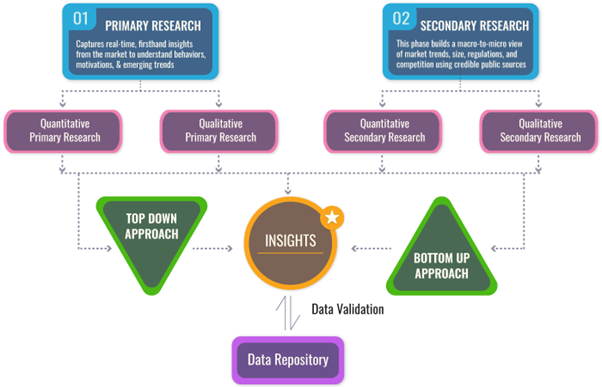
We follow a comprehensive, multi-phase research framework designed to deliver accurate, strategic, and decision-ready intelligence. Our process integrates primary and secondary research , both quantitative and qualitative , along with dual modeling techniques ( top-down and bottom-up) and a final layer of validation through our proprietary in-house repository.
PRIMARY RESEARCH
Primary research captures real-time, firsthand insights from the market to understand behaviors, motivations, and emerging trends.
1. Quantitative Primary Research
Objective: Generate statistically significant data directly from market participants.
Approaches:- Structured surveys with customers, distributors, and field agents
- Mobile-based data collection for point-of-sale audits and usage behavior
- Phone-based interviews (CATI) for market sizing and product feedback
- Online polling around industry events and digital campaigns
- Purchase frequency by customer type
- Channel performance across geographies
- Feature demand by application or demographic
2. Qualitative Primary Research
Objective: Explore decision-making drivers, pain points, and market readiness.
Approaches:- In-depth interviews (IDIs) with executives, product managers, and key decision-makers
- Focus groups among end users and early adopters
- Site visits and observational research for consumer products
- Informal field-level discussions for regional and cultural nuances
SECONDARY RESEARCH
This phase helps establish a macro-to-micro understanding of market trends, size, regulation, and competitive dynamics, sourced from credible and public domain information.
1. Quantitative Secondary Research
Objective: Model market value and segment-level forecasts based on published data.
Sources include:- Financial reports and investor summaries
- Government trade data, customs records, and regulatory statistics
- Industry association publications and economic databases
- Channel performance and pricing data from marketplace listings
- Revenue splits, pricing trends, and CAGR estimates
- Supply-side capacity and volume tracking
- Investment analysis and funding benchmarks
2. Qualitative Secondary Research
Objective: Capture strategic direction, innovation signals, and behavioral trends.
Sources include:- Company announcements, roadmaps, and product pipelines
- Publicly available whitepapers, conference abstracts, and academic research
- Regulatory body publications and policy briefs
- Social and media sentiment scanning for early-stage shifts
- Strategic shifts in market positioning
- Unmet needs and white spaces
- Regulatory triggers and compliance impact
DUAL MODELING: TOP-DOWN + BOTTOM-UP
To ensure robust market estimation, we apply two complementary sizing approaches:
Top-Down Modeling:- Start with broader industry value (e.g., global or regional TAM)
- Apply filters by segment, geography, end-user, or use case
- Adjust with primary insights and validation benchmarks
- Ideal for investor-grade market scans and opportunity mapping
- Aggregate from the ground up using sales volumes, pricing, and unit economics
- Use internal modeling templates aligned with stakeholder data
- Incorporate distributor-level or region-specific inputs
- Most accurate for emerging segments and granular sub-markets
DATA VALIDATION: IN-HOUSE REPOSITORY
We close the loop with proprietary data intelligence built from ongoing projects, industry monitoring, and historical benchmarking. This repository includes:
- Multi-sector market and pricing models
- Key trendlines from past interviews and forecasts
- Benchmarked adoption rates, churn patterns, and ROI indicators
- Industry-specific deviation flags and cross-check logic
- Catches inconsistencies early
- Aligns projections across studies
- Enables consistent, high-trust deliverables