
India Antiepileptic Drugs Market Size and Forecast (2026–2034), Regional Growth, Trend, Share and Industry Analysis Report Coverage: By Drug Class (Sodium Channel Modulators, GABA-Enhancing Agents, Calcium Channel Modulators, and Others); By Route of Administration (Oral, Intravenous, Intramuscular, and Others); By Formulation (Tablets and Capsules, Oral Liquids and Suspensions, Injectable Formulations, and Others); By Distribution Channel (Hospital Pharmacies, Retail Pharmacies, and Online Pharmacies)
2026-11-12
Healthcare
Swetal (Research Analyst)
Description
India Antiepileptic Drugs Market Overview
The India antiepileptic drugs market is projected to expand from USD 0.51 billion in 2026 to USD 0.79 billion by 2034, registering a CAGR of 5.8% during 2026–2034. Market drivers of the India antiepileptic drugs market include the continuous requirement for epilepsy treatment, advancements in neurological diagnosis, and enhanced availability of pharmaceutical products. The India Antiepileptic Drugs Market comprises traditional and novel medicines that help manage seizures. Demand for these products depends on their efficacy, tolerance, cost, and patient compliance. India's existing pharmaceutical generics industry makes available cost-effective antiepileptic drugs. Moreover, government policies aimed at promoting access to low-cost generics will positively impact market growth.
The hospital sector, neurology clinics, retail pharmacies, and state healthcare institutions are involved in the distribution of drugs; however, access to these products may vary depending on the region. Lack of proper treatment, limited access to specialists, high cost of drugs, and side effects continue to limit the market growth. Increased access to diagnosis, improved treatment continuity, and development of safer medicines will create opportunities for pharmaceutical companies operating in India's antiepileptic drugs market.

India Antiepileptic Drugs Market Growth Drivers
Rising Need for Long-Term Epilepsy Management
The increasing demand for proper and prolonged management of epilepsy will drive the demand for antiepileptic drugs in India, as patients may require constant medication to prevent the occurrence of seizures and recurrence. Increasing knowledge about neurological disorders, better access to diagnostic services, and increased interaction with healthcare professionals are motivating patients to get themselves treated. The requirement for constant follow-ups, adjustment of medication, and prevention of seizures is another factor that increases the recurrent demand in hospitals, neurology clinics, and retail pharmacies. Moreover, the availability of inexpensive generic drugs will help in overcoming cost concerns and ensure access to treatment. All of these factors will offer opportunities for pharmaceutical companies to increase their offerings of antiepileptic drugs in India.
Growing Availability of Affordable Generic Medicines
Availability of affordable generic drugs is aiding in the growth of the antiepileptic drugs market in India through facilitating accessibility to drugs that are necessary for treating seizures. The existence of an already set-up pharmaceutical manufacturing industry in India is allowing local manufacturers to manufacture a variety of generic drugs, thus widening treatment options in terms of various prices. Since epilepsy requires constant medication, this lowers the cost of medication for patients, making it easier for them to continue using the drugs. Government efforts aimed at providing affordable generic medications have facilitated accessibility of medicine even in rural areas. In addition, there is stiff competition in the local manufacturing industry that allows for cost-effective production and accessibility of products.
India Antiepileptic Drugs Market Restraint
Persistent Treatment Gaps and Uneven Access to Neurological Care
Inequitable access to neurological health care is a constraint for the antiepileptic drug market in India, as lack of knowledge, late detection, shortage of specialized health care personnel, and monetary issues can hinder patients from obtaining proper and continuous treatments. Access to physicians specializing in neurology and medicines differs according to whether one lives in urban or rural areas. This can prevent epilepsy patients from getting the needed assistance. Stigmatization and misconceptions of the disease might keep patients away from going to the physician or continuing treatment. As controlling seizures necessitates the use of anticonvulsant medicine and regular consultations for extended periods, it may become an impediment to using antiepileptics.
India Antiepileptic Drugs Market Opportunities
Expansion of Affordable Generic Drug Manufacturing
There is an immense possibility of growth in India's market for antiepileptic drugs as there are well-developed facilities for generic drug manufacturing in India, which offer low-cost and efficient treatments. The need for such generic antiepileptic drugs exists due to the nature of epilepsy, as patients suffering from the disease require lifelong medication. This is where domestic pharmaceutical companies can benefit by widening their range of antiepileptic drugs, enhancing efficiency, and ensuring effective distribution through hospitals, retail pharmacies, and government healthcare facilities. The focus on cost-effective drugs and the increasing availability of generic drug programs will facilitate market penetration. Pharmaceutical companies that ensure high-quality products, regulatory compliance, and reliable supply without increasing manufacturing costs can gain a competitive advantage.
Development of Better-Tolerated Antiepileptic Therapies
The development of antiepileptic treatments that have more tolerable side effects offers an opportunity for the antiepileptic drugs market in India, since it will help address the problems with treatments linked to side effects, drug interactions, and long-term drug use. People who need constant seizure control face problems with the current medications, and hence there is a need for new medicines that will offer effective seizure control without having complications related to treatments. Pharmaceutical companies can take advantage of this opportunity through investing in research and development, developing better drug formulations, and offering more treatment alternatives to cater to the different seizure types. Improved tolerance of the drugs will also be useful in ensuring treatment adherence and minimizing the need for drug adjustment.
India Antiepileptic Drugs Market Scope
India Antiepileptic Drugs Market Report Segmentation Analysis
The Sodium Channel Modulators Segment Is Expected to Dominate the India Antiepileptic Drugs Market During the Forecast Period
The sodium channel modulator sub-segment is forecast to hold an important place in the market of antiepileptic drugs in India because of the already existing use of these drugs in the management of focal seizures and others. Such drugs are known to be effective in helping to normalize the abnormal electrical activity in the brain by blocking the voltage-gated sodium channels, which can lead to the successful management of seizures in patients where it is necessary. Besides, the use of such drugs in clinical practice, their generic availability, and applicability for long-term treatment are among the factors that may favor the growth of the demand for them. Moreover, the widespread production of already existing antiepileptic drugs by domestic pharmaceutical companies may favor the growth of the segment.

Oral Segment Is Expected to Dominate the India Antiepileptic Drugs Market During the Forecast Period
Oral medications are believed to gain market share in India due to their practicality and effectiveness. Oral preparations will allow for continuous administration of the drug at home without any need for hospitalization. The fact that they are suitable for outpatient treatment also contributes to their popularity. Another feature that contributes to the popularity of the segment is the availability of oral antiepileptic drugs in both established and generic markets. It offers enough opportunities for doctors to prescribe drugs in accordance with the clinical state of the patients and economic capabilities. In India, where oral drugs cannot be purchased cheaply enough from hospitals and retail pharmacies, the availability of affordable oral antiepileptic medications also becomes an advantage for diverse groups of patients. The emphasis on outpatient treatment and continuous drug therapy will help to preserve the dominance of the segment during the forecast period.
The Tablet and Capsules Segment Is Expected to Dominate the India Antiepileptic Drugs Market During the Forecast Period
The tablets & capsules sub-segment is expected to dominate India's antiepileptic drugs market, driven by their ease of consumption, dosage uniformity, and suitability for long-term seizure management. The tablets & capsules are preferred in maintenance therapies owing to their ease of administration, provision of consistent dosing, and use in outpatient therapy. Availability of various established and generic formulations of antiepileptic drugs in the market makes it possible for doctors to prescribe medications as per the patient's needs and cost. Moreover, the robust presence of pharmaceutical manufacturers and pharmacies in the country also adds to the availability of these formulations. Competitive pricing of generics in tablets & capsules is also expected to facilitate patients taking their medication in continuous therapy. This will contribute towards sustaining growth over the forecast period along with oral liquids and other forms for children and uncooperative patients.
The Hospital Pharmacies Segment Is Expected to Dominate the India Antiepileptic Drugs Market During the Forecast Period
The hospital pharmacies category is expected to continue holding its share in India’s antiepileptic drugs market based on the importance of hospitals in epilepsy diagnosis and treatment initiation and monitoring. Prescriptions are provided in the neurology department, where healthcare practitioners diagnose the type of seizures, prescribe the required drugs, and evaluate treatment effectiveness and safety. Hospital pharmacies offer antiepileptic drug prescriptions as well as help adjust medication regimens for people needing specialized attention because of their hard-to-control epilepsy. The presence of diagnostic services and medicine purchasing systems is another reason to increase demand through this distribution channel. Retail pharmacies play an important role in providing prescriptions for people who are undergoing long-term therapy at the outpatient clinics. Continuous availability of hospital neurological care and prescription drugs is expected to contribute to the success of this category.
The following segments are part of an in-depth analysis of the India Antiepileptic Drugs Market:
India Antiepileptic Drugs Market Competition Landscape Analysis
The India antiepileptic drugs market is one that faces stiff competition between local pharmaceutical producers and multinational firms. The competition takes place through product availability, pricing, brand recognition, and distribution. Participants in the market include Sun Pharmaceutical Industries, Cipla, Abbott, Torrent Pharmaceuticals, Lupin, and Alkem Laboratories, among others, through the pharmaceutical products and neurological therapies that they offer. Local manufacturers take advantage of low-cost generic drug manufacturing in India and thus are able to offer affordable alternatives for antiepileptic drugs that are prescribed most often. There is stiff competition in generic drug markets due to the fact that pricing, product quality, compliance, and consistent supply determine market positions. On the other hand, those who want to differentiate themselves are concentrating on expansion of their product portfolio and addressing treatment needs with better formulations and new therapies. The existence of a wide network of hospitals and retail pharmacies facilitates access to the market; however, pricing pressures and affordability issues limit profit margins.
India Antiepileptic Drugs Market Recent Developments News:
In September 2026, Alkem Laboratories launched Neuceno, a cenobamate-based antiepileptic medication in India for the treatment of partial-onset seizures in adults. Cenobamate offers an additional treatment option for patients requiring improved seizure control, particularly those whose seizures remain inadequately controlled with existing therapies. The launch reflects the growing availability of newer antiepileptic medications in India and highlights domestic pharmaceutical companies' efforts to expand their neurology portfolios with differentiated treatments. It also underscores the potential for innovative therapies to address unmet needs in epilepsy management, although affordability, physician adoption, and access to specialist care will influence market penetration.
In March 2026, Mankind Pharma acquired the Indian market rights to Roche’s Rivotril, a clonazepam-based medication used to manage neurological and psychiatric conditions, including epilepsy and seizure disorders. The agreement grants Mankind exclusive rights to manufacture, market, and distribute the brand across India. The acquisition aligns with the company’s strategy to strengthen its chronic and specialty therapy portfolio and complements its existing central nervous system (CNS) offerings. Mankind plans to use its nationwide distribution network and established physician reach to expand the brand’s accessibility. The development highlights the role of brand acquisitions in strengthening competitive positioning, expanding established treatment portfolios, and improving market access in India’s antiepileptic drugs market.
The India Antiepileptic Drugs Market is dominated by a few large companies, such as
Sun Pharmaceutical Industries
Cipla
Abbott
Torrent Pharmaceuticals
Lupin
Alkem Laboratories
Intas Pharmaceuticals
Ipca Laboratories
Zydus Lifesciences
Dr. Reddy's Laboratories
Aurobindo Pharma
Hetero
Micro Labs
Mankind Pharma
Macleods Pharmaceuticals
Glenmark Pharmaceuticals
Unichem Laboratories
Alembic Pharmaceuticals
Wockhardt
Eris Lifesciences
Other Prominent Players
Frequently Asked Questions
Swetal (Research Analyst)
Swetal is a Research Analyst with 4+ years of experience specializing in healthcare market research, medical devices, healthcare IT, and medical technology industry analysis. Her expertise includes competitive intelligence, secondary research, market trend forecasting, and healthcare business insights across global healthcare ecosystems.
She contributes to advanced market research reports by analyzing regulatory frameworks, emerging healthcare technologies, competitive landscapes, and innovation trends shaping the medical industry. With a strong focus on accurate market intelligence, strategic insights, and healthcare industry trends, Swetal supports businesses in making informed, data-backed decisions in a rapidly transforming healthcare environment.
India Antiepileptic Drugs Market Introduction and Market Overview
Objectives of the Study
Market Segmentation
Drug Class of the India Antiepileptic Drugs Market
Route of Administration of the India Antiepileptic Drugs Market
Formulation of India Antiepileptic Drugs Market
Distribution Channel of the India Antiepileptic Drugs Market
Competition Coverage List of Market Participants
Market Definition: Antiepileptic Drugs Market
Executive Summary
India Antiepileptic Drugs Market Estimation & Forecast
India Antiepileptic Drugs Market Size (US$ Million) Estimates & Historical Trend Analysis (2021 - 2025)
India Peptide Cancer Vaccine Overall Market Size (US$ Million), Growth Rate (Y-o-Y), Market CAGR (%), Market Forecast (2026 - 2034)
Snapshot of India Antiepileptic Drugs Market
India Antiepileptic Drugs Market Revenue Share (%) 2025
Key Competitors & Key Insights
Market Overview (Qualitative Analysis)
Demand Side Trends
Supply Side Trends / Manufacturing Trends
Demand and Opportunity Assessment, 2026 - 2034
Market Dynamics
Drivers
Limitations
Opportunities
Impact Analysis of Drivers and Restraints
Key Developments
Regulatory Landscape
Pricing Analysis
Supply Chain Analysis
Porter’s Five Forces Analysis
Bargaining Power of Suppliers
Bargaining Power of Buyers
Threat of Substitutes
Threat of New Entrants
Competitive Rivalry
PEST Analysis
Political Factors
Economic Factors
Social Factors
Technology Factors
India Antiepileptic Drugs Market Estimates & Forecast Trend Analysis, by Drug Class
India Antiepileptic Drugs Market Assessments & Key Findings, by Drug Class
India Antiepileptic Drugs Market Revenue (US$ Million) Estimates and Forecasts, by Drug Class, 2021 - 2034
Sodium Channel Modulators
GABA-Enhancing Agents
Calcium Channel Modulators
Others
India Antiepileptic Drugs Market Estimates & Forecast Trend Analysis, by Route of Administration
India Antiepileptic Drugs Market Assessments & Key Findings, by Route of Administration
India Antiepileptic Drugs Market Revenue (US$ Million) Estimates and Forecasts, by Route of Administration, 2021 - 2034
Oral
Intravenous
Intramuscular
Others
India Antiepileptic Drugs Market Estimates & Forecast Trend Analysis, by Formulation
India Antiepileptic Drugs Market Assessments & Key Findings, by Formulation
India Antiepileptic Drugs Market Revenue (US$ Million) Estimates and Forecasts, by Formulation, 2021 - 2034
Tablets and Capsules
Oral Liquids and Suspensions
Injectable Formulations
Others
India Antiepileptic Drugs Market Estimates & Forecast Trend Analysis, by Distribution Channel
India Antiepileptic Drugs Market Assessments & Key Findings, by Distribution Channel
India Antiepileptic Drugs Market Revenue (US$ Million) Estimates and Forecasts, by Distribution Channel, 2021 - 2034
Hospital Pharmacies
Retail Pharmacies
Online Pharmacies
Competition Landscape
India Antiepileptic Drugs Market Product Mapping
India Antiepileptic Drugs Market Concentration Analysis, by Leading Players / Innovators / Emerging Players / New Entrants
India Antiepileptic Drugs Market Tier Structure Analysis
India Antiepileptic Drugs Market Concentration & Company Market Shares (%) Analysis, 2025
Company Profiles
Sun Pharmaceutical Industries
Company Overview & Key Stats
Financial Performance & KPIs
Product Portfolio
SWOT Analysis
Business Strategy & Recent Developments
* Similar details would be provided for all the players mentioned below
Cipla
Abbott
Torrent Pharmaceuticals
Lupin
Alkem Laboratories
Intas Pharmaceuticals
Ipca Laboratories
Zydus Lifesciences
Dr. Reddy's Laboratories
Aurobindo Pharma
Hetero
Micro Labs
Mankind Pharma
Macleods Pharmaceuticals
Glenmark Pharmaceuticals
Unichem Laboratories
Alembic Pharmaceuticals
Wockhardt
Eris Lifesciences
Other Prominent Players
Research Findings & Conclusion
Assumption & Acronyms Used
Research Methodology
External Transportations / Databases
Internal Proprietary Database
Primary Research
Secondary Research
Assumptions
Limitations
Report FAQs
Our Research Methodology
"Insight without rigor is just noise."
We follow a comprehensive, multi-phase research framework designed to deliver accurate, strategic, and decision-ready intelligence. Our process integrates primary and secondary research , both quantitative and qualitative , along with dual modeling techniques ( top-down and bottom-up) and a final layer of validation through our proprietary in-house repository.
PRIMARY RESEARCH
Primary research captures real-time, firsthand insights from the market to understand behaviors, motivations, and emerging trends.
1. Quantitative Primary Research
Objective: Generate statistically significant data directly from market participants.
Approaches:- Structured surveys with customers, distributors, and field agents
- Mobile-based data collection for point-of-sale audits and usage behavior
- Phone-based interviews (CATI) for market sizing and product feedback
- Online polling around industry events and digital campaigns
- Purchase frequency by customer type
- Channel performance across geographies
- Feature demand by application or demographic
2. Qualitative Primary Research
Objective: Explore decision-making drivers, pain points, and market readiness.
Approaches:- In-depth interviews (IDIs) with executives, product managers, and key decision-makers
- Focus groups among end users and early adopters
- Site visits and observational research for consumer products
- Informal field-level discussions for regional and cultural nuances
SECONDARY RESEARCH
This phase helps establish a macro-to-micro understanding of market trends, size, regulation, and competitive dynamics, sourced from credible and public domain information.
1. Quantitative Secondary Research
Objective: Model market value and segment-level forecasts based on published data.
Sources include:- Financial reports and investor summaries
- Government trade data, customs records, and regulatory statistics
- Industry association publications and economic databases
- Channel performance and pricing data from marketplace listings
- Revenue splits, pricing trends, and CAGR estimates
- Supply-side capacity and volume tracking
- Investment analysis and funding benchmarks
2. Qualitative Secondary Research
Objective: Capture strategic direction, innovation signals, and behavioral trends.
Sources include:- Company announcements, roadmaps, and product pipelines
- Publicly available whitepapers, conference abstracts, and academic research
- Regulatory body publications and policy briefs
- Social and media sentiment scanning for early-stage shifts
- Strategic shifts in market positioning
- Unmet needs and white spaces
- Regulatory triggers and compliance impact
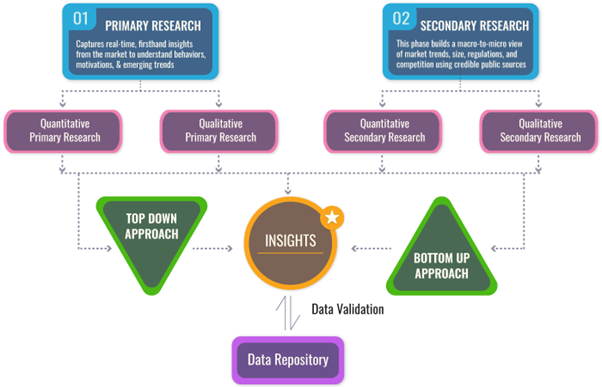
DUAL MODELING: TOP-DOWN + BOTTOM-UP
To ensure robust market estimation, we apply two complementary sizing approaches:
Top-Down Modeling:- Start with broader industry value (e.g., global or regional TAM)
- Apply filters by segment, geography, end-user, or use case
- Adjust with primary insights and validation benchmarks
- Ideal for investor-grade market scans and opportunity mapping
- Aggregate from the ground up using sales volumes, pricing, and unit economics
- Use internal modeling templates aligned with stakeholder data
- Incorporate distributor-level or region-specific inputs
- Most accurate for emerging segments and granular sub-markets
DATA VALIDATION: IN-HOUSE REPOSITORY
We close the loop with proprietary data intelligence built from ongoing projects, industry monitoring, and historical benchmarking. This repository includes:
- Multi-sector market and pricing models
- Key trendlines from past interviews and forecasts
- Benchmarked adoption rates, churn patterns, and ROI indicators
- Industry-specific deviation flags and cross-check logic
- Catches inconsistencies early
- Aligns projections across studies
- Enables consistent, high-trust deliverables