

India Biochip Market Size and Forecast (2026–2034), Regional Growth, Trend, Share and Industry Analysis Report Coverage: By Type (DNA Chips, Protein Chips, Lab-on-a-Chip (LOC), Cell Arrays, Others); By Product (Consumables, Instruments, Software and Services); By Application (Disease Diagnostics, Drug Discovery and Development, Genomics, Agricultural Biotechnology, Others); By End User (Biotechnology and Pharmaceutical Companies, Hospitals and Diagnostic Centers, Academic and Research Institutes, Others)
2026-11-17
Healthcare
Swetal (Research Analyst)
Description
India Biochip Market Overview
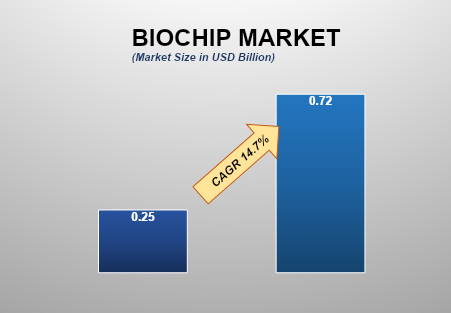
The India biochip market is projected to expand from USD 0.25 billion in 2026 to USD 0.72 billion by 2034, registering a CAGR of 14.7% during 2026–2034. India's biochip market is becoming a crucial segment of both biotechnology and advanced diagnostics, with sustained growth expected from rising demand for rapid disease diagnosis, molecular diagnostics, personalized medicine, and high-throughput drug discovery. The increase in the number of infectious and chronic disease burdens, expanding pharmaceutical and biotechnology R&D, and the need for faster, more accurate diagnostic solutions have increased demand for DNA chips, protein chips, cell-based chips, and lab-on-chip technologies. While microarray-based technologies are widely used in genotyping and gene expression analysis, microfluidics is advancing point-of-care diagnostics, integrated diagnostic cartridge development, and laboratory miniaturization. Government efforts that promote the manufacturing of medical devices and biotechnology innovation have facilitated the growth of local companies, such as Molbio Diagnostics, Achira Labs, Huwel Lifesciences, and PathShodh Healthcare, that create locally-produced diagnostic and biosensing technology. However, the high cost of development and validation and a lack of advanced manufacturing capabilities within the country for chips, as well as the reliance on imported technologies and affordability constraints of small diagnostic facilities continue to limit commercialization.
India Biochip Market Growth Drivers
Increasing Demand for Rapid and Decentralized Molecular Diagnostics
Increasing demand for timely identification of diseases and for quick diagnostic turnaround along with effective multi-purpose testing outside the centralized laboratory system is driving the demand for biochip-based diagnostic solutions in India. Micro-PCR chips, lab-on-chip devices and different types of integrated molecular diagnostics cartridges are widely used for sample preparation and analysis with minimal manual work input. The introduction of these devices in diagnostics of infectious diseases including tuberculosis and cancer helps to expand the market for such devices since they can be used in cheap public health facilities, small laboratories, and point-of-care settings. For example, Truenat by Molbio Diagnostics utilizes the technology of micro-PCR chips and portable systems to detect tuberculosis and other infections. Its use in decentralized testing shows how chip-based technology enables the use of molecular diagnostics in the field where the conventional laboratory infrastructure is inaccessible.
Expansion of Pharmaceutical and Biotechnology Research Activities
The rise in investment in pharma R&D, genomics, drug discovery, and precision medicine is driving the need for DNA chips, protein chips, cell-based chips, and microfluidic research technologies. The pharmaceutical and biotech sectors are requiring advanced analytical instruments to study biological interactions, discover disease biomarkers, and expedite the drug development process. Biochips provide decreased sample use and increased test efficacy, opening doors for dedicated local manufacturers and technology providers. For instance, Achira Labs’ Fabchip microfluidic technology shows how small chips can be used in multi-testing applications. The increase in biomarker research and molecular profiling efforts implies that the processes based on such technologies will be widely adopted by pharmaceutical R&D labs, biotech firms, and diagnostic research labs.
India Biochip Market Restraint
High Manufacturing Costs and Limited Domestic Fabrication Capabilities
To create and manufacture biochips, several technical materials and specialized precision micro-manufacturing technologies and surfaces must be utilized, in addition to biocompatible coatings and sophisticated quality-control measures. These features mean that biochip manufacturing requires a very high initial investment, as the technologies being developed are used for such products as DNA biochips, protein chips, and the so-called integrated microfluidic platforms. Limited access to specialized fabrication capability and dependence on imported substrates and raw materials, as well as precision parts, add to the manufacturing costs, lengthen timeframes for commercialization of the developed products, and limit the capabilities of domestic manufacturers to compete with global players in the field of biochip manufacturing. For example, to be able to produce microfluidic and molecular diagnostic chips, several tasks must first be completed, namely defining the accurate geometry of the channels, achieving proper surface properties, and ensuring high reproducibility of the measurements. All this means that Indian companies dealing with biochip manufacturing, especially with biochip scale-up from pilot to large-scale production, will have to face numerous expenses for validation of their technologies.
India Biochip Market Opportunities
Growing Opportunity for Indigenous Biochip Development and Healthcare Technology Localization
India aims to boost homegrown medical device manufacturing and biotechnology capabilities, and this is enabling stakeholders to create, develop, and market biochip technologies meant for the country's healthcare needs. The growing demand for low-cost molecular diagnostic solutions, disease detection, tumor identification, and non-centralized laboratory testing is aiding manufacturers to allocate resources for microfluidic chip manufacturing, biosensor incorporation, disposable diagnostic cartridges, and all-in-one lab-on-a-chip models. As an example, Molbio Diagnostics' Truenat system shows the commercial viability of local technology in this area due to its products and disposable micro-PCR chips used in medicine for TB and other diseases. Achira Labs' Fabchip technology also opens possibilities for local technologies in microfluidics. In terms of policies, India's BioE3 Policy, approved in August 2024, is promising a facilitating environment via establishing biofoundries, biomanufacturing facilities, and infrastructure to implement related technology solutions. As per the Department of Science and Technology data published in July 2026, more than 270 projects were successful in applying for funding through the policy's discovery, technology application, and technology scaling stages. Nonetheless, the aforementioned projects do not target biochips directly; however, the overall support provided can help domestic biochip practitioners. This creates opportunities for Indian manufacturers to strengthen in-house fabrication capabilities, reduce reliance on imported components, improve production economics and develop application-specific biochip products for domestic healthcare providers and international markets.
India Biochip Market Scope
India Biochip Market Report Segmentation Analysis
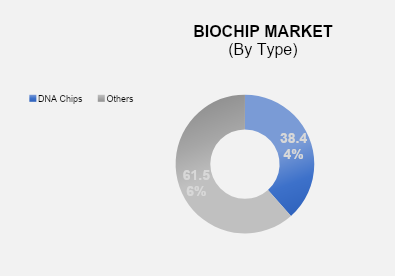
DNA Chips Segment Is Expected to Dominate the India Biochip Market During the Forecast Period
The DNA chips segment is anticipated to occupy a significant position in the India Biochip Market, driven by the rising usage of genomic examination, profiling of gene expression, testing of genes, and molecular diagnostics. The growing preference for early detection and understanding of diseases drives the popularity of DNA microarrays in diagnostic laboratories, the biotechnology industry, and pharmaceutical research facilities. Rapid progress in genome processing, personalized therapy and oncology techniques, and also increased industry demand for R&D activities are supporting the increased usage of DNA chip technology.
Consumables Segment Is Expected to Dominate the India Biochip Market During the Forecast Period
The consumables segment is expected to dominate the India Biochip Market during the forecast period due to the recurring need for disposable chips, assay reagents, cartridges, sample preparation materials, and other testing components. As opposed to instruments and integrated biochip systems, consumables are needed for individual test procedures and must be refilled regularly, generating repeat demand from diagnostic laboratories, hospitals, biotechnology companies and pharmaceutical research facilities. Rising adoption of molecular diagnostics, microfluidic platforms, and multiplexed bioassays is further driving consumption of application-specific chip cartridges and reagents. Furthermore, the recurring procurement due to the growth in decentralized diagnostic testing and routine laboratory workflows is expected to continue to make consumables a major revenue-generating segment.
Disease Diagnostics Segment Is Expected to Dominate the India Biochip Market During the Forecast Period
The Disease Diagnostics segment is anticipated to hold the largest share of the India Biochip Market during the forecast period owing to the increasing demand for quick, accurate, and economical detection of infectious diseases, cancer, and genetic conditions. The demand for diagnostic testing in India is huge, and there is growing emphasis on detecting disease early. This is leading to the use of DNA chips, biosensor chips, and microfluidic diagnostic platforms. These technologies allow for the identification of multiple biological markers, variations in genes, and disease-associated targets while reducing the need for samples and the complexity of testing. The growing demand for tuberculosis testing, infectious disease screening, oncology biomarker identification, and molecular profiling is driving opportunities for biochip-based diagnostic solutions. Moreover, the advent of portable and integrated diagnostic platforms is moving testing capabilities beyond central laboratories.
Biotechnology and Pharmaceutical Companies Segment Is Expected to Dominate the India Biochip Market During the Forecast Period
The biotechnology and pharmaceutical companies segment is expected to account for the largest share of the India Biochip Market during the forecast period owing to rising investments in drug discovery, genomic studies, biomarker discovery and development of targeted therapies. Biotech and pharmaceutical companies make use of biochips to study gene expression, molecular profiling, toxicity, interaction studies & evaluate potential drug candidates. DNA chips, protein chips, and cell-based biochips are used by pharmaceutical and biotechnology companies to understand various biological parameters at the same time, leading to increased efficiency in their research. The increasing pharmaceutical manufacturing industry in India, along with an increasing biotechnology industry is also boosting demand from this segment. The requirement to speed up R&D and improve pre-clinical research efficiency is also expected to boost adoption of high-end biochip products among biotech and pharma companies.
The following segments are part of an in-depth analysis of the India Biochip Market:
India Biochip Market Competition Landscape Analysis
India biochip market is moderately fragmented and growing, with many indigenous players offering different kinds of biochips such as molecular diagnostic chips, microfluidic chips, biosensors, and lab-on-chip systems. Molbio Diagnostics is fairly well positioned in the market with its successful Truenat molecular diagnostic chip-based system. Others such as Achira Labs and Huwel Lifesciences offer microfluidic and nucleic acid-based diagnostics. MyLab Discovery Solutions, Point-of-Care Microfluidics and PathShodh Healthcare offer molecular diagnostic systems, bespoke lab-on-chip devices and biosensor systems, respectively. Further players such as Amar Biosystems, Adiuvo Diagnostics, Technoculture Research and Biosense Technologies are working on niche areas of microfluidics, diagnostic cartridge systems and point-of-care devices. The market is competitive, with players looking to provide differentiated products, fabrication capabilities, high accuracy, compatibility, regulatory compliance, scalable production, and cost-effective devices. While Molbio is fairly well positioned compared to most indigenous specialists, the overall market is fragmented, and there is no accurate public data to show what percentage of the market the top 6 manufacturers hold.
India Biochip Market Recent Developments News:
In July 2026, Achira Labs Private Limited was selected under the Government of India's Promotion of Research and Innovation in Pharma-MedTech (PRIP) Scheme, in the novel medical devices category. In collaboration with the Tata Institute for Genetics and Society, the company will develop a multiplexed microfluidic diagnostic platform capable of detecting dengue, malaria, chikungunya, and typhoid using a single finger-prick blood sample. This development strengthens its position in indigenous lab-on-chip technologies and multiplexed point-of-care diagnostics.
In March 2026, Huwel Lifesciences Private Limited entered into an expanded business collaboration with Avio Smart Market Stack (formerly Bartronics India Limited) following an MoU signed in September 2025. The partnership focuses on business development and project execution for Huwel's molecular diagnostic products, including its tuberculosis testing platform. Its Quantiplus MTB FAST platform was reported to have undergone a Health Technology Assessment by the Department of Health Research, with an estimated testing cost of approximately INR 340 per sample, compared with INR 700–1,000 for conventional molecular testing systems cited in the assessment.
The India Biochip Market is dominated by a few large companies, such as
Molbio Diagnostics Private Limited
Huwel Lifesciences Private Limited
Achira Labs Private Limited
MyLab Discovery Solutions Private Limited
Point-of-Care Microfluidics Private Limited
PathShodh Healthcare Private Limited
Amar Biosystems Private Limited
Adiuvo Diagnostics Private Limited
Technoculture Research Private Limited
Cleome Innovations Private Limited
Biosense Technologies Private Limited
ISMO Bio-Photonics Private Limited
NeoDx Biotech Labs Private Limited
J. Mitra & Co. Private Limited
3B BlackBio Dx Limited
Other Prominent Players
Frequently Asked Questions
Swetal (Research Analyst)
Swetal is a Research Analyst with 4+ years of experience specializing in healthcare market research, medical devices, healthcare IT, and medical technology industry analysis. Her expertise includes competitive intelligence, secondary research, market trend forecasting, and healthcare business insights across global healthcare ecosystems.
She contributes to advanced market research reports by analyzing regulatory frameworks, emerging healthcare technologies, competitive landscapes, and innovation trends shaping the medical industry. With a strong focus on accurate market intelligence, strategic insights, and healthcare industry trends, Swetal supports businesses in making informed, data-backed decisions in a rapidly transforming healthcare environment.
India Biochip Market Introduction and Market Overview
Objectives of the Study
Market Segmentation
Type of the India Biochip Market
Products of the India Biochip Market
Application of the India Biochip Market
End User of the India Biochip Market
Competition Coverage List of Market Participants
Market Definition: Biochip Market
Executive Summary
India Biochip Market Estimation & Forecast
India Biochip Market Size (US$ Million) Estimates & Historical Trend Analysis (2021 - 2025)
India Peptide Cancer Vaccine Overall Market Size (US$ Million), Growth Rate (Y-o-Y), Market CAGR (%), Market Forecast (2026 - 2034)
Snapshot of India Biochip Market
India Biochip Market Revenue Share (%) 2025
Key Competitors & Key Insights
Market Overview (Qualitative Analysis)
Demand Side Trends
Supply Side Trends / Manufacturing Trends
Demand and Opportunity Assessment, 2026 - 2034
Market Dynamics
Drivers
Limitations
Opportunities
Impact Analysis of Drivers and Restraints
Key Developments
Regulatory Landscape
Pricing Analysis
Supply Chain Analysis
Porter’s Five Forces Analysis
Bargaining Power of Suppliers
Bargaining Power of Buyers
Threat of Substitutes
Threat of New Entrants
Competitive Rivalry
PEST Analysis
Political Factors
Economic Factors
Social Factors
Technology Factors
India Biochip Market Estimates & Forecast Trend Analysis, by Type
India Biochip Market Assessments & Key Findings, by Type
India Biochip Market Revenue (US$ Million) Estimates and Forecasts, by Type, 2021 - 2034
Protein Chips
Lab-on-a-Chip (LOC)
Cell Arrays
Others
India Biochip Market Estimates & Forecast Trend Analysis, by Product
India Biochip Market Assessments & Key Findings, by Product
India Biochip Market Revenue (US$ Million) Estimates and Forecasts, by Product, 2021 - 2034
Consumables
Instruments
Software and Services
India Biochip Market Estimates & Forecast Trend Analysis, by Application
India Biochip Market Assessments & Key Findings, by Application
India Biochip Market Revenue (US$ Million) Estimates and Forecasts, by Application, 2021 - 2034
Disease Diagnostics
Drug Discovery and Development
Genomics
Agricultural Biotechnology
Others
India Biochip Market Estimates & Forecast Trend Analysis, by End User
India Biochip Market Assessments & Key Findings, by End User
India Biochip Market Revenue (US$ Million) Estimates and Forecasts, by End User, 2021 - 2034
Biotechnology and Pharmaceutical Companies
Hospitals and Diagnostic Center
Academic and Research Institutes
Others
Competition Landscape
India Biochip Market Product Mapping
India Biochip Market Concentration Analysis, by Leading Players / Innovators / Emerging Players / New Entrants
India Biochip Market Tier Structure Analysis
India Biochip Market Concentration & Company Market Shares (%) Analysis, 2025
Company Profiles
Molbio Diagnostics Private Limited
Company Overview & Key Stats
Financial Performance & KPIs
Product Portfolio
SWOT Analysis
Business Strategy & Recent Developments
* Similar details would be provided for all the players mentioned below
Huwel Lifesciences Private Limited
Achira Labs Private Limited
MyLab Discovery Solutions Private Limited
Point-of-Care Microfluidics Private Limited
PathShodh Healthcare Private Limited
Amar Biosystems Private Limited
Adiuvo Diagnostics Private Limited
Technoculture Research Private Limited
Cleome Innovations Private Limited
Biosense Technologies Private Limited
ISMO Bio-Photonics Private Limited
NeoDx Biotech Labs Private Limited
J. Mitra & Co. Private Limited
3B BlackBio Dx Limited
Other Prominent Players
Research Findings & Conclusion
Assumptions & Acronyms Used
Research Methodology
External Transportation / Databases
Internal Proprietary Database
Primary Research
Secondary Research
Assumptions
Limitations
Report FAQs
Our Research Methodology
"Insight without rigor is just noise."
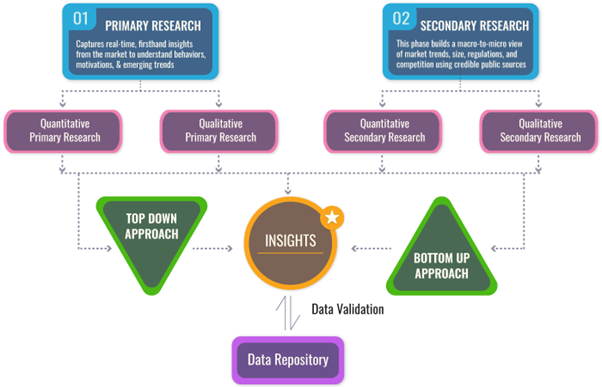
We follow a comprehensive, multi-phase research framework designed to deliver accurate, strategic, and decision-ready intelligence. Our process integrates primary and secondary research , both quantitative and qualitative , along with dual modeling techniques ( top-down and bottom-up) and a final layer of validation through our proprietary in-house repository.
PRIMARY RESEARCH
Primary research captures real-time, firsthand insights from the market to understand behaviors, motivations, and emerging trends.
1. Quantitative Primary Research
Objective: Generate statistically significant data directly from market participants.
Approaches:- Structured surveys with customers, distributors, and field agents
- Mobile-based data collection for point-of-sale audits and usage behavior
- Phone-based interviews (CATI) for market sizing and product feedback
- Online polling around industry events and digital campaigns
- Purchase frequency by customer type
- Channel performance across geographies
- Feature demand by application or demographic
2. Qualitative Primary Research
Objective: Explore decision-making drivers, pain points, and market readiness.
Approaches:- In-depth interviews (IDIs) with executives, product managers, and key decision-makers
- Focus groups among end users and early adopters
- Site visits and observational research for consumer products
- Informal field-level discussions for regional and cultural nuances
SECONDARY RESEARCH
This phase helps establish a macro-to-micro understanding of market trends, size, regulation, and competitive dynamics, sourced from credible and public domain information.
1. Quantitative Secondary Research
Objective: Model market value and segment-level forecasts based on published data.
Sources include:- Financial reports and investor summaries
- Government trade data, customs records, and regulatory statistics
- Industry association publications and economic databases
- Channel performance and pricing data from marketplace listings
- Revenue splits, pricing trends, and CAGR estimates
- Supply-side capacity and volume tracking
- Investment analysis and funding benchmarks
2. Qualitative Secondary Research
Objective: Capture strategic direction, innovation signals, and behavioral trends.
Sources include:- Company announcements, roadmaps, and product pipelines
- Publicly available whitepapers, conference abstracts, and academic research
- Regulatory body publications and policy briefs
- Social and media sentiment scanning for early-stage shifts
- Strategic shifts in market positioning
- Unmet needs and white spaces
- Regulatory triggers and compliance impact
DUAL MODELING: TOP-DOWN + BOTTOM-UP
To ensure robust market estimation, we apply two complementary sizing approaches:
Top-Down Modeling:- Start with broader industry value (e.g., global or regional TAM)
- Apply filters by segment, geography, end-user, or use case
- Adjust with primary insights and validation benchmarks
- Ideal for investor-grade market scans and opportunity mapping
- Aggregate from the ground up using sales volumes, pricing, and unit economics
- Use internal modeling templates aligned with stakeholder data
- Incorporate distributor-level or region-specific inputs
- Most accurate for emerging segments and granular sub-markets
DATA VALIDATION: IN-HOUSE REPOSITORY
We close the loop with proprietary data intelligence built from ongoing projects, industry monitoring, and historical benchmarking. This repository includes:
- Multi-sector market and pricing models
- Key trendlines from past interviews and forecasts
- Benchmarked adoption rates, churn patterns, and ROI indicators
- Industry-specific deviation flags and cross-check logic
- Catches inconsistencies early
- Aligns projections across studies
- Enables consistent, high-trust deliverables