

Mobile Cardiac Telemetry Systems Market Size and Forecast (2026–2034), Global and Regional Growth, Trend, Share and Industry Analysis Report Coverage: By Product Type (Multiple Lead Mobile Cardiac Telemetry Systems and Mobile Cardiac Telemetry Patch), By Disease Indication (Arrhythmia / Atrial Fibrillation, Bradycardia, Tachycardia, Heart Failure, and Others), By End User (Hospital and Specialty Clinics, Diagnostic Centers, Home Care, and Others), and Geography
2026-07-31
Healthcare
Swetal (Research Analyst)
Description
Mobile Cardiac Telemetry Systems
Market Overview
The global mobile
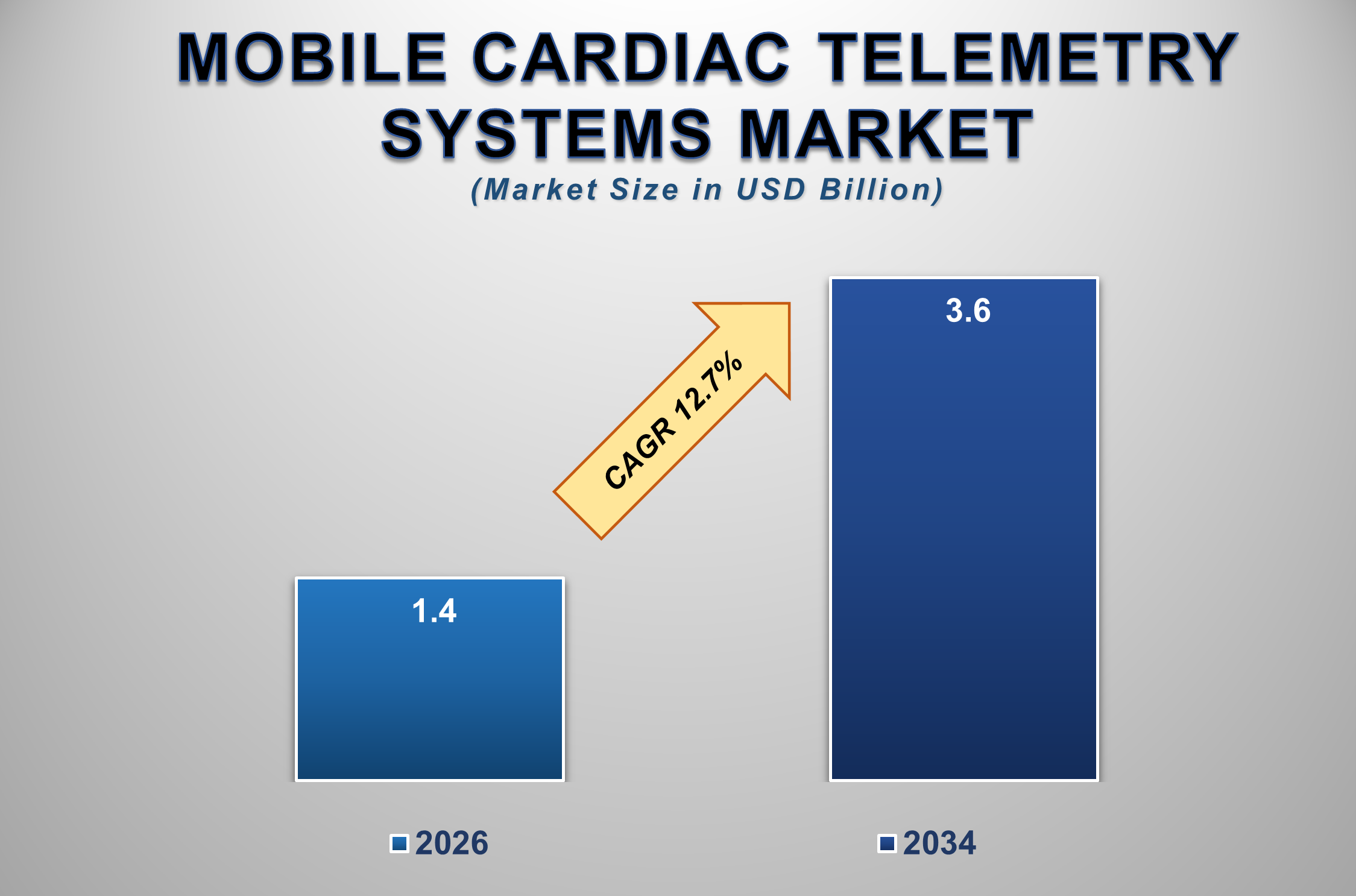
cardiac telemetry systems market was valued at USD 1.4 billion in 2026 and is
projected to reach USD 3.6 billion by 2034, expanding at a CAGR of 12.7% during
the forecast period. Mobile Cardiac
Telemetry (MCT) Systems Market consists of wireless wearable cardiac monitoring
equipment and monitoring services that transmit real-time ECG data at regular
intervals to ensure the detection of possible occurrences of cardiac
arrhythmias. The MCT Systems are used among patients suffering from unexplained
heart palpitations, syncope, atrial fibrillation, stroke recovery, and cardiovascular
diseases requiring longer analysis compared to classic Holter monitors. The
main forces behind the expansion of the Mobile Cardiac Telemetry (MCT) Systems
Market are the increasing number of cardiovascular diseases and atrial
fibrillation incidences, the implementation of remote patient monitoring, and
the increase in the adoption of digital health technologies and advancement of
AI-enabled ECG analytics and cloud-based data transmission.
Mobile Cardiac Telemetry Systems
Market Drivers and Opportunities
Rising
Prevalence of Cardiac Arrhythmias and Cardiovascular Diseases is Driving Market
Growth
The Mobile Cardiac
Telemetry (MCT) Systems Market is driven by the increasing burden posed by
cardiovascular diseases (CVDs). The rising prevalence of acquired and
congenital heart diseases has prompted many healthcare providers to adopt
systems for continuous monitoring to detect problems such as incomplete
arrhythmias. The World Heart Federation estimates that in 2023, the number of
congenital heart disease (CHD) cases will reach around 2.3 million newborns and 16 million affected
people. The growth carries additional importance due to the advent of
age-related issues such as atrial fibrillation. The solutions help to achieve
timely healthcare responses and avoid complications.
Growing Adoption
of Remote Patient Monitoring and Digital Healthcare Fueling Market Expansion
The implementation
of Mobile Cardiac Telemetry (MCT) systems is gaining momentum due to the rapid
growth of Remote Patient Monitoring (RPM) programs, telehealth services, and
home health care. The majority of healthcare providers are gradually moving to decentralized
models that allow continuous monitoring of patients without being confined to
hospitals, helping reduce the number of patients coming to hospitals. MCT
systems facilitate this process by providing the real-time transmission of ECG
data, continuous medical supervision, and quick identification of cardiac
events, ensuring timely actions without requiring frequent visits to doctors.
The advancement of technologies with respect to wearable ECG monitoring devices
further drives the market growth. For instance, in February 2026, the company
HeartBeam, Inc. announced that they had launched a pilot study testing their
new, time-demand 12-lead ECG patch for patients suspected of coronary artery
disease. Such developments define the trend of the industry where much
attention is paid to remote diagnostic instruments yielding high-quality
cardiac information from home. With the growing interest in remote monitoring
services, the demand for MCT systems will keep increasing.
Expansion of
AI-Enabled Predictive Cardiac Monitoring
Presents Significant Opportunities
The combination of
artificial intelligence (AI), machine learning (ML), and advanced analytics in
Mobile Cardiac Telemetry (MCT) systems opens new prospects for transforming
cardiac monitoring from mere diagnosis into preventive and predictive health
assistance. AI-based algorithms work on continuous ECG data and look for subtle
or transient arrhythmias, classifying critical events and eliminating
false-positive alerts. The use of predictive analytics not only enhances the
immediate identification of events but also highlights high-risk patients in
terms of adverse heart conditions, hence allowing doctors to take necessary
steps earlier on and develop treatment plans. This combination of advantages
enhances the accuracy of diagnosis, reduces the workload of medical staff, and
increases operational efficiency. Given the ongoing trend towards the
popularity of remote patient monitoring and value-based healthcare, it is
expected that AI-enabled MCT solutions will become popular as part of regular
cardiovascular treatment.
Mobile Cardiac Telemetry Systems
Market Scope
|
Report Attributes |
Description |
|
Market Size in
2026 |
USD 1.4 Billion |
|
Market Forecast
in 2034 |
USD 3.6
Billion |
|
CAGR % 2026-2034 |
12.7% |
|
Base Year |
2025 |
|
Historic Data |
2021-2025 |
|
Forecast Period |
2026-2034 |
|
Report USP
|
Pricing and Cost Structure
Analysis, Product Innovation Benchmarking, Whitespace Assessment, Company
Share, Company Heatmap, Growth Factors, and more |
|
Segments Covered |
●
By
Product Type ●
By
Disease Indication ●
By End
User |
|
Regional Scope |
●
North
America ●
Europe ●
APAC ●
Latin
America ●
Middle East
and Africa |
|
Country Scope |
●
U.S. ●
Canada ●
U.K. ●
Germany ●
France ●
Italy ●
Spain ●
Russia ●
China ●
India ●
Japan ●
South
Korea ●
Australia
●
Mexico ●
Brazil ●
Saudi
Arabia ●
UAE ●
South
Africa
|
Mobile Cardiac Telemetry Systems
Market Report Segmentation Analysis
The global mobile
cardiac telemetry systems market industry analysis is segmented by product
type, by disease indication, by end user, and by region.
Multiple Lead
Mobile Cardiac Telemetry Systems Segment Is Expected to Dominate the Mobile
Cardiac Telemetry Systems Market During the Forecast Period
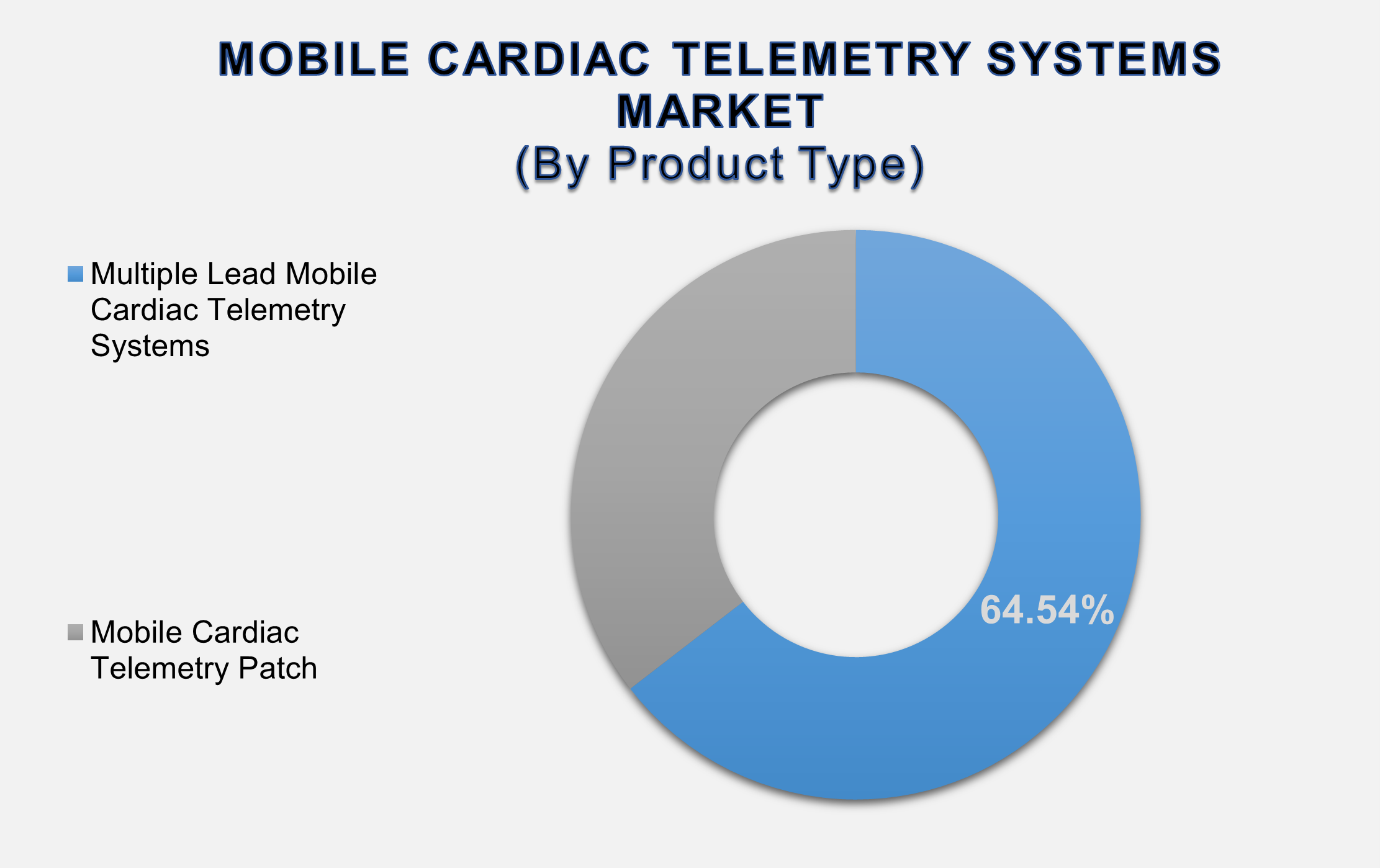
The Multiple Lead
Mobile Cardiac Telemetry (MCT) Systems segment is anticipated to lead the
market due to its higher diagnostic accuracy, broader ability to assess cardiac
rhythms, and greater acceptance for managing complex cardiovascular conditions.
Unlike single-lead systems, multiple-lead MCT devices allow for more detailed
examination of cardiac electrical activity, thereby enabling the detection of a
larger number of intermittent arrhythmias, ischemic processes, and conduction
disorders. Hospitals, cardiology clinics, and remote monitoring service
providers filter this system, making it one of the most widely used for the
monitoring of patients whose conditions require continuous and certified ECG
care. Growth in the segment is actually driven by the introduction of advanced
ECG analytics and artificial intelligence software. A clear example is the
agreement made in April 2026 between AccurKardia and Specialized Medical for a
multi-year contract that includes specialized medical innovations powered by AccurKardia's
FDA-cleared Class II software, also known as AccurECG 2.0. The introduction of
AI-driven ECG analytics with multi-lead monitoring improves automated
arrhythmia detection, making ECG data interpretation easier and faster while
improving efficiency. Health providers will continue to focus on high-quality
remote cardiac monitoring solutions for prompt diagnosis, resulting in high
uptake of multi-lead monitoring equipment in the future.
Arrhythmia /
Atrial Fibrillation Segment Is Expected to Lead the Mobile Cardiac Telemetry
Systems Market by Disease Indication
Due to the
increasing incidence of atrial fibrillation as well as the growth of the aging
population and the increased demand for continuous cardiac monitoring, the
Arrhythmia / Atrial Fibrillation (AF) segment is anticipated to remain the
largest in the Mobile Cardiac Telemetry (MCT) Systems Market throughout the
forecast period. As AF episodes are often transient and asymptomatic, Mobile
Cardiac Telemetry systems offer an immense advantage by offering continuous,
real-time ECG monitoring, thus ensuring early and accurate diagnosis.
Furthermore, the growing adoption of remote patient monitoring, AI-assisted ECG
analysis, and preventive cardiovascular treatment contributes to the wider
implementation of MCT systems, which are used for diagnosis, treatment monitoring,
and post-procedure care.
Hospital and
Specialty Clinics Segment Is Expected to Dominate the End User Segment
Hospitals and
specialty clinics will hold the largest share in the Mobile Cardiac Telemetry
(MCT) Systems Market during the forecast period due to the large number of
patients suffering from cardiovascular disorders, availability of lucrative
cardiology services, and high acceptance of advanced technologies of remote
cardiac monitoring. Hospitals and specialty clinics are the main places for
diagnosing, controlling, and treating patients with suspected arrhythmias and
diverse types of heart diseases, which causes considerable demand for MCT. At
the same time, MCT integration with remote monitoring programs and digital
healthcare systems allows doctors to conduct continuous monitoring of patients
and get better outcomes from the application of these technologies.
The following
segments are part of an in-depth analysis of the global mobile cardiac
telemetry systems market:
|
Market Segments |
|
|
By
Product Type |
●
Multiple
Lead Mobile Cardiac Telemetry Systems ●
Mobile
Cardiac Telemetry Patch |
|
By
Disease Indication |
●
Arrhythmia /
Atrial Fibrillation ●
Bradycardia ●
Tachycardia ●
Heart
Failure ●
Others |
|
By End
User |
●
Hospital and
Specialty Clinics ●
Diagnostic
Centers ●
Home Care ●
Others |
Mobile Cardiac Telemetry Systems
Market Share Analysis by Region
North America is
projected to hold the largest share of the global Mobile Cardiac Telemetry
Systems Market over the forecast period
North America will
dominate the global mobile cardiac telemetry (MCT) systems market during the
forecast period, mainly due to the high rate of cardiovascular diseases and
atrial fibrillation, an advanced healthcare system, and a high level of
implementation of remote patient monitoring technologies. The region has many
advantages, including reimbursement policies, awareness among physicians, and
many manufacturers introducing innovations, the latest of which is the use of
AI in cardiac monitoring devices. In addition to that, increased expenses on
healthcare, an aging population, and a growing shift towards home-based and
value-based care increase the implementation of ambulatory cardiac monitoring
technologies.
Mobile Cardiac
Telemetry Systems Market Competition Landscape Analysis
Wearable devices
that monitor the functioning of the heart are manufactured and introduced to
the market by businesses engaged in the mobile cardiac telemetry (MCT) market.
The equipment has been successfully applied in hospitals, cardiac clinics,
ambulatory care facilities, and the in-home care market for detection and
treatment of heart problems. Companies producing such devices strive to remain
competitive by employing new technologies such as artificial intelligence,
cloud technology, and telemedicine. Business growth is encouraged by the
development of technological innovations, increasing use of digital health
technologies, and effective reimbursement programs.
Global Mobile
Cardiac Telemetry Systems Market Recent Developments News:
●
In April 2026
- At HRS 2026 in Chicago, Implicity presented data demonstrating that its
cloud-based AI algorithm reduced false implantable loop recorder (ILR) alerts
by 61.6% beyond manufacturer-embedded AI, while maintaining 98.3% diagnostic
sensitivity, further validating the effectiveness of next-generation AI-enabled
remote cardiac monitoring.
●
In August 2025
- InfoBionic.Ai, a leader in
AI-enabled remote cardiac monitoring, announced that the U.S. Food and Drug
Administration (FDA) has granted 510(k) clearance for its MoMe ARC 1-Lead
Patch, an added configuration for extended-duration ECG monitoring. The MoMe
ARC Patch represents a major leap forward in both patient and clinician
experience and a pivotal advancement in the company’s evolving MoMe ARC
strategy.
The global
mobile cardiac telemetry systems market is dominated by a few large companies,
such as
●
AliveCor
●
Applied Cardiac Systems Inc.
●
Bardy Diagnostics (Hillrom/Baxter)
●
BioTelemetry, Inc.
●
Biotricity Inc.
●
Bittium Corporation
●
Boston Scientific (through Preventice Solutions)
●
iRhythm Technologies, Inc.
●
Medicalgorithmics S.A.
●
Medicomp Inc.
●
Medtronic plc
●
Philips Healthcare (BioTelemetry is now part of
Philips)
●
Preventice Solutions
●
ScottCare
●
Telerhythmics LLC
●
VitalConnect
●
Zoll Medical Corporation
● Other Prominent Players
Frequently Asked Questions
Swetal (Research Analyst)
Swetal is a Research Analyst with 4+ years of experience specializing in healthcare market research, medical devices, healthcare IT, and medical technology industry analysis. Her expertise includes competitive intelligence, secondary research, market trend forecasting, and healthcare business insights across global healthcare ecosystems.
She contributes to advanced market research reports by analyzing regulatory frameworks, emerging healthcare technologies, competitive landscapes, and innovation trends shaping the medical industry. With a strong focus on accurate market intelligence, strategic insights, and healthcare industry trends, Swetal supports businesses in making informed, data-backed decisions in a rapidly transforming healthcare environment.
1.
Global
Mobile Cardiac Telemetry Systems Market Introduction and Market Overview
1.1. Objectives of the Study
1.2. Market Segmentation
1.2.1.Product Type of the Global
Mobile Cardiac Telemetry Systems Market
1.2.2.Disease Indication of the Global
Mobile Cardiac Telemetry Systems Market
1.2.3.End User of the Global Mobile
Cardiac Telemetry Systems Market
1.2.4.Region of the Global Mobile
Cardiac Telemetry Systems Market
1.3. Competition Coverage List of
Market Participants
1.4. Market Definition: Mobile
Cardiac Telemetry Systems Market
2.
Executive Summary
2.1. Global Mobile Cardiac Telemetry
Systems Market Estimation & Forecast
2.1.1.Global Mobile Cardiac Telemetry
Systems Market Size (US$ Million) Estimates & Historical Trend Analysis
(2021 - 2025)
2.1.2.Global Mobile Cardiac Telemetry
Systems Overall Market Size (US$ Million), Growth Rate (Y-o-Y), Market CAGR
(%), Market Forecast (2026 - 2034)
2.2. Snapshot of Global Mobile
Cardiac Telemetry Systems Market
2.3. Global Mobile Cardiac Telemetry
Systems Market Revenue Share (%) 2025
2.4. REGIONAL OUTLINE: Revenue CAGR,
by Region
2.5. Key Competitors & Key
Insights
3.
Market Overview (Qualitative
Analysis)
3.1. Demand Side Trends
3.2. Supply Side Trends /
Manufacturing Trends
3.3. Demand and Opportunity
Assessment, 2026 - 2034
3.4. Market Dynamics
3.4.1.Drivers
3.4.2.Limitations
3.4.3.Opportunities
3.4.4.Impact Analysis of Drivers and
Restraints
3.5. Key Developments
3.6. Regulatory Landscape
3.7. Pricing Analysis
3.8. Supply Chain Analysis
3.9. Porter’s Five Forces Analysis
3.9.1.Bargaining Power of Suppliers
3.9.2.Bargaining Power of Buyers
3.9.3.Threat of Substitutes
3.9.4.Threat of New Entrants
3.9.5.Competitive Rivalry
3.10. PEST Analysis
3.10.1. Political Factors
3.10.2. Economic Factors
3.10.3. Social Factors
3.10.4. Technology Factors
4.
Global Mobile Cardiac Telemetry
Systems Market Estimates & Forecast Trend Analysis, by Product Type
4.1. Global Mobile Cardiac Telemetry
Systems Market Assessments & Key Findings, by Product Type
4.2. Global Mobile Cardiac Telemetry
Systems Market Revenue (US$ Million) Estimates and Forecasts, by Product Type,
2021 - 2034
4.2.1.Multiple Lead Mobile Cardiac
Telemetry Systems
4.2.2.Mobile Cardiac Telemetry Patch
5.
Global Mobile Cardiac Telemetry
Systems Market Estimates & Forecast Trend Analysis, by Disease Indication
5.1. Global Mobile Cardiac Telemetry
Systems Market Assessments & Key Findings, by Disease Indication
5.2. Global Mobile Cardiac Telemetry
Systems Market Revenue (US$ Million) Estimates and Forecasts, by Disease
Indication, 2021 - 2034
5.2.1.Arrhythmia / Atrial Fibrillation
5.2.2.Bradycardia
5.2.3.Tachycardia
5.2.4.Heart Failure
5.2.5.Others
6.
Global Mobile Cardiac Telemetry
Systems Market Estimates & Forecast Trend Analysis, by End User
6.1. Global Mobile Cardiac Telemetry
Systems Market Assessments & Key Findings, by End User
6.2. Global Mobile Cardiac Telemetry
Systems Market Revenue (US$ Million) Estimates and Forecasts, by End User, 2021
- 2034
6.2.1.Hospital and Specialty Clinics
6.2.2.Diagnostic Centers
6.2.3.Home Care
6.2.4.Others
7.
Global Mobile Cardiac Telemetry
Systems Market Estimates & Forecast Trend Analysis, by Region
7.1. Global Mobile Cardiac Telemetry
Systems Market Assessments & Key Findings, by Region
7.2. Global Mobile Cardiac Telemetry
Systems Market Revenue (US$ Million) Estimates and Forecasts, by Region, 2021 -
2034
7.2.1.North America
7.2.2.Europe
7.2.3.Asia Pacific
7.2.4.Middle East & Africa
7.2.5.Latin America
8.
North
America Mobile Cardiac Telemetry Systems Market: Estimates & Forecast Trend Analysis
8.1.
North
America Mobile Cardiac Telemetry Systems Market Assessments & Key Findings
8.1.1.North America Mobile Cardiac
Telemetry Systems Market Introduction
8.1.2.North America Mobile Cardiac
Telemetry Systems Market Size Estimates and Forecast (US$ Million) (2021 -
2034)
8.1.2.2. By Disease Indication
8.1.2.3. By End
User
8.1.2.4. By Country
8.1.2.4.1. The U.S.
8.1.2.4.2. Canada
9.
Europe
Mobile Cardiac Telemetry Systems Market: Estimates & Forecast Trend Analysis
9.1. Europe Mobile Cardiac Telemetry
Systems Market Assessments & Key Findings
9.1.1.Europe Mobile Cardiac Telemetry
Systems Market Introduction
9.1.2.Europe Mobile Cardiac Telemetry
Systems Market Size Estimates and Forecast (US$ Million) (2021 - 2034)
9.1.2.1. By Product Type
9.1.2.2. By Disease Indication
9.1.2.3. By End User
9.1.2.4. By Country
9.1.2.4.1.
Germany
9.1.2.4.2.
Italy
9.1.2.4.3.
U.K.
9.1.2.4.4.
France
9.1.2.4.5.
Spain
9.1.2.4.6.
Switzerland
9.1.2.4.7. Rest
of Europe
10. Asia Pacific Mobile
Cardiac Telemetry Systems Market:
Estimates & Forecast Trend Analysis
10.1. Asia Pacific Market Assessments
& Key Findings
10.1.1. Asia Pacific Mobile Cardiac
Telemetry Systems Market Introduction
10.1.2. Asia Pacific Mobile Cardiac
Telemetry Systems Market Size Estimates and Forecast (US$ Million) (2021 -
2034)
10.1.2.1. By Product Type
10.1.2.2. By Disease Indication
10.1.2.3. By End User
10.1.2.4. By Country
10.1.2.4.1. China
10.1.2.4.2. Japan
10.1.2.4.3. India
10.1.2.4.4. Australia
10.1.2.4.5. South Korea
10.1.2.4.6. Rest of Asia Pacific
11. Middle East & Africa Mobile
Cardiac Telemetry Systems Market:
Estimates & Forecast Trend Analysis
11.1. Middle East & Africa Market
Assessments & Key Findings
11.1.1. Middle
East & Africa
Mobile Cardiac Telemetry Systems Market Introduction
11.1.2. Middle
East & Africa
Mobile Cardiac Telemetry Systems Market Size Estimates and Forecast (US$
Million) (2021 - 2034)
11.1.2.1. By Product Type
11.1.2.2. By Disease Indication
11.1.2.3. By End User
11.1.2.4. By Country
11.1.2.4.1. South Africa
11.1.2.4.2. UAE
11.1.2.4.3. Saudi Arabia
11.1.2.4.4. Rest of MEA
12. Latin America
Mobile Cardiac Telemetry Systems Market:
Estimates & Forecast Trend Analysis
12.1. Latin America Market Assessments
& Key Findings
12.1.1. Latin America Mobile Cardiac
Telemetry Systems Market Introduction
12.1.2. Latin America Mobile Cardiac
Telemetry Systems Market Size Estimates and Forecast (US$ Million) (2021 -
2034)
12.1.2.1. By Product Type
12.1.2.2. By Disease Indication
12.1.2.3. By End User
12.1.2.4. By Country
12.1.2.4.1. Brazil
12.1.2.4.2. Mexico
12.1.2.4.3. Argentina
12.1.2.4.4. Rest of LATAM
13. Competition Landscape
13.1. Global Mobile Cardiac Telemetry
Systems Market Product Mapping
13.2. Global Mobile Cardiac Telemetry
Systems Market Concentration Analysis, by Leading Players / Innovators /
Emerging Players / New Entrants
13.3. Global Mobile Cardiac Telemetry
Systems Market Tier Structure Analysis
13.4. Global Mobile Cardiac Telemetry
Systems Market Concentration & Company Market Shares (%) Analysis, 2025
14. Company Profiles
14.1. AliveCor
14.1.1. Company Overview & Key Stats
14.1.2. Financial Performance & KPIs
14.1.3. Product Portfolio
14.1.4. SWOT Analysis
14.1.5. Business Strategy & Recent
Developments
* Similar details would be provided
for all the players mentioned below
14.2. Applied Cardiac Systems Inc.
14.3. Bardy Diagnostics
(Hillrom/Baxter)
14.4. BioTelemetry, Inc.
14.5. Biotricity Inc.
14.6. Bittium Corporation
14.7. Boston Scientific (through
Preventice Solutions)
14.8. iRhythm Technologies, Inc.
14.9. Medicalgorithmics S.A.
14.10. Medicomp Inc.
14.11. Medtronic plc
14.12. Philips Healthcare (BioTelemetry
is now part of Philips)
14.13. Preventice Solutions
14.14. ScottCare
14.15. Telerhythmics LLC
14.16. VitalConnect
14.17. Zoll Medical Corporation
14.18. Other Prominent Players
15. Research
Findings & Conclusion
16. Assumptions & Acronyms Used
17. Research
Methodology
17.1. External Transportation /
Databases
17.2. Internal Proprietary Database
17.3. Primary Research
17.4. Secondary Research
17.5. Assumptions
17.6. Limitations
17.7. Report FAQs
Our Research Methodology
"Insight without rigor is just noise."
We follow a comprehensive, multi-phase research framework designed to deliver accurate, strategic, and decision-ready intelligence. Our process integrates primary and secondary research , both quantitative and qualitative , along with dual modeling techniques ( top-down and bottom-up) and a final layer of validation through our proprietary in-house repository.
PRIMARY RESEARCH
Primary research captures real-time, firsthand insights from the market to understand behaviors, motivations, and emerging trends.
1. Quantitative Primary Research
Objective: Generate statistically significant data directly from market participants.
Approaches:- Structured surveys with customers, distributors, and field agents
- Mobile-based data collection for point-of-sale audits and usage behavior
- Phone-based interviews (CATI) for market sizing and product feedback
- Online polling around industry events and digital campaigns
- Purchase frequency by customer type
- Channel performance across geographies
- Feature demand by application or demographic
2. Qualitative Primary Research
Objective: Explore decision-making drivers, pain points, and market readiness.
Approaches:- In-depth interviews (IDIs) with executives, product managers, and key decision-makers
- Focus groups among end users and early adopters
- Site visits and observational research for consumer products
- Informal field-level discussions for regional and cultural nuances
SECONDARY RESEARCH
This phase helps establish a macro-to-micro understanding of market trends, size, regulation, and competitive dynamics, sourced from credible and public domain information.
1. Quantitative Secondary Research
Objective: Model market value and segment-level forecasts based on published data.
Sources include:- Financial reports and investor summaries
- Government trade data, customs records, and regulatory statistics
- Industry association publications and economic databases
- Channel performance and pricing data from marketplace listings
- Revenue splits, pricing trends, and CAGR estimates
- Supply-side capacity and volume tracking
- Investment analysis and funding benchmarks
2. Qualitative Secondary Research
Objective: Capture strategic direction, innovation signals, and behavioral trends.
Sources include:- Company announcements, roadmaps, and product pipelines
- Publicly available whitepapers, conference abstracts, and academic research
- Regulatory body publications and policy briefs
- Social and media sentiment scanning for early-stage shifts
- Strategic shifts in market positioning
- Unmet needs and white spaces
- Regulatory triggers and compliance impact
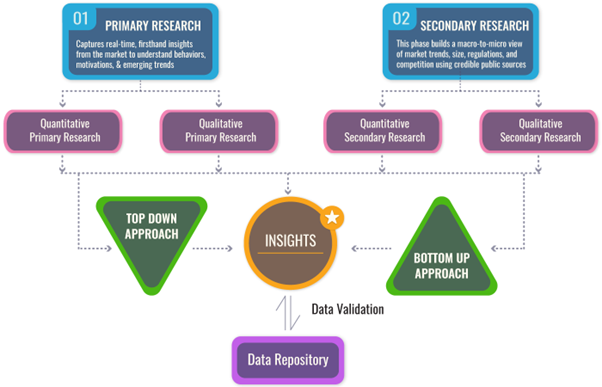
DUAL MODELING: TOP-DOWN + BOTTOM-UP
To ensure robust market estimation, we apply two complementary sizing approaches:
Top-Down Modeling:- Start with broader industry value (e.g., global or regional TAM)
- Apply filters by segment, geography, end-user, or use case
- Adjust with primary insights and validation benchmarks
- Ideal for investor-grade market scans and opportunity mapping
- Aggregate from the ground up using sales volumes, pricing, and unit economics
- Use internal modeling templates aligned with stakeholder data
- Incorporate distributor-level or region-specific inputs
- Most accurate for emerging segments and granular sub-markets
DATA VALIDATION: IN-HOUSE REPOSITORY
We close the loop with proprietary data intelligence built from ongoing projects, industry monitoring, and historical benchmarking. This repository includes:
- Multi-sector market and pricing models
- Key trendlines from past interviews and forecasts
- Benchmarked adoption rates, churn patterns, and ROI indicators
- Industry-specific deviation flags and cross-check logic
- Catches inconsistencies early
- Aligns projections across studies
- Enables consistent, high-trust deliverables