

Natural Vitamin E Market Size and Forecast (2025–2033), Global and Regional Growth, Trend, Share and Industry Analysis Report Coverage: By Type (Tocopherols, Tocotrienols), By Application (Dietary Supplements, Food & Beverages, Cosmetics, Others), and Geography
2026-02-25
Consumer Products
Jaya Bundele (Research Analyst)
Description
Natural Vitamin E Market Overview
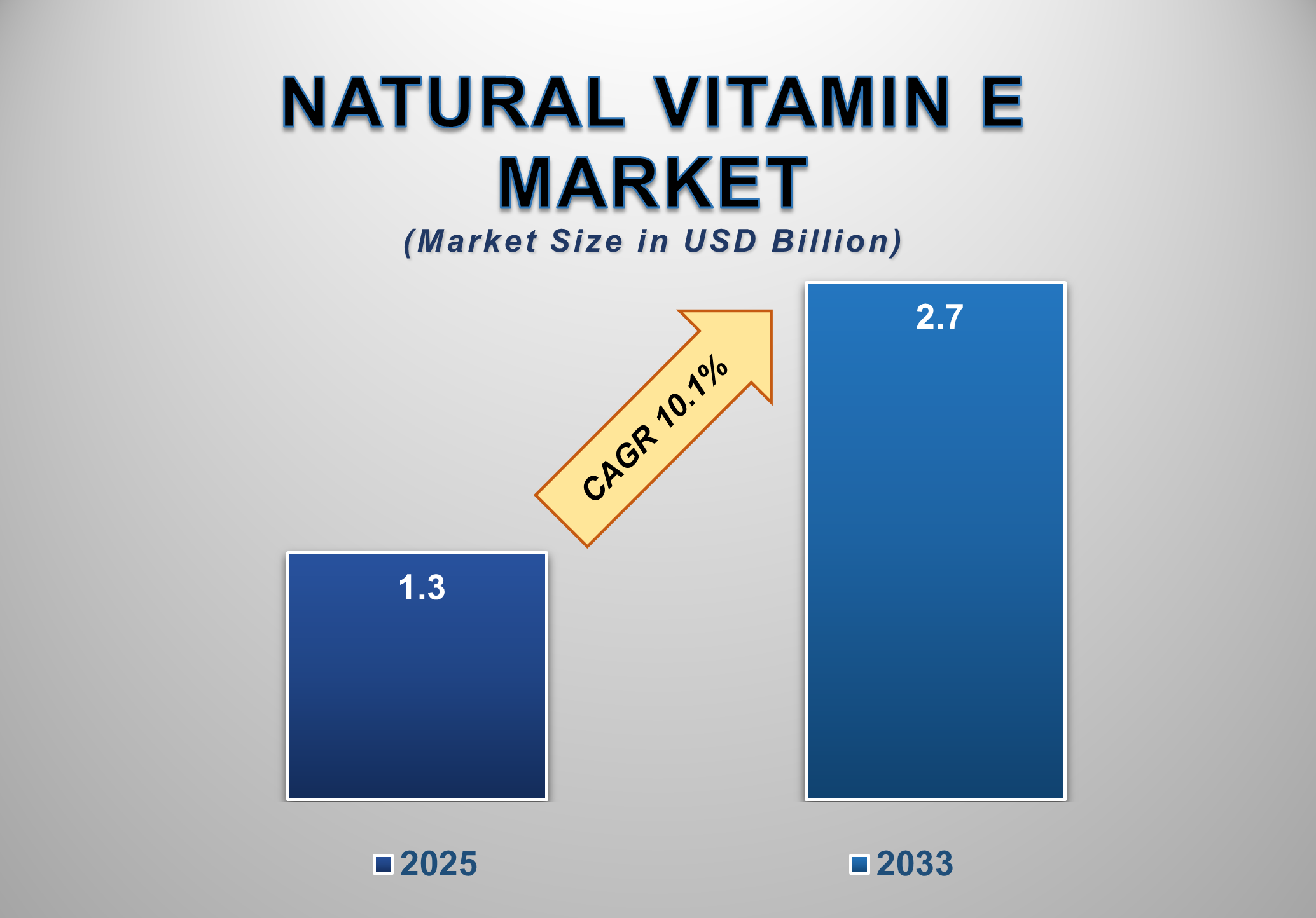
The global natural vitamin E market was valued at USD 1.3 billion in 2025 and is projected to reach USD 2.7 billion by 2033, registering a strong CAGR of 10.1% during the forecast period. Market growth is primarily driven by rising consumer preference for naturally sourced vitamins, increasing awareness of antioxidant health benefits, and expanding demand from dietary supplements, functional foods, and personal care industries. Natural vitamin E, derived from plant-based oils, is increasingly favored over synthetic alternatives due to higher bioavailability and perceived health benefits.
Natural vitamin E plays a
critical role in supporting immune function, cardiovascular health, skin
protection, and cellular repair. Growing health consciousness, aging
populations, and the increasing prevalence of lifestyle-related disorders have
fueled demand for preventive nutrition solutions. As consumers shift toward
clean-label, non-GMO, and plant-based ingredients, manufacturers are
prioritizing natural vitamin E in product formulations.
Natural Vitamin E Market
Drivers and Opportunities
Growing Demand for
Dietary Supplements Is Driving Market Expansion
The rapid expansion of the global dietary supplements industry is
a major driver of the natural vitamin E market. Increasing awareness of
preventive healthcare, immune support, and nutritional supplementation has
significantly boosted the consumption of vitamin E-based products. Consumers
are actively seeking supplements that provide antioxidant protection,
cardiovascular benefits, and skin health support, making natural vitamin E a
key ingredient in multivitamin and standalone formulations. Aging populations
in developed regions and rising middle-class demographics in emerging economies
are accelerating supplement adoption. Vitamin E supplementation is commonly
recommended for immune support, cognitive health, and oxidative stress
reduction, particularly among elderly consumers. Additionally, athletes and
fitness-focused individuals are increasingly incorporating antioxidant
supplements into their nutrition regimens.
Healthcare professionals and nutritionists are also emphasizing
the superior bioavailability of natural vitamin E compared to synthetic
alternatives, further reinforcing demand. Regulatory authorities in several
regions are supporting transparency in labeling, encouraging manufacturers to
highlight natural ingredient sourcing. As preventive healthcare continues to
gain importance globally, dietary supplements will remain the largest and most
influential demand driver for natural vitamin E.
Rising Use in Cosmetics and Functional Foods Is Strengthening
Market Growth
The growing application of natural vitamin E in cosmetics and
functional foods is another key growth driver. In the cosmetics industry,
vitamin E is widely used for its skin-conditioning, anti-aging, and antioxidant
properties. Rising demand for clean beauty, organic skincare, and natural
personal care products is driving cosmetic manufacturers to replace synthetic
antioxidants with natural vitamin E. In functional foods and beverages, natural
vitamin E is increasingly incorporated to enhance nutritional value and extend
shelf life due to its oxidative stability benefits. Consumers are actively
seeking fortified foods that support heart health, immunity, and overall
wellness. This trend is particularly strong in developed markets where
functional food consumption is well established. Food manufacturers are also
responding to regulatory and consumer pressure to eliminate artificial
additives, positioning natural vitamin E as a preferred ingredient. As product
innovation accelerates across beauty and food industries, the role of natural
vitamin E as a multifunctional ingredient is expanding, contributing
significantly to overall market growth.
Expansion in Emerging Markets Is Creating Significant Growth
Opportunities
Emerging economies represent a major growth opportunity for the
natural vitamin E market. Rapid urbanization, rising disposable incomes, and
increasing health awareness in the Asia Pacific, Latin America, and parts of
the Middle East are driving demand for nutritional supplements and fortified
foods. Consumers in these regions are becoming more proactive about preventive
healthcare, creating strong demand for vitamin-based products.
Asia Pacific, in particular, is witnessing rapid growth in dietary supplement consumption, supported by expanding retail infrastructure and e-commerce penetration. Local manufacturers are increasing production capacity, while global players are strengthening their presence through partnerships and acquisitions. Government initiatives promoting nutrition and wellness further enhance market potential. Additionally, growing cosmetic manufacturing hubs in countries such as China, South Korea, and India are increasing demand for natural vitamin E as a key ingredient in skincare formulations. As awareness of natural and plant-based ingredients continues to rise, emerging markets are expected to play a pivotal role in shaping future demand patterns
Natural Vitamin E Market
Scope
|
Report Attributes |
Description |
|
Market Size in 2025 |
USD 1.3 Billion |
|
Market Forecast in 2035 |
USD 2.7 Billion |
|
CAGR % 2025-2035 |
10.1% |
|
Base Year |
2024 |
|
Historic Data |
2020-2024 |
|
Forecast Period |
2025-2035 |
|
Report USP |
Production, Consumption,
Company Share, Company Heatmap, Company Production Capacity, Growth Factors,
and more |
|
Segments Covered |
●
By Type ●
By Application |
|
Regional Scope |
●
North America, ●
Europe, ●
APAC, ●
Latin America ●
Middle East and
Africa |
|
Country Scope |
1)
U.S. 2)
Canada 3)
Germany 4)
UK 5)
France 6)
Spain 7)
Italy 8)
Switzerland 9)
China 10)
Japan 11)
India 12)
Australia 13)
South Korea 14)
Brazil 15)
Mexico 16)
Argentina 17)
South Africa 18)
Saudi Arabia 19)
UAE |
Natural Vitamin E Market
Report Segmentation Analysis
The Global Natural Vitamin E
Market Industry Analysis Is Segmented by Type, by Application, and by Region.
Tocopherols Segment Dominates the Natural Vitamin E Market
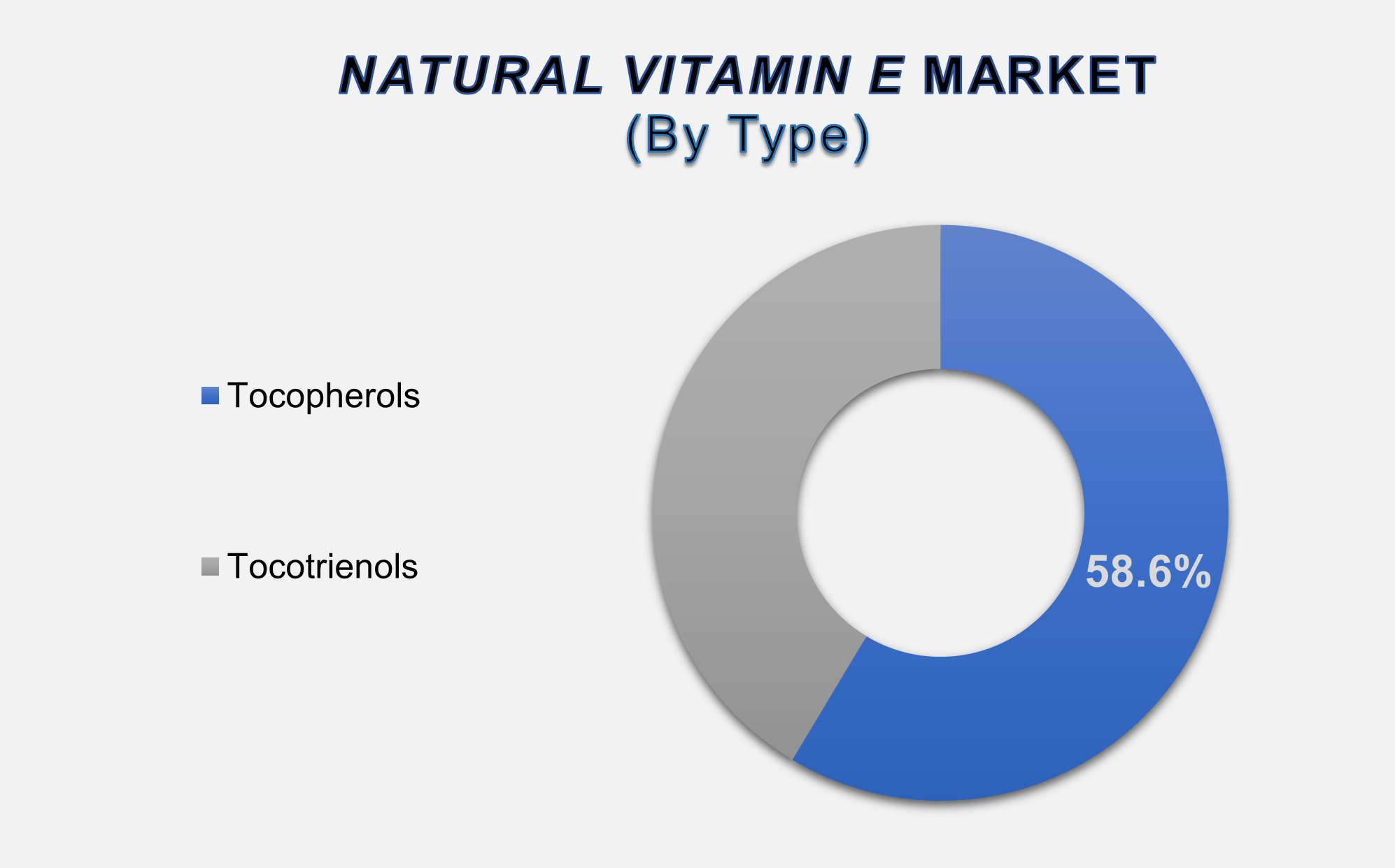
The tocopherols segment accounted for approximately 58.6% of the global natural vitamin E market, driven by its widespread use in dietary supplements and food applications. Tocopherols are the most commonly used form of vitamin E due to their established health benefits, stability, and regulatory acceptance across major markets. Alpha-tocopherol, in particular, is extensively used in supplement formulations for immune support and antioxidant protection. Food manufacturers also prefer tocopherols for their ability to prevent lipid oxidation, extending product shelf life naturally. Their cost-effectiveness compared to tocotrienols further supports dominance in mass-market applications. As demand for natural antioxidants continues to rise, tocopherols are expected to maintain their leading position, supported by extensive clinical validation and broad consumer acceptance.
Dietary
Supplements Segment Holds the Largest Application Share
The
dietary supplements segment represents the largest application area for natural
vitamin E, driven by rising preventive healthcare adoption and growing consumer
focus on nutritional adequacy. Vitamin E supplements are widely consumed for
heart health, immune function, and skin benefits, making them a staple
ingredient in multivitamin formulations. Supplement manufacturers are
increasingly emphasizing natural sourcing to meet clean-label requirements. The
expansion of direct-to-consumer supplement brands and personalized nutrition
platforms is further boosting demand. With sustained consumer interest in
wellness and immunity, dietary supplements are expected to remain the dominant
application segment.
The following segments are
part of an in-depth analysis of the global Natural Vitamin E market:
|
Market Segments |
|
|
By Type |
●
Tocopherols ●
Tocotrienols |
|
By Application |
●
Dietary Supplements ●
Food and Beverages ●
Cosmetics ●
Others |
Natural Vitamin E Market
Share Analysis by Region
North America is
anticipated to hold the biggest portion of the Natural Vitamin E Market
globally throughout the forecast period.
North America dominated the
global natural vitamin E market, accounting for approximately 42.1% of the
total market share in 2025. The region’s leadership is driven by high dietary
supplement consumption, a strong presence of nutraceutical manufacturers, and
widespread awareness of preventive healthcare. The United States represents the
largest contributor, supported by well-established retail channels, regulatory
clarity, and high consumer spending on health and wellness products.
Asia Pacific is expected to
register the highest CAGR during the forecast period, supported by rising
health awareness, expanding middle-class populations, and rapid growth of the
dietary supplement and cosmetic industries. Countries such as China, India, and
Japan are witnessing increased consumption of fortified foods and
nutraceuticals. Strong manufacturing capabilities, favorable government
initiatives, and expanding e-commerce platforms are positioning the Asia
Pacific as the fastest-growing regional market.
Natural Vitamin E Market
Competition Landscape Analysis
The natural vitamin E market is
moderately competitive, characterized by the presence of global ingredient
manufacturers and regional producers. Companies focus on product quality,
sustainable sourcing, technological advancements in extraction, and long-term
supply agreements. Strategic collaborations with food, supplement, and cosmetic
manufacturers are key competitive strategies.
Global Natural Vitamin E
Market Recent Developments News:
- In March 2025 – Louis Dreyfus Company (LDC)
expanded its presence in the fast-growing Asia-Pacific natural vitamin E
market by launching new plant-based vitamin E products at the Food
Ingredients China exhibition. This strategic move diversifies LDC's revenue
into value-added downstream products, directly addressing the increasing
Chinese demand for high-quality, sustainable, and nutritious plant-based
ingredients for functional foods and supplements.
- In January 2025 – BASF announced a low-double-digit
million-euro investment to expand vitamin E acetate production capacity at
its Ludwigshafen, Germany, facility by 10%, with completion targeted for
2027. This capacity increase proactively addresses sustained global demand
growth from the food additives, pharmaceutical, and high-growth cosmetics
sectors, while helping to mitigate supply chain constraints caused by
volatile raw material prices.
- In October 2023 – Kensing LLC acquired Advanced
Organic Materials (AOM), a manufacturer of natural vitamin E, mixed
tocopherols, and phytosterols with production facilities in Spain and
Argentina. This acquisition enhances Kensing's geographic footprint and
combined production capabilities, positioning the company to better serve
the growing demand for non-GMO and sustainably sourced natural vitamin E
in Europe and the Americas.
The Global Natural Vitamin E Market
Is Dominated by a Few Large Companies, such as
●
Archer Daniels Midland
●
BASF SE
●
Cargill
●
DuPont
●
DSM
●
BTSA Biotecnologías
Aplicadas
●
Davos Life Science
●
Nutrilo
●
Zhejiang Medicine
●
Ningbo Dahongying
●
Wilmar International
●
Fuji Chemical
Industries
●
Eisai Food &
Chemical
●
Shandong SunnyGrain
●
Vance Group
●
Riken Vitamin
●
Mitsubishi Chemical
●
Bluestar Adisseo
●
Hubei Xinur
●
Beijing Gingko Group
● Others
Frequently Asked Questions
Jaya Bundele (Research Analyst)
Jaya Bundele is a skilled Research Analyst with 4+ years of experience in market intelligence, consumer insights, competitive analysis, and industry forecasting across the consumer goods, agriculture, and food & beverage sectors. She specializes in market sizing, trend analysis, growth opportunity mapping, and strategic secondary research for global and regional markets.
Her expertise lies in transforming complex industry data into actionable business strategies that help organizations identify emerging trends, understand customer behavior, and gain a competitive edge. With a strong focus on data-driven insights, business intelligence, and future market trends, Jaya delivers high-quality research solutions aligned with evolving industry demands and market dynamics.
Natural Vitamin E Market
Our Research Methodology
"Insight without rigor is just noise."
We follow a comprehensive, multi-phase research framework designed to deliver accurate, strategic, and decision-ready intelligence. Our process integrates primary and secondary research , both quantitative and qualitative , along with dual modeling techniques ( top-down and bottom-up) and a final layer of validation through our proprietary in-house repository.
PRIMARY RESEARCH
Primary research captures real-time, firsthand insights from the market to understand behaviors, motivations, and emerging trends.
1. Quantitative Primary Research
Objective: Generate statistically significant data directly from market participants.
Approaches:- Structured surveys with customers, distributors, and field agents
- Mobile-based data collection for point-of-sale audits and usage behavior
- Phone-based interviews (CATI) for market sizing and product feedback
- Online polling around industry events and digital campaigns
- Purchase frequency by customer type
- Channel performance across geographies
- Feature demand by application or demographic
2. Qualitative Primary Research
Objective: Explore decision-making drivers, pain points, and market readiness.
Approaches:- In-depth interviews (IDIs) with executives, product managers, and key decision-makers
- Focus groups among end users and early adopters
- Site visits and observational research for consumer products
- Informal field-level discussions for regional and cultural nuances
SECONDARY RESEARCH
This phase helps establish a macro-to-micro understanding of market trends, size, regulation, and competitive dynamics, sourced from credible and public domain information.
1. Quantitative Secondary Research
Objective: Model market value and segment-level forecasts based on published data.
Sources include:- Financial reports and investor summaries
- Government trade data, customs records, and regulatory statistics
- Industry association publications and economic databases
- Channel performance and pricing data from marketplace listings
- Revenue splits, pricing trends, and CAGR estimates
- Supply-side capacity and volume tracking
- Investment analysis and funding benchmarks
2. Qualitative Secondary Research
Objective: Capture strategic direction, innovation signals, and behavioral trends.
Sources include:- Company announcements, roadmaps, and product pipelines
- Publicly available whitepapers, conference abstracts, and academic research
- Regulatory body publications and policy briefs
- Social and media sentiment scanning for early-stage shifts
- Strategic shifts in market positioning
- Unmet needs and white spaces
- Regulatory triggers and compliance impact
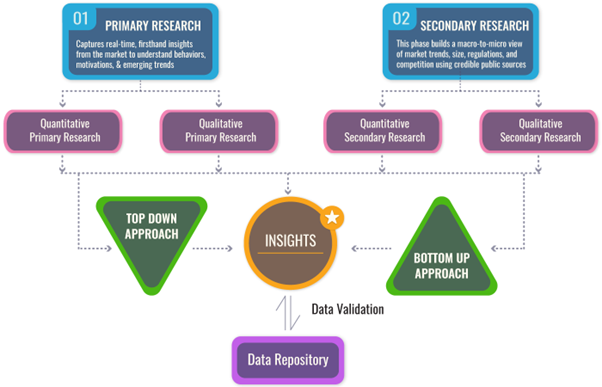
DUAL MODELING: TOP-DOWN + BOTTOM-UP
To ensure robust market estimation, we apply two complementary sizing approaches:
Top-Down Modeling:- Start with broader industry value (e.g., global or regional TAM)
- Apply filters by segment, geography, end-user, or use case
- Adjust with primary insights and validation benchmarks
- Ideal for investor-grade market scans and opportunity mapping
- Aggregate from the ground up using sales volumes, pricing, and unit economics
- Use internal modeling templates aligned with stakeholder data
- Incorporate distributor-level or region-specific inputs
- Most accurate for emerging segments and granular sub-markets
DATA VALIDATION: IN-HOUSE REPOSITORY
We close the loop with proprietary data intelligence built from ongoing projects, industry monitoring, and historical benchmarking. This repository includes:
- Multi-sector market and pricing models
- Key trendlines from past interviews and forecasts
- Benchmarked adoption rates, churn patterns, and ROI indicators
- Industry-specific deviation flags and cross-check logic
- Catches inconsistencies early
- Aligns projections across studies
- Enables consistent, high-trust deliverables