

Oat-based Snacks Market Size and Forecast (2025-2033), Global and Regional Growth, Trend, Share, and Industry Analysis Report Coverage: By Product (Oat-based Bakery and Bars, Oat-based Savory), By Distribution Channel (Offline, Online), and Geography
2025-12-17
Consumer Products
Jaya Bundele (Research Analyst)
Description
Oat-Based
Snacks Market Overview
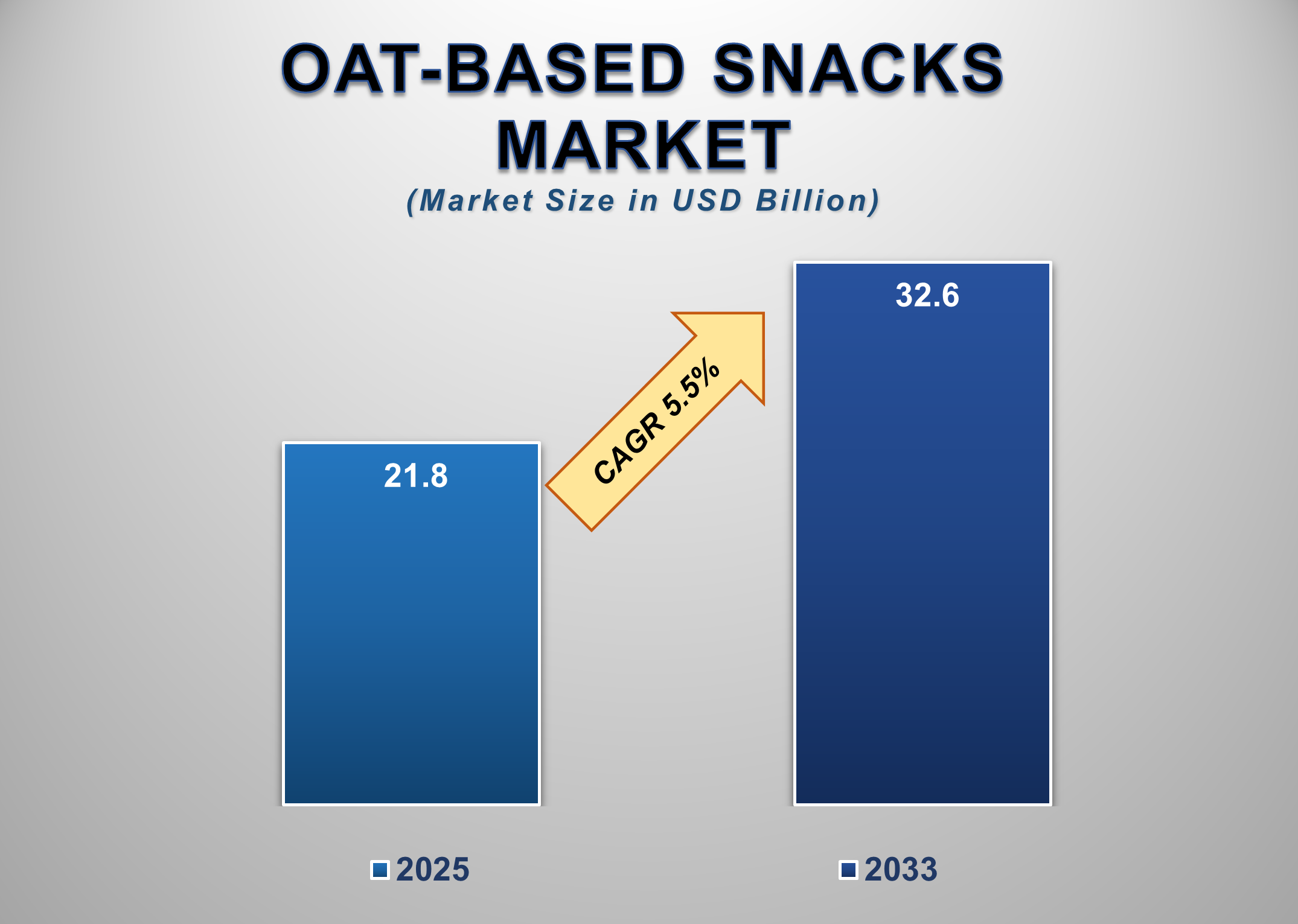
The global Oat-based Snacks Market size is projected to grow from USD 21.8 billion in 2025 to USD 32.6 billion by 2033, registering a CAGR of 5.5% during the forecast period. The market is experiencing steady growth due to increasing consumer preference for healthy, fiber-rich snacking options and the rising adoption of plant-based diets. Oats are valued for their high nutritional content, including essential vitamins, minerals, and antioxidants, which support weight management, heart health, and digestive wellness.
As consumers increasingly seek clean-label, gluten-free, and functional food products, oat-based snacks such as bakery bars, granolas, crackers, and savory bites are gaining considerable traction. Major brands are expanding their product lines to include new flavors, organic offerings, and minimally processed options to cater to evolving consumer demand. Additionally, the growth of e-commerce platforms and health-focused retail chains is making these products more accessible globally.
Oat-Based Snacks Market Drivers and Opportunities
Rising Demand for Healthy and Functional Snacks Is Driving
the Oat-based Snacks Market Growth
The
increasing consumer shift toward healthier eating habits, driven by rising
health consciousness and the growing prevalence of lifestyle-related disorders,
is a primary factor driving the demand for oat-based snacks. Oats are rich in
beta-glucan, a soluble fiber known for its cholesterol-lowering properties, and
are widely recognized as a wholesome ingredient in diets aimed at improving
heart health and managing weight. As interest in clean-label and naturally
nutritious food grows, consumers are increasingly opting for snacks made from
whole grains like oats over conventional processed snacks high in sugar,
sodium, and unhealthy fats. Product innovation further supports this shift,
with brands launching oat-based snacks in diverse formats such as protein bars,
granola bites, cookies, and savory crackers to meet different taste preferences
and occasions. Moreover, the growing vegan and plant-based population is
fueling demand for oat-based products as a cruelty-free, sustainable
alternative to dairy and meat-based snacks. The heightened focus on functional
food, digestive wellness, and immune health post-pandemic has amplified the
appeal of oat-based snacks. Manufacturers are also leveraging the clean
ingredient profile of oats to enhance product labeling transparency. With
rising urbanization and a preference for on-the-go snacking, the oat-based
snacks market is poised to benefit significantly from continued consumer
interest in guilt-free, nutritionally dense options.
Expansion
of Online Retail Channels Is Fuelling Market Access and Consumer Reach
The
increasing penetration of e-commerce platforms is significantly expanding the
accessibility and visibility of oat-based snacks, especially among young,
urban, and health-conscious consumers. Online channels provide a convenient and
diverse platform for product discovery, comparison, and purchase, driving the
growth of small and emerging oat-snack brands that may not have a wide
brick-and-mortar presence. Subscription-based online snack boxes, targeted
digital marketing campaigns, and influencer collaborations further encourage
trial and repeat purchases. The growth of online health food marketplaces and
direct-to-consumer (DTC) strategies has lowered the barriers to entry for
innovative brands focusing on niche segments such as gluten-free, organic, or
high-protein oat snacks. Additionally, digital platforms enable manufacturers
to quickly gather consumer feedback, analyze buying trends, and engage with
customers through personalized offerings and loyalty programs. The COVID-19
pandemic has accelerated digital transformation across the food and beverage
sector, with a lasting impact on consumer shopping behavior. Even in developing
regions, increasing internet penetration and smartphone adoption are
contributing to the growth of online snack sales. This retail shift offers
significant opportunities for oat-based snack manufacturers to grow their
market share while optimizing distribution costs and enhancing customer
experience.
Opportunity for the
Oat-based Snacks Market
Rising Popularity of Plant-Based Diets Presents Lucrative
Opportunities in the Oat-Based Snacks Market
Worldwide
The
global rise of plant-based diets, bolstered by growing environmental concerns,
ethical consumerism, and increasing lactose intolerance cases, is creating
significant opportunities for oat-based snack manufacturers. Oats, as a
naturally plant-based ingredient, serve as a versatile base for a wide range of
snacks that appeal to vegan, vegetarian, and flexitarian consumers. With a
growing number of consumers seeking alternatives to dairy and animal-derived
products, oat-based snacks are being positioned as sustainable,
allergy-friendly, and nutrient-dense options. Moreover, plant-based diets are
increasingly associated with better health outcomes, including reduced risk of
chronic diseases, which further drives demand. This trend is particularly
strong among millennials and Gen Z consumers who prioritize both health
benefits and eco-consciousness in their food choices. Capitalizing on this
shift, brands are innovating with organically sourced oats, clean-label
recipes, and functional add-ons such as plant proteins, adaptogens, and
superfoods to attract a wider customer base. The opportunity lies in expanding
oat-based snack product lines that align with the values of modern conscious
consumers, supported by clear sustainability messaging, ethical sourcing practices,
and recyclable packaging.
Oat-Based Snacks Market
Scope
|
Report Attributes |
Description |
|
Market Size in 2025 |
USD 21.8 Billion |
|
Market Forecast in 2033 |
USD 32.6 Billion |
|
CAGR % 2025-2033 |
5.5% |
|
Base Year |
2024 |
|
Historic Data |
2020-2024 |
|
Forecast Period |
2025-2033 |
|
Report USP |
Production, Consumption,
Company Share, Company Heatmap, Company Production Capacity, Growth Factors,
and more |
|
Segments Covered |
●
By Product ●
By Distribution
Channel |
|
Regional Scope |
●
North America ●
Europe ●
APAC ●
Latin America ●
Middle East and
Africa |
|
Country Scope |
1)
U.S. 2)
Canada 3)
Germany 4)
UK 5)
France 6)
Spain 7)
Italy 8)
Switzerland 9)
China 10)
Japan 11)
India 12)
Australia 13)
South Korea 14)
Brazil 15)
Mexico 16)
Argentina 17)
South Africa 18)
Saudi Arabia 19)
UAE |
Oat-Based Snacks Market
Report Segmentation Analysis
The global oat-based snacks
market industry analysis is segmented by product, by distribution channel, and
by region.
Oat-based bakery and bars
segment accounted for the largest market share in the global Oat-based Snacks
market
The Oat-based Snacks Market is
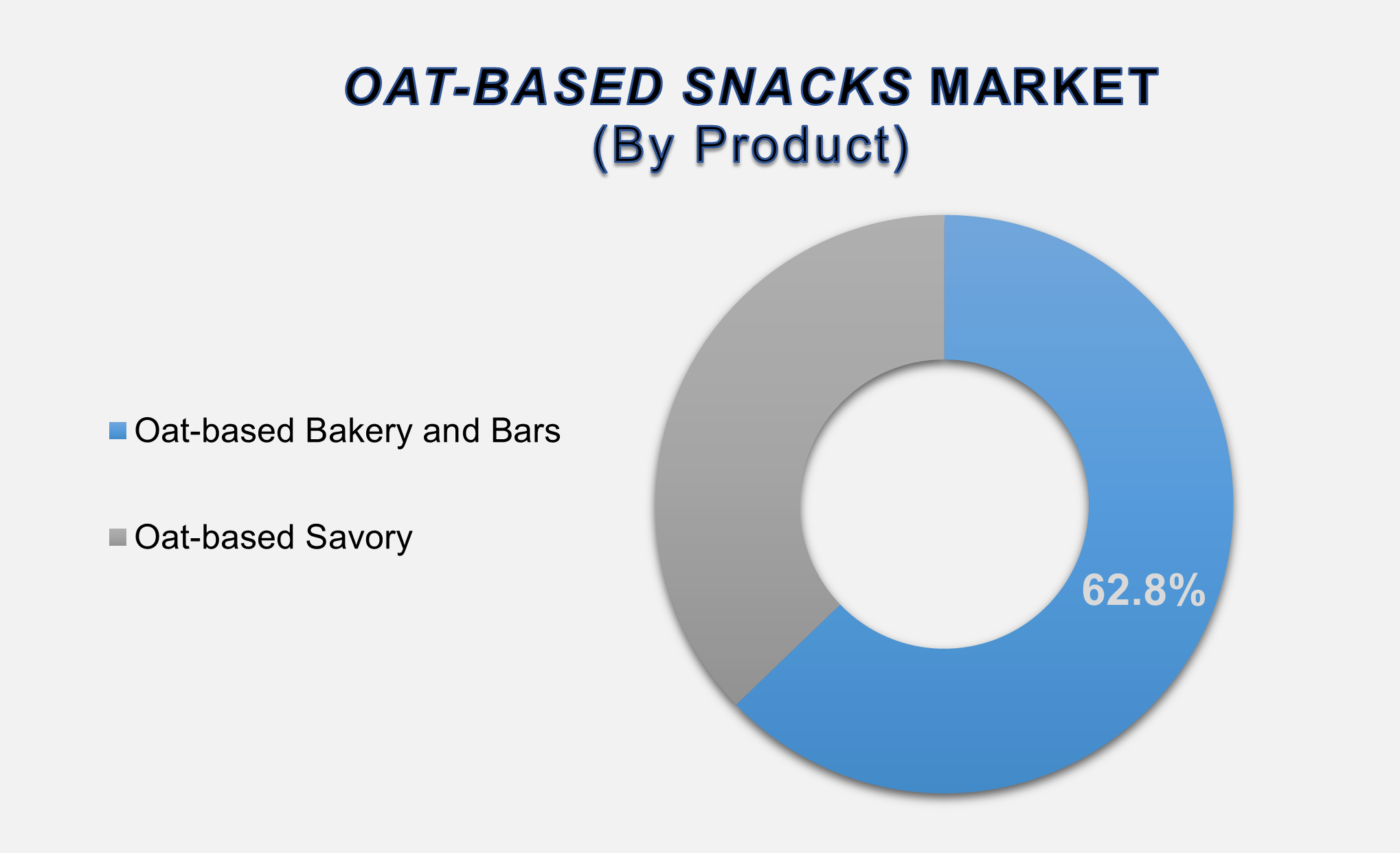
segmented into oat-based bakery and bars, and oat-based savory products.
Oat-based bakery and bars segment accounted for the largest market share in the
global Oat-based Snacks market in 2025, driven by high consumer demand for
convenient, portable, and nutritionally rich snacking options. This segment
benefits from the widespread popularity of granola bars, oat cookies, energy
bars, and oat-based breakfast biscuits, particularly among busy consumers
looking for a quick breakfast or midday energy boost. These products are often
marketed as guilt-free snacks due to their high fiber, whole grain, and often
low-sugar content. Brand innovation in flavors, gluten-free offerings, and
protein fortification is helping expand the segment’s appeal across different
age groups. The savory oat-based segment, while smaller, is rapidly growing due
to emerging consumer interest in healthier alternatives to traditional chips
and crackers, creating opportunities for brands to innovate in spices, flavors,
and texture.
The offline segment
accounted for the largest market share in the global Oat-based Snacks market
The Oat-based Snacks Market is
segmented into offline and online distribution channels. The offline segment
accounted for the largest market share in the global Oat-based Snacks market in
2025, owing to the strong presence of supermarkets, hypermarkets, and
convenience stores that offer high product visibility and instant purchasing
convenience. Traditional retail channels continue to dominate snack purchases
due to consumer preference for physical product inspection and the availability
of attractive in-store promotions. However, the online segment is witnessing
rapid growth, driven by increasing internet penetration, the popularity of
e-commerce platforms, and the convenience of home delivery. The rise of
health-focused online retailers, subscription snack services, and
direct-to-consumer (DTC) websites is expanding the reach of both established
and emerging oat snack brands. Digital retail also provides opportunities for
personalized shopping experiences and targeted marketing campaigns,
particularly for niche and premium oat-based snack products.
The following segments are
part of an in-depth analysis of the global Oat-based Snacks Market:
|
Market
Segments |
|
|
By Product |
●
Oat-based Bakery and
Bars ●
Oat-based Savory |
|
By
Distribution Channel |
●
Offline ●
Online |
Oat-Based Snacks Market Share Analysis by Region
The North America region
is projected to hold the largest share of the global Oat-based Snacks market
over the forecast period.
North America accounted for the
largest share of the global Oat-based Snacks Market in 2025, with a 40% market
share. The region’s dominance is attributed to high consumer awareness of the
health benefits of oats, a well-developed retail infrastructure, and the
presence of leading market players such as General Mills, Kellogg’s, and Quaker
Oats. The popularity of on-the-go and functional snacking, driven by lifestyle
trends and high demand for clean-label products, further supports regional
growth. The U.S. market, in particular, benefits from significant investments
in product innovation, sustainability initiatives, and marketing campaigns
emphasizing fiber-rich, plant-based snacking.
Asia-Pacific
(APAC) is expected to be the fastest-growing region during the forecast period,
supported by a growing middle-class population, rising health consciousness,
and increasing urbanization. Markets like China, India, and Southeast Asia are
witnessing a surge in demand for nutritious and convenient snack foods,
influenced by changing dietary habits and the rising popularity of
Western-style breakfast substitutes. Local and international manufacturers are
expanding their presence in APAC through innovative flavors, affordable
pricing, and partnerships with regional retailers, driving substantial market
growth.
Oat-Based Snacks Market Competition
Landscape Analysis
The global
Oat-based Snacks Market is characterized by the presence of leading food and
health snack companies, along with nimble startups focused on innovative and
clean-label offerings. Key players include General Mills, Kellogg’s, Quaker
Oats, Nairn’s, Bob’s Red Mill, Nature’s Path, and MOMA. These companies
emphasize product innovation, sustainability, and strategic expansion in
digital and emerging markets.
Global Oat-Based Snacks Market Recent
Developments News:
- In September 2024, Glebe Farm
Foods launched PureOaty Tea-rrific, a specialized oat drink engineered for
tea drinkers. Developed to overcome common issues like taste, color, and
stability in plant-based tea companions, the product ensures a consistent,
non-splitting, and flavorful addition to tea, meeting a previously
underserved segment in the milk-alternative market.
- In July 2024, Tata Soulfull
introduced Masala Oats+ Dal Shakti, a savory snack combining moong dal
with its popular Mast Masala flavor. Ready in four minutes, the product
features a non-sticky texture, contains 25% millets, and blends
traditional Indian ingredients to offer a nutritious, convenient, and
culturally resonant snacking option.
- In May 2024, Graze expanded its
healthier snacking range in the UK with two new products: the Snack Pack
Crunch multipack, available in Smoky
Barbecue and Marmite flavors, with 30% less fat and under 100 calories per
pack, and the Honeycomb Oat Boosts
flapjack, containing 50% less sugar. Both products use fully recyclable
packaging, raising the brand’s overall recyclable portfolio to 94%.
The Global Oat-based Snacks Market is dominated
by a few large companies, such as
●
General Mills
●
Kellogg's
●
Quaker Oats
●
Nairn's
●
Bob's Red Mill
●
Nature's Path
●
MOMA
●
Lizis
●
Munk Pack
●
Oat Haus
●
Bobo's
●
Oatein
●
Oatbox
●
Rude Health
●
Dorset Cereals
●
Weetabix
●
Noble Jerky
●
Oat Mama
●
Oat Bakery
●
Oat Pantry
● Other Prominent Players
Frequently Asked Questions
Jaya Bundele (Research Analyst)
1. Global Oat-based Snacks
Market Introduction and Market Overview
1.1.
Objectives
of the Study
1.2.
Global
Oat-based Snacks Market Scope and Market Estimation
1.2.1.Global Oat-based Snacks Overall
Market Size (US$ Bn), Market CAGR (%), Market forecast (2025 - 2033)
1.2.2.Global Oat-based Snacks
Market Revenue Share (%) and Growth Rate (Y-o-Y) from 2020 - 2033
1.3.
Market
Segmentation
1.3.1.Product of Global Oat-based
Snacks Market
1.3.2.Distribution Channel of
Global Oat-based Snacks Market
1.3.3.Region of Global Oat-based
Snacks Market
2. Executive
Summary
2.1.
Demand
Side Trends
2.2.
Key
Market Trends
2.3.
Market
Demand (US$ Bn) Analysis 2020 – 2024 and Forecast, 2025 – 2033
2.4.
Demand
and Opportunity Assessment
2.5.
Demand
Supply Scenario
2.6.
Market
Dynamics
2.6.1.Drivers
2.6.2.Limitations
2.6.3.Opportunities
2.6.4.Impact Analysis of Drivers
and Restraints
2.7.
Emerging
Trends for Oat-based Snacks Market
2.8.
Porter’s
Five Forces Analysis
2.9.
PEST
Analysis
2.10.
Key
Regulation
3. Global
Oat-based Snacks Market Estimates
& Historical Trend Analysis (2020 - 2024)
4. Global
Oat-based Snacks Market Estimates
& Forecast Trend Analysis, by Product
4.1.
Global
Oat-based Snacks Market Revenue (US$ Bn) Estimates and Forecasts, by Product, 2020
- 2033
4.1.1.Oat-based Bakery and Bars
4.1.2.Oat-based Savory
5. Global
Oat-based Snacks Market Estimates
& Forecast Trend Analysis, by Distribution Channel
5.1.
Global
Oat-based Snacks Market Revenue (US$ Bn) Estimates and Forecasts, by Distribution
Channel, 2020 - 2033
5.1.1.Offline
5.1.2.Online
6. Global
Oat-based Snacks Market Estimates
& Forecast Trend Analysis, by Region
6.1.
Global
Oat-based Snacks Market Revenue (US$ Bn) Estimates and Forecasts, by Region, 2020
- 2033
6.1.1.North America
6.1.2.Europe
6.1.3.Asia Pacific
6.1.4.Middle East & Africa
6.1.5.Latin America
7. North America Oat-based
Snacks Market: Estimates & Forecast
Trend Analysis
7.1.
North
America Oat-based Snacks Market Assessments & Key Findings
7.1.1.North America Oat-based
Snacks Market Introduction
7.1.2.North America Oat-based
Snacks Market Size Estimates and Forecast (US$ Billion) (2020 - 2033)
7.1.2.1. By Product
7.1.2.2. By Distribution
Channel
7.1.2.3.
By
Country
7.1.2.3.1. The U.S.
7.1.2.3.2. Canada
8. Europe Oat-based
Snacks Market: Estimates & Forecast
Trend Analysis
8.1.
Europe
Oat-based Snacks Market Assessments & Key Findings
8.1.1.Europe Oat-based Snacks
Market Introduction
8.1.2.Europe Oat-based Snacks
Market Size Estimates and Forecast (US$ Billion) (2020 - 2033)
8.1.2.1. By Product
8.1.2.2. By Distribution
Channel
8.1.2.3.
By
Country
8.1.2.3.1.
Germany
8.1.2.3.2.
Italy
8.1.2.3.3.
U.K.
8.1.2.3.4.
France
8.1.2.3.5.
Spain
8.1.2.3.6.
Switzerland
8.1.2.3.7. Rest
of Europe
9. Asia Pacific Oat-based
Snacks Market: Estimates & Forecast
Trend Analysis
9.1.
Asia
Pacific Market Assessments & Key Findings
9.1.1.Asia Pacific Oat-based
Snacks Market Introduction
9.1.2.Asia Pacific Oat-based
Snacks Market Size Estimates and Forecast (US$ Billion) (2020 - 2033)
9.1.2.1. By Product
9.1.2.2. By Distribution
Channel
9.1.2.3.
By
Country
9.1.2.3.1.
China
9.1.2.3.2.
Japan
9.1.2.3.3.
India
9.1.2.3.4.
Australia
9.1.2.3.5.
South
Korea
9.1.2.3.6. Rest of Asia Pacific
10. Middle East & Africa Oat-based
Snacks Market: Estimates & Forecast
Trend Analysis
10.1.
Middle
East & Africa Market Assessments & Key Findings
10.1.1.
Middle East & Africa Oat-based Snacks Market Introduction
10.1.2.
Middle East & Africa Oat-based Snacks Market Size Estimates
and Forecast (US$ Billion) (2020 - 2033)
10.1.2.1. By Product
10.1.2.2. By Distribution
Channel
10.1.2.3.
By
Country
10.1.2.3.1. UAE
10.1.2.3.2. Saudi
Arabia
10.1.2.3.3. South
Africa
10.1.2.3.4. Rest
of MEA
11. Latin America
Oat-based Snacks Market: Estimates
& Forecast Trend Analysis
11.1.
Latin
America Market Assessments & Key Findings
11.1.1.
Latin
America Oat-based Snacks Market Introduction
11.1.2.
Latin
America Oat-based Snacks Market Size Estimates and Forecast (US$ Billion) (2020
- 2033)
11.1.2.1. By Product
11.1.2.2. By Distribution
Channel
11.1.2.3.
By
Country
11.1.2.3.1. Brazil
11.1.2.3.2. Argentina
11.1.2.3.3. Mexico
11.1.2.3.4. Rest
of LATAM
12. Country Wise Market:
Introduction
13.
Competition
Landscape
13.1.
Global
Oat-based Snacks Market Product Mapping
13.2.
Global
Oat-based Snacks Market Concentration Analysis, by Leading Players / Innovators
/ Emerging Players / New Entrants
13.3.
Global
Oat-based Snacks Market Tier Structure Analysis
13.4.
Global
Oat-based Snacks Market Concentration & Company Market Shares (%) Analysis,
2024
14.
Company
Profiles
14.1.
General Mills
14.1.1.
Company
Overview & Key Stats
14.1.2.
Financial
Performance & KPIs
14.1.3.
Product
Portfolio
14.1.4.
SWOT
Analysis
14.1.5.
Business
Strategy & Recent Developments
* Similar details would be provided for all the players
mentioned below
14.2. Kellogg's
14.3. Quaker
Oats
14.4. Nairn's
14.5. Bob's
Red Mill
14.6. Nature's
Path
14.7. MOMA
14.8. Lizis
14.9. Munk
Pack
14.10. Oat Haus
14.11. Bobo's
14.12. Oatein
14.13. Oatbox
14.14. Rude
Health
14.15. Dorset
Cereals
14.16. Weetabix
14.17. Noble
Jerky
14.18. Oat Mama
14.19. Oat
Bakery
14.20. Oat
Pantry
14.21. Others
15. Research
Methodology
15.1.
External
Transportations / Databases
15.2.
Internal
Proprietary Database
15.3.
Primary
Research
15.4.
Secondary
Research
15.5.
Assumptions
15.6.
Limitations
15.7.
Report
FAQs
16. Research
Findings & Conclusion
Our Research Methodology
"Insight without rigor is just noise."
We follow a comprehensive, multi-phase research framework designed to deliver accurate, strategic, and decision-ready intelligence. Our process integrates primary and secondary research , both quantitative and qualitative , along with dual modeling techniques ( top-down and bottom-up) and a final layer of validation through our proprietary in-house repository.
PRIMARY RESEARCH
Primary research captures real-time, firsthand insights from the market to understand behaviors, motivations, and emerging trends.
1. Quantitative Primary Research
Objective: Generate statistically significant data directly from market participants.
Approaches:- Structured surveys with customers, distributors, and field agents
- Mobile-based data collection for point-of-sale audits and usage behavior
- Phone-based interviews (CATI) for market sizing and product feedback
- Online polling around industry events and digital campaigns
- Purchase frequency by customer type
- Channel performance across geographies
- Feature demand by application or demographic
2. Qualitative Primary Research
Objective: Explore decision-making drivers, pain points, and market readiness.
Approaches:- In-depth interviews (IDIs) with executives, product managers, and key decision-makers
- Focus groups among end users and early adopters
- Site visits and observational research for consumer products
- Informal field-level discussions for regional and cultural nuances
SECONDARY RESEARCH
This phase helps establish a macro-to-micro understanding of market trends, size, regulation, and competitive dynamics, sourced from credible and public domain information.
1. Quantitative Secondary Research
Objective: Model market value and segment-level forecasts based on published data.
Sources include:- Financial reports and investor summaries
- Government trade data, customs records, and regulatory statistics
- Industry association publications and economic databases
- Channel performance and pricing data from marketplace listings
- Revenue splits, pricing trends, and CAGR estimates
- Supply-side capacity and volume tracking
- Investment analysis and funding benchmarks
2. Qualitative Secondary Research
Objective: Capture strategic direction, innovation signals, and behavioral trends.
Sources include:- Company announcements, roadmaps, and product pipelines
- Publicly available whitepapers, conference abstracts, and academic research
- Regulatory body publications and policy briefs
- Social and media sentiment scanning for early-stage shifts
- Strategic shifts in market positioning
- Unmet needs and white spaces
- Regulatory triggers and compliance impact
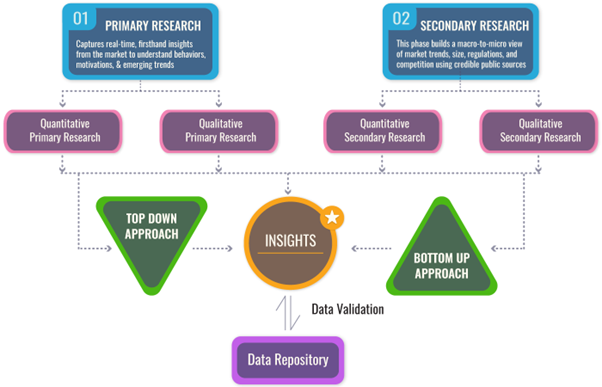
DUAL MODELING: TOP-DOWN + BOTTOM-UP
To ensure robust market estimation, we apply two complementary sizing approaches:
Top-Down Modeling:- Start with broader industry value (e.g., global or regional TAM)
- Apply filters by segment, geography, end-user, or use case
- Adjust with primary insights and validation benchmarks
- Ideal for investor-grade market scans and opportunity mapping
- Aggregate from the ground up using sales volumes, pricing, and unit economics
- Use internal modeling templates aligned with stakeholder data
- Incorporate distributor-level or region-specific inputs
- Most accurate for emerging segments and granular sub-markets
DATA VALIDATION: IN-HOUSE REPOSITORY
We close the loop with proprietary data intelligence built from ongoing projects, industry monitoring, and historical benchmarking. This repository includes:
- Multi-sector market and pricing models
- Key trendlines from past interviews and forecasts
- Benchmarked adoption rates, churn patterns, and ROI indicators
- Industry-specific deviation flags and cross-check logic
- Catches inconsistencies early
- Aligns projections across studies
- Enables consistent, high-trust deliverables