

Packet Sniffer and Capture Tool Market Size and Forecast (2026 - 2034), Global and Regional Growth, Trend, Share and Industry Analysis Report Coverage; By Component (Software and Services); By Deployment (Cloud and On-premise); By Enterprise Size (Small & Medium Enterprises and Large Enterprises); By Application (Network Monitoring, Cybersecurity, Performance Analysis, and Troubleshooting); By End-use (IT & Telecom, BFSI, Government & Defense, Healthcare, Retail & E-commerce, and Others) and Geography
2026-03-12
ICT
Ekta Chaurasia (Team Lead)
Description
Packet Sniffer and Capture Tool Market Overview
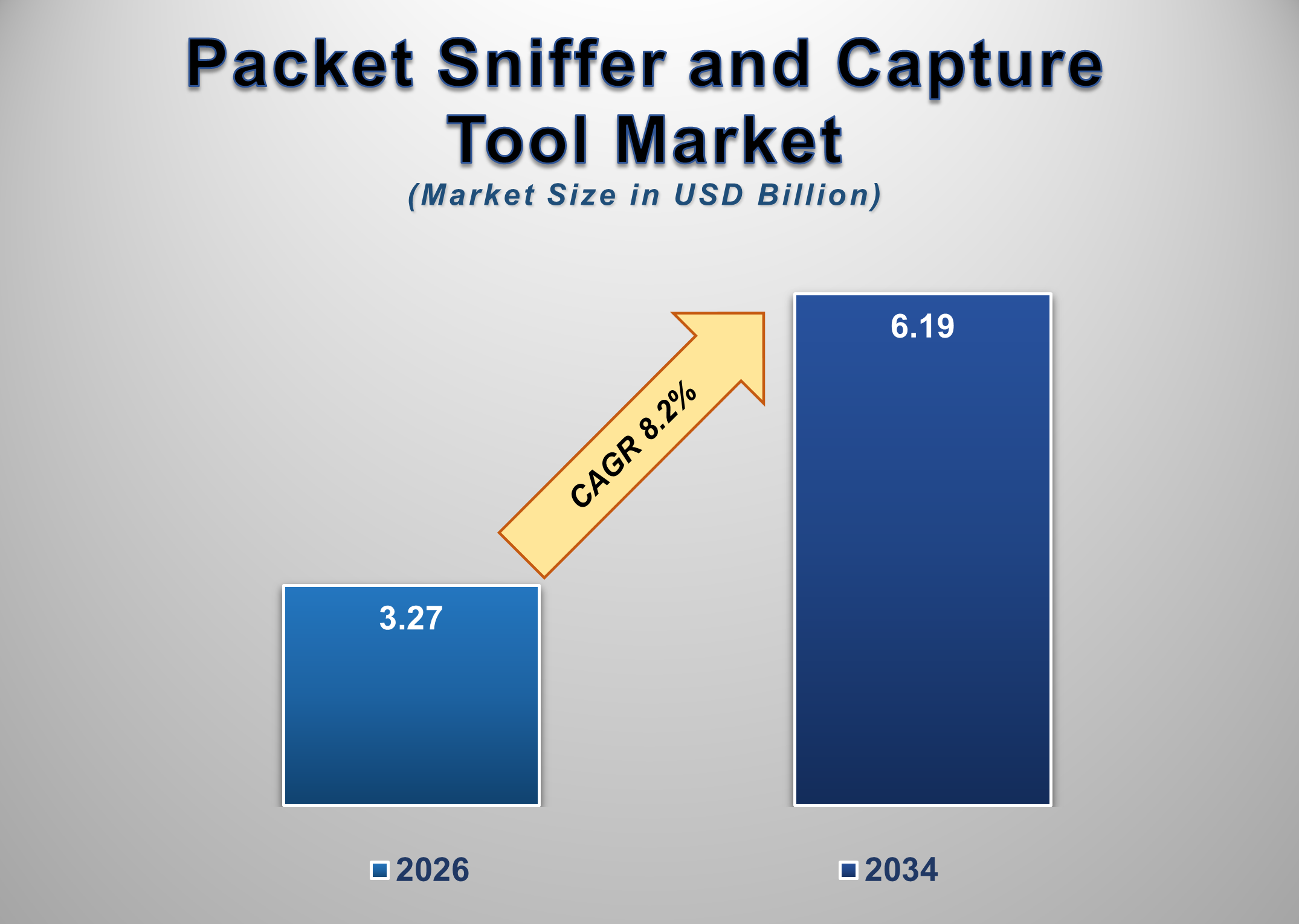
The global Packet Sniffer and Capture Tool Market is witnessing steady expansion as organizations across industries increasingly rely on sophisticated network monitoring solutions to manage complex digital infrastructures. The market is estimated to reach USD 3.27 billion in 2026 and is projected to grow to USD 6.19 billion by 2034, registering a CAGR of 8.2% during the forecast period. The rising demand for network visibility, increasing cyber threats, and growing data traffic across enterprise networks are key factors driving the growth of packet sniffing and network capture tools globally.
Packet sniffers and capture tools are specialized software or hardware solutions designed to monitor, capture, and analyze network packets transmitted across digital networks. These tools enable network administrators, cybersecurity analysts, and IT professionals to inspect data packets for troubleshooting connectivity issues, analyzing traffic patterns, detecting malicious activities, and ensuring optimal network performance. Packet sniffing technology operates by intercepting network data streams and decoding packet-level information such as source and destination addresses, protocols, and payload data.
As enterprises adopt cloud computing, hybrid networks, IoT ecosystems, and distributed digital environments, network traffic complexity has increased significantly. Packet capture tools play a crucial role in providing deep packet inspection, traffic analysis, protocol debugging, and intrusion detection capabilities, which help organizations maintain secure and high-performing networks. Additionally, the growing reliance on digital communication systems, enterprise applications, and remote working environments has increased the importance of real-time network monitoring and threat detection. As a result, organizations are investing in advanced packet sniffing solutions to improve operational visibility, strengthen cybersecurity frameworks, and ensure network reliability across large-scale digital infrastructures.
Packet Sniffer and Capture Tool Market Drivers and Opportunities
Rising Cybersecurity Threats and Data Breaches are anticipated to drive market growth during the forecast period
The rapid growth of cyberattacks, ransomware incidents, and sophisticated network intrusions is significantly driving the demand for packet sniffing and capture tools across enterprises and government organizations worldwide. Modern cyber threats often operate silently within networks, exploiting vulnerabilities and transferring malicious payloads without immediate detection. Packet sniffing solutions provide deep packet inspection capabilities that allow cybersecurity teams to monitor suspicious network traffic, detect anomalies, and identify potential threats in real time.
Global cybercrime damages are projected to exceed USD 10 trillion annually by 2027, according to cybersecurity research organizations, highlighting the growing need for advanced network monitoring technologies. Packet capture tools enable security analysts to examine detailed packet-level data, detect unauthorized access attempts, identify malicious communication channels, and analyze suspicious network behavior. Furthermore, industries such as banking, defense, healthcare, and telecommunications require continuous network monitoring to safeguard sensitive data and ensure compliance with cybersecurity regulations.
Organizations are also adopting Security Information and Event Management (SIEM) systems and advanced threat detection platforms, which often integrate packet capture technologies to enhance visibility across network layers. As cyberattacks become more sophisticated and frequent, packet sniffing tools are expected to play a crucial role in strengthening enterprise cybersecurity frameworks and preventing data breaches.
Rapid Expansion of Data Traffic and Complex Enterprise Networks is driving the demand for packet monitoring solutions
The exponential growth in internet usage, digital applications, and connected devices has led to a dramatic increase in global network traffic. Enterprises now operate large-scale digital infrastructures that include cloud platforms, virtual networks, IoT devices, and remote workforce connectivity. These complex network environments generate massive volumes of data packets that must be continuously monitored to maintain system performance and reliability.
Packet capture tools allow network administrators to analyze traffic patterns, identify congestion points, and diagnose performance issues within enterprise networks. With the widespread adoption of 5G connectivity, edge computing, and IoT ecosystems, network environments are becoming more distributed and dynamic, making real-time packet monitoring essential. Packet sniffing technologies enable organizations to detect bandwidth bottlenecks, optimize network routing, and ensure efficient data transmission across interconnected systems.
Additionally, enterprises increasingly rely on application performance monitoring (APM) and network performance monitoring (NPM) solutions that leverage packet capture capabilities to deliver granular insights into network operations. As organizations continue to expand their digital infrastructures, the demand for packet sniffing and traffic analysis tools is expected to grow significantly during the forecast period.
Integration with Cloud-Based Network Monitoring Platforms creates significant opportunities
The growing adoption of cloud computing and hybrid IT infrastructures presents substantial opportunities for packet sniffing and capture tool providers. Traditional packet monitoring tools were primarily designed for on-premise networks; however, the shift toward cloud environments requires advanced solutions capable of monitoring traffic across virtual networks, multi-cloud platforms, and containerized environments.
Cloud-based packet capture tools provide scalable monitoring capabilities that enable organizations to analyze network traffic across distributed infrastructures. These tools offer features such as real-time traffic analysis, automated anomaly detection, and integration with cloud-native security platforms. Enterprises are increasingly adopting cloud-based network monitoring solutions because they provide greater flexibility, centralized management, and lower infrastructure costs.
Technology companies are also integrating artificial intelligence (AI) and machine learning (ML) into packet monitoring platforms to improve threat detection and automate network analysis processes. These advanced technologies allow systems to detect abnormal network patterns and respond to potential security threats automatically. As organizations continue to migrate their operations to cloud-based ecosystems, the demand for intelligent packet capture solutions is expected to increase significantly.
Packet Sniffer and Capture Tool Market Scope
Packet Sniffer and Capture Tool Market Report Segmentation Analysis
The global packet sniffer and capture tool market industry analysis is segmented by component, deployment, enterprise size, application, end-use industry, and region.
Software Segment Dominates the Component Market
By component, the packet sniffer and capture tool market is segmented into software and services. The software segment currently dominates the market because most packet sniffing solutions are delivered as network monitoring software platforms used by IT administrators and cybersecurity teams. These software tools allow users to capture and analyze network packets, inspect protocols, monitor bandwidth usage, and detect anomalies within network traffic.
Modern packet sniffing software provides advanced capabilities such as deep packet inspection, protocol decoding, traffic visualization, and automated alerts. Enterprises rely on these tools to troubleshoot network issues, analyze application performance, and detect potential security threats. Meanwhile, the services segment is expected to grow steadily due to increasing demand for managed network monitoring services, consulting, and system integration.
On-premise Deployment Holds the Largest Share
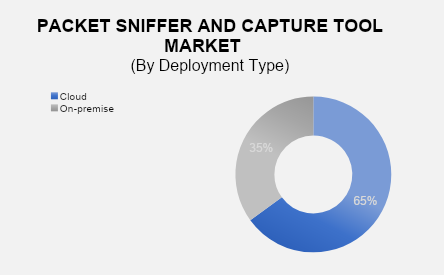
Based on deployment type, the market is bifurcated into cloud and on-premise solutions. On-premise deployment currently holds the largest share because many organizations prefer to maintain direct control over network monitoring systems, particularly in industries that handle sensitive information such as banking, defense, and healthcare.
On-premise packet capture tools allow enterprises to monitor internal networks with greater security and compliance control. However, cloud deployment is expected to register the highest growth rate during the forecast period as organizations adopt cloud-native network monitoring platforms. Cloud-based solutions provide scalability, remote accessibility, and cost efficiency, making them attractive for modern IT environments.
IT & Telecom Sector Dominates the End-use Segment
In terms of end-use industries, the packet sniffer and capture tool market is segmented into IT & telecom, BFSI, government & defense, healthcare, retail & e-commerce, and others. The IT & telecom sector currently accounts for the largest share of the market due to its heavy reliance on network infrastructure and data communication systems.
Telecommunications companies manage extensive network infrastructures that require continuous monitoring and troubleshooting. Packet sniffing tools help telecom operators analyze network traffic, detect service disruptions, and ensure optimal network performance. Additionally, telecom providers utilize packet capture technologies to analyze bandwidth consumption, identify security vulnerabilities, and maintain high service reliability for millions of subscribers.
Packet Sniffer and Capture Tool Market Share Analysis by Region
North America is expected to hold the largest share of the global packet sniffer and capture tool market throughout the forecast period. The region benefits from advanced digital infrastructure, widespread adoption of cloud computing technologies, and strong investments in cybersecurity solutions. The presence of major technology companies, cybersecurity vendors, and network infrastructure providers further strengthens the market growth in North America.
Europe represents a significant market due to increasing cybersecurity regulations and the growing adoption of network monitoring technologies among enterprises. Countries such as Germany, the United Kingdom, and France are investing heavily in cybersecurity infrastructure and digital transformation initiatives.
The Asia-Pacific region is expected to witness the fastest growth during the forecast period. Rapid digitalization, expanding internet penetration, and increasing adoption of cloud technologies across countries such as China, India, Japan, and South Korea are contributing to strong demand for network monitoring tools. Additionally, the growth of telecom networks and enterprise IT infrastructures across emerging Asian economies is creating new opportunities for packet capture tool providers.
Global Packet Sniffer and Capture Tool Market Recent Developments News
● In April 2025, Cisco introduced an advanced network analytics platform with enhanced packet capture and AI-powered traffic monitoring capabilities to improve enterprise network visibility.
● In January 2025, IBM expanded its cybersecurity portfolio by integrating deep packet inspection technologies into its cloud-based security monitoring solutions.
● In September 2024, SolarWinds launched a new version of its network performance monitoring platform featuring enhanced packet analysis and real-time traffic diagnostics capabilities.
Competitive Landscape
The global Packet Sniffer and Capture Tool Market is dominated by several major technology and cybersecurity companies, including:
● Cisco Systems
● IBM Corporation
● SolarWinds Corporation
● Broadcom Inc.
● Netscout Systems
● Paessler AG
● Colasoft Co. Ltd.
● ManageEngine
● Riverbed Technology
● Wireshark Foundation
● Savvius
● Viavi Solutions
● ExtraHop Networks
● NETSCOUT Arbor
● Dynatrace
● Other Prominent Players
Frequently Asked Questions
Ekta Chaurasia (Team Lead)
Ekta Chaurasia is a highly experienced Team Lead at M2Square Consultancy with over 7 years of expertise in market research, strategic consulting, competitive benchmarking, and business intelligence solutions. She specializes in ICT, semiconductors & electronics, automotive & transportation, and industrial machinery markets.
She leads end-to-end global research projects focused on market trends, industry analysis, growth forecasting, customer insights, and strategic decision-making. Known for her analytical leadership and industry expertise, Ekta helps businesses uncover growth opportunities, evaluate competitive landscapes, and stay ahead in rapidly evolving markets through accurate and insight-driven research.
Packet Sniffer and Capture Tool Market
Our Research Methodology
"Insight without rigor is just noise."
We follow a comprehensive, multi-phase research framework designed to deliver accurate, strategic, and decision-ready intelligence. Our process integrates primary and secondary research , both quantitative and qualitative , along with dual modeling techniques ( top-down and bottom-up) and a final layer of validation through our proprietary in-house repository.
PRIMARY RESEARCH
Primary research captures real-time, firsthand insights from the market to understand behaviors, motivations, and emerging trends.
1. Quantitative Primary Research
Objective: Generate statistically significant data directly from market participants.
Approaches:- Structured surveys with customers, distributors, and field agents
- Mobile-based data collection for point-of-sale audits and usage behavior
- Phone-based interviews (CATI) for market sizing and product feedback
- Online polling around industry events and digital campaigns
- Purchase frequency by customer type
- Channel performance across geographies
- Feature demand by application or demographic
2. Qualitative Primary Research
Objective: Explore decision-making drivers, pain points, and market readiness.
Approaches:- In-depth interviews (IDIs) with executives, product managers, and key decision-makers
- Focus groups among end users and early adopters
- Site visits and observational research for consumer products
- Informal field-level discussions for regional and cultural nuances
SECONDARY RESEARCH
This phase helps establish a macro-to-micro understanding of market trends, size, regulation, and competitive dynamics, sourced from credible and public domain information.
1. Quantitative Secondary Research
Objective: Model market value and segment-level forecasts based on published data.
Sources include:- Financial reports and investor summaries
- Government trade data, customs records, and regulatory statistics
- Industry association publications and economic databases
- Channel performance and pricing data from marketplace listings
- Revenue splits, pricing trends, and CAGR estimates
- Supply-side capacity and volume tracking
- Investment analysis and funding benchmarks
2. Qualitative Secondary Research
Objective: Capture strategic direction, innovation signals, and behavioral trends.
Sources include:- Company announcements, roadmaps, and product pipelines
- Publicly available whitepapers, conference abstracts, and academic research
- Regulatory body publications and policy briefs
- Social and media sentiment scanning for early-stage shifts
- Strategic shifts in market positioning
- Unmet needs and white spaces
- Regulatory triggers and compliance impact
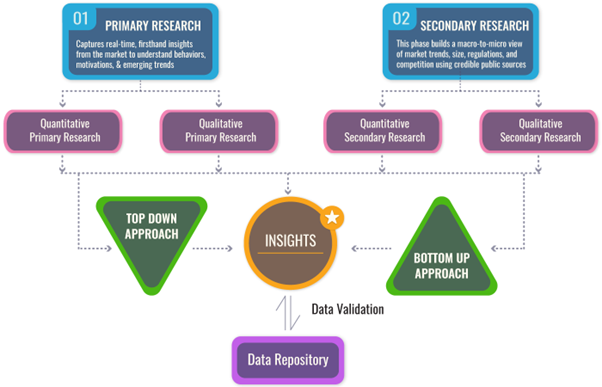
DUAL MODELING: TOP-DOWN + BOTTOM-UP
To ensure robust market estimation, we apply two complementary sizing approaches:
Top-Down Modeling:- Start with broader industry value (e.g., global or regional TAM)
- Apply filters by segment, geography, end-user, or use case
- Adjust with primary insights and validation benchmarks
- Ideal for investor-grade market scans and opportunity mapping
- Aggregate from the ground up using sales volumes, pricing, and unit economics
- Use internal modeling templates aligned with stakeholder data
- Incorporate distributor-level or region-specific inputs
- Most accurate for emerging segments and granular sub-markets
DATA VALIDATION: IN-HOUSE REPOSITORY
We close the loop with proprietary data intelligence built from ongoing projects, industry monitoring, and historical benchmarking. This repository includes:
- Multi-sector market and pricing models
- Key trendlines from past interviews and forecasts
- Benchmarked adoption rates, churn patterns, and ROI indicators
- Industry-specific deviation flags and cross-check logic
- Catches inconsistencies early
- Aligns projections across studies
- Enables consistent, high-trust deliverables