

Peptide Antibiotics Market Size and Forecast (2025–2033), Global and Regional Growth, Trend, Share and Industry Analysis Report Coverage: By Product (Ribosomal Synthesized Peptide Antibiotics, Non-ribosomal Synthesized Peptide Antibiotics); By Disease (Skin Infection, HABP/VABP, Blood Stream Infections, Others); By Distribution Channel (Hospital Pharmacies, Retail Pharmacies, Online Pharmacies); and Geography.
2025-12-17
Healthcare
Swetal (Research Analyst)
Description
Peptide
Antibiotics Market Overview
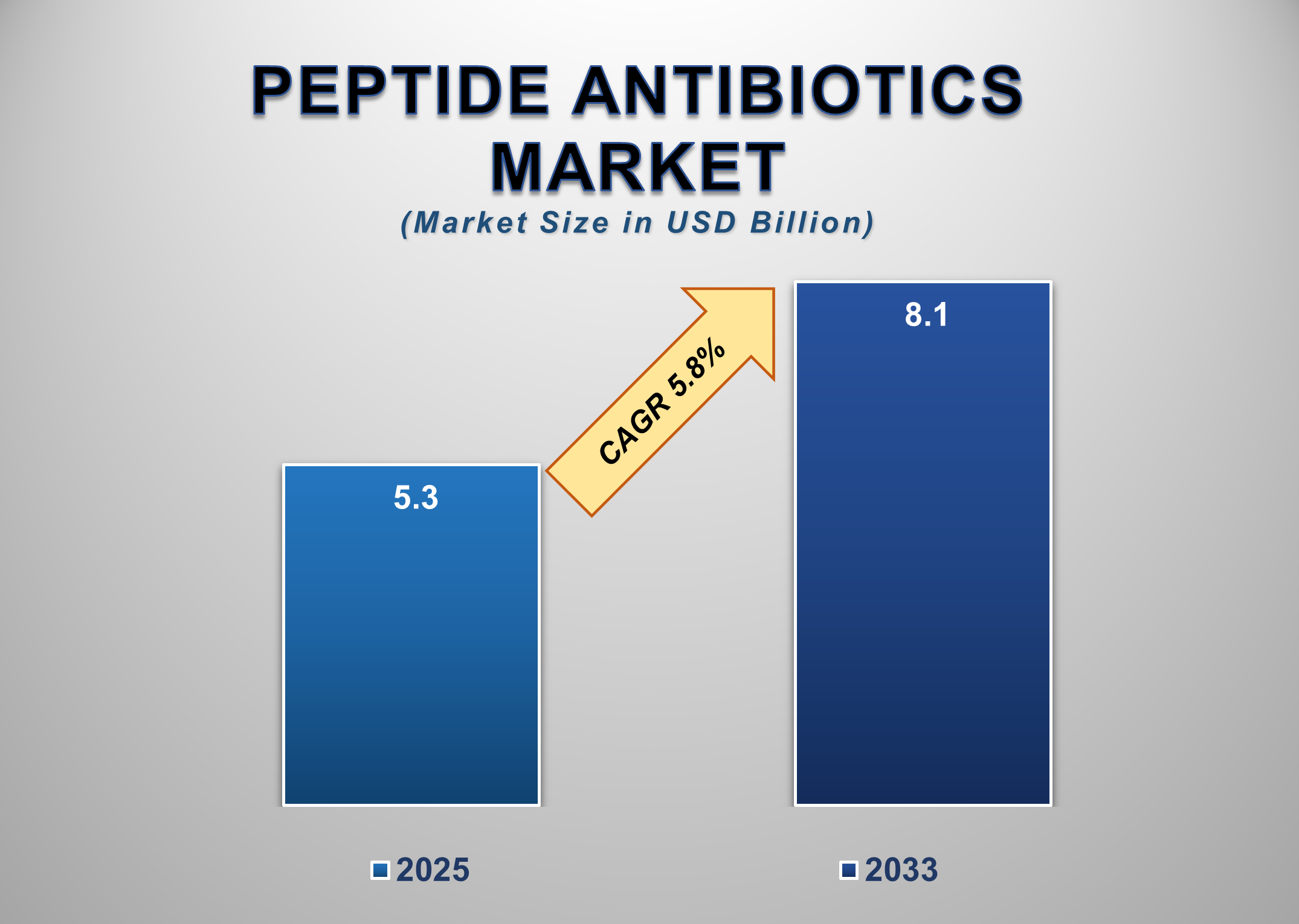
The Global Peptide Antibiotics Market Size is witnessing steady expansion, supported by increasing antimicrobial resistance (AMR), growing incidences of hospital-acquired infections, and the rising demand for new antibiotic classes. Valued at USD 5.3 billion in 2025, the market is projected to reach USD 8.1 billion by 2033, registering a CAGR of 5.8% during the forecast period. Peptide antibiotics, which include both ribosomal and non-ribosomal synthesized forms, are gaining prominence due to their unique mechanisms of action and reduced resistance compared to traditional antibiotics. These compounds exhibit high potency against multidrug-resistant bacteria, making them valuable assets in combating life-threatening infections.
The market growth is bolstered by
increasing research into novel peptide structures, improved synthesis
technologies, and rising investments in R&D by pharmaceutical companies.
Additionally, supportive government policies aimed at tackling antibiotic
resistance and expanding hospital infrastructure contribute to the industry’s
progress. The growing use of peptide antibiotics in treating skin infections,
bloodstream infections, and respiratory conditions further enhances demand.
With continuous innovation in bioengineering and peptide modification
technologies, the global peptide antibiotics market is expected to evolve
rapidly, offering new opportunities for pharmaceutical players and healthcare
providers worldwide.
Peptide
Antibiotics Market Drivers and Opportunities
Rising Incidence of
Drug-Resistant Bacterial Infections Is Driving the Peptide Antibiotics Market
Growth
The growing prevalence of
antibiotic-resistant bacterial infections is one of the primary drivers
propelling the global peptide antibiotics market. Multidrug-resistant (MDR)
pathogens such as MRSA, Pseudomonas aeruginosa, and Acinetobacter species pose
significant challenges to healthcare systems worldwide. Traditional antibiotics
have lost much of their efficacy, leading to an urgent need for new therapeutic
classes. Peptide antibiotics, with their ability to disrupt bacterial membranes
and inhibit biofilm formation, provide an effective alternative.
The World Health Organization
(WHO) and the Centers for Disease Control and Prevention (CDC) have highlighted
AMR as one of the greatest global health threats. In response, governments and
pharmaceutical companies are investing in antibiotic stewardship programs and
advanced research focused on peptide-based solutions. Non-ribosomally
synthesized peptides, in particular, have shown broad-spectrum activity against
resistant Gram-positive and Gram-negative bacteria. Increased clinical trials,
coupled with greater awareness of antimicrobial stewardship, are driving
adoption. Moreover, hospitals and clinics are integrating peptide antibiotics
into infection control protocols to improve patient outcomes, further boosting
market growth.
Advancements in Peptide
Synthesis and Formulation Technologies Are Boosting Market Expansion
Rapid advancements in synthetic
biology and biotechnology have significantly enhanced peptide antibiotic
production, stability, and delivery mechanisms. Modern techniques such as
solid-phase peptide synthesis (SPPS), recombinant DNA technology, and microreactor
systems are enabling efficient and cost-effective production of complex peptide
structures. These innovations have expanded the clinical applicability of
peptide antibiotics, making them more stable and easier to formulate for oral
or injectable administration.
Pharmaceutical firms are also
developing modified peptides with improved pharmacokinetics, such as increased
half-life and reduced immunogenicity. The use of nanocarriers, liposomes, and
polymeric systems for peptide delivery enhances bioavailability and target
specificity, leading to better therapeutic outcomes. Furthermore, partnerships
between biotech startups and large pharmaceutical corporations are accelerating
the commercialization of novel peptide compounds. The trend toward personalized
medicine and precision antimicrobial therapies is also creating new
opportunities for peptide antibiotics. As a result, the market is witnessing a
strong shift toward innovation-driven growth, supported by continuous
technological improvements in peptide engineering and drug delivery platforms.
Increasing R&D Investments
and Global Antimicrobial Resistance Initiatives Offer Long-Term Growth
Potential
The growing global focus on
combating antimicrobial resistance is creating substantial opportunities for
the peptide antibiotics market. Governments, research institutions, and
healthcare organizations are allocating significant resources toward developing
next-generation antibiotics. International programs such as the Global AMR
Innovation Fund (GAMRIF) and the CARB-X initiative are supporting the discovery
of novel peptide-based antimicrobials. These initiatives encourage
collaboration between academic researchers, biotech firms, and pharmaceutical
companies, fostering innovation in antibiotic development.
Emerging economies are also
becoming key participants in AMR mitigation efforts, with countries like India
and China investing in biotechnology research and peptide drug discovery.
Increasing venture capital funding and strategic mergers and acquisitions
within the antibiotic development sector are further enhancing market
competitiveness. Moreover, the push for alternative antimicrobial mechanisms,
such as bacteriophage therapy combined with peptide-based antibiotics, is
expected to reshape the treatment landscape. As global demand for effective
antimicrobial solutions continues to rise, the peptide antibiotics market is
well-positioned for strong long-term expansion, especially in the face of
increasing bacterial resistance and growing healthcare challenges.
Peptide Antibiotics Market Scope
|
Report Attributes |
Description |
|
Market Size in 2025 |
USD 5.3 Billion |
|
Market Forecast in 2033 |
USD 8.1 Billion |
|
CAGR % 2025-2033 |
5.8% |
|
Base Year |
2024 |
|
Historic Data |
2020-2024 |
|
Forecast Period |
2025-2033 |
|
Report USP |
Production, Consumption, Company
Share, company heatmap, Company Production Capacity, Growth Factors and more |
|
Segments Covered |
●
By Product, By
Disease, By Distribution Channel |
|
Regional Scope |
●
North America ●
Europe ●
APAC ●
Latin America ●
Middle East and
Africa |
|
Country Scope |
1)
U.S. 2)
Canada 3)
Germany 4)
UK 5)
France 6)
Spain 7)
Italy 8)
Switzerland 9)
China 10)
Japan 11)
India 12)
Australia 13)
South Korea 14)
Brazil 15)
Mexico 16)
Argentina 17)
South Africa 18)
Saudi Arabia 19)
UAE |
Peptide Antibiotics Market Report Segmentation Analysis
The global Peptide Antibiotics
Market industry analysis is segmented by Product, by Disease, by Distribution
Channel, and by Region.
Non-ribosomal Synthesized
Peptide Antibiotics Segment Accounted for the Largest Market Share in the
Global Peptide Antibiotics Market
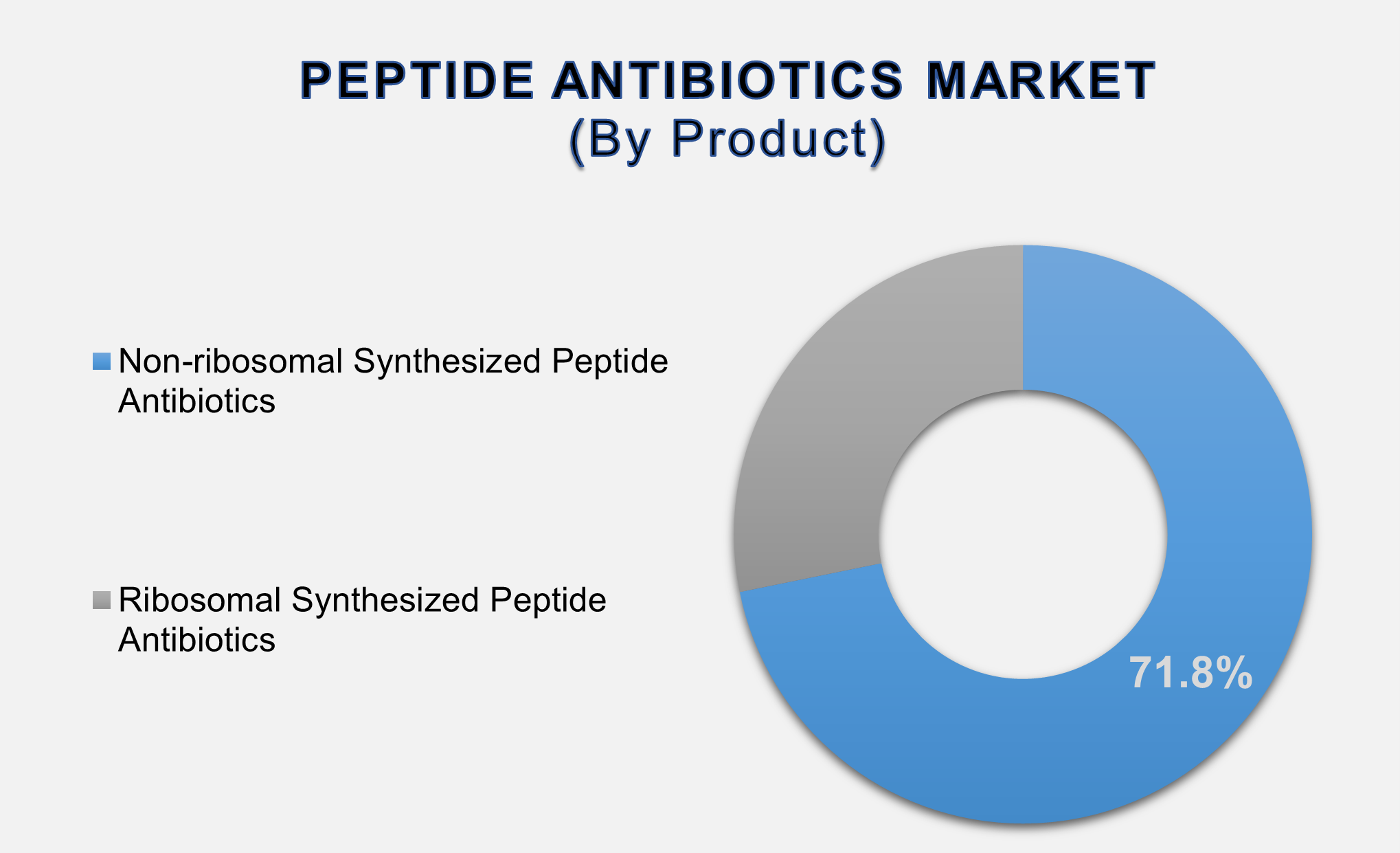
By product, the market is segmented into Ribosomal Synthesized Peptide Antibiotics and Non-ribosomal Synthesized Peptide Antibiotics. The Non-ribosomal Synthesized Peptide Antibiotics segment dominated the market in 2025, accounting for 71.8% of global revenue. These antibiotics are synthesized by non-ribosomal peptide synthetases (NRPS), which allow for structural diversity and broad-spectrum antibacterial activity. Compounds such as polymyxins, daptomycin, and vancomycin fall into this category and are crucial in treating resistant infections. The rising incidence of Gram-negative bacterial infections and the limited efficacy of existing small-molecule antibiotics are driving demand for non-ribosomal peptides. Their ability to target multiple bacterial mechanisms simultaneously enhances treatment effectiveness, particularly in hospital-acquired infections. Pharmaceutical companies are investing heavily in optimizing NRPS biosynthesis and modifying peptide sequences to reduce toxicity and enhance selectivity. This continued innovation ensures the segment’s sustained dominance over the forecast period.
Skin Infection Segment Leads
the Market by Disease in the Global Peptide Antibiotics Market
By disease, the market is divided
into Skin Infection, HABP/VABP, Blood Stream Infections, and Others.
The Skin Infection segment held the largest market share in 2025, driven by the
high prevalence of soft tissue and wound infections, particularly among
diabetic and elderly populations. Peptide antibiotics are increasingly used to
combat methicillin-resistant and multidrug-resistant bacteria that frequently
cause skin and wound complications. Their potent bactericidal activity and
lower likelihood of resistance make them preferred therapeutic options in
dermatological and post-surgical care. Moreover, the ongoing development of
topical peptide-based formulations and creams enhances patient compliance and
accelerates recovery. The segment’s growth is further supported by increasing
hospital admissions for skin and soft tissue infections, rising awareness of
antimicrobial hygiene, and expanding clinical trials evaluating novel peptide
antibiotic applications in dermatology.
Hospital Pharmacies Segment
Accounted for the Largest Market Share in the Global Peptide Antibiotics Market
By
distribution channel, the market is categorized into Hospital Pharmacies,
Retail Pharmacies, and Online Pharmacies. The Hospital Pharmacies segment
dominated the global market in 2025, supported by the growing use of peptide
antibiotics in inpatient settings for the treatment of severe bacterial
infections. Hospitals play a critical role in antibiotic stewardship programs
and ensure proper administration of peptide-based therapies under medical
supervision. The need for intravenous and injectable formulations, which are
typically dispensed in hospitals, further strengthens this segment’s dominance.
Additionally, increasing hospital-acquired infections and the availability of
advanced diagnostic tools for bacterial identification are boosting peptide antibiotic
use within healthcare institutions. Collaborations between hospitals and
pharmaceutical companies to streamline antimicrobial protocols also enhance the
accessibility and effectiveness of these treatments.
The following segments are
part of an in-depth analysis of the global Peptide Antibiotics Market:
|
Market
Segments |
|
|
By Type |
●
Ribosomally
Synthesized Peptide Antibiotics ●
Non-ribosomal
Synthesized Peptide Antibiotics |
|
By Ingredient |
●
Skin Infection ●
HABP/VABP ●
Bloodstream
Infections ●
Others |
|
By
Distribution Channel |
●
Hospital Pharmacies ●
Retail Pharmacies ●
Online Pharmacies |
Peptide
Antibiotics Market Share Analysis by Region
The North America region is
projected to hold the largest share of the global Peptide Antibiotics Market
over the forecast period.
North America accounted for the
largest share of the global peptide antibiotics market, representing 41.3% in
2025. The region’s dominance is supported by advanced healthcare
infrastructure, strong antibiotic R&D capabilities, and favorable regulatory
frameworks. The United States leads with high adoption rates of peptide-based
drugs due to increasing awareness about antimicrobial resistance and a robust
presence of key pharmaceutical companies. Furthermore, extensive funding from
agencies such as the NIH and BARDA supports peptide antibiotic innovation. The
region’s comprehensive antibiotic stewardship programs, coupled with growing
hospital infection control initiatives, are driving consistent demand for
advanced antimicrobial treatments.
In contrast, the Asia Pacific
region is projected to witness the fastest CAGR during the forecast period.
Rising infection rates, growing healthcare expenditure, and supportive
government initiatives to combat AMR are fueling regional market expansion. Countries
such as China, India, and Japan are investing in local peptide synthesis and
manufacturing capabilities. The increasing presence of contract research
organizations (CROs) and biopharmaceutical startups specializing in peptide
drug discovery further enhances growth. Expanding hospital infrastructure and
increasing public awareness regarding antibiotic misuse are expected to create
favorable conditions for market development in the Asia Pacific region.
Peptide
Antibiotics Market Competition Landscape Analysis
The peptide
antibiotics market is moderately competitive, with leading players focusing on
expanding product portfolios, investing in R&D, and pursuing strategic
collaborations. Key companies include Merck & Co., Pfizer, Novartis,
GlaxoSmithKline, Teva Pharmaceutical, Mylan, Sun Pharmaceutical, Lupin,
Aurobindo Pharma, and Hikma Pharmaceuticals. Emerging firms such as Nabriva
Therapeutics, Paratek Pharmaceuticals, and Melinta Therapeutics are actively
developing novel peptide antibiotic formulations.
Global Peptide Antibiotics Market Recent Developments
News:
- In September 2024,
Beiersdorf and Macro Biologics entered a multi-year partnership to develop
antimicrobial peptides for applications in skincare and healthcare,
leveraging innovative biotechnology to address microbial resistance and
skin health.
- In April 2023,
Peptilogics completed patient enrollment for a Phase 1b trial of PLG0206,
an engineered antimicrobial peptide for Periprosthetic Joint Infection
(PJI) after knee replacement. The open-label, dose-escalation study aims
to evaluate safety, tolerability, and efficacy compared to historical
controls.
- In September 2022, Revance
received U.S. FDA approval for DAXXIFY™ (DaxibotulinumtoxinA-lanm), a
peptide-formulated neurotoxin injectable for aesthetic use, expanding
treatment options in the medical aesthetics market.
The Global Peptide Antibiotics Market is dominated by
a few large companies, such as
●
Merck & Co.
●
Pfizer
●
Novartis
●
GlaxoSmithKline
●
Teva Pharmaceutical
●
Mylan
●
Sun Pharmaceutical
●
Aurobindo Pharma
●
Lupin
●
Hikma Pharmaceuticals
●
Fresenius Kabi
●
Cipla
●
Wockhardt
●
Melinta Therapeutics
●
Nabriva Therapeutics
●
Paratek
Pharmaceuticals
●
Tetraphase
Pharmaceuticals
●
Basilea Pharmaceutica
●
Allecra Therapeutics
●
Entasis Therapeutics
● Other Prominent Players
Frequently Asked Questions
Swetal (Research Analyst)
Swetal is a Research Analyst with 4+ years of experience specializing in healthcare market research, medical devices, healthcare IT, and medical technology industry analysis. Her expertise includes competitive intelligence, secondary research, market trend forecasting, and healthcare business insights across global healthcare ecosystems.
She contributes to advanced market research reports by analyzing regulatory frameworks, emerging healthcare technologies, competitive landscapes, and innovation trends shaping the medical industry. With a strong focus on accurate market intelligence, strategic insights, and healthcare industry trends, Swetal supports businesses in making informed, data-backed decisions in a rapidly transforming healthcare environment.
1. Global Peptide Antibiotics
Market Introduction and Market Overview
1.1.
Objectives
of the Study
1.2.
Global
Peptide Antibiotics Market Scope and Market Estimation
1.2.1.Global Peptide Antibiotics
Market Overall Market Size (US$ Bn), Market CAGR (%), Market forecast (2025 - 2033)
1.2.2.Global Peptide Antibiotics
Market Revenue Share (%) and Growth Rate (Y-o-Y) from 2020 - 2033
1.3.
Market
Segmentation
1.3.1.Product of Global Peptide
Antibiotics Market
1.3.2.Disease of Global Peptide
Antibiotics Market
1.3.3.Distribution Channel of
Global Peptide Antibiotics Market
1.3.4.Region of Global Peptide
Antibiotics Market
2. Executive
Summary
2.1.
Demand
Side Trends
2.2.
Key
Market Trends
2.3.
Market
Demand (US$ Bn) Analysis 2020 – 2024 and Forecast, 2025 – 2033
2.4.
Demand
and Opportunity Assessment
2.5.
Demand
Supply Scenario
2.6.
Market
Dynamics
2.6.1.Drivers
2.6.2.Limitations
2.6.3.Opportunities
2.6.4.Impact Analysis of Drivers
and Restraints
2.7.
Emerging
Trends for Peptide Antibiotics Market
2.8.
Porter’s
Five Forces Analysis
2.9.
PEST
Analysis
2.10.
Key
Regulation
3. Global
Peptide Antibiotics Market Estimates
& Historical Trend Analysis (2020 - 2024)
4.
Global Peptide Antibiotics
Market Estimates & Forecast Trend
Analysis, by Product
4.1.
Global
Peptide Antibiotics Market Revenue (US$ Bn) Estimates and Forecasts, by Product,
2020 - 2033
4.1.1.Ribosomal Synthesized
Peptide Antibiotics
4.1.2.Non-ribosomal Synthesized
Peptide Antibiotics
5.
Global Peptide Antibiotics
Market Estimates & Forecast Trend
Analysis, by Disease
5.1.
Global
Peptide Antibiotics Market Revenue (US$ Bn) Estimates and Forecasts, by Disease,
2020 - 2033
5.1.1.Skin Infection
5.1.2.HABP/VABP
5.1.3.Blood Stream Infections
5.1.4.Others
6.
Global Peptide Antibiotics
Market Estimates & Forecast Trend
Analysis, by Distribution Channel
6.1.
Global
Peptide Antibiotics Market Revenue (US$ Bn) Estimates and Forecasts, by Distribution
Channel, 2020 - 2033
6.1.1.Hospital Pharmacies
6.1.2.Retail Pharmacies
6.1.3.Online Pharmacies
7. Global
Peptide Antibiotics Market Estimates
& Forecast Trend Analysis, by region
1.1.
Global
Peptide Antibiotics Market Revenue (US$ Bn) Estimates and Forecasts, by region,
2020 - 2033
1.1.1.North America
1.1.2.Europe
1.1.3.Asia Pacific
1.1.4.Middle East & Africa
1.1.5.Latin America
8. North America Peptide
Antibiotics Market: Estimates &
Forecast Trend Analysis
8.1.
North
America Peptide Antibiotics Market Assessments & Key Findings
8.1.1.North America Peptide
Antibiotics Market Introduction
8.1.2.North America Peptide
Antibiotics Market Size Estimates and Forecast (US$ Billion) (2020 - 2033)
8.1.2.1. By Product
8.1.2.2. By Disease
8.1.2.3. By Distribution
Channel
8.1.2.4.
By
Country
8.1.2.4.1.
The
U.S.
8.1.2.4.2.
Canada
9. Europe Peptide
Antibiotics Market: Estimates &
Forecast Trend Analysis
9.1.
Europe
Peptide Antibiotics Market Assessments & Key Findings
9.1.1.Europe Peptide Antibiotics
Market Introduction
9.1.2.Europe Peptide Antibiotics
Market Size Estimates and Forecast (US$ Billion) (2020 - 2033)
9.1.2.1. By Product
9.1.2.2. By Disease
9.1.2.3. By Distribution
Channel
9.1.2.4.
By
Country
9.1.2.4.1. Germany
9.1.2.4.2. Italy
9.1.2.4.3. U.K.
9.1.2.4.4. France
9.1.2.4.5. Spain
9.1.2.4.6. Switzerland
9.1.2.4.7.
Rest of Europe
10. Asia Pacific Peptide
Antibiotics Market: Estimates &
Forecast Trend Analysis
10.1.
Asia
Pacific Market Assessments & Key Findings
10.1.1.
Asia
Pacific Peptide Antibiotics Market Introduction
10.1.2.
Asia
Pacific Peptide Antibiotics Market Size Estimates and Forecast (US$ Billion) (2020
- 2033)
10.1.2.1. By Product
10.1.2.2. By Disease
10.1.2.3. By Distribution
Channel
10.1.2.4.
By
Country
10.1.2.4.1. China
10.1.2.4.2. Japan
10.1.2.4.3. India
10.1.2.4.4. Australia
10.1.2.4.5. South Korea
10.1.2.4.6.
Rest
of Asia Pacific
11. Middle East & Africa Peptide
Antibiotics Market: Estimates &
Forecast Trend Analysis
11.1.
Middle
East & Africa Market Assessments & Key Findings
11.1.1.
Middle East & Africa Peptide Antibiotics Market
Introduction
11.1.2.
Middle East & Africa Peptide Antibiotics Market Size Estimates
and Forecast (US$ Billion) (2020 - 2033)
11.1.2.1. By Product
11.1.2.2. By Disease
11.1.2.3. By Distribution
Channel
11.1.2.4.
By
Country
11.1.2.4.1. South
Africa
11.1.2.4.2. UAE
11.1.2.4.3. Saudi
Arabia
11.1.2.4.4.
Rest of MEA
12. Latin America
Peptide Antibiotics Market: Estimates
& Forecast Trend Analysis
12.1.
Latin
America Market Assessments & Key Findings
12.1.1.
Latin
America Peptide Antibiotics Market Introduction
12.1.2.
Latin
America Peptide Antibiotics Market Size Estimates and Forecast (US$ Billion) (2020
- 2033)
12.1.2.1. By Product
12.1.2.2. By Disease
12.1.2.3. By Distribution
Channel
12.1.2.4.
By
Country
12.1.2.4.1. Brazil
12.1.2.4.2. Mexico
12.1.2.4.3. Argentina
12.1.2.4.4.
Rest of LATAM
13. Country Wise Market:
Introduction
14.
Competition
Landscape
14.1.
Global
Peptide Antibiotics Market Product Mapping
14.2.
Global
Peptide Antibiotics Market Concentration Analysis, by Leading Players /
Innovators / Emerging Players / New Entrants
14.3.
Global
Peptide Antibiotics Market Tier Structure Analysis
14.4.
Global
Peptide Antibiotics Market Concentration & Company Market Shares (%)
Analysis, 2023
15.
Company
Profiles
15.1. Merck
& Co.
15.1.1.
Company
Overview & Key Stats
15.1.2.
Financial
Performance & KPIs
15.1.3.
Product
Portfolio
15.1.4.
SWOT
Analysis
15.1.5.
Business
Strategy & Recent Developments
* Similar details would be provided for all
the players mentioned below
15.2. Pfizer
15.3. Novartis
15.4. GlaxoSmithKline
15.5. Teva
Pharmaceutical
15.6. Mylan
15.7. Sun
Pharmaceutical
15.8. Aurobindo
Pharma
15.9. Lupin
15.10. Hikma
Pharmaceuticals
15.11. Fresenius
Kabi
15.12. Cipla
15.13. Wockhardt
15.14. Melinta
Therapeutics
15.15. Nabriva
Therapeutics
15.16. Paratek
Pharmaceuticals
15.17. Tetraphase
Pharmaceuticals
15.18. Basilea
Pharmaceutica
15.19. Allecra
Therapeutics
15.20. Entasis
Therapeutics
15.21. Other
Prominent Players
16. Research
Methodology
16.1.
External
Transportations / Databases
16.2.
Internal
Proprietary Database
16.3.
Primary
Research
16.4.
Secondary
Research
16.5.
Assumptions
16.6.
Limitations
16.7.
Report
FAQs
17. Research
Findings & Conclusion
Our Research Methodology
"Insight without rigor is just noise."
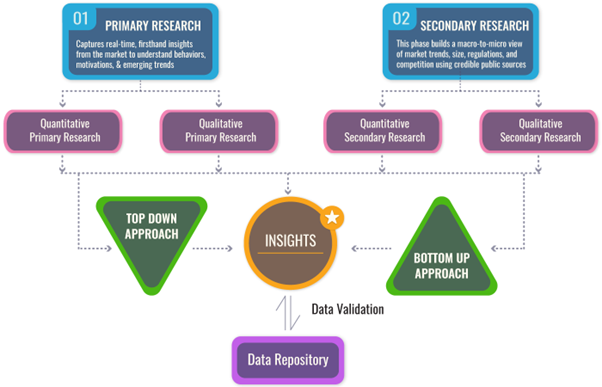
We follow a comprehensive, multi-phase research framework designed to deliver accurate, strategic, and decision-ready intelligence. Our process integrates primary and secondary research , both quantitative and qualitative , along with dual modeling techniques ( top-down and bottom-up) and a final layer of validation through our proprietary in-house repository.
PRIMARY RESEARCH
Primary research captures real-time, firsthand insights from the market to understand behaviors, motivations, and emerging trends.
1. Quantitative Primary Research
Objective: Generate statistically significant data directly from market participants.
Approaches:- Structured surveys with customers, distributors, and field agents
- Mobile-based data collection for point-of-sale audits and usage behavior
- Phone-based interviews (CATI) for market sizing and product feedback
- Online polling around industry events and digital campaigns
- Purchase frequency by customer type
- Channel performance across geographies
- Feature demand by application or demographic
2. Qualitative Primary Research
Objective: Explore decision-making drivers, pain points, and market readiness.
Approaches:- In-depth interviews (IDIs) with executives, product managers, and key decision-makers
- Focus groups among end users and early adopters
- Site visits and observational research for consumer products
- Informal field-level discussions for regional and cultural nuances
SECONDARY RESEARCH
This phase helps establish a macro-to-micro understanding of market trends, size, regulation, and competitive dynamics, sourced from credible and public domain information.
1. Quantitative Secondary Research
Objective: Model market value and segment-level forecasts based on published data.
Sources include:- Financial reports and investor summaries
- Government trade data, customs records, and regulatory statistics
- Industry association publications and economic databases
- Channel performance and pricing data from marketplace listings
- Revenue splits, pricing trends, and CAGR estimates
- Supply-side capacity and volume tracking
- Investment analysis and funding benchmarks
2. Qualitative Secondary Research
Objective: Capture strategic direction, innovation signals, and behavioral trends.
Sources include:- Company announcements, roadmaps, and product pipelines
- Publicly available whitepapers, conference abstracts, and academic research
- Regulatory body publications and policy briefs
- Social and media sentiment scanning for early-stage shifts
- Strategic shifts in market positioning
- Unmet needs and white spaces
- Regulatory triggers and compliance impact
DUAL MODELING: TOP-DOWN + BOTTOM-UP
To ensure robust market estimation, we apply two complementary sizing approaches:
Top-Down Modeling:- Start with broader industry value (e.g., global or regional TAM)
- Apply filters by segment, geography, end-user, or use case
- Adjust with primary insights and validation benchmarks
- Ideal for investor-grade market scans and opportunity mapping
- Aggregate from the ground up using sales volumes, pricing, and unit economics
- Use internal modeling templates aligned with stakeholder data
- Incorporate distributor-level or region-specific inputs
- Most accurate for emerging segments and granular sub-markets
DATA VALIDATION: IN-HOUSE REPOSITORY
We close the loop with proprietary data intelligence built from ongoing projects, industry monitoring, and historical benchmarking. This repository includes:
- Multi-sector market and pricing models
- Key trendlines from past interviews and forecasts
- Benchmarked adoption rates, churn patterns, and ROI indicators
- Industry-specific deviation flags and cross-check logic
- Catches inconsistencies early
- Aligns projections across studies
- Enables consistent, high-trust deliverables