

Peptide Cancer Vaccine Market Size and Forecast (2026–2034), Global and Regional Growth, Trend, Share and Industry Analysis Report Coverage; By Type (Personalized Peptide Vaccines, Multivalent Peptide Vaccines, Others); By Application (Melanoma, Lung Cancer, Breast Cancer, Prostate Cancer, Others); By End User (Hospitals, Cancer Research Institutes, Specialty Clinics, Others), and Geography
2026-04-07
Healthcare
Swetal (Research Analyst)
Description
Peptide Cancer Vaccine Market Overview
The global Peptide Cancer Vaccine market
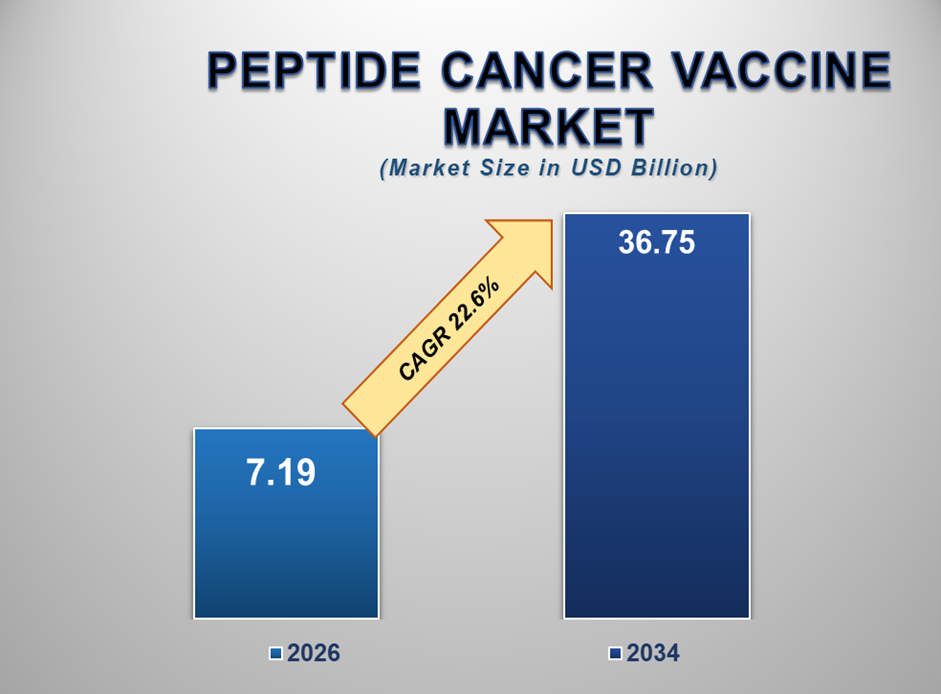
was valued at USD 7.19 billion in 2026 and is projected to reach USD
36.75 billion by 2034, expanding at a CAGR of 22.6% during the forecast
period. Market growth is driven by rising demand for targeted cancer
therapies, advancements in immunotherapy, and increasing investment in oncology
research. Peptide cancer vaccines are emerging as a promising approach in
cancer treatment, enabling the immune system to recognize and attack
tumor-specific antigens with high precision.
Peptide cancer vaccines are a type of
therapeutic vaccine designed to stimulate the body’s immune system to identify
and destroy cancer cells. These vaccines use short sequences of amino acids
(peptides) that correspond to tumor-associated antigens, allowing the immune
system to recognize malignant cells while sparing healthy tissues. Unlike
conventional treatments such as chemotherapy and radiation therapy, peptide
vaccines offer a more targeted and less toxic approach to cancer treatment.
The growing prevalence of cancer worldwide
has significantly increased the need for innovative and effective treatment
options. Traditional therapies often come with severe side effects and limited
specificity, leading to a growing shift toward immunotherapy-based treatments.
Peptide cancer vaccines have gained attention due to their ability to provide
long-term immune responses and reduce the risk of cancer recurrence.
Furthermore, advancements in genomics and
personalized medicine are enhancing the development of customized peptide
vaccines tailored to individual patients. These personalized vaccines are
designed based on specific tumor profiles, improving treatment effectiveness.
As research in cancer immunotherapy continues to expand, peptide cancer
vaccines are expected to play a crucial role in the future of oncology
treatments.
Peptide Cancer Vaccine Market Drivers and Opportunities
The Rising Prevalence of Cancer and
Demand for Targeted Therapies are Driving Market Growth
The increasing global incidence of cancer
is one of the primary drivers of the peptide cancer vaccine market. Cancer
remains one of the leading causes of mortality worldwide, with millions of new
cases diagnosed each year. This growing burden has intensified the need for
more effective and less invasive treatment options.
Peptide cancer vaccines offer a targeted
approach by activating the immune system to recognize cancer cells based on
their unique antigen profiles. This specificity reduces damage to healthy
tissues and minimizes adverse side effects compared to conventional cancer
treatments. As patients and healthcare providers seek safer and more efficient
therapies, the demand for peptide-based vaccines is expected to increase
significantly.
Additionally, the shift toward precision
medicine is further supporting the adoption of peptide cancer vaccines. These
vaccines can be tailored to match the genetic and molecular characteristics of
individual tumors, enabling personalized treatment strategies. As healthcare
systems increasingly adopt patient-centric approaches, the demand for targeted
immunotherapies is expected to grow.
Advancements in Immunotherapy and
Vaccine Development Are Fueling Market Expansion
Technological advancements in immunotherapy
and molecular biology are playing a critical role in the growth of the peptide
cancer vaccine market. Innovations in peptide synthesis, antigen
identification, and immune response modulation are improving the effectiveness
of these vaccines.
Modern peptide vaccines are designed to
enhance antigen presentation and stimulate strong immune responses. Techniques
such as adjuvant incorporation and delivery system optimization are improving
vaccine efficacy and durability. These advancements are enabling researchers to
develop vaccines capable of targeting multiple tumor antigens simultaneously,
increasing treatment success rates.
Furthermore, the integration of
bioinformatics and computational biology is accelerating the identification of
tumor-specific antigens. This allows for faster and more efficient vaccine
development processes. As research institutions and pharmaceutical companies
continue to invest in immunotherapy innovations, the peptide cancer vaccine
market is expected to experience significant growth.
Expansion of Personalized Medicine and
Clinical Research Presents Significant Opportunities
The increasing focus on personalized
medicine presents major opportunities for the peptide cancer vaccine market.
Personalized peptide vaccines are developed based on the unique genetic profile
of an individual’s tumor, enabling highly targeted treatment strategies.
Advancements in genomic sequencing and
biomarker analysis are enabling researchers to identify patient-specific tumor
antigens, which can be used to design customized vaccines. This approach
enhances treatment effectiveness and reduces the likelihood of resistance.
Additionally, the growing number of
clinical trials focused on cancer immunotherapy is accelerating the development
and commercialization of peptide vaccines. Pharmaceutical companies and
research organizations are investing heavily in clinical studies to evaluate
the safety and efficacy of these vaccines across different cancer types.
As personalized medicine continues to gain
momentum and clinical research expands, peptide cancer vaccines are expected to
become a key component of future cancer treatment strategies.
Peptide Cancer Vaccine Market Scope
|
Report Attributes |
Description |
|
Market Size
in 2026 |
USD 7.19 Billion |
|
Market
Forecast in 2034 |
USD 36.75 Billion |
|
CAGR %
2026-2034 |
22.6% |
|
Base Year |
2025 |
|
Historic
Data |
2021-2025 |
|
Forecast
Period |
2026-2034 |
|
Report USP |
Production, Consumption,
Company Share, Company Heatmap, Company Production, Service Type, Growth
Factors and more |
|
Segments
Covered |
∙ By Type |
|
Regional
Scope |
● North America |
|
Country
Scope |
U.S. |
Peptide Cancer Vaccine Market Report
Segmentation Analysis
The global peptide cancer vaccine market
industry analysis is segmented by type, by application, by end user, and by
region.
Personalized Peptide Vaccines Segment Is
Expected to Dominate the Market During the Forecast Period
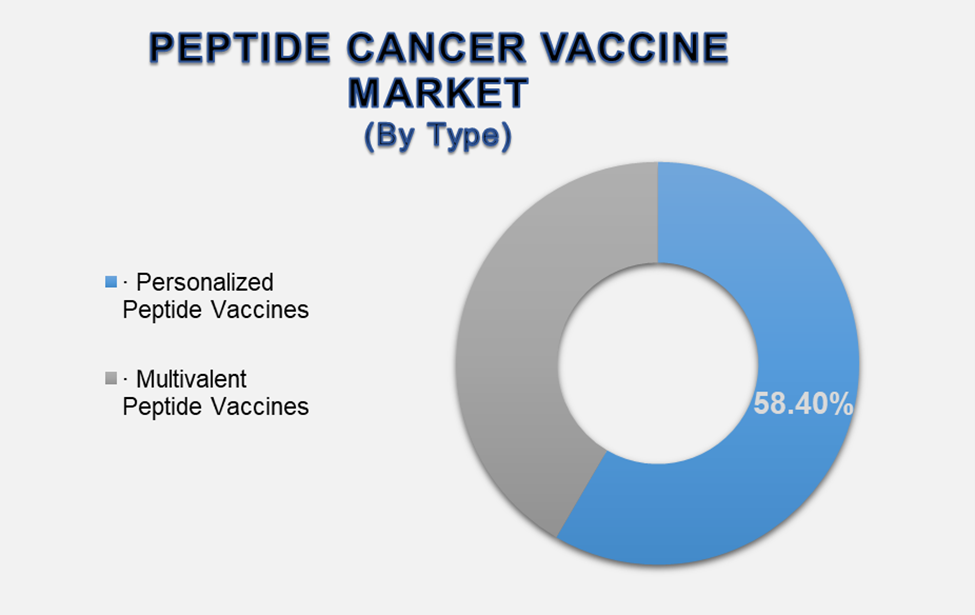
The personalized peptide vaccines segment
accounted for approximately 58.4% of the global market, making it the dominant
category. These vaccines are tailored to individual patients based on their
tumor antigen profiles, providing higher treatment efficacy and improved immune
response.
Melanoma Segment Is Expected to Lead the
Market by Application
Melanoma represents one of the most extensively studied cancer types for peptide vaccine development. Peptide-based immunotherapies have shown promising results in melanoma treatment due to the presence of well-defined tumor antigens. As a result, this segment commands a substantial share of the market.
The Hospitals Segment Is Expected to
Dominate the End-User Market
Hospitals account for the largest share of
the market due to the availability of advanced oncology treatment facilities
and specialized medical professionals. Hospitals are the primary centers for
administering cancer vaccines and conducting clinical trials, contributing to
their dominant position.
The following segments are part of an
in-depth analysis of the global Peptide Cancer Vaccine market:
|
Market Segments |
|
|
By Type |
∙
Personalized Peptide Vaccines |
|
By Application |
|
|
By
End User |
∙
Hospitals |
Peptide Cancer Vaccine Market Share
Analysis By Region
North America is projected to hold the
largest share of the global peptide cancer vaccine market over the forecast
period.
North America accounted for approximately
42.8% of the global market in 2026, driven by advanced healthcare
infrastructure, strong investment in cancer research, and the presence of
leading pharmaceutical companies. The United States leads in clinical research
and immunotherapy development, contributing significantly to regional
dominance.
Asia Pacific is expected to register the
highest CAGR during the forecast period due to increasing healthcare
investments, expanding clinical research activities, and rising cancer
incidence rates in countries such as China and India.
Peptide Cancer Vaccine Market
Competition Landscape Analysis
The peptide cancer vaccine market is highly
competitive, with companies focusing on innovation, clinical trials, and
strategic collaborations. Key players are investing in advanced immunotherapy
technologies and expanding their product pipelines to strengthen their market
position.
Global Peptide Cancer Vaccine Market
Recent Developments News:
∙ In March 2026 – Several biotechnology
companies expanded clinical trials for personalized peptide cancer vaccines
targeting multiple tumor types.
∙ In October 2025 – New peptide-based immunotherapy platforms were introduced
to enhance vaccine efficacy.
∙ In July 2025 – Increased investments in cancer research accelerated the
development of advanced peptide vaccine technologies.
The Global Peptide Cancer Vaccine Market
is dominated by a few large companies, such as
∙ Moderna Inc.
∙ BioNTech SE
∙ Pfizer Inc.
∙ Merck & Co., Inc.
∙ AstraZeneca PLC
∙ GlaxoSmithKline plc
∙ Novartis AG
∙ Roche Holding AG
∙ Amgen Inc.
∙ CureVac N.V.
∙ Gritstone Bio
∙ Vaccibody AS
∙ Immunicum AB
∙ Inovio Pharmaceuticals
∙ Others
Frequently Asked Questions
Swetal (Research Analyst)
Swetal is a Research Analyst with 4+ years of experience specializing in healthcare market research, medical devices, healthcare IT, and medical technology industry analysis. Her expertise includes competitive intelligence, secondary research, market trend forecasting, and healthcare business insights across global healthcare ecosystems.
She contributes to advanced market research reports by analyzing regulatory frameworks, emerging healthcare technologies, competitive landscapes, and innovation trends shaping the medical industry. With a strong focus on accurate market intelligence, strategic insights, and healthcare industry trends, Swetal supports businesses in making informed, data-backed decisions in a rapidly transforming healthcare environment.
1.
Global Peptide Cancer
Vaccine Market Introduction and Market Overview
1.1. Objectives of the Study
1.2. Global Peptide Cancer Vaccine Market Scope and Market Estimation
1.2.1.
Global Peptide Cancer Vaccine
Overall Market Size (US$ Million), Market CAGR (%), Market Forecast (2026 -
2034)
1.2.2.
Global Peptide Cancer Vaccine
Market Revenue Share (%) and Growth Rate (Y-o-Y) from 2021 - 2034
1.3. Market Segmentation
1.3.1.
Type of Global Peptide Cancer
Vaccine Market
1.3.2.
Application of Global Peptide
Cancer Vaccine Market
1.3.3.
End User of Global Peptide
Cancer Vaccine Market
1.3.4.
Region of Global Peptide Cancer
Vaccine Market
2.
Executive Summary
2.1. Demand Side Trends
2.2. Key Market Trends
2.3. Market Demand (US$ Million) Analysis 2021 – 2025 and Forecast, 2026
– 2034
2.4. Demand and Opportunity Assessment
2.5. Key Developments
2.6. Overview of Tariff, Regulatory Landscape, and Standards
2.7. Market Entry Strategies
2.8. Market Dynamics
2.8.1.
Drivers
2.8.2.
Limitations
2.8.3.
Opportunities
2.8.4.
Impact Analysis of Drivers and
Restraints
2.9. Porter’s Five Forces Analysis
2.10.
PEST Analysis
3.
Global Peptide Cancer
Vaccine Market Estimates & Historical Trend Analysis (2021 - 2025)
4.
Global Peptide Cancer
Vaccine Market Estimates & Forecast Trend Analysis, by Type
4.1. Global Peptide Cancer Vaccine Market Revenue (US$ Million) Estimates
and Forecasts, by Type, 2021 - 2034
4.1.1.
Personalized Peptide Vaccines
4.1.2.
Multivalent Peptide Vaccines
4.1.3.
Others
5.
Global Peptide Cancer
Vaccine Market Estimates & Forecast Trend Analysis, by Application
5.1. Global Peptide Cancer Vaccine Market Revenue (US$ Million) Estimates
and Forecasts, by Application, 2021 - 2034
5.1.1.
Melanoma
5.1.2.
Lung Cancer
5.1.3.
Breast Cancer
5.1.4.
Prostate Cancer
5.1.5.
Others
6.
Global Peptide Cancer
Vaccine Market Estimates & Forecast Trend Analysis, by End User
6.1. Global Peptide Cancer Vaccine Market Revenue (US$ Million) Estimates
and Forecasts, by End User, 2021 - 2034
6.1.1.
Hospitals
6.1.2.
Cancer Research Institutes
6.1.3.
Specialty Clinics
6.1.4.
Others
7.
Global Peptide Cancer
Vaccine Market Estimates & Forecast Trend Analysis, by Region
7.1. Global Peptide Cancer Vaccine Market Revenue (US$ Million) Estimates
and Forecasts, by Region, 2021 - 2034
7.1.1.
North America
7.1.2.
Europe
7.1.3.
Asia Pacific
7.1.4.
Middle East & Africa
7.1.5.
Latin America
8.
North America Peptide
Cancer Vaccine Market: Estimates & Forecast Trend Analysis
8.1. North America Peptide Cancer Vaccine Market Assessments & Key
Findings
8.1.1.
North America Peptide Cancer
Vaccine Market Introduction
8.1.2.
North America Peptide Cancer
Vaccine Market Size Estimates and Forecast (US$ Million) (2021 - 2034)
8.1.2.1.
By Type
8.1.2.2.
By Application
8.1.2.3.
By End User
8.1.2.4.
By Country
8.1.2.4.1.
The U.S.
8.1.2.4.2.
Canada
9.
Europe Peptide Cancer
Vaccine Market: Estimates & Forecast Trend Analysis
9.1. Europe Peptide Cancer Vaccine Market Assessments & Key Findings
9.1.1.
Europe Peptide Cancer Vaccine
Market Introduction
9.1.2.
Europe Peptide Cancer Vaccine
Market Size Estimates and Forecast (US$ Million) (2021 - 2034)
9.1.2.1.
By Type
9.1.2.2.
By Application
9.1.2.3.
By End User
9.1.2.4.
By Country
9.1.2.4.1.
Germany
9.1.2.4.2.
Italy
9.1.2.4.3.
U.K.
9.1.2.4.4.
France
9.1.2.4.5.
Spain
9.1.2.4.6.
Switzerland
9.1.2.4.7.
Rest of Europe
10. Asia Pacific Peptide Cancer Vaccine Market: Estimates & Forecast
Trend Analysis
10.1.
Asia Pacific Market Assessments
& Key Findings
10.1.1.
Asia Pacific Peptide Cancer
Vaccine Market Introduction
10.1.2.
Asia Pacific Peptide Cancer
Vaccine Market Size Estimates and Forecast (US$ Million) (2021 - 2034)
10.1.2.1.
By Type
10.1.2.2.
By Application
10.1.2.3.
By End User
10.1.2.4.
By Country
10.1.2.4.1.
China
10.1.2.4.2.
Japan
10.1.2.4.3.
India
10.1.2.4.4.
Australia
10.1.2.4.5.
South Korea
10.1.2.4.6.
Rest of Asia Pacific
11. Middle East & Africa Peptide Cancer Vaccine Market: Estimates
& Forecast Trend Analysis
11.1.
Middle East & Africa Market
Assessments & Key Findings
11.1.1.
Middle East & Africa
Peptide Cancer Vaccine Market Introduction
11.1.2.
Middle East & Africa
Peptide Cancer Vaccine Market Size Estimates and Forecast (US$ Million) (2021 -
2034)
11.1.2.1.
By Type
11.1.2.2.
By Application
11.1.2.3.
By End User
11.1.2.4.
By Country
11.1.2.4.1.
UAE
11.1.2.4.2.
Saudi Arabia
11.1.2.4.3.
South Africa
11.1.2.4.4.
Rest of MEA
12. Latin America Peptide Cancer Vaccine Market: Estimates &
Forecast Trend Analysis
12.1.
Latin America Market
Assessments & Key Findings
12.1.1.
Latin America Peptide Cancer
Vaccine Market Introduction
12.1.2.
Latin America Peptide Cancer
Vaccine Market Size Estimates and Forecast (US$ Million) (2021 - 2034)
12.1.2.1.
By Type
12.1.2.2.
By Application
12.1.2.3.
By End User
12.1.2.4.
By Country
12.1.2.4.1.
Brazil
12.1.2.4.2.
Mexico
12.1.2.4.3.
Argentina
12.1.2.4.4.
Rest of LATAM
13. Competition Landscape
13.1.
Global Peptide Cancer Vaccine
Market Product Mapping
13.2.
Global Peptide Cancer Vaccine
Market Concentration Analysis, by Leading Players / Innovators / Emerging
Players / New Entrants
13.3.
Global Peptide Cancer Vaccine
Market Tier Structure Analysis
13.4.
Global Peptide Cancer Vaccine
Market Concentration & Company Market Shares (%) Analysis, 2025
14. Company Profiles
14.1.
Moderna Inc.
14.1.1.
Company Overview & Key
Stats
14.1.2.
Financial Performance &
KPIs
14.1.3.
Product Portfolio
14.1.4.
SWOT Analysis
14.1.5.
Business Strategy & Recent
Developments
*Similar details would be provided for all
the players mentioned below
14.2.
BioNTech SE
14.3.
Pfizer Inc.
14.4.
Merck & Co., Inc.
14.5.
AstraZeneca PLC
14.6.
GlaxoSmithKline plc
14.7.
Novartis AG
14.8.
Roche Holding AG
14.9.
Amgen Inc.
14.10.
CureVac N.V.
14.11.
Gritstone Bio
14.12.
Vaccibody AS
14.13.
Immunicum AB
14.14.
Inovio Pharmaceuticals
14.15.
Others
15. Research Findings & Conclusion
16. Assumption & Acronyms Used
17. Research Methodology
17.1.
External Transportations /
Databases
17.2.
Internal Proprietary Database
17.3.
Primary Research
17.4.
Secondary Research
17.5.
Assumptions
17.6.
Limitations
17.7.
Report FAQs
Our Research Methodology
"Insight without rigor is just noise."
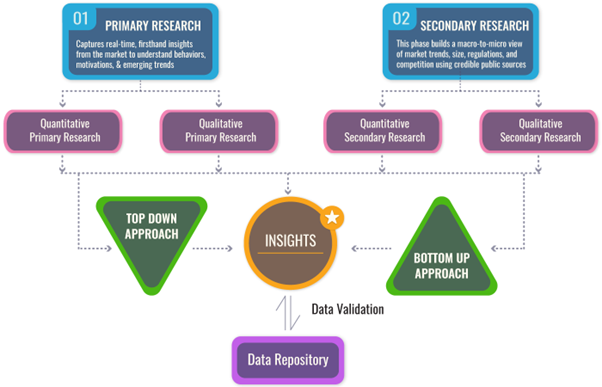
We follow a comprehensive, multi-phase research framework designed to deliver accurate, strategic, and decision-ready intelligence. Our process integrates primary and secondary research , both quantitative and qualitative , along with dual modeling techniques ( top-down and bottom-up) and a final layer of validation through our proprietary in-house repository.
PRIMARY RESEARCH
Primary research captures real-time, firsthand insights from the market to understand behaviors, motivations, and emerging trends.
1. Quantitative Primary Research
Objective: Generate statistically significant data directly from market participants.
Approaches:- Structured surveys with customers, distributors, and field agents
- Mobile-based data collection for point-of-sale audits and usage behavior
- Phone-based interviews (CATI) for market sizing and product feedback
- Online polling around industry events and digital campaigns
- Purchase frequency by customer type
- Channel performance across geographies
- Feature demand by application or demographic
2. Qualitative Primary Research
Objective: Explore decision-making drivers, pain points, and market readiness.
Approaches:- In-depth interviews (IDIs) with executives, product managers, and key decision-makers
- Focus groups among end users and early adopters
- Site visits and observational research for consumer products
- Informal field-level discussions for regional and cultural nuances
SECONDARY RESEARCH
This phase helps establish a macro-to-micro understanding of market trends, size, regulation, and competitive dynamics, sourced from credible and public domain information.
1. Quantitative Secondary Research
Objective: Model market value and segment-level forecasts based on published data.
Sources include:- Financial reports and investor summaries
- Government trade data, customs records, and regulatory statistics
- Industry association publications and economic databases
- Channel performance and pricing data from marketplace listings
- Revenue splits, pricing trends, and CAGR estimates
- Supply-side capacity and volume tracking
- Investment analysis and funding benchmarks
2. Qualitative Secondary Research
Objective: Capture strategic direction, innovation signals, and behavioral trends.
Sources include:- Company announcements, roadmaps, and product pipelines
- Publicly available whitepapers, conference abstracts, and academic research
- Regulatory body publications and policy briefs
- Social and media sentiment scanning for early-stage shifts
- Strategic shifts in market positioning
- Unmet needs and white spaces
- Regulatory triggers and compliance impact
DUAL MODELING: TOP-DOWN + BOTTOM-UP
To ensure robust market estimation, we apply two complementary sizing approaches:
Top-Down Modeling:- Start with broader industry value (e.g., global or regional TAM)
- Apply filters by segment, geography, end-user, or use case
- Adjust with primary insights and validation benchmarks
- Ideal for investor-grade market scans and opportunity mapping
- Aggregate from the ground up using sales volumes, pricing, and unit economics
- Use internal modeling templates aligned with stakeholder data
- Incorporate distributor-level or region-specific inputs
- Most accurate for emerging segments and granular sub-markets
DATA VALIDATION: IN-HOUSE REPOSITORY
We close the loop with proprietary data intelligence built from ongoing projects, industry monitoring, and historical benchmarking. This repository includes:
- Multi-sector market and pricing models
- Key trendlines from past interviews and forecasts
- Benchmarked adoption rates, churn patterns, and ROI indicators
- Industry-specific deviation flags and cross-check logic
- Catches inconsistencies early
- Aligns projections across studies
- Enables consistent, high-trust deliverables