

Plus-size Clothing Market Size and Forecast (2025–2033), Global and Regional Growth, Trend, Share and Industry Analysis Report Coverage: By Product (Casual, Sportswear, Inner Wear, Ethnic Wear, Formal, Night Wear, Others); By Gender (Women, Men); By Age Group (Below 15, 16 to 59, 60 & Above); By Pricing (Mass, Premium, Luxury); and Geography
2025-12-17
Consumer Products
Jaya Bundele (Research Analyst)
Description
Plus-size
Clothing Market Overview
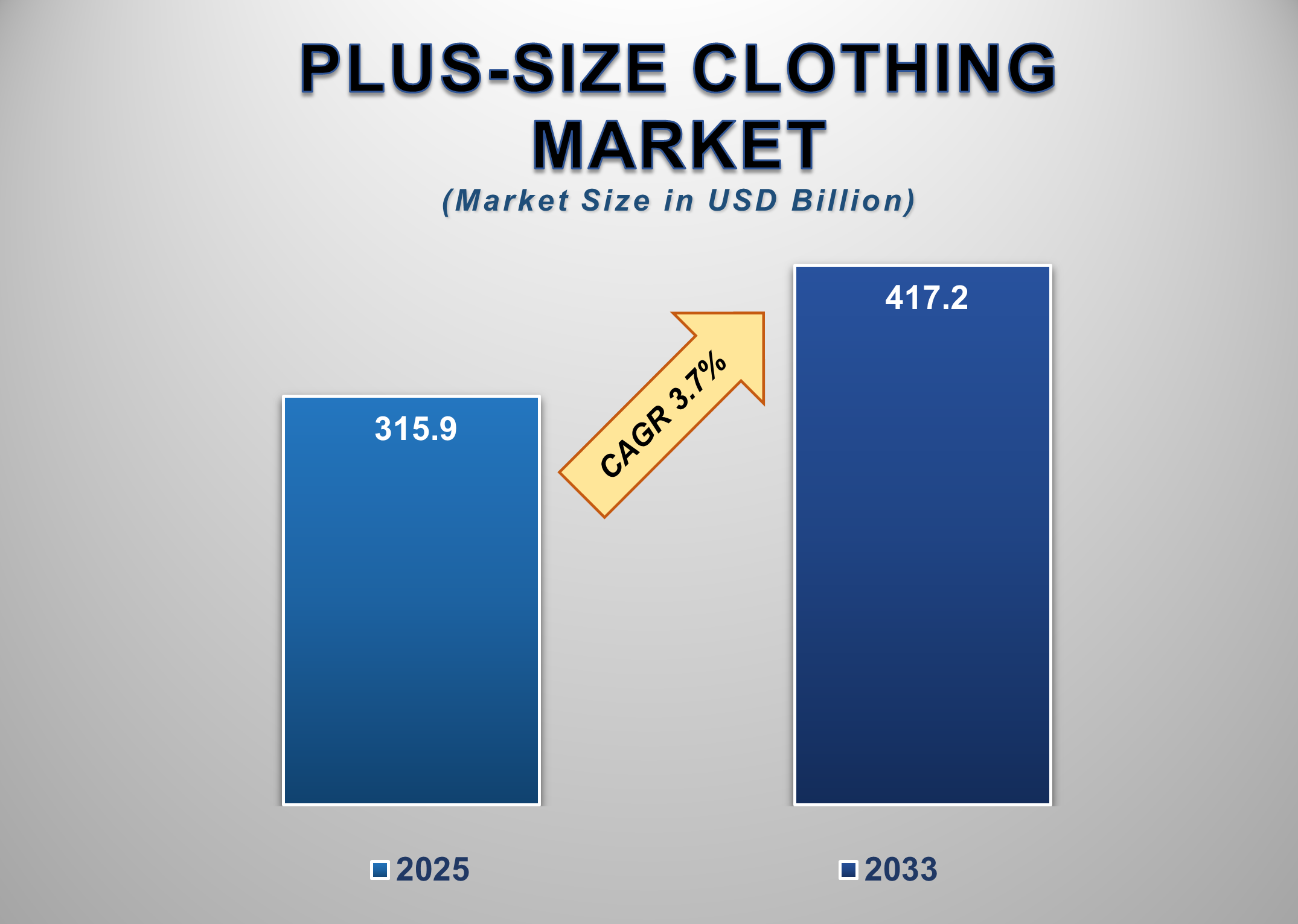
The Global Plus-size Clothing Market is experiencing steady growth, driven by rising body inclusivity awareness, increasing fashion consciousness among larger-sized consumers, and growing demand for stylish, comfortable, and size-diverse apparel. Valued at USD 315.9 billion in 2025, the market is projected to reach USD 417.2 billion by 2033, expanding at a CAGR of 3.7% during the forecast period. The shift toward body positivity and diversity in fashion is compelling brands to expand their product ranges, adopt inclusive marketing strategies, and develop trend-driven designs for all body types.
Social media influence, celebrity
endorsements, and the rise of digital retail platforms have further accelerated
market penetration. E-commerce has enabled consumers to access wider varieties,
custom fits, and affordable plus-size fashion, particularly in emerging
economies. Additionally, collaborations between mainstream and plus-size brands
are reshaping consumer expectations and fashion accessibility. With the growing
recognition that style and fit should not be limited by size, manufacturers are
investing in fabric technology and adaptive design to enhance comfort and
appearance. As a result, the global plus-size clothing industry is
transitioning from a niche to a mainstream fashion segment, supported by
evolving consumer behavior, rising disposable incomes, and increasing brand
competition worldwide.
Plus-size Clothing Market Drivers and
Opportunities
Growing Body Positivity and Fashion Inclusivity Are Driving
the Plus-size Clothing Market Growth
The
global shift toward body positivity and inclusivity is a major force fueling
the plus-size clothing market. Consumers are increasingly rejecting outdated
beauty standards and demanding representation and equality in fashion. The
influence of social media movements such as #BodyPositivity and #LoveYourCurves
has amplified awareness, encouraging fashion brands to cater to diverse body
shapes. Retail giants like H&M, Nike, and Levi’s are incorporating extended
sizing in their collections, recognizing the market potential of plus-size
consumers, who make up a significant portion of the population globally.
Designers
and influencers advocating size diversity have redefined the industry’s
aesthetic norms, leading to the creation of trendy, well-fitted apparel that
complements different body proportions. The rise of adaptive clothing
technologies and 3D body scanning is also enhancing fit precision. Moreover,
increasing the participation of plus-size
models in fashion campaigns and runway shows promotes inclusivity. This
evolving mindset is not only reshaping consumer purchasing patterns but also
driving industry-wide innovation in design, marketing, and retail strategy, solidifying the long-term growth trajectory of the
plus-size clothing market.
Expansion
of E-commerce Platforms and Digital Retail Channels Is Boosting Market
Accessibility
The
rapid expansion of online retail has revolutionized how plus-size consumers
shop for apparel, driving convenience, variety, and customization. E-commerce
giants and fashion startups alike are leveraging digital platforms to reach
broader audiences, offering personalized recommendations, virtual fitting
rooms, and flexible return policies that enhance the shopping experience.
Online platforms such as ASOS Curve, Boohoo Plus, and Torrid are capitalizing
on this shift by offering size-inclusive collections across multiple price
points.
Artificial
intelligence and data analytics are enabling brands to track consumer
preferences, forecast demand, and minimize inventory waste. The integration of
augmented reality (AR) and AI-based styling tools further allows users to
visualize fit and design before purchase, reducing size-related
dissatisfaction. Additionally, social commerce facilitated by platforms like
Instagram and TikTok has become a key marketing tool for promoting
body-positive fashion. These innovations, combined with the convenience of
online accessibility, are transforming e-commerce into a dominant distribution
channel for the plus-size clothing market, particularly among younger and
tech-savvy consumers.
Untapped Market Potential
in Emerging Economies Creates Lucrative Growth Prospects
Emerging
markets represent a significant untapped opportunity for the plus-size clothing
industry. Rapid urbanization, rising disposable incomes, and growing exposure
to global fashion trends are fueling demand across Asia Pacific, Latin America,
and the Middle East. Historically underserved, these regions are now witnessing
increasing acceptance of plus-size apparel as cultural attitudes evolve. The
expansion of organized retail and the proliferation of online marketplaces such
as Myntra, Zalora, and Lazada are enabling brands to enter these high-potential
markets efficiently. Furthermore, local manufacturers and designers are
beginning to focus on inclusive sizing and regionally tailored styles to appeal
to diverse body shapes. Governments promoting domestic textile industries and
rising consumer confidence are also supporting this growth. As Western fashion
brands continue to expand globally, collaborations with regional retailers and
influencers are expected to boost visibility and trust. The combination of
evolving consumer mindsets, digital commerce expansion, and affordability
improvements positions emerging economies as key growth drivers for the global
plus-size clothing market over the next decade.
Plus-size Clothing Market
Scope
|
Report Attributes |
Description |
|
Market Size in 2025 |
USD 315.9 Billion |
|
Market Forecast in 2033 |
USD 417.2 Billion |
|
CAGR % 2025-2033 |
3.7% |
|
Base Year |
2024 |
|
Historic Data |
2020-2024 |
|
Forecast Period |
2025-2033 |
|
Report USP |
Production, Consumption,
Company Share, Company Heatmap, Company Production Capacity, Growth Factors,
and more |
|
Segments Covered |
●
By Product, By
Gender, By Age Group, By Pricing |
|
Regional Scope |
●
North America, ●
Europe, ●
APAC, ●
Latin America ●
Middle East and
Africa |
|
Country Scope |
1)
U.S. 2)
Canada 3)
U.K. 4)
Germany 5)
France 6)
Italy 7)
Spain 8)
Russia 9)
China 10)
India 11)
Japan 12)
South Korea 13)
Mexico 14)
Brazil 15)
Argentina 16)
Saudi Arabia 17)
UAE 18)
South Africa |
Plus-size Clothing Market
Report Segmentation Analysis
The global Plus-size Clothing
Market industry analysis is segmented by Product, by Gender, By Age Group, By
Pricing, and by Region.
Casual Segment Accounted for the Largest Market Share in
the Global Plus-size Clothing Market
By
product, the market is segmented into Casual, Sportswear, Inner Wear, Ethnic
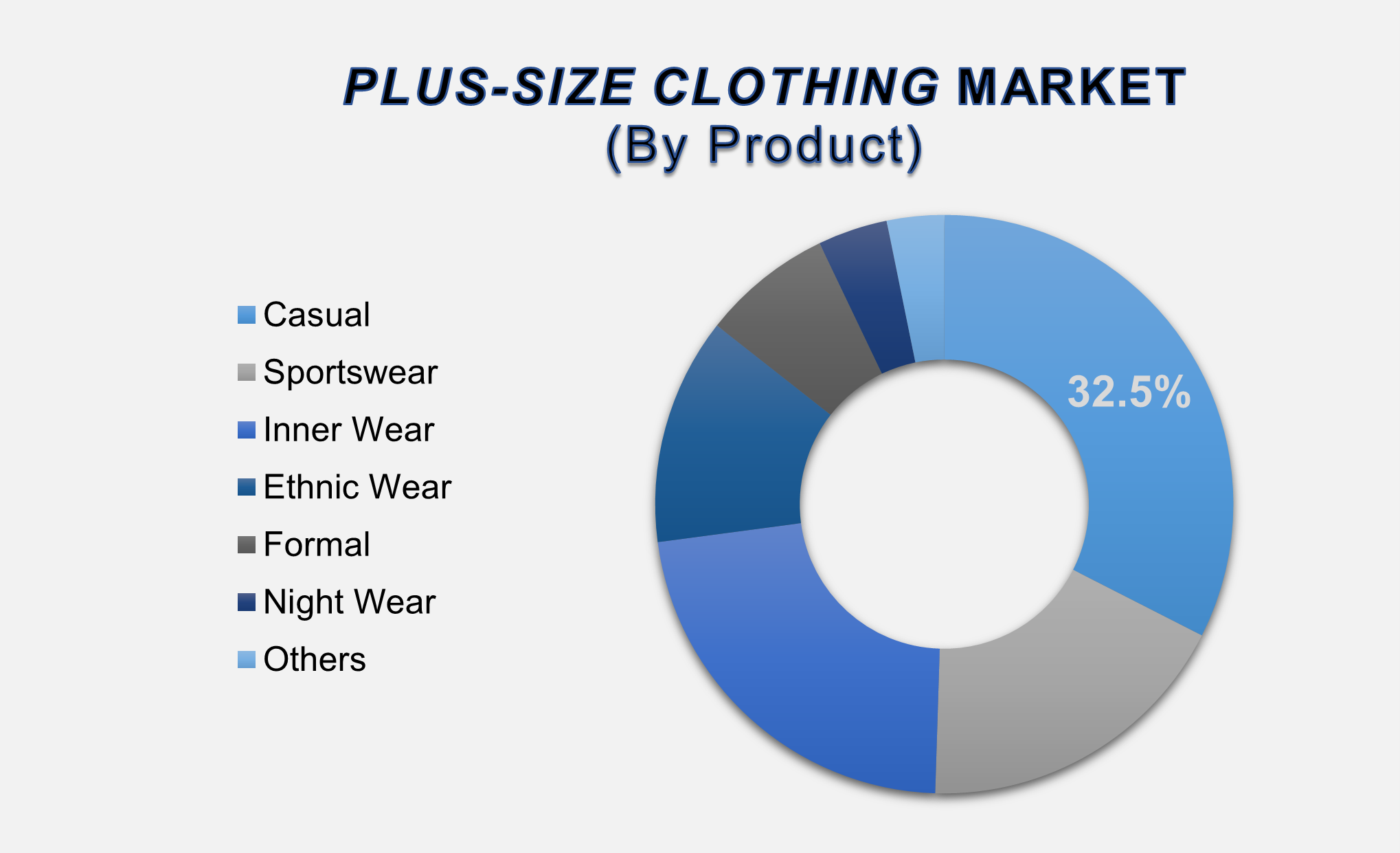
Wear, Formal, Night Wear, and Others. The Casual segment dominated the global
market in 2025, accounting for 32.5% of total revenue. This dominance stems
from the growing popularity of versatile and comfortable clothing among
plus-size consumers, reflecting changing lifestyle preferences. Demand for
casual wear such as jeans, t-shirts, and relaxed dresses has surged due to
increasing remote work trends and informal social settings.
Brands are focusing on high-quality stretch fabrics, moisture-wicking materials, and adaptive fits that combine comfort with style. Moreover, collaborations with influencers and the introduction of plus-size active-casual lines by global players such as Old Navy, H&M+, and Levi’s are driving product innovation. The segment’s strong presence across both online and offline channels ensures its continued leadership in the global market.
The Women's Segment Leads the Market by Gender in the Global Plus-size
Clothing Market
By
gender, the market is divided into Women, Men, and Children. The Women segment
held the largest market share in 2025, supported by high fashion awareness,
increasing empowerment, and greater availability of women’s plus-size apparel.
Women’s demand for trendy, well-fitted, and diverse clothing styles has
encouraged global brands to expand their offerings beyond basic designs.
Rising
participation of women in the workforce, coupled with growing social acceptance
of body diversity, has strengthened this segment’s dominance. Moreover, the
influence of social media influencers and fashion bloggers has increased
awareness of size-inclusive collections. Leading brands such as Torrid,
Eloquii, and Lane Bryant continue to expand their product portfolios, catering
to both casual and professional fashion needs. As more women embrace body
confidence, this segment is expected to sustain strong momentum throughout the
forecast period.
The Below 15 Age Group Segment Accounted for the Largest Share in
the Global Plus-size Clothing Market
By age
group, the market is segmented into Below 15, 16 to 59, and 60 & Above. The
Below 15 segment dominated the global market in 2025, reflecting the growing
incidence of childhood obesity and rising demand for appropriate and
comfortable clothing for children and adolescents. Increasing parental
awareness and greater fashion consciousness among younger consumers are driving
segment growth. Manufacturers are introducing playful, functional, and
sustainable designs that ensure comfort and fit while maintaining style.
Retailers such as Walmart, Old Navy, and Target are expanding youth plus-size
ranges through online platforms to enhance accessibility. The focus on
eco-friendly materials and body-positive branding in children’s fashion further
supports the segment’s rise, making it an important contributor to the overall
plus-size clothing market.
The following segments are
part of an in-depth analysis of the global Plus-size Clothing market:
|
Market
Segments |
|
|
By Product |
●
Casual ●
Sportswear ●
Inner Wear ●
Ethnic Wear ●
Formal ●
Nightwear ●
Others |
|
By Gender |
●
Women ●
Men |
|
By Age Group |
●
Below 15 ●
16 to 59 ●
60 & Above |
|
By Pricing |
●
Mass ●
Premium ●
Luxury |
Plus-size Clothing Market Share Analysis by
Region
North America is
Projected to Hold the Largest Share of the Global Plus-size Clothing Market
Over the Forecast Period
North America dominated the
global plus-size clothing market in 2025, accounting for 38.9% of total
revenue. The region’s leadership is attributed to its mature retail
infrastructure, early adoption of inclusive fashion, and presence of major
players such as Torrid, Lane Bryant, and Ashley Stewart. Increasing awareness
of body positivity, combined with strong online sales and influencer-driven
marketing, has made North America a key hub for plus-size fashion innovation.
Additionally, premium brands are introducing extended sizing options and luxury
collections to cater to affluent consumers seeking quality and style.
Meanwhile, the Asia Pacific
region is expected to record the fastest growth during the forecast period,
driven by expanding middle-class populations, rising fashion consciousness, and
the proliferation of digital retail platforms. Countries like China, Japan, and
India are witnessing increasing acceptance of body inclusivity, supported by
local designers and international collaborations. Online shopping trends,
coupled with rising Western fashion influence and improved logistics
infrastructure, are enhancing accessibility and affordability. As more global
brands invest in localized production and region-specific campaigns, the Asia
Pacific is set to emerge as a dynamic growth engine for the plus-size clothing
market through 2033.
Plus-size Clothing Market Competition Landscape
Analysis
The global plus-size clothing
market is highly competitive, featuring both established fashion houses and
emerging direct-to-consumer brands. Leading companies such as Torrid, Lane
Bryant, Ashley Stewart, Eloquii, and Fashion to Figure dominate the North
American market, while global fashion retailers like H&M+, ASOS Curve, and
Boohoo Plus are expanding their online offerings. Strategic collaborations,
influencer partnerships, and sustainability initiatives are key strategies
driving brand differentiation. Additionally, the integration of advanced sizing
technologies and data-driven design solutions is improving customer
satisfaction.
Global Plus-Size Clothing Market Recent
Developments News:
●
In April 2023, Full Beauty Brands
acquired Eloquii Inc., a plus-size women’s apparel brand previously owned by
Walmart. Eloquii offers a comprehensive size range, including clothing (12W–44W), bras (band sizes 30–58, cups
A–O), and medium- to wide-width footwear. The
acquisition strengthens Full Beauty Brands’ position in the expanding U.S.
plus-size market.
●
In November 2022, Adidas collaborated
with 11 Honoré to launch its first performance activewear capsule for plus
sizes (1X–4X). The 14-piece collection included a corset sports bra with sheer
mesh, a recycled-material bodysuit, and earth-tone matching sets, expanding
inclusive sizing in premium athletic wear.
The Global Plus-size Clothing Market is dominated by a few large companies, such as
●
Lane Bryant
●
Ashley Stewart
●
Fashion to Figure
●
Dia & Co
●
Eloquii
●
Universal Standard
●
Old Navy
●
Walmart
●
ASOS Curve
●
Boohoo Plus
●
H&M+
●
Maurices
●
Avenue
●
City Chic
●
Reitmans
●
Ulla Popken
●
Simply Be
●
BloomChic
●
Catherine's
● Others
Frequently Asked Questions
Jaya Bundele (Research Analyst)
Jaya Bundele is a skilled Research Analyst with 4+ years of experience in market intelligence, consumer insights, competitive analysis, and industry forecasting across the consumer goods, agriculture, and food & beverage sectors. She specializes in market sizing, trend analysis, growth opportunity mapping, and strategic secondary research for global and regional markets.
Her expertise lies in transforming complex industry data into actionable business strategies that help organizations identify emerging trends, understand customer behavior, and gain a competitive edge. With a strong focus on data-driven insights, business intelligence, and future market trends, Jaya delivers high-quality research solutions aligned with evolving industry demands and market dynamics.
1. Global Plus-size Clothing
Market Introduction and Market Overview
1.1.
Objectives
of the Study
1.2.
Global
Plus-size Clothing Market Scope and Market Estimation
1.2.1.Global Plus-size Clothing Overall
Market Size (US$ Bn), Market CAGR (%), Market forecast (2025 - 2033)
1.2.2.Global Plus-size Clothing
Market Revenue Share (%) and Growth Rate (Y-o-Y) from 2020 - 2033
1.3.
Market
Segmentation
1.3.1.Gender of Global Plus-size
Clothing Market
1.3.2.Product Type of Global Plus-size
Clothing Market
1.3.3.Age Group of Global Plus-size
Clothing Market
1.3.4.Pricing of Global Plus-size
Clothing Market
1.3.5.Region of Global Plus-size
Clothing Market
2. Executive
Summary
2.1.
Demand
Side Trends
2.2.
Key
Market Trends
2.3.
Market
Demand (US$ Bn) Analysis 2020 – 2024 and Forecast, 2025 – 2033
2.4.
Demand
and Opportunity Assessment
2.5.
Market
Dynamics
2.5.1.Drivers
2.5.2.Limitations
2.5.3.Opportunities
2.5.4.Impact Analysis of Drivers
and Restraints
2.6.
Key
Product/Brand Analysis
2.7.
Technological
Advancements
2.8.
Key
Developments
2.9.
Porter’s
Five Forces Analysis
2.9.1.Bargaining Power of
Suppliers
2.9.2.Bargaining Power of Buyers
2.9.3.Threat of Substitutes
2.9.4.Threat of New Entrants
2.9.5.Competitive Rivalry
2.10.
PEST
Analysis
2.10.1.
Political
Factors
2.10.2.
Economic
Factors
2.10.3.
Social
Factors
2.10.4.
Technology
Factors
2.11.
Insights
on Cost-effectiveness of Plus-size Clothing
2.12.
Key
Regulation
3. Global
Plus-size Clothing Market Estimates
& Historical Trend Analysis (2020 - 2024)
4. Global
Plus-size Clothing Market Estimates
& Forecast Trend Analysis, by Gender
4.1.
Global
Plus-size Clothing Market Revenue (US$ Bn) Estimates and Forecasts, by Gender, 2020
- 2033
4.1.1.Women
4.1.2.Men
5. Global
Plus-size Clothing Market Estimates
& Forecast Trend Analysis, by Product Type
5.1.
Global
Plus-size Clothing Market Revenue (US$ Bn) Estimates and Forecasts, by Product
Type, 2020 - 2033
5.1.1.Casual
5.1.2.Sportswear
5.1.3.Inner Wear
5.1.4.Ethnic Wear
5.1.5.Formal
5.1.6.Night Wear
5.1.7.Others
6. Global
Plus-size Clothing Market Estimates
& Forecast Trend Analysis, by Age Group
6.1.
Global
Plus-size Clothing Market Revenue (US$ Bn) Estimates and Forecasts, by Age
Group, 2020 - 2033
6.1.1.Below 15
6.1.2.16 to 59
6.1.3.60 & Above
7. Global
Plus-size Clothing Market Estimates
& Forecast Trend Analysis, by Pricing
7.1.
Global
Plus-size Clothing Market Revenue (US$ Bn) Estimates and Forecasts, by Pricing,
2020 - 2033
7.1.1.Mass
7.1.2.Premium
7.1.3.Luxury
8. Global
Plus-size Clothing Market Estimates
& Forecast Trend Analysis, by Region
8.1.
Global
Plus-size Clothing Market Revenue (US$ Bn) Estimates and Forecasts, by Region, 2020
- 2033
8.1.1.North America
8.1.2.Europe
8.1.3.Asia Pacific
8.1.4.Middle East & Africa
8.1.5.Latin America
9. North America Plus-size
Clothing Market: Estimates &
Forecast Trend Analysis
9.1.
North
America Plus-size Clothing Market Assessments & Key Findings
9.1.1.North America Plus-size
Clothing Market Introduction
9.1.2.North America Plus-size
Clothing Market Size Estimates and Forecast (US$ Billion) (2020 - 2033)
9.1.2.1. By Gender
9.1.2.2. By Product
Type
9.1.2.3. By Age Group
9.1.2.4. By Pricing
9.1.2.5.
By
Country
9.1.2.5.1.
The
U.S.
9.1.2.5.2.
Canada
10. Europe Plus-size
Clothing Market: Estimates &
Forecast Trend Analysis
10.1.
Europe
Plus-size Clothing Market Assessments & Key Findings
10.1.1.
Europe
Plus-size Clothing Market Introduction
10.1.2.
Europe
Plus-size Clothing Market Size Estimates and Forecast (US$ Billion) (2020 - 2033)
10.1.2.1. By Gender
10.1.2.2. By Product
Type
10.1.2.3. By Age Group
10.1.2.4. By Pricing
10.1.2.5.
By
Country
10.1.2.5.1. Germany
10.1.2.5.2. Italy
10.1.2.5.3. U.K.
10.1.2.5.4. France
10.1.2.5.5. Spain
10.1.2.5.6.
Rest of Europe
11. Asia Pacific Plus-size
Clothing Market: Estimates &
Forecast Trend Analysis
11.1.
Asia
Pacific Market Assessments & Key Findings
11.1.1.
Asia
Pacific Plus-size Clothing Market Introduction
11.1.2.
Asia
Pacific Plus-size Clothing Market Size Estimates and Forecast (US$ Billion) (2020
- 2033)
11.1.2.1. By Gender
11.1.2.2. By Product
Type
11.1.2.3. By Age Group
11.1.2.4. By Pricing
11.1.2.5.
By
Country
11.1.2.5.1. China
11.1.2.5.2. Japan
11.1.2.5.3. India
11.1.2.5.4. Australia
11.1.2.5.5. South Korea
11.1.2.5.6.
Rest
of Asia Pacific
12. Middle East & Africa Plus-size
Clothing Market: Estimates &
Forecast Trend Analysis
12.1.
Middle
East & Africa Market Assessments & Key Findings
12.1.1.
Middle East & Africa Plus-size Clothing Market
Introduction
12.1.2.
Middle East & Africa Plus-size Clothing Market Size Estimates
and Forecast (US$ Billion) (2020 - 2033)
12.1.2.1. By Gender
12.1.2.2. By Product
Type
12.1.2.3. By Age Group
12.1.2.4. By Pricing
12.1.2.5.
By
Country
12.1.2.5.1. UAE
12.1.2.5.2. Saudi
Arabia
12.1.2.5.3. South
Africa
12.1.2.5.4.
Rest of MEA
13. Latin America
Plus-size Clothing Market: Estimates
& Forecast Trend Analysis
13.1.
Latin
America Market Assessments & Key Findings
13.1.1.
Latin
America Plus-size Clothing Market Introduction
13.1.2.
Latin
America Plus-size Clothing Market Size Estimates and Forecast (US$ Billion) (2020
- 2033)
13.1.2.1. By Gender
13.1.2.2. By Product
Type
13.1.2.3. By Age Group
13.1.2.4. By Pricing
13.1.2.5.
By
Country
13.1.2.5.1. Brazil
13.1.2.5.2. Argentina
13.1.2.5.3. Mexico
13.1.2.5.4.
Rest of LATAM
14. Country Wise Market:
Introduction
15.
Competition
Landscape
15.1.
Global
Plus-size Clothing Market Product Mapping
15.2.
Global
Plus-size Clothing Market Concentration Analysis, by Leading Players /
Innovators / Emerging Players / New Entrants
15.3.
Global
Plus-size Clothing Market Tier Structure Analysis
15.4.
Global
Plus-size Clothing Market Concentration & Company Market Shares (%)
Analysis, 2024
16.
Company
Profiles
16.1.
Torrid
16.1.1.
Company
Overview & Key Stats
16.1.2.
Financial
Performance & KPIs
16.1.3.
Product
Portfolio
16.1.4.
SWOT
Analysis
16.1.5.
Business
Strategy & Recent Developments
*
Similar details would be provided for all the players mentioned below
16.2. Lane
Bryant
16.3. Ashley
Stewart
16.4. Fashion
to Figure
16.5. Dia
& Co
16.6. Eloquii
16.7. Universal
Standard
16.8. Old Navy
16.9. Walmart
16.10. ASOS
Curve
16.11. Boohoo
Plus
16.12. H&M+
16.13. Maurices
16.14. Avenue
16.15. City
Chic
16.16. Reitmans
16.17. Ulla
Popken
16.18. Simply
Be
16.19. BloomChic
16.20. Catherine's
16.21. Others
17. Research
Methodology
17.1.
External
Transportations / Databases
17.2.
Internal
Proprietary Database
17.3.
Primary
Research
17.4.
Secondary
Research
17.5.
Assumptions
17.6.
Limitations
17.7.
Report
FAQs
18. Research
Findings & Conclusion
Our Research Methodology
"Insight without rigor is just noise."
We follow a comprehensive, multi-phase research framework designed to deliver accurate, strategic, and decision-ready intelligence. Our process integrates primary and secondary research , both quantitative and qualitative , along with dual modeling techniques ( top-down and bottom-up) and a final layer of validation through our proprietary in-house repository.
PRIMARY RESEARCH
Primary research captures real-time, firsthand insights from the market to understand behaviors, motivations, and emerging trends.
1. Quantitative Primary Research
Objective: Generate statistically significant data directly from market participants.
Approaches:- Structured surveys with customers, distributors, and field agents
- Mobile-based data collection for point-of-sale audits and usage behavior
- Phone-based interviews (CATI) for market sizing and product feedback
- Online polling around industry events and digital campaigns
- Purchase frequency by customer type
- Channel performance across geographies
- Feature demand by application or demographic
2. Qualitative Primary Research
Objective: Explore decision-making drivers, pain points, and market readiness.
Approaches:- In-depth interviews (IDIs) with executives, product managers, and key decision-makers
- Focus groups among end users and early adopters
- Site visits and observational research for consumer products
- Informal field-level discussions for regional and cultural nuances
SECONDARY RESEARCH
This phase helps establish a macro-to-micro understanding of market trends, size, regulation, and competitive dynamics, sourced from credible and public domain information.
1. Quantitative Secondary Research
Objective: Model market value and segment-level forecasts based on published data.
Sources include:- Financial reports and investor summaries
- Government trade data, customs records, and regulatory statistics
- Industry association publications and economic databases
- Channel performance and pricing data from marketplace listings
- Revenue splits, pricing trends, and CAGR estimates
- Supply-side capacity and volume tracking
- Investment analysis and funding benchmarks
2. Qualitative Secondary Research
Objective: Capture strategic direction, innovation signals, and behavioral trends.
Sources include:- Company announcements, roadmaps, and product pipelines
- Publicly available whitepapers, conference abstracts, and academic research
- Regulatory body publications and policy briefs
- Social and media sentiment scanning for early-stage shifts
- Strategic shifts in market positioning
- Unmet needs and white spaces
- Regulatory triggers and compliance impact

DUAL MODELING: TOP-DOWN + BOTTOM-UP
To ensure robust market estimation, we apply two complementary sizing approaches:
Top-Down Modeling:- Start with broader industry value (e.g., global or regional TAM)
- Apply filters by segment, geography, end-user, or use case
- Adjust with primary insights and validation benchmarks
- Ideal for investor-grade market scans and opportunity mapping
- Aggregate from the ground up using sales volumes, pricing, and unit economics
- Use internal modeling templates aligned with stakeholder data
- Incorporate distributor-level or region-specific inputs
- Most accurate for emerging segments and granular sub-markets
DATA VALIDATION: IN-HOUSE REPOSITORY
We close the loop with proprietary data intelligence built from ongoing projects, industry monitoring, and historical benchmarking. This repository includes:
- Multi-sector market and pricing models
- Key trendlines from past interviews and forecasts
- Benchmarked adoption rates, churn patterns, and ROI indicators
- Industry-specific deviation flags and cross-check logic
- Catches inconsistencies early
- Aligns projections across studies
- Enables consistent, high-trust deliverables