

Polyolefin Elastomers Market Size and Forecast (2026–2034), Global and Regional Growth, Trend, Share and Industry Analysis Report Coverage; By Type (Polyethylene, Polypropylene, Ethylene Propylene Diene Monomer); By Manufacturing Method (Injection Molding, Extrusion Molding, Blow Molding); By Application (Adhesives, Molded Rubber Goods, Wires and Cables); By End-Use (Automotive, Healthcare, Consumer Goods, Packaging); and Geography
2026-09-07
Chemicals & Materials
Aishwarya Panbude (Research Analyst)
Description
Polyolefin Elastomers Market Overview
The global Polyolefin Elastomers Market
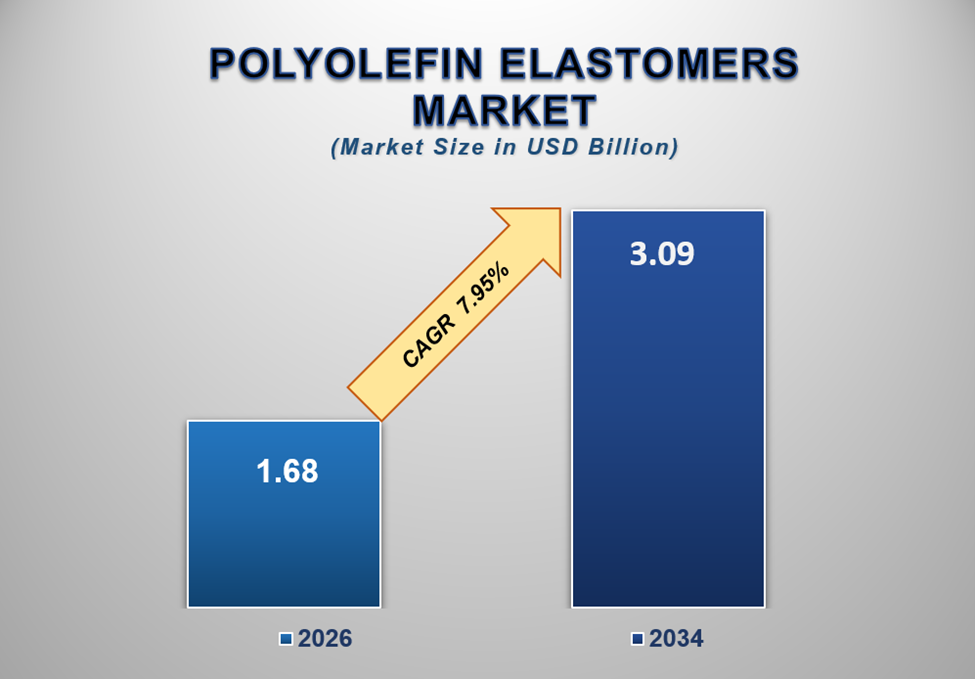
was valued at USD 1.68 billion in 2026 and is projected to reach USD
3.09 billion by 2034, expanding at a CAGR of 7.95% during the
forecast period. The market is witnessing steady growth due to increasing
demand for lightweight and flexible materials, rising automotive production,
growing use of high-performance polymers in packaging, expanding healthcare
applications, increasing adoption of recyclable materials, and technological
advances in polymer manufacturing.
Polyolefin elastomers are flexible polymer
materials that combine rubber-like elasticity with the processing advantages
associated with thermoplastics. Their combination of flexibility, impact
resistance, chemical stability, low-temperature performance, and processability
makes them suitable for applications across automotive, packaging, healthcare,
consumer products, electrical systems, and industrial manufacturing.
The automotive industry remains an
important area of demand because polyolefin elastomers can help manufacturers
reduce component weight while providing flexibility, impact absorption,
vibration control, and improved surface characteristics.
The increasing production of electric
vehicles is creating additional opportunities for polyolefin elastomers. These
materials are increasingly considered for interior components, cable
insulation, battery-related applications, seals, protective components, and
other areas where lightweight construction and durability are important.
Packaging is another major application
area. Polyolefin elastomers can improve flexibility, puncture resistance,
sealability, softness, and impact performance in flexible packaging structures.
The growing demand for convenient and
lightweight packaging is encouraging manufacturers to develop elastomer-based
materials for food, pharmaceutical, personal-care, and consumer-product
packaging.
Healthcare applications are also expanding
because selected polyolefin elastomer grades can provide softness, chemical
resistance, sterilization compatibility, and latex-free characteristics. These
properties make them suitable for tubing, seals, flexible connectors, and other
medical components.
Consumer goods manufacturers use polyolefin
elastomers in products requiring soft-touch surfaces, impact resistance,
flexibility, and improved tactile characteristics.
Wire and cable applications are also
contributing to market growth as elastomeric materials can provide flexibility
and insulation properties required in electrical and telecommunications
systems.
Sustainability is becoming increasingly
important across the industry. Manufacturers are developing recyclable and
lower-carbon polymer solutions while improving compatibility with existing
recycling systems.
Advances in catalyst technology are
enabling greater control over polymer architecture and material
characteristics. This allows producers to develop grades with specific
combinations of elasticity, strength, clarity, processability, and thermal
performance.
The growing demand for high-performance
polymers across automotive, packaging, healthcare, consumer goods, and
industrial applications is therefore expected to support continued expansion of
the global polyolefin elastomers market through 2034.
Polyolefin Elastomers Market Drivers and Opportunities
Growing Demand for Lightweight and
Flexible Materials Is Driving Market Growth
The increasing requirement for lightweight,
durable, and flexible materials across manufacturing industries is one of the
major drivers of the polyolefin elastomers market.
Automotive manufacturers are increasingly
replacing heavier materials with lightweight polymer-based components to
improve vehicle efficiency and support electrification objectives.
Polyolefin elastomers can provide a
combination of flexibility, impact resistance, vibration damping, and
processability, making them suitable for automotive interiors, exterior
components, seals, protective elements, and other applications.
Packaging manufacturers are also adopting
flexible polymer materials to reduce material consumption while maintaining
adequate strength and sealing performance.
The expanding use of lightweight materials
in consumer goods, electrical products, healthcare equipment, and industrial
components is further broadening the addressable market for polyolefin
elastomers.
Expansion of Automotive and Electric
Vehicle Manufacturing Is Supporting Market Development
The automotive industry represents a major
opportunity for polyolefin elastomer manufacturers.
These materials are increasingly used in
dashboards, door components, trims, seals, protective covers, vibration-control
components, and other vehicle applications.
The shift toward electric vehicles is
creating additional material requirements because EV manufacturers are seeking
lightweight solutions that can also provide thermal resistance, vibration
management, insulation, and durability.
Polyolefin elastomers can be processed
using established thermoplastic manufacturing techniques, allowing
manufacturers to integrate them into high-volume production environments.
The continued expansion of automotive
manufacturing in Asia Pacific and other emerging production centers is expected
to support demand for these materials.
Sustainable Packaging, Recyclability,
and Advanced Polymer Technologies Present Significant Opportunities
The growing emphasis on sustainable
packaging is creating new opportunities for polyolefin elastomer manufacturers.
Packaging producers are increasingly
looking for materials that combine flexibility and performance with improved
recyclability and compatibility with circular material systems.
Polyolefin elastomers can provide useful
properties in flexible films and sealing layers while supporting the
development of lightweight packaging structures.
Manufacturers are also investing in
lower-carbon feedstocks, recyclable material grades, improved catalyst systems,
and polymer architectures designed for specific performance requirements.
Healthcare applications provide another
growth opportunity. Demand for flexible, latex-free, chemically stable, and
sterilizable materials is increasing across medical devices and healthcare
products.
Advanced grades designed for multilayer
packaging, medical components, electric vehicle applications, and specialty
industrial products are expected to provide additional growth opportunities
through 2034.
Polyolefin Elastomers Market Scope
|
Report Attributes |
Description |
|
Market Size
in 2026 |
USD
1.68 Billion |
|
Market
Forecast in 2034 |
USD 3.09 Billion |
|
CAGR %
2026-2034 |
7.95% |
|
Base Year |
2025 |
|
Historic
Data |
2021-2025 |
|
Forecast
Period |
2026-2034 |
|
Report USP |
Production, Consumption,
Company Share, Company Heatmap, Company Production, Service Type, Growth
Factors and more |
|
Segments
Covered |
• By Type |
|
Regional
Scope |
● North America |
|
Country
Scope |
U.S. |
Polyolefin Elastomers Market Report Segmentation Analysis
The global polyolefin elastomer market
industry analysis is segmented by type, manufacturing method, application,
end-use, and region.
The Polyethylene Segment Is Expected to
Dominate the Market During the Forecast Period
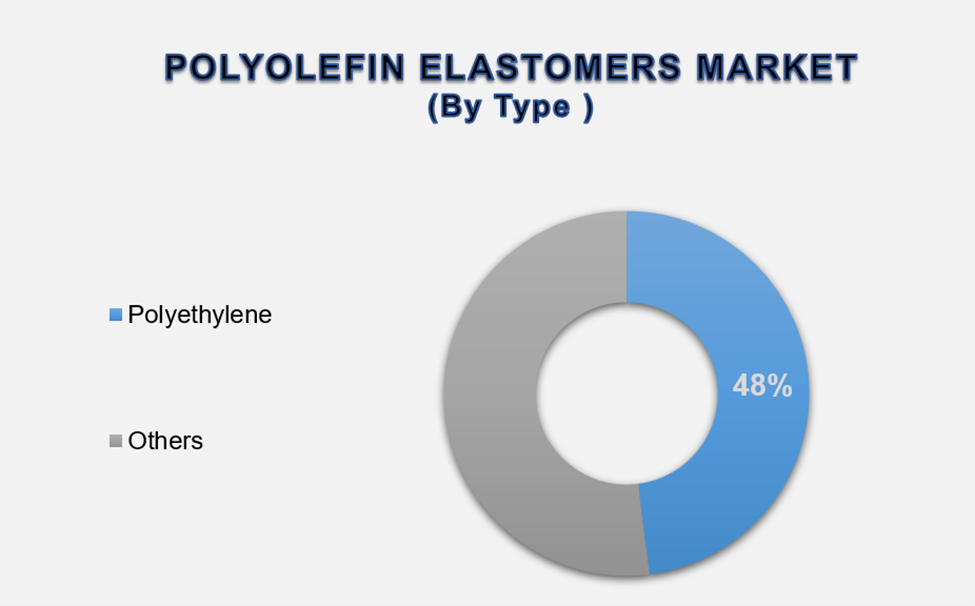
The Polyethylene segment accounted
for approximately 48% of the global polyolefin elastomers market, making
it the leading product type.
Polyethylene-based polyolefin elastomers
are widely used because they provide a useful combination of flexibility,
softness, impact resistance, chemical stability, and processability.
These materials are particularly suitable
for flexible packaging, films, sealants, medical tubing, and other applications
where flexibility and toughness are required.
Their compatibility with conventional
thermoplastic processing equipment allows manufacturers to produce components
and films efficiently at a commercial scale.
Polyethylene elastomers also provide
favorable low-temperature performance and can be incorporated into applications
requiring controlled elasticity and sealing characteristics.
Growing demand for flexible packaging and
lightweight polymer products is expected to support continued adoption of
polyethylene-based elastomers.
The Injection Molding Segment Is
Expected to Lead the Market by Manufacturing Method
The Injection Molding segment is
expected to represent the largest share of the market.
Injection molding is widely used for
manufacturing polymer components requiring precise dimensions, consistent
quality, complex geometries, and efficient high-volume production.
Polyolefin elastomers processed through
injection molding are used in automotive components, consumer products, medical
devices, seals, protective covers, and industrial parts.
The increasing production of lightweight
automotive components and consumer products is supporting demand for
injection-molded elastomer solutions.
Advances in molding equipment and material
formulations are also improving cycle efficiency and surface quality.
The Molded Rubber Goods Segment Is
Expected to Lead the Market by Application
The Molded Rubber Goods segment is
expected to maintain a significant position in the global polyolefin elastomers
market.
Polyolefin elastomers provide the
flexibility, impact resistance, and durability required in molded products such
as seals, protective components, flexible fittings, and other rubber-like
parts.
Their thermoplastic processing
characteristics can provide manufacturing advantages compared with certain
conventional elastomer systems.
Increasing demand for lightweight and
durable molded components across automotive, consumer, healthcare, and
industrial applications is supporting the segment.
The Automotive Segment Is Expected to
Dominate the Market by End-Use
The Automotive segment is expected
to account for the largest share of the market.
Automotive manufacturers use polyolefin
elastomers across interior and exterior components, seals, trims,
vibration-control parts, protective components, and other applications.
The material's combination of low weight,
flexibility, impact resistance, and processability makes it suitable for modern
vehicle designs.
Increasing vehicle production and the
transition toward electric mobility are creating additional demand for
lightweight polymer materials.
The growing emphasis on vehicle efficiency,
interior comfort, noise reduction, and component durability is expected to
sustain automotive demand through the forecast period.
The following segments are part of an
in-depth analysis of the global Polyolefin Elastomers Market:
|
Market
Segments |
|
|
By Type |
●
Polyethylene ●
Polypropylene ●
Ethylene Propylene Diene Monomer |
|
By Manufacturing Method |
●
Injection Molding ●
Extrusion Molding ●
Blow Molding |
|
By Application |
●
Adhesives ●
Molded Rubber Goods ●
Wires and Cables |
|
By
End Use |
●
Automotive ●
Healthcare ●
Consumer Goods ●
Packaging |
Polyolefin Elastomers Market Share Analysis By Region
Asia Pacific
is projected to hold the largest share of the global polyolefin elastomers
market over the forecast period.
Asia Pacific accounted for approximately 44%
of the market, according to the latest Fortune Business Insights dataset. The
region benefits from extensive automotive and electronics manufacturing,
expanding packaging production, growing industrialization, and increasing
polymer consumption across China, India, Japan, South Korea, and other
manufacturing economies.
China
remains a major regional market because of its large automotive, consumer
goods, packaging, electronics, and industrial manufacturing base. Increasing
domestic production of polymer materials and continued investment in advanced
manufacturing are supporting demand.
India is
emerging as an important growth market as automotive manufacturing, packaging
production, healthcare infrastructure, and consumer goods industries expand.
Increasing investment in domestic polymer production is also supporting the
broader specialty materials ecosystem.
North America represents a significant market supported by established automotive
manufacturing, advanced packaging production, healthcare applications, and
technological development in specialty polymers. The United States
remains the dominant contributor in the region.
Europe is an
important market due to its advanced automotive industry, strong sustainability
initiatives, technical manufacturing capabilities, and increasing demand for
lightweight and recyclable materials. Germany, the U.K., France, Italy,
Spain, and Switzerland represent key markets.
Latin America is expected to witness steady growth as automotive manufacturing,
packaging, consumer goods production, and industrial activity expand. Brazil,
Mexico, and Argentina are important regional markets.
The Middle East & Africa represents an emerging opportunity supported by investments in
petrochemical production, manufacturing, packaging, infrastructure, and
industrial development.
Polyolefin Elastomers Market Competition
Landscape Analysis
The global polyolefin elastomers market is
competitive, with major polymer manufacturers focusing on product
innovation, catalyst technologies, production scale, application-specific
grades, sustainability, and regional manufacturing capabilities.
Leading producers are developing elastomer
grades with improved flexibility, impact resistance, thermal stability,
clarity, processability, and recycling compatibility.
Automotive applications remain an important
area of product development as manufacturers seek lightweight materials for
conventional and electric vehicles.
Packaging is another major competitive
area, particularly for flexible films, sealing layers, multilayer structures,
and products designed to improve puncture resistance and package integrity.
Companies are also increasing investments
in sustainable polymer solutions. Recyclable materials, lower-carbon
feedstocks, circular production systems, and improved material efficiency are
becoming increasingly important in product development.
Strategic partnerships and long-term
relationships with automotive manufacturers, packaging producers,
medical-device companies, and compounders are also helping suppliers expand
their application reach.
The industry remains relatively
concentrated among major global polymer producers, while specialized
compounders and regional manufacturers compete through customized formulations
and application-specific technical support.
Global Polyolefin Elastomers Market
Recent Developments News
●
In August 2026 – Market research released updated industry forecasts highlighting
continued expansion of polyolefin elastomers across automotive, packaging,
healthcare, and consumer applications.
●
In July 2026 – Polyolefin elastomer market assessments highlighted increasing
demand for recyclable and lower-carbon grades designed for flexible packaging
and lightweight automotive applications.
●
In February 2026 – Industry analysis identified continued growth in lightweight
automotive components and flexible packaging as important demand drivers for
polyolefin elastomers.
●
In 2025 – Major polymer producers continued expanding specialty elastomer
portfolios serving automotive, packaging, consumer, wire, and cable, and
industrial applications.
●
In 2025 – Dow reported polyolefin elastomers among its specialty polymer
products serving automotive, packaging, footwear, health and hygiene,
photovoltaic, wire and cable, and other applications.
The Global Polyolefin Elastomers Market
is Dominated by a Few Large Companies, Such As
●
Dow Inc.
●
ExxonMobil Corporation
●
Mitsui Chemicals, Inc.
●
LG Chem Ltd.
●
LyondellBasell Industries N.V.
●
SABIC
●
SK Geo Centric Co., Ltd.
●
Borealis AG
●
Sumitomo Chemical Co., Ltd.
●
Versalis S.p.A.
●
Braskem S.A.
●
Reliance Industries Limited
●
INEOS AG
●
Prime Polymer Co., Ltd.
●
Mitsui Elastomers Singapore
Pte. Ltd.
●
Sinopec Corporation
●
PetroChina Company Limited
●
Hanwha Solutions Corporation
●
Mitsubishi Chemical Group
Corporation
●
Kraton Corporation
● Others
Frequently Asked Questions
Aishwarya Panbude (Research Analyst)
Aishwarya Panbude is a skilled Research Analyst with 4+ years of experience in market intelligence, consumer insights, competitive analysis, and industry forecasting across the consumer goods, agriculture, and food & beverage sectors. She specializes in market sizing, trend analysis, growth opportunity mapping, and strategic secondary research for global and regional markets.
Her expertise lies in transforming complex industry data into actionable business strategies that help organizations identify emerging trends, understand customer behavior, and gain a competitive edge. With a strong focus on data-driven insights, business intelligence, and future market trends, Jaya delivers high-quality research solutions aligned with evolving industry demands and market dynamics.
1.
Global Polyolefin Elastomers Market
Introduction and Market Overview
1.1.
Objectives of the Study
1.2.
Market Definition
1.2.1.Offering of Global
Polyolefin Elastomers Market
1.2.2.End Use of Global
Polyolefin Elastomers Market
1.2.3.Market Scope of Global
Polyolefin Elastomers Market
1.2.4.Application of Global
Polyolefin Elastomers Market
1.2.5.Region of Global
Polyolefin Elastomers Market
1.3.
Competition Overview List of Market Participants
1.4.
Market Definition: Polyolefin Elastomers Market
2.
Executive Summary
2.1.
Global Polyolefin Elastomers Market Estimation
& Forecast
2.1.1.Global Polyolefin
Elastomers Market Size (US$ Million) Estimates & Historical Trend Analysis,
2021 – 2025
2.1.2.Global Polyolefin
Elastomers Market Size (US$ Million), Growth Rate (Y-o-Y), Market Forecast,
2026 – 2034
2.2.
Snapshot of Global Polyolefin Elastomers Market
2.3.
Global Polyolefin Elastomers Market Revenue
Share (%) 2025
2.4.
REGIONAL: Revenue Analysis
2.5.
Key Competitors & Key Insights
3.
Market Overview (Qualitative Analysis)
3.1.
Demand Side Trends
3.2.
Supply Side Trends / Manufacturing Trends
3.3.
Demand and Opportunity Assessment, 2026 – 2034
3.4.
Key Developments
3.5.
Overview of Regulatory Landscape, Compliance
Framework, and Industry Standards
3.6.
Market Entry Strategies
3.7.
Market Dynamics
3.7.1.Drivers
3.7.2.Limitations
3.7.3.Opportunities
3.7.4.Impact Analysis of
Drivers and Restraints
3.8.
Porter's Five Forces Analysis
3.9.
PEST Analysis
4.
Global Polyolefin Elastomers Market
Estimates & Historical Trend Analysis, 2021 – 2025
5.
Global Polyolefin Elastomers Market
Estimates & Forecast Trend Analysis, by Type
5.1.
Global Polyolefin Elastomers Market Revenue (US$
Million) Estimates and Forecasts, by Type, 2021 – 2034
5.1.1.Polyethylene
5.1.2.Polypropylene
5.1.3.Ethylene Propylene Diene
Monomer
6.
Global Polyolefin Elastomers Market
Estimates & Forecast Trend Analysis, by Manufacturing Method
6.1.
Global Polyolefin Elastomers Market Revenue (US$
Million) Estimates and Forecasts, by Manufacturing Method, 2021 – 2034
6.1.1.Injection Molding
6.1.2.Extrusion Molding
6.1.3.Blow Molding
7.
Global Polyolefin Elastomers Market
Estimates & Forecast Trend Analysis, by Application
7.1.
Global Polyolefin Elastomers Market Revenue (US$
Million) Estimates and Forecasts, by Application, 2021 – 2034
7.1.1.Adhesives
7.1.2.Molded Rubber Goods
7.1.3.Wires and Cables
8.
Global Polyolefin Elastomers Market
Estimates & Forecast Trend Analysis, by End-Use
8.1.
Global Polyolefin Elastomers Market Revenue (US$
Million) Estimates and Forecasts, by End-Use, 2021 – 2034
8.1.1.Automotive
8.1.2.Healthcare
8.1.3.Consumer Goods
8.1.4.Packaging
9.
Global Polyolefin Elastomers Market
Estimates & Forecast Trend Analysis, by Region
9.1.
Global Polyolefin Elastomers Market Revenue (US$
Million) Estimates and Forecasts, by Region, 2021 – 2034
9.1.1.North America
9.1.2.Europe
9.1.3.Asia Pacific
9.1.4.Middle East & Africa
9.1.5.Latin America
10.
North America Polyolefin Elastomers
Market: Estimates & Forecast Trend Analysis
10.1.
North America Polyolefin Elastomers Market
Assessments & Key Findings
10.1.1.
North America Polyolefin Elastomers Market
Introduction
10.1.2.
North America Polyolefin Elastomers Market Size
Estimates and Forecast (US$ Million), 2021 – 2034
10.1.2.1.
By Type
10.1.2.2.
By Manufacturing Method
10.1.2.3.
By Application
10.1.2.4.
By End-Use
10.1.2.5.
By Country
10.1.2.5.1.
The U.S.
10.1.2.5.2.
Canada
11.
Europe Polyolefin Elastomers Market:
Estimates & Forecast Trend Analysis
11.1.
Europe Polyolefin Elastomers Market Assessments
& Key Findings
11.1.1.
Europe Polyolefin Elastomers Market Introduction
11.1.2.
Europe Polyolefin Elastomers Market Size
Estimates and Forecast (US$ Million), 2021 – 2034
11.1.2.1.
By Type
11.1.2.2.
By Manufacturing Method
11.1.2.3.
By Application
11.1.2.4.
By End-Use
11.1.2.5.
By Country
11.1.2.5.1.
Germany
11.1.2.5.2.
Italy
11.1.2.5.3.
The U.K.
11.1.2.5.4.
France
11.1.2.5.5.
Spain
11.1.2.5.6.
Switzerland
11.1.2.5.7.
Rest of Europe
12.
Asia Pacific Polyolefin Elastomers
Market: Estimates & Forecast Trend Analysis
12.1.
Asia Pacific Polyolefin Elastomers Market
Assessments & Key Findings
12.1.1.
Asia Pacific Polyolefin Elastomers Market
Introduction
12.1.2.
Asia Pacific Polyolefin Elastomers Market Size
Estimates and Forecast (US$ Million), 2021 – 2034
12.1.2.1.
By Type
12.1.2.2.
By Manufacturing Method
12.1.2.3.
By Application
12.1.2.4.
By End-Use
12.1.2.5.
By Country
12.1.2.5.1.
China
12.1.2.5.2.
Japan
12.1.2.5.3.
India
12.1.2.5.4.
Australia
12.1.2.5.5.
South Korea
12.1.2.5.6.
Rest of Asia Pacific
13.
Middle East & Africa Polyolefin Elastomers
Market: Estimates & Forecast Trend Analysis
13.1.
Middle East & Africa Polyolefin Elastomers
Market Assessments & Key Findings
13.1.1.
Middle East & Africa Polyolefin Elastomers
Market Introduction
13.1.2.
Middle East & Africa Polyolefin Elastomers
Market Size Estimates and Forecast (US$ Million), 2021 – 2034
13.1.2.1.
By Type
13.1.2.2.
By Manufacturing Method
13.1.2.3.
By Application
13.1.2.4.
By End-Use
13.1.2.5.
By Country
13.1.2.5.1.
UAE
13.1.2.5.2.
Saudi Arabia
13.1.2.5.3.
South Africa
13.1.2.5.4.
Rest of Middle East & Africa
14.
Latin America Polyolefin Elastomers
Market: Estimates & Forecast Trend Analysis
14.1.
Latin America Polyolefin Elastomers Market
Assessments & Key Findings
14.1.1.
Latin America Polyolefin Elastomers Market
Introduction
14.1.2.
Latin America Polyolefin Elastomers Market Size
Estimates and Forecast (US$ Million), 2021 – 2034
14.1.2.1.
By Type
14.1.2.2.
By Manufacturing Method
14.1.2.3.
By Application
14.1.2.4.
By End-Use
14.1.2.5.
By Country
14.1.2.5.1.
Brazil
14.1.2.5.2.
Mexico
14.1.2.5.3.
Argentina
14.1.2.5.4.
Rest of Latin America
15.
Competition Landscape
15.1.
Global Polyolefin Elastomers Market Product
Mapping
15.2.
Global Polyolefin Elastomers Market
Concentration Analysis, by Leading Players / Innovators / Emerging Players /
New Entrants
15.3.
Global Polyolefin Elastomers Market Tier
Structure Analysis
15.4.
Global Polyolefin Elastomers Market
Concentration & Company Market Shares (%) Analysis, 2025
16.
Company Profiles
16.1.
Dow Inc.
16.1.1.
Company Overview & Key Stats
16.1.2.
Financial Performance & KPIs
16.1.3.
Product Portfolio
16.1.4.
SWOT Analysis
16.1.5.
Business Strategy & Recent Developments
Similar details would be provided for all the players
mentioned below
16.2.
ExxonMobil Corporation
16.3.
Mitsui Chemicals, Inc.
16.4.
LG Chem Ltd.
16.5.
LyondellBasell Industries N.V.
16.6.
SABIC
16.7.
SK Geo Centric Co., Ltd.
16.8.
Borealis AG
16.9.
Sumitomo Chemical Co., Ltd.
16.10.
Versalis S.p.A.
16.11.
Braskem S.A.
16.12.
Reliance Industries Limited
16.13.
INEOS AG
16.14.
Prime Polymer Co., Ltd.
16.15.
Mitsui Elastomers Singapore Pte. Ltd.
16.16.
Sinopec Corporation
16.17.
PetroChina Company Limited
16.18.
Hanwha Solutions Corporation
16.19.
Mitsubishi Chemical Group Corporation
16.20.
Kraton Corporation
16.21.
Others
17.
Research Findings & Conclusion
18.
Assumptions & Acronyms Used
19.
Research Methodology
19.1.
External Databases
19.2.
Internal Proprietary Database
19.3.
Primary Research
19.4.
Secondary Research
19.5.
Assumptions
19.6.
Limitations
19.7.
Report FAQs
Our Research Methodology
"Insight without rigor is just noise."
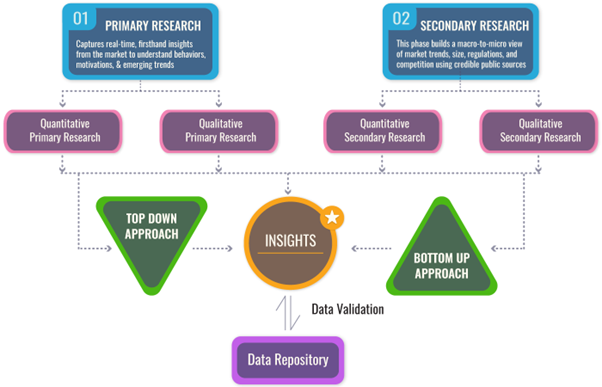
We follow a comprehensive, multi-phase research framework designed to deliver accurate, strategic, and decision-ready intelligence. Our process integrates primary and secondary research , both quantitative and qualitative , along with dual modeling techniques ( top-down and bottom-up) and a final layer of validation through our proprietary in-house repository.
PRIMARY RESEARCH
Primary research captures real-time, firsthand insights from the market to understand behaviors, motivations, and emerging trends.
1. Quantitative Primary Research
Objective: Generate statistically significant data directly from market participants.
Approaches:- Structured surveys with customers, distributors, and field agents
- Mobile-based data collection for point-of-sale audits and usage behavior
- Phone-based interviews (CATI) for market sizing and product feedback
- Online polling around industry events and digital campaigns
- Purchase frequency by customer type
- Channel performance across geographies
- Feature demand by application or demographic
2. Qualitative Primary Research
Objective: Explore decision-making drivers, pain points, and market readiness.
Approaches:- In-depth interviews (IDIs) with executives, product managers, and key decision-makers
- Focus groups among end users and early adopters
- Site visits and observational research for consumer products
- Informal field-level discussions for regional and cultural nuances
SECONDARY RESEARCH
This phase helps establish a macro-to-micro understanding of market trends, size, regulation, and competitive dynamics, sourced from credible and public domain information.
1. Quantitative Secondary Research
Objective: Model market value and segment-level forecasts based on published data.
Sources include:- Financial reports and investor summaries
- Government trade data, customs records, and regulatory statistics
- Industry association publications and economic databases
- Channel performance and pricing data from marketplace listings
- Revenue splits, pricing trends, and CAGR estimates
- Supply-side capacity and volume tracking
- Investment analysis and funding benchmarks
2. Qualitative Secondary Research
Objective: Capture strategic direction, innovation signals, and behavioral trends.
Sources include:- Company announcements, roadmaps, and product pipelines
- Publicly available whitepapers, conference abstracts, and academic research
- Regulatory body publications and policy briefs
- Social and media sentiment scanning for early-stage shifts
- Strategic shifts in market positioning
- Unmet needs and white spaces
- Regulatory triggers and compliance impact
DUAL MODELING: TOP-DOWN + BOTTOM-UP
To ensure robust market estimation, we apply two complementary sizing approaches:
Top-Down Modeling:- Start with broader industry value (e.g., global or regional TAM)
- Apply filters by segment, geography, end-user, or use case
- Adjust with primary insights and validation benchmarks
- Ideal for investor-grade market scans and opportunity mapping
- Aggregate from the ground up using sales volumes, pricing, and unit economics
- Use internal modeling templates aligned with stakeholder data
- Incorporate distributor-level or region-specific inputs
- Most accurate for emerging segments and granular sub-markets
DATA VALIDATION: IN-HOUSE REPOSITORY
We close the loop with proprietary data intelligence built from ongoing projects, industry monitoring, and historical benchmarking. This repository includes:
- Multi-sector market and pricing models
- Key trendlines from past interviews and forecasts
- Benchmarked adoption rates, churn patterns, and ROI indicators
- Industry-specific deviation flags and cross-check logic
- Catches inconsistencies early
- Aligns projections across studies
- Enables consistent, high-trust deliverables