

Global Probiotic Cosmetics Market Size and Forecast (2025–2033), Global and Regional Growth, Trend, Share and Industry Analysis Report Coverage: By Product (Skin Care, Hair Care), By Distribution Channel (Hypermarkets & Supermarkets, Pharmacy & Drug Stores, E-commerce, Others), and Geography
2026-01-02
Consumer Products
Jaya Bundele (Research Analyst)
Description
Probiotic
Cosmetics Market Overview
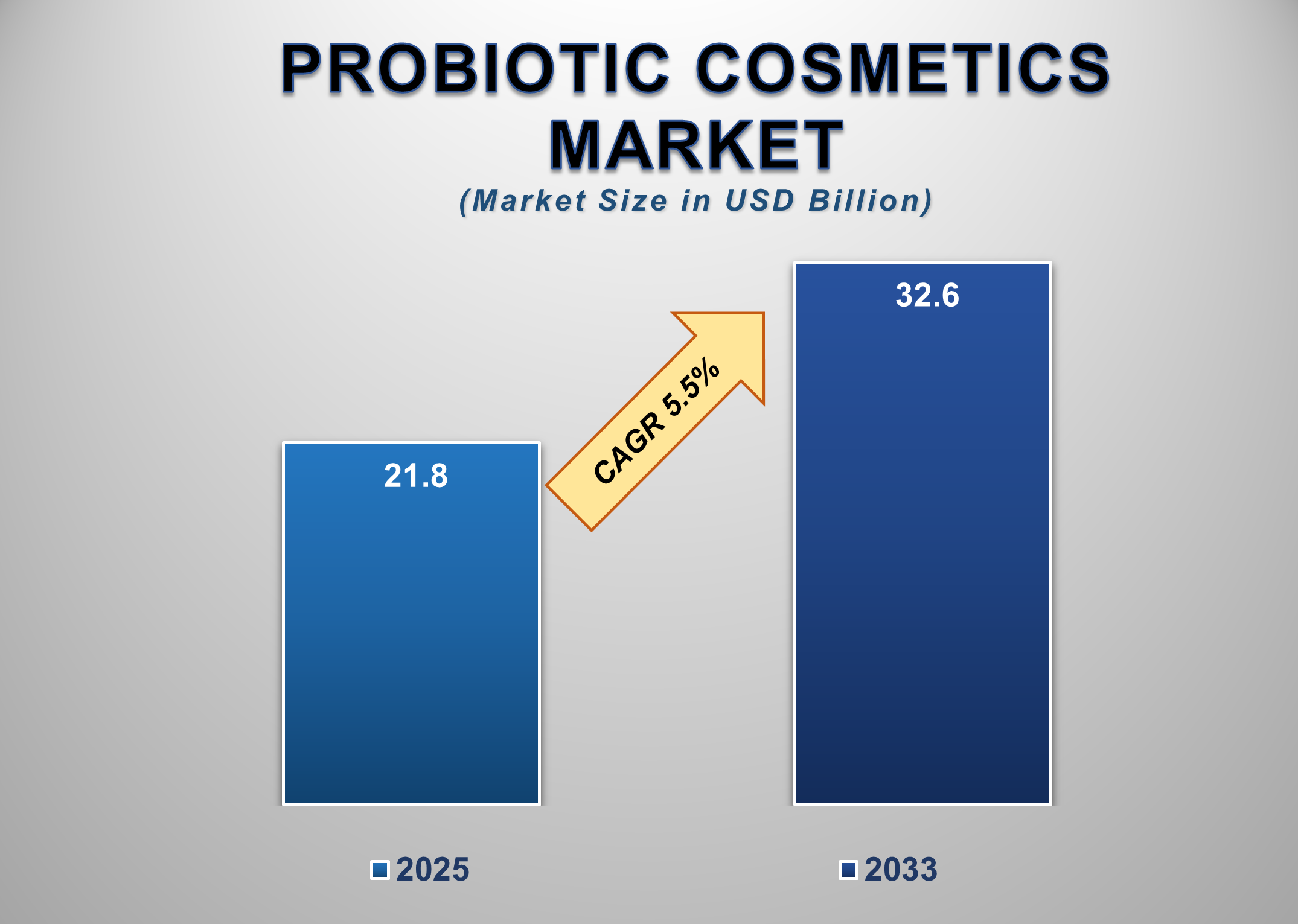
The global Probiotic Cosmetics Market is witnessing sustained expansion as consumers increasingly prioritize microbiome-friendly skincare and personal care solutions rooted in natural, functional, and science-backed ingredients. The market, valued at USD 21.8 billion in 2025, is projected to reach USD 32.6 billion by 2033, expanding at a CAGR of 5.5%. This growth is underpinned by rising awareness regarding the skin microbiome’s role in maintaining barrier function, preventing acne and inflammation, and enhancing overall skin health. Consumers are shifting away from harsh chemical-based cosmetics toward formulations infused with probiotics, prebiotics, and postbiotics, leading to strong traction for premium skincare brands focused on holistic skin wellness.
Additionally,
rising urban pollution levels, lifestyle-related skin disorders, and growing
demand for clean-label and health-positioned beauty products are driving
product innovation. Brands are increasingly launching serums, cleansers,
moisturizers, masks, shampoos, and facial care formulations enriched with live
cultures or fermented actives. At the same time, the influence of social media,
beauty influencers, and dermatology-backed claims are boosting consumer acceptance. E-commerce platforms and
specialty stores are expanding product visibility across urban and semi-urban
markets. As personalization, bio-fermentation, and microbiome diagnostics
evolve, probiotic cosmetics are expected to become a mainstream segment within
the global beauty and personal care industry.
Probiotic Cosmetics Market Drivers and
Opportunities
Rising Skin Sensitivity
and Microbiome Awareness Are Driving Significant Growth in the Probiotic
Cosmetics Market
The
increasing prevalence of skin sensitivity, eczema, dermatitis, and acne
resulting from pollution exposure, chemical-laden cosmetics, and lifestyle
stressors is significantly driving demand for probiotic-infused cosmetic
formulations. Consumers today are becoming more skincare-aware and educated
about the importance of maintaining a balanced skin microbiome, which has
shifted preferences toward microbiome-restoring and barrier-strengthening
products. As a result, probiotics, postbiotics, and prebiotics have emerged as
key ingredients that can help soothe inflammation, restore flora, and support
long-term skin health. Dermatologists and aesthetic practitioners are
increasingly recommending probiotic-based skincare for conditions such as acne,
rosacea, and barrier dysfunction, enhancing credibility and adoption. In
parallel, the global rise in the clean beauty movement and demand for natural
and bioactive ingredients has accelerated the shift from chemical-heavy
cosmetics to functional and therapeutic beauty solutions. This trend is
particularly strong among millennials and Gen Z consumers who prioritize
ingredient transparency, product efficacy, and holistic wellness. Leading
brands are promoting clinically validated claims, sustainable formulations, and
irritation-free product lines, further supporting market expansion. The
increasing popularity of minimalistic skincare routines also favors probiotic
cosmetics, as these formulations offer multiple benefits: hydration, repair, anti-inflammatory action, and protection
in fewer steps. As awareness deepens, probiotic cosmetics are becoming
essential for sensitive skin management and preventative skincare.
Growing Demand for
Clean-Label, Natural, and Functional Beauty Products Is Fueling Market
Expansion
Consumer
preference for clean-label and natural beauty products continues to rise,
creating favorable conditions for probiotic cosmetics, which align with key
purchasing drivers such as transparency, safety, and sustainability. The global
clean beauty movement has pushed brands to eliminate harsh preservatives,
alcohols, sulfates, parabens, and synthetic fragrances, ingredients known to disturb the skin microbiome. In
response, product developers are formulating cosmetics enriched with naturally
derived probiotics and fermented extracts that deliver multi-functional
benefits. These include improved hydration, anti-aging properties, enhanced
elasticity, and protection against environmental stressors. The rising
health-conscious population is also increasingly demanding multifunctional
beauty solutions that merge cosmetic and therapeutic benefits. Probiotic
cosmetics fit neatly into this niche by offering scientifically supported
outcomes without synthetic chemicals. Manufacturers are using green chemistry,
biotechnology, and fermentation-based processes to design high-performance
products that meet both regulatory standards and consumer expectations.
Marketing narratives emphasizing science, purity, and results are also
strengthening adoption, particularly in North America and Europe. Furthermore,
the move toward vegan, cruelty-free, and sustainable personal care products has
boosted the popularity of probiotics, as they are compatible with plant-based
and environmentally responsible formulations. With more brands entering the
segment and offering differentiated microbiome-friendly product lines, the
probiotic cosmetics market is set to witness consistent demand from clean
beauty-driven consumers worldwide.
Emerging Economies’
Rising Beauty Spending and Online Retail Growth Are Poised to Create
Significant Opportunities in the Probiotic Cosmetics Market Worldwide
Rapid
economic development in emerging markets across Asia-Pacific, Latin America,
and the Middle East presents substantial growth opportunities for probiotic
cosmetic brands. Rising disposable incomes, increasing urbanization, and a
growing young population with a strong
interest in premium skincare are fueling market potential. Consumers in these
regions are becoming more aware of skin health, microbiome science, and the
advantages of functional beauty products, enabling probiotic cosmetics to gain
fast traction. Additionally, improved access to global beauty trends through
social media and online platforms is accelerating adoption. E-commerce growth
represents another major opportunity. Online skincare penetration is expanding
rapidly due to aggressive digital marketing, influencer collaborations, and
brand-driven educational campaigns on ingredient efficacy. Probiotic cosmetic
brands benefit significantly from online channels because they allow detailed
product storytelling, ingredient explanation, and personalized recommendations
critical for consumer trust in microbiome-related formulations. Local and
regional players are also entering the segment with affordable product lines
tailored to climate-specific skin concerns,
such as humidity-related breakouts or pollution-induced sensitivity. As
cross-border e-commerce expands, consumers in emerging regions are gaining
easier access to global brands, further accelerating market expansion.
Together, these factors are expected to create high-growth opportunities for
international and domestic firms in the probiotic cosmetics landscape.
Probiotic Cosmetics
Market Scope
|
Report Attributes |
Description |
|
Market Size in 2025 |
USD 21.8 Billion |
|
Market Forecast in 2033 |
USD 32.6 Billion |
|
CAGR % 2025-2033 |
5.5% |
|
Base Year |
2024 |
|
Historic Data |
2020-2024 |
|
Forecast Period |
2025-2033 |
|
Report USP |
Production, Consumption,
company share, company heatmap, company production Capacity, growth factors,
and more |
|
Segments Covered |
●
By Product ●
By Distribution
Channel |
|
Regional Scope |
●
North America ●
Europe ●
APAC ●
Latin America ●
Middle East and
Africa |
|
Country Scope |
1)
U.S. 2)
Canada 3)
Germany 4)
UK 5)
France 6)
Spain 7)
Italy 8)
Switzerland 9)
China 10)
Japan 11)
India 12)
Australia 13)
South Korea 14)
Brazil 15)
Mexico 16)
Argentina 17)
South Africa 18)
Saudi Arabia 19)
UAE |
Probiotic Cosmetics
Market Report Segmentation Analysis
The global Probiotic Cosmetics
market industry analysis is segmented by product, by distribution channel, and
by region.
The Skin Care Segment
Accounted for the Largest Market Share in the Global Probiotic Cosmetics Market
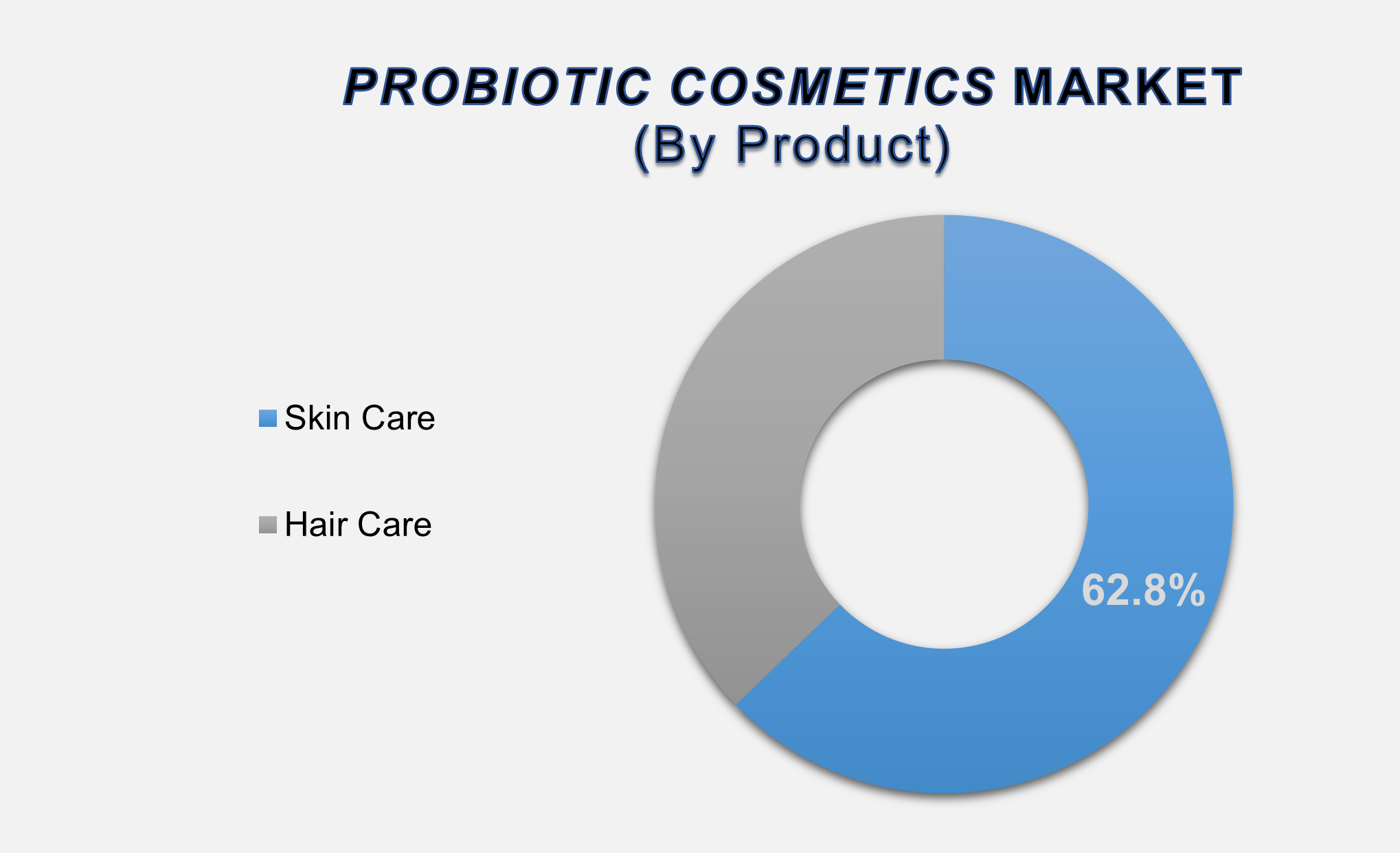
The skin care segment dominated the probiotic cosmetics market with a substantial 62.8% share in 2025, driven by rising awareness of microbiome-focused skincare and increasing consumer shift toward natural and functional beauty solutions. Skin care products, including moisturizers, face serums, cleansers, masks, and anti-aging creams, are the most suitable formulations for probiotics because of their direct interaction with the skin microbiota. Growing concerns about dryness, sensitivity, acne, inflammation, and premature aging have led consumers to seek microbiome-balancing solutions, which boost demand for probiotic-based skin care. Dermatologist endorsements, clinically validated results, and the rising trend of minimalistic skincare routines further enhance adoption. Leading brands continue to innovate using live cultures, lysates, and fermented actives to improve hydration, strengthen the skin barrier, and protect against pollution-induced damage. As beauty consumers become increasingly ingredient-aware and prioritize long-term skin health benefits, the skin care segment is expected to maintain its leadership throughout the forecast period.
The Hypermarkets &
Supermarkets Segment Accounted for the Largest Market Share in the Global
Probiotic Cosmetics Market
Hypermarkets
and supermarkets held the largest share among distribution channels in 2025 due
to their strong retail footprint, extensive consumer reach, and ability to
offer a wide range of probiotic cosmetics under one roof. These outlets provide
high product visibility, access to premium international brands, and
opportunities for in-store promotions, making them a preferred choice for
consumers seeking reliable and authentic beauty products. As probiotic
cosmetics continue to enter mainstream retail, supermarkets have become key
points for educating consumers through product displays, sampling, and
dermatologist-endorsed packaging. The availability of skin care and hair care
products in various price ranges also supports mass adoption. Additionally, rising
urbanization in emerging markets is increasing footfall in hypermarket chains,
further expanding sales. Despite the rapid rise of e-commerce, physical stores
remain crucial for consumers who prefer to evaluate beauty products through
texture, fragrance, and packaging before purchase. This segment is expected to
remain dominant, particularly in North America, Europe, and parts of Asia.
The following segments are
part of an in-depth analysis of the global Probiotic Cosmetics Market:
|
Market
Segments |
|
|
By Product |
●
Skin Care ●
Hair Care |
|
By
Distribution Channel |
●
Hypermarket/Supermarket ●
Pharmacies
and Drug Stores ●
E-commerce ●
Others |
Probiotic Cosmetics Market Share Analysis by
Region
The North America region
is projected to hold the largest share of the global Probiotic Cosmetics market
over the forecast period.
North America dominated the
global probiotic cosmetics market in 2025, accounting for 38.9% market share.
The region benefits from high consumer awareness of microbiome science, strong
demand for premium skincare, and early adoption of clean-label, natural, and
functional cosmetic products. The presence of established beauty brands, strong
dermatology networks, and advanced retail infrastructure further supports
market growth. The U.S. leads the region due to strong spending on skincare,
rapid product innovation, and widespread e-commerce penetration.
Asia-Pacific
is expected to grow at the highest CAGR during the forecast period, driven by
rising beauty consciousness, rapid urbanization, and increasing disposable
income in countries such as China, Japan, South Korea, and India. The region is
also a global hub for skincare innovation, particularly in fermented beauty and
natural activities, both core elements of probiotic formulations. K-beauty and
J-beauty trends continue to influence global probiotic-based product launches.
Probiotic Cosmetics Market Competition Landscape
Analysis
The probiotic cosmetics market is moderately
competitive, with established global brands and emerging microbiome-focused
companies driving innovation. Key players, including Esse Skincare, Estee
Lauder Companies, Aurelia London, L’Oréal, Unilever, Glowbiotics, TULA Life,
Inc., and Eminence Organic Skin Care, are investing in microbiome research,
bio-fermentation technologies, sustainable formulations, and
dermatologist-validated claims to strengthen their market presence.
Global Probiotic Cosmetics Market Recent
Developments News:
- In September 2024, Unilever
launched the POND’S SKIN INSTITUTE Microbiome Analyzer, a diagnostic tool
that provides personalized skincare recommendations within 60 minutes by
analyzing an individual’s skin microbiome. Piloted in partnership with
Watsons in the Philippines, the technology leverages Unilever’s microbiome
research to offer science-backed, tailored product suggestions, meeting
growing consumer demand for precision skincare.
- In December 2023, L'Oréal
acquired Lactobio, a Danish biotechnology company specializing in live
probiotics and microbiome research. This strategic acquisition enhances
L'Oréal’s capabilities in developing microbiome-based cosmetic solutions,
integrating live bacteria formulations to create advanced skincare and
haircare products rooted in scientific innovation.
The Global Probiotic Cosmetics Market is
dominated by a few large companies, such as
●
Esse Skincare
●
Estee Lauder
Companies, Inc.
●
Aurelia London
(H&H Group)
●
L’oreal S.A.
●
TULA Life, Inc.
●
EMINENCE ORGANIC SKIN
CARE
●
Unilever
●
LaFlore Probiotic
Skincare
●
GLOWBIOTICS
●
The Clorox Company
● Other Prominent Players
Frequently Asked Questions
Jaya Bundele (Research Analyst)
Jaya Bundele is a skilled Research Analyst with 4+ years of experience in market intelligence, consumer insights, competitive analysis, and industry forecasting across the consumer goods, agriculture, and food & beverage sectors. She specializes in market sizing, trend analysis, growth opportunity mapping, and strategic secondary research for global and regional markets.
Her expertise lies in transforming complex industry data into actionable business strategies that help organizations identify emerging trends, understand customer behavior, and gain a competitive edge. With a strong focus on data-driven insights, business intelligence, and future market trends, Jaya delivers high-quality research solutions aligned with evolving industry demands and market dynamics.
1. Global Probiotic Cosmetics
Market Introduction and Market Overview
1.1.
Objectives
of the Study
1.2.
Global
Probiotic Cosmetics Market Scope and Market Estimation
1.2.1.Global Probiotic Cosmetics
Overall Market Size (US$ Bn), Market CAGR (%), Market forecast (2025 - 2033)
1.2.2.Global Probiotic Cosmetics
Market Revenue Share (%) and Growth Rate (Y-o-Y) from 2020 - 2033
1.3.
Market
Segmentation
1.3.1.Product of Global Probiotic
Cosmetics Market
1.3.2.Distribution Channel of
Global Probiotic Cosmetics Market
1.3.3.Region of Global Probiotic
Cosmetics Market
2. Executive
Summary
2.1.
Demand
Side Trends
2.2.
Key
Market Trends
2.3.
Market
Demand (US$ Bn) Analysis 2020 – 2024 and Forecast, 2025 – 2033
2.4.
Demand
and Opportunity Assessment
2.5.
Demand
Supply Scenario
2.6.
Market
Dynamics
2.6.1.Drivers
2.6.2.Limitations
2.6.3.Opportunities
2.6.4.Impact Analysis of Drivers
and Restraints
2.7.
Emerging
Trends for Probiotic Cosmetics Market
2.8.
Porter’s
Five Forces Analysis
2.9.
PEST
Analysis
2.10.
Key
Regulation
3. Global
Probiotic Cosmetics Market Estimates
& Historical Trend Analysis (2020 - 2024)
4. Global
Probiotic Cosmetics Market Estimates
& Forecast Trend Analysis, by Product
4.1.
Global
Probiotic Cosmetics Market Revenue (US$ Bn) Estimates and Forecasts, by Product,
2020 - 2033
4.1.1.Skin Care
4.1.2.Hair Care
5. Global
Probiotic Cosmetics Market Estimates
& Forecast Trend Analysis, by Distribution Channel
5.1.
Global
Probiotic Cosmetics Market Revenue (US$ Bn) Estimates and Forecasts, by Distribution
Channel, 2020 - 2033
5.1.1.Hypermarket/Supermarket
5.1.2.Pharmacy and Drug Stores
5.1.3.E-commerce
5.1.4.Others
6. Global
Probiotic Cosmetics Market Estimates
& Forecast Trend Analysis, by Region
6.1.
Global
Probiotic Cosmetics Market Revenue (US$ Bn) Estimates and Forecasts, by Region,
2020 - 2033
6.1.1.North America
6.1.2.Europe
6.1.3.Asia Pacific
6.1.4.Middle East & Africa
6.1.5.Latin America
7. North America Probiotic
Cosmetics Market: Estimates &
Forecast Trend Analysis
7.1.
North
America Probiotic Cosmetics Market Assessments & Key Findings
7.1.1.North America Probiotic
Cosmetics Market Introduction
7.1.2.North America Probiotic
Cosmetics Market Size Estimates and Forecast (US$ Billion) (2020 - 2033)
7.1.2.1. By Product
7.1.2.2. By Distribution
Channel
7.1.2.3.
By
Country
7.1.2.3.1. The U.S.
7.1.2.3.2. Canada
8. Europe Probiotic
Cosmetics Market: Estimates &
Forecast Trend Analysis
8.1.
Europe
Probiotic Cosmetics Market Assessments & Key Findings
8.1.1.Europe Probiotic Cosmetics
Market Introduction
8.1.2.Europe Probiotic Cosmetics
Market Size Estimates and Forecast (US$ Billion) (2020 - 2033)
8.1.2.1. By Product
8.1.2.2. By Distribution
Channel
8.1.2.3.
By
Country
8.1.2.3.1.
Germany
8.1.2.3.2.
Italy
8.1.2.3.3.
U.K.
8.1.2.3.4.
France
8.1.2.3.5.
Spain
8.1.2.3.6.
Switzerland
8.1.2.3.7. Rest
of Europe
9. Asia Pacific Probiotic
Cosmetics Market: Estimates &
Forecast Trend Analysis
9.1.
Asia
Pacific Market Assessments & Key Findings
9.1.1.Asia Pacific Probiotic
Cosmetics Market Introduction
9.1.2.Asia Pacific Probiotic
Cosmetics Market Size Estimates and Forecast (US$ Billion) (2020 - 2033)
9.1.2.1. By Product
9.1.2.2. By Distribution
Channel
9.1.2.3.
By
Country
9.1.2.3.1.
China
9.1.2.3.2.
Japan
9.1.2.3.3.
India
9.1.2.3.4.
Australia
9.1.2.3.5.
South
Korea
9.1.2.3.6. Rest of Asia Pacific
10. Middle East & Africa Probiotic
Cosmetics Market: Estimates &
Forecast Trend Analysis
10.1.
Middle
East & Africa Market Assessments & Key Findings
10.1.1.
Middle East & Africa Probiotic Cosmetics Market
Introduction
10.1.2.
Middle East & Africa Probiotic Cosmetics Market Size Estimates
and Forecast (US$ Billion) (2020 - 2033)
10.1.2.1. By Product
10.1.2.2. By Distribution
Channel
10.1.2.3.
By
Country
10.1.2.3.1. UAE
10.1.2.3.2. Saudi
Arabia
10.1.2.3.3. South
Africa
10.1.2.3.4. Rest
of MEA
11. Latin America
Probiotic Cosmetics Market: Estimates
& Forecast Trend Analysis
11.1.
Latin
America Market Assessments & Key Findings
11.1.1.
Latin
America Probiotic Cosmetics Market Introduction
11.1.2.
Latin
America Probiotic Cosmetics Market Size Estimates and Forecast (US$ Billion) (2020
- 2033)
11.1.2.1. By Product
11.1.2.2. By Distribution
Channel
11.1.2.3.
By
Country
11.1.2.3.1. Brazil
11.1.2.3.2. Argentina
11.1.2.3.3. Mexico
11.1.2.3.4. Rest
of LATAM
12. Country Wise Market:
Introduction
13.
Competition
Landscape
13.1.
Global
Probiotic Cosmetics Market Product Mapping
13.2.
Global
Probiotic Cosmetics Market Concentration Analysis, by Leading Players /
Innovators / Emerging Players / New Entrants
13.3.
Global
Probiotic Cosmetics Market Tier Structure Analysis
13.4.
Global
Probiotic Cosmetics Market Concentration & Company Market Shares (%)
Analysis, 2024
14.
Company
Profiles
14.1.
Esse Skincare
14.1.1.
Company
Overview & Key Stats
14.1.2.
Financial
Performance & KPIs
14.1.3.
Product
Portfolio
14.1.4.
SWOT
Analysis
14.1.5.
Business
Strategy & Recent Developments
* Similar details would be provided for all the players
mentioned below
14.2. Estee
Lauder Companies, Inc.
14.3. Aurelia
London (H&H Group)
14.4. L’oreal
S.A.
14.5. TULA
Life, Inc.
14.6. EMINENCE
ORGANIC SKIN CARE
14.7. Unilever
14.8. LaFlore
Probiotic Skincare
14.9. GLOWBIOTICS
14.10. The
Clorox Company
14.11. Others
15. Research
Methodology
15.1.
External
Transportations / Databases
15.2.
Internal
Proprietary Database
15.3.
Primary
Research
15.4.
Secondary
Research
15.5.
Assumptions
15.6.
Limitations
15.7.
Report
FAQs
16. Research
Findings & Conclusion
Our Research Methodology
"Insight without rigor is just noise."
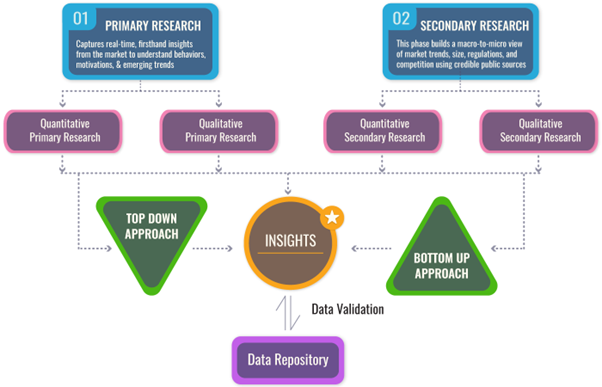
We follow a comprehensive, multi-phase research framework designed to deliver accurate, strategic, and decision-ready intelligence. Our process integrates primary and secondary research , both quantitative and qualitative , along with dual modeling techniques ( top-down and bottom-up) and a final layer of validation through our proprietary in-house repository.
PRIMARY RESEARCH
Primary research captures real-time, firsthand insights from the market to understand behaviors, motivations, and emerging trends.
1. Quantitative Primary Research
Objective: Generate statistically significant data directly from market participants.
Approaches:- Structured surveys with customers, distributors, and field agents
- Mobile-based data collection for point-of-sale audits and usage behavior
- Phone-based interviews (CATI) for market sizing and product feedback
- Online polling around industry events and digital campaigns
- Purchase frequency by customer type
- Channel performance across geographies
- Feature demand by application or demographic
2. Qualitative Primary Research
Objective: Explore decision-making drivers, pain points, and market readiness.
Approaches:- In-depth interviews (IDIs) with executives, product managers, and key decision-makers
- Focus groups among end users and early adopters
- Site visits and observational research for consumer products
- Informal field-level discussions for regional and cultural nuances
SECONDARY RESEARCH
This phase helps establish a macro-to-micro understanding of market trends, size, regulation, and competitive dynamics, sourced from credible and public domain information.
1. Quantitative Secondary Research
Objective: Model market value and segment-level forecasts based on published data.
Sources include:- Financial reports and investor summaries
- Government trade data, customs records, and regulatory statistics
- Industry association publications and economic databases
- Channel performance and pricing data from marketplace listings
- Revenue splits, pricing trends, and CAGR estimates
- Supply-side capacity and volume tracking
- Investment analysis and funding benchmarks
2. Qualitative Secondary Research
Objective: Capture strategic direction, innovation signals, and behavioral trends.
Sources include:- Company announcements, roadmaps, and product pipelines
- Publicly available whitepapers, conference abstracts, and academic research
- Regulatory body publications and policy briefs
- Social and media sentiment scanning for early-stage shifts
- Strategic shifts in market positioning
- Unmet needs and white spaces
- Regulatory triggers and compliance impact
DUAL MODELING: TOP-DOWN + BOTTOM-UP
To ensure robust market estimation, we apply two complementary sizing approaches:
Top-Down Modeling:- Start with broader industry value (e.g., global or regional TAM)
- Apply filters by segment, geography, end-user, or use case
- Adjust with primary insights and validation benchmarks
- Ideal for investor-grade market scans and opportunity mapping
- Aggregate from the ground up using sales volumes, pricing, and unit economics
- Use internal modeling templates aligned with stakeholder data
- Incorporate distributor-level or region-specific inputs
- Most accurate for emerging segments and granular sub-markets
DATA VALIDATION: IN-HOUSE REPOSITORY
We close the loop with proprietary data intelligence built from ongoing projects, industry monitoring, and historical benchmarking. This repository includes:
- Multi-sector market and pricing models
- Key trendlines from past interviews and forecasts
- Benchmarked adoption rates, churn patterns, and ROI indicators
- Industry-specific deviation flags and cross-check logic
- Catches inconsistencies early
- Aligns projections across studies
- Enables consistent, high-trust deliverables