

Protein-fortified Food Products Market Size and Forecast (2026 - 2034) | Report Coverage: By Nature (Conventional and Organic), By Product Type (Protein Bars, Protein-fortified Dairy Products, Protein Beverages, Bakery and Snack Products, Breakfast Cereals and Breakfast Products, Protein-enriched Ready-to-eat Meals, Meat and Meat Alternatives, and Others), By Protein Source (Animal-based Protein, Plant-based Protein, and Alternative Protein Sources), By Distribution Channel (Supermarkets and Hypermarkets, Convenience Stores, Specialty Nutrition Stores, Online Retail, and Others), and Geography
2026-11-05
Consumer Products
Aishwarya Panbude (Research Analyst)
Description
Protein-fortified Food Products Market Overview
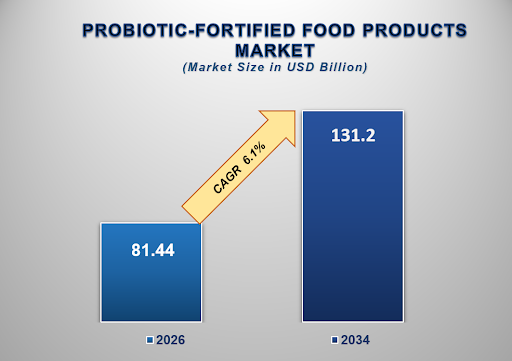
The global protein-fortified food products market is projected to reach USD 81.44 billion in 2026 and USD 131.24 billion by 2034, registering a compound annual growth rate (CAGR) of 6.1% during the forecast period. The market is expanding as consumers increasingly prioritize protein intake as part of everyday nutrition, active lifestyles, weight-management routines, and broader wellness goals. Protein-fortified food products include conventional food items that have been formulated or modified to provide additional protein compared with their standard counterparts. These products allow consumers to increase protein consumption through familiar foods rather than relying exclusively on protein powders or specialized sports nutrition supplements.
Protein fortification has moved beyond its traditional association with athletes and bodybuilders. Consumers are increasingly encountering protein-enriched products in breakfast foods, dairy products, snack bars, bakery items, beverages, and convenient meals. This broader availability is making protein a more visible feature of everyday food purchasing decisions. Manufacturers are responding by incorporating additional protein into familiar products while attempting to preserve taste, texture, affordability, and convenience. The ability to integrate protein into established eating habits is an important factor supporting the category's commercial development.
Growing interest in muscle maintenance, satiety, active aging, and balanced nutrition is influencing consumer preferences. Protein is an essential macronutrient required for normal body functions, including the maintenance and repair of body tissues. Consumers with different lifestyles may therefore seek foods that help them meet their individual protein requirements. However, appropriate protein intake varies according to age, activity level, health status, and overall dietary needs. Protein-fortified products are one way of increasing protein intake, but their nutritional value should also be assessed in relation to total calories, added sugars, sodium, saturated fat, fiber, and the broader composition of the diet.
Product innovation is changing the structure of the market. Manufacturers are developing protein-enriched versions of familiar foods, including yogurt, milk-based beverages, cereal products, snack bars, breakfast mixes, and convenient meals. Some companies are using whey, casein, and other dairy-derived proteins, while others are incorporating soy, pea, rice, and other plant-based protein ingredients. The growing variety of protein sources allows brands to serve consumers with different dietary preferences, including vegetarian, vegan, and lactose-avoiding consumers, although the suitability of a product depends on its complete ingredient composition.
The market is also being influenced by changing food-purchasing behavior. Busy lifestyles have increased interest in portable snacks, convenient breakfast options, ready-to-drink beverages, and products that can be consumed between meals. Protein-fortified products can combine convenience with a specific nutritional proposition, making them attractive to consumers who want to incorporate protein into more occasions throughout the day. Manufacturers are using single-serving packs, resealable packaging, portion-controlled products, and multipacks to improve convenience and encourage repeat purchases.
Retail accessibility is another important factor. Protein-fortified foods are sold through supermarkets, hypermarkets, convenience stores, specialty nutrition retailers, online marketplaces, and direct-to-consumer platforms. Mainstream grocery distribution can introduce these products to consumers who do not regularly purchase sports nutrition products, while specialty stores continue to serve consumers seeking more targeted formulations. Online channels also allow manufacturers to communicate protein content, ingredient sources, dietary suitability, and other product attributes directly to consumers.
The competitive environment is becoming more complex as established food manufacturers, dairy companies, sports nutrition businesses, snack brands, and emerging functional food companies enter overlapping product categories. Companies compete through protein content, ingredient quality, flavor, texture, packaging, price, and brand positioning. Long-term success depends on delivering a credible nutritional proposition without compromising the sensory qualities that influence food purchases. Products that balance protein content with taste, affordability, and convenience are better positioned to become part of consumers' regular diets.
Protein-fortified Food Products Market Size Analysis
The global protein-fortified food products market is expected to increase from USD 81.44 billion in 2026 to USD 131.24 billion by 2034, representing a CAGR of 6.1% during the forecast period. This expansion reflects the growing presence of protein-enriched foods across mainstream grocery categories, increased demand for convenient nutrition, and product development focused on different protein sources and consumption occasions.
The market's development is supported by the transition from narrowly targeted sports nutrition products toward foods that appeal to a wider consumer base. Protein bars and specialized nutrition products remain important, but manufacturers are also incorporating protein into familiar breakfast foods, dairy products, snacks, beverages, and ready-to-eat formats. This expansion provides consumers with more opportunities to obtain protein through their preferred eating habits and allows manufacturers to compete across multiple product categories.
Protein source selection is becoming a significant factor in product differentiation. Dairy-derived proteins are valued for their functional properties and established use in food manufacturing, while plant-based proteins provide alternatives for consumers seeking products aligned with vegetarian, vegan, or other dietary preferences. However, proteins differ in their amino acid composition, functionality, taste, solubility, and suitability for specific applications. Manufacturers must therefore select ingredients according to the requirements of the finished product rather than relying on protein quantity alone.
The market is also influenced by the need to maintain product quality as protein content increases. Adding protein can affect texture, moisture retention, flavor, color, and processing behavior. For example, protein enrichment in baked goods may influence dough characteristics, while protein addition to beverages can affect solubility and stability. Successful product development requires balancing nutritional objectives with food science, processing requirements, and consumer acceptance.
The projected expansion creates opportunities for manufacturers across conventional and organic product lines, animal-based and plant-based protein sources, and multiple retail channels. However, commercial performance will depend on factors such as ingredient costs, formulation efficiency, consumer willingness to pay, product availability, and the ability to deliver a satisfying eating experience.
Protein-fortified Food Products Market Definition
The protein-fortified food products market comprises food products formulated to contain additional protein compared with comparable conventional products or designed to provide a higher protein content as a defining nutritional characteristic. These products may include protein bars, dairy products, beverages, bakery items, snacks, breakfast foods, ready-to-eat meals, and selected meat or meat-alternative products.
Protein fortification can be achieved through the addition of animal-derived ingredients such as whey protein, casein, milk protein, egg protein, or other suitable protein ingredients. Plant-based formulations may use soy, pea, rice, wheat, and other protein sources. Depending on the product, manufacturers may use one protein source or combine several ingredients to achieve a desired nutritional profile, texture, flavor, and manufacturing performance.
The market includes products sold through supermarkets, hypermarkets, convenience stores, specialty nutrition retailers, online marketplaces, and other distribution channels. Demand is influenced by consumer interest in protein intake, convenience, taste, nutritional composition, dietary preferences, affordability, and brand credibility.
Protein-fortified food products should be distinguished from standalone protein powders and dietary supplements when the latter are not incorporated into a conventional food product. Nevertheless, some research providers include sports nutrition products or broader protein supplements within their market definitions. Market estimates can therefore vary depending on the categories covered by a particular study.
Protein-fortified Food Products Market Drivers and Opportunities
Driver 1: Increasing Consumer Focus on Protein Intake, Active Lifestyles, and Everyday Nutrition
Growing attention to protein intake is a major factor supporting the protein-fortified food products market. Consumers increasingly recognize protein as an essential component of a balanced diet and are looking for practical ways to include it in their daily meals. This interest extends across different age groups and lifestyles, including physically active consumers, working professionals, individuals seeking convenient meal options, and older adults concerned with maintaining muscle function as they age.
Historically, high-protein foods were strongly associated with bodybuilding, athletic performance, and specialized sports nutrition. The category has since expanded into mainstream food retail, where protein-enriched products are positioned for breakfast, snacking, meal replacement, and general nutritional convenience. This transition is increasing the number of occasions in which consumers encounter protein-fortified foods. A consumer who may not purchase a sports nutrition shake could still choose a high-protein yogurt, cereal, snack bar, or ready-to-drink beverage as part of an ordinary meal or snack.
The growing popularity of active lifestyles is also supporting demand. Consumers participating in fitness activities may seek foods that help them meet their daily protein requirements, while individuals with demanding schedules may value products that combine convenience with nutritional content. Protein-fortified products can serve these preferences when they provide a practical serving size and fit into an individual's overall dietary pattern.
Interest in satiety and weight management is another influence on purchasing decisions. Protein is commonly discussed in relation to fullness and dietary planning, encouraging some consumers to choose higher-protein foods when selecting snacks or meals. Manufacturers are responding with products that emphasize protein content while also promoting portion convenience. However, the suitability of a product for weight management depends on its total energy content, ingredients, portion size, and the consumer's broader diet rather than protein content alone.
The aging population in several markets is also encouraging greater attention to nutritional adequacy and muscle maintenance. Some older consumers may find protein-enriched foods useful when they have difficulty meeting their nutritional needs through ordinary meals. This creates opportunities for convenient products with accessible packaging, appropriate portion sizes, and familiar flavors. Products intended for older adults must nevertheless account for individual dietary needs, health circumstances, and any relevant medical advice.
As protein becomes a more familiar part of mainstream food marketing, consumer expectations are also changing. Shoppers increasingly compare protein quantities, serving sizes, ingredients, and nutritional information across competing products. Brands that communicate protein content clearly and provide a balanced nutritional profile can improve their appeal. This growing focus on everyday protein consumption is likely to remain an important driver of product innovation and market expansion.
Driver 2: Product Innovation, Wider Protein Sources, and Mainstream Retail Availability
Product innovation is another important driver of the protein-fortified food products market. Manufacturers are expanding protein enrichment into categories that consumers already purchase, reducing the need to adopt unfamiliar products or significantly change established eating habits. Protein-enriched dairy products, breakfast mixes, cereals, bakery items, snacks, beverages, and ready-to-eat meals demonstrate how manufacturers can incorporate a nutritional proposition into everyday food formats.
The development of new protein sources is broadening product options. Dairy proteins such as whey and casein are widely used because of their established food applications and functional properties. Plant-based proteins, including soy and pea protein, offer alternatives for consumers who prefer plant-derived ingredients. Other sources may be used depending on regional preferences, cost, processing requirements, and the intended characteristics of the finished product.
However, the choice of protein source involves more than nutritional content. Different proteins have distinct solubility, water-binding, emulsification, gelling, and flavor characteristics. These differences can affect the texture of baked goods, the mouthfeel of beverages, and the structure of snack products. Manufacturers must address these technical considerations to ensure that protein fortification does not compromise consumer acceptance.
The market is also benefiting from improved product formats and packaging. Ready-to-drink beverages, single-serving snacks, resealable packs, multipacks, and convenient breakfast products allow consumers to incorporate protein into different daily routines. Manufacturers are experimenting with flavors, ingredient combinations, and portion formats to make protein-enriched foods more appealing to consumers who may otherwise find specialized nutrition products inconvenient or repetitive.
Mainstream retail distribution is reinforcing these developments. Supermarkets and hypermarkets allow protein-fortified foods to compete directly with conventional grocery products, while convenience stores serve consumers seeking portable options. Specialty nutrition stores remain important for targeted products, and online retail provides access to broader assortments. This distribution diversity enables manufacturers to reach consumers across different shopping habits and price points.
Private-label products and competition between established brands are also influencing the market. Retailers may introduce protein-enriched alternatives to established branded products, creating more price points and increasing consumer choice. Brands must therefore compete through taste, nutritional composition, packaging, availability, and credibility rather than relying exclusively on the presence of protein in the product.
Together, product innovation and wider retail availability are helping transform protein fortification from a specialist nutritional feature into a more common element of food product development. Companies that successfully combine nutritional value with familiar flavors, appropriate pricing, and convenient formats can improve their prospects for sustained consumer demand.
Opportunities: Plant-based Protein Innovation, Localized Food Fortification, and Emerging Consumer Segments
Plant-based protein innovation presents a significant opportunity for manufacturers. Consumers increasingly seek food products that align with vegetarian, vegan, flexitarian, or other dietary preferences. Protein enrichment using soy, pea, rice, wheat, and other plant-derived ingredients allows companies to develop products for these consumers while broadening the range of available protein sources.
Product developers can explore plant-based protein applications across breakfast foods, beverages, snacks, bakery products, and convenient meals. The challenge is to maintain acceptable flavor, texture, solubility, and nutritional quality. Some plant proteins have distinctive flavors or processing characteristics, making ingredient selection and formulation development particularly important. Manufacturers that address these challenges can create products that compete on both nutrition and eating experience.
Localized food fortification provides another opportunity, especially in markets where consumers prefer familiar regional foods. Instead of relying only on imported protein bars and specialized shakes, companies can incorporate protein into established breakfast formats, snack products, dairy foods, and other culturally familiar items. This approach can make protein-enriched foods more accessible to consumers who prefer traditional meals and familiar flavors.
In India, for example, opportunities exist for protein-enriched versions of convenient breakfast foods, dairy products, snack mixes, and ready-to-eat meals. Localized formulations can reflect regional taste preferences, typical eating occasions, and different price expectations. Manufacturers must ensure that fortification does not compromise the traditional product's texture, flavor, preparation method, or affordability.
Another opportunity lies in developing products for consumers whose nutritional requirements or purchasing behavior differ from those of conventional sports nutrition customers. These may include working professionals seeking convenient breakfasts, older adults interested in maintaining nutritional adequacy, and families looking for protein-enriched everyday foods. Product development should focus on clearly defined consumer needs and appropriate nutritional profiles rather than applying the same high-protein positioning to every category.
Organic and clean-label formulations may provide additional differentiation for consumers who prioritize ingredient sourcing, simplicity, or specific production standards. However, organic status does not automatically indicate a higher protein content or superior nutritional quality. Companies must communicate these attributes accurately and ensure that products meet the relevant requirements.
Digital commerce and direct-to-consumer distribution can support these opportunities by allowing brands to test new products, reach niche audiences, and gather consumer feedback. Online channels may also help smaller manufacturers introduce specialized protein-enriched products without immediately requiring broad physical retail distribution.
Long-term opportunity will depend on the ability to combine effective protein fortification with affordable pricing, appealing sensory qualities, reliable ingredient sourcing, and credible nutritional information. Manufacturers that adapt products to local food cultures and consumer requirements can broaden the market beyond traditional sports nutrition and premium wellness categories.
Protein-fortified Food Products Market Scope
Protein-fortified Food Products Market Segmentation Analysis
The protein-fortified food products market is segmented by nature, product type, protein source, and distribution channel. These categories reflect differences in production methods, ingredient selection, food applications, purchasing behavior, and retail availability. Market performance can vary across countries according to consumer preferences, ingredient costs, dietary habits, purchasing power, and the maturity of the functional food sector.
By Nature
The market is segmented into conventional and organic protein-fortified food products. This classification reflects differences in product sourcing, production standards, ingredient eligibility, and consumer positioning. Both categories can contain protein-enriched foods, but organic certification and protein content represent separate product attributes.
Conventional
Conventional protein-fortified foods represent a broad category that includes products manufactured using ingredients and processes permitted under applicable food regulations, without necessarily meeting organic certification requirements. These products can be found across protein bars, dairy foods, beverages, snacks, cereals, bakery products, and ready-to-eat meals.
The segment benefits from broad manufacturing capabilities, established ingredient supply chains, and availability through mainstream retail channels. Conventional products can accommodate a wide range of protein sources and formulation approaches, allowing manufacturers to develop products at different price points. Their commercial performance depends on taste, nutritional composition, brand recognition, pricing, and retail availability.
Conventional products may be particularly relevant to consumers who prioritize protein content and convenience without specifically seeking organic certification. Manufacturers must nevertheless maintain appropriate food safety, labeling, and quality standards and ensure that nutrition claims comply with applicable requirements.
Organic
Organic protein-fortified foods are positioned for consumers who prioritize certified organic ingredients or specific production standards. Depending on the product and jurisdiction, organic formulations must meet applicable requirements for ingredient sourcing, processing, certification, and labeling.
The category may include selected dairy products, snack bars, plant-based foods, and other products formulated using eligible organic ingredients. Manufacturers face formulation challenges when trying to achieve high protein content while maintaining organic certification, desired taste, suitable texture, and acceptable pricing.
Organic positioning can provide product differentiation, particularly among consumers who actively examine ingredient sourcing and production practices. However, organic certification does not automatically mean that a product contains more protein or is nutritionally superior to a conventional equivalent. Brands must communicate the distinction accurately and ensure that their claims reflect the product's actual characteristics.
By Product Type
The market is segmented into protein bars, protein-fortified dairy products, protein beverages, bakery and snack products, breakfast cereals and breakfast products, protein-enriched ready-to-eat meals, meat and meat alternatives, and other products. Product segmentation reflects the variety of food categories into which manufacturers incorporate additional protein.
Protein Bars
Protein bars are portable products formulated to provide a concentrated amount of protein in a convenient serving. They are commonly associated with fitness and sports nutrition but are also purchased as snacks, travel foods, and convenient options between meals.
Manufacturers differentiate protein bars through protein content, protein source, texture, flavor, sweetener selection, coating, and additional ingredients such as nuts, seeds, grains, or fiber. Products may use whey, milk protein, soy, pea, or blended protein ingredients depending on their intended nutritional profile.
The category's development depends on balancing protein content with taste and texture. High protein inclusion can affect firmness, dryness, and flavor, making formulation expertise important. Consumers may also compare total calories, sugar, fiber, and serving size, so a high protein claim alone may not determine purchasing decisions.
Protein-fortified Dairy Products
Protein-fortified dairy products include yogurt, milk, cheese-based products, dairy snacks, and other dairy foods formulated to provide additional protein. Dairy proteins such as whey and casein are commonly used in these products, although the precise formulation varies by application.
The segment benefits from the familiarity of dairy foods and their established role in many consumers' diets. Protein-enriched yogurt and milk products can provide convenient options for breakfast, snacks, or post-exercise consumption. Manufacturers compete through flavor, texture, protein content, packaging, price, and the inclusion of additional nutritional attributes.
Product development requires attention to processing conditions, texture, viscosity, stability, and flavor. Higher protein levels can change the sensory characteristics of dairy products, making formulation and processing adjustments necessary. Lactose-free and other specialized options may broaden the consumer base, although the presence of protein does not automatically make a product suitable for every dietary requirement.
Protein Beverages
Protein beverages include ready-to-drink products, protein-enriched milk-based drinks, plant-based beverages, and other liquid products formulated to provide additional protein. They are purchased for different purposes, including convenience, sports nutrition, meal accompaniment, and everyday nutritional intake.
Ready-to-drink products can appeal to consumers who need a portable option without preparation. Plant-based beverages provide alternatives for selected dietary preferences, while dairy-based formulations may use whey, casein, or milk protein. The performance of each product depends on taste, mouthfeel, protein content, solubility, stability, and packaging.
Manufacturers must manage challenges such as sedimentation, separation, heat stability, and flavor changes. Products containing particular proteins may require specialized processing conditions to maintain their desired characteristics. Packaging formats, including single-serving bottles and cartons, can also influence convenience and shelf placement.
Bakery and Snack Products
Protein-fortified bakery and snack products include enriched bread, cookies, crackers, muffins, chips, puffs, and other convenient food items. These products allow manufacturers to add protein to familiar snacks rather than relying exclusively on specialized nutrition products.
Protein ingredients can alter dough behavior, moisture retention, texture, browning, and flavor. Manufacturers must adjust recipes and processing conditions to preserve the qualities consumers expect from the original product. The choice of protein source is therefore important, especially when a product requires a particular texture or neutral flavor.
The segment offers opportunities for products that combine convenience with nutritional differentiation. However, protein fortification does not automatically make a snack nutritionally balanced. Product development must consider the complete formulation, including sodium, added sugars, fats, fiber, and serving size.
Breakfast Cereals and Breakfast Products
This category includes protein-enriched breakfast cereals, granola, oatmeal, pancake and waffle mixes, ready-to-cook breakfast products, and other morning meal formats. Manufacturers can increase protein content through the addition of protein ingredients or by incorporating naturally protein-rich components.
Breakfast products provide an opportunity to reach consumers at a regular eating occasion. Convenient formats may appeal to working professionals, students, and households seeking quick meal preparation. In markets with strong regional breakfast traditions, manufacturers can also explore protein-enriched versions of familiar dishes and mixes.
Product formulation requires attention to flavor, texture, cooking performance, preparation time, and cost. Consumers may compare protein content alongside fiber, sugar, sodium, and other nutritional attributes. Brands that combine familiar flavors with practical preparation and a credible nutritional profile can improve consumer acceptance.
Protein-enriched Ready-to-eat Meals
Protein-enriched ready-to-eat meals include packaged meals, prepared meal components, and convenient dishes designed to provide additional protein. These products may appeal to consumers seeking a practical meal option while managing time constraints or specific nutritional preferences.
Protein can be incorporated through meat, dairy ingredients, legumes, plant-based proteins, or combinations of ingredients. Manufacturers must balance protein content with portion size, taste, texture, preparation requirements, and overall nutritional composition. Product safety, shelf life, packaging, and distribution conditions are also important, particularly for chilled or frozen meals.
The category provides opportunities for convenient nutrition across retail and foodservice settings. Its development depends on consumer acceptance, affordability, product variety, and the ability to deliver consistent quality.
Meat and Meat Alternatives
This category includes selected meat products formulated to provide higher protein content and plant-based meat alternatives designed to deliver protein through ingredients such as soy, pea, wheat, or other suitable sources. These products serve different consumer preferences and should not be treated as nutritionally identical.
Meat-based products may rely on the naturally high protein content of meat while using formulation changes to meet specific product objectives. Plant-based alternatives use protein ingredients to reproduce selected characteristics of conventional meat products, including texture, structure, and cooking performance.
Manufacturers must consider protein quality, amino acid composition, flavor, texture, moisture retention, ingredient sourcing, and cost. For plant-based products, achieving a satisfying eating experience while maintaining a suitable nutritional profile remains an important product development challenge.
Others
Other products include protein-fortified foods that do not fall within the main categories described above. These may include selected sauces, meal components, desserts, confectionery, or emerging functional food formats.
The segment provides opportunities for manufacturers to experiment with new applications and respond to evolving consumer preferences. Commercial success depends on whether protein enrichment provides a meaningful benefit without compromising taste, texture, price, or ease of use.
By Protein Source
The market is segmented into animal-based protein, plant-based protein, and alternative protein sources. Protein source selection influences nutritional composition, allergen considerations, taste, texture, processing requirements, sourcing, and consumer positioning.
Animal-based Protein
Animal-based protein sources include whey protein, casein, milk protein, egg protein, and other suitable animal-derived ingredients. These proteins are used in a variety of food applications because of their nutritional properties and functional characteristics.
Dairy proteins are widely used in protein bars, beverages, dairy products, and other formulations. Their functional properties can support applications requiring particular texture, solubility, or processing performance. Egg protein may also be used in selected bakery and other food products.
Manufacturers must consider allergen labeling, ingredient cost, processing requirements, and the needs of consumers who avoid particular animal-derived ingredients. Product positioning should clearly identify the protein source to help consumers make informed choices.
Plant-based Protein
Plant-based protein sources include soy, pea, rice, wheat, and other plant-derived ingredients. These ingredients are used in protein bars, beverages, bakery products, snacks, breakfast foods, and meat alternatives.
The category appeals to consumers seeking plant-based products or alternatives to particular animal-derived ingredients. Plant proteins vary in amino acid composition, digestibility, solubility, taste, and functional behavior, so manufacturers may combine different sources to achieve a desired formulation.
Product development must address issues such as beany or earthy flavors, texture, sedimentation in beverages, and the effect of protein inclusion on processing. Allergen information is also important, particularly for products containing soy or wheat. Clear labeling and suitable formulation can help manufacturers serve consumers with different dietary preferences.
Alternative Protein Sources
Alternative protein sources include emerging or specialized ingredients that fall outside the conventional animal-based and plant-based categories, depending on the classification used by the manufacturer or market report. Examples may include selected fermentation-derived proteins, microbial proteins, and other developing protein ingredients approved for the relevant food application.
These sources may offer opportunities for ingredient diversification and new functional properties. Their commercial adoption depends on production scale, cost, regulatory acceptance, consumer familiarity, nutritional characteristics, and suitability for the finished food product.
Manufacturers considering alternative proteins must assess ingredient safety, sourcing consistency, flavor, texture, processing performance, and labeling requirements. Consumer acceptance and the ability to compete with established protein ingredients will influence the segment's longer-term potential.
By Distribution Channel
The market is segmented into supermarkets and hypermarkets, convenience stores, specialty nutrition stores, online retail, and other channels. Distribution influences product visibility, availability, consumer education, and purchasing convenience.
Supermarkets and Hypermarkets
Supermarkets and hypermarkets provide broad access to protein-fortified food products through established grocery networks. These outlets can stock protein bars, dairy products, beverages, breakfast foods, snacks, and other enriched products in relevant food categories.
Their broad customer base enables protein-fortified products to reach consumers who do not specifically shop for sports nutrition. Product placement, packaging, price, brand recognition, and the range of available flavors can influence purchasing decisions. Retailers may also introduce private-label products to serve consumers seeking lower-priced alternatives.
Manufacturers must manage retailer relationships, supply consistency, promotional planning, and product availability. Products that fit mainstream shopping habits and offer an understandable nutritional proposition may be better positioned for repeat purchases.
Convenience Stores
Convenience stores provide access to portable protein-fortified products, particularly snacks and ready-to-drink beverages. They serve consumers seeking quick purchases during commuting, work breaks, travel, or other daily activities.
Single-serving formats are especially relevant in this channel because they can be consumed without extensive preparation. Product success depends on availability, visibility, portability, flavor, price, and the suitability of the product for immediate consumption.
Manufacturers must consider packaging size, shelf stability, and retail margins when designing products for convenience outlets. Products with clear nutritional information and recognizable flavors can support consumer selection in a limited retail environment.
Specialty Nutrition Stores
Specialty nutrition stores focus on sports nutrition, dietary supplements, functional foods, and related products. They may carry a broader selection of protein bars, beverages, and specialized food products than general retailers.
These stores can serve consumers who actively compare protein content, protein sources, and product formulation. Their customers may include athletes, fitness enthusiasts, and consumers seeking targeted nutritional products. Retail staff and product displays can also support product discovery and consumer education.
Competition in this channel depends on product differentiation, ingredient quality, price, and the credibility of nutritional claims. Manufacturers can use specialty retail to introduce new products before expanding into wider grocery distribution.
Online Retail
Online retail enables consumers to compare protein-fortified foods across brands, product types, protein sources, and price points. Brand-owned websites, online marketplaces, and specialist food platforms can provide access to products that may not be stocked locally.
Digital channels allow manufacturers to communicate nutritional information, ingredient sourcing, dietary suitability, and product availability directly to consumers. Subscription services and multipack offers can encourage repeat purchasing, particularly for products consumed regularly.
However, online product descriptions must remain accurate and comply with applicable requirements. Reliable fulfillment, packaging integrity, product shelf life, and transparent customer information are important to maintaining consumer confidence.
Others
Other distribution channels include selected foodservice outlets, vending systems, workplace retail, institutional channels, and additional specialty formats. Their importance varies by product category and market.
Foodservice and workplace settings may provide opportunities for protein-enriched snacks, beverages, and convenient meals. Manufacturers must consider serving requirements, product handling, supply consistency, and the commercial needs of channel partners.
Protein-fortified Food Products Market Share Analysis by Region
The global protein-fortified food products market covers North America, Europe, Asia Pacific, Latin America, and the Middle East and Africa. Regional market development is influenced by consumer awareness of protein intake, dietary habits, purchasing power, ingredient availability, retail infrastructure, and the maturity of the functional food industry.
The importance of individual product categories varies by region. Markets with established sports nutrition industries may have broad access to protein bars and beverages, while other markets may offer greater opportunities for protein-enriched dairy products, breakfast foods, snacks, or familiar regional meals. Regional revenue shares should be assigned only when supported by a consistent market dataset and a clearly defined product scope.
North America Protein-fortified Food Products Market
North America represents an established market for protein-fortified food products, supported by broad retail distribution, consumer familiarity with functional foods, and the presence of food manufacturers across dairy, snacks, beverages, and sports nutrition. Protein-enriched products are available through supermarkets, hypermarkets, convenience stores, specialty nutrition outlets, and online platforms.
The region's product landscape extends beyond traditional sports nutrition. Consumers can find protein-enriched yogurt, dairy beverages, snack bars, cereals, chips, bakery products, and ready-to-drink beverages. This variety allows protein fortification to reach different consumer groups and eating occasions. Manufacturers compete through nutritional content, taste, packaging, price, and product positioning.
The United States is an important market within the region because of its established functional food sector and extensive grocery and e-commerce infrastructure. Canada also offers opportunities through dairy, packaged food, and nutrition retail channels, while Mexico provides additional potential through expanding product availability and changing consumer preferences.
Market development depends on manufacturers' ability to offer convenient and appealing products at competitive prices. Ingredient costs, consumer expectations regarding nutrition labels, and competition from private-label products can affect commercial performance. Companies that balance protein content with taste, affordability, and accessible distribution can strengthen their market position.
Europe's Protein-fortified Food Products Market
Europe's protein-fortified food products market is supported by established food manufacturing, broad grocery distribution, and consumer interest in nutrition, active lifestyles, and convenient foods. Protein enrichment is used across dairy products, snack bars, beverages, breakfast foods, and selected plant-based products.
Consumers in the region may compare products based on protein content, ingredient composition, sugar levels, product origin, and other nutritional characteristics. This creates opportunities for manufacturers to differentiate through product quality, formulation, and clear labeling. However, preferences vary across countries, and a product that performs well in one market may require adjustments to flavor, packaging, or price in another.
The United Kingdom, Germany, France, Italy, and Spain are relevant markets for regional analysis. Established retail networks support product availability, while online channels allow consumers to access specialized products. Manufacturers must also account for applicable food safety, nutrition labeling, and claims requirements when developing and marketing protein-fortified products.
Opportunities include protein-enriched bakery products, dairy foods, convenient breakfasts, and plant-based alternatives. Companies that understand local eating habits and maintain product quality can expand across different consumer groups. The ability to deliver nutritional benefits without compromising taste remains important for repeat purchasing.
Asia Pacific Protein-Fortified Food Products Market
Asia Pacific offers significant opportunities for protein-fortified food manufacturers because of its large population, diverse food cultures, and expanding access to packaged and functional foods. Demand is influenced by rising interest in nutrition, fitness, convenient meals, and products that fit changing urban lifestyles.
The region contains markets with different levels of consumer awareness, purchasing power, and retail development. In some markets, consumers may be familiar with sports nutrition products, while in others, protein fortification can expand through dairy products, breakfast foods, snack products, and familiar regional meal formats. Localized product development can help brands reach consumers who prefer traditional flavors and established eating habits.
China, India, Japan, South Korea, and Australia are important markets for regional assessment. India presents opportunities for protein-enriched breakfast products, snacks, dairy foods, and convenient meal formats. Japan and South Korea offer developed packaged food markets with consumers interested in product convenience and differentiated nutrition. Australia also provides opportunities through established grocery and health-oriented retail channels.
Manufacturers must consider regional differences in protein sources, dietary preferences, flavor expectations, and price sensitivity. Plant-based ingredients may appeal to selected consumer groups, while dairy proteins remain important in many product categories. Companies that combine appropriate formulations with accessible pricing and reliable distribution can improve market reach.
Latin America Protein-fortified Food Products Market
Latin America provides opportunities for protein-fortified food products as packaged food distribution expands and consumers encounter a wider range of functional and convenient foods. Demand varies according to income levels, local food preferences, nutritional awareness, and product availability.
Brazil is an important market to assess because of its large consumer base and developed food and beverage industry. Mexico and Argentina also offer opportunities through grocery retail, convenience stores, and online distribution. Product categories may include protein bars, dairy products, beverages, snack foods, and other convenient formats.
Pricing is an important consideration in the region. Manufacturers must balance protein content, ingredient costs, packaging, and retail margins to create products that consumers can purchase regularly. Locally produced ingredients and distribution partnerships may help companies manage costs and adapt products to regional tastes.
The growth of online retail can improve access to specialized protein products, particularly in urban markets. However, long-term expansion depends on product availability, consumer education, brand trust, and the ability to maintain consistent quality. Companies that offer practical products at suitable price points may be better positioned to broaden adoption beyond specialist nutrition consumers.
Middle East and Africa Protein-fortified Food Products Market
The Middle East and Africa region offers developing opportunities for protein-fortified food products as modern retail, packaged food availability, and consumer interest in wellness evolve. Demand is influenced by purchasing power, dietary habits, urbanization, retail infrastructure, and the availability of protein-enriched products.
Markets in the Gulf region, including Saudi Arabia and the United Arab Emirates, provide opportunities through supermarkets, hypermarkets, convenience stores, specialty nutrition retailers, and online platforms. South Africa is another relevant market because of its established packaged food and retail sectors. Other markets may offer longer-term potential as product access and consumer awareness develop.
Protein-fortified beverages, snack bars, dairy products, and convenient packaged foods can serve consumers seeking portable nutrition. Manufacturers must adapt their product ranges to local preferences, price expectations, and applicable requirements for food labeling and nutritional claims.
Ingredient sourcing, import costs, distribution reliability, and storage conditions can influence market development. Companies that establish reliable local partnerships and provide accessible products with clear nutritional information may improve their prospects for regional expansion.
Protein-fortified Food Products Market Competitive Landscape
The protein-fortified food products market includes established food and beverage manufacturers, dairy companies, sports nutrition brands, snack producers, functional food businesses, and suppliers of protein ingredients. Competition extends across multiple categories because protein enrichment can be applied to a wide range of products rather than one isolated food segment.
Large food manufacturers may benefit from established brands, manufacturing capacity, retailer relationships, and broad distribution networks. Specialist nutrition companies can differentiate through targeted formulations, higher protein content, and positioning focused on fitness or active lifestyles. Dairy companies can use their experience with milk proteins and processing technologies to develop protein-enriched dairy foods and beverages, while plant-based food manufacturers can target consumers seeking non-animal protein sources.
Product formulation is a key competitive factor. Manufacturers must balance protein content with taste, texture, appearance, shelf stability, and price. High protein levels can affect the sensory properties of foods, meaning that successful products often require extensive formulation and testing. Companies that deliver a satisfying eating experience alongside a credible nutritional proposition can improve consumer acceptance.
Protein source selection is another important area of differentiation. Whey and casein are used in many dairy-based and sports nutrition products, while soy, pea, and other plant proteins are used in selected snacks, beverages, and meat alternatives. Manufacturers may combine sources to achieve particular functional or nutritional properties. However, the most suitable source depends on the intended application, cost, allergen considerations, and consumer preferences.
Distribution strategy also shapes competition. Brands compete for shelf space in supermarkets, convenience stores, and specialty retailers, while online channels provide opportunities for direct consumer engagement and product discovery. Retailers may introduce private-label products to compete on price, increasing pressure on branded manufacturers to differentiate through quality, taste, convenience, and trust.
Key Companies in the Protein-fortified Food Products Market
The following companies are relevant participants across protein-fortified foods, functional nutrition, dairy products, snacks, and protein ingredients. Their activities differ by product category and region. The list is illustrative and does not represent a verified ranking by market share.
Nestlé S.A.
Danone S.A.
General Mills, Inc.
Glanbia plc
BellRing Brands, Inc.
PepsiCo, Inc.
Mondelēz International, Inc.
Mars, Incorporated
The Hershey Company
Abbott Laboratories
Arla Foods amba
Chobani Global Holdings, LLC
Kellanova
The Simply Good Foods Company
Orgain, Inc.
Competitive Strategies
Product Portfolio Expansion: Companies expand their protein-fortified food ranges by introducing new flavors, product formats, serving sizes, and food applications. This allows manufacturers to reach consumers across breakfast, snacking, beverages, and convenient meals.
Protein Source Diversification: Manufacturers use animal-based, plant-based, and selected alternative protein sources to address different nutritional needs and dietary preferences. Source selection depends on cost, flavor, texture, processing performance, allergen considerations, and product positioning.
Nutritional and Sensory Optimization: Product developers seek to increase protein content while preserving taste, texture, mouthfeel, and shelf stability. These considerations are especially important for beverages, baked goods, dairy products, and snack bars.
Retail Expansion and Digital Commerce: Companies use supermarkets, convenience stores, specialty retailers, and online channels to broaden availability. Digital platforms can support direct communication, multipack offers, subscription models, and the introduction of specialized products.
Brand Differentiation and Clear Labeling: Brands compete through recognizable ingredients, transparent nutritional information, convenient packaging, and clear communication about protein content. Accurate labeling and compliance with relevant requirements help maintain consumer trust.
Recent Developments in the Protein-fortified Food Products Market
February 2026 – Twirtles Introduces Protein-fortified Superpuffs: Indian healthy-snacking brand Twirtles announced the launch of Superpuffs, a protein-chip range fortified with vitamins and minerals. The launch reflects the development of protein-enriched snacks positioned as alternatives to conventional snack products. It also illustrates how food manufacturers are extending protein fortification into formats designed for everyday snacking rather than only sports nutrition.
April 2026 – Agropur Announces Investments in Dairy Protein Production: Dairy cooperative Agropur announced investments in its Beauceville, Quebec, and Bedford, Nova Scotia, facilities to enhance the production of value-added dairy proteins. The investment highlights the importance of ingredient supply capacity as demand for protein-enriched food products expands. Increased production capabilities can support manufacturers using dairy proteins across food and nutrition applications.
July 2026 – MTR Foods Introduces a Protein Breakfast Range: MTR Foods, part of Orkla India, announced a protein breakfast range that incorporates plant-based protein into familiar Indian breakfast formats. The range includes protein rava idli mix, protein dosa mix, protein upma mix, and selected quick-preparation breakfast products. The launch demonstrates how protein fortification can be adapted to established regional foods and familiar consumption occasions.
These developments illustrate three relevant industry directions: the expansion of protein into everyday snacks, investment in protein ingredient supply, and localization of protein-enriched products for familiar food categories. They are examples of industry activity rather than evidence of market-wide adoption or guaranteed commercial success.
Protein-fortified Food Products Market: Research Findings and Conclusion
The protein-fortified food products market is positioned for continued expansion as protein becomes a more prominent consideration in everyday food selection. Based on the supplied estimates, the market is projected to increase from USD 81.44 billion in 2026 to USD 131.24 billion by 2034, registering a CAGR of 6.1%. Growth is supported by consumer interest in protein intake, demand for convenient nutrition, product innovation, and the expansion of protein-enriched products into mainstream grocery categories.
The market includes protein bars, dairy products, beverages, bakery and snack products, breakfast foods, ready-to-eat meals, meat products, meat alternatives, and other food applications. Manufacturers are using animal-based and plant-based proteins to meet different nutritional, functional, and dietary requirements. The ability to preserve taste, texture, affordability, and convenience remains central to product development.
Conventional products benefit from established manufacturing and retail infrastructure, while organic products offer an additional positioning opportunity for consumers who prioritize certified sourcing. These categories serve different preferences and should not be treated as direct indicators of protein content or overall nutritional quality.
Distribution remains important to market development. Supermarkets and hypermarkets allow protein-enriched foods to reach mainstream grocery consumers, convenience stores support portable consumption, specialty nutrition retailers serve targeted needs, and online platforms expand access to a wider product assortment. Manufacturers that combine appropriate distribution with reliable product quality and clear nutritional information can strengthen consumer trust.
Regional opportunities vary according to purchasing power, food culture, retail development, and consumer awareness. North America and Europe provide established markets for protein-enriched foods, while Asia Pacific offers opportunities across diverse product categories and regional food traditions. Latin America and the Middle East and Africa provide further potential as packaged food access and consumer interest in convenient nutrition develop.
Looking ahead, successful manufacturers will need to go beyond adding protein to existing products. They must create foods that consumers enjoy, can afford, and understand nutritionally. Improvements in ingredient functionality, plant-based protein applications, localized food fortification, and convenient packaging may support future growth. Companies that balance protein content with overall product quality and credible nutritional communication can strengthen their position in an increasingly competitive market.
Frequently Asked Questions
Aishwarya Panbude (Research Analyst)
Aishwarya Panbude is a skilled Research Analyst with 4+ years of experience in market intelligence, consumer insights, competitive analysis, and industry forecasting across the consumer goods, agriculture, and food & beverage sectors. She specializes in market sizing, trend analysis, growth opportunity mapping, and strategic secondary research for global and regional markets.
Her expertise lies in transforming complex industry data into actionable business strategies that help organizations identify emerging trends, understand customer behavior, and gain a competitive edge. With a strong focus on data-driven insights, business intelligence, and future market trends, Aishwarya delivers high-quality research solutions aligned with evolving industry demands and market dynamics.
Global Protein-fortified Food Products Market Introduction and Market Overview
Objectives of the Study
Global Protein-fortified Food Products Market Scope and Market Estimation
Global Protein-fortified Food Products Market Size (US$ Million), Market CAGR (%), Market Forecast (2026 - 2034)
Global Protein-fortified Food Products Market Revenue Share (%) and Growth Rate (Y-o-Y) Analysis (2021 - 2034)
Market Segmentation
By Nature of Global Protein-fortified Food Products Market
Conventional
Organic
By Product Type of Global Protein-fortified Food Products Market
Protein Bars
Protein-fortified Dairy Products
Protein Beverages
Bakery and Snack Products
Breakfast Cereals and Breakfast Products
Protein-enriched Ready-to-eat Meals
Meat and Meat Alternatives
Others
By Protein Source of Global Protein-fortified Food Products Market
Animal-based Protein
Plant-based Protein
Alternative Protein Sources
By Distribution Channel of Global Protein-fortified Food Products Market
Supermarkets and Hypermarkets
Convenience Stores
Specialty Nutrition Stores
Online Retail
Others
By Region of Global Protein-fortified Food Products Market
North America
Europe
Asia Pacific
Middle East & Africa
Latin America
Competition Coverage List of Market Participants
Market Definition: Protein-fortified Food Products Market
Executive Summary
Demand Side Trends
Key Market Trends
Market Demand (US$ Million) Analysis 2021 – 2025 and Forecast, 2026 – 2034
Demand and Opportunity Assessment
Key Developments
Overview of Regulatory Landscape, Compliance Framework, and Industry Standards
Market Entry Strategies
Market Dynamics
Drivers
Limitations
Opportunities
Impact Analysis of Drivers and Restraints
Porter's Five Forces Analysis
PEST Analysis
Global Protein-fortified Food Products Market Estimates & Historical Trend Analysis (2021 – 2025)
Global Protein-fortified Food Products Market Estimates & Forecast Trend Analysis, by Nature
Global Protein-fortified Food Products Market Revenue (US$ Million) Estimates and Forecasts, by Nature, 2021 - 2034
Conventional
Organic
Global Protein-fortified Food Products Market Estimates & Forecast Trend Analysis, by Product Type
Global Protein-fortified Food Products Market Revenue (US$ Million) Estimates and Forecasts, by Product Type, 2021 - 2034
Protein Bars
Protein-fortified Dairy Products
Protein Beverages
Bakery and Snack Products
Breakfast Cereals and Breakfast Products
Protein-enriched Ready-to-eat Meals
Meat and Meat Alternatives
Others
Global Protein-fortified Food Products Market Estimates & Forecast Trend Analysis, by Protein Source
Global Protein-fortified Food Products Market Revenue (US$ Million) Estimates and Forecasts, by Protein Source, 2021 - 2034
Animal-based Protein
Plant-based Protein
Alternative Protein Sources
Global Protein-fortified Food Products Market Estimates & Forecast Trend Analysis, by Distribution Channel
Global Protein-fortified Food Products Market Revenue (US$ Million) Estimates and Forecasts, by Distribution Channel, 2021 - 2034
Supermarkets and Hypermarkets
Convenience Stores
Specialty Nutrition Stores
Online Retail
Others
Global Protein-fortified Food Products Market Estimates & Forecast Trend Analysis, by Region
Global Protein-fortified Food Products Market Revenue (US$ Million) Estimates and Forecasts, by Region, 2021 - 2034
North America
Europe
Asia Pacific
Middle East & Africa
Latin America
North America Protein-fortified Food Products Market: Estimates & Forecast Trend Analysis
North America Protein-fortified Food Products Market Assessments & Key Findings
North America Protein-fortified Food Products Market Introduction
North America Protein-fortified Food Products Market Size Estimates and Forecast (US$ Million) (2021 - 2034)
By Nature
By Product Type
By Protein Source
By Distribution Channel
By Country
The U.S.
Canada
Europe Protein-fortified Food Products Market: Estimates & Forecast Trend Analysis
Europe Protein-fortified Food Products Market Assessments & Key Findings
Europe Protein-fortified Food Products Market Introduction
Europe Protein-fortified Food Products Market Size Estimates and Forecast (US$ Million) (2021 - 2034)
By Nature
By Product Type
By Protein Source
By Distribution Channel
By Country
Germany
Italy
The U.K.
France
Spain
Switzerland
Rest of Europe
Asia Pacific Protein-fortified Food Products Market: Estimates & Forecast Trend Analysis
Asia Pacific Protein-fortified Food Products Market Assessments & Key Findings
Asia Pacific Protein-fortified Food Products Market Introduction
Asia Pacific Protein-fortified Food Products Market Size Estimates and Forecast (US$ Million) (2021 - 2034)
By Nature
By Product Type
By Protein Source
By Distribution Channel
By Country
China
Japan
India
Australia
South Korea
Rest of Asia Pacific
Middle East & Africa Protein-fortified Food Products Market: Estimates & Forecast Trend Analysis
Middle East & Africa Protein-fortified Food Products Market Assessments & Key Findings
Middle East & Africa Protein-fortified Food Products Market Introduction
Middle East & Africa Protein-fortified Food Products Market Size Estimates and Forecast (US$ Million) (2021 - 2034)
By Nature
By Product Type
By Protein Source
By Distribution Channel
By Country
UAE
Saudi Arabia
South Africa
Rest of Middle East & Africa
Latin America Protein-fortified Food Products Market: Estimates & Forecast Trend Analysis
Latin America Protein-fortified Food Products Market Assessments & Key Findings
Latin America Protein-fortified Food Products Market Introduction
Latin America Protein-fortified Food Products Market Size Estimates and Forecast (US$ Million) (2021 - 2034)
By Nature
By Product Type
By Protein Source
By Distribution Channel
By Country
Brazil
Mexico
Argentina
Rest of Latin America
Competition Landscape
Global Protein-fortified Food Products Market Product Mapping
Global Protein-fortified Food Products Market Concentration Analysis, by Leading Players
Global Protein-fortified Food Products Market Concentration Analysis, by Innovators
Global Protein-fortified Food Products Market Concentration Analysis, by Emerging Players
Global Protein-fortified Food Products Market Concentration Analysis, by New Entrants
Global Protein-fortified Food Products Market Tier Structure Analysis
Global Protein-fortified Food Products Market Concentration & Company Market Shares (%) Analysis, 2026
Company Profiles
Nestlé S.A.
Company Overview & Key Stats
Financial Performance & KPIs
Product Portfolio
SWOT Analysis
Business Strategy & Recent Developments
Danone S.A.
General Mills, Inc.
Glanbia plc
BellRing Brands, Inc.
PepsiCo, Inc.
Mondelēz International, Inc.
Mars, Incorporated
The Hershey Company
Abbott Laboratories
Arla Foods amba
Chobani Global Holdings, LLC
Kellanova
The Simply Good Foods Company
Orgain, Inc.
Research Findings & Conclusion
Assumptions & Acronyms Used
Research Methodology
External Databases
Internal Proprietary Database
Primary Research
Secondary Research
Assumptions
Limitations
Report FAQ
Our Research Methodology
"Insight without rigor is just noise."
We follow a comprehensive, multi-phase research framework designed to deliver accurate, strategic, and decision-ready intelligence. Our process integrates primary and secondary research , both quantitative and qualitative , along with dual modeling techniques ( top-down and bottom-up) and a final layer of validation through our proprietary in-house repository.
PRIMARY RESEARCH
Primary research captures real-time, firsthand insights from the market to understand behaviors, motivations, and emerging trends.
1. Quantitative Primary Research
Objective: Generate statistically significant data directly from market participants.
Approaches:- Structured surveys with customers, distributors, and field agents
- Mobile-based data collection for point-of-sale audits and usage behavior
- Phone-based interviews (CATI) for market sizing and product feedback
- Online polling around industry events and digital campaigns
- Purchase frequency by customer type
- Channel performance across geographies
- Feature demand by application or demographic
2. Qualitative Primary Research
Objective: Explore decision-making drivers, pain points, and market readiness.
Approaches:- In-depth interviews (IDIs) with executives, product managers, and key decision-makers
- Focus groups among end users and early adopters
- Site visits and observational research for consumer products
- Informal field-level discussions for regional and cultural nuances
SECONDARY RESEARCH
This phase helps establish a macro-to-micro understanding of market trends, size, regulation, and competitive dynamics, sourced from credible and public domain information.
1. Quantitative Secondary Research
Objective: Model market value and segment-level forecasts based on published data.
Sources include:- Financial reports and investor summaries
- Government trade data, customs records, and regulatory statistics
- Industry association publications and economic databases
- Channel performance and pricing data from marketplace listings
- Revenue splits, pricing trends, and CAGR estimates
- Supply-side capacity and volume tracking
- Investment analysis and funding benchmarks
2. Qualitative Secondary Research
Objective: Capture strategic direction, innovation signals, and behavioral trends.
Sources include:- Company announcements, roadmaps, and product pipelines
- Publicly available whitepapers, conference abstracts, and academic research
- Regulatory body publications and policy briefs
- Social and media sentiment scanning for early-stage shifts
- Strategic shifts in market positioning
- Unmet needs and white spaces
- Regulatory triggers and compliance impact
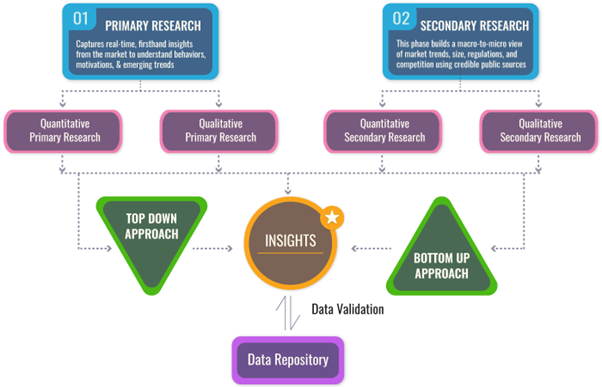
DUAL MODELING: TOP-DOWN + BOTTOM-UP
To ensure robust market estimation, we apply two complementary sizing approaches:
Top-Down Modeling:- Start with broader industry value (e.g., global or regional TAM)
- Apply filters by segment, geography, end-user, or use case
- Adjust with primary insights and validation benchmarks
- Ideal for investor-grade market scans and opportunity mapping
- Aggregate from the ground up using sales volumes, pricing, and unit economics
- Use internal modeling templates aligned with stakeholder data
- Incorporate distributor-level or region-specific inputs
- Most accurate for emerging segments and granular sub-markets
DATA VALIDATION: IN-HOUSE REPOSITORY
We close the loop with proprietary data intelligence built from ongoing projects, industry monitoring, and historical benchmarking. This repository includes:
- Multi-sector market and pricing models
- Key trendlines from past interviews and forecasts
- Benchmarked adoption rates, churn patterns, and ROI indicators
- Industry-specific deviation flags and cross-check logic
- Catches inconsistencies early
- Aligns projections across studies
- Enables consistent, high-trust deliverables