
Small Molecule Drug Discovery Market Size and Forecast (2026–2034), Global and Regional Growth, Trend, Share and Industry Analysis Report Coverage: By Therapeutic Area (Oncology, Central Nervous System, Cardiovascular, Respiratory, Metabolic Disorders, Gastrointestinal, Infectious Diseases, Autoimmune Disorders, and Others (Rare Diseases, Dermatology, Ophthalmology, etc.)), By Discovery Phase (Target Identification, Target Validation, Hit Identification (Hit Generation), Hit-to-Lead, Lead Identification, Lead Optimization, Preclinical Candidate Selection), By Drug Type (Synthetic Small Molecules, Natural-Product Derivatives, Peptide Mimetics, PROTACs & Molecular Glues, Nucleoside Analogues, Others (Covalent Small Molecules, Macrocycles, etc.)), By Technology (High-Throughput Screening (HTS), Fragment-Based Drug Discovery (FBDD), Structure-Based Drug Design (SBDD), Computational / AI-Driven Design, DNA-Encoded Library Screening, CRISPR-Based Target Validation, Bioassay Development & Cell-based Platforms, and Others (Virtual Screening, Phenotypic Screening, etc.)), By End User (Pharmaceutical Companies, Biotechnology Companies, Academic & Research Institutes, and Contract Research Organizations (CROs)) and Geography
2026-07-23
Healthcare
Swetal (Research Analyst)
Description
Small Molecule Drug Discovery Market
Overview
The global small
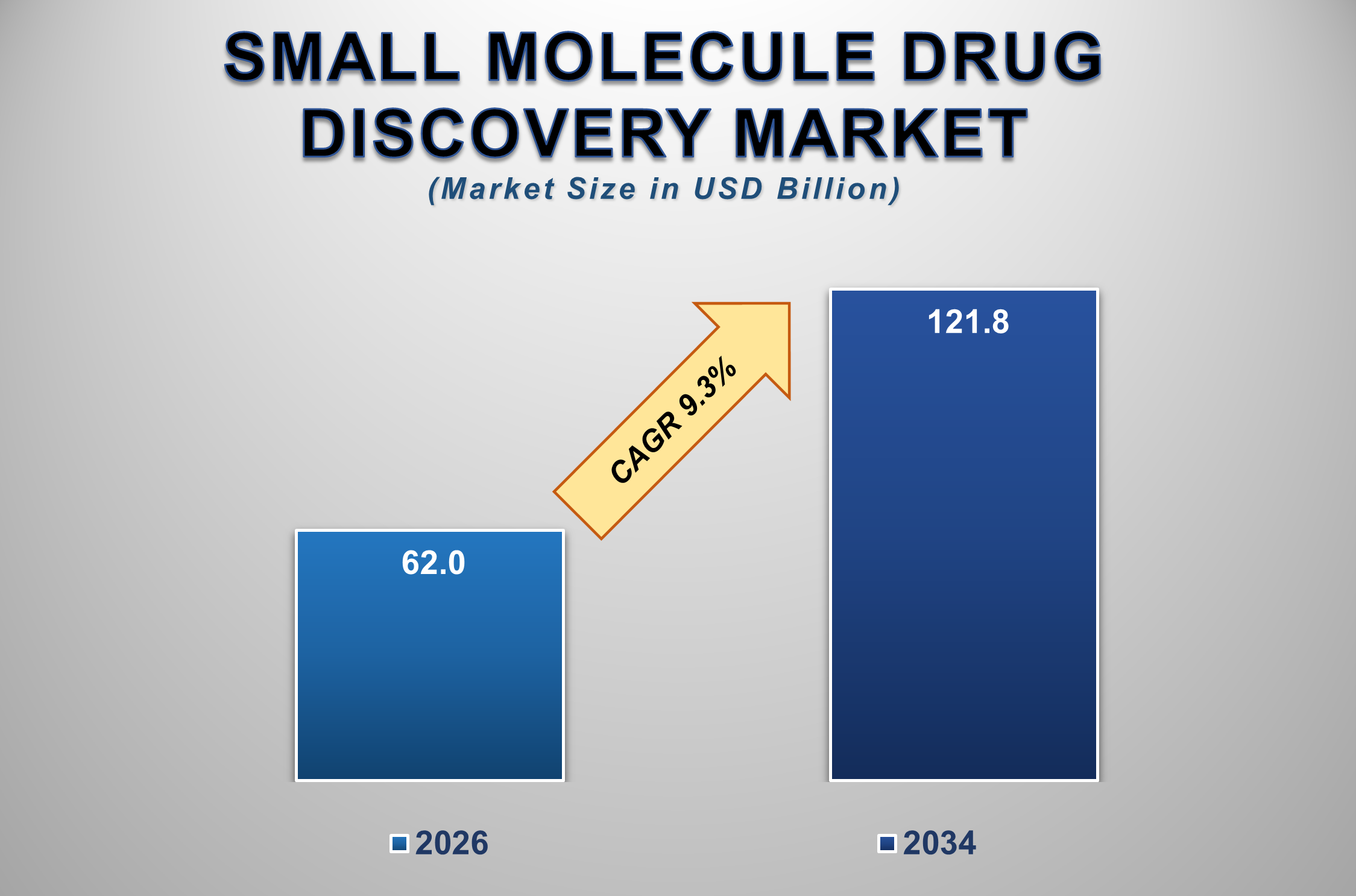
molecule drug discovery market was valued at USD 62.0 billion in 2026 and is
projected to reach USD 121.8 billion by 2034, expanding at a CAGR of 9.3%
during the forecast period. The factors propelling the Small Molecule Drug
Discovery Market include the rising need for targeted and personalized
treatments, higher incidence of chronic and infectious disorders, and the
steady improvements in drug discovery technologies. Small molecule drugs
continue to be the preferred choice for developing medicines because of their
ability to enter cells, oral bioavailability, established processes for
manufacturing, and low-cost production when compared with some of the biologics
available in the market. The use of technologies like artificial intelligence
(AI), machine learning, high-throughput screening, structure-based drug
discovery, and computer modeling is greatly increasing the efficiency in
identifying targets, lead optimization, and candidate selection. Moreover, the
rise in R&D spending by pharmaceutical and biotechnology firms,
partnerships with CROs, and usage of new approaches like fragment-based drug
discovery and DNA-encoded libraries are adding to the growth of the market. In
addition, the active development pipeline of oncology, CNS, metabolic, and rare
disease products is adding value to the market.
Small Molecule Drug Discovery Market
Drivers and Opportunities
Rising Adoption
of AI and Advanced Computational Technologies in Drug Discovery is Driving
Market Growth
The increased use of artificial intelligence
(AI), machine learning, and computational modeling is changing the landscape of
the small molecule drug discovery market through faster target discovery,
virtual screening, optimization, and candidate selection. The use of such
approaches saves time, improves prediction capabilities, and decreases the cost
of drug discovery, thus helping pharmaceutical and biotechnology firms improve
the efficiency of their R&D activities. In line with this, in July 2026,
Insilico Medicine and China Medical System Holdings Limited (CMS) entered into
an expanded AI-based drug discovery partnership for the development of a new
drug for a common CNS condition. The agreement involves the use of the
PandaOmics platform of Insilico Medicine, an AI-based target discovery platform
that discovers new MoAs.
Growing Burden
of Chronic and Complex Diseases Fueling Market Expansion
Increased cases of
cancer, neurological diseases, cardiovascular diseases, metabolic disorders,
and infections are boosting the demand for novel small molecule drugs. Due to
their pharmacokinetic properties, oral bioavailability, and capacity to act on
intracellular mechanisms, small molecules have always been the choice treatment
modality and will continue to be an attractive option that will lead to
continued investment in drug discovery programs across various disease areas.
Increased cases of chronic diseases are fueling drug discovery programs.
According to the CDC, in May 2026, heart disease and stroke were among the
leading causes of death in America, with more than 850,000 people in America
succumbing to heart disease in 2024, representing more than a quarter of all
deaths. Increasing cases of such deadly diseases will increase the need for
novel and effective therapeutics, hence increasing small molecule drug
discovery programs by pharmaceutical and biotech companies.
Expansion of
Targeted Therapies and Undruggable Target Discovery Presents Significant
Opportunities
With developments
in technologies such as PROTACs, molecular glues, fragment-based drug
discovery, and structure-based drug design through AI, scientists are being
enabled to develop drugs for previously undruggable proteins and pathways. This
is generating major possibilities for developing first-in-class precision
medicines, especially in fields like oncology, rare diseases, and
neurodegenerative disorders, as well as new collaboration strategies among
pharmaceuticals, biotech companies, and CROs. As an indicator of this trend, in
February 2026, Johnson & Johnson reported the FDA approval of a novel
monthly dose for its RYBREVANT FASPRO, reinforcing the use of targeted
therapies in oncology. This represents one of the continuous advancements in
the field of precision medicine and the industry’s focus on the development of
highly targeted small-molecule and biological treatments.
Small Molecule Drug Discovery Market
Scope
|
Report Attributes |
Description |
|
Market Size in
2026 |
USD 62.0
Billion |
|
Market Forecast
in 2034 |
USD 121.8
Billion |
|
CAGR % 2026-2034 |
9.3% |
|
Base Year |
2025 |
|
Historic Data |
2021-2025 |
|
Forecast Period |
2026-2034 |
|
Report USP |
Pricing and
Cost Structure Analysis, Product Innovation Benchmarking, Whitespace
Assessment, Company Share, Company Heatmap, Growth Factors and more |
|
Segments Covered |
●
By
Therapeutic Area ●
By
Discovery Phase ●
By Drug
Type ●
By
Technology ●
By End
User |
|
Regional Scope |
●
North
America ●
Europe ●
APAC ●
Latin
America ●
Middle
East and Africa |
|
Country Scope |
●
U.S. ●
Canada ●
U.K. ●
Germany ●
France ●
Italy ●
Spain ●
Russia ●
China ●
India ●
Japan ●
South
Korea ●
Australia
●
Mexico ●
Brazil ●
Saudi
Arabia ●
UAE ●
South
Africa
|
Small Molecule Drug Discovery Market
Report Segmentation Analysis
The global small
molecule drug discovery market industry analysis is segmented by therapeutic
area, by discovery phase, by drug type, by technology, by end user, and by
region.
Oncology Segment
Is Expected to Dominate the Small Molecule Drug Discovery Market During the
Forecast Period
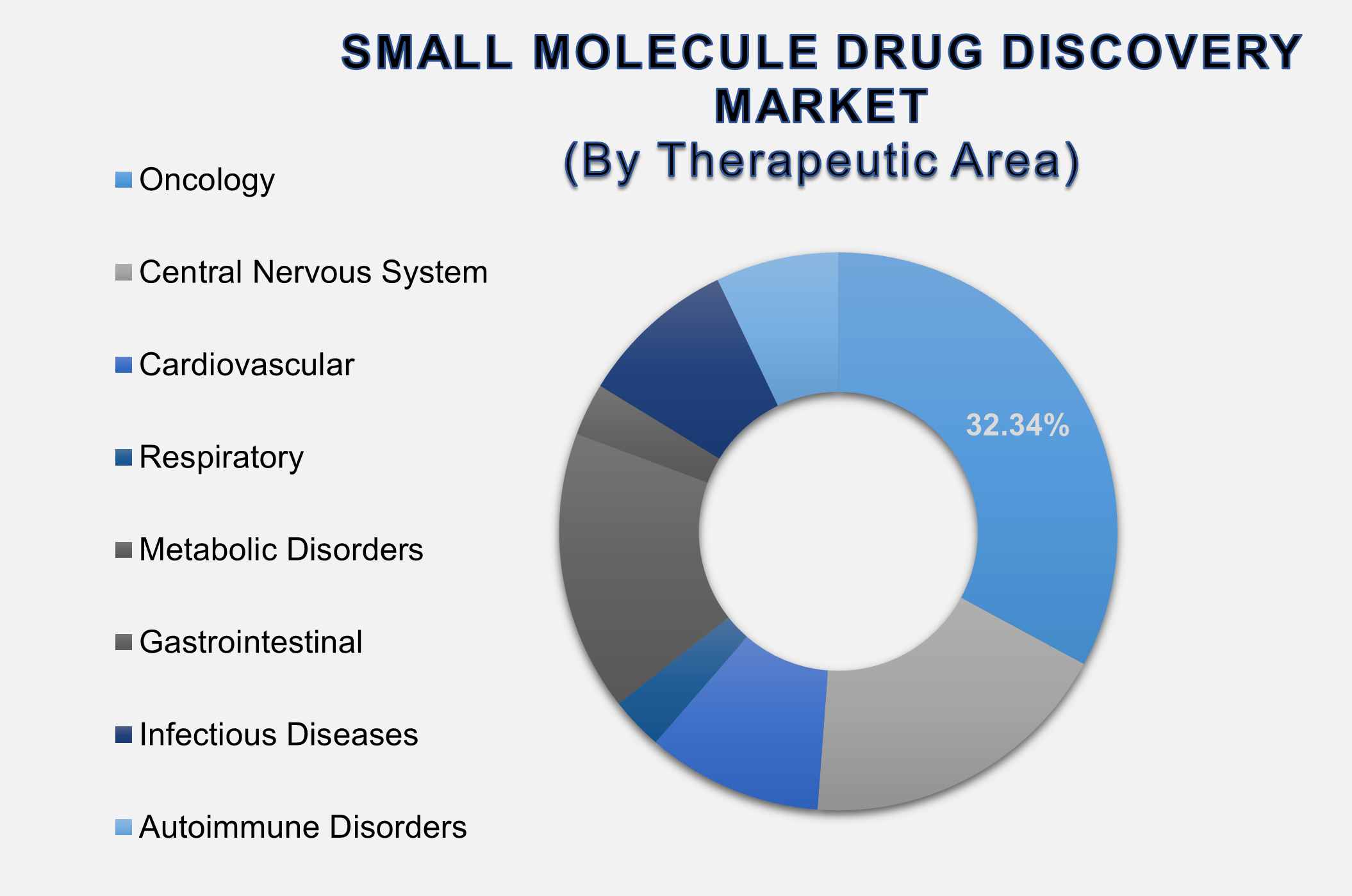
The oncology
segment will hold a leading position in the market for the discovery of small
molecules through 2027 owing to rising incidences of cancer worldwide,
innovations in precision medicine, and research in targeted therapy. Small
molecule medicines continue to be widely used for the treatment of cancer
because of their capacity to inhibit cell signaling pathways, address
particular cancerous mutations, and ease of consumption through oral
administration. Moreover, increasing adoption of drug discovery platforms
enabled by artificial intelligence, biomarker technology, and structure-based
drug design is speeding up the process of developing new oncology drugs. The
increasing number of cancer cases keeps adding pressure on the need for novel
drugs. As per WHO statistics, cancer is responsible for more than 26,000 deaths
each day, resulting in almost 10 million deaths a year out of 20.6 million
cancer patients and making it the world’s second-largest killer disease after
heart disorders. It is because of the growing threat of this disease that
pharmaceutical and biotech companies are increasing their investment in
cancer-focused drug development pipeline programs, ensuring the leadership of
the oncology segment in the worldwide small molecule drug discovery market.
Target
Identification Segment Is Expected to Lead the Small Molecule Drug Discovery
Market by Discovery Phase
Target
identification will be the leading sub-segment of the small molecule drug
discovery market in terms of the discovery phase due to its critical role in
discovering and validating biological targets related to diseases that become
the basis for developing effective drugs. The use of genomic, proteomic, and
transcriptomic techniques; functional screening using CRISPR; data integration
from omics techniques; and artificial intelligence technologies makes the
discovery of targets much easier and faster, helping researchers to find new
targets for treating oncological, neurological, cardiovascular, metabolic, and
rare diseases. Large pharmaceutical companies and biotech companies invest
large sums of money in AI tools for target identification with the purpose of
preventing drug failure in late clinical trials, improving efficiency of
R&D processes, and creating novel and unique small molecules. In addition,
growing attention towards precision medicine and biomarker-driven drug
development, as well as collaboration between biopharmaceutical companies,
technology providers, and CROs, also boosts the demand for efficient target
identification tools, thereby ensuring the dominance of the sub-segment on the
global small molecule drug discovery market.
Synthetic Small
Molecules Segment Is Expected to Dominate the Drug Type Segment
The synthetic small
molecules sub-segment is expected to dominate all other segments in terms of
drug types during the forecast period owing to the existing use of synthetic
small molecules in treating various conditions like cancer, cardiovascular
diseases, infections, metabolic diseases, and neurodegenerative diseases. Some
of the advantages offered by synthetic small molecules include chemical
stability, good pharmacokinetics, oral administration, cost-effective
production process, cellular penetration, and modulation of intracellular
targets. Due to the aforementioned factors, synthetic small molecules are
considered the best therapeutic approach for the treatment of acute and chronic
diseases. Moreover, research and development activities in medicinal chemistry,
structure-based drug discovery, high-throughput screening, and AI-driven drug
discovery are resulting in the identification of new synthetic compounds that
offer better efficacy and safety. Pharmaceutical companies are extensively
working on research and development activities in the field of synthetic drugs,
resulting in the development of new drug pipelines and approval of new small
molecule drugs.
High-Throughput
Screening (HTS) Segment Is Expected to Dominate the Technology Segment
The high-throughput
screening (HTS) category is projected to rule the technology category of the
small-molecule drug discovery market throughout the forecast period on account
of its capability to efficiently assess millions of chemicals against a certain
biological target. HTS greatly enhances the process of hit identification,
reduces the time involved in the drug discovery process, and makes the process
highly effective in the discovery of promising lead candidates. HTS technology
is widely used by pharmaceutical companies, biotech firms, and contract
research organizations, as it is highly compatible with automation, robotics,
imaging, and AI-based analysis systems. Moreover, growing investments in the
expansion of compound libraries, assay development, miniaturization, and
machine learning-based hit prioritization are contributing to the improvement
in the accuracy and productivity of HTS technology. The increasing need for
novel therapies in conditions like oncology, neurology, cardiovascular disease,
infectious disease, and orphan diseases is continuously driving the adoption of
HTS, which in turn is making HTS dominate the global small molecule drug
discovery market.
Pharmaceutical
Companies Segment Is Expected to Dominate the End User Segment
The pharmaceutical companies category is predicted to be the leading segment within the end-user segment of the small molecule drug discovery market over the forecast period due to heavy investments in R&D, drug development pipelines, and the rising need for new drugs in various diseases. Pharmaceutical companies have the necessary resources, technology, and infrastructure to undertake drug discovery programs on a large scale, starting from the identification of targets and hit compounds and moving through the lead optimization and preclinical stage. Moreover, advancements in artificial intelligence, high-throughput screening, computational chemistry, and structure-based drug design allow pharmaceutical companies to optimize the process of drug discovery, speed up development time, and increase the success rates in choosing candidates. The strategic collaborations with biotech companies, contract research organizations, and research institutes and the rising number of licensing agreements and acquisitions also contribute to the drug discovery abilities of pharmaceutical companies. Increased incidence of chronic and complex diseases and the emphasis on precision medicine and targeted drugs are pushing pharmaceutical companies to broaden their small molecule discovery pipeline and continue their dominance in the global small molecule drug discovery market.
The following
segments are part of an in-depth analysis of the global small molecule drug
discovery market:
|
Market Segments |
|
|
By
Therapeutic Area |
●
Oncology ●
Central
Nervous System ●
Cardiovascular ●
Respiratory ●
Metabolic
Disorders ●
Gastrointestinal ●
Infectious
Diseases ●
Autoimmune
Disorders ●
Others (Rare
Diseases, Dermatology, Ophthalmology, etc.) |
|
By
Discovery Phase |
●
Target Identification ●
Target
Validation ●
Hit
Identification (Hit Generation) ●
Hit-to-Lead ●
Lead
Identification ●
Lead
Optimization ●
Preclinical
Candidate Selection |
|
By
Drug Type |
●
Synthetic
Small Molecules ●
Natural-Product
Derivatives ●
Peptide
Mimetics ●
PROTACs
& Molecular Glues ●
Nucleoside
Analogues ●
Others
(Covalent Small Molecules, Macrocycles, etc.) |
|
By
Technology |
●
High-Throughput
Screening (HTS) ●
Fragment-Based
Drug Discovery (FBDD) ●
Structure-Based
Drug Design (SBDD) ●
Computational
/ AI-Driven Design ●
DNA-Encoded
Library Screening ●
CRISPR-Based
Target Validation ●
Bioassay
Development & Cell-based Platforms ●
Others
(Virtual Screening, Phenotypic Screening, etc.) |
|
By End
User |
●
Pharmaceutical
Companies ●
Biotechnology
Companies ●
Academic
& Research Institutes ●
Contract
Research Organizations (CROs) |
Small Molecule Drug Discovery Market
Share Analysis by Region
North America is
projected to hold the largest share of the global small molecule drug discovery
market over the forecast period.
The North American
region is expected to dominate the global small molecule drug discovery market
share during the forecast period owing to the huge amount of investments made
in the pharmaceutical and biotech industry's R&D, advanced drug discovery infrastructure,
and rapid adoption of AI-enabled drug discovery solutions. It is also aided by
the presence of many top biopharmaceutical firms and research organizations
within the region and the formation of strategic alliances to develop new
drugs. In line with this, in May 2026, Incyte and Genesis Molecular AI extended
their strategic partnership to use advanced AI solutions for discovering new
small molecule drugs for Incyte's targets.
Small Molecule
Drug Discovery Market Competition Landscape Analysis
The small molecule
drug discovery market includes the presence of major players like
pharmaceutical companies, biotechnology companies, CROs, and AI-based drug
discovery companies that aim to expedite the process of drug discovery and
development. Major players in the market are improving their competitiveness by
making innovations in artificial intelligence (AI), machine learning,
high-throughput screening (HTS), computational chemistry, structure-based drug
design, collaboration, licensing, mergers and acquisitions, and investments in
R&D. The rising popularity of precision medicine, a focus on targeted
therapy, increasing use of AI-powered drug discovery platforms, and increasing
incidences of cancer, cardiovascular diseases, neurological diseases, metabolic
diseases, and rare diseases are opening up tremendous growth opportunities in
the global small molecule drug discovery market.
Global Small
Molecule Drug Discovery Market Recent Developments News:
●
In July 2026 -
Evogene announced a strategic joint initiative with the Blavatnik Center for
Drug Discovery (BCDD) at Tel Aviv University.
The partnership will focus on accelerating the growth and development of small-molecule drug discovery in the Israeli academic research ecosystem.
●
In June
2026 -
Nexentis Technologies Inc.,
a drug discovery company that also invests in solar energy assets based on the
RTB (Ready to Build) business model, announced
that its wholly owned subsidiary, MitoCareX Bio Ltd., has entered into an engagement with Boltz, PBC, an AI research lab that focuses on biomolecular foundation
models and drug discovery workflows, to accelerate the identification of novel
small-molecule scaffolds targeting selected solute carrier (SLC) proteins of
interest to MitoCareX's pipeline.
●
In July 2026 -
Astex Pharmaceuticals, a
pharmaceutical company dedicated to the discovery and development of novel small-molecule therapeutics for oncology and diseases of the central
nervous system, announced that it has entered
into an exclusive, worldwide research collaboration and license agreement with
Genentech, a member of the Roche Group, to identify small-molecule drug candidates with selective inhibitory activity as
potential treatments for breast cancer.
The Global
Small Molecule Drug Discovery Market is dominated by a few large companies,
such as
●
AstraZeneca plc
●
Atomwise Inc.
●
BenevolentAI
●
Charles River Laboratories
●
ChemPartner
●
Curia Global Inc.
●
Domainex Ltd.
●
Eurofins Discovery
●
Evotec SE
●
Exscientia plc
●
Insilico Medicine
●
Jubilant Biosys Ltd.
●
Pfizer Inc.
●
Recursion Pharmaceuticals
●
Relay Therapeutics
●
Schrodinger Inc.
●
Syngene International Ltd.
●
Thermo Fisher Scientific Inc.
●
WuXi AppTec
● Other Prominent Players
Frequently Asked Questions
Swetal (Research Analyst)
Swetal is a Research Analyst with 4+ years of experience specializing in healthcare market research, medical devices, healthcare IT, and medical technology industry analysis. Her expertise includes competitive intelligence, secondary research, market trend forecasting, and healthcare business insights across global healthcare ecosystems.
She contributes to advanced market research reports by analyzing regulatory frameworks, emerging healthcare technologies, competitive landscapes, and innovation trends shaping the medical industry. With a strong focus on accurate market intelligence, strategic insights, and healthcare industry trends, Swetal supports businesses in making informed, data-backed decisions in a rapidly transforming healthcare environment.
1.
Global
Small Molecule Drug Discovery Market Introduction and Market Overview
1.1. Objectives of the Study
1.2. Market Segmentation
1.2.1.Therapeutic Area of the Global Small
Molecule Drug Discovery Market
1.2.2.Discovery Phase of the Global Small
Molecule Drug Discovery Market
1.2.3.Drug Type of the Global Small
Molecule Drug Discovery Market
1.2.4.Technology of the Global Small
Molecule Drug Discovery Market
1.2.5.End User of the Global Small
Molecule Drug Discovery Market
1.2.6.Region of Global Small Molecule
Drug Discovery Market
1.3. Competition Coverage List of
Market Participants
1.4. Market Definition: Small
Molecule Drug Discovery Market
2.
Executive Summary
2.1. Global Small Molecule Drug
Discovery Market Estimation & Forecast
2.1.1.Global Small Molecule Drug
Discovery Market Size (US$ Million) Estimates & Historical Trend Analysis
(2021 - 2025)
2.1.2.Global Small Molecule Drug
Discovery Overall Market Size (US$ Million), Growth Rate (Y-o-Y), Market CAGR
(%), Market forecast (2026 - 2034)
2.2. Snapshot of Global Small
Molecule Drug Discovery Market
2.3. Global Small Molecule Drug
Discovery Market Revenue Share (%) 2025
2.4. REGIONAL OUTLINE: Revenue CAGR,
by Region
2.5. Key Competitors & Key
Insights
3.
Market Overview (Qualitative
Analysis)
3.1. Demand Side Trends
3.2. Supply Side Trends /
Manufacturing Trends
3.3. Demand and Opportunity
Assessment, 2026 - 2034
3.4. Market Dynamics
3.4.1.Drivers
3.4.2.Limitations
3.4.3.Opportunities
3.4.4.Impact Analysis of Drivers and
Restraints
3.5. Key Developments
3.6. Regulatory Landscape
3.7. Pricing Analysis
3.8. Supply Chain Analysis
3.9. Porter’s Five Forces Analysis
3.9.1.Bargaining Power of Suppliers
3.9.2.Bargaining Power of Buyers
3.9.3.Threat of Substitutes
3.9.4.Threat of New Entrants
3.9.5.Competitive Rivalry
3.10. PEST Analysis
3.10.1. Political Factors
3.10.2. Economic Factors
3.10.3. Social Factors
3.10.4. Technology Factors
4.
Global Small Molecule Drug
Discovery Market Estimates & Forecast Trend Analysis, by Therapeutic Area
4.1. Global Small Molecule Drug
Discovery Market Assessments & Key Findings, by Therapeutic Area
4.2. Global Small Molecule Drug
Discovery Market Revenue (US$ Million) Estimates and Forecasts, by Therapeutic
Area, 2021 - 2034
4.2.1.Oncology
4.2.2.Central Nervous System
4.2.3.Cardiovascular
4.2.4.Respiratory
4.2.5.Metabolic Disorders
4.2.6.Gastrointestinal
4.2.7.Infectious Diseases
4.2.8.Autoimmune Disorders
4.2.9.Others (Rare Diseases,
Dermatology, Ophthalmology, etc.)
5.
Global Small Molecule Drug
Discovery Market Estimates & Forecast Trend Analysis, by Discovery Phase
5.1. Global Small Molecule Drug
Discovery Market Assessments & Key Findings, by Discovery Phase
5.2. Global Small Molecule Drug
Discovery Market Revenue (US$ Million) Estimates and Forecasts, by Discovery
Phase, 2021 - 2034
5.2.1.Target Identification
5.2.2.Target Validation
5.2.3.Hit Identification (Hit
Generation)
5.2.4.Hit-to-Lead
5.2.5.Lead Identification
5.2.6.Lead Optimization
5.2.7.Preclinical Candidate Selection
6.
Global Small Molecule Drug
Discovery Market Estimates & Forecast Trend Analysis, by Drug Type
6.1. Global Small Molecule Drug
Discovery Market Assessments & Key Findings, by Drug Type
6.2. Global Small Molecule Drug
Discovery Market Revenue (US$ Million) Estimates and Forecasts, by Drug Type, 2021
- 2034
6.2.1.Synthetic Small Molecules
6.2.2.Natural-Product Derivatives
6.2.3.Peptide Mimetics
6.2.4.PROTACs & Molecular Glues
6.2.5.Nucleoside Analogues
6.2.6.Others (Covalent Small
Molecules, Macrocycles, etc.)
7.
Global Small Molecule Drug
Discovery Market Estimates & Forecast Trend Analysis, by Technology
7.1. Global Small Molecule Drug
Discovery Market Assessments & Key Findings, by Technology
7.2. Global Small Molecule Drug
Discovery Market Revenue (US$ Million) Estimates and Forecasts, by Technology,
2021 - 2034
7.2.1.High-Throughput Screening (HTS)
7.2.2.Fragment-Based Drug Discovery
(FBDD)
7.2.3.Structure-Based Drug Design
(SBDD)
7.2.4.Computational / AI-Driven Design
7.2.5.DNA-Encoded Library Screening
7.2.6.CRISPR-Based Target Validation
7.2.7.Bioassay Development &
Cell-based Platforms
7.2.8.Others (Virtual Screening,
Phenotypic Screening, etc.)
8.
Global Small Molecule Drug
Discovery Market Estimates & Forecast Trend Analysis, by End User
8.1. Global Small Molecule Drug
Discovery Market Assessments & Key Findings, by End User
8.2. Global Small Molecule Drug
Discovery Market Revenue (US$ Million) Estimates and Forecasts, by End User,
2021 - 2034
8.2.1.Pharmaceutical Companies
8.2.2.Biotechnology Companies
8.2.3.Academic & Research
Institutes
8.2.4.Contract Research Organizations
(CROs)
9.
Global Small Molecule Drug
Discovery Market Estimates & Forecast Trend Analysis, by Region
9.1. Global Small Molecule Drug
Discovery Market Assessments & Key Findings, by Region
9.2. Global Small Molecule Drug
Discovery Market Revenue (US$ Million) Estimates and Forecasts, by Region, 2021
- 2034
9.2.1.North America
9.2.2.Europe
9.2.3.Asia Pacific
9.2.4.Middle East & Africa
9.2.5.Latin America
10. North America Small
Molecule Drug Discovery Market:
Estimates & Forecast Trend Analysis
10.1.
North
America Small Molecule Drug Discovery Market Assessments & Key Findings
10.1.1. North America Small Molecule
Drug Discovery Market Introduction
10.1.2. North America Small Molecule
Drug Discovery Market Size Estimates and Forecast (US$ Million) (2021 - 2034)
10.1.2.1. By Therapeutic Area
10.1.2.2. By Discovery Phase
10.1.2.3. By Drug Type
10.1.2.4. By Technology
10.1.2.5. By End User
10.1.2.6. By Country
10.1.2.6.1. The U.S.
10.1.2.6.2. Canada
11. Europe Small
Molecule Drug Discovery Market:
Estimates & Forecast Trend Analysis
11.1. Europe Small Molecule Drug
Discovery Market Assessments & Key Findings
11.1.1. Europe Small Molecule Drug
Discovery Market Introduction
11.1.2. Europe Small Molecule Drug
Discovery Market Size Estimates and Forecast (US$ Million) (2021 - 2034)
11.1.2.1. By Therapeutic Area
11.1.2.2. By Discovery Phase
11.1.2.3. By Drug Type
11.1.2.4. By Technology
11.1.2.5. By End User
11.1.2.6. By Country
11.1.2.6.1.
Germany
11.1.2.6.2.
Italy
11.1.2.6.3.
U.K.
11.1.2.6.4.
France
11.1.2.6.5.
Spain
11.1.2.6.6.
Switzerland
11.1.2.6.7. Rest
of Europe
12. Asia Pacific Small
Molecule Drug Discovery Market:
Estimates & Forecast Trend Analysis
12.1. Asia Pacific Market Assessments
& Key Findings
12.1.1. Asia Pacific Small Molecule Drug
Discovery Market Introduction
12.1.2. Asia Pacific Small Molecule Drug
Discovery Market Size Estimates and Forecast (US$ Million) (2021 - 2034)
12.1.2.1. By Therapeutic Area
12.1.2.2. By Discovery Phase
12.1.2.3. By Drug Type
12.1.2.4. By Technology
12.1.2.5. By End User
12.1.2.6. By Country
12.1.2.6.1. China
12.1.2.6.2. Japan
12.1.2.6.3. India
12.1.2.6.4. Australia
12.1.2.6.5. South Korea
12.1.2.6.6. Rest of Asia Pacific
13. Middle East & Africa Small
Molecule Drug Discovery Market:
Estimates & Forecast Trend Analysis
13.1. Middle East & Africa Market
Assessments & Key Findings
13.1.1. Middle
East & Africa Small
Molecule Drug Discovery Market Introduction
13.1.2. Middle
East & Africa Small
Molecule Drug Discovery Market Size Estimates and Forecast (US$ Million) (2021
- 2034)
13.1.2.1. By Therapeutic Area
13.1.2.2. By Discovery Phase
13.1.2.3. By Drug Type
13.1.2.4. By Technology
13.1.2.5. By End User
13.1.2.6. By Country
13.1.2.6.1. South Africa
13.1.2.6.2. UAE
13.1.2.6.3. Saudi Arabia
13.1.2.6.4. Rest of MEA
14. Latin America
Small Molecule Drug Discovery Market:
Estimates & Forecast Trend Analysis
14.1. Latin America Market Assessments
& Key Findings
14.1.1. Latin America Small Molecule
Drug Discovery Market Introduction
14.1.2. Latin America Small Molecule
Drug Discovery Market Size Estimates and Forecast (US$ Million) (2021 - 2034)
14.1.2.1. By Therapeutic Area
14.1.2.2. By Discovery Phase
14.1.2.3. By Drug Type
14.1.2.4. By Technology
14.1.2.5. By End User
14.1.2.6. By Country
14.1.2.6.1. Brazil
14.1.2.6.2. Mexico
14.1.2.6.3. Argentina
14.1.2.6.4. Rest of LATAM
15. Competition Landscape
15.1. Global Small Molecule Drug Discovery
Market Product Mapping
15.2. Global Small Molecule Drug
Discovery Market Concentration Analysis, by Leading Players / Innovators /
Emerging Players / New Entrants
15.3. Global Small Molecule Drug
Discovery Market Tier Structure Analysis
15.4. Global Small Molecule Drug
Discovery Market Concentration & Company Market Shares (%) Analysis, 2025
16. Company Profiles
16.1. AstraZeneca plc
16.1.1. Company Overview & Key Stats
16.1.2. Financial Performance & KPIs
16.1.3. Product Portfolio
16.1.4. SWOT Analysis
16.1.5. Business Strategy & Recent
Developments
* Similar details would be provided
for all the players mentioned below
16.2. Atomwise Inc.
16.3. BenevolentAI
16.4. Charles River Laboratories
16.5. ChemPartner
16.6. Curia Global Inc.
16.7. Domainex Ltd.
16.8. Eurofins Discovery
16.9. Evotec SE
16.10. Exscientia plc
16.11. Insilico Medicine
16.12. Jubilant Biosys Ltd.
16.13. Pfizer Inc.
16.14. Recursion Pharmaceuticals
16.15. Relay Therapeutics
16.16. Schrodinger Inc.
16.17. Syngene International Ltd.
16.18. Thermo Fisher Scientific Inc.
16.19. WuXi AppTec
16.20. Other Prominent Players
17. Research
Findings & Conclusion
18. Assumption & Acronyms Used
19. Research
Methodology
19.1. External Transportations /
Databases
19.2. Internal Proprietary Database
19.3. Primary Research
19.4. Secondary Research
19.5. Assumptions
19.6. Limitations
19.7. Report FAQs
Our Research Methodology
"Insight without rigor is just noise."
We follow a comprehensive, multi-phase research framework designed to deliver accurate, strategic, and decision-ready intelligence. Our process integrates primary and secondary research , both quantitative and qualitative , along with dual modeling techniques ( top-down and bottom-up) and a final layer of validation through our proprietary in-house repository.
PRIMARY RESEARCH
Primary research captures real-time, firsthand insights from the market to understand behaviors, motivations, and emerging trends.
1. Quantitative Primary Research
Objective: Generate statistically significant data directly from market participants.
Approaches:- Structured surveys with customers, distributors, and field agents
- Mobile-based data collection for point-of-sale audits and usage behavior
- Phone-based interviews (CATI) for market sizing and product feedback
- Online polling around industry events and digital campaigns
- Purchase frequency by customer type
- Channel performance across geographies
- Feature demand by application or demographic
2. Qualitative Primary Research
Objective: Explore decision-making drivers, pain points, and market readiness.
Approaches:- In-depth interviews (IDIs) with executives, product managers, and key decision-makers
- Focus groups among end users and early adopters
- Site visits and observational research for consumer products
- Informal field-level discussions for regional and cultural nuances
SECONDARY RESEARCH
This phase helps establish a macro-to-micro understanding of market trends, size, regulation, and competitive dynamics, sourced from credible and public domain information.
1. Quantitative Secondary Research
Objective: Model market value and segment-level forecasts based on published data.
Sources include:- Financial reports and investor summaries
- Government trade data, customs records, and regulatory statistics
- Industry association publications and economic databases
- Channel performance and pricing data from marketplace listings
- Revenue splits, pricing trends, and CAGR estimates
- Supply-side capacity and volume tracking
- Investment analysis and funding benchmarks
2. Qualitative Secondary Research
Objective: Capture strategic direction, innovation signals, and behavioral trends.
Sources include:- Company announcements, roadmaps, and product pipelines
- Publicly available whitepapers, conference abstracts, and academic research
- Regulatory body publications and policy briefs
- Social and media sentiment scanning for early-stage shifts
- Strategic shifts in market positioning
- Unmet needs and white spaces
- Regulatory triggers and compliance impact
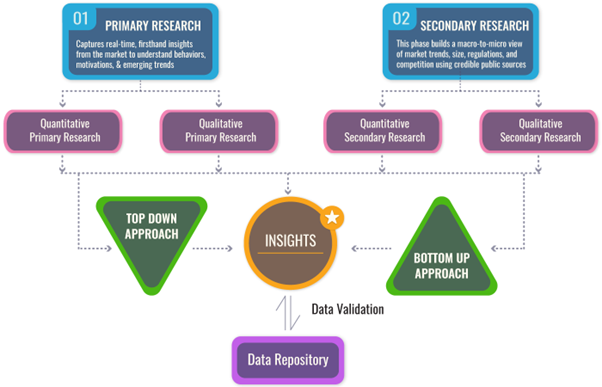
DUAL MODELING: TOP-DOWN + BOTTOM-UP
To ensure robust market estimation, we apply two complementary sizing approaches:
Top-Down Modeling:- Start with broader industry value (e.g., global or regional TAM)
- Apply filters by segment, geography, end-user, or use case
- Adjust with primary insights and validation benchmarks
- Ideal for investor-grade market scans and opportunity mapping
- Aggregate from the ground up using sales volumes, pricing, and unit economics
- Use internal modeling templates aligned with stakeholder data
- Incorporate distributor-level or region-specific inputs
- Most accurate for emerging segments and granular sub-markets
DATA VALIDATION: IN-HOUSE REPOSITORY
We close the loop with proprietary data intelligence built from ongoing projects, industry monitoring, and historical benchmarking. This repository includes:
- Multi-sector market and pricing models
- Key trendlines from past interviews and forecasts
- Benchmarked adoption rates, churn patterns, and ROI indicators
- Industry-specific deviation flags and cross-check logic
- Catches inconsistencies early
- Aligns projections across studies
- Enables consistent, high-trust deliverables