

Smart Fleet Management Market Size and Forecast (2026–2034), Global and Regional Growth, Trends, Share and Industry Analysis Report Coverage; By Component, Deployment Mode, Fleet Type, Application, and Geography
2026-11-04
Automotive & Transportation (Mobility)
Ekta Chaurasia (Team Lead)
Description
Smart Fleet Management Market Overview
The Smart Fleet Management Market is evolving as businesses adopt connected technologies to improve vehicle utilization, operational visibility, driver safety, and transportation efficiency. Smart fleet management solutions combine telematics, GPS tracking, cloud-based software, sensors, data analytics, and automated reporting to help organizations monitor vehicles, plan routes, track fuel consumption, manage maintenance, and evaluate driver performance. These capabilities are increasingly relevant to logistics providers, commercial transport operators, public transportation agencies, and companies that maintain large vehicle fleets.
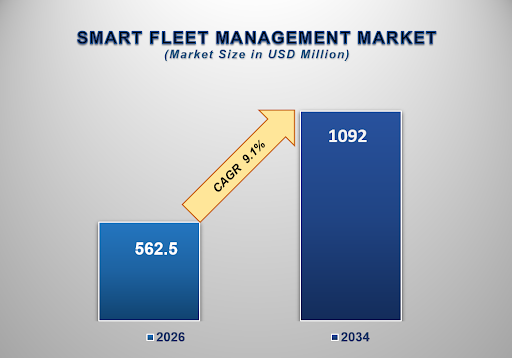
The global Smart Fleet Management Market is valued at USD 562.53 million in 2026 and is projected to reach USD 1,092.9 million by 2034, registering a CAGR of 9.1% during 2026–2034, based on the supplied figures. Market expansion is supported by the growing need to control transportation costs, improve delivery performance, reduce vehicle downtime, and gain real-time visibility into fleet operations.
Businesses are increasingly integrating fleet management platforms with enterprise resource planning systems, warehouse management tools, fuel cards, maintenance applications, and customer delivery systems. These integrations enable more coordinated operations and better-informed decisions. At the same time, fleet operators face challenges related to implementation costs, data security, connectivity limitations, legacy-system integration, and the need to train employees to use advanced digital tools effectively.
Smart Fleet Management Market Drivers and Opportunities
1. Growing Demand for Real-Time Fleet Visibility Is Supporting Market Expansion
Fleet operators increasingly require accurate, real-time information about vehicle locations, operating conditions, driver activity, and delivery progress. GPS tracking and telematics platforms provide visibility into fleet movements and help businesses respond to delays, route changes, and unexpected operating issues. These capabilities are particularly useful for logistics companies, e-commerce delivery providers, field-service organizations, and commercial transportation businesses managing vehicles across multiple locations.
Smart fleet management platforms also help organizations monitor vehicle utilization and identify inefficient operating patterns. By consolidating operational information into centralized dashboards, businesses can improve coordination between dispatchers, drivers, maintenance teams, and customers. The growing importance of service reliability and delivery transparency continues to encourage adoption.
2. Rising Operating Costs Are Encouraging Fleet Optimization
Fuel, maintenance, labour, insurance, and vehicle replacement represent significant costs for fleet-dependent businesses. Smart fleet management systems help operators assess fuel consumption, identify excessive idling, monitor maintenance schedules, and optimize route planning. Data-driven decisions can improve vehicle availability and reduce avoidable operating expenses.
Predictive maintenance capabilities can also identify warning signs before certain mechanical issues lead to costly breakdowns. Driver behavior monitoring may support safer driving practices by highlighting speeding, harsh braking, and other potentially risky behaviors. As companies seek to improve productivity without proportionately increasing fleet size, integrated fleet optimization solutions are becoming increasingly valuable.
3. Artificial Intelligence and Connected Vehicle Technologies Create New Opportunities
Advances in artificial intelligence, machine learning, cloud computing, and connected vehicle technology are creating opportunities for more intelligent fleet operations. Advanced platforms can analyze historical and real-time data to support demand forecasting, route recommendations, predictive maintenance, and vehicle allocation.
Electric fleet adoption is also driving demand for tools to monitor battery status, charging requirements, vehicle range, and energy consumption. Integration with logistics and enterprise software offers further opportunities by connecting fleet activity with order management, warehouse operations, and customer service. Vendors that provide secure, scalable, and easy-to-integrate platforms may be well positioned to benefit from these developments.
Smart Fleet Management Market Scope
Smart Fleet Management Market Report Segmentation Analysis
The Smart Fleet Management Market is segmented according to component, deployment mode, fleet type, application, and geography.
Each category reflects differences in fleet complexity, technology adoption, data-management requirements, and operational objectives. Component segmentation distinguishes the physical devices used to collect vehicle information from the software platforms that interpret data and the services required for implementation and ongoing support.
Deployment preferences depend on organizational IT capabilities, data governance requirements, scalability needs, and integration with existing business systems. Fleet type influences the functionality required, while application segmentation reflects the operational tasks that organizations seek to improve through digital fleet management.
Software Platforms Are Central to Data-Driven Fleet Operations
Fleet management software brings together vehicle-location data, telematics information, maintenance records, fuel usage, driver performance, and operational reports. These platforms allow fleet managers to review activity across vehicles and locations through centralized dashboards and analytical tools.
Software solutions can also connect with dispatch systems, enterprise applications, and customer-facing platforms to support coordinated decision-making. Demand is influenced by the need for automation, real-time reporting, predictive analytics, and improved visibility across increasingly complex transportation networks.
Hardware and services remain essential to successful deployment. Tracking devices, onboard sensors, and communication equipment collect and transmit operational data, while installation, integration, training, and technical support help businesses implement and maintain their fleet management systems.
The Following Segments Are Part of an In-Depth Analysis of the Smart Fleet Management Market
By Component, Software and Telematics Hardware Enable Connected Fleet Operations
- Hardware: Includes GPS tracking devices, onboard diagnostic devices, sensors, telematics control units, communication modules, and other equipment used to collect and transmit vehicle data. Hardware performance affects data accuracy, connectivity, and the reliability of fleet monitoring.
- Software: Includes fleet dashboards, tracking applications, analytics platforms, dispatch tools, maintenance-management systems, and reporting applications. Software helps organizations convert operational data into actionable information for route planning, cost management, and vehicle utilization.
- Services: Includes installation, integration, consulting, training, technical support, and managed fleet services. These services help businesses deploy systems, connect existing technologies, and maintain reliable operations.
By Deployment Mode, Cloud-Based and On-Premises Systems Serve Different Business Needs
- Cloud-Based: Cloud platforms allow fleet managers to access operational data through internet-connected applications and centralized dashboards. They support remote monitoring, scalable data processing, and software updates without requiring organizations to maintain all infrastructure locally.
- On-Premises: On-premises solutions operate through infrastructure managed by the organization. They may suit businesses that require greater control over internal data systems, customized deployment environments, or integration with existing enterprise infrastructure.
By Fleet Type, Commercial Transportation Represents a Major Use Case
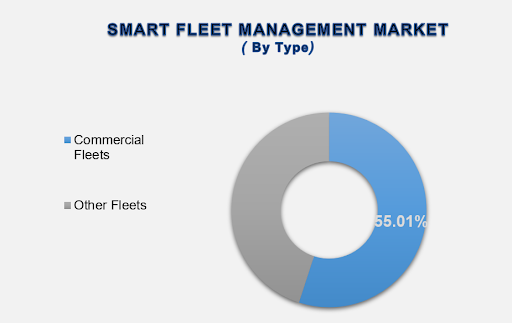
- Commercial Fleets: Includes logistics vehicles, delivery vans, trucks, service vehicles, and company-owned transportation assets. Fleet management tools support route planning, fuel monitoring, maintenance scheduling, and delivery coordination.
- Passenger Vehicle Fleets: Includes corporate cars, rental vehicles, taxis, and other passenger transportation fleets. Digital monitoring can improve vehicle allocation, utilization, maintenance planning, and operational accountability.
- Public Transportation Fleets: Includes buses and other vehicles operated by public transportation agencies and private transit providers. Fleet platforms support vehicle location monitoring, service coordination, maintenance planning, and schedule visibility.
- Specialized Fleets: Includes construction vehicles, utility fleets, agricultural equipment, and other purpose-specific vehicles. These fleets may require asset tracking, equipment utilization monitoring, geofencing, and specialized maintenance capabilities.
By Application, Fleet Optimization Supports Efficiency and Operational Control
- Vehicle Tracking: Uses GPS and telematics to monitor vehicle location, movement, route progress, and operating status. It helps fleet managers maintain visibility across distributed vehicle networks.
- Route Optimization: Uses traffic conditions, delivery schedules, vehicle capacity, and destination information to identify practical routes. Better route planning can support timely deliveries and reduce unnecessary travel.
- Driver Management: Tracks driving behavior, work patterns, and relevant performance indicators. These tools can help organizations identify training needs and promote safer operating practices.
- Fuel Management: Monitors fuel consumption, idling, and other factors affecting vehicle efficiency. The resulting data helps operators identify abnormal usage and improve cost control.
- Predictive Maintenance: Uses vehicle diagnostics, usage data, and maintenance records to identify potential problems and support proactive servicing. The objective is to reduce avoidable downtime and improve vehicle availability.
- Asset Monitoring: Tracks vehicle utilization and, where supported, associated equipment or mobile assets. This is useful for businesses managing distributed operations and valuable equipment.
- Compliance Management: Supports the monitoring and documentation of relevant vehicle, driver, and operating requirements. The features available depend on the platform, jurisdiction, and fleet type.
North America, Europe, and Asia-Pacific Influence the Smart Fleet Management Market
North America Benefits from Mature Telematics Adoption and Fleet Digitization
North America is an established market for connected fleet technologies, supported by commercial trucking, parcel delivery, field services, and large-scale distribution networks. Fleet operators use tracking and analytics platforms to improve vehicle utilization, monitor operating costs, and maintain delivery visibility across extensive transport corridors.
The U.S. is a key market due to its large commercial transportation sector and demand for fleet productivity tools. Canada contributes through freight transportation, logistics, public services, and industrial operations. Adoption is influenced by technology investment, fleet size, connectivity, and the need to integrate digital systems with established operational processes.
Europe Emphasizes Efficient Transport Operations and Regulatory Compliance
Europe's smart fleet management demand is shaped by logistics digitization, cross-border transportation, urban delivery operations, and vehicle-efficiency priorities. Fleet operators increasingly rely on digital platforms to coordinate vehicles, monitor performance, and maintain operational records across different locations.
Germany, France, the U.K., Italy, and other European markets offer opportunities across commercial transportation, passenger fleets, and public services. Integration with electric vehicles and connected mobility systems is also creating demand for platforms capable of managing charging, energy use, and vehicle performance.
Asia-Pacific Offers Growth Opportunities Through Expanding Logistics Networks
Asia-Pacific's market potential is supported by e-commerce growth, urbanization, expanding commercial fleets, and investments in logistics infrastructure. China has a substantial vehicle and technology ecosystem, while India presents opportunities through logistics modernization, delivery services, and the digitalization of commercial transportation. Japan and South Korea contribute through advanced automotive technologies and connected mobility solutions.
Fleet operators across the region require systems that can accommodate different fleet sizes, connectivity conditions, and business models. Demand will depend on digital infrastructure, implementation costs, data capabilities, and the willingness of businesses to adopt integrated fleet-management platforms.
Latin America Sees Opportunities in Fleet Visibility and Cost Optimization
Latin American fleet operators face the need to manage fuel expenses, vehicle utilization, delivery schedules, and operational risks across diverse transport networks. Smart fleet management systems can support better visibility and help organizations monitor assets operating over long distances.
Brazil and Mexico are relevant markets because of their commercial transportation, manufacturing, distribution, and logistics activities. Adoption depends on technology affordability, connectivity, integration capabilities, and the availability of suitable solutions for regional operating conditions.
The Middle East and Africa Offer Opportunities Across Logistics and Commercial Fleets
Fleet management adoption in the Middle East and Africa is associated with logistics investment, commercial transportation, infrastructure development, and the modernization of fleet operations. The UAE and Saudi Arabia are relevant markets for connected logistics and transportation services, while South Africa has established freight, distribution, and commercial vehicle operations.
The region's outlook depends on investment in digital infrastructure, fleet modernization, business requirements, and the integration of vehicle data with logistics and enterprise systems. Solutions that deliver practical operating-cost benefits and reliable monitoring can support adoption across different fleet categories.
Note: Regional descriptions are qualitative. Region-specific market shares have not been assigned because a consistent, verified regional dataset is not available in this report.
Smart Fleet Management Market Competition Landscape Analysis
Competition in the Smart Fleet Management Market includes telematics providers, fleet software developers, automotive technology companies, GPS tracking specialists, and integrated mobility solution providers. Market participants compete through platform functionality, data accuracy, connectivity, analytics, integration capabilities, user experience, cybersecurity, and the ability to support fleets across multiple regions.
Vendors increasingly combine vehicle tracking with route optimization, driver monitoring, maintenance planning, fuel management, and compliance tools. The availability of integrated features can help customers reduce dependence on disconnected applications and create a more consistent view of fleet performance.
Cloud infrastructure and advanced analytics are also shaping competition. Providers that support scalable deployments, secure data handling, flexible integration, and actionable reporting can appeal to businesses managing complex operations. At the same time, implementation costs, platform interoperability, and the availability of technical support remain important considerations for customers.
Global Smart Fleet Management Market Recent Developments News
Artificial Intelligence Is Expanding Fleet Analytics Capabilities
Fleet technology providers are increasingly incorporating advanced analytics and AI-based capabilities into vehicle monitoring and operational planning. These tools can help identify patterns in driving behavior, maintenance needs, route performance, and fleet utilization. Their value depends on the quality of collected data and how effectively recommendations are incorporated into daily operations.
Connected Vehicle Data Is Supporting Predictive Maintenance
The use of vehicle diagnostics and telematics data is creating opportunities for proactive maintenance management. By monitoring operating conditions and identifying potential warning signs, fleet managers can plan servicing more effectively and reduce the likelihood of unexpected vehicle downtime.
Cloud Platforms Are Improving Remote Fleet Management
Cloud-based fleet management systems support centralized monitoring across vehicles, depots, and geographic regions. Remote access and integration with enterprise applications can help businesses coordinate dispatch, maintenance, customer service, and reporting activities.
Electric Fleet Adoption Is Creating New Management Requirements
As organizations introduce electric vehicles into their fleets, management platforms increasingly need to account for battery condition, charging schedules, energy consumption, vehicle range, and charging infrastructure. These functions can help operators coordinate electric vehicles with existing fleet operations.
These points describe broad industry technology trends rather than verified announcements tied to specific dates or company launches.
The Global Smart Fleet Management Market Includes Several Established Technology and Telematics Companies
The competitive ecosystem includes companies specializing in fleet tracking, connected vehicle systems, telematics, driver safety, and fleet optimization software. Key participants include:
Geotab Inc.
Samsara Inc.
Verizon Connect
Trimble Inc.
Teletrac Navman
Fleet Complete
Motive Technologies
Gurtam
Michelin Connected Fleet
ORBCOMM Inc.
Powerfleet Inc.
Webfleet
CalAmp Corp.
Azuga, Inc.
Lytx, Inc.
Frequently Asked Questions
Ekta Chaurasia (Team Lead)
Ekta Chaurasia is a highly experienced Team Lead at M2Square Consultancy with over 7 years of expertise in market research, strategic consulting, competitive benchmarking, and business intelligence solutions. She specializes in ICT, semiconductors & electronics, automotive & transportation, and industrial machinery markets.
She leads end-to-end global research projects focused on market trends, industry analysis, growth forecasting, customer insights, and strategic decision-making. Known for her analytical leadership and industry expertise, Ekta helps businesses uncover growth opportunities, evaluate competitive landscapes, and stay ahead in rapidly evolving markets through accurate and insight-driven research.
Global Smart Fleet Management Market Introduction and Market Overview
Objectives of the Study
Global Smart Fleet Management Market Scope and Market Estimation
Global Smart Fleet Management Market Size (US$ Million), Market CAGR (%), Market Forecast (2026 - 2034)
Global Smart Fleet Management Market Revenue Share (%) and Growth Rate (Y-o-Y) Analysis (2021 - 2034)
Market Segmentation
By Component of Global Smart Fleet Management Market
Hardware
Software
Services
By Deployment Mode of Global Smart Fleet Management Market
Cloud-Based
On-Premises
By Fleet Type of Global Smart Fleet Management Market
Commercial Fleets
Passenger Vehicle Fleets
Public Transportation Fleets
Specialized Fleets
By Application of Global Smart Fleet Management Market
Vehicle Tracking
Route Optimization
Driver Management
Fuel Management
Predictive Maintenance
Asset Monitoring
Compliance Management
Region of Global Smart Fleet Management Market
Competition Coverage List of Market Participants
Market Definition: Smart Fleet Management Market
Executive Summary
Demand Side Trends
Key Market Trends
Market Demand (US$ Million) Analysis 2021 – 2025 and Forecast, 2026 – 2034
Demand and Opportunity Assessment
Key Developments
Overview of Regulatory Landscape, Compliance Framework, and Industry Standards
Market Entry Strategies
Market Dynamics
Drivers
Limitations
Opportunities
Impact Analysis of Drivers and Restraints
Porter's Five Forces Analysis
PEST Analysis
Global Smart Fleet Management Market Estimates & Historical Trend Analysis (2021 – 2025)
Global Smart Fleet Management Market Estimates & Forecast Trend Analysis, by Component
Global Smart Fleet Management Market Revenue (US$ Million) Estimates and Forecasts, by Component, 2021 - 2034
Hardware
Software
Services
Global Smart Fleet Management Market Estimates & Forecast Trend Analysis, by Deployment Mode
Global Smart Fleet Management Market Revenue (US$ Million) Estimates and Forecasts, by Deployment Mode, 2021 - 2034
Cloud-Based
On-Premises
Global Smart Fleet Management Market Estimates & Forecast Trend Analysis, by Fleet Type
Global Smart Fleet Management Market Revenue (US$ Million) Estimates and Forecasts, by Fleet Type, 2021 - 2034
Commercial Fleets
Passenger Vehicle Fleets
Public Transportation Fleets
Specialized Fleets
Global Smart Fleet Management Market Estimates & Forecast Trend Analysis, by Application
Global Smart Fleet Management Market Revenue (US$ Million) Estimates and Forecasts, by Application, 2021 - 2034
Vehicle Tracking
Route Optimization
Driver Management
Fuel Management
Predictive Maintenance
Asset Monitoring
Compliance Management
Global Smart Fleet Management Market Estimates & Forecast Trend Analysis, by Region
Global Smart Fleet Management Market Revenue (US$ Million) Estimates and Forecasts, by Region, 2021 - 2034
North America
Europe
Asia Pacific
Middle East & Africa
Latin America
North America Smart Fleet Management Market: Estimates & Forecast Trend Analysis
North America Smart Fleet Management Market Assessments & Key Findings
North America Smart Fleet Management Market Introduction
North America Smart Fleet Management Market Size Estimates and Forecast (US$ Million) (2021 - 2034)
By Component
By Deployment Mode
By Fleet Type
By Application
By Country
The U.S.
Canada
Europe Smart Fleet Management Market: Estimates & Forecast Trend Analysis
Europe Smart Fleet Management Market Assessments & Key Findings
Europe Smart Fleet Management Market Introduction
Europe Smart Fleet Management Market Size Estimates and Forecast (US$ Million) (2021 - 2034)
By Component
By Deployment Mode
By Fleet Type
By Application
By Country
Germany
Italy
The U.K.
France
Spain
Switzerland
Rest of Europe
Asia Pacific Smart Fleet Management Market: Estimates & Forecast Trend Analysis
Asia Pacific Smart Fleet Management Market Assessments & Key Findings
Asia Pacific Smart Fleet Management Market Introduction
Asia Pacific Smart Fleet Management Market Size Estimates and Forecast (US$ Million) (2021 - 2034)
By Component
By Deployment Mode
By Fleet Type
By Application
By Country
China
Japan
India
Australia
South Korea
Rest of Asia Pacific
Middle East & Africa Smart Fleet Management Market: Estimates & Forecast Trend Analysis
Middle East & Africa Smart Fleet Management Market Assessments & Key Findings
Middle East & Africa Smart Fleet Management Market Introduction
Middle East & Africa Smart Fleet Management Market Size Estimates and Forecast (US$ Million) (2021 - 2034)
By Component
By Deployment Mode
By Fleet Type
By Application
By Country
UAE
Saudi Arabia
South Africa
Rest of Middle East & Africa
Latin America Smart Fleet Management Market: Estimates & Forecast Trend Analysis
Latin America Smart Fleet Management Market Assessments & Key Findings
Latin America Smart Fleet Management Market Introduction
Latin America Smart Fleet Management Market Size Estimates and Forecast (US$ Million) (2021 - 2034)
By Component
By Deployment Mode
By Fleet Type
By Application
By Country
Brazil
Mexico
Argentina
Rest of Latin America
Competition Landscape
Global Smart Fleet Management Market Product Mapping
Global Smart Fleet Management Market Concentration Analysis, by Leading Players
Global Smart Fleet Management Market Concentration Analysis, by Innovators
Global Smart Fleet Management Market Concentration Analysis, by Emerging Players
Global Smart Fleet Management Market Concentration Analysis, by New Entrants
Global Smart Fleet Management Market Tier Structure Analysis
Global Smart Fleet Management Market Concentration & Company Market Shares (%) Analysis, 2026
Company Profiles
Geotab Inc.
Company Overview & Key Stats
Financial Performance & KPIs
Product Portfolio
SWOT Analysis
Business Strategy & Recent Developments
*Similar details would be provided for all the players mentioned below
Samsara Inc.
Company Overview & Key Stats
Financial Performance & KPIs
Product Portfolio
SWOT Analysis
Business Strategy & Recent Developments
Verizon Connect
Company Overview & Key Stats
Financial Performance & KPIs
Product Portfolio
SWOT Analysis
Business Strategy & Recent Developments
Trimble Inc.
Company Overview & Key Stats
Financial Performance & KPIs
Product Portfolio
SWOT Analysis
Business Strategy & Recent Developments
Teletrac Navman
Company Overview & Key Stats
Financial Performance & KPIs
Product Portfolio
SWOT Analysis
Business Strategy & Recent Developments
Fleet Complete
Company Overview & Key Stats
Financial Performance & KPIs
Product Portfolio
SWOT Analysis
Business Strategy & Recent Developments
Motive Technologies
Company Overview & Key Stats
Financial Performance & KPIs
Product Portfolio
SWOT Analysis
Business Strategy & Recent Developments
Gurtam
Company Overview & Key Stats
Financial Performance & KPIs
Product Portfolio
SWOT Analysis
Business Strategy & Recent Developments
Michelin Connected Fleet
Company Overview & Key Stats
Financial Performance & KPIs
Product Portfolio
SWOT Analysis
Business Strategy & Recent Developments
ORBCOMM Inc.
Company Overview & Key Stats
Financial Performance & KPIs
Product Portfolio
SWOT Analysis
Business Strategy & Recent Developments
Powerfleet Inc.
Company Overview & Key Stats
Financial Performance & KPIs
Product Portfolio
SWOT Analysis
Business Strategy & Recent Developments
Webfleet
Company Overview & Key Stats
Financial Performance & KPIs
Product Portfolio
SWOT Analysis
Business Strategy & Recent Developments
CalAmp Corp.
Company Overview & Key Stats
Financial Performance & KPIs
Product Portfolio
SWOT Analysis
Business Strategy & Recent Developments
Azuga, Inc.
Company Overview & Key Stats
Financial Performance & KPIs
Product Portfolio
SWOT Analysis
Business Strategy & Recent Developments
Lytx, Inc.
Company Overview & Key Stats
Financial Performance & KPIs
Product Portfolio
SWOT Analysis
Business Strategy & Recent Developments
Research Findings & Conclusion
Assumptions & Acronyms Used
Research Methodology
External Databases
Internal Proprietary Database
Primary Research
Secondary Research
Assumptions
Limitations
Report FAQ
Our Research Methodology
"Insight without rigor is just noise."
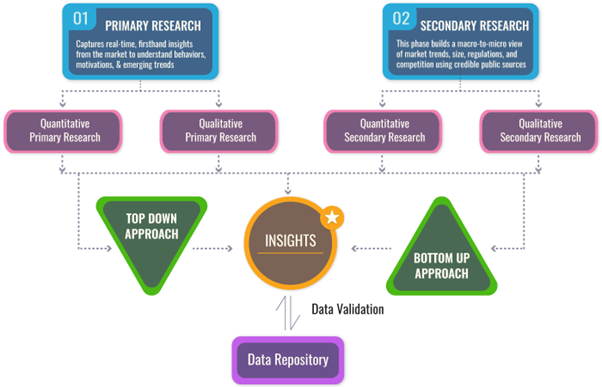
We follow a comprehensive, multi-phase research framework designed to deliver accurate, strategic, and decision-ready intelligence. Our process integrates primary and secondary research , both quantitative and qualitative , along with dual modeling techniques ( top-down and bottom-up) and a final layer of validation through our proprietary in-house repository.
PRIMARY RESEARCH
Primary research captures real-time, firsthand insights from the market to understand behaviors, motivations, and emerging trends.
1. Quantitative Primary Research
Objective: Generate statistically significant data directly from market participants.
Approaches:- Structured surveys with customers, distributors, and field agents
- Mobile-based data collection for point-of-sale audits and usage behavior
- Phone-based interviews (CATI) for market sizing and product feedback
- Online polling around industry events and digital campaigns
- Purchase frequency by customer type
- Channel performance across geographies
- Feature demand by application or demographic
2. Qualitative Primary Research
Objective: Explore decision-making drivers, pain points, and market readiness.
Approaches:- In-depth interviews (IDIs) with executives, product managers, and key decision-makers
- Focus groups among end users and early adopters
- Site visits and observational research for consumer products
- Informal field-level discussions for regional and cultural nuances
SECONDARY RESEARCH
This phase helps establish a macro-to-micro understanding of market trends, size, regulation, and competitive dynamics, sourced from credible and public domain information.
1. Quantitative Secondary Research
Objective: Model market value and segment-level forecasts based on published data.
Sources include:- Financial reports and investor summaries
- Government trade data, customs records, and regulatory statistics
- Industry association publications and economic databases
- Channel performance and pricing data from marketplace listings
- Revenue splits, pricing trends, and CAGR estimates
- Supply-side capacity and volume tracking
- Investment analysis and funding benchmarks
2. Qualitative Secondary Research
Objective: Capture strategic direction, innovation signals, and behavioral trends.
Sources include:- Company announcements, roadmaps, and product pipelines
- Publicly available whitepapers, conference abstracts, and academic research
- Regulatory body publications and policy briefs
- Social and media sentiment scanning for early-stage shifts
- Strategic shifts in market positioning
- Unmet needs and white spaces
- Regulatory triggers and compliance impact
DUAL MODELING: TOP-DOWN + BOTTOM-UP
To ensure robust market estimation, we apply two complementary sizing approaches:
Top-Down Modeling:- Start with broader industry value (e.g., global or regional TAM)
- Apply filters by segment, geography, end-user, or use case
- Adjust with primary insights and validation benchmarks
- Ideal for investor-grade market scans and opportunity mapping
- Aggregate from the ground up using sales volumes, pricing, and unit economics
- Use internal modeling templates aligned with stakeholder data
- Incorporate distributor-level or region-specific inputs
- Most accurate for emerging segments and granular sub-markets
DATA VALIDATION: IN-HOUSE REPOSITORY
We close the loop with proprietary data intelligence built from ongoing projects, industry monitoring, and historical benchmarking. This repository includes:
- Multi-sector market and pricing models
- Key trendlines from past interviews and forecasts
- Benchmarked adoption rates, churn patterns, and ROI indicators
- Industry-specific deviation flags and cross-check logic
- Catches inconsistencies early
- Aligns projections across studies
- Enables consistent, high-trust deliverables