

Global Smart TV Market Size and Forecast (2025 – 2033), Global and Regional Growth, Trend, Share, and Industry Analysis Report Coverage: By Operating System (Android TV, Tizen, WebOS, Roku, Others), By Resolution (4K UHD TV, HDTV, Full HD TV, 8K TV), By Screen Size (Below 32 inches, 32 to 45 inches, 46 to 55 inches, 56 to 65 inches, Above 65 inches), By Technology (OLED, QLED, LED, Others), By Distribution Channel (Online, Offline), and Geography
2025-11-26
Semiconductor and Electronics
Ekta Chaurasia (Team Lead)
Description
Smart TV Market Overview
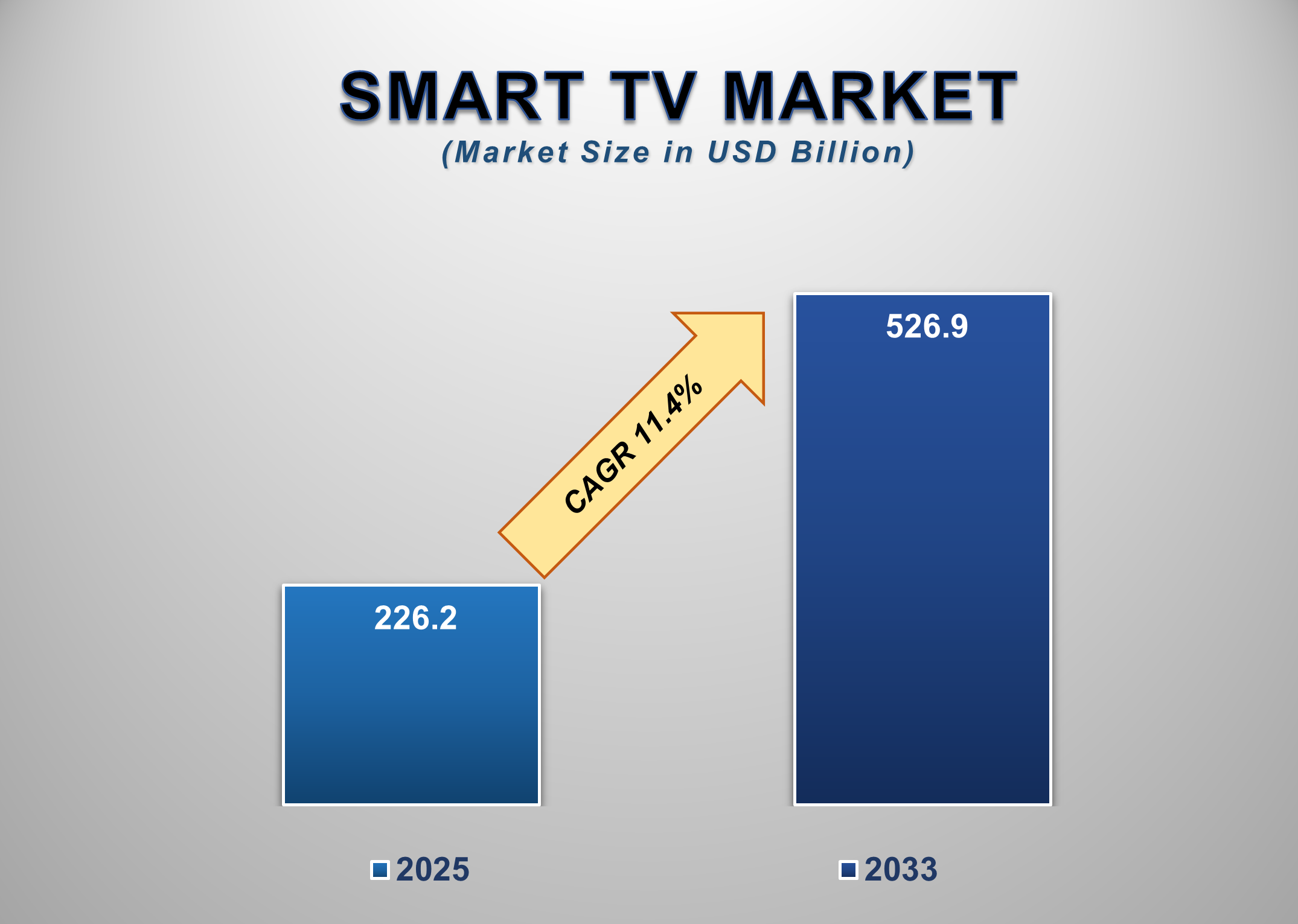
The Global Smart TV Market is projected to reach US$526.9 billion by 2033 from an estimated US$226.2 billion in 2025, growing at a CAGR of 11.4% during 2025–2033. The market is witnessing rapid expansion driven by evolving consumer preferences for connected entertainment systems, advancements in display technology, and growing internet penetration worldwide. Smart TVs, embedded with advanced operating systems, allow users to access a vast range of content, from streaming services and games to web browsing, directly from their television sets.
A rising appetite for 4K and 8K
displays, coupled with AI-integrated voice assistance and smart home
connectivity, is boosting adoption across both developed and emerging
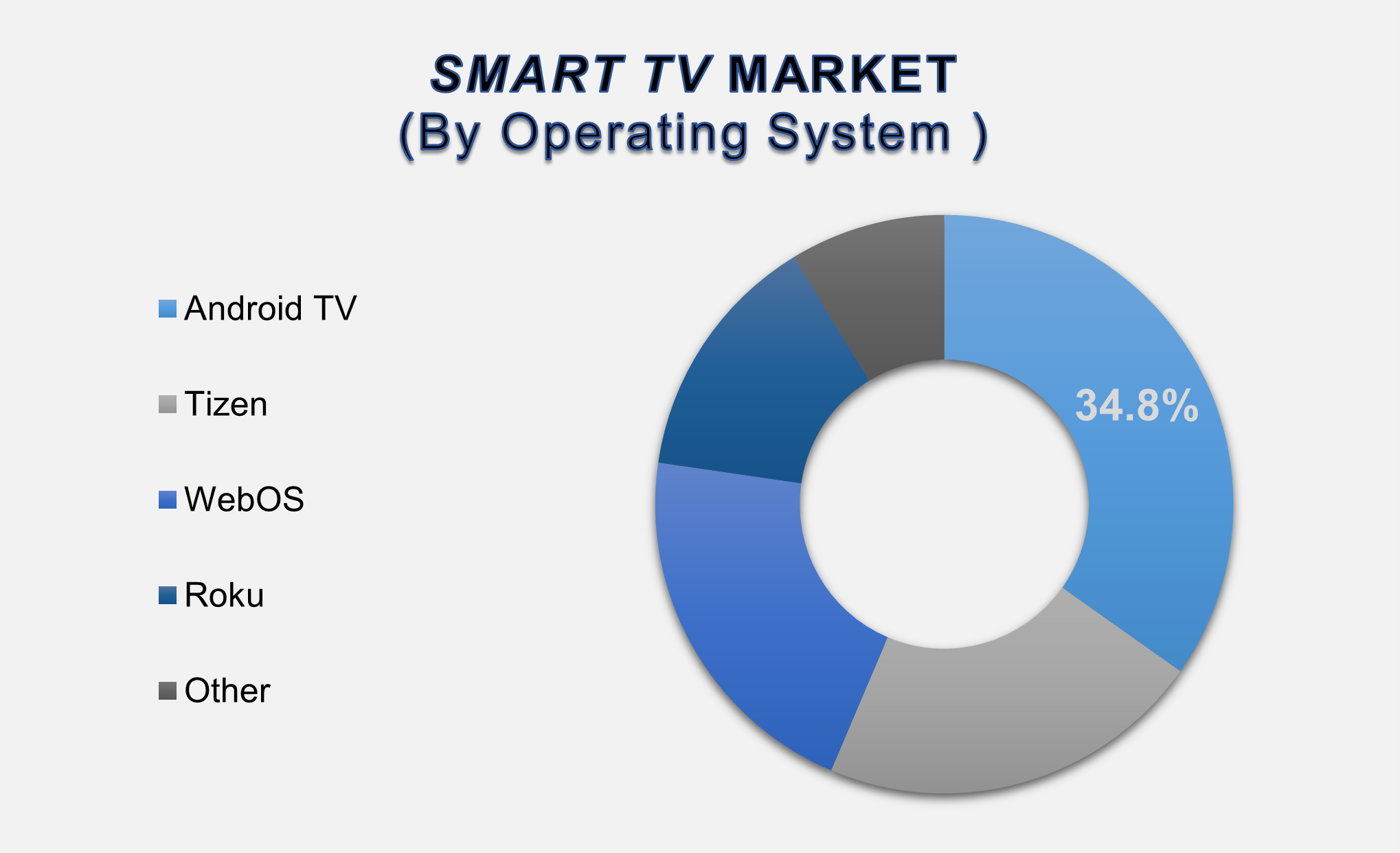
economies. Notably, Android TV leads the market with a 34.8% share due to its
flexible ecosystem and wide developer support. Meanwhile, the proliferation of
OTT platforms and reduced costs of high-resolution panels are broadening
accessibility to high-end smart TVs. Consumers are increasingly switching from
conventional televisions to smart variants, fueling intensified competition
among global manufacturers.
Smart TV Market Drivers
and Opportunities
Rising
Internet Penetration and OTT Adoption are Driving the Smart TV Market Growth
The rapid global adoption of high-speed internet services has been
a vital catalyst for the expansion of the smart TV market. With the growing
accessibility of broadband and 4G/5G mobile networks, consumers now enjoy
seamless connectivity that supports HD and 4K content streaming via popular OTT
(over-the-top) platforms. Streaming giants such as Netflix, Hulu, and Amazon
Prime Video have revolutionized media consumption by shifting audiences from
traditional broadcast models to direct-to-consumer digital platforms. This
transformation is further fueled by the rising availability of affordable data
plans and the proliferation of smart devices. As user engagement with OTT
content surges, smart TVs are becoming the preferred medium for home
entertainment, owing to their ability to provide immersive audiovisual
experiences. Moreover, young consumers increasingly favor smart TVs for their
capability to integrate social media, gaming, and music applications alongside
mainstream video streaming. Government initiatives supporting digital
infrastructure growth in emerging economies, coupled with the competitive
pricing strategies of smart TV manufacturers, have enhanced market penetration
among middle-income households. This shift in consumer behavior from passive TV
viewing to interactive content streaming is poised to significantly drive smart
TV demand during the projected period.
Technological Innovations in Display and Connectivity Are
Accelerating Smart TV Adoption
The evolution of smart TV technology has been marked by rapid
advancements in display resolution, processing power, and user-friendly
interfaces. Manufacturers are consistently improving TV panels through
technologies such as OLED, QLED, MicroLED, and Mini-LED, which offer enhanced
brightness, deep black levels, wider color gamut, and exceptional viewing
angles. Meanwhile, the integration of AI-powered features such as upscaling to
8K, adaptive contrast control, and voice-command navigation significantly elevates
the viewing experience. Moreover, the incorporation of smart home connectivity
protocols like Google Assistant, Alexa, and Apple HomeKit, along with support
for Wi-Fi 6 and Bluetooth 5.0, enables smooth multi-device communication and
home ecosystem integration. The rising adoption of cloud gaming, virtual
reality experiences, and home fitness applications has expanded the utility of
smart TVs beyond entertainment. Advanced audio technologies, including Dolby
Atmos and DTS:X, have created cinema-like audio experiences, encouraging
consumers to upgrade to premium smart TV models. These innovations not only
enhance the aesthetic appeal and technical capabilities of smart TVs but also
make them central to connected living spaces. As manufacturers continue to
differentiate through innovations in design, display sophistication, and
integrated software ecosystems, the smart TV market is expected to witness
significant growth momentum.
Emerging Economies' Growth of Smart TV Is Poised to Create
Significant Opportunities in the Smart TV Market Worldwide
Rapid urbanization, rising disposable incomes, and the expansion
of consumer electronics distribution networks in emerging economies present
promising opportunities for smart TV manufacturers. Countries across the Asia
Pacific, Latin America, and Africa are experiencing increased household
penetration of advanced digital devices, fueled by economic development and
government-backed digitalization programs. The advent of local and regional
content platforms, as well as language-specific streaming services, is further
cultivating the demand for smart TVs among previously underserved populations.
Affordable financing options, EMI schemes, and promotional discounts offered
through online retail channels have made larger screen sizes and
higher-resolution smart TVs financially accessible to a broader demographic.
Consumer preferences in high-potential markets such as India, Indonesia,
Brazil, and Nigeria are shifting away from conventional TV sets toward smart
TVs that can support online education, telehealth, and social entertainment.
Additionally, the rise of domestic smart TV manufacturers, alongside strategic
partnerships with telecom operators offering bundled broadband services, is
reshaping the competitive landscape in these regions. With OEMs focusing on customized
regional content, energy-efficient models, and modular software upgrades, the
smart TV market in emerging economies is positioned for strong future growth.
These untapped markets not only offer significant sales potential but also
provide opportunities for smart TV brands to establish long-term loyalty among
newly connected users.
Smart TV Market Scope
|
Report Attributes |
Description |
|
Market Size in 2025 |
USD 226.2 Billion |
|
Market Forecast in 2033 |
USD 526.9 Billion |
|
CAGR % 2025-2033 |
11.4% |
|
Base Year |
2024 |
|
Historic Data |
2020-2024 |
|
Forecast Period |
2025-2033 |
|
Report USP |
Production, Consumption,
Company Share, Company Heatmap, Company Production Capacity, Growth Factors,
and more |
|
Segments Covered |
●
By Operating
System ●
By Resolution ●
By Screen Size ●
BY Technology ●
By Distribution
Channel |
|
Regional Scope |
●
North America, ●
Europe, ●
APAC, ●
Latin America ●
Middle East and
Africa |
|
Country Scope |
1)
U.S. 2)
Canada 3)
Germany 4)
UK 5)
France 6)
Spain 7)
Italy 8)
Switzerland 9)
China 10)
Japan 11)
India 12)
Australia 13)
South Korea 14)
Brazil 15)
Mexico 16)
Argentina 17)
South Africa 18)
Saudi Arabia 19)
UAE |
Smart TV Market Report
Segmentation Analysis
The global Smart TV Market is
segmented into Operating System, Resolution, Screen Size, Technology,
Distribution Channel, and Geography.
The
Android TV Segment Accounted for the Largest Market
Share in the Global Smart TV Market
By Operating System, the market is segmented into Android TV, Tizen, WebOS, Roku, and Others. The Android TV segment dominates the global market, accounting for the largest share in 2025. This dominance is attributed to Android’s open-source architecture, which enables TV manufacturers to integrate customizable software environments with extensive app compatibility. Android TVs offer seamless access to the Google Play Store, allowing users to download hundreds of apps, games, and streaming platforms. The OEM flexibility, support for Chromecast built-in, and regular software updates reinforce Android TV’s leadership. The widespread use of Android in smartphones further enhances consumer familiarity and ease of use, leading to broader adoption, especially in the Asia Pacific and Latin America.
4K
UHD TV Segment Led the Global Smart TV Market by Resolution in 2025
By resolution, the Smart TV Market is classified into 4K UHD TV, HDTV,
Full HD TV, 8K TV, and Others. The 4K UHD TV segment held the largest market
share in 2025, driven by a combination of decreasing price points and
increasing availability of 4K content across OTT platforms. The
ultra-high-definition resolution offers exceptional clarity and depth,
appealing to consumers seeking immersive visual experiences. Content providers
such as Netflix, Amazon Prime, and YouTube have significantly expanded their 4K
libraries, encouraging users to adopt 4K smart TVs. Furthermore, 4K TVs are
becoming the default resolution for mid-range and premium TV models, replacing
Full HD options, and gaining strong traction among home cinema enthusiasts.
Below
32 Inches Segment Was the Most Significant in the Global Smart TV Market by
Screen Size in 2025
By
Screen Size, the Smart TV Market is categorized into below 32 inches, 32 to 45 inches, 46 to 55 inches, 56 to 65
inches, and above 65 inches. The Below 32-inch segment captured the highest market share in 2025,
particularly due to its widespread use in small living spaces, bedrooms, and
secondary TV setups. This segment is notably popular in price-sensitive
regions, including South Asia and parts of Africa, where households prioritize
affordability and basic smart functionality. However, the market for larger
screens (above 55 inches) is expected to grow rapidly as consumers increasingly
prefer enhanced home theater-like viewing experiences and content in 4K and 8K
resolutions.
The following segments are
part of an in-depth analysis of the global Smart TV market:
|
Market Segments |
|
|
By Operating
System |
●
Android TV ●
Tizen ●
WebOS ●
Roku ●
Other) |
|
By Resolution |
●
4K UHD TV ●
HDTV ●
Full HD TV ●
8K TV |
|
By Screen Size |
●
Below 32 inches ●
32 to 45 inches ●
46 to 55 inches ●
56 to 65 inches ●
Above 65 inches |
|
By Technology |
●
OLED ●
QLED ●
LED ●
Others |
|
By
Distribution Channel |
●
Online ●
Offline |
Smart TV Market Share
Analysis by Region
The
North America region is projected to hold the largest
share of the global Smart TV market over the forecast period.
North
America dominated the global Smart TV Market in 2025, accounting for 38.9% of
total revenue. This leadership is driven by high household internet penetration
rates, a robust base of OTT service subscribers, and early adoption of premium
home entertainment systems. Consumers in the region exhibit a strong preference
for the latest-generation 4K and 8K TV panels,
alongside advanced features including voice assistants, Dolby Vision IQ, and
multi-device integration. Additionally, the presence of leading industry
players, strategic partnerships with streaming platforms, and rapidly growing
8K content availability are strengthening market traction in the U.S. and
Canada.
Asia
Pacific is anticipated to witness the fastest CAGR during the forecast period.
The region’s rapidly growing middle class, increase in disposable income, and
expansion of local manufacturing capabilities make it a significant growth hub.
Notably, high demand in China, India, and Southeast Asia, supported by
digitalization initiatives and rising broadband penetration, is fueling market
expansion. Local brands offering competitively priced smart TVs, along with
tailored regional content, contribute to the market's dynamism in APAC.
Smart TV Market
Competition Landscape Analysis
The Smart TV market is fragmented
with the presence of global giants and regional players. Key companies include
Samsung Electronics Co., Ltd., LG Electronics Inc., Sony Corporation, TCL
Electronics, and Hisense International. These players invest heavily in R&D
to innovate display technologies like QD-OLED and MicroLED. Partnerships with
content platforms and AI-chip integration serve as strategic differentiators.
Emerging companies like Vizio, Xiaomi, and OnePlus focus on affordability and
localized content. Mergers, smart home integration strategies, and voice
assistant compatibility remain core competitive elements.
Global Smart TV Market
Recent Developments News:
- In August 2024,
Haier Group Corporation introduced its premium M95E series QD-Mini LED
4K televisions in the Indian market. The new models are engineered with
advanced display, audio, and gaming technologies to deliver a high-quality
home entertainment experience.
- In July 2024,
Sony Group Corporation launched the BRAVIA 7 series, featuring Mini
LED backlighting, the Cognitive Processor XR, and XR Triluminos Pro
technology. The lineup is designed to offer enhanced picture and sound
quality, creating a more immersive and realistic viewing experience.
- In July 2024,
Koninklijke Philips N.V. released its 2024 OLED TV lineup in Europe,
including the OLED809 and OLED909 models. The OLED809 features a 144 Hz refresh rate, upgraded video
processing, and support for Apple AirPlay 2 and HomeKit. The OLED909
includes a 4-sided Ambilight system and succeeds the previous OLED908
model.
The Global Smart TV Market Is
Dominated by a Few Large Companies, such as
●
Haier Inc.
●
Hisense International
●
Intex Technologies
●
Koninklijke Philips
N.V
●
LG Electronics Inc
●
Panasonic Corporation
●
Samsung Electronics
Co. Ltd
●
Sansui Electric Co.
Ltd
●
Sony Corporation
●
TCL Electronics
Holdings Limited
●
Toshiba Visual
Solutions (TVS Regza Corporation)
● Others
Frequently Asked Questions
Ekta Chaurasia (Team Lead)
Ekta Chaurasia is a highly experienced Team Lead at M2Square Consultancy with over 7 years of expertise in market research, strategic consulting, competitive benchmarking, and business intelligence solutions. She specializes in ICT, semiconductors & electronics, automotive & transportation, and industrial machinery markets.
She leads end-to-end global research projects focused on market trends, industry analysis, growth forecasting, customer insights, and strategic decision-making. Known for her analytical leadership and industry expertise, Ekta helps businesses uncover growth opportunities, evaluate competitive landscapes, and stay ahead in rapidly evolving markets through accurate and insight-driven research.
1. Global Smart TV Market
Introduction and Market Overview
1.1.
Objectives
of the Study
1.2.
Global
Smart TV Market Scope and Market Estimation
1.2.1.Global Smart TV Overall
Market Size (US$ Bn), Market CAGR (%), Market forecast (2025 - 2033)
1.2.2.Global Smart TV Market
Revenue Share (%) and Growth Rate (Y-o-Y) from 2020 - 2033
1.3.
Market
Segmentation
1.3.1.Operating System of Global
Smart TV Market
1.3.2.Resolution of Global Smart
TV Market
1.3.3.Screen Size of Global Smart
TV Market
1.3.4.Technology of Global Smart
TV Market
1.3.5.Distribution Channel of
Global Smart TV Market
1.3.6.Region of Global Smart TV
Market
2.
Executive Summary
2.1. Demand Side Trends
2.2. Key Market Trends
2.3. Market Demand (US$ Bn)
Analysis 2020 – 2024 and Forecast, 2025 – 2033
2.4. Demand and Opportunity
Assessment
2.5. Demand Supply Scenario
2.6. Market Dynamics
2.7. Drivers
2.8. Limitations
2.9. Opportunities
2.10. Impact Analysis of Drivers
and Restraints
2.11. Emerging Trends for
Lithium-ion Battery Recycling Market
2.12. Porter’s Five Forces
Analysis
2.13. PEST Analysis
2.14. Key Regulation
3. Global
Smart TV Market Estimates
& Historical Trend Analysis (2020 - 2024)
4.
Global Smart TV Market Estimates & Forecast Trend Analysis, by
Operating System
4.1.
Global
Smart TV Market Revenue (US$ Bn) Estimates and Forecasts, by Operating System, 2020
- 2033
4.1.1.Android TV
4.1.2.Tizen
4.1.3.WebOS
4.1.4.Roku
4.1.5.Other
5.
Global Smart TV Market Estimates & Forecast Trend Analysis, by
Resolution
5.1.
Global
Smart TV Market Revenue (US$ Bn) Estimates and Forecasts, by Resolution, 2020 -
2033
5.1.1.4K UHD TV
5.1.2.HDTV
5.1.3.Full HD TV
5.1.4.8K TV
6.
Global Smart TV Market Estimates & Forecast Trend Analysis, by
Screen Size
6.1.
Global
Smart TV Market Revenue (US$ Bn) Estimates and Forecasts, by Form, 2020 - 2033
6.1.1.Below 32 inches
6.1.2.32 to 45 inches
6.1.3.46 to 55 inches
6.1.4.56 to 65 inches
6.1.5.Above 65 inches
7.
Global Smart TV Market Estimates & Forecast Trend Analysis, by
Technology
7.1.
Global
Smart TV Market Revenue (US$ Bn) Estimates and Forecasts, by Technology, 2020 -
2033
7.1.1.OLED
7.1.2.QLED
7.1.3.LED
7.1.4.Others
8. Global
Smart TV Market Estimates
& Forecast Trend Analysis, by Distribution Channel
8.1.
Global
Smart TV Market Revenue (US$ Bn) Estimates and Forecasts, by Distribution
Channel, 2020 - 2033
8.1.1.Online
8.1.2.Offline
9. Global
Smart TV Market Estimates
& Forecast Trend Analysis, by Region
9.1.
Global
Smart TV Market Revenue (US$ Bn) Estimates and Forecasts, by Region, 2020 - 2033
9.1.1.North America
9.1.2.Europe
9.1.3.Asia Pacific
9.1.4.Middle East & Africa
9.1.5.Latin America
10. North America Smart
TV Market: Estimates & Forecast
Trend Analysis
10.1. North America Smart TV
Market Assessments & Key Findings
10.1.1.
North
America Smart TV Market Introduction
10.1.2.
North
America Smart TV Market Size Estimates and Forecast (US$ Billion) (2020 - 2033)
10.1.2.1.
By Operating System
10.1.2.2.
By Resolution
10.1.2.3.
By Screen Size
10.1.2.4.
By Technology
10.1.2.5.
By Distribution Channel
10.1.2.6. By Country
10.1.2.6.1. The U.S.
10.1.2.6.2. Canada
11. Europe Smart
TV Market: Estimates & Forecast
Trend Analysis
11.1. Europe Smart TV Market
Assessments & Key Findings
11.1.1. Europe Smart TV Market
Introduction
11.1.2. Europe Smart TV Market
Size Estimates and Forecast (US$ Billion) (2020 - 2033)
11.1.2.1.
By Operating System
11.1.2.2.
By Resolution
11.1.2.3.
By Screen Size
11.1.2.4.
By Technology
11.1.2.5.
By Distribution Channel
11.1.2.6. By Country
11.1.2.6.1.
Germany
11.1.2.6.2.
Italy
11.1.2.6.3.
U.K.
11.1.2.6.4.
France
11.1.2.6.5.
Spain
11.1.2.6.6.
Switzerland
11.1.2.6.7. Rest
of Europe
12. Asia Pacific Smart
TV Market: Estimates & Forecast
Trend Analysis
12.1. Asia Pacific Market
Assessments & Key Findings
12.1.1.
Asia
Pacific Smart TV Market Introduction
12.1.2.
Asia
Pacific Smart TV Market Size Estimates and Forecast (US$ Billion) (2020 - 2033)
12.1.2.1.
By Operating System
12.1.2.2.
By Resolution
12.1.2.3.
By Screen Size
12.1.2.4.
By Technology
12.1.2.5.
By Distribution Channel
12.1.2.6. By Country
12.1.2.6.1. China
12.1.2.6.2. Japan
12.1.2.6.3. India
12.1.2.6.4. Australia
12.1.2.6.5. South Korea
12.1.2.6.6. Rest of Asia Pacific
13. Middle East & Africa Smart
TV Market: Estimates & Forecast
Trend Analysis
13.1. Middle East & Africa
Market Assessments & Key Findings
13.1.1. Middle
East & Africa
Smart TV Market Introduction
13.1.2. Middle
East & Africa
Smart TV Market Size Estimates and Forecast (US$ Billion) (2020 - 2033)
13.1.2.1.
By Operating System
13.1.2.2.
By Resolution
13.1.2.3.
By Screen Size
13.1.2.4.
By Technology
13.1.2.5.
By Distribution Channel
13.1.2.6. By Country
13.1.2.6.1. UAE
13.1.2.6.2. Saudi
Arabia
13.1.2.6.3. South
Africa
13.1.2.6.4. Rest
of MEA
14. Latin America
Smart TV Market: Estimates &
Forecast Trend Analysis
14.1. Latin America Market
Assessments & Key Findings
14.1.1. Latin America Smart TV
Market Introduction
14.1.2. Latin America Smart TV
Market Size Estimates and Forecast (US$ Billion) (2020 - 2033)
14.1.2.1.
By Operating System
14.1.2.2.
By Resolution
14.1.2.3.
By Screen Size
14.1.2.4.
By Technology
14.1.2.5. By Distribution
Channel
14.1.2.6. By Country
14.1.2.6.1. Brazil
14.1.2.6.2. Argentina
14.1.2.6.3. Mexico
14.1.2.6.4. Rest
of LATAM
15.
Country
Wise Market: Introduction
16.
Competition
Landscape
16.1. Global Smart TV Market Product
Mapping
16.2. Global Smart TV Market
Concentration Analysis, by Leading Players / Innovators / Emerging Players /
New Entrants
16.3. Global Smart TV Market Tier
Structure Analysis
16.4. Global Smart TV Market
Concentration & Company Market Shares (%) Analysis, 2023
17.
Company
Profiles
17.1.
Haier Inc.
17.1.1.
Company
Overview & Key Stats
17.1.2.
Financial
Performance & KPIs
17.1.3.
Product
Portfolio
17.1.4.
SWOT
Analysis
17.1.5.
Business
Strategy & Recent Developments
* Similar details would be provided for all the players
mentioned below
17.2.
Hisense International
17.3.
Intex Technologies
17.4.
Koninklijke Philips N.V
17.5.
LG Electronics Inc
17.6.
Panasonic Corporation
17.7.
Samsung Electronics Co. Ltd
17.8.
Sansui Electric Co. Ltd
17.9.
Sony Corporation
17.10.
TCL Electronics Holdings Limited
17.11.
Toshiba Visual Solutions (TVS Regza Corporation)
17.12.
Others
18. Research
Methodology
18.1. External Transportations /
Databases
18.2. Internal Proprietary
Database
18.3. Primary Research
18.4. Secondary Research
18.5. Assumptions
18.6. Limitations
18.7. Report FAQs
19. Research Findings & Conclusion
Our Research Methodology
"Insight without rigor is just noise."
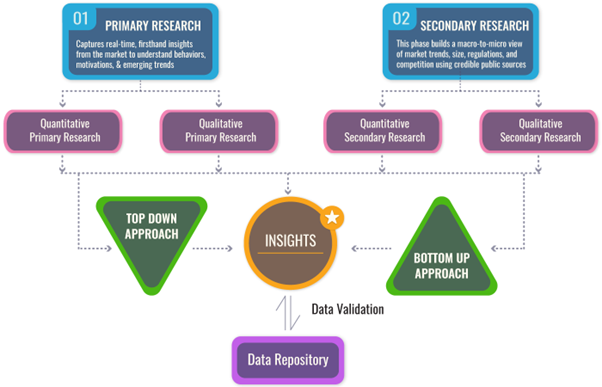
We follow a comprehensive, multi-phase research framework designed to deliver accurate, strategic, and decision-ready intelligence. Our process integrates primary and secondary research , both quantitative and qualitative , along with dual modeling techniques ( top-down and bottom-up) and a final layer of validation through our proprietary in-house repository.
PRIMARY RESEARCH
Primary research captures real-time, firsthand insights from the market to understand behaviors, motivations, and emerging trends.
1. Quantitative Primary Research
Objective: Generate statistically significant data directly from market participants.
Approaches:- Structured surveys with customers, distributors, and field agents
- Mobile-based data collection for point-of-sale audits and usage behavior
- Phone-based interviews (CATI) for market sizing and product feedback
- Online polling around industry events and digital campaigns
- Purchase frequency by customer type
- Channel performance across geographies
- Feature demand by application or demographic
2. Qualitative Primary Research
Objective: Explore decision-making drivers, pain points, and market readiness.
Approaches:- In-depth interviews (IDIs) with executives, product managers, and key decision-makers
- Focus groups among end users and early adopters
- Site visits and observational research for consumer products
- Informal field-level discussions for regional and cultural nuances
SECONDARY RESEARCH
This phase helps establish a macro-to-micro understanding of market trends, size, regulation, and competitive dynamics, sourced from credible and public domain information.
1. Quantitative Secondary Research
Objective: Model market value and segment-level forecasts based on published data.
Sources include:- Financial reports and investor summaries
- Government trade data, customs records, and regulatory statistics
- Industry association publications and economic databases
- Channel performance and pricing data from marketplace listings
- Revenue splits, pricing trends, and CAGR estimates
- Supply-side capacity and volume tracking
- Investment analysis and funding benchmarks
2. Qualitative Secondary Research
Objective: Capture strategic direction, innovation signals, and behavioral trends.
Sources include:- Company announcements, roadmaps, and product pipelines
- Publicly available whitepapers, conference abstracts, and academic research
- Regulatory body publications and policy briefs
- Social and media sentiment scanning for early-stage shifts
- Strategic shifts in market positioning
- Unmet needs and white spaces
- Regulatory triggers and compliance impact
DUAL MODELING: TOP-DOWN + BOTTOM-UP
To ensure robust market estimation, we apply two complementary sizing approaches:
Top-Down Modeling:- Start with broader industry value (e.g., global or regional TAM)
- Apply filters by segment, geography, end-user, or use case
- Adjust with primary insights and validation benchmarks
- Ideal for investor-grade market scans and opportunity mapping
- Aggregate from the ground up using sales volumes, pricing, and unit economics
- Use internal modeling templates aligned with stakeholder data
- Incorporate distributor-level or region-specific inputs
- Most accurate for emerging segments and granular sub-markets
DATA VALIDATION: IN-HOUSE REPOSITORY
We close the loop with proprietary data intelligence built from ongoing projects, industry monitoring, and historical benchmarking. This repository includes:
- Multi-sector market and pricing models
- Key trendlines from past interviews and forecasts
- Benchmarked adoption rates, churn patterns, and ROI indicators
- Industry-specific deviation flags and cross-check logic
- Catches inconsistencies early
- Aligns projections across studies
- Enables consistent, high-trust deliverables