

Sports Supplement Market Size and Forecast (2026–2034), Global and Regional Growth, Trends, Share and Industry Analysis Report Coverage; By Product Type, Ingredients, Functionality, Formulation, End User, Distribution Channel, and Geography
2026-11-05
Consumer Products
Aishwarya Panbude (Research Analyst)
Description
Sports Supplement Market Overview
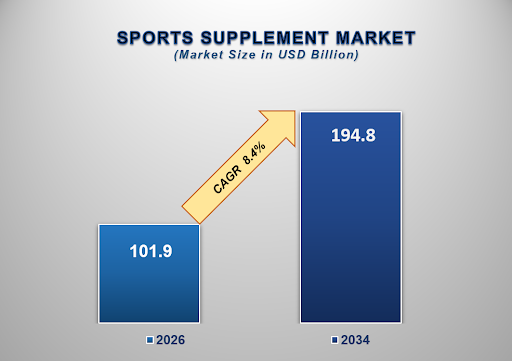
The global Sports Supplement Market is projected to reach USD 101.98 billion in 2026 and USD 194.86 billion by 2034, registering a CAGR of 8.4% during 2026–2034. Market growth is supported by increasing participation in fitness activities, rising interest in sports performance and recovery, and growing awareness of nutrition among athletes, bodybuilders, gym members, and recreational exercisers. Sports supplements have also gained visibility among consumers who incorporate protein, amino acids, creatine, and other targeted nutritional products into their everyday wellness routines.
Sports supplements are products formulated to complement dietary intake and support specific nutritional objectives associated with physical activity. Common categories include protein powders, amino acid supplements, creatine, pre-workout formulations, electrolyte and hydration products, recovery supplements, vitamins, minerals, and ready-to-consume sports nutrition products. Their formulations differ according to ingredient composition, intended use, serving format, and target consumer group.
The market has expanded beyond professional athletes to include recreational fitness participants and consumers pursuing muscle development, exercise recovery, endurance, and general nutritional support. This broader customer base is encouraging manufacturers to introduce products with varied flavors, ingredient combinations, serving sizes, and formulations. Plant-based proteins, convenient ready-to-drink products, and simplified supplement routines are also creating opportunities for product differentiation.
Distribution has become another important factor in market development. Online stores enable consumers to compare ingredients, nutritional information, prices, and product reviews, while specialist nutrition retailers and fitness centers provide access to products aimed at specific training goals. At the same time, consumers are becoming more attentive to ingredient transparency, product authenticity, third-party testing, and evidence supporting performance claims. Manufacturers that combine clear labeling with quality assurance and appropriate product positioning can strengthen consumer trust in an increasingly competitive market.
Sports supplements are generally used alongside regular food intake rather than as substitutes for a balanced diet. Product suitability depends on individual nutritional requirements, health status, training intensity, and the ingredients included in the formulation. This makes product education, responsible marketing, and reliable manufacturing important elements of the market's long-term development.
Sports Supplement Market Drivers and Opportunities
Increasing Participation in Fitness Activities Is Driving Market Growth
Growing participation in gym workouts, strength training, recreational sports, running, and endurance activities is increasing demand for sports supplements. Consumers are paying greater attention to the relationship between nutrition, exercise performance, and recovery, encouraging the use of protein products, amino acids, creatine, and other targeted formulations.
The customer base has expanded beyond competitive athletes to include beginners, recreational exercisers, and individuals following structured fitness programmes. This change is influencing product development, with manufacturers offering supplements for different training objectives, dietary preferences, and levels of experience. As fitness participation broadens, brands have opportunities to develop products that address specific nutritional needs while providing clear ingredient information and appropriate usage guidance.
Product Innovation and Ingredient Diversification Are Fueling Market Expansion
Sports supplement manufacturers are expanding their portfolios through new ingredient combinations, alternative protein sources, and convenient consumption formats. Whey and casein remain established protein sources, while soy, pea, rice, and other plant-derived proteins appeal to consumers seeking dairy-free or vegan alternatives. Creatine, branched-chain amino acids, essential amino acids, electrolytes, and other functional ingredients support further product diversification.
Innovation is also occurring in flavor development, formulation convenience, portion-controlled servings, and ready-to-drink products. Consumers increasingly compare nutritional composition, ingredient transparency, digestibility, and price when selecting supplements. Manufacturers that balance formulation quality with convenient formats and credible product positioning can strengthen their competitive position.
E-Commerce and Personalized Sports Nutrition Create Significant Opportunities
The expansion of online retail creates opportunities for sports supplement brands to reach consumers directly and serve specialized nutritional preferences. Brand websites, online marketplaces, subscription models, and digital fitness communities enable companies to communicate product features and reach consumers interested in specific training goals. Digital channels also allow manufacturers to introduce niche products without relying exclusively on conventional retail distribution.
Another opportunity lies in personalized sports nutrition. Brands can develop product ranges around endurance, strength training, recovery, plant-based diets, and other consumer requirements. Bundled product offerings and educational resources can help consumers navigate different supplement categories. However, personalization should be based on appropriate nutritional guidance and substantiated claims rather than unsupported promises about performance or health outcomes.
Sports Supplement Market Scope
Sports Supplement Market Report Segmentation Analysis
The global Sports Supplement Market is segmented by product type, ingredients, functionality, formulation, end user, distribution channel, and region. These categories reflect differences in consumer nutritional requirements, exercise objectives, ingredient preferences, and purchasing behavior.
Protein Supplements Segment Is Expected to Dominate the Sports Supplement Market
Protein supplements represent a major product category because protein is essential for muscle maintenance and contributes to muscle repair and recovery following exercise. Products include whey protein, casein, plant-based protein powders, protein blends, and ready-to-drink protein formulations. Demand comes from bodybuilders, strength-training participants, athletes, and consumers seeking convenient ways to increase dietary protein intake.
Protein products also benefit from established distribution networks and widespread consumer familiarity. Manufacturers continue to introduce lactose-free, vegan, low-sugar, and specialized formulations to serve different dietary preferences. According to a published industry estimate for 2025, sports protein products accounted for approximately 72.48% of the sports supplement market. The exact share can vary depending on the definition of sports protein products and the market categories included in a particular study.
Pre-Workout and Recovery Supplements Serve Different Exercise Requirements
Pre-workout supplements are designed to be consumed before exercise and may contain ingredients such as caffeine, creatine, amino acids, or other compounds, depending on the formulation. Consumers select these products according to their training routines, ingredient preferences, and tolerance.
Post-workout and recovery products focus on nutritional support following physical activity. Protein powders, amino acid formulations, and selected carbohydrate-protein combinations are used by consumers seeking convenient recovery nutrition. Product effectiveness and suitability depend on the ingredients, serving size, overall diet, and individual requirements.
Powder Formulations Maintain a Strong Position in Product Availability
Powders remain an established format for protein supplements, creatine, amino acids, and pre-workout products. They allow manufacturers to offer different serving sizes and flavor options, while consumers can mix products with water, milk, or other beverages as appropriate.
Capsules and tablets provide convenience for selected ingredients, while ready-to-drink formulations appeal to consumers who prefer products that require little preparation. Bars and other portable formats offer alternatives for use during travel or around training schedules. The choice of formulation depends on ingredient stability, ease of use, pricing, and consumer preferences.
The Following Segments Are Part of an In-Depth Analysis of the Global Sports Supplement Market
Market Segments
By Product Type
Protein Supplements: Include whey, casein, plant-based proteins, protein blends, and ready-to-drink products. These supplements are widely used to help meet dietary protein requirements and support muscle maintenance and recovery.
Creatine Supplements: Primarily include creatine monohydrate and other creatine formulations marketed for exercise performance. Product choice depends on ingredient quality, formulation, serving instructions, and consumer preferences.
Amino Acid Supplements: Include branched-chain amino acids, essential amino acids, and other amino acid formulations. These products are marketed for different sports nutrition purposes and are selected according to individual dietary needs.
Pre-Workout Supplements: Designed for consumption before training, these products may contain caffeine, creatine, amino acids, or other functional ingredients. Their composition and stimulant content vary significantly.
Post-Workout Supplements: Include protein-based products and other formulations marketed for post-exercise nutrition. Their role depends on the consumer's overall dietary intake and exercise requirements.
Electrolyte and Hydration Supplements: Include electrolyte powders, tablets, and beverages intended to help replace electrolytes lost through sweat. Requirements vary according to exercise duration, intensity, and environmental conditions.
Vitamins and Minerals: Include selected micronutrient formulations used by consumers seeking to address dietary gaps. Supplementation should be appropriate to individual requirements.
Other Sports Supplements: Include specialized formulations that do not fall into the main categories, such as certain endurance-focused and botanical products.
By Ingredients
Proteins and Amino Acids: Support the development of products for protein intake, muscle maintenance, and recovery. Sources include dairy-derived and plant-derived ingredients.
Carbohydrates: Used in selected sports nutrition products to provide energy, particularly for endurance activities and prolonged exercise.
Vitamins and Minerals: Incorporated into formulations to provide essential micronutrients where dietary intake may be insufficient.
Creatine: Used in sports supplements commonly associated with repeated high-intensity exercise and strength-training routines.
Electrolytes: Include minerals such as sodium and potassium used in hydration-focused products.
Botanicals and Herbal Ingredients: Included in selected formulations marketed for energy, performance, or general wellness. Their suitability depends on the ingredient, dose, evidence, and safety profile.
Probiotics: Used in certain products targeting digestive or broader wellness requirements, although their relevance depends on the strain and intended use.
Other Ingredients: Include additional compounds incorporated into specialized sports nutrition formulations.
By Functionality
Energy and Performance: Includes products marketed to support exercise energy, alertness, or training performance. Ingredient selection and stimulant content vary across products.
Muscle Growth: Covers protein and selected performance-oriented supplements commonly used alongside resistance training.
Recovery: Includes protein, amino acid, carbohydrate, and other formulations intended to complement post-exercise nutrition.
Hydration: Includes electrolyte products designed for fluid and electrolyte replacement during or following exercise.
Weight Management: Includes products marketed to complement weight-management programs. Results depend on overall diet, activity, and individual circumstances.
Endurance Support: Includes carbohydrate-electrolyte formulations and other products used during prolonged physical activity.
Other Functions: Includes specialized products developed for particular sporting activities or nutritional preferences.
By Formulation
Powder: Widely used for protein, creatine, amino acid, and pre-workout products. Powders offer flexible serving sizes and multiple flavor options.
Capsules: Provide a convenient format for ingredients that can be delivered in encapsulated form.
Tablets: Offer measured servings and are used for selected vitamins, minerals, and other supplement ingredients.
Liquid and Ready-to-Drink Products: Reduce preparation requirements and appeal to consumers seeking convenience before, during, or after exercise.
Bars: Provide portable sports nutrition formats, including protein bars and selected energy products.
Gummies: Offer an alternative consumption format for certain supplement ingredients, depending on formulation and serving requirements.
Other Formats: Include specialized delivery systems developed for particular ingredients or consumer needs.
By End User
Athletes: Include professional and competitive sports participants who may use supplements to complement structured training and nutritional plans.
Bodybuilders: Represent a major consumer group for protein products, creatine, and other supplements associated with resistance training.
Fitness Enthusiasts: Include gym members and individuals following regular exercise routines for strength, conditioning, and general fitness.
Recreational Sports Participants: Include people participating in running, cycling, team sports, and other recreational physical activities.
Lifestyle Users: Include consumers who use sports nutrition products alongside everyday fitness and wellness routines.
Others: Cover additional consumer groups with specialized nutritional requirements.
By Distribution Channel
Online Retail: Includes brand websites, online marketplaces, and other digital platforms that provide product comparisons and broad product availability.
Specialty Stores and Fitness Centers: Provide access to sports nutrition products through specialist retailers, supplement shops, and selected gym-based outlets.
Supermarkets and Hypermarkets: Offer selected mainstream supplements and convenient access for regular shoppers.
Drug Stores and Pharmacies: Distribute certain nutritional supplements and products positioned around general health and wellness.
Convenience Stores: Provide access to selected ready-to-drink products, bars, and portable sports nutrition formats.
Others: Include additional retail and distribution arrangements serving particular markets or customer groups.
Sports Supplement Market Share Analysis by Region
North America Holds a Significant Position in the Sports Supplement Market
North America represents an important market for sports supplements, supported by established fitness industries, a large base of gym members, and broad availability of sports nutrition products. The United States is a major market for protein powders, creatine, pre-workout products, and ready-to-drink nutrition. Online retailers, specialist supplement stores, fitness centers, and mainstream retailers all contribute to product distribution.
Consumer familiarity with established supplement brands supports market activity, while demand for plant-based ingredients, convenient formulations, and transparent labelling creates opportunities for product development. Competition is strong, making product quality, pricing, brand credibility, and distribution coverage important commercial considerations.
Europe Benefits from Established Sports Nutrition Retail and Diverse Dietary Preferences
Europe represents a developed market for sports supplements, with demand across the United Kingdom, Germany, France, Italy, Spain, and other countries. Fitness participation, recreational sports, and interest in protein-rich nutrition contribute to demand for protein powders, creatine, hydration products, and other formulations.
Consumers across the region have varied dietary preferences, encouraging manufacturers to offer vegan, lactose-free, and other specialized products. Regulatory requirements, ingredient compliance, labeling standards, and evidence supporting product claims are important considerations for companies operating across European markets.
Asia Pacific Offers Growth Opportunities Through Expanding Fitness Participation
Asia Pacific offers opportunities for sports supplement manufacturers as fitness participation, gym culture, and consumer awareness of sports nutrition expand. China, India, Japan, South Korea, and Australia represent markets with different consumer preferences, purchasing power, and distribution structures.
Rising interest in strength training, recreational fitness, and convenient nutrition can support demand for protein supplements, creatine, and other targeted products. Local flavors, affordable product sizes, regional distribution partnerships, and e-commerce can help brands reach a wider consumer base. Product education and consumer confidence remain important to sustained adoption.
Latin America Presents Opportunities Through Expanding Fitness and Retail Channels
Latin America offers potential for sports supplement brands through fitness centers, specialist nutrition stores, online marketplaces, and selected mainstream retailers. Brazil and Argentina are important markets within the region, while demand in other countries depends on disposable income, product availability, and consumer awareness.
Protein products and convenient sports nutrition formats can appeal to consumers involved in strength training and recreational sports. Companies seeking expansion must consider pricing, distribution reliability, local preferences, and compliance with national requirements governing nutritional supplements.
The Middle East and Africa Offer Opportunities in Specialist Sports Nutrition
The Middle East and Africa comprise diverse markets with varying levels of supplement adoption and retail development. In the Middle East, fitness clubs, sports facilities, specialist nutrition stores, and e-commerce channels support the availability of sports nutrition products. Saudi Arabia and the United Arab Emirates offer opportunities for brands serving active consumers and gym members.
Across Africa, growth potential depends on affordability, retail access, consumer awareness, and reliable product supply. Manufacturers and distributors can address these factors through suitable product ranges, clear nutritional information, and partnerships with established local retailers.
Sports Supplement Market Competition Landscape Analysis
The sports supplement market is competitive, with established nutrition companies, specialist sports supplement brands, and diversified food and wellness businesses serving overlapping consumer groups. Companies compete through product formulation, ingredient sourcing, flavor selection, pricing, brand reputation, distribution reach, and the ability to serve specific dietary and training requirements.
Protein products remain an important area of competition because consumers compare protein content, source, flavor, serving cost, and formulation characteristics. Creatine, pre-workout products, hydration supplements, and recovery formulations provide further opportunities for differentiation. Plant-based products and convenient ready-to-consume formats allow companies to target customers who prefer alternatives to traditional powders.
Digital marketing and e-commerce have increased the importance of brand communication and consumer education. At the same time, product authenticity, appropriate labelling, ingredient transparency, and quality assurance remain critical to maintaining trust. Companies that establish reliable supply chains and communicate substantiated product benefits can strengthen their market positions.
Global Sports Supplement Market Recent Developments News
Product formulation innovation: Sports nutrition companies continue to expand their ranges with plant-based proteins, specialized protein blends, creatine products, and formulations designed for particular training routines.
Convenient consumption formats: Ready-to-drink products, protein bars, capsules, and other portable formats address consumers seeking alternatives to preparing powders.
Growing interest in plant-based nutrition: Manufacturers are developing products using pea, soy, rice, and other plant-derived protein sources to serve vegan and dairy-free consumers.
Expansion of online distribution: Brand-owned websites and online marketplaces are increasing the availability of sports supplements and allowing consumers to compare product features and prices.
Greater focus on quality and transparency: Ingredient disclosure, manufacturing standards, product testing, and substantiated claims are important areas of focus as consumers become more discerning.
Personalized product positioning: Brands are increasingly organizing product portfolios around strength training, endurance, recovery, hydration, and broader active-lifestyle requirements.
The Global Sports Supplement Market Is Characterized by the Presence of Several Established Companies
Representative companies operating in sports supplements and related sports nutrition categories include:
Glanbia plc
Optimum Nutrition
Abbott Laboratories
Herbalife Ltd.
Amway Corporation
GNC Holdings
MuscleTech
The Bountiful Company
PepsiCo, Inc.
Nestlé Health Science
Dymatize
Universal Nutrition
NOW Foods
MusclePharm
BSN
Frequently Asked Questions
Aishwarya Panbude (Research Analyst)
Aishwarya Panbude is a skilled Research Analyst with 4+ years of experience in market intelligence, consumer insights, competitive analysis, and industry forecasting across the consumer goods, agriculture, and food & beverage sectors. She specializes in market sizing, trend analysis, growth opportunity mapping, and strategic secondary research for global and regional markets.
Her expertise lies in transforming complex industry data into actionable business strategies that help organizations identify emerging trends, understand customer behavior, and gain a competitive edge. With a strong focus on data-driven insights, business intelligence, and future market trends, Aishwarya delivers high-quality research solutions aligned with evolving industry demands and market dynamics.
Global Sports Supplement Market Introduction and Market Overview
Objectives of the Study
Global Sports Supplement Market Scope and Market Estimation
Global Sports Supplement Market Size (US$ Million), Market CAGR (%), Market Forecast (2026 - 2034)
Global Sports Supplement Market Revenue Share (%) and Growth Rate (Y-o-Y) Analysis (2021 - 2034)
Market Segmentation
By Product Type of Global Sports Supplement Market
Protein Supplements
Creatine Supplements
Amino Acid Supplements
Pre-Workout Supplements
Post-Workout Supplements
Electrolyte and Hydration Supplements
Vitamins and Minerals
Other Sports Supplements
By Ingredients of Global Sports Supplement Market
Proteins and Amino Acids
Carbohydrates
Vitamins and Minerals
Creatine
Electrolytes
Botanicals and Herbal Ingredients
Probiotics
Other Ingredients
By Functionality of Global Sports Supplement Market
Energy and Performance
Muscle Growth
Recovery
Hydration
Weight Management
Endurance Support
Other Functions
By Formulation of Global Sports Supplement Market
Powder
Capsules
Tablets
Liquid and Ready-to-Drink
Bars
Gummies
Other Formats
By End User of Global Sports Supplement Market
Athletes
Bodybuilders
Fitness Enthusiasts
Recreational Sports Participants
Lifestyle Users
Others
By Distribution Channel of Global Sports Supplement Market
Online Retail
Specialty Stores and Fitness Centers
Supermarkets and Hypermarkets
Drug Stores and Pharmacies
Convenience Stores
Others
By Region of Global Sports Supplement Market
North America
Europe
Asia Pacific
Middle East & Africa
Latin America
Competition Coverage List of Market Participants
Market Definition: Sports Supplement Market
Executive Summary
Demand Side Trends
Key Market Trends
Market Demand (US$ Million) Analysis 2021 – 2025 and Forecast, 2026 – 2034
Demand and Opportunity Assessment
Key Developments
Overview of Regulatory Landscape, Compliance Framework, and Industry Standards
Market Entry Strategies
Market Dynamics
Drivers
Limitations
Opportunities
Impact Analysis of Drivers and Restraints
Porter's Five Forces Analysis
PEST Analysis
Global Sports Supplement Market Estimates & Historical Trend Analysis (2021 – 2025)
Global Sports Supplement Market Estimates & Forecast Trend Analysis, by Product Type
Global Sports Supplement Market Revenue (US$ Million) Estimates and Forecasts, by Product Type, 2021 - 2034
Protein Supplements
Creatine Supplements
Amino Acid Supplements
Pre-Workout Supplements
Post-Workout Supplements
Electrolyte and Hydration Supplements
Vitamins and Minerals
Other Sports Supplements
Global Sports Supplement Market Estimates & Forecast Trend Analysis, by Ingredients
Global Sports Supplement Market Revenue (US$ Million) Estimates and Forecasts, by Ingredients, 2021 - 2034
Proteins and Amino Acids
Carbohydrates
Vitamins and Minerals
Creatine
Electrolytes
Botanicals and Herbal Ingredients
Probiotics
Other Ingredients
Global Sports Supplement Market Estimates & Forecast Trend Analysis, by Functionality
Global Sports Supplement Market Revenue (US$ Million) Estimates and Forecasts, by Functionality, 2021 - 2034
Energy and Performance
Muscle Growth
Recovery
Hydration
Weight Management
Endurance Support
Other Functions
Global Sports Supplement Market Estimates & Forecast Trend Analysis, by Formulation
Global Sports Supplement Market Revenue (US$ Million) Estimates and Forecasts, by Formulation, 2021 - 2034
Powder
Capsules
Tablets
Liquid and Ready-to-Drink
Bars
Gummies
Other Formats
Global Sports Supplement Market Estimates & Forecast Trend Analysis, by End User
Global Sports Supplement Market Revenue (US$ Million) Estimates and Forecasts, by End User, 2021 - 2034
Athletes
Bodybuilders
Fitness Enthusiasts
Recreational Sports Participants
Lifestyle Users
Others
Global Sports Supplement Market Estimates & Forecast Trend Analysis, by Distribution Channel
Global Sports Supplement Market Revenue (US$ Million) Estimates and Forecasts, by Distribution Channel, 2021 - 2034
Online Retail
Specialty Stores and Fitness Centers
Supermarkets and Hypermarkets
Drug Stores and Pharmacies
Convenience Stores
Others
Global Sports Supplement Market Estimates & Forecast Trend Analysis, by Region
Global Sports Supplement Market Revenue (US$ Million) Estimates and Forecasts, by Region, 2021 - 2034
North America
Europe
Asia Pacific
Middle East & Africa
Latin America
North America Sports Supplement Market: Estimates & Forecast Trend Analysis
North America Sports Supplement Market Assessments & Key Findings
North America Sports Supplement Market Introduction
North America Sports Supplement Market Size Estimates and Forecast (US$ Million) (2021 - 2034)
By Product Type
By Ingredients
By Functionality
By Formulation
By End User
By Distribution Channel
By Country
The U.S.
Canada
Europe Sports Supplement Market: Estimates & Forecast Trend Analysis
Europe Sports Supplement Market Assessments & Key Findings
Europe Sports Supplement Market Introduction
Europe Sports Supplement Market Size Estimates and Forecast (US$ Million) (2021 - 2034)
By Product Type
By Ingredients
By Functionality
By Formulation
By End User
By Distribution Channel
By Country
Germany
Italy
The U.K.
France
Spain
Switzerland
Rest of Europe
Asia Pacific Sports Supplement Market: Estimates & Forecast Trend Analysis
Asia Pacific Sports Supplement Market Assessments & Key Findings
Asia Pacific Sports Supplement Market Introduction
Asia Pacific Sports Supplement Market Size Estimates and Forecast (US$ Million) (2021 - 2034)
By Product Type
By Ingredients
By Functionality
By Formulation
By End User
By Distribution Channel
By Country
China
Japan
India
Australia
South Korea
Rest of Asia Pacific
Middle East & Africa Sports Supplement Market: Estimates & Forecast Trend Analysis
Middle East & Africa Sports Supplement Market Assessments & Key Findings
Middle East & Africa Sports Supplement Market Introduction
Middle East & Africa Sports Supplement Market Size Estimates and Forecast (US$ Million) (2021 - 2034)
By Product Type
By Ingredients
By Functionality
By Formulation
By End User
By Distribution Channel
By Country
UAE
Saudi Arabia
South Africa
Rest of Middle East & Africa
Latin America Sports Supplement Market: Estimates & Forecast Trend Analysis
Latin America Sports Supplement Market Assessments & Key Findings
Latin America Sports Supplement Market Introduction
Latin America Sports Supplement Market Size Estimates and Forecast (US$ Million) (2021 - 2034)
By Product Type
By Ingredients
By Functionality
By Formulation
By End User
By Distribution Channel
By Country
Brazil
Mexico
Argentina
Rest of Latin America
Competition Landscape
Global Sports Supplement Market Product Mapping
Global Sports Supplement Market Concentration Analysis, by Leading Players
Global Sports Supplement Market Concentration Analysis, by Innovators
Global Sports Supplement Market Concentration Analysis, by Emerging Players
Global Sports Supplement Market Concentration Analysis, by New Entrants
Global Sports Supplement Market Tier Structure Analysis
Global Sports Supplement Market Concentration & Company Market Shares (%) Analysis, 2026
Company Profiles
Glanbia plc
Company Overview & Key Stats
Financial Performance & KPIs
Product Portfolio
SWOT Analysis
Business Strategy & Recent Developments
Optimum Nutrition
Abbott Laboratories
Herbalife Ltd.
Amway Corporation
GNC Holdings
MuscleTech
The Bountiful Company
PepsiCo, Inc.
Nestlé Health Science
Dymatize
Universal Nutrition
NOW Foods
MusclePharm
BSN
Research Findings & Conclusion
Assumptions & Acronyms Used
Research Methodology
External Databases
Internal Proprietary Database
Primary Research
Secondary Research
Assumptions
Limitations
Report FAQ
Our Research Methodology
"Insight without rigor is just noise."
We follow a comprehensive, multi-phase research framework designed to deliver accurate, strategic, and decision-ready intelligence. Our process integrates primary and secondary research , both quantitative and qualitative , along with dual modeling techniques ( top-down and bottom-up) and a final layer of validation through our proprietary in-house repository.
PRIMARY RESEARCH
Primary research captures real-time, firsthand insights from the market to understand behaviors, motivations, and emerging trends.
1. Quantitative Primary Research
Objective: Generate statistically significant data directly from market participants.
Approaches:- Structured surveys with customers, distributors, and field agents
- Mobile-based data collection for point-of-sale audits and usage behavior
- Phone-based interviews (CATI) for market sizing and product feedback
- Online polling around industry events and digital campaigns
- Purchase frequency by customer type
- Channel performance across geographies
- Feature demand by application or demographic
2. Qualitative Primary Research
Objective: Explore decision-making drivers, pain points, and market readiness.
Approaches:- In-depth interviews (IDIs) with executives, product managers, and key decision-makers
- Focus groups among end users and early adopters
- Site visits and observational research for consumer products
- Informal field-level discussions for regional and cultural nuances
SECONDARY RESEARCH
This phase helps establish a macro-to-micro understanding of market trends, size, regulation, and competitive dynamics, sourced from credible and public domain information.
1. Quantitative Secondary Research
Objective: Model market value and segment-level forecasts based on published data.
Sources include:- Financial reports and investor summaries
- Government trade data, customs records, and regulatory statistics
- Industry association publications and economic databases
- Channel performance and pricing data from marketplace listings
- Revenue splits, pricing trends, and CAGR estimates
- Supply-side capacity and volume tracking
- Investment analysis and funding benchmarks
2. Qualitative Secondary Research
Objective: Capture strategic direction, innovation signals, and behavioral trends.
Sources include:- Company announcements, roadmaps, and product pipelines
- Publicly available whitepapers, conference abstracts, and academic research
- Regulatory body publications and policy briefs
- Social and media sentiment scanning for early-stage shifts
- Strategic shifts in market positioning
- Unmet needs and white spaces
- Regulatory triggers and compliance impact
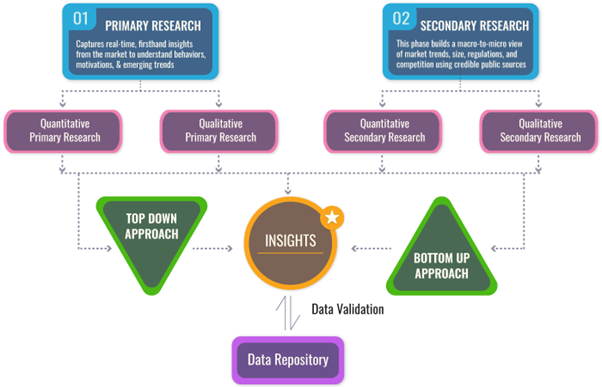
DUAL MODELING: TOP-DOWN + BOTTOM-UP
To ensure robust market estimation, we apply two complementary sizing approaches:
Top-Down Modeling:- Start with broader industry value (e.g., global or regional TAM)
- Apply filters by segment, geography, end-user, or use case
- Adjust with primary insights and validation benchmarks
- Ideal for investor-grade market scans and opportunity mapping
- Aggregate from the ground up using sales volumes, pricing, and unit economics
- Use internal modeling templates aligned with stakeholder data
- Incorporate distributor-level or region-specific inputs
- Most accurate for emerging segments and granular sub-markets
DATA VALIDATION: IN-HOUSE REPOSITORY
We close the loop with proprietary data intelligence built from ongoing projects, industry monitoring, and historical benchmarking. This repository includes:
- Multi-sector market and pricing models
- Key trendlines from past interviews and forecasts
- Benchmarked adoption rates, churn patterns, and ROI indicators
- Industry-specific deviation flags and cross-check logic
- Catches inconsistencies early
- Aligns projections across studies
- Enables consistent, high-trust deliverables