

Trading Card Game Market Size and Forecast (2026–2034), Global and Regional Growth, Trend, Share and Industry Analysis Report Coverage; By Product Type (Physical Trading Card Games, Digital Trading Card Games, Hybrid Trading Card Games); By Age Group (Children, Teenagers, Adults); By Distribution Channel (Specialty Stores, Online Retail, Hypermarkets & Supermarkets, Hobby Shops, Direct-to-Consumer Channels); By Application (Competitive Gaming, Casual Gaming, Collecting & Investment, Educational Gaming, Entertainment); By End User (Individual Consumers, Gaming Communities, Collectors, Tournament Organizers, Others), and Geography
2026-07-02
Media & Entertainment
Ekta Chaurasia (Team Lead)
Description
Trading Card Game Market Overview
The global Trading Card Game (TCG)
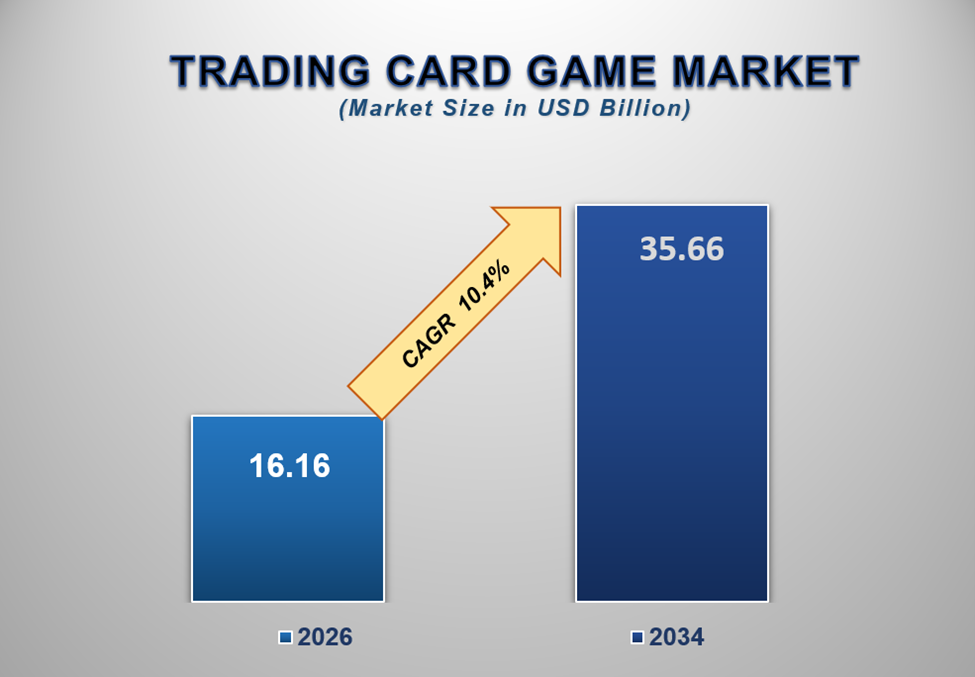
Market was valued at USD 16.16 billion in 2026 and is projected to
reach USD 35.66 billion by 2034, expanding at a CAGR of 10.4% during
the forecast period. The market is experiencing remarkable growth due to
the increasing popularity of collectible gaming products, expansion of
organized esports and tournament ecosystems, rising consumer interest in
collectible assets, growing influence of digital gaming platforms, and strong
engagement from both casual players and dedicated collector communities
worldwide.
Trading card games have evolved from niche
hobby products into a globally recognized entertainment category that combines
strategic gameplay, social interaction, competitive engagement, and collectible
value. Unlike conventional board games or video games, trading card games
create unique ecosystems where gameplay mechanics, card collection, rarity, and
community participation collectively drive long-term consumer engagement.
The market has experienced a significant
transformation over the past decade. Originally centered around physical card
products, the industry now encompasses digital trading card games, mobile
gaming experiences, hybrid physical-digital ecosystems, and global tournament
infrastructures. This diversification has broadened the consumer base while
creating multiple revenue streams for publishers and gaming companies.
One of the defining characteristics of the
trading card game market is its ability to simultaneously attract players and
collectors. Many consumers participate for the strategic and competitive
aspects of gameplay, while others focus on collecting rare, limited-edition,
and valuable cards. This dual-purpose appeal creates a highly resilient market
structure capable of maintaining engagement across varying consumer interests.
The increasing popularity of organized
gaming events and competitive tournaments is contributing significantly to
market expansion. Large-scale tournaments, regional championships, and global
competitive circuits encourage player participation while strengthening brand
loyalty and community development. Competitive environments also stimulate
product sales as players continuously seek new cards and deck-building
strategies.
The rise of digital technologies has
further accelerated market growth. Digital trading card games provide
accessible entry points for new players while eliminating physical distribution
barriers. Online platforms allow consumers to compete globally, participate in
virtual tournaments, and engage with gaming communities regardless of
geographic location.
Social media platforms, streaming services,
and content creation ecosystems have become powerful growth drivers for the
industry. Influencers, professional players, collectors, and gaming creators
regularly showcase card openings, deck-building strategies, tournament
gameplay, and market trends, generating substantial visibility and consumer
interest.
The collectible investment aspect of
trading cards has also gained prominence. Rare cards, limited-print editions,
promotional releases, and vintage collectibles increasingly attract investors
and collectors seeking long-term value appreciation. This trend has elevated
trading cards from recreational products to alternative collectible assets
within broader collectibles markets.
Manufacturers are continuously introducing
new expansions, themed collections, crossover collaborations, and special
editions to sustain consumer interest and encourage repeat purchases.
Intellectual property partnerships with popular entertainment franchises
further expand market reach and attract diverse audiences.
As gaming culture continues expanding globally and consumers increasingly seek interactive entertainment experiences that combine competition, collection, and community engagement, the trading card game market is expected to maintain strong growth momentum throughout the forecast period.
Trading Card Game Market Drivers and Opportunities
The Growing Popularity of Collectible
Culture and Gaming Communities Is Driving Market Growth
One of the most important factors fueling
the growth of the trading card game market is the increasing popularity of
collectible culture worldwide.
Consumers are increasingly seeking products
that provide both entertainment value and collectible appeal. Trading card
games uniquely satisfy these preferences by combining strategic gameplay with
collectible ownership. Rare cards, limited editions, promotional releases, and
exclusive products create excitement among collectors while supporting
long-term market engagement.
Gaming communities play a critical role in
sustaining demand. Local gaming clubs, hobby groups, online forums, social
media communities, and organized tournaments encourage continuous participation
and product purchases. Community-driven engagement strengthens brand loyalty
and enhances the overall gaming experience.
The growing acceptance of gaming as a
mainstream entertainment activity has also expanded the market's demographic
reach. Trading card games are increasingly attracting participants across
various age groups, including children, teenagers, young adults, and older
collectors.
Additionally, nostalgia-driven purchasing
behavior is contributing to market growth. Many consumers who participated in
trading card games during childhood are re-engaging with the hobby as adults,
often introducing newer generations to the experience.
As collectible culture continues gaining
momentum globally, the trading card game market is expected to benefit
substantially.
Expansion of Digital Trading Card
Platforms Is Accelerating Market Development
Digital transformation is reshaping the
trading card game industry and creating significant growth opportunities.
Digital trading card games offer several
advantages, including lower barriers to entry, global accessibility, automated
gameplay mechanics, and continuous content updates. New players can easily
learn the game rules and participate without the need to purchase physical
products initially.
Online platforms facilitate global
competition, enabling players to engage with opponents from different regions
while participating in virtual tournaments and ranked gaming systems. This
accessibility has significantly expanded the addressable market for trading
card game publishers.
The integration of mobile gaming
capabilities has further increased consumer engagement. Mobile platforms allow
users to play anytime and anywhere, supporting more frequent interactions and
improving player retention.
Digital environments also provide
opportunities for innovative monetization models, including expansion packs,
cosmetic upgrades, battle passes, and virtual collectibles. These revenue
streams complement traditional physical product sales while expanding overall
market value.
As digital gaming ecosystems continue evolving, digital trading card platforms are expected to remain a major growth catalyst for the industry.
Intellectual Property Collaborations and
Premium Collectibles Create Significant Opportunities
The increasing use of intellectual property
partnerships represents a major opportunity within the trading card game
market.
Publishers are collaborating with popular
entertainment franchises, movies, television series, anime properties, comic
book brands, and video game franchises to create themed card collections that
appeal to both gaming enthusiasts and fans of associated intellectual
properties.
These collaborations generate excitement
among existing players while attracting new consumer segments that may not have
previously participated in trading card games. Limited-edition releases often
create strong demand and collectible value, further enhancing market
performance.
Premium collectibles represent another
important opportunity area. High-quality card designs, exclusive artwork,
serialized products, luxury packaging, and limited production runs appeal to
dedicated collectors seeking unique assets.
The growth of grading services and
authentication platforms is also supporting premium collectible markets.
Professionally graded cards often command higher values and provide collectors
with greater confidence regarding authenticity and condition.
Furthermore, emerging technologies such as
augmented reality, digital ownership verification, and interactive gaming
experiences may create additional opportunities for innovation within the
trading card game industry.
As publishers continue exploring new
content partnerships and premium product strategies, the market is expected to
experience sustained growth and diversification.
Trading Card Game Market Scope
|
Report Attributes |
Description |
|
Market Size
in 2026 |
USD 16.16 Billion |
|
Market
Forecast in 2034 |
USD 35.66 Billion |
|
CAGR %
2026-2034 |
10.4% |
|
Base Year |
2025 |
|
Historic
Data |
2021-2025 |
|
Forecast
Period |
2026-2034 |
|
Report USP |
Production, Consumption,
Company Share, Company Heatmap, Company Production, Service Type, Growth
Factors and more |
|
Segments
Covered |
∙ By Product Type |
|
Regional
Scope |
● North America |
|
Country
Scope |
U.S. |
Trading Card Game Market Report Segmentation Analysis
The global trading card game market industry analysis is segmented into product type, age group, distribution channel, application, end user, and region.
Physical Trading Card Games Segment Is
Expected to Dominate the Market During the Forecast Period
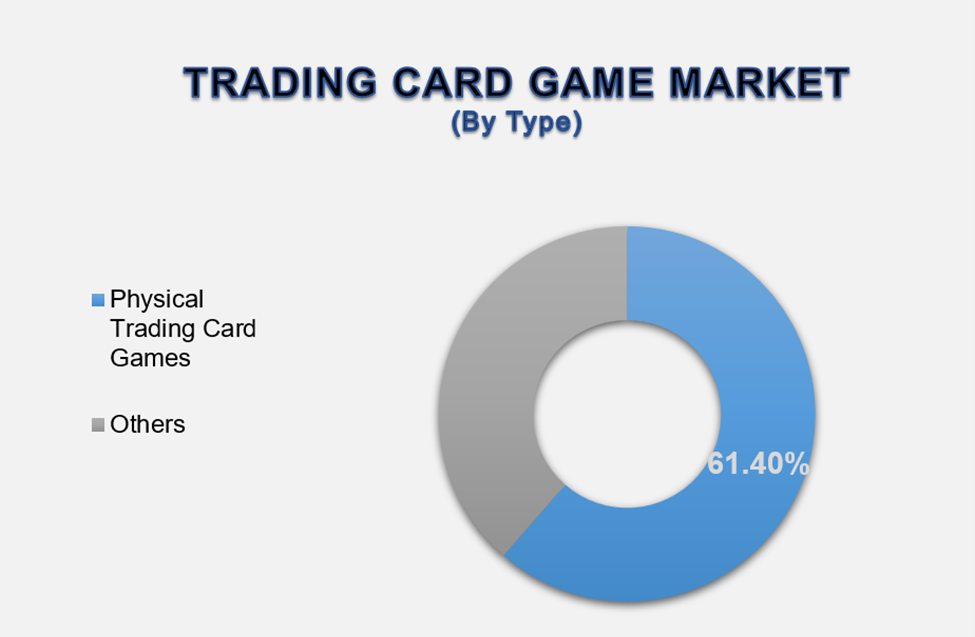
The physical trading card games segment
accounted for approximately 61.4% of the global market, making it the
largest product category.
Physical trading card games continue to
dominate due to their strong collectible appeal, tangible ownership value,
tournament usage, and established community ecosystems. Physical cards offer
experiences that digital alternatives cannot fully replicate, including
collecting, trading, grading, and displaying rare items.
Collectors often view physical cards as
long-term assets, especially limited-edition products and rare releases. This
investment-oriented perspective contributes significantly to sustained demand.
Manufacturers continue introducing premium
card designs, exclusive expansions, and special collector editions to maintain
consumer engagement and stimulate purchases.
As collectible culture remains strong globally, physical trading card games are expected to retain their leading market position.
The Adult Segment Is Expected to Lead
the Market by Age Group
The adult consumer segment represents the
largest share of the global trading card game market.
Adult players and collectors typically
possess greater purchasing power and often invest significantly in competitive
decks, premium collectibles, tournament participation, and graded card
acquisitions. Many adult consumers have longstanding connections to popular
trading card game franchises developed during their childhood.
The increasing recognition of trading cards
as collectible assets has further encouraged participation among adult
collectors and investors.
Additionally, adults play an important role
in community building, tournament organization, and content creation activities
that support broader market growth.
As collector and investment activities continue expanding, the adult segment is expected to remain the largest age group category.
The Collecting & Investment Segment
Is Expected to Dominate the Market by Application
Collecting and investment applications
account for the largest share of market demand.
Rare cards, first-edition releases,
promotional items, and limited-production products have become highly
sought-after collectibles among enthusiasts and investors. Many consumers
actively acquire trading cards with expectations of future value appreciation.
The growth of grading services and
secondary marketplaces has improved transparency and liquidity within the
collectibles ecosystem, encouraging greater participation from investors.
Social media visibility and publicized
record-breaking card sales have further increased awareness regarding
collectible trading card markets.
As alternative collectibles continue attracting investor interest, the collecting and investment segment is expected to maintain its leadership position.
Online Retail Segment Is Expected to
Lead the Market by Distribution Channel
Online retail represents the largest
distribution channel within the trading card game market.
E-commerce platforms provide consumers with
access to a broad range of products, including sealed packs, booster boxes,
singles, collectibles, and exclusive releases. Online channels offer
convenience, product variety, and global accessibility that traditional retail
environments often cannot match.
Digital marketplaces also facilitate
secondary market transactions, enabling collectors and players to buy, sell,
and trade individual cards efficiently.
The continued growth of direct-to-consumer
strategies and online community engagement is further strengthening the
importance of e-commerce channels.
As digital commerce adoption continues increasing globally, online retail is expected to remain the dominant distribution channel.
The following segments are part of an
in-depth analysis of the global Trading Card Game market:
|
Market Segments |
|
|
By Product Type |
∙ Physical Trading Card Games |
|
By Age Group |
∙ Children |
|
By Distribution Channel |
∙ Specialty Stores |
|
By Application |
∙ Competitive Gaming |
|
By End User |
∙ Individual Consumers |
Trading Card Game Market Share Analysis By Region
North America is projected to dominate the
global trading card game market, accounting for approximately 35.8% of total
market revenue in 2026.
The region benefits from a mature gaming
culture, strong consumer spending on collectibles, extensive tournament
infrastructures, and high participation rates across both competitive and
casual gaming communities. The United States remains the largest market due to
its well-established collector ecosystem and significant presence of leading
industry participants.
Asia-Pacific represents another major
market driven by strong gaming traditions, large consumer populations, growing
esports ecosystems, and significant demand for anime and entertainment-related
collectibles. Japan, China, and South Korea are particularly important
contributors to regional growth.
Europe continues experiencing steady
expansion due to increasing collector participation, growing digital gaming
adoption, and expanding organized gaming communities.
Latin America and the Middle East & Africa are emerging as promising markets as gaming culture and digital commerce adoption continue to develop.
Trading Card Game Market Competition Landscape Analysis
The global trading card game market is
characterized by strong intellectual property ownership, continuous product
innovation, active community engagement, and expanding digital integration
strategies.
Leading publishers focus heavily on content
development, expansion releases, competitive gaming support, and cross-media
collaborations to sustain consumer interest. Companies are increasingly
leveraging digital platforms, mobile applications, and online tournaments to
strengthen player engagement and expand market reach.
Strategic partnerships with entertainment
franchises continue driving product innovation and attracting new audiences.
Additionally, investments in premium collectibles, authenticated products, and
direct-to-consumer distribution channels are reshaping competitive dynamics
across the industry.
As consumer interest in collectibles and interactive gaming experiences continues growing, competition is expected to intensify among established publishers and emerging market entrants.
Global Trading Card Game Market Recent
Developments News
∙ In April 2026, several trading card
publishers introduced premium collector editions featuring exclusive artwork
and limited production runs.
∙ In February 2026, digital trading card
game developers expanded competitive esports ecosystems through global
tournament initiatives.
∙ In November 2025, major gaming companies
launched franchise-based crossover collections designed to attract new player
communities.
∙ In August 2025, card grading and
authentication services expanded operations to address growing demand from
collectors and investors.
∙ In June 2025, publishers enhanced direct-to-consumer online sales strategies through exclusive product launches and community engagement programs.
The Global Trading Card Game Market is
Dominated by a Few Large Companies, Such As
∙ The Pokémon Company International
∙ Konami Group Corporation
∙ Hasbro, Inc. (Wizards of the Coast)
∙ Bandai Namco Holdings Inc.
∙ Bushiroad Inc.
∙ Ravensburger AG
∙ Upper Deck Company, LLC
∙ Panini Group
∙ Cryptozoic Entertainment
∙ Fantasy Flight Games
∙ Arcane Wonders
∙ Legend Story Studios
∙ TCGplayer, Inc.
∙ Cardmarket GmbH
∙ Asmodee Group
∙ Others
Frequently Asked Questions
Ekta Chaurasia (Team Lead)
Ekta Chaurasia is a highly experienced Team Lead at M2Square Consultancy with over 7 years of expertise in market research, strategic consulting, competitive benchmarking, and business intelligence solutions. She specializes in ICT, semiconductors & electronics, automotive & transportation, and industrial machinery markets.
She leads end-to-end global research projects focused on market trends, industry analysis, growth forecasting, customer insights, and strategic decision-making. Known for her analytical leadership and industry expertise, Ekta helps businesses uncover growth opportunities, evaluate competitive landscapes, and stay ahead in rapidly evolving markets through accurate and insight-driven research.
1.
Global Trading Card Game
Market Introduction and Market Overview
1.1. Objectives of the Study
1.2. Global Trading Card Game Market Scope and Market Estimation
1.2.1.
Global Trading Card Game Market
Overall Market Size (US$ Billion), Market CAGR (%), Market Forecast (2026 -
2034)
1.2.2.
Global Trading Card Game Market
Revenue Share (%) and Growth Rate (Y-o-Y) from 2021 - 2034
1.3. Market Segmentation
1.3.1.
Product Type of Global Trading
Card Game Market
1.3.2.
Age Group of Global Trading
Card Game Market
1.3.3.
Distribution Channel of Global
Trading Card Game Market
1.3.4.
Application of Global Trading
Card Game Market
1.3.5.
End User of Global Trading Card
Game Market
1.3.6.
Region of Global Trading Card
Game Market
2.
Executive Summary
2.1. Demand Side Trends
2.2. Key Market Trends
2.3. Market Demand (US$ Billion) Analysis 2021 – 2025 and Forecast, 2026
– 2034
2.4. Demand and Opportunity Assessment
2.5. Key Developments
2.6. Overview of Trading Card Game Ecosystem and Collectible Gaming
Framework
2.7. Market Entry Strategies
2.8. Market Dynamics
2.8.1.
Drivers
2.8.2.
Limitations
2.8.3.
Opportunities
2.8.4.
Impact Analysis of Drivers and
Restraints
2.9. Porter’s Five Forces Analysis
2.10.
PEST Analysis
3.
Global Trading Card Game
Market Estimates & Historical Trend Analysis (2021 - 2025)
4.
Global Trading Card Game
Market Estimates & Forecast Trend Analysis, by Product Type
4.1. Global Trading Card Game Market Revenue (US$ Billion) Estimates and
Forecasts, by Product Type, 2021 - 2034
4.1.1.
Physical Trading Card Games
4.1.2.
Digital Trading Card Games
4.1.3.
Hybrid Trading Card Games
5.
Global Trading Card Game
Market Estimates & Forecast Trend Analysis, by Age Group
5.1. Global Trading Card Game Market Revenue (US$ Billion) Estimates and
Forecasts, by Age Group, 2021 - 2034
5.1.1.
Children
5.1.2.
Teenagers
5.1.3.
Adults
6.
Global Trading Card Game
Market Estimates & Forecast Trend Analysis, by Distribution Channel
6.1. Global Trading Card Game Market Revenue (US$ Billion) Estimates and
Forecasts, by Distribution Channel, 2021 - 2034
6.1.1.
Specialty Stores
6.1.2.
Online Retail
6.1.3.
Hypermarkets & Supermarkets
6.1.4.
Hobby Shops
6.1.5.
Direct-to-Consumer Channels
7.
Global Trading Card Game
Market Estimates & Forecast Trend Analysis, by Application
7.1. Global Trading Card Game Market Revenue (US$ Billion) Estimates and
Forecasts, by Application, 2021 - 2034
7.1.1.
Competitive Gaming
7.1.2.
Casual Gaming
7.1.3.
Collecting & Investment
7.1.4.
Educational Gaming
7.1.5.
Entertainment
8.
Global Trading Card Game
Market Estimates & Forecast Trend Analysis, by End User
8.1. Global Trading Card Game Market Revenue (US$ Billion) Estimates and
Forecasts, by End User, 2021 - 2034
8.1.1.
Individual Consumers
8.1.2.
Gaming Communities
8.1.3.
Collectors
8.1.4.
Tournament Organizers
8.1.5.
Others
9.
Global Trading Card Game
Market Estimates & Forecast Trend Analysis, by Region
9.1. Global Trading Card Game Market Revenue (US$ Billion) Estimates and
Forecasts, by Region, 2021 - 2034
9.1.1.
North America
9.1.2.
Europe
9.1.3.
Asia Pacific
9.1.4.
Middle East & Africa
9.1.5.
Latin America
10. North America Trading Card Game Market: Estimates & Forecast
Trend Analysis
10.1.
North America Trading Card Game
Market Assessments & Key Findings
10.1.1.
North America Trading Card Game
Market Introduction
10.1.2.
North America Trading Card Game
Market Size Estimates and Forecast (2021 - 2034)
10.1.2.1.
By Product Type
10.1.2.2.
By Age Group
10.1.2.3.
By Distribution Channel
10.1.2.4.
By Application
10.1.2.5.
By End User
10.1.2.6.
By Country
10.1.2.6.1.
U.S.
10.1.2.6.2.
Canada
11. Europe Trading Card Game Market: Estimates & Forecast Trend
Analysis
11.1.
Europe Trading Card Game Market
Assessments & Key Findings
11.1.1.
Europe Trading Card Game Market
Introduction
11.1.2.
Europe Trading Card Game Market
Size Estimates and Forecast (2021 - 2034)
11.1.2.1.
By Product Type
11.1.2.2.
By Age Group
11.1.2.3.
By Distribution Channel
11.1.2.4.
By Application
11.1.2.5.
By End User
11.1.2.6.
By Country
11.1.2.6.1.
Germany
11.1.2.6.2.
Italy
11.1.2.6.3.
U.K.
11.1.2.6.4.
France
11.1.2.6.5.
Spain
11.1.2.6.6.
Switzerland
11.1.2.6.7.
Rest of Europe
12. Asia Pacific Trading Card Game Market: Estimates & Forecast
Trend Analysis
12.1.
Asia Pacific Trading Card Game
Market Assessments & Key Findings
12.1.1.
Asia Pacific Trading Card Game
Market Introduction
12.1.2.
Asia Pacific Trading Card Game
Market Size Estimates and Forecast (2021 - 2034)
12.1.2.1.
By Product Type
12.1.2.2.
By Age Group
12.1.2.3.
By Distribution Channel
12.1.2.4.
By Application
12.1.2.5.
By End User
12.1.2.6.
By Country
12.1.2.6.1.
China
12.1.2.6.2.
Japan
12.1.2.6.3.
India
12.1.2.6.4.
Australia
12.1.2.6.5.
South Korea
12.1.2.6.6.
Rest of Asia Pacific
13. Middle East & Africa Trading Card Game Market: Estimates &
Forecast Trend Analysis
13.1.
Middle East & Africa
Trading Card Game Market Assessments & Key Findings
13.1.1.
Middle East & Africa
Trading Card Game Market Introduction
13.1.2.
Middle East & Africa
Trading Card Game Market Size Estimates and Forecast (2021 - 2034)
13.1.2.1.
By Product Type
13.1.2.2.
By Age Group
13.1.2.3.
By Distribution Channel
13.1.2.4.
By Application
13.1.2.5.
By End User
13.1.2.6.
By Country
13.1.2.6.1.
UAE
13.1.2.6.2.
Saudi Arabia
13.1.2.6.3.
South Africa
13.1.2.6.4.
Rest of MEA
14. Latin America Trading Card Game Market: Estimates & Forecast
Trend Analysis
14.1.
Latin America Trading Card Game
Market Assessments & Key Findings
14.1.1.
Latin America Trading Card Game
Market Introduction
14.1.2.
Latin America Trading Card Game
Market Size Estimates and Forecast (2021 - 2034)
14.1.2.1.
By Product Type
14.1.2.2.
By Age Group
14.1.2.3.
By Distribution Channel
14.1.2.4.
By Application
14.1.2.5.
By End User
14.1.2.6.
By Country
14.1.2.6.1.
Brazil
14.1.2.6.2.
Mexico
14.1.2.6.3.
Argentina
14.1.2.6.4.
Rest of LATAM
15. Competition Landscape
15.1.
Global Trading Card Game Market
Product Mapping
15.2.
Global Trading Card Game Market
Concentration Analysis
15.3.
Global Trading Card Game Market
Tier Structure Analysis
15.4.
Global Trading Card Game Market
Share Analysis (2025)
16. Company Profiles
16.1.
The Pokémon Company
International
16.1.1.
Company Overview & Key
Stats
16.1.2.
Financial Performance &
KPIs
16.1.3.
Product Portfolio
16.1.4.
SWOT Analysis
16.1.5.
Business Strategy & Recent
Developments
16.2.
Konami Group Corporation
16.3.
Hasbro, Inc. (Wizards of the
Coast)
16.4.
Bandai Namco Holdings Inc.
16.5.
Bushiroad Inc.
16.6.
Ravensburger AG
16.7.
Upper Deck Company, LLC
16.8.
Panini Group
16.9.
Cryptozoic Entertainment
16.10.
Fantasy Flight Games
16.11.
Arcane Wonders
16.12.
Legend Story Studios
16.13.
TCGplayer, Inc.
16.14.
Cardmarket GmbH
16.15.
Asmodee Group
16.16.
Others
17. Research Findings & Conclusion
18. Assumption & Acronyms Used
19. Research Methodology
19.1.
External Databases
19.2.
Internal Proprietary Database
19.3.
Primary Research
19.4.
Secondary Research
19.5.
Assumptions
19.6.
Limitations
19.7.
Report FAQs
Our Research Methodology
"Insight without rigor is just noise."
We follow a comprehensive, multi-phase research framework designed to deliver accurate, strategic, and decision-ready intelligence. Our process integrates primary and secondary research , both quantitative and qualitative , along with dual modeling techniques ( top-down and bottom-up) and a final layer of validation through our proprietary in-house repository.
PRIMARY RESEARCH
Primary research captures real-time, firsthand insights from the market to understand behaviors, motivations, and emerging trends.
1. Quantitative Primary Research
Objective: Generate statistically significant data directly from market participants.
Approaches:- Structured surveys with customers, distributors, and field agents
- Mobile-based data collection for point-of-sale audits and usage behavior
- Phone-based interviews (CATI) for market sizing and product feedback
- Online polling around industry events and digital campaigns
- Purchase frequency by customer type
- Channel performance across geographies
- Feature demand by application or demographic
2. Qualitative Primary Research
Objective: Explore decision-making drivers, pain points, and market readiness.
Approaches:- In-depth interviews (IDIs) with executives, product managers, and key decision-makers
- Focus groups among end users and early adopters
- Site visits and observational research for consumer products
- Informal field-level discussions for regional and cultural nuances
SECONDARY RESEARCH
This phase helps establish a macro-to-micro understanding of market trends, size, regulation, and competitive dynamics, sourced from credible and public domain information.
1. Quantitative Secondary Research
Objective: Model market value and segment-level forecasts based on published data.
Sources include:- Financial reports and investor summaries
- Government trade data, customs records, and regulatory statistics
- Industry association publications and economic databases
- Channel performance and pricing data from marketplace listings
- Revenue splits, pricing trends, and CAGR estimates
- Supply-side capacity and volume tracking
- Investment analysis and funding benchmarks
2. Qualitative Secondary Research
Objective: Capture strategic direction, innovation signals, and behavioral trends.
Sources include:- Company announcements, roadmaps, and product pipelines
- Publicly available whitepapers, conference abstracts, and academic research
- Regulatory body publications and policy briefs
- Social and media sentiment scanning for early-stage shifts
- Strategic shifts in market positioning
- Unmet needs and white spaces
- Regulatory triggers and compliance impact

DUAL MODELING: TOP-DOWN + BOTTOM-UP
To ensure robust market estimation, we apply two complementary sizing approaches:
Top-Down Modeling:- Start with broader industry value (e.g., global or regional TAM)
- Apply filters by segment, geography, end-user, or use case
- Adjust with primary insights and validation benchmarks
- Ideal for investor-grade market scans and opportunity mapping
- Aggregate from the ground up using sales volumes, pricing, and unit economics
- Use internal modeling templates aligned with stakeholder data
- Incorporate distributor-level or region-specific inputs
- Most accurate for emerging segments and granular sub-markets
DATA VALIDATION: IN-HOUSE REPOSITORY
We close the loop with proprietary data intelligence built from ongoing projects, industry monitoring, and historical benchmarking. This repository includes:
- Multi-sector market and pricing models
- Key trendlines from past interviews and forecasts
- Benchmarked adoption rates, churn patterns, and ROI indicators
- Industry-specific deviation flags and cross-check logic
- Catches inconsistencies early
- Aligns projections across studies
- Enables consistent, high-trust deliverables