
US Diabetes Management Apps Market Size and Forecast (2026–2034), Trend, Share and Industry Analysis Report Coverage: By Type (Type 1, Type 2, Gestational, Pre-diabetes), By Platform (iOS, Android, Web-based, Integrated Digital Ecosystems), By Functionality (Blood Glucose Monitoring, Insulin Tracking, Diet & Nutrition Planning, Physical Activity Tracking), By Subscription Model (Freemium, Subscription-Based, One-time Purchase, Ad-Supported, Insurance Reimbursement-Based), By End Use (Patients, Healthcare Providers, Payers/Insurance Companies)
2026-09-15
ICT
Ekta Chaurasia (Team Lead)
Description
US Diabetes
Management Apps Market Overview
The US Diabetes Management Apps Market
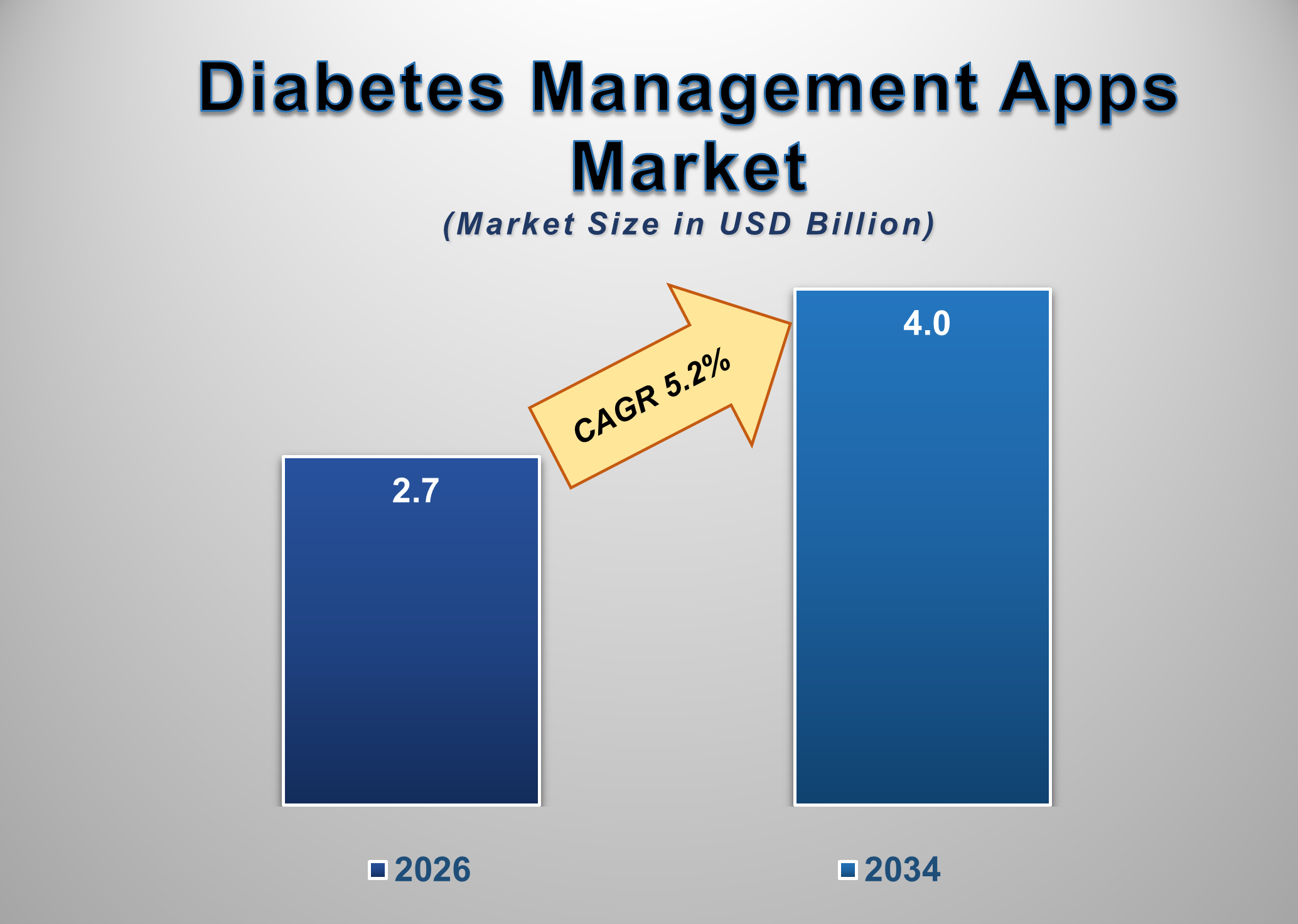
is valued at USD 2.7 billion in 2026 and is projected to reach USD 4.0 billion
by 2034, expanding at a CAGR of 5.2% during the forecast period. Market growth
is supported by the substantial and continuing diabetes burden across the
United States. According to the CDC's National Diabetes Statistics Report,
updated in January 2026, approximately 40.1 million Americans were living with
diagnosed or undiagnosed diabetes as of 2023, representing 12.0% of the
population. Of this population, 29.1 million individuals had received a
diagnosis, while approximately 11.0 million cases remained undiagnosed. The
country also has an estimated 2 million people living with Type 1 diabetes,
including around 314,000 children and adolescents, highlighting the need for
continuous disease monitoring and management across different patient groups.
The growing prevalence of diabetes is further reinforced by the large
population at risk of developing the condition. Approximately 115 million U.S.
adults are estimated to be living with prediabetes, while around 1.5 million
new diabetes cases are diagnosed each year. This substantial patient population
is creating sustained demand for accessible and technology-enabled tools that
support blood glucose monitoring, insulin management, medication adherence,
dietary planning, physical activity tracking, and communication with healthcare
providers. Diabetes management applications are increasingly being used to
provide patients with real-time health information and personalized support,
enabling more consistent monitoring outside conventional healthcare settings.
U.S.
Diabetes Management Apps Market Growth Drivers
Expanded Medicare Reimbursement for
Remote Monitoring Is Supporting Diabetes App Adoption
The CMS Calendar Year 2026 Medicare
Physician Fee Schedule introduced important changes to the reimbursement
framework for Remote Patient Monitoring (RPM). The updated framework added new
billing codes and enhanced reimbursement provisions for remote monitoring and
clinical management services. These developments are particularly relevant to
diabetes care, as glucose-monitoring devices and connected technologies can be
incorporated into remote patient management programs. The expanded
reimbursement environment reduces financial barriers for healthcare providers
seeking to adopt digital platforms for monitoring patients outside traditional
clinical settings. As a result, diabetes management applications that integrate
glucose data, connected devices, and healthcare-provider communication are
expected to benefit from increased adoption. The development is also likely to
strengthen the commercial potential of insurance reimbursement-based
subscription models by expanding access to reimbursable digital diabetes management
services.
Increasing FDA Clearances for Advanced
Diabetes Software Are Expanding Clinical Capabilities
The growing number of FDA clearances
for software-enabled diabetes technologies is supporting the development of
increasingly sophisticated diabetes management applications. Recent regulatory
activity has included technologies designed to support insulin dosing,
automated glucose management, and clinical decision-making. These developments
demonstrate increasing acceptance of digital tools that combine connected
glucose-monitoring devices, algorithms, and software-based recommendations to
improve diabetes care. Advanced applications can integrate data from continuous
glucose monitors, smart insulin pens, and other connected devices to provide
patients and healthcare professionals with more comprehensive insights into
disease management. The continued regulatory progress of algorithm-driven and
AI-enabled solutions is expected to expand the functionality of diabetes
applications beyond basic tracking toward personalized decision support and
more clinically integrated disease management.
U.S. Diabetes Management Apps Market
Restraint
Increasing Health Data Privacy and
Regulatory Compliance Requirements Create Operational Challenges
The growing use of connected health
applications has increased regulatory attention toward the collection, storage,
sharing, and protection of sensitive patient information. Diabetes management
applications often process highly sensitive health data, including blood
glucose readings, medication information, insulin usage, and other personal
health indicators. U.S. regulatory authorities have expanded oversight of
health applications and connected devices, particularly regarding unauthorized
data sharing and inadequate consumer disclosure. This creates additional
compliance requirements for app developers and digital health companies, which
may need to invest in stronger cybersecurity systems, privacy controls,
data-governance frameworks, and transparent consent mechanisms. These
requirements can increase operating costs, particularly for smaller companies,
while advertising-supported business models may face additional scrutiny
regarding the use of consumer health information.
U.S. Diabetes Management Apps Market
Opportunities
Expanded Remote Monitoring
Reimbursement Creates Opportunities for Insurance-Supported Digital Care
Programs
The evolving Medicare reimbursement
framework presents a significant opportunity for diabetes management
application providers to expand insurance-supported remote monitoring services.
Improved reimbursement mechanisms can enable healthcare providers to incorporate
digital applications and connected glucose-monitoring technologies into
structured patient-care programs. Platforms capable of supporting continuous
data collection, remote monitoring, clinical communication, and care-management
workflows are particularly well positioned to benefit. The growing availability
of reimbursable digital health services can also encourage partnerships between
app developers, healthcare providers, insurers, and medical-device companies.
As remote care becomes increasingly integrated into chronic disease management,
insurance-supported subscription and service models are expected to create new
revenue opportunities for diabetes management app providers.
Regulatory Progress in AI-Based
Clinical Decision Support Opens Opportunities for Next-Generation Diabetes Apps
Increasing regulatory acceptance of
software-based clinical decision-support technologies creates opportunities for
developers of advanced diabetes management applications. The emergence of
regulatory pathways for AI-enabled and algorithm-driven healthcare software can
reduce uncertainty surrounding the development and commercialization of
next-generation digital health solutions. Developers are increasingly exploring
technologies capable of analyzing patient data, supporting insulin management,
identifying glucose trends, and providing personalized recommendations. The
integration of artificial intelligence and advanced algorithms can enhance the
value of diabetes management applications by enabling more personalized and
responsive care. As regulatory frameworks and precedents continue to develop,
companies that successfully combine clinical validation, regulatory compliance,
and user-friendly technology will be well positioned to introduce more advanced
diabetes management solutions into the U.S. market.
US Diabetes Management Apps Market
Scope
|
Report
Attributes |
Description |
|
Market Size |
USD 2.7 Billion (2026) |
|
Market Forecast |
USD 4.0
Billion (2034) |
|
CAGR % |
5.2% |
|
Base Year |
2025 |
|
Historic Data |
2020–2025 |
|
Forecast Period |
2026–2034 |
|
Report USP |
Production, Consumption, company share, company
heatmap, company production capacity, growth factors and more |
|
Geography |
United
States |
|
By Type |
Type 1 Diabetes, Type 2 Diabetes, Gestational
Diabetes, Pre-diabetes |
|
By Platform |
iOS,
Android, Web-based Applications, Integrated Digital Ecosystems |
|
By Functionality |
Blood Glucose Monitoring Apps, Insulin Tracking
Apps, Diet & Nutrition Planning Apps, Physical Activity Tracking Apps |
|
By Subscription Model |
Freemium,
Subscription-Based, One-time Purchase, Ad-Supported, Insurance
Reimbursement-Based |
|
By End Use |
Patients, Healthcare Providers, Payers/Insurance
Companies |
|
Key Players |
Abbott
Laboratories; Dexcom, Inc.; F. Hoffmann-La Roche Ltd. (mySugr); Glooko, Inc.;
Medtronic plc; DarioHealth Corp.; LifeScan, Inc.; Insulet Corporation; Tandem
Diabetes Care, Inc.; Omada Health, Inc.; One Drop; WellDoc |
|
By Type |
Type 1 Diabetes, Type 2 Diabetes, Gestational
Diabetes, Pre-diabetes |
US Diabetes Management Apps Market Report
Segmentation Analysis
Type 2 Diabetes Dominates the Market
Due to Its Large Patient Population
The U.S. Diabetes Management Apps
Market is segmented by type into Type 1 Diabetes, Type 2 Diabetes, Gestational
Diabetes, and Pre-diabetes. Type 2 diabetes represents the largest segment,
primarily due to its significantly larger patient population and the widespread
need for long-term disease monitoring and management. Diabetes management
applications designed for Type 2 patients offer features such as blood glucose
tracking, medication and insulin management, lifestyle monitoring, nutrition
guidance, and personalized health recommendations. The large number of
individuals living with or at risk of developing Type 2 diabetes continues to
create substantial demand for digital disease-management solutions. Meanwhile,
the growing population with pre-diabetes presents an important opportunity for
prevention-focused applications designed to support lifestyle modification,
weight management, physical activity, and early intervention.
Integrated Digital Ecosystems Gain
Momentum as Cross-Platform Accessibility Becomes Increasingly Important
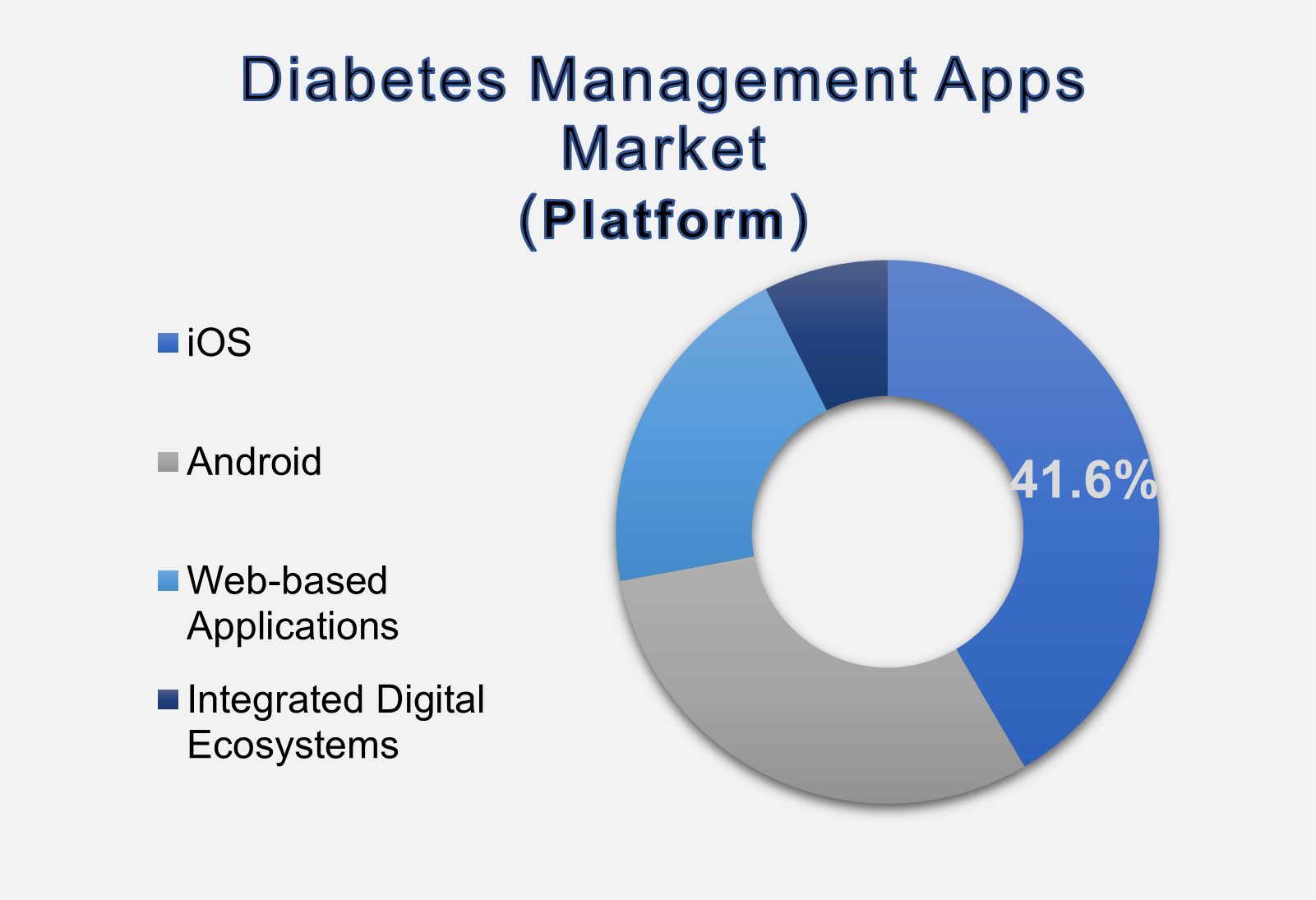
By platform, the market is segmented into iOS, Android, Web-based Applications, and Integrated Digital Ecosystems. Both iOS and Android platforms represent important channels for diabetes management applications, allowing developers to reach a broad patient population through smartphones and connected devices. Web-based applications also support remote access and healthcare-provider interaction. However, integrated digital ecosystems are gaining increasing importance as diabetes care becomes more connected and technology-driven. These ecosystems can combine data from continuous glucose monitors, smart insulin pens, wearable devices, and digital health applications within a single platform. The ability to connect multiple devices and provide a consolidated view of patient health information is expected to support the growing adoption of integrated digital diabetes-management solutions.
Blood Glucose Monitoring Apps Lead as
Continuous Monitoring Remains Central to Diabetes Management
By functionality, the market is
segmented into Blood Glucose Monitoring Apps, Insulin Tracking Apps, Diet &
Nutrition Planning Apps, and Physical Activity Tracking Apps. Blood glucose
monitoring apps hold the leading position, reflecting the fundamental
importance of glucose measurement in diabetes management. These applications
enable users to monitor glucose trends, track readings over time, receive
alerts, and integrate data from connected monitoring devices. The growing
adoption of continuous glucose monitoring technologies is further supporting
demand for applications that collect, analyze, and display real-time glucose
information. Insulin tracking, nutrition planning, and physical activity
monitoring also represent important functionalities; however, these features
are increasingly integrated into comprehensive platforms built around glucose
monitoring and overall disease management.
Insurance Reimbursement-Based Models
Gain Momentum with the Expansion of Digital Healthcare Programs
By subscription model, the market is
segmented into Freemium, Subscription-Based, One-time Purchase, Ad-Supported,
and Insurance Reimbursement-Based. Freemium and subscription-based models
remain widely used among consumer-focused diabetes applications, allowing users
to access basic services while paying for premium features or advanced
functionalities. However, insurance reimbursement-based models are gaining
momentum as digital health technologies become increasingly integrated into
formal healthcare and remote patient-monitoring programs. Expanding
reimbursement mechanisms can encourage healthcare providers and digital health
companies to develop solutions that support continuous patient monitoring and
clinical care. This trend is expected to strengthen partnerships among
technology providers, healthcare organizations, insurers, and medical-device
manufacturers.
Patients Represent the Largest End-Use
Segment, While Healthcare Providers Drive Increasing Adoption
By end use, the market is segmented
into Patients, Healthcare Providers, and Payers/Insurance Companies. Patients
represent the largest end-use segment, supported by the substantial number of
individuals requiring continuous diabetes monitoring and long-term disease
management. The increasing availability of smartphone-based applications and
connected health devices enables patients to actively monitor their condition
and manage diabetes outside conventional healthcare settings. Healthcare
providers are also emerging as an increasingly important end-user group as
remote monitoring and digital care models become more integrated into clinical
practice. Healthcare professionals can use application-generated data to
monitor patient health, support treatment decisions, and improve communication.
Meanwhile, payers and insurance companies are increasingly interested in
digital diabetes-management solutions that may improve health outcomes and help
reduce the long-term costs associated with diabetes-related complications.
The
following segments are part of an in-depth analysis of the U.S. Diabetes
Management Apps Market:
|
Market Segments |
|
|
By
Type |
· Type
1 Diabetes · Type
2 Diabetes · Gestational
Diabetes · Pre-diabetes |
|
By
Platform |
· iOS · Android · Web-based
Applications · Integrated
Digital Ecosystems |
|
By
Functionality |
· Blood
Glucose Monitoring Apps · Insulin
Tracking Apps · Diet
& Nutrition Planning Apps · Physical
Activity Tracking Apps |
|
By
Subscription Model |
· Freemium · Subscription-Based · One-time
Purchase · Ad-Supported · Insurance
Reimbursement-Based |
|
By
End Use |
· Patients · Healthcare
Providers · Payers/Insurance
Companies |
US Diabetes Management Apps Market Competition Landscape Analysis
The U.S. diabetes management apps
competitive landscape is anchored by established medical device manufacturers
whose apps are companion software to FDA-cleared hardware (Abbott, Dexcom,
Medtronic, Insulet, Tandem Diabetes Care, LifeScan), alongside dedicated
digital health platform companies (Glooko, DarioHealth, WellDoc, One Drop,
Omada Health) and a pharmaceutical-company-owned entrant (Roche's mySugr).
Recent competitive positioning is increasingly defined by FDA clearance
activity and the ability to bill CMS's expanded RPM codes rather than by
consumer app-store metrics alone.
Abbott Laboratories
Manufacturer of FreeStyle Libre
continuous glucose monitoring sensors and, per Medtronic's January 2026 FDA
clearance announcement, the supplier of the Instinct sensor integrated into
Medtronic's newly cleared MiniMed Go app, reflecting Abbott's role as a
cross-competitor sensor supplier as well as a direct market participant.
Dexcom, Inc.
San Diego-headquartered manufacturer
of FDA-cleared continuous glucose monitoring systems, whose companion mobile
applications represent a core part of the Blood Glucose Monitoring Apps
functionality segment.
F. Hoffmann-La Roche Ltd. (mySugr)
Operator of the mySugr
diabetes-logging and management app, representing pharmaceutical-company
ownership of consumer-facing diabetes app functionality.
Glooko, Inc.
A digital health platform aggregating
data across multiple glucose meters, CGMs, and insulin pumps from different
manufacturers into a single provider- and patient-facing application.
Medtronic plc
Received FDA 510(k) clearance on 12
January 2026 for its MiniMed Go app, integrating its InPen smart insulin pen
with an Abbott-made glucose sensor into a single Smart Multiple Daily Injection
system for people with insulin-requiring Type 1 or Type 2 diabetes aged 7 and
older.
DarioHealth Corp.
Operator of a multi-chronic-condition
digital health platform including diabetes management, integrating
cellular-enabled glucometers and other connected devices into a consumer-facing
application with outcomes tracking.
LifeScan, Inc.
A blood glucose monitoring device
manufacturer (OneTouch brand) with companion app functionality supporting
glucose logging and data sharing with healthcare providers.
Insulet Corporation
Manufacturer of the Omnipod insulin
pump system, whose companion mobile application provides pump control and
glucose-data integration for insulin-dependent users.
Tandem Diabetes Care, Inc.
San Diego-headquartered manufacturer
of the t: slim insulin pump line, whose mobile app ecosystem supports pump
management and CGM data integration.
Omada Health, Inc.
A digital chronic-disease management
company offering diabetes prevention and management programs, positioned toward
the Payers/Insurance Companies end-use segment through employer- and
health-plan-contracted program delivery.
One Drop
A diabetes and chronic-condition
management app platform combining glucose tracking, coaching, and
connected-device data integration for consumer and employer-sponsored use.
WellDoc
Operator of the BlueStar digital
health platform, which has received multiple FDA 510(k) clearances (its 10th
and 11th announced in 2023) for connected insulin-dosing functionality,
including CGM-informed bolus insulin dose calculation.
U.S. Diabetes
Management Apps Market Recent Developments News:
·
January 2026: Medtronic announced FDA 510(k) clearance
for its MiniMed Go app, integrating the InPen smart insulin pen with an
Abbott-made Instinct glucose sensor into a single Smart MDI system for people 7
and older with insulin-requiring Type 1 or Type 2 diabetes, with commercial
launch expected in spring 2026.
·
January 2026: Diabeloop announced FDA 510(k)
clearance for DBLG2, classified as a Class II Interoperable Automated Glycemic
Controller, opening the U.S. market to the company's automated insulin-delivery
algorithm.
·
December 2025: UpDoc received FDA 510(k)
clearance (K253281) for a prescription software device managing basal insulin
dosing in adults with Type 2 diabetes, cleared as substantially equivalent to
Hygieia's d-Nav predicate device, and reported by industry coverage as the
first FDA clearance of a diabetes management platform with a patient-facing
large language model interface.
·
November 2025: CMS finalized its Calendar Year
2026 Medicare Physician Fee Schedule, adding new Remote Patient Monitoring CPT
codes 99445 and 99470 and increasing reimbursement rates for the existing RPM
code set, effective for dates of service on or after 1 January 2026.
·
July 2024: The FTC's updated Health Breach
Notification Rule took effect, expanding breach-notification obligations to
health apps and connected devices — including glucose-tracking apps and
glucose-meter-linked accessories — that are not covered by HIPAA.
·
January 2026: CDC published its updated
National Diabetes Statistics Report, recording 40.1 million Americans with
diagnosed or undiagnosed diabetes (2023 data) and 115 million U.S. adults with
prediabetes.
The
U.S. Diabetes Management Apps Market is dominated by a few large companies, such
as
·
Abbott Laboratories
·
Dexcom, Inc.
·
F. Hoffmann-La Roche Ltd. (mySugr)
·
Glooko, Inc.
·
Medtronic plc
·
DarioHealth Corp.
·
LifeScan, Inc.
·
Insulet Corporation
·
Tandem Diabetes Care, Inc.
·
Omada Health, Inc.
·
One Drop
·
WellDoc
· Others
Frequently Asked Questions
Ekta Chaurasia (Team Lead)
Ekta Chaurasia is a highly experienced Team Lead at M2Square Consultancy with over 7 years of expertise in market research, strategic consulting, competitive benchmarking, and business intelligence solutions. She specializes in ICT, semiconductors & electronics, automotive & transportation, and industrial machinery markets.
She leads end-to-end global research projects focused on market trends, industry analysis, growth forecasting, customer insights, and strategic decision-making. Known for her analytical leadership and industry expertise, Ekta helps businesses uncover growth opportunities, evaluate competitive landscapes, and stay ahead in rapidly evolving markets through accurate and insight-driven research.
Test
Our Research Methodology
"Insight without rigor is just noise."
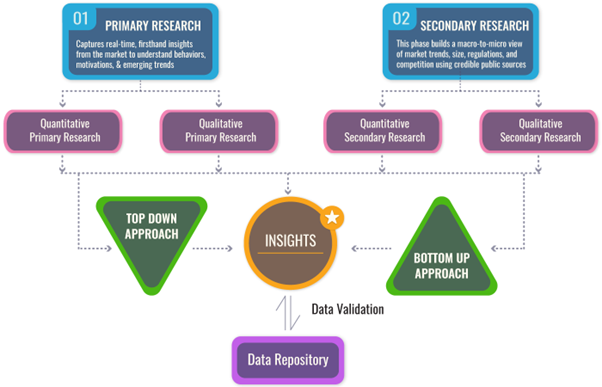
We follow a comprehensive, multi-phase research framework designed to deliver accurate, strategic, and decision-ready intelligence. Our process integrates primary and secondary research , both quantitative and qualitative , along with dual modeling techniques ( top-down and bottom-up) and a final layer of validation through our proprietary in-house repository.
PRIMARY RESEARCH
Primary research captures real-time, firsthand insights from the market to understand behaviors, motivations, and emerging trends.
1. Quantitative Primary Research
Objective: Generate statistically significant data directly from market participants.
Approaches:- Structured surveys with customers, distributors, and field agents
- Mobile-based data collection for point-of-sale audits and usage behavior
- Phone-based interviews (CATI) for market sizing and product feedback
- Online polling around industry events and digital campaigns
- Purchase frequency by customer type
- Channel performance across geographies
- Feature demand by application or demographic
2. Qualitative Primary Research
Objective: Explore decision-making drivers, pain points, and market readiness.
Approaches:- In-depth interviews (IDIs) with executives, product managers, and key decision-makers
- Focus groups among end users and early adopters
- Site visits and observational research for consumer products
- Informal field-level discussions for regional and cultural nuances
SECONDARY RESEARCH
This phase helps establish a macro-to-micro understanding of market trends, size, regulation, and competitive dynamics, sourced from credible and public domain information.
1. Quantitative Secondary Research
Objective: Model market value and segment-level forecasts based on published data.
Sources include:- Financial reports and investor summaries
- Government trade data, customs records, and regulatory statistics
- Industry association publications and economic databases
- Channel performance and pricing data from marketplace listings
- Revenue splits, pricing trends, and CAGR estimates
- Supply-side capacity and volume tracking
- Investment analysis and funding benchmarks
2. Qualitative Secondary Research
Objective: Capture strategic direction, innovation signals, and behavioral trends.
Sources include:- Company announcements, roadmaps, and product pipelines
- Publicly available whitepapers, conference abstracts, and academic research
- Regulatory body publications and policy briefs
- Social and media sentiment scanning for early-stage shifts
- Strategic shifts in market positioning
- Unmet needs and white spaces
- Regulatory triggers and compliance impact
DUAL MODELING: TOP-DOWN + BOTTOM-UP
To ensure robust market estimation, we apply two complementary sizing approaches:
Top-Down Modeling:- Start with broader industry value (e.g., global or regional TAM)
- Apply filters by segment, geography, end-user, or use case
- Adjust with primary insights and validation benchmarks
- Ideal for investor-grade market scans and opportunity mapping
- Aggregate from the ground up using sales volumes, pricing, and unit economics
- Use internal modeling templates aligned with stakeholder data
- Incorporate distributor-level or region-specific inputs
- Most accurate for emerging segments and granular sub-markets
DATA VALIDATION: IN-HOUSE REPOSITORY
We close the loop with proprietary data intelligence built from ongoing projects, industry monitoring, and historical benchmarking. This repository includes:
- Multi-sector market and pricing models
- Key trendlines from past interviews and forecasts
- Benchmarked adoption rates, churn patterns, and ROI indicators
- Industry-specific deviation flags and cross-check logic
- Catches inconsistencies early
- Aligns projections across studies
- Enables consistent, high-trust deliverables