

Veterinary Diagnostics Market Size and Forecast (2026–2034), Global and Regional Growth, Trend, Share and Industry Analysis Report Coverage: By Product Type (Instruments, Kits And Reagents, Software And Services); By Technology (Immunodiagnostics, Clinical Biochemistry, Molecular Diagnostics, Hematology, and Others (Urinalysis, Coagulation Testing, Toxicology, etc.)); By Animal Type (Companion Animals (Dogs, Cats, and Others (Rabbits, Birds, etc.)); Livestock Animals (Cattle, Swine, Poultry, and Others (Camel, Buffalo, etc.)); By End-User (Veterinary Hospitals & Clinics, Reference Laboratories, Ambulatory & Mobile Vet Services, Research Institutes & Universities, and Others (Wildlife Rehabilitation Centers, Zoos & Aquariums, etc.)); and Geography
2026-07-30
Healthcare
Swetal (Research Analyst)
Description
Veterinary Diagnostics Market
Overview
The global
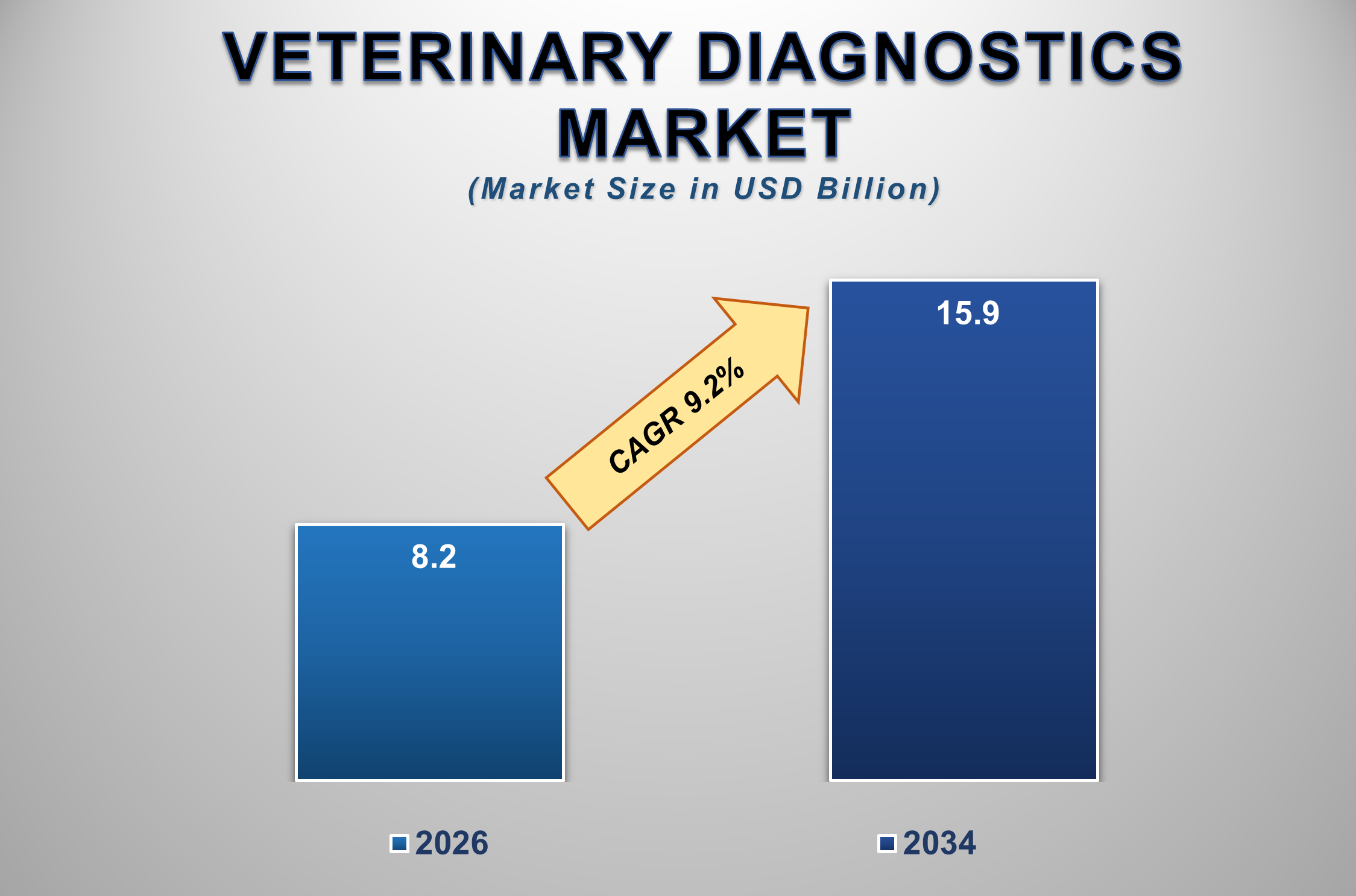
veterinary diagnostics market was valued at USD 8.2 billion in 2026 and is
projected to reach USD 15.9 billion by 2034, expanding at a CAGR of 9.2% during
the forecast period. The market for veterinary diagnostics includes equipment,
reagents, materials, software, and laboratory services that are involved in the
detection, monitoring, and management of disease in companion and livestock
animals. Diagnostic tools like immunodiagnosis, molecular diagnostics,
hematology, clinical biochemistry, microbiology, and point-of-care tests are
responsible for ensuring early detection, diagnosis, and treatment of disease
conditions. There are factors such as an increased number of pets, increasing
expenditure on animal healthcare, increased production of livestock, and the
prevalence of zoonotic diseases that influence the market. There are also
improvements in technologies like molecular diagnostics, automation, artificial
intelligence-based diagnostics, and rapid point-of-care tests that improve the
effectiveness of diagnoses.
Veterinary Diagnostics Market Drivers
and Opportunities
Rising Pet
Ownership and Increasing Animal Healthcare Expenditure Are Driving Market
Growth
The
growth in the population of those who own companion animals and the growth in
the expenditure on pet health care services form one of the major reasons for
the demand for veterinary diagnostic tests in the market. As per the statistics
from the most recent sourcebook from the AVMA, the number of households that
own any pets rose from 71.5 million in 2016 to 77.5 million in 2025, and 58.6%
of the total households have at least one pet. Meanwhile, the number of dogs
that were owned rose from 76.8 million to 87.3 million, while the number of
cats that were owned rose from 58.3 million to 76.3 million in the same
duration of time. The report mentions that the relationship between man and
animals has grown very close, as more than 79.5% of dog owners and 70.4% of cat
owners regard their pets as part of their families.
As more pets become
a part of the family unit, expenditure on basic veterinary care, disease
detection, vaccination, and treatment of chronic diseases is steadily
increasing. Pet owners are putting increased focus on early diagnosis and
regular check-ups to improve their pet's health and increase their lifespan.
Such developments are driving more veterinary facilities to adopt newer
veterinary diagnostic equipment such as immunodiagnostics kits, molecular
diagnostics, clinical chemistry instruments, point-of-care instruments, and
other diagnostic tests performed in the laboratory. These developments are
expected to drive the market for veterinary diagnostics over the forecast
period due to increased pet ownership and healthcare expenditure.
Growing Focus on
Livestock Health and Zoonotic Disease Surveillance Fueling Market Expansion
With the rising
demand for animal-based food items, such as meat, milk, and eggs, there have
been increasing investments made in health management and disease prevention
among livestock, thus offering a lot of potential for the growth of the
veterinary diagnostics market. Livestock farmers are focusing more on keeping
their herd healthy, minimizing losses, and making effective use of feed by
means of disease monitoring and preventive health care services. It has become
necessary to diagnose infectious diseases like foot and mouth disease, avian
flu, African swine fever, bovine tuberculosis, and brucellosis to reduce any
economic losses or prevent disease outbreaks, thus ensuring continuous
production from the livestock. On the other hand, the increasing threat of
zoonotic diseases coupled with concerns over global food security issues has
led to the improvement of animal disease surveillance systems. Advanced
diagnostics have been vital for monitoring the occurrence of disease outbreaks,
conducting epidemiological research, adopting fast reaction strategies, and
complying with animal health and food safety guidelines. The emerging
technologies in molecular diagnostics, PCR-based tests, immunodiagnosis, and
portable point-of-care testing have assisted in faster and more accurate
detection of pathogens. Furthermore, continuous development in laboratory
facilities, livestock disease surveillance systems, and One Health initiatives
will result in an increasing adoption of advanced diagnostic techniques, which
is anticipated to boost the global veterinary diagnostics market.
Expansion of
Point-of-Care and AI-Enabled Veterinary Diagnostics Presents Significant
Opportunities
The increasing need
for speedy, reliable, and decentralized diagnostic tests is opening up a
significant number of business opportunities in the point-of-care (POC) and
artificial intelligence-driven veterinary diagnostic market. The use of
portable analyzers and small diagnostic systems that provide quick and reliable
results within minutes is becoming increasingly common among veterinarians,
allowing for faster decision-making and prompt commencement of treatments. Such
technologies decrease dependency on laboratory settings, improve efficiency of
workflows, and increase availability of diagnostic services in veterinary
clinics, livestock farms, mobile veterinary services, and remote areas.
Cloud-based diagnostic systems allow for easy sharing of information and
consultation from remote places.
Through improvements in the speed, accuracy, and consistency of test interpretation, artificial intelligence is changing the dynamics of veterinary diagnostics. Image analysis powered by AI and automated hematology systems has proven to be effective in reducing human errors, simplifying laboratory practices, and assisting veterinarians in the diagnosis of complicated diseases. Indeed, it is against this background that the enhancement of Vetscan OptiCell by Zoetis Inc., the company's cartridge-based artificial intelligence-powered hematology analyzer, was announced in April 2026. It represents the next stage of the development of the platform. Designed for fast and accurate blood testing, this system will facilitate veterinary experts' decision-making. Such advances in veterinary diagnostics represent a move towards intelligent and connected devices that allow for point-of-care testing. The increasing use of AI and related technologies in the veterinary sector and their ability to improve the accuracy of diagnoses and the efficiency of work routines are likely to bring substantial growth prospects for the global veterinary diagnostics market during the forecast period.
Veterinary Diagnostics Market Scope
|
Report Attributes |
Description |
|
Market Size in
2026 |
USD 8.2
Billion |
|
Market Forecast
in 2034 |
USD 15.9
Billion |
|
CAGR % 2026-2034 |
9.2% |
|
Base Year |
2025 |
|
Historic Data |
2021-2025 |
|
Forecast Period |
2026-2034 |
|
Report USP |
Pricing and
Cost Structure Analysis, Product Innovation Benchmarking, Whitespace
Assessment, Company Share, Company Heatmap, Growth Factors and more |
|
Segments Covered |
●
By
Product Type ●
By
Technology ●
By Animal
Type ●
By
End-User |
|
Regional Scope |
●
North
America ●
Europe ●
APAC ●
Latin
America ●
Middle
East and Africa |
|
Country Scope |
●
U.S. ●
Canada ●
U.K. ●
Germany ●
France ●
Italy ●
Spain ●
Russia ●
China ●
India ●
Japan ●
South
Korea ●
Australia
●
Mexico ●
Brazil ●
Saudi
Arabia ●
UAE ●
South
Africa
|
Veterinary Diagnostics Market Report
Segmentation Analysis
The global
veterinary diagnostics market industry analysis is segmented by product type,
by technology, by animal type, by end user, and by region.
Kits and
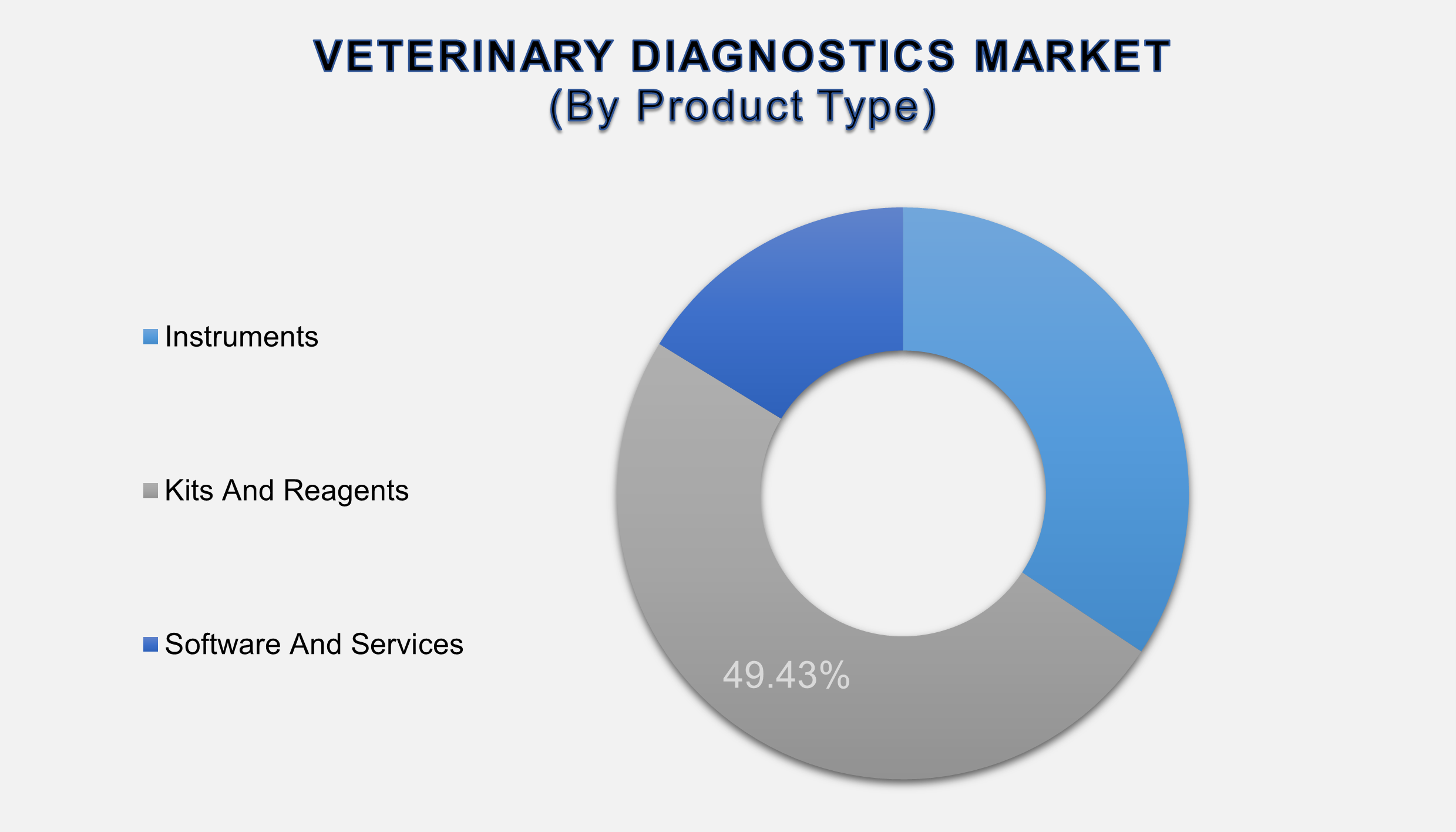
Reagents Segment Is Expected to Dominate the Veterinary Diagnostics Market
During the Forecast Period
The kits and reagents category will occupy the largest portion of the veterinary diagnostics market share during the forecast period due to their repeated usage, wide application areas, and the rising need for quick and accurate diagnosis. While diagnostic instruments are capital goods, kits and reagents are considered consumable products that will continue to be used for every single test done. The increasing number of health screening tests, infectious disease testing, clinical chemistry testing, immunodiagnostics testing, molecular diagnostics testing, hematology testing, and parasitology testing among pets and livestock is leading to increased use of these products. Increased pet ownership, growth in livestock production, and increased awareness about preventive animal healthcare are adding to the increase in testing volume. Technological innovations are another factor supporting the development of this market segment. New types of highly sensitive, user-friendly, and fast diagnostic assays are introduced by manufacturers, providing veterinarians with the ability to receive precise results in just a few minutes. Furthermore, the adoption of PCR-based reagents, ELISA kits, multiplex diagnostic tests, and cartridges for diagnostics is contributing to increased efficiency of the process and decreased turnaround times. Expansion of veterinary clinics and in-house laboratories, along with the growing monitoring of zoonoses and livestock diseases, is further facilitating the increased use of reagents. Finally, continuous innovation of products by leading animal health companies and a preference for decentralization of testing are predicted to continue supporting the demand for diagnostic kits and reagents, ensuring dominance of this segment in the global veterinary diagnostics market.
Immunodiagnostics
Segment Is Expected to Lead the Veterinary Diagnostics Market by Technology
The
immunodiagnostics segment will continue to lead the veterinary diagnostics
market in the forecast period on account of the extensive use of these tests in
the diagnosis of various infectious diseases, endocrine diseases, and other
diseases of animals with speed and accuracy. Technologies like ELISA, lateral
flow tests, and antigen and antibody tests are highly sensitive and inexpensive;
hence, they are the preferred mode of tests in veterinary hospitals, veterinary
clinics, diagnostic labs, and livestock farms.
Increasing demand
for preventive healthcare of animals, rising cases of zoonosis and infectious
diseases, and increased wellness testing are increasing the demand for
immunodiagnostic technologies. Moreover, advances in multiplex assays and
point-of-care immunodiagnostics are increasing their effectiveness and
availability in the global veterinary diagnostics market.
Companion
Animals Segment Is Expected to Dominate the Animal Type Segment
The pets’ companion
animal category will remain dominant in the global veterinary diagnostics
industry throughout the forecast period owing to increased pet ownership,
higher humanization of pets, and greater investment in preventive healthcare.
Increasing demand for health screenings, disease diagnosis, and disease
management in companion animals, including dogs, cats, and others, is promoting
the application of veterinary diagnostic procedures. Moreover, the growing
usage of point-of-care, molecular, and immunodiagnostics in veterinary
hospitals and clinics will help the segment maintain its market dominance.
Veterinary
Hospitals & Clinics Segment Is Expected to Dominate the End User Segment
The veterinary hospitals & clinics category is anticipated to lead the veterinary diagnostics market throughout the forecast period on account of the rising number of pet visits, increasing requirement for preventative healthcare, and growing usage of innovative diagnostic equipment. Veterinary hospitals & clinics act as the main venue for health screening and disease diagnoses, resulting in the widespread use of diagnostic devices, imaging equipment, molecular diagnostics, and point-of-care testing systems.
Further expansion
in the development of veterinary hospitals and enhanced focus on clinical
services is also contributing towards the growth of the segment. For example,
in February 2026, CareVet introduced its Premier Centers, which represent a
network of hospitals known for their clinical excellence and veterinary
practices based on evidence, thereby promoting the usage of advanced diagnostic
equipment. In June 2026, Lakefield Veterinary Group introduced the Care Beyond
Limits Fund, which aims at providing necessary veterinary services to pets that
cannot afford to pay for them due to a lack of funds.
The following
segments are part of an in-depth analysis of the global veterinary diagnostics
market:
|
Market Segments |
|
|
By
Product Type |
●
Instruments ●
Kits And
Reagents ●
Software And
Services |
|
By
Technology |
●
Immunodiagnostics ●
Clinical
Biochemistry ●
Molecular
Diagnostics ●
Hematology ●
Others
(Urinalysis, Coagulation Testing, Toxicology, etc.) |
|
By
Animal Type |
●
Companion
Animals o
Dogs o
Cats o
Others (Rabbits,
Birds, etc.) ●
Livestock
Animals o
Cattle o
Swine o
Poultry o
Others
(Camel, Buffalo, etc.) |
|
By End
User |
●
Veterinary
Hospitals & Clinics ●
Reference
Laboratories ●
Ambulatory
& Mobile Vet Services ●
Research
Institutes & Universities ●
Others
(Wildlife Rehabilitation Centers, Zoos & Aquariums, etc.) |
Veterinary Diagnostics Market Share
Analysis by Region
North America is
projected to hold the largest share of the global veterinary diagnostics market
over the forecast period
North America is
projected to hold the largest share of the global veterinary diagnostics market
due to the following factors: a high number of pets, modern veterinary
healthcare facilities and services, strong livestock health management
practices, and the presence of key players in the animal health sector. Other
factors contributing to the region’s market share include increasing adoption
of advanced technology solutions, rising healthcare costs for companion
animals, and the presence of numerous veterinary hospitals, clinics, and
diagnostic labs.
Moreover, strategic
investments and acquisitions carried out by key players consolidate North
America's market leadership position. For example, in March 2026, Zoetis Inc.
entered into a definitive agreement to acquire Neogen Corporation’s animal
genomics business for USD 160 million. This merger enhances Zoetis’ portfolio
in precision animal health and genomics and expands its global diagnostics
portfolio with Neogen’s genomics business that serves customers in more than
120 countries through its laboratories in the US, Brazil, Australia, China, and
the UK.
Veterinary
Diagnostics Market Competition Landscape Analysis
The market for
veterinary diagnostics is a very competitive one, with the leading companies
operating in the segment of animal health, veterinary diagnostics
manufacturing, and biotechnology concentrating on the development of novel
diagnostic technologies for companion and livestock animals. The market players
are engaged in developing advanced immunodiagnostic, molecular diagnostic,
point-of-care, clinical chemistry, hematology, and AI-based diagnostic
technologies that will help detect diseases fast and accurately. Acquisitions,
collaborations, launching new products, geographical expansion, and R&D are
the ways market players are building up their market position. Moreover, the
increasing use of rapid diagnostic tests, integration of AI and digital
veterinary solutions, livestock disease surveillance programs, and preventive
care for animal health are the factors contributing to the growth of the
market.
Global
Veterinary Diagnostics Market Recent Developments News:
●
In May 2026 –
HORIBA announced the launch of Yumivet, its new veterinary diagnostics brand,
alongside the introduction of a dedicated solution, the Yumivet VH2500
hematology analyzer.
●
In January
2026 - Antech, a global
veterinary diagnostics company, announced the
launch of RapidRead Dental for Feline, an AI-powered dental radiograph analysis
solution built specifically for cats, and the addition of SDMA testing to its
in-house diagnostic platform, Element i+.
●
In November
2025 - Zoetis Inc. announced the acquisition of Veterinary Pathology Group, a leading veterinary diagnostic laboratory
group with multiple locations across the UK and Ireland. The acquisition
further expands Zoetis’ comprehensive diagnostics portfolio and reinforces its
commitment to advancing animal health through innovative, high-quality
diagnostic solutions.
●
In September
2025 - FUJIFILM Healthcare Europe announced the European launch of the FUJI
DRI-CHEM AU20V, an enhanced in-house diagnostics measurement device for
veterinary use.
The Global
Veterinary Diagnostics Market is dominated by a few large companies, such as
●
BioMérieux SA
●
BioNote Inc.
●
Bio-Rad Laboratories Inc.
●
Boehringer Ingelheim GmbH
●
Covetrus Inc.
●
Danaher Corporation
●
Esaote SpA
●
Eurofins Technologies
●
Heska Corporation
●
HIPRA
●
IDEXX Laboratories Inc.
●
IDVet
●
INDICAL Bioscience GmbH
●
Mindray Medical International Ltd.
●
Neogen Corporation
●
QIAGEN N.V.
●
Randox Laboratories Ltd.
●
Thermo Fisher Scientific Inc.
●
Virbac SA
●
Zoetis Inc.
● Other Prominent Players
Frequently Asked Questions
Swetal (Research Analyst)
Swetal is a Research Analyst with 4+ years of experience specializing in healthcare market research, medical devices, healthcare IT, and medical technology industry analysis. Her expertise includes competitive intelligence, secondary research, market trend forecasting, and healthcare business insights across global healthcare ecosystems.
She contributes to advanced market research reports by analyzing regulatory frameworks, emerging healthcare technologies, competitive landscapes, and innovation trends shaping the medical industry. With a strong focus on accurate market intelligence, strategic insights, and healthcare industry trends, Swetal supports businesses in making informed, data-backed decisions in a rapidly transforming healthcare environment.
1.
Global
Veterinary Diagnostics Market Introduction and Market Overview
1.1. Objectives of the Study
1.2. Market Segmentation
1.2.1.Product Type of the Global Veterinary
Diagnostics Market
1.2.2.Technology of the Global Veterinary
Diagnostics Market
1.2.3.Animal Type of the Global Veterinary
Diagnostics Market
1.2.4.End User of Global Veterinary
Diagnostics Market
1.2.5.Region of Global Veterinary
Diagnostics Market
1.3. Competition Coverage List of
Market Participants
1.4. Market Definition: Veterinary
Diagnostics Market
2.
Executive Summary
2.1. Global Veterinary Diagnostics
Market Estimation & Forecast
2.1.1.Global Veterinary Diagnostics
Market Size (US$ Million) Estimates & Historical Trend Analysis (2021 -
2025)
2.1.2.Global Veterinary Diagnostics
Overall Market Size (US$ Million), Growth Rate (Y-o-Y), Market CAGR (%), Market
forecast (2026 - 2034)
2.2. Snapshot of Global Veterinary
Diagnostics Market
2.3. Global Veterinary Diagnostics
Market Revenue Share (%) 2025
2.4. REGIONAL OUTLINE: Revenue CAGR,
by Region
2.5. Key Competitors & Key
Insights
3.
Market Overview (Qualitative
Analysis)
3.1. Demand Side Trends
3.2. Supply Side Trends /
Manufacturing Trends
3.3. Demand and Opportunity
Assessment, 2026 - 2034
3.4. Market Dynamics
3.4.1.Drivers
3.4.2.Limitations
3.4.3.Opportunities
3.4.4.Impact Analysis of Drivers and
Restraints
3.5. Key Developments
3.6. Regulatory Landscape
3.7. Pricing Analysis
3.8. Supply Chain Analysis
3.9. Porter’s Five Forces Analysis
3.9.1.Bargaining Power of Suppliers
3.9.2.Bargaining Power of Buyers
3.9.3.Threat of Substitutes
3.9.4.Threat of New Entrants
3.9.5.Competitive Rivalry
3.10. PEST Analysis
3.10.1. Political Factors
3.10.2. Economic Factors
3.10.3. Social Factors
3.10.4. Technology Factors
4.
Global Veterinary Diagnostics
Market Estimates & Forecast Trend Analysis, by Product Type
4.1. Global Veterinary Diagnostics
Market Assessments & Key Findings, by Product Type
4.2. Global Veterinary Diagnostics
Market Revenue (US$ Million) Estimates and Forecasts, by Product Type, 2021 -
2034
4.2.1.Instruments
4.2.2.Kits And Reagents
4.2.3.Software And Services
5.
Global Veterinary Diagnostics
Market Estimates & Forecast Trend Analysis, by Technology
5.1. Global Veterinary Diagnostics
Market Assessments & Key Findings, by Technology
5.2. Global Veterinary Diagnostics
Market Revenue (US$ Million) Estimates and Forecasts, by Technology, 2021 -
2034
5.2.1.Immunodiagnostics
5.2.2.Clinical Biochemistry
5.2.3.Molecular Diagnostics
5.2.4.Hematology
5.2.5.Others (Urinalysis, Coagulation
Testing, Toxicology, etc.)
6.
Global Veterinary Diagnostics
Market Estimates & Forecast Trend Analysis, by Animal Type
6.1. Global Veterinary Diagnostics
Market Assessments & Key Findings, by Animal Type
6.2. Global Veterinary Diagnostics
Market Revenue (US$ Million) Estimates and Forecasts, by Animal Type, 2021 -
2034
6.2.1.Companion Animals
6.2.1.1.
Dogs
6.2.1.2.
Cats
6.2.1.3.
Others
(Rabbits, Birds, etc.)
6.2.2.Livestock Animals
6.2.2.1.
Cattle
6.2.2.2.
Swine
6.2.2.3.
Poultry
6.2.2.4.
Others
(Camel, Buffalo, etc.)
7.
Global Veterinary Diagnostics
Market Estimates & Forecast Trend Analysis, by End User
7.1. Global Veterinary Diagnostics
Market Assessments & Key Findings, by End User
7.2. Global Veterinary Diagnostics
Market Revenue (US$ Million) Estimates and Forecasts, by End User, 2021 - 2034
7.2.1.Veterinary Hospitals &
Clinics
7.2.2.Reference Laboratories
7.2.3.Ambulatory & Mobile Vet
Services
7.2.4.Research Institutes &
Universities
7.2.5.Others (Wildlife Rehabilitation
Centers, Zoos & Aquariums, etc.)
8.
Global Veterinary Diagnostics
Market Estimates & Forecast Trend Analysis, by Region
8.1. Global Veterinary Diagnostics
Market Assessments & Key Findings, by Region
8.2. Global Veterinary Diagnostics
Market Revenue (US$ Million) Estimates and Forecasts, by Region, 2021 - 2034
8.2.1.North America
8.2.2.Europe
8.2.3.Asia Pacific
8.2.4.Middle East & Africa
8.2.5.Latin America
9.
North
America Veterinary Diagnostics Market: Estimates & Forecast Trend Analysis
9.1.
North
America Veterinary Diagnostics Market Assessments & Key Findings
9.1.1.North America Veterinary
Diagnostics Market Introduction
9.1.2.North America Veterinary
Diagnostics Market Size Estimates and Forecast (US$ Million) (2021 - 2034)
9.1.2.1. By Product Type
9.1.2.2. By Technology
9.1.2.3. By Animal Type
9.1.2.4. By End User
9.1.2.5. By Country
9.1.2.5.1. The U.S.
9.1.2.5.2. Canada
10. Europe Veterinary
Diagnostics Market: Estimates & Forecast
Trend Analysis
10.1. Europe Veterinary Diagnostics
Market Assessments & Key Findings
10.1.1. Europe Veterinary Diagnostics
Market Introduction
10.1.2. Europe Veterinary Diagnostics
Market Size Estimates and Forecast (US$ Million) (2021 - 2034)
10.1.2.1. By Product Type
10.1.2.2. By Technology
10.1.2.3. By Animal Type
10.1.2.4. By End User
10.1.2.4.1.
Germany
10.1.2.4.2.
Italy
10.1.2.4.3.
U.K.
10.1.2.4.4.
France
10.1.2.4.5.
Spain
10.1.2.4.6.
Switzerland
10.1.2.4.7. Rest
of Europe
11. Asia Pacific Veterinary
Diagnostics Market: Estimates &
Forecast Trend Analysis
11.1. Asia Pacific Market Assessments
& Key Findings
11.1.1. Asia Pacific Veterinary Diagnostics
Market Introduction
11.1.2. Asia Pacific Veterinary
Diagnostics Market Size Estimates and Forecast (US$ Million) (2021 - 2034)
11.1.2.1. By Product Type
11.1.2.2. By Technology
11.1.2.3. By Animal Type
11.1.2.4. By End User
11.1.2.5. By Country
11.1.2.5.1. China
11.1.2.5.2. Japan
11.1.2.5.3. India
11.1.2.5.4. Australia
11.1.2.5.5. South Korea
11.1.2.5.6. Rest of Asia Pacific
12. Middle East & Africa Veterinary
Diagnostics Market: Estimates &
Forecast Trend Analysis
12.1. Middle East & Africa Market
Assessments & Key Findings
12.1.1. Middle
East & Africa Veterinary
Diagnostics Market Introduction
12.1.2. Middle
East & Africa Veterinary
Diagnostics Market Size Estimates and Forecast (US$ Million) (2021 - 2034)
12.1.2.1. By Product Type
12.1.2.2. By Technology
12.1.2.3. By Animal Type
12.1.2.4. By End User
12.1.2.5. By Country
12.1.2.5.1. South Africa
12.1.2.5.2. UAE
12.1.2.5.3. Saudi Arabia
12.1.2.5.4. Rest of MEA
13. Latin America
Veterinary Diagnostics Market:
Estimates & Forecast Trend Analysis
13.1. Latin America Market Assessments
& Key Findings
13.1.1. Latin America Veterinary
Diagnostics Market Introduction
13.1.2. Latin America Veterinary
Diagnostics Market Size Estimates and Forecast (US$ Million) (2021 - 2034)
13.1.2.1. By Product Type
13.1.2.2. By Technology
13.1.2.3. By Animal Type
13.1.2.4. By End User
13.1.2.5. By Country
13.1.2.5.1. Brazil
13.1.2.5.2. Mexico
13.1.2.5.3. Argentina
13.1.2.5.4. Rest of LATAM
14. Competition Landscape
14.1. Global Veterinary Diagnostics
Market Product Mapping
14.2. Global Veterinary Diagnostics
Market Concentration Analysis, by Leading Players / Innovators / Emerging Players
/ New Entrants
14.3. Global Veterinary Diagnostics
Market Tier Structure Analysis
14.4. Global Veterinary Diagnostics
Market Concentration & Company Market Shares (%) Analysis, 2025
15. Company Profiles
15.1. BioMérieux SA
15.1.1. Company Overview & Key Stats
15.1.2. Financial Performance & KPIs
15.1.3. Product Portfolio
15.1.4. SWOT Analysis
15.1.5. Business Strategy & Recent
Developments
* Similar details would be provided
for all the players mentioned below
15.2.
BioNote Inc.
15.3.
Bio-Rad Laboratories Inc.
15.4.
Boehringer Ingelheim GmbH
15.5.
Covetrus Inc.
15.6.
Danaher Corporation
15.7.
Esaote SpA
15.8.
Eurofins Technologies
15.9.
Heska Corporation
15.10.
HIPRA
15.11.
IDEXX Laboratories Inc.
15.12.
IDVet
15.13.
INDICAL Bioscience GmbH
15.14.
Mindray Medical International
Ltd.
15.15.
Neogen Corporation
15.16.
QIAGEN N.V.
15.17.
Randox Laboratories Ltd.
15.18.
Thermo Fisher Scientific Inc.
15.19.
Virbac SA
15.20. Zoetis Inc.
15.21. Other Prominent Players
16. Research
Findings & Conclusion
17. Assumption & Acronyms Used
18. Research
Methodology
18.1. External Transportations /
Databases
18.2. Internal Proprietary Database
18.3. Primary Research
18.4. Secondary Research
18.5. Assumptions
18.6. Limitations
18.7. Report FAQs
Our Research Methodology
"Insight without rigor is just noise."
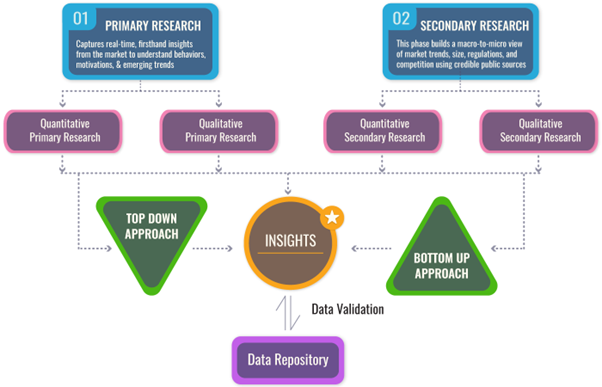
We follow a comprehensive, multi-phase research framework designed to deliver accurate, strategic, and decision-ready intelligence. Our process integrates primary and secondary research , both quantitative and qualitative , along with dual modeling techniques ( top-down and bottom-up) and a final layer of validation through our proprietary in-house repository.
PRIMARY RESEARCH
Primary research captures real-time, firsthand insights from the market to understand behaviors, motivations, and emerging trends.
1. Quantitative Primary Research
Objective: Generate statistically significant data directly from market participants.
Approaches:- Structured surveys with customers, distributors, and field agents
- Mobile-based data collection for point-of-sale audits and usage behavior
- Phone-based interviews (CATI) for market sizing and product feedback
- Online polling around industry events and digital campaigns
- Purchase frequency by customer type
- Channel performance across geographies
- Feature demand by application or demographic
2. Qualitative Primary Research
Objective: Explore decision-making drivers, pain points, and market readiness.
Approaches:- In-depth interviews (IDIs) with executives, product managers, and key decision-makers
- Focus groups among end users and early adopters
- Site visits and observational research for consumer products
- Informal field-level discussions for regional and cultural nuances
SECONDARY RESEARCH
This phase helps establish a macro-to-micro understanding of market trends, size, regulation, and competitive dynamics, sourced from credible and public domain information.
1. Quantitative Secondary Research
Objective: Model market value and segment-level forecasts based on published data.
Sources include:- Financial reports and investor summaries
- Government trade data, customs records, and regulatory statistics
- Industry association publications and economic databases
- Channel performance and pricing data from marketplace listings
- Revenue splits, pricing trends, and CAGR estimates
- Supply-side capacity and volume tracking
- Investment analysis and funding benchmarks
2. Qualitative Secondary Research
Objective: Capture strategic direction, innovation signals, and behavioral trends.
Sources include:- Company announcements, roadmaps, and product pipelines
- Publicly available whitepapers, conference abstracts, and academic research
- Regulatory body publications and policy briefs
- Social and media sentiment scanning for early-stage shifts
- Strategic shifts in market positioning
- Unmet needs and white spaces
- Regulatory triggers and compliance impact
DUAL MODELING: TOP-DOWN + BOTTOM-UP
To ensure robust market estimation, we apply two complementary sizing approaches:
Top-Down Modeling:- Start with broader industry value (e.g., global or regional TAM)
- Apply filters by segment, geography, end-user, or use case
- Adjust with primary insights and validation benchmarks
- Ideal for investor-grade market scans and opportunity mapping
- Aggregate from the ground up using sales volumes, pricing, and unit economics
- Use internal modeling templates aligned with stakeholder data
- Incorporate distributor-level or region-specific inputs
- Most accurate for emerging segments and granular sub-markets
DATA VALIDATION: IN-HOUSE REPOSITORY
We close the loop with proprietary data intelligence built from ongoing projects, industry monitoring, and historical benchmarking. This repository includes:
- Multi-sector market and pricing models
- Key trendlines from past interviews and forecasts
- Benchmarked adoption rates, churn patterns, and ROI indicators
- Industry-specific deviation flags and cross-check logic
- Catches inconsistencies early
- Aligns projections across studies
- Enables consistent, high-trust deliverables