

Volatile Organic Compound (VOC) Gas Sensor Market Size and Forecast (2026 - 2034), Global and Regional Growth, Trend, Share and Industry Analysis Report Coverage; By Technology (Metal Oxide Semiconductor, Photoionization Detector, Electrochemical, Infrared and Others); By Type (Portable, Fixed and Integrated Modules); By Application (Industrial Monitoring, Indoor Air Quality Monitoring, Environmental Monitoring, Automotive and Others); By End-use (Residential, Commercial, Industrial, Automotive, Oil & Gas and Others) and Geography
2026-03-11
Semiconductor and Electronics
Ekta Chaurasia (Team Lead)
Description
Volatile Organic Compound (VOC) Gas Sensor Market Overview
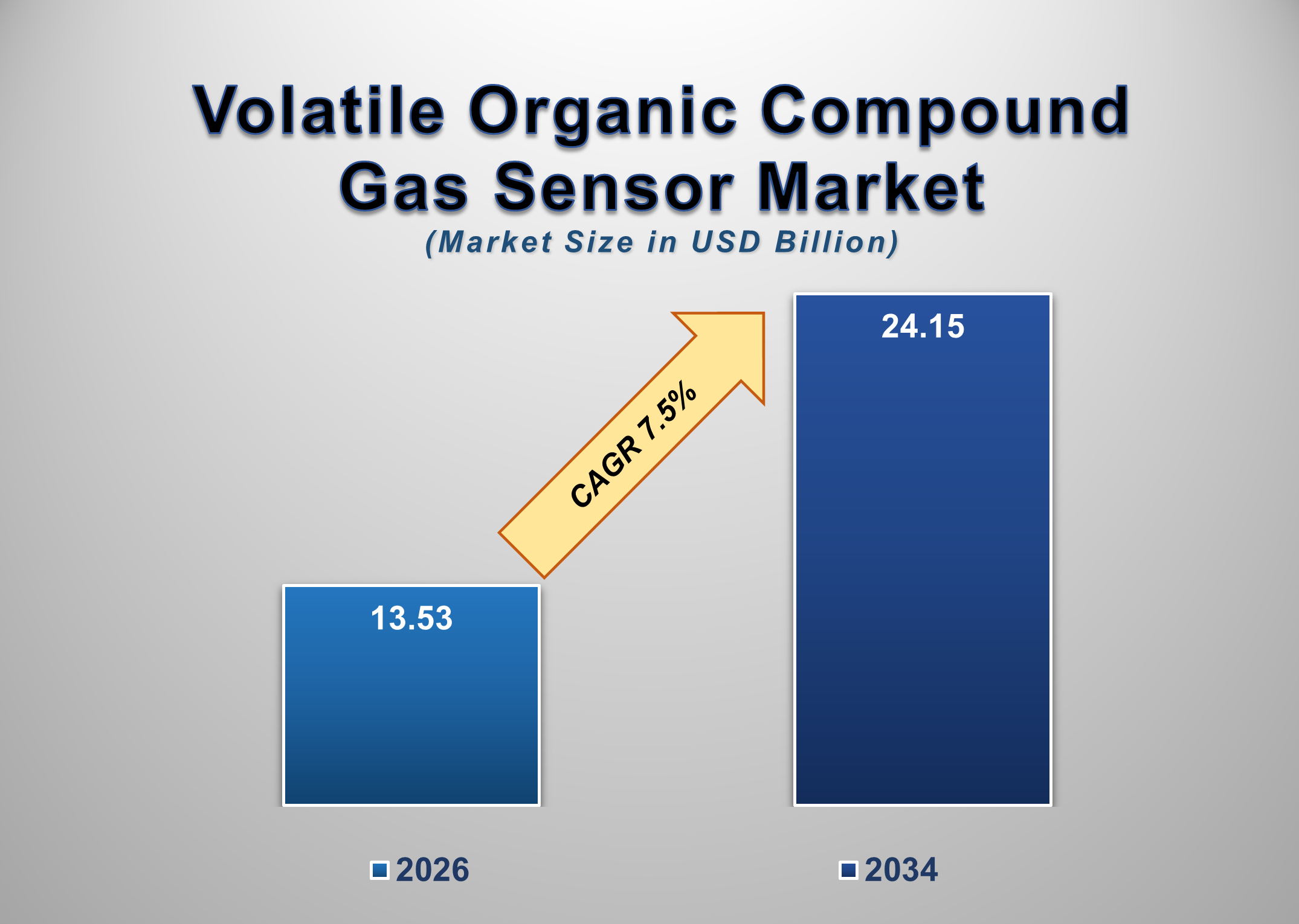
The global Volatile Organic Compound (VOC) Gas Sensor Market is witnessing significant growth, driven by tightening environmental regulations, rising concerns about indoor air pollution, and strengthening industrial safety standards across developed and emerging economies. The global Volatile Organic Compound (VOC) Gas Sensor Market is valued at USD 13.53 billion in 2026 and is projected to reach USD 24.15 billion by 2034, growing at a CAGR of 7.5% during the forecast period.
Volatile organic compound gas sensors are analytical detection devices used to measure airborne chemical vapors emitted from solvents, fuels, adhesives, cleaning agents, paints, petrochemicals, and combustion processes. These sensors play a crucial role in monitoring air quality, ensuring workplace safety, controlling industrial emissions, and enabling smart environmental management systems.
The market includes semiconductor-based sensors, photoionization detectors (PID), infrared absorption sensors, and electrochemical detection systems. These technologies are deployed across manufacturing plants, laboratories, commercial buildings, smart homes, automotive cabins, oil refineries, and environmental monitoring stations. Increasing urbanization, industrialization, and public awareness regarding respiratory health are reinforcing the long-term growth trajectory of this market.
Volatile Organic Compound (VOC) Gas Sensor Market Drivers and Opportunities
Rising Indoor Air Quality Concerns and Regulatory Enforcement are anticipated to lift the Volatile Organic Compound (VOC) Gas Sensor market growth during the forecast period
The rapid increase in indoor air pollution levels has become a major public health concern globally. Studies indicate that indoor environments can contain VOC concentrations two to five times higher than outdoor air, primarily due to emissions from building materials, furniture coatings, cleaning agents, and office equipment. As urban populations spend nearly 80–90% of their time indoors, monitoring air quality has become essential for residential, commercial, and institutional buildings.
Governments and regulatory agencies have implemented stricter exposure limits for hazardous organic vapors in workplaces and public infrastructure. Occupational health standards now require continuous monitoring of solvents and chemical emissions in manufacturing plants, pharmaceutical facilities, petrochemical complexes, and printing industries. Compliance requirements are compelling industries to transition from manual air sampling techniques to real-time, sensor-based monitoring systems.
Additionally, green building certifications and sustainable infrastructure policies require documented indoor air quality metrics. VOC sensors are increasingly integrated into HVAC systems, building automation platforms, and smart ventilation controls to ensure optimized air exchange and reduced pollutant exposure. This regulatory tightening and growing health awareness are expected to significantly accelerate adoption across both developed and emerging markets.
Smart Infrastructure Integration and IoT-based Environmental Monitoring are vital drivers for influencing the growth of the global Volatile Organic Compound (VOC) Gas Sensor market
The expansion of smart buildings, connected devices, and intelligent environmental management systems is fundamentally transforming the gas sensor landscape. Modern infrastructure increasingly relies on sensor networks that collect real-time environmental data to enhance operational efficiency and energy optimization.
VOC sensors are being embedded into smart thermostats, air purifiers, building management systems, and industrial automation platforms. These sensors enable demand-controlled ventilation, adjusting airflow based on pollutant concentration rather than fixed schedules, thereby improving energy efficiency while maintaining air quality standards.
Advancements in micro-electromechanical systems (MEMS) fabrication, nanomaterial-based sensing elements, and low-power semiconductor architecture have allowed manufacturers to produce compact, highly sensitive, and energy-efficient VOC detection modules. Integration with IoT platforms and cloud-based analytics enables predictive maintenance, automated alerts, and centralized monitoring.
The convergence of environmental monitoring with digital transformation initiatives in manufacturing, healthcare facilities, data centers, and commercial complexes is expected to drive large-scale sensor deployment over the forecast period.
Automotive Cabin Air Quality Monitoring is poised to create significant opportunities in the global Volatile Organic Compound (VOC) Gas Sensor market
The automotive sector presents a high-growth opportunity for VOC gas sensor manufacturers. Interior materials, adhesives, plastics, and upholstery emit volatile organic compounds, particularly in newly manufactured vehicles. Growing consumer awareness regarding in-cabin air quality has led automotive OEMs to incorporate air monitoring systems within advanced climate control modules.
Electric vehicles (EVs) and autonomous vehicles further intensify this demand. Extended passenger occupancy, airtight cabin designs, and premium interior materials increase the importance of continuous air quality monitoring. VOC sensors integrated with intelligent filtration systems allow automatic regulation of air purification levels, enhancing passenger comfort and safety.
As automotive manufacturers emphasize wellness-focused design and regulatory authorities introduce in-cabin air quality guidelines, the adoption of VOC sensing technologies is expected to expand significantly across both premium and mid-range vehicle segments.
Volatile Organic Compound (VOC) Gas Sensor Market Scope
Volatile Organic Compound (VOC) Gas Sensor Market Report Segmentation Analysis
The global Volatile Organic Compound (VOC) Gas Sensor Market industry analysis is segmented by technology, type, application, end-use, and region.
Metal Oxide Semiconductor Dominates the Technology Segment
By Technology, the market is segmented into Metal Oxide Semiconductor (MOS), Photoionization Detector (PID), Electrochemical, Infrared, and Others. The MOS segment dominates due to its cost efficiency, compact design, and suitability for mass-market consumer and industrial applications. MOS sensors offer long operational life and compatibility with IoT-enabled devices, making them widely adopted in smart homes and HVAC systems. Meanwhile, PID sensors are projected to grow at a higher CAGR owing to their superior sensitivity and accuracy in industrial safety environments.
Fixed Sensors hold the highest share of the Type Segment
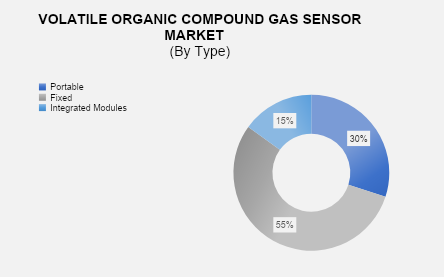
Based on type, the market is bifurcated into Portable, Fixed, and Integrated Modules. Fixed VOC sensors dominate the market as industrial plants, laboratories, and commercial facilities require continuous environmental monitoring systems. Permanent installations provide real-time alerts and automated ventilation control. Portable and handheld sensors are witnessing rapid growth due to increasing demand in field inspections and emergency response scenarios.
Industrial Monitoring Segment Leads by Application
In terms of application, the market is segmented into Industrial Monitoring, Indoor Air Quality Monitoring, Environmental Monitoring, Automotive, and Others. Industrial monitoring holds the largest share due to mandatory emission control regulations in the chemical, petrochemical, and manufacturing industries. Continuous monitoring systems are critical for preventing hazardous exposure and ensuring regulatory compliance. Indoor air quality monitoring is projected to grow significantly due to rising health awareness and smart building adoption.
The Industrial Sector is a key End-use
In terms of End-use, the market is segmented into Residential, Commercial, Industrial, Automotive, Oil & Gas, and Others. The Industrial segment dominates due to stringent workplace safety regulations and continuous emission monitoring requirements. Oil & gas facilities, refineries, and chemical processing plants rely heavily on VOC detection systems to mitigate explosion and toxicity risks.
The following segments are part of an in-depth analysis of the global Volatile Organic Compound (VOC) Gas Sensor Market:
Market Segments
Volatile Organic Compound (VOC) Gas Sensor Market Share Analysis by Region
The North America region is projected to hold the largest share of the global Volatile Organic Compound (VOC) Gas Sensor Market over the forecast period.
North America leads due to strict occupational safety regulations, advanced smart infrastructure deployment, and high adoption of HVAC-integrated environmental monitoring systems. Europe holds a moderate share supported by environmental sustainability initiatives and green building certifications. Asia-Pacific is the fastest-growing region driven by rapid industrialization, urban pollution concerns, and expanding manufacturing activity in China and India.
Global Volatile Organic Compound (VOC) Gas Sensor Market Recent Developments News:
o In May 2025, a leading sensor manufacturer launched an ultra-low-power MEMS-based VOC sensor designed for battery-operated smart home applications.
o In March 2025, an automotive OEM integrated advanced VOC detection modules into its premium EV lineup to enhance in-cabin air monitoring.
o In January 2025, a semiconductor company expanded its production capacity to meet rising demand from industrial safety applications in Asia-Pacific.
The Global Volatile Organic Compound (VOC) Gas Sensor Market is dominated by a few large companies, such as
● Honeywell International Inc.
● Bosch Sensortec GmbH
● Sensirion AG
● AMS-OSRAM AG
● Figaro Engineering Inc.
● Siemens AG
● Drägerwerk AG & Co. KGaA
● Thermo Fisher Scientific Inc.
● Amphenol Advanced Sensors
● Renesas Electronics Corporation
● SGX Sensortech
● Alphasense Ltd.
● Aeroqual Limited
● SPEC Sensors
● Other Prominent Players
Frequently Asked Questions
Ekta Chaurasia (Team Lead)
Ekta Chaurasia is a highly experienced Team Lead at M2Square Consultancy with over 7 years of expertise in market research, strategic consulting, competitive benchmarking, and business intelligence solutions. She specializes in ICT, semiconductors & electronics, automotive & transportation, and industrial machinery markets.
She leads end-to-end global research projects focused on market trends, industry analysis, growth forecasting, customer insights, and strategic decision-making. Known for her analytical leadership and industry expertise, Ekta helps businesses uncover growth opportunities, evaluate competitive landscapes, and stay ahead in rapidly evolving markets through accurate and insight-driven research.
Volatile Organic Compound (VOC) Gas Sensor Market
Our Research Methodology
"Insight without rigor is just noise."
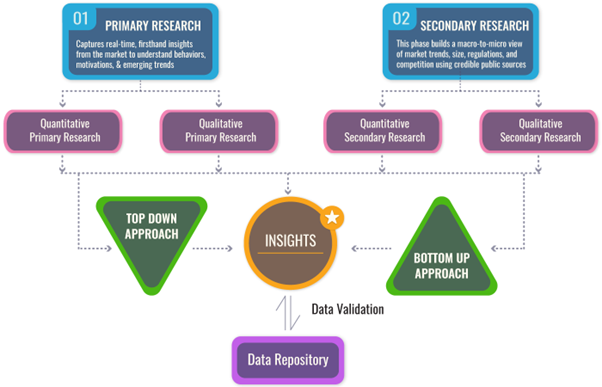
We follow a comprehensive, multi-phase research framework designed to deliver accurate, strategic, and decision-ready intelligence. Our process integrates primary and secondary research , both quantitative and qualitative , along with dual modeling techniques ( top-down and bottom-up) and a final layer of validation through our proprietary in-house repository.
PRIMARY RESEARCH
Primary research captures real-time, firsthand insights from the market to understand behaviors, motivations, and emerging trends.
1. Quantitative Primary Research
Objective: Generate statistically significant data directly from market participants.
Approaches:- Structured surveys with customers, distributors, and field agents
- Mobile-based data collection for point-of-sale audits and usage behavior
- Phone-based interviews (CATI) for market sizing and product feedback
- Online polling around industry events and digital campaigns
- Purchase frequency by customer type
- Channel performance across geographies
- Feature demand by application or demographic
2. Qualitative Primary Research
Objective: Explore decision-making drivers, pain points, and market readiness.
Approaches:- In-depth interviews (IDIs) with executives, product managers, and key decision-makers
- Focus groups among end users and early adopters
- Site visits and observational research for consumer products
- Informal field-level discussions for regional and cultural nuances
SECONDARY RESEARCH
This phase helps establish a macro-to-micro understanding of market trends, size, regulation, and competitive dynamics, sourced from credible and public domain information.
1. Quantitative Secondary Research
Objective: Model market value and segment-level forecasts based on published data.
Sources include:- Financial reports and investor summaries
- Government trade data, customs records, and regulatory statistics
- Industry association publications and economic databases
- Channel performance and pricing data from marketplace listings
- Revenue splits, pricing trends, and CAGR estimates
- Supply-side capacity and volume tracking
- Investment analysis and funding benchmarks
2. Qualitative Secondary Research
Objective: Capture strategic direction, innovation signals, and behavioral trends.
Sources include:- Company announcements, roadmaps, and product pipelines
- Publicly available whitepapers, conference abstracts, and academic research
- Regulatory body publications and policy briefs
- Social and media sentiment scanning for early-stage shifts
- Strategic shifts in market positioning
- Unmet needs and white spaces
- Regulatory triggers and compliance impact
DUAL MODELING: TOP-DOWN + BOTTOM-UP
To ensure robust market estimation, we apply two complementary sizing approaches:
Top-Down Modeling:- Start with broader industry value (e.g., global or regional TAM)
- Apply filters by segment, geography, end-user, or use case
- Adjust with primary insights and validation benchmarks
- Ideal for investor-grade market scans and opportunity mapping
- Aggregate from the ground up using sales volumes, pricing, and unit economics
- Use internal modeling templates aligned with stakeholder data
- Incorporate distributor-level or region-specific inputs
- Most accurate for emerging segments and granular sub-markets
DATA VALIDATION: IN-HOUSE REPOSITORY
We close the loop with proprietary data intelligence built from ongoing projects, industry monitoring, and historical benchmarking. This repository includes:
- Multi-sector market and pricing models
- Key trendlines from past interviews and forecasts
- Benchmarked adoption rates, churn patterns, and ROI indicators
- Industry-specific deviation flags and cross-check logic
- Catches inconsistencies early
- Aligns projections across studies
- Enables consistent, high-trust deliverables