

Wearable LED Light Therapy Devices Market Size and Forecast (2026–2034), Global and Regional Growth, Trends, Share and Industry Analysis Report Coverage; By Product Type, Light Technology, Application, Distribution Channel, End User, and Geography
2026-11-03
Healthcare
Swetal (Research Analyst)
Description
Wearable LED Light Therapy Devices Market Overview
The Wearable LED Light Therapy Devices Market is expanding as consumers and healthcare-adjacent wellness users show growing interest in portable, technology-enabled light treatment products. These devices use light-emitting diodes (LEDs) to deliver light at selected wavelengths, commonly red, blue, and near-infrared, depending on the product's intended use. Wearable formats include facial masks, flexible panels, eye-area devices, scalp-focused products, and other body-worn systems designed for use at home or in professional settings.
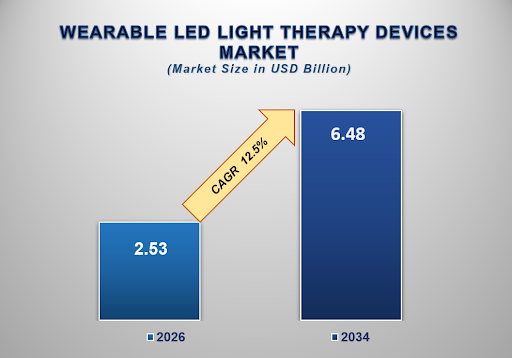
The global market is projected to reach USD 2.53 billion in 2026 and USD 6.48 billion by 2034, growing at a compound annual growth rate (CAGR) of 12.5% during 2026–2034. Market expansion is supported by interest in at-home skincare routines, non-invasive beauty technologies, portable wellness equipment, and consumer devices that can be incorporated into regular personal-care schedules. Improvements in LED components, flexible materials, rechargeable batteries, and device controls are helping manufacturers develop products that are more convenient to wear and operate.
Facial LED masks are among the most visible products in this category, particularly those marketed for cosmetic skin care. Depending on wavelength and design, products may be positioned for concerns such as acne-prone skin or visible signs of skin ageing. Other wearable formats target the scalp or selected body areas. However, evidence and permitted claims vary by device, wavelength, intended use, and regulatory status; consumer wellness products should not automatically be considered equivalent to clinically validated medical devices.
Product differentiation depends on more than the number of LEDs. Wavelength selection, light output, treatment duration, coverage, fit, heat management, eye protection, battery performance, and ease of cleaning all influence usability. Manufacturers must also communicate realistic expectations and provide appropriate safety instructions. As the category develops, credibility, product quality, user comfort, and transparent claims are likely to remain important factors shaping consumer trust.
Wearable LED Light Therapy Devices Market Drivers and Opportunities
1. Rising Demand for At-Home Skincare Technologies Is Supporting Market Expansion
Consumers are increasingly incorporating technology-based products into their skincare routines, creating opportunities for wearable LED devices designed for convenient home use. Facial masks allow users to complete hands-free light sessions without travelling to a clinic or beauty centre. Their appeal is strengthened by rechargeable designs, preset treatment modes, flexible materials, and product formats intended to simplify regular use.
Interest in non-invasive cosmetic treatments is also supporting demand. Wearable LED devices are marketed for selected skin concerns, including visible signs of ageing and acne-prone skin, although effectiveness depends on the device and its intended use. Brands that communicate appropriate expectations, provide clear instructions, and substantiate product claims can build consumer confidence in this expanding category.
2. Product Innovation and Multifunctional Designs Are Increasing Consumer Interest
Manufacturers are developing devices that combine multiple wavelengths, wider treatment coverage, and more convenient controls. Red and near-infrared light are commonly used in products positioned for skin rejuvenation, while blue light is often incorporated into devices intended for acne-related applications. Some systems combine several wavelengths in a single product, giving users different treatment modes within one wearable format.
Innovation also extends to cordless operation, improved facial fit, lightweight construction, adjustable straps, and app-connected controls. Manufacturers are exploring wearable designs for the face, neck, chest, and scalp to serve a broader range of personal-care needs. Product differentiation increasingly depends on comfort, safety, reliability, and evidence supporting the intended application rather than simply increasing the number of LEDs.
3. E-Commerce and Wider Retail Availability Create Opportunities for Market Penetration
Online retail offers brands a direct route to consumers through product demonstrations, educational content, reviews, and subscription-free purchasing experiences. Digital channels can help explain device specifications, treatment schedules, and differences between product categories, which is valuable in a market where consumers may find technical claims difficult to evaluate.
Opportunities also exist through beauty retailers, specialty skincare stores, dermatology practices, and selected professional distribution networks. Retail partnerships can make devices easier to evaluate before purchase, while professional guidance can help consumers understand whether a product suits their needs. Companies that combine digital reach with credible product information and responsive after-sales support may be better positioned to develop repeat customer relationships.
Wearable LED Light Therapy Devices Market Scope
Wearable LED Light Therapy Devices Market Segmentation Analysis
The Wearable LED Light Therapy Devices Market is segmented by product type, light technology, price tier, application, end user, distribution channel, and geography. Product type is a particularly useful dimension because device design determines the treatment area, wearing comfort, and intended use. Facial masks are widely recognized in consumer beauty technology, while neck and chest masks, eye-area devices, and scalp-focused wearables address more specialized needs.
Light technology provides another important basis for differentiation. Red, blue, and near-infrared wavelengths are used across different product categories, but their intended applications and evidence bases are not interchangeable. Multi-wavelength devices offer several treatment modes, although the inclusion of additional wavelengths does not by itself establish superior performance.
LED Face Masks Hold the Largest Share Among Product Types
LED face masks represent a leading product category because they cover a substantial portion of the face while allowing hands-free use. Their popularity is supported by consumer interest in at-home skincare, the availability of products at different price points, and the use of multiple light settings in some models. Manufacturers continue to differentiate these devices through fit, coverage, material flexibility, treatment duration, and safety features.
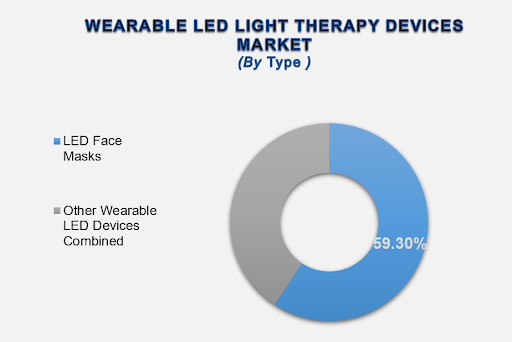
The remaining share is calculated as 100% minus the reported LED face-mask share and includes other product types such as neck and chest masks, eye-area devices, scalp-focused wearables, and other wearable formats. It should not be interpreted as a separately reported market share for any individual product category.
Red Light Technology Serves Multiple Wearable Applications
Red light is a prominent technology in wearable LED devices, particularly products positioned for facial skincare and scalp care. Manufacturers use different wavelength configurations and treatment protocols depending on the intended application. Near-infrared light is also incorporated into some products, while blue light is commonly associated with devices designed for acne-related skincare routines.
Product evaluation requires attention to the device's specifications, light output, treatment schedule, safety instructions, and supporting evidence. Consumers should not assume that different devices using the same general light color provide equivalent results.
Premium Devices Compete Through Features and Product Positioning
Premium products commonly emphasize multiple wavelengths, higher device coverage, flexible or ergonomic construction, rechargeable operation, and treatment customization. These features can appeal to consumers seeking a more sophisticated skincare device, but higher pricing does not automatically guarantee better clinical outcomes.
Entry-level and mid-range products may attract buyers who are exploring light therapy for the first time. Professional-grade products serve a different customer base and may have distinct performance specifications and intended uses. Clear distinctions between cosmetic wellness products and regulated medical devices are important across all price categories.
The Following Segments Are Part of an In-Depth Analysis of the Wearable LED Light Therapy Devices Market
Market Segments
Product Type
LED Face Masks: Wearable devices designed to deliver light across the face. They are commonly marketed for cosmetic skin-care routines and may offer red, blue, near-infrared, or combined light settings.
LED Neck and Chest Masks: Products intended to cover the neck, décolletage, or upper chest. Their design focuses on extending light treatment beyond the face.
LED Eye-Area Devices: Smaller wearable products designed around the skin surrounding the eyes. Fit, comfort, and appropriate eye protection are important considerations.
LED Hair-Growth Caps and Helmets: Scalp-worn devices designed to distribute light across targeted areas of the head. Their features may include hands-free operation and defined treatment schedules.
Wearable LED Panels and Wraps: Flexible or body-worn formats that can be positioned over selected areas. Their uses vary by design and intended application.
Other Wearable Devices: Specialized or hybrid formats that do not fall into the main categories, including products developed for particular treatment areas.
Light Technology
Red Light: Commonly incorporated into products marketed for skin appearance and rejuvenation. Performance depends on wavelength, delivered dose, treatment protocol, and device design.
Blue Light: Used in some skincare devices intended for acne-related applications. Suitability depends on the specific product and the user's skin-care needs.
Near-Infrared Light: Included in selected devices designed to deliver light at wavelengths beyond the visible red spectrum. Its application depends on the device's intended use and technical specifications.
Amber or Yellow Light: Offered in some consumer devices as part of differentiated or multi-mode light settings.
Multi-Wavelength Technology: Combines two or more light bands within one device, potentially allowing different treatment settings.
Other Technologies: Includes specialized wavelength configurations and hybrid designs developed for narrower product applications.
Price Tier
Entry-Level Devices: Target consumers seeking relatively accessible wearable light therapy products, typically with a simpler feature set.
Mid-Range Devices: Balance price with factors such as coverage, construction, treatment modes, and convenience.
Premium Devices: Often emphasize brand positioning, advanced controls, multiple wavelengths, materials, and user experience.
Professional or Clinic-Grade Devices: Serve professional settings or specialized applications. Intended use, regulatory status, and technical performance may differ from consumer products.
Application
Skin Rejuvenation: Includes products marketed for the appearance of fine lines, skin texture, and other visible signs of ageing.
Acne Management: Includes devices designed for acne-related skincare routines, particularly those incorporating blue light or selected combinations of wavelengths.
Hair and Scalp Care: Covers wearable caps and helmets designed for scalp-focused light treatment.
Targeted Skin Care: Includes devices for specific areas such as the neck, chest, and eye area.
Other Wellness Applications: Encompasses additional uses offered by specialized products, subject to their intended purpose and supporting evidence.
End User
Women: A major consumer audience for facial LED devices, reflecting the category's close connection with beauty and personal-care routines.
Men: An expanding target audience for products addressing skin appearance, acne-related concerns, and scalp care.
Professional and Clinical Users: Includes selected practitioners and businesses using appropriate devices within their service offerings.
Other Consumers: Covers users whose needs are not captured by the principal demographic groups or who purchase devices for specialized applications.
Distribution Channel
Online and E-Commerce: Includes brand websites, online marketplaces, and other digital retail platforms. Product comparisons, demonstrations, reviews, and educational materials can influence purchasing decisions.
Specialty Stores: Beauty and personal-care stores can provide product discovery and assistance with comparing device features.
Beauty and Personal-Care Retailers: Established retail networks help make wearable light therapy devices accessible to consumers who prefer in-person shopping.
Other Offline Channels: Includes selected professional distributors and other retail outlets that carry suitable devices.
Wearable LED Light Therapy Devices Market Share Analysis by Region
North America Maintains a Strong Position in the Wearable LED Light Therapy Devices Market
North America is an important market for wearable LED light therapy devices, supported by consumer interest in beauty technology, established e-commerce channels, and the availability of premium skincare products. The United States is a key market for facial LED devices and specialized brands. Consumer awareness, product launches, retail partnerships, and attention to regulatory clearances contribute to the competitive environment.
Canada also presents opportunities through online beauty retail and demand for at-home personal-care products. Adoption across the region depends on product affordability, consumer trust, the quality of supporting evidence, and the clarity of product claims.
Europe Benefits from Established Beauty Retail and Demand for Premium Skincare Devices
Europe is a significant market for wearable light therapy products, with demand shaped by premium skincare consumption, beauty-specialty retail, and growing interest in technology-enabled personal care. The United Kingdom, Germany, France, Italy, and Spain provide opportunities for brands selling through direct online channels and established retailers.
Regulatory compliance and substantiated product claims are important considerations. Consumers may compare devices based on design, comfort, treatment modes, brand credibility, and price, while retailers influence product discovery and availability.
Asia Pacific Offers Growth Potential Through Beauty Technology Adoption
Asia Pacific is an important growth region due to its large consumer base, established beauty and personal-care industries, and interest in at-home skincare. China, Japan, and South Korea have active beauty technology markets, while India and Australia offer opportunities through digital commerce and specialty personal-care retail.
Market growth will depend on pricing, distribution, consumer education, product suitability, and trust in device performance. Local manufacturing and the availability of different price tiers may also influence competitive dynamics.
Latin America Presents Opportunities Through Digital Retail Expansion
In Latin America, wearable LED devices can reach consumers through online marketplaces, specialist beauty retailers, and selected professional channels. Brazil is an important beauty and personal-care market, while demand in other countries depends on consumer purchasing power and access to branded devices.
Product education is particularly relevant for unfamiliar technologies. Transparent information about intended use, safety, and realistic outcomes can help consumers distinguish between products with different specifications.
The Middle East and Africa Offer Opportunities in Premium Personal Care
Demand in the Middle East is supported by premium beauty retail, luxury personal-care consumption, and access to international skincare brands. The United Arab Emirates and Saudi Arabia are relevant markets for online and specialist retail distribution.
Across Africa, opportunities are more dependent on affordability, availability, and access to established retail networks. Wider adoption will rely on suitable price points, product education, and dependable after-sales support.
Wearable LED Light Therapy Devices Market Competition Landscape Analysis
The market includes established beauty-technology brands, specialized LED therapy manufacturers, and consumer electronics companies expanding into personal care. Competition centres on product design, wavelength configuration, treatment coverage, comfort, ease of use, pricing, and the credibility of product claims.
Some brands emphasize clinically positioned products and regulatory clearances, while others compete through distinctive designs, multi-wavelength functions, digital marketing, and direct-to-consumer sales. Retail partnerships and professional recommendations can also influence brand visibility and consumer confidence.
Product safety and evidence are important differentiators. Manufacturers must ensure that device instructions, intended uses, and promotional claims are appropriate for the product. As the market expands, companies that combine convenient design with transparent information and dependable customer support may be better positioned to retain consumer trust.
Global Wearable LED Light Therapy Devices Market Recent Developments
Key areas of product and industry development include:
Multifunctional wearable masks: Brands are expanding product designs to address different facial areas or combine multiple light settings within a single wearable device.
Improved fit and materials: Flexible construction, ergonomic shapes, and lighter designs are intended to improve comfort and ease of use.
Cordless and rechargeable formats: Battery-powered devices can simplify treatment routines and reduce dependence on wired connections.
Expansion into scalp-focused products: Wearable caps and helmets broaden the category beyond facial skincare and target consumers interested in hair and scalp care.
Retail and e-commerce expansion: Wider distribution helps consumers compare product specifications and access devices across different price categories.
Greater attention to evidence and compliance: Regulatory clearances, appropriately supported claims, and clear safety instructions are increasingly relevant to consumer confidence.
These developments describe broad industry trends and should not be interpreted as a verified list of individual company announcements.
The Global Wearable LED Light Therapy Devices Market Includes Several Established and Specialized Companies
Representative companies operating in wearable LED therapy, beauty technology, and related consumer devices include:
CurrentBody
Omnilux
Therabody
SharkNinja
Dr. Dennis Gross Skincare
Solawave
HigherDOSE
FOREO
LightStim
iRESTORE
BioPhotas (Celluma)
Capillus
Qure Skincare
Deesse PRO
MZ SKIN
Frequently Asked Questions
Swetal (Research Analyst)
Swetal is a Research Analyst with 4+ years of experience specializing in healthcare market research, medical devices, healthcare IT, and medical technology industry analysis. Her expertise includes competitive intelligence, secondary research, market trend forecasting, and healthcare business insights across global healthcare ecosystems.
She contributes to advanced market research reports by analyzing regulatory frameworks, emerging healthcare technologies, competitive landscapes, and innovation trends shaping the medical industry. With a strong focus on accurate market intelligence, strategic insights, and healthcare industry trends, Swetal supports businesses in making informed, data-backed decisions in a rapidly transforming healthcare environment.
Global Wearable LED Light Therapy Devices Market Introduction and Market Overview
Objectives of the Study
Global Wearable LED Light Therapy Devices Market Scope and Market Estimation
Global Wearable LED Light Therapy Devices Market Size (US$ Million), Market CAGR (%), Market Forecast (2026 - 2034)
Global Wearable LED Light Therapy Devices Market Revenue Share (%) and Growth Rate (Y-o-Y) Analysis (2021 - 2034)
Market Segmentation
By Product Type of Global Wearable LED Light Therapy Devices Market
LED Face Masks
LED Neck and Chest Masks
LED Eye-Area Devices
LED Hair-Growth Caps and Helmets
Wearable LED Panels and Wraps
Others
By Light Technology of Global Wearable LED Light Therapy Devices Market
Red Light
Blue Light
Near-Infrared Light
Amber or Yellow Light
Multi-Wavelength Technology
Others
By Price Tier of Global Wearable LED Light Therapy Devices Market
Entry-Level
Mid-Range
Premium
Professional or Clinic-Grade
By Application of Global Wearable LED Light Therapy Devices Market
Skin Rejuvenation
Acne Management
Hair and Scalp Care
Targeted Skin Care
Other Wellness Applications
By Distribution Channel of Global Wearable LED Light Therapy Devices Market
Online and E-Commerce
Specialty Stores
Beauty and Personal-Care Retailers
Other Offline Channels
By End User of Global Wearable LED Light Therapy Devices Market
Women
Men
Professional and Clinical Users
Other Consumers
Region of Global Wearable LED Light Therapy Devices Market
Competition Coverage List of Market Participants
Market Definition: Wearable LED Light Therapy Devices Market
Executive Summary
Demand Side Trends
Key Market Trends
Market Demand (US$ Million) Analysis 2021 – 2025 and Forecast, 2026 – 2034
Demand and Opportunity Assessment
Key Developments
Overview of Regulatory Landscape, Compliance Framework, and Industry Standards
Market Entry Strategies
Market Dynamics
Drivers
Limitations
Opportunities
Impact Analysis of Drivers and Restraints
Porter's Five Forces Analysis
PEST Analysis
Global Wearable LED Light Therapy Devices Market Estimates & Historical Trend Analysis (2021 – 2025)
Global Wearable LED Light Therapy Devices Market Estimates & Forecast Trend Analysis, by Product Type
Global Wearable LED Light Therapy Devices Market Revenue (US$ Million) Estimates and Forecasts, by Product Type, 2021 - 2034
LED Face Masks
LED Neck and Chest Masks
LED Eye-Area Devices
LED Hair-Growth Caps and Helmets
Wearable LED Panels and Wraps
Others
Global Wearable LED Light Therapy Devices Market Estimates & Forecast Trend Analysis, by Light Technology
Global Wearable LED Light Therapy Devices Market Revenue (US$ Million) Estimates and Forecasts, by Light Technology, 2021 - 2034
Red Light
Blue Light
Near-Infrared Light
Amber or Yellow Light
Multi-Wavelength Technology
Others
Global Wearable LED Light Therapy Devices Market Estimates & Forecast Trend Analysis, by Price Tier
Global Wearable LED Light Therapy Devices Market Revenue (US$ Million) Estimates and Forecasts, by Price Tier, 2021 - 2034
Entry-Level
Mid-Range
Premium
Professional or Clinic-Grade
Global Wearable LED Light Therapy Devices Market Estimates & Forecast Trend Analysis, by Application
Global Wearable LED Light Therapy Devices Market Revenue (US$ Million) Estimates and Forecasts, by Application, 2021 - 2034
Skin Rejuvenation
Acne Management
Hair and Scalp Care
Targeted Skin Care
Other Wellness Applications
Global Wearable LED Light Therapy Devices Market Estimates & Forecast Trend Analysis, by Distribution Channel
Global Wearable LED Light Therapy Devices Market Revenue (US$ Million) Estimates and Forecasts, by Distribution Channel, 2021 - 2034
Online and E-Commerce
Specialty Stores
Beauty and Personal-Care Retailers
Other Offline Channels
Global Wearable LED Light Therapy Devices Market Estimates & Forecast Trend Analysis, by End User
Global Wearable LED Light Therapy Devices Market Revenue (US$ Million) Estimates and Forecasts, by End User, 2021 - 2034
Women
Men
Professional and Clinical Users
Other Consumers
Global Wearable LED Light Therapy Devices Market Estimates & Forecast Trend Analysis, by Region
Global Wearable LED Light Therapy Devices Market Revenue (US$ Million) Estimates and Forecasts, by Region, 2021 - 2034
North America
Europe
Asia Pacific
Middle East & Africa
Latin America
North America Wearable LED Light Therapy Devices Market: Estimates & Forecast Trend Analysis
North America Wearable LED Light Therapy Devices Market Assessments & Key Findings
North America Wearable LED Light Therapy Devices Market Introduction
North America Wearable LED Light Therapy Devices Market Size Estimates and Forecast (US$ Million) (2021 - 2034)
By Product Type
By Light Technology
By Price Tier
By Application
By Distribution Channel
By End User
By Country
The U.S.
Canada
Europe Wearable LED Light Therapy Devices Market: Estimates & Forecast Trend Analysis
Europe Wearable LED Light Therapy Devices Market Assessments & Key Findings
Europe Wearable LED Light Therapy Devices Market Introduction
Europe Wearable LED Light Therapy Devices Market Size Estimates and Forecast (US$ Million) (2021 - 2034)
By Product Type
By Light Technology
By Price Tier
By Application
By Distribution Channel
By End User
By Country
Germany
Italy
The U.K.
France
Spain
Switzerland
Rest of Europe
Asia Pacific Wearable LED Light Therapy Devices Market: Estimates & Forecast Trend Analysis
Asia Pacific Wearable LED Light Therapy Devices Market Assessments & Key Findings
Asia Pacific Wearable LED Light Therapy Devices Market Introduction
Asia Pacific Wearable LED Light Therapy Devices Market Size Estimates and Forecast (US$ Million) (2021 - 2034)
By Product Type
By Light Technology
By Price Tier
By Application
By Distribution Channel
By End User
By Country
China
Japan
India
Australia
South Korea
Rest of Asia Pacific
Middle East & Africa Wearable LED Light Therapy Devices Market: Estimates & Forecast Trend Analysis
Middle East & Africa Wearable LED Light Therapy Devices Market Assessments & Key Findings
Middle East & Africa Wearable LED Light Therapy Devices Market Introduction
Middle East & Africa Wearable LED Light Therapy Devices Market Size Estimates and Forecast (US$ Million) (2021 - 2034)
By Product Type
By Light Technology
By Price Tier
By Application
By Distribution Channel
By End User
By Country
UAE
Saudi Arabia
South Africa
Rest of Middle East & Africa
Latin America Wearable LED Light Therapy Devices Market: Estimates & Forecast Trend Analysis
Latin America Wearable LED Light Therapy Devices Market Assessments & Key Findings
Latin America Wearable LED Light Therapy Devices Market Introduction
Latin America Wearable LED Light Therapy Devices Market Size Estimates and Forecast (US$ Million) (2021 - 2034)
By Product Type
By Light Technology
By Price Tier
By Application
By Distribution Channel
By End User
By Country
Brazil
Mexico
Argentina
Rest of Latin America
Competition Landscape
Global Wearable LED Light Therapy Devices Market Product Mapping
Global Wearable LED Light Therapy Devices Market Concentration Analysis, by Leading Players
Global Wearable LED Light Therapy Devices Market Concentration Analysis, by Innovators
Global Wearable LED Light Therapy Devices Market Concentration Analysis, by Emerging Players
Global Wearable LED Light Therapy Devices Market Concentration Analysis, by New Entrants
Global Wearable LED Light Therapy Devices Market Tier Structure Analysis
Global Wearable LED Light Therapy Devices Market Concentration & Company Market Shares (%) Analysis, 2026
Company Profiles
CurrentBody
Company Overview & Key Stats
Financial Performance & KPIs
Product Portfolio
SWOT Analysis
Business Strategy & Recent Developments
*Similar details would be provided for all the players mentioned below
Omnilux
Company Overview & Key Stats
Financial Performance & KPIs
Product Portfolio
SWOT Analysis
Business Strategy & Recent Developments
Therabody
Company Overview & Key Stats
Financial Performance & KPIs
Product Portfolio
SWOT Analysis
Business Strategy & Recent Developments
SharkNinja
Company Overview & Key Stats
Financial Performance & KPIs
Product Portfolio
SWOT Analysis
Business Strategy & Recent Developments
Dr. Dennis Gross Skincare
Company Overview & Key Stats
Financial Performance & KPIs
Product Portfolio
SWOT Analysis
Business Strategy & Recent Developments
Solawave
Company Overview & Key Stats
Financial Performance & KPIs
Product Portfolio
SWOT Analysis
Business Strategy & Recent Developments
HigherDOSE
Company Overview & Key Stats
Financial Performance & KPIs
Product Portfolio
SWOT Analysis
Business Strategy & Recent Developments
FOREO
Company Overview & Key Stats
Financial Performance & KPIs
Product Portfolio
SWOT Analysis
Business Strategy & Recent Developments
LightStim
Company Overview & Key Stats
Financial Performance & KPIs
Product Portfolio
SWOT Analysis
Business Strategy & Recent Developments
iRESTORE
Company Overview & Key Stats
Financial Performance & KPIs
Product Portfolio
SWOT Analysis
Business Strategy & Recent Developments
BioPhotas (Celluma)
Company Overview & Key Stats
Financial Performance & KPIs
Product Portfolio
SWOT Analysis
Business Strategy & Recent Developments
Capillus
Company Overview & Key Stats
Financial Performance & KPIs
Product Portfolio
SWOT Analysis
Business Strategy & Recent Developments
Qure Skincare
Company Overview & Key Stats
Financial Performance & KPIs
Product Portfolio
SWOT Analysis
Business Strategy & Recent Developments
Déesse PRO
Company Overview & Key Stats
Financial Performance & KPIs
Product Portfolio
SWOT Analysis
Business Strategy & Recent Developments
MZ SKIN
Company Overview & Key Stats
Financial Performance & KPIs
Product Portfolio
SWOT Analysis
Business Strategy & Recent Developments
Research Findings & Conclusion
Assumptions & Acronyms Used
Research Methodology
External Databases
Internal Proprietary Database
Primary Research
Secondary Research
Assumptions
Limitations
Report FAQ
Our Research Methodology
"Insight without rigor is just noise."
We follow a comprehensive, multi-phase research framework designed to deliver accurate, strategic, and decision-ready intelligence. Our process integrates primary and secondary research , both quantitative and qualitative , along with dual modeling techniques ( top-down and bottom-up) and a final layer of validation through our proprietary in-house repository.
PRIMARY RESEARCH
Primary research captures real-time, firsthand insights from the market to understand behaviors, motivations, and emerging trends.
1. Quantitative Primary Research
Objective: Generate statistically significant data directly from market participants.
Approaches:- Structured surveys with customers, distributors, and field agents
- Mobile-based data collection for point-of-sale audits and usage behavior
- Phone-based interviews (CATI) for market sizing and product feedback
- Online polling around industry events and digital campaigns
- Purchase frequency by customer type
- Channel performance across geographies
- Feature demand by application or demographic
2. Qualitative Primary Research
Objective: Explore decision-making drivers, pain points, and market readiness.
Approaches:- In-depth interviews (IDIs) with executives, product managers, and key decision-makers
- Focus groups among end users and early adopters
- Site visits and observational research for consumer products
- Informal field-level discussions for regional and cultural nuances
SECONDARY RESEARCH
This phase helps establish a macro-to-micro understanding of market trends, size, regulation, and competitive dynamics, sourced from credible and public domain information.
1. Quantitative Secondary Research
Objective: Model market value and segment-level forecasts based on published data.
Sources include:- Financial reports and investor summaries
- Government trade data, customs records, and regulatory statistics
- Industry association publications and economic databases
- Channel performance and pricing data from marketplace listings
- Revenue splits, pricing trends, and CAGR estimates
- Supply-side capacity and volume tracking
- Investment analysis and funding benchmarks
2. Qualitative Secondary Research
Objective: Capture strategic direction, innovation signals, and behavioral trends.
Sources include:- Company announcements, roadmaps, and product pipelines
- Publicly available whitepapers, conference abstracts, and academic research
- Regulatory body publications and policy briefs
- Social and media sentiment scanning for early-stage shifts
- Strategic shifts in market positioning
- Unmet needs and white spaces
- Regulatory triggers and compliance impact
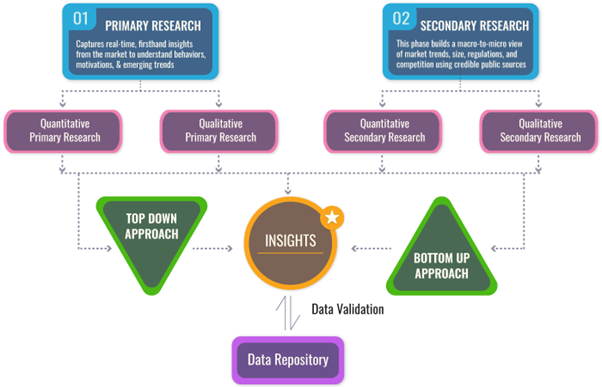
DUAL MODELING: TOP-DOWN + BOTTOM-UP
To ensure robust market estimation, we apply two complementary sizing approaches:
Top-Down Modeling:- Start with broader industry value (e.g., global or regional TAM)
- Apply filters by segment, geography, end-user, or use case
- Adjust with primary insights and validation benchmarks
- Ideal for investor-grade market scans and opportunity mapping
- Aggregate from the ground up using sales volumes, pricing, and unit economics
- Use internal modeling templates aligned with stakeholder data
- Incorporate distributor-level or region-specific inputs
- Most accurate for emerging segments and granular sub-markets
DATA VALIDATION: IN-HOUSE REPOSITORY
We close the loop with proprietary data intelligence built from ongoing projects, industry monitoring, and historical benchmarking. This repository includes:
- Multi-sector market and pricing models
- Key trendlines from past interviews and forecasts
- Benchmarked adoption rates, churn patterns, and ROI indicators
- Industry-specific deviation flags and cross-check logic
- Catches inconsistencies early
- Aligns projections across studies
- Enables consistent, high-trust deliverables