

Autism Spectrum Disorder Treatment Market Size and Forecast (2025–2033), Global and Regional Share, Trends, and Industry Analysis Report Coverage: By Treatment Type (Communication & Behavioral Therapies, Drug Therapies), By Type (Autistic Disorder, Asperger Syndrome, Pervasive Developmental Disorder, Others), and Geography
2026-01-30
Healthcare
Swetal (Research Analyst)
Description
Autism Spectrum Disorder Treatment Market Overview
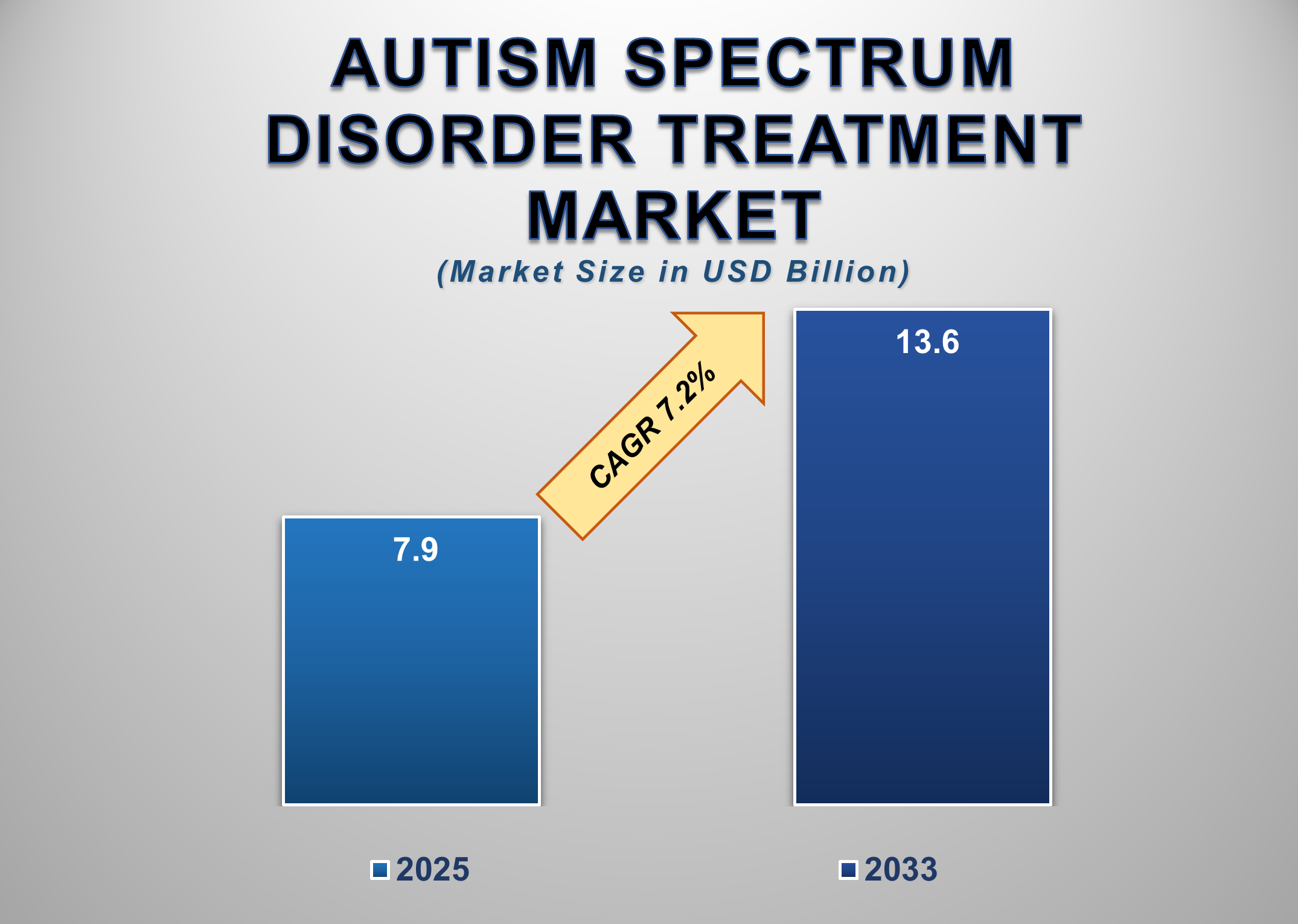
The Global Autism Spectrum Disorder (ASD) Treatment Market was valued at USD 7.9 billion in 2025 and is projected to reach USD 13.6 billion by 2033, expanding at a CAGR of 7.2% during the forecast period. Market growth is primarily driven by rising autism prevalence, increasing awareness and early diagnosis, and expanding access to behavioral and therapeutic interventions across developed and emerging economies.
Autism spectrum disorder is a
complex neurodevelopmental condition characterized by challenges in social
interaction, communication, and repetitive behaviors. While ASD has no
definitive cure, a combination of behavioral therapies, educational interventions,
and pharmacological treatments plays a crucial role in improving functional
outcomes and quality of life. Over the past decade, the treatment landscape has
evolved significantly, with a strong emphasis on early intervention and
personalized therapy programs.
Autism Spectrum Disorder
Treatment Market Drivers and Opportunities
Rising
Prevalence of Autism and Early Diagnosis Is Driving Market Growth
The increasing global prevalence of autism spectrum disorder is a
primary driver of the ASD treatment market. Improved diagnostic criteria,
enhanced screening programs, and greater awareness among parents, educators,
and healthcare professionals have led to earlier and more frequent diagnosis of
ASD, particularly in children. Government-led screening initiatives and
pediatric developmental monitoring programs are enabling early identification,
which significantly improves treatment outcomes. Early diagnosis increases
demand for long-term behavioral, speech, and occupational therapies, often
extending into adolescence and adulthood. As prevalence rates continue to rise
globally, healthcare systems are allocating greater resources toward ASD
treatment services, fueling sustained market growth.
Strong Demand for Behavioral and Communication Therapies Is
Supporting Market Expansion
Behavioral and communication-based interventions form the cornerstone of autism treatment, addressing core challenges related to social interaction, language development, and adaptive behavior. These therapies are widely recognized as first-line treatment approaches, particularly for pediatric patients. The growing adoption of structured therapy programs, supported by evidence-based outcomes, is driving investment in specialized therapy centers, digital therapy platforms, and trained professionals. Schools and community healthcare providers are increasingly integrating behavioral therapies into educational and care frameworks. This widespread reliance on non-pharmacological interventions continues to underpin steady growth of the ASD treatment market
Emerging
Drug Development and Precision Medicine Create Future Opportunities
Although behavioral therapies dominate current treatment approaches, the development of novel pharmacological therapies presents a significant growth opportunity. Pharmaceutical companies are actively researching drugs targeting neurological pathways associated with autism-related symptoms such as irritability, anxiety, sleep disturbances, and social deficits. Advances in genomics, biomarker research, and precision medicine are opening new avenues for targeted therapies tailored to specific ASD subtypes. As clinical pipelines mature and regulatory approvals expand, drug-based interventions are expected to complement behavioral therapies, particularly for moderate to severe cases, creating long-term growth potential for the market
Autism Spectrum Disorder
Treatment Market Scope
|
Report Attributes |
Description |
|
Market Size in 2025 |
USD 7.9 Billion |
|
Market Forecast in 2033 |
USD 13.6 Billion |
|
CAGR % 2025-2033 |
7.2% |
|
Base Year |
2024 |
|
Historic Data |
2020-2024 |
|
Forecast Period |
2025-2033 |
|
Report USP |
Production, Consumption,
Company Share, Company Heatmap, Company Production Capacity, Growth Factor,
and more. |
|
Segments Covered |
●
By Treatment Type ●
By Type |
|
Regional Scope |
●
North America, ●
Europe, ●
APAC, ●
Latin America ●
Middle East and
Africa |
|
Country Scope |
1)
U.S. 2)
Canada 3)
Germany 4)
UK 5)
France 6)
Spain 7)
Italy 8)
Switzerland 9)
China 10)
Japan 11)
India 12)
Australia 13)
South Korea 14)
Brazil 15)
Mexico 16)
Argentina 17)
South Africa 18)
Saudi Arabia 19)
UAE |
Autism Spectrum Disorder
Treatment Market Report Segmentation Analysis
The Global Autism Spectrum
Disorder Treatment Market Industry Analysis is segmented by Treatment Type, by
Type, and by Region.
Communication &
Behavioral Therapies Segment Accounted for the Largest Market Share
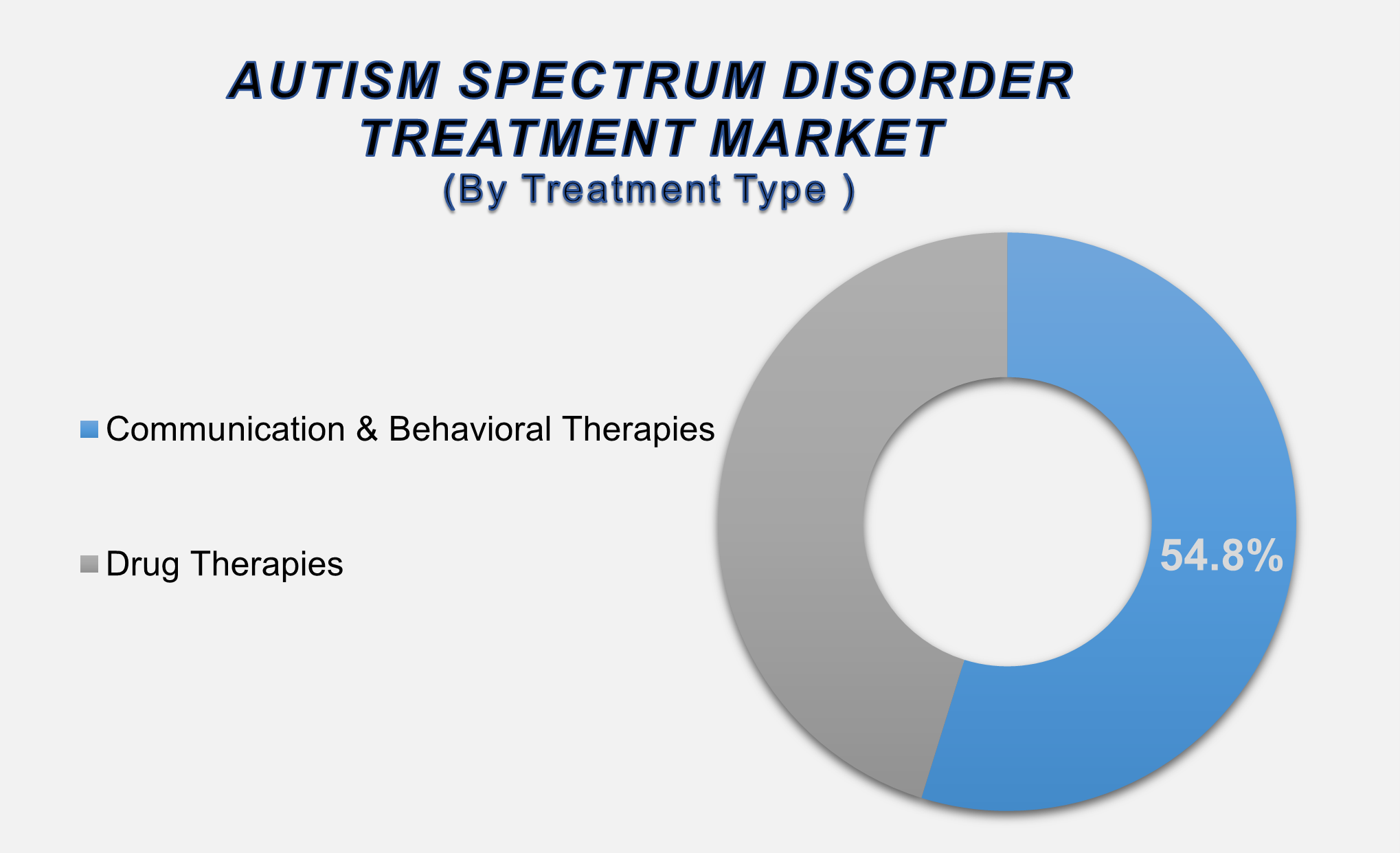
The communication and behavioral therapies segment accounted for the largest market share at 54.8%, driven by its central role in addressing core ASD symptoms. These therapies focus on improving communication skills, social interaction, emotional regulation, and adaptive behaviors, making them essential across all autism severity levels. Behavioral therapies are typically initiated soon after diagnosis and continue over long durations, resulting in sustained demand. The growing availability of specialized therapists, increased insurance coverage in developed markets, and integration of therapy services into school systems have further strengthened this segment’s dominance.
Autistic Disorder Segment
Holds the Largest Share Among Disorder Types
The
autistic disorder segment holds the largest share, reflecting the higher
diagnosis rate and more intensive treatment requirements associated with
classic autism presentations. Patients diagnosed with autistic disorder
typically require long-term, multidisciplinary interventions involving
behavioral, speech, and occupational therapies. Greater awareness among
healthcare providers and caregivers has led to earlier diagnosis of autistic
disorder, increasing lifetime treatment demand and contributing significantly
to overall market revenue.
The following segments are
part of an in-depth analysis of the global Autism Spectrum Disorder Treatment
market:
|
Market Segments |
|
|
By Treatment
Type |
●
Communication &
Behavioral Therapies o
Applied Behavior
Analysis (ABA) o
Speech &
Language Therapy o
Occupational Therapy o
Others ●
Drug Therapies o
Antipsychotic Drugs o
SSRIs/Antidepressants o
Stimulants o
Sleep Medications o
Others |
|
By Type |
●
Autistic Disorder ●
Asperger Syndrome ●
Pervasive
Developmental Disorder (PDD) ●
Others |
Autism Spectrum Disorder
Treatment Market Share Analysis by Region
North America is
anticipated to hold the biggest portion of the Autism Spectrum Disorder
Treatment Market globally throughout the forecast period.
North America dominates the
global ASD treatment market with 39.9% share, supported by advanced diagnostic
capabilities, strong insurance coverage for behavioral therapies, and high
awareness levels. The United States accounts for the majority of regional
revenue due to extensive therapy infrastructure and ongoing clinical research.
Asia-Pacific is expected to grow
at the highest CAGR, driven by rising awareness, expanding pediatric healthcare
services, and increasing government focus on neurodevelopmental disorders.
Countries such as China, India, Japan, and South Korea are witnessing rapid
growth in ASD diagnosis and treatment adoption, creating significant regional
opportunities.
Autism Spectrum Disorder
Treatment Market Competition Landscape Analysis
The ASD treatment market is
moderately fragmented, with a mix of global pharmaceutical companies and
emerging biotech firms focusing on symptom-targeted drug development. Strategic
collaborations, clinical trial advancements, and expansion of therapy-based
service models characterize the competitive environment.
Global Autism Spectrum
Disorder Treatment Market Recent Developments News:
- In February 2025,
DeFloria, Inc. announced U.S. FDA clearance of its Investigational New
Drug (IND) application to begin a Phase 2 clinical trial for AJA001, an
oral cannabinoid-based therapeutic.
- In December 2024,
Kingdom Therapeutics Ltd. completed a meeting with the U.S. FDA
regarding KT-20610, its oral drug candidate targeting the endocannabinoid
system (ECS) for the treatment of Autism Spectrum Disorder (ASD).
- In December 2024,
Goldman Sachs Alternatives acquired the Center for Social Dynamics
(CSD) from NMS Capital. CSD is a leading provider of applied behavior
analysis (ABA) therapy for individuals with Autism Spectrum Disorder
(ASD), expanding Goldman Sachs Alternatives' portfolio in specialized
behavioral healthcare.
The Global Autism Spectrum Disorder Treatment Market Is Dominated by a Few Large Companies, such as
●
Roche
●
Pfizer
●
Eli Lilly
●
Johnson & Johnson
●
GlaxoSmithKline
●
Otsuka Pharmaceutical
●
Yamo Pharmaceuticals
●
Curemark
●
Axial Therapeutics
●
Neuren Pharmaceuticals
●
Seaside Therapeutics
●
Corcept Therapeutics
●
Neurochlore
●
Stalicla
●
Synlogic
●
BlackThorn
Therapeutics
●
Zynerba
Pharmaceuticals
●
GW Pharmaceuticals
●
SCIEX
●
Supernus
Pharmaceuticals
● Others
Frequently Asked Questions
Swetal (Research Analyst)
Swetal is a Research Analyst with 4+ years of experience specializing in healthcare market research, medical devices, healthcare IT, and medical technology industry analysis. Her expertise includes competitive intelligence, secondary research, market trend forecasting, and healthcare business insights across global healthcare ecosystems.
She contributes to advanced market research reports by analyzing regulatory frameworks, emerging healthcare technologies, competitive landscapes, and innovation trends shaping the medical industry. With a strong focus on accurate market intelligence, strategic insights, and healthcare industry trends, Swetal supports businesses in making informed, data-backed decisions in a rapidly transforming healthcare environment.
1. Global Autism Spectrum
Disorder Treatment Market Introduction and Market Overview
1.1.
Objectives
of the Study
1.2.
Global
Autism Spectrum Disorder Treatment Market Scope and Market Estimation
1.2.1.Global Autism Spectrum
Disorder Treatment Overall Market Size (US$ Bn), Market CAGR (%), Market
forecast (2025 - 2033)
1.2.2.Global Autism Spectrum
Disorder Treatment Market Revenue Share (%) and Growth Rate (Y-o-Y) from 2020 -
2033
1.3.
Market
Segmentation
1.3.1.Treatment Type of Global Autism
Spectrum Disorder Treatment Market
1.3.2.Type of Global Autism
Spectrum Disorder Treatment Market
1.3.3.Region of Global Autism
Spectrum Disorder Treatment Market
2. Executive
Summary
2.1.
Demand
Side Trends
2.2.
Key
Market Trends
2.3.
Market
Demand (US$ Bn) Analysis 2020 – 2024 and Forecast, 2025 – 2033
2.4.
Demand
and Opportunity Assessment
2.5.
Demand
Supply Scenario
2.6.
Market
Dynamics
2.6.1.Drivers
2.6.2.Limitations
2.6.3.Opportunities
2.6.4.Impact Analysis of Drivers
and Restraints
2.7.
Emerging
Trends for Autism Spectrum Disorder Treatment Market
2.8.
Porter’s
Five Forces Analysis
2.9.
PEST
Analysis
2.10.
Key
Regulation
3. Global
Autism Spectrum Disorder Treatment Market
Estimates & Historical Trend Analysis (2020 - 2024)
4. Global
Autism Spectrum Disorder Treatment Market
Estimates & Forecast Trend Analysis, by Treatment
Type
4.1.
Global
Autism Spectrum Disorder Treatment Market Revenue (US$ Bn) Estimates and
Forecasts, by Treatment Type, 2020 - 2033
4.1.1.Communication &
Behavioral Therapies
4.1.1.1.
Applied
Behavior Analysis (ABA)
4.1.1.2.
Speech
& Language Therapy
4.1.1.3.
Occupational
Therapy
4.1.1.4.
Others
4.1.2.Drug Therapies
4.1.2.1.
Antipsychotic
Drugs
4.1.2.2.
SSRIs/Antidepressants
4.1.2.3.
Stimulants
4.1.2.4.
Sleep
Medications
4.1.2.5.
Others
5. Global
Autism Spectrum Disorder Treatment Market
Estimates & Forecast Trend Analysis, by Type
5.1.
Global
Autism Spectrum Disorder Treatment Market Revenue (US$ Bn) Estimates and
Forecasts, by Type, 2020 - 2033
5.1.1.Autistic Disorder
5.1.2.Asperger Syndrome
5.1.3.Pervasive Developmental
Disorder (PDD)
5.1.4.Others
6. Global
Autism Spectrum Disorder Treatment Market
Estimates & Forecast Trend Analysis, by Region
6.1.
Global
Autism Spectrum Disorder Treatment Market Revenue (US$ Bn) Estimates and
Forecasts, by Region, 2020 - 2033
6.1.1.North America
6.1.2.Europe
6.1.3.Asia Pacific
6.1.4.Middle East & Africa
6.1.5.Latin America
7. North America Autism
Spectrum Disorder Treatment Market:
Estimates & Forecast Trend Analysis
7.1.
North
America Autism Spectrum Disorder Treatment Market Assessments & Key
Findings
7.1.1.North America Autism
Spectrum Disorder Treatment Market Introduction
7.1.2.North America Autism
Spectrum Disorder Treatment Market Size Estimates and Forecast (US$ Billion) (2020
- 2033)
7.1.2.1. By Treatment
Type
7.1.2.2. By Type
7.1.2.3.
By
Country
7.1.2.3.1. The U.S.
7.1.2.3.2. Canada
8. Europe Autism
Spectrum Disorder Treatment Market:
Estimates & Forecast Trend Analysis
8.1.
Europe
Autism Spectrum Disorder Treatment Market Assessments & Key Findings
8.1.1.Europe Autism Spectrum
Disorder Treatment Market Introduction
8.1.2.Europe Autism Spectrum
Disorder Treatment Market Size Estimates and Forecast (US$ Billion) (2020 - 2033)
8.1.2.1. By Treatment
Type
8.1.2.2. By Type
8.1.2.3.
By
Country
8.1.2.3.1.
Germany
8.1.2.3.2.
Italy
8.1.2.3.3.
U.K.
8.1.2.3.4.
France
8.1.2.3.5.
Spain
8.1.2.3.6.
Switzerland
8.1.2.3.7. Rest
of Europe
9. Asia Pacific Autism
Spectrum Disorder Treatment Market:
Estimates & Forecast Trend Analysis
9.1.
Asia
Pacific Market Assessments & Key Findings
9.1.1.Asia Pacific Autism
Spectrum Disorder Treatment Market Introduction
9.1.2.Asia Pacific Autism
Spectrum Disorder Treatment Market Size Estimates and Forecast (US$ Billion) (2020
- 2033)
9.1.2.1. By Treatment
Type
9.1.2.2. By Type
9.1.2.3.
By
Country
9.1.2.3.1.
China
9.1.2.3.2.
Japan
9.1.2.3.3.
India
9.1.2.3.4.
Australia
9.1.2.3.5.
South
Korea
9.1.2.3.6. Rest of Asia Pacific
10. Middle East & Africa Autism
Spectrum Disorder Treatment Market:
Estimates & Forecast Trend Analysis
10.1.
Middle
East & Africa Market Assessments & Key Findings
10.1.1.
Middle East & Africa Autism Spectrum Disorder Treatment
Market Introduction
10.1.2.
Middle East & Africa Autism Spectrum Disorder Treatment
Market Size Estimates and Forecast (US$ Billion) (2020 - 2033)
10.1.2.1. By Treatment
Type
10.1.2.2. By Type
10.1.2.3.
By
Country
10.1.2.3.1. UAE
10.1.2.3.2. Saudi
Arabia
10.1.2.3.3. South
Africa
10.1.2.3.4. Rest
of MEA
11. Latin America
Autism Spectrum Disorder Treatment Market: Estimates & Forecast Trend Analysis
11.1.
Latin
America Market Assessments & Key Findings
11.1.1.
Latin
America Autism Spectrum Disorder Treatment Market Introduction
11.1.2.
Latin
America Autism Spectrum Disorder Treatment Market Size Estimates and Forecast
(US$ Billion) (2020 - 2033)
11.1.2.1. By Treatment
Type
11.1.2.2. By Type
11.1.2.3.
By
Country
11.1.2.3.1. Brazil
11.1.2.3.2. Argentina
11.1.2.3.3. Mexico
11.1.2.3.4. Rest
of LATAM
12. Country Wise Market:
Introduction
13.
Competition
Landscape
13.1.
Global
Autism Spectrum Disorder Treatment Market Product Mapping
13.2.
Global
Autism Spectrum Disorder Treatment Market Concentration Analysis, by Leading
Players / Innovators / Emerging Players / New Entrants
13.3.
Global
Autism Spectrum Disorder Treatment Market Tier Structure Analysis
13.4.
Global
Autism Spectrum Disorder Treatment Market Concentration & Company Market
Shares (%) Analysis, 2024
14.
Company
Profiles
14.1.
Roche
14.1.1.
Company
Overview & Key Stats
14.1.2.
Financial
Performance & KPIs
14.1.3.
Product
Portfolio
14.1.4.
SWOT
Analysis
14.1.5.
Business
Strategy & Recent Developments
* Similar details would be provided for all the players
mentioned below
14.2. Pfizer
14.3. Eli
Lilly
14.4. Johnson
& Johnson
14.5. GlaxoSmithKline
14.6. Otsuka
Pharmaceutical
14.7. Yamo
Pharmaceuticals
14.8. Curemark
14.9. Axial
Therapeutics
14.10. Neuren
Pharmaceuticals
14.11. Seaside
Therapeutics
14.12. Corcept
Therapeutics
14.13. Neurochlore
14.14. Stalicla
14.15. Synlogic
14.16. BlackThorn
Therapeutics
14.17. Zynerba
Pharmaceuticals
14.18. GW
Pharmaceuticals
14.19. SCIEX
14.20. Supernus
Pharmaceuticals
14.21. Others
15. Research
Methodology
15.1.
External
Transportations / Databases
15.2.
Internal
Proprietary Database
15.3.
Primary
Research
15.4.
Secondary
Research
15.5.
Assumptions
15.6.
Limitations
15.7.
Report
FAQs
16. Research
Findings & Conclusion
Our Research Methodology
"Insight without rigor is just noise."
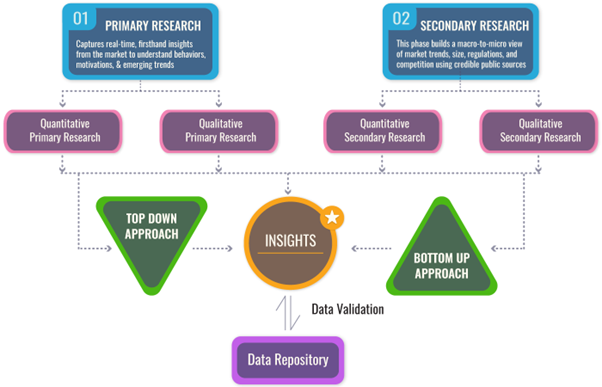
We follow a comprehensive, multi-phase research framework designed to deliver accurate, strategic, and decision-ready intelligence. Our process integrates primary and secondary research , both quantitative and qualitative , along with dual modeling techniques ( top-down and bottom-up) and a final layer of validation through our proprietary in-house repository.
PRIMARY RESEARCH
Primary research captures real-time, firsthand insights from the market to understand behaviors, motivations, and emerging trends.
1. Quantitative Primary Research
Objective: Generate statistically significant data directly from market participants.
Approaches:- Structured surveys with customers, distributors, and field agents
- Mobile-based data collection for point-of-sale audits and usage behavior
- Phone-based interviews (CATI) for market sizing and product feedback
- Online polling around industry events and digital campaigns
- Purchase frequency by customer type
- Channel performance across geographies
- Feature demand by application or demographic
2. Qualitative Primary Research
Objective: Explore decision-making drivers, pain points, and market readiness.
Approaches:- In-depth interviews (IDIs) with executives, product managers, and key decision-makers
- Focus groups among end users and early adopters
- Site visits and observational research for consumer products
- Informal field-level discussions for regional and cultural nuances
SECONDARY RESEARCH
This phase helps establish a macro-to-micro understanding of market trends, size, regulation, and competitive dynamics, sourced from credible and public domain information.
1. Quantitative Secondary Research
Objective: Model market value and segment-level forecasts based on published data.
Sources include:- Financial reports and investor summaries
- Government trade data, customs records, and regulatory statistics
- Industry association publications and economic databases
- Channel performance and pricing data from marketplace listings
- Revenue splits, pricing trends, and CAGR estimates
- Supply-side capacity and volume tracking
- Investment analysis and funding benchmarks
2. Qualitative Secondary Research
Objective: Capture strategic direction, innovation signals, and behavioral trends.
Sources include:- Company announcements, roadmaps, and product pipelines
- Publicly available whitepapers, conference abstracts, and academic research
- Regulatory body publications and policy briefs
- Social and media sentiment scanning for early-stage shifts
- Strategic shifts in market positioning
- Unmet needs and white spaces
- Regulatory triggers and compliance impact
DUAL MODELING: TOP-DOWN + BOTTOM-UP
To ensure robust market estimation, we apply two complementary sizing approaches:
Top-Down Modeling:- Start with broader industry value (e.g., global or regional TAM)
- Apply filters by segment, geography, end-user, or use case
- Adjust with primary insights and validation benchmarks
- Ideal for investor-grade market scans and opportunity mapping
- Aggregate from the ground up using sales volumes, pricing, and unit economics
- Use internal modeling templates aligned with stakeholder data
- Incorporate distributor-level or region-specific inputs
- Most accurate for emerging segments and granular sub-markets
DATA VALIDATION: IN-HOUSE REPOSITORY
We close the loop with proprietary data intelligence built from ongoing projects, industry monitoring, and historical benchmarking. This repository includes:
- Multi-sector market and pricing models
- Key trendlines from past interviews and forecasts
- Benchmarked adoption rates, churn patterns, and ROI indicators
- Industry-specific deviation flags and cross-check logic
- Catches inconsistencies early
- Aligns projections across studies
- Enables consistent, high-trust deliverables