Antibody-Drug Conjugates (ADCs): The Next Oncology Revolution Driving the Future of Precision Cancer Therapy
_ The Next Oncology Revolution Driving the Future of Precision Cancer Therapy.jpg) Antibody-Drug Conjugates (ADCs): The Next Oncology Revolution Driving the Future of Precision Cancer Therapy
Antibody-Drug Conjugates (ADCs): The Next Oncology Revolution Driving the Future of Precision Cancer Therapy
Published on July 14, 2026 | Category: Healthcare
Antibody-Drug
Conjugates
(ADCs): The Next Oncology Revolution
The fight against cancer is
entering a new era. Antibody-drug
conjugates (ADCs) are leading this change. Often called "guided
missiles" in cancer therapy, ADCs connect the targeting ability of
monoclonal antibodies with the cell-killing effects of strong cytotoxic drugs.
This focused approach allows doctors to attack cancer cells more effectively
while causing less harm to healthy tissues compared to traditional
chemotherapy. In recent years, ADCs have grown from a promising research idea
into one of the fastest-growing areas in oncology. Our market analysis forecasts
that the global ADC market will expand at a strong double-digit rate until
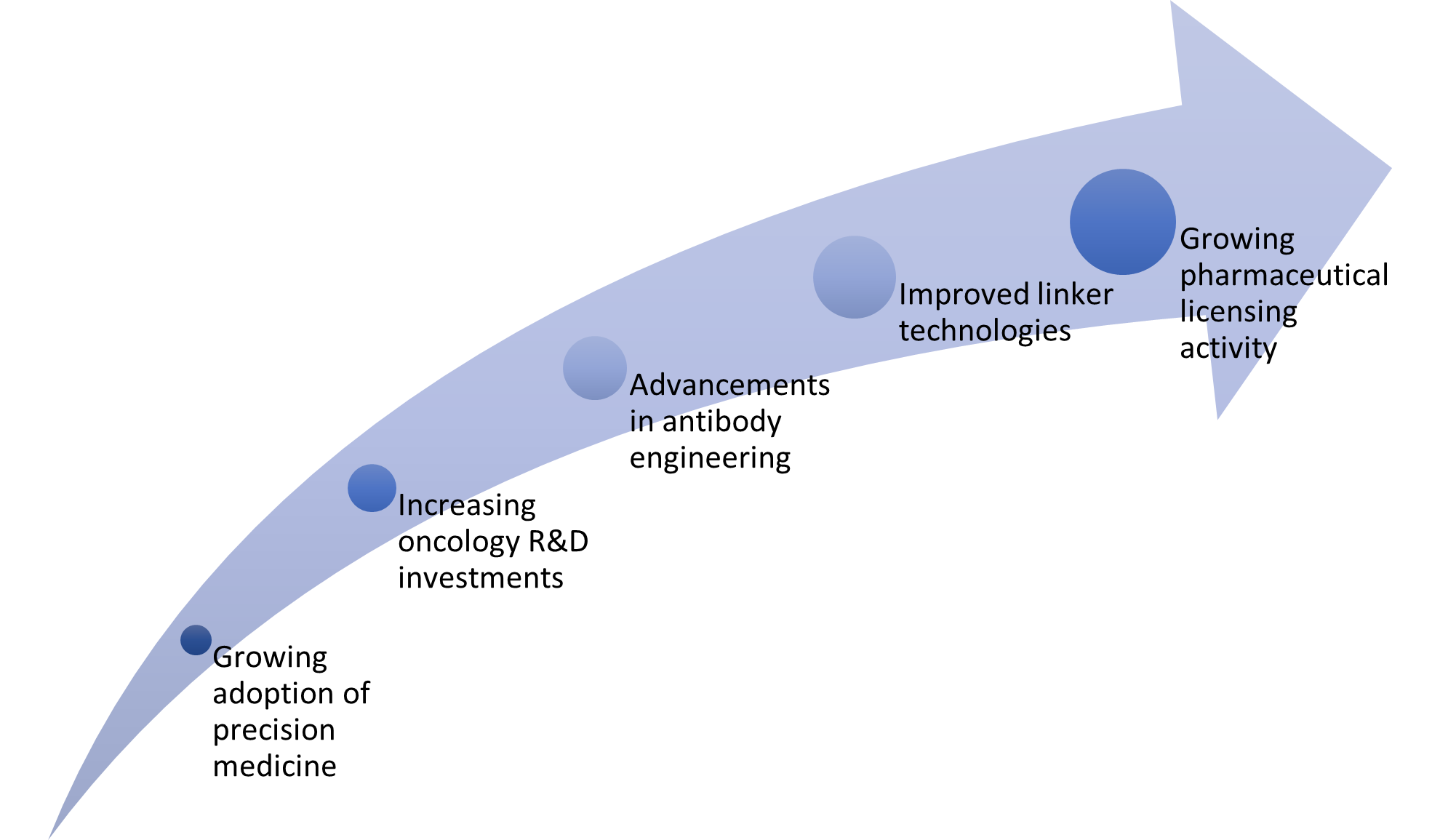
2035. This growth is driven by increasing regulatory approvals, more investment
in cancer research, improvements in linker and conjugation technologies, and
the rising use of precision
medicine.
ADCs are not just impacting
clinics; they are also changing the pharmaceutical landscape. From drug
discovery and biologics manufacturing to contract development, bioconjugation
technologies, and companion diagnostics, companies across the healthcare sector
are adjusting their strategies to take advantage of this quickly growing
opportunity. For pharmaceutical manufacturers, biotechnology companies, CDMOs,
investors, and technology providers, ADCs mean much more than just another
class of cancer drugs. They are emerging as one of the most promising long-term
growth opportunities in oncology.
Why ADCs Are Gaining Momentum
Globally, cancer is one of the
leading causes of death, with millions of new cases diagnosed each year. While
conventional chemotherapy has been essential in cancer treatment for decades,
its lack of selectivity often results in significant side effects and limits
the dose that patients can safely receive. ADCs tackle this ongoing issue by
delivering powerful anti-cancer agents directly to tumor cells. They use
antibodies that target specific proteins on cancer cells, transporting highly
potent drugs exactly where they are needed. This reduces exposure to healthy
tissues and improves treatment results.
The commercial success of newly
approved ADC therapies has boosted confidence in this technology. This success
is encouraging pharmaceutical companies to greatly expand their research
projects and investments in next-generation ADC platforms.
Current Market Overview
The antibody-drug conjugate (ADC) market has
transitioned from a niche research area into one of the most dynamic segments
of the global oncology therapeutics industry. Over the decade, advancements in
antibody engineering, linker chemistry, and payload technologies have enhanced
the commercialization of ADCs, leading to increased confidence among
pharmaceutical and biotechnology companies. As a result, organizations across
the value chain are making substantial investments in the discovery of novel
monoclonal antibodies, next-generation linker technologies, highly potent
cytotoxic payloads, site-specific conjugation platforms, biomarker-driven
patient selection, companion diagnostics, and dedicated ADC manufacturing
capabilities. Growing research into combination immunotherapy regimens is
expanding the clinical potential of ADCs across multiple cancer indications.
The commercial success of several blockbuster ADC therapies in breast cancer,
lung cancer, bladder cancer, hematological malignancies, and gastric cancer has
further validated the technology, encouraging developers to broaden their
pipelines into additional solid tumors and difficult-to-treat cancers. This
strong drive is positioning ADCs as a cornerstone of precision oncology and a
key growth area for the global biopharmaceutical
industry.
Exclusive Market Intelligence: Trends Defining the ADC
Revolution
⮚
Antibody-Drug Conjugates (ADCs) are being tested for types of
cancer. People with HER2-positive breast cancer are not the only ones who can benefit from
ADCs. Many pharmaceutical companies are now testing ADCs on people with lung,
gastric, prostate, and colorectal cancers. They are also testing them on people
with blood cancers and other hard-to-treat tumors. This change helps more
patients get treatment and makes ADCs more useful for companies.
⮚
Companies are working hard to improve the technology that connects
the antibody to the drug in ADCs. This technology is called linker technology.
As more ADCs are being developed, companies are trying to make their linker
technology better than others. They are trying to make sure the drug is
released in the tumor and not in healthy cells. Companies that have linker
technology will have an advantage over others. They will be able to make more
effective ADCs.
⮚
Combination Therapies Are Expanding Market Opportunities: Antibody
Drug Conjugates are being tested with treatments like immune checkpoint
inhibitors, targeted therapies, chemotherapy, radiotherapy, and bispecific
antibodies. This is done to see if these combination therapies can help
patients get better and if more people can get these treatments. As we learn
more about how these combination therapies work, they will likely play a big
role in helping the market grow. Antibody Drug Conjugates are being used in
many of these combination therapies, which is why they are so important.
⮚
Manufacturing Expertise Is Becoming a Strategic Differentiator:
Making Antibody Drug Conjugates is a lot harder than making biologics. It
requires skills in making monoclonal antibodies, cytotoxic payload synthesis,
bioconjugation, sterile fill-finish, high-potency containment, and advanced
analytical testing. Because of these challenges, it is hard for new companies
to start making Antibody Drug Conjugates. This means that companies that are
already good at making Antibody Drug Conjugates are in demand. As a result,
being good at making Antibody Drug Conjugates is just as important as coming up
with ideas for Antibody Drug Conjugates.
⮚ Precision Medicine Is Broadening the Clinical Potential of Antibody Drug Conjugates: We are getting better at finding biomarkers and making companion diagnostics. This helps us choose the patients for Antibody Drug Conjugate treatments so they work better. By combining targeted therapies with precision diagnostics, we can give people personalized cancer treatment. This is an opportunity for companies that want to make treatments and diagnostic tools that work well together. Antibody Drug Conjugates are a part of this, and they will continue to play a big role in precision medicine.
Market Challenges:
|
Challenge |
Business Impact |
|
Complex Manufacturing |
Higher Production Costs |
|
High Development Expenditure |
Increased Capital Requirements |
|
Clinical Trial Complexity |
Extended Development Timelines |
|
Supply Chain Requirements |
Specialized Manufacturing Infrastructure |
|
Regulatory Expectations |
Comprehensive Quality and Safety
Standards |
Emerging Trends
⮚
Next-Generation ADC Platforms: Companies are
working on better antibody-drug conjugates. These new ADCs have kinds of
medicine inside them, better ways of attaching the medicine to the antibody,
and are better at finding the tumor. This means the treatment will work better,
have fewer side effects, and can be used for more types of cancer.
⮚
AI-Driven ADC Discovery: Artificial intelligence
is helping to make new ADCs faster. It is making it easier to pick the
antibody, find the right target, and make the molecule just right. This means
companies can make drugs faster, pick the best ones, and have a better chance
of success.
⮚
Expansion into Treatment Lines: Many ADCs that
are already approved are now being used earlier in treatment. This means more
people can use them, they can make money, and they are becoming a big part of
treating cancer precisely.
⮚ Increased
Licensing and M&A Activity: Big pharmaceutical companies are buying
companies that make new and different ADCs. They are also making deals to work
together. This shows that the industry thinks ADCs are going to be big in the
future. It also helps companies make new drugs and sell them all over the
world.
Regional Opportunity Analysis
|
Region |
Opportunity Outlook |
Growth Drivers |
|
North America |
|
Strong clinical research ecosystem, high
oncology spending, regulatory innovation |
|
Europe |
|
Precision medicine adoption, academic
collaborations, favorable reimbursement |
|
Asia-Pacific |
|
Expanding biologics manufacturing,
increasing cancer burden, government investments |
|
China |
|
Rapid ADC pipeline development, domestic
innovation, licensing activity |
|
Japan |
|
Advanced oncology research, aging
population |
|
Middle East |
|
Growing oncology infrastructure and
healthcare investments |
Competitive Intelligence
The ADC industry is becoming more competitive as big
pharma players and innovative biotech companies are competing to boost their
oncology pipeline. Companies are growing their clinical pipeline, securing
licenses for new antibody and conjugate technologies, merging with innovative
biotech companies specializing in ADC technology, and building up high-potency
manufacturing facilities. Collaborations with specialist CDMOs are speeding up
the development and commercialization process as well. Manufacturers are also
developing their manufacturing capacity in North America, Europe, and
Asia-Pacific. Our research shows that companies with integrated capabilities
from discovery through manufacturing to commercialization will be most prepared
for success in the ADC industry.
Technology Innovations Reshaping ADC Development
Every phase of ADC development from target
identification to commercialization is witnessing rapid innovation. The use of
artificial intelligence for the identification of new targets and design of
optimized antibodies is increasing within pharmaceutical companies. The
development in site-specific conjugation and linker technology is ensuring
better efficacy of the drugs by making sure that they are stable, have an
efficient delivery mechanism, and have high therapeutic efficacy. At the same
time, the development in the area of next-generation cytotoxins, biomarkers for
patient selection, and companion diagnostics is resulting in the development of
more personalized medicines.
Proprietary Framework: ADC Commercial Readiness
Scorecard
Our analysts assess ADC
opportunities using six strategic dimensions.
|
Assessment Category |
Strategic Importance |
|
Clinical Differentiation |
Very High |
|
Target Selection |
Very High |
|
Linker Technology |
High |
|
Manufacturing Scalability |
High |
|
Regulatory Readiness |
High |
|
Commercial Partnership Potential |
Medium-High |
This framework helps
pharmaceutical companies prioritize pipeline assets and optimize
commercialization strategies.
The Next Decade of ADC Innovation
Based on our market research, Antibody Drug Conjugates
(ADCs) are set to emerge as one of the most potent platforms for the coming
decade. The market is set to grow outside conventional indications as ADCs get
approved for more solid tumor indications and gain entry into earlier lines of
therapy. In addition, continued synergies with immunotherapies, innovation in
next-generation payload and linker technologies, and growth in precision
medicines will only increase their market potential. The growing need for
specialized manufacturing technology and continuing licensing deals and mergers
will continue to transform the competitive dynamics. Early investments in
differentiating ADC technologies, manufacturing capability, and collaboration
strategies can prove to be very fruitful.
Why Businesses Need Strategic Market Intelligence
ADC space is developing very fast, and data-based
decision-making becomes crucial for drug executives and investors.
Full market intelligence allows companies to:
●
Benchmark competitive pipelines
●
Discover licensing potential
●
Evaluate manufacturing partners
●
Keep track of clinical trials
●
Evaluate technology platforms
●
Follow regulatory approvals
●
Analyze market demand
●
Set up investment strategies
Intelligence turns market complexities into business
decisions.
Conclusion
Antibody-drug conjugates are
redefining the future of oncology by combining targeted precision with powerful
therapeutic efficacy. Their ability to address unmet clinical needs, coupled
with rapid technological advancements and expanding commercial opportunities,
positions ADCs as one of the most promising segments in the pharmaceutical
industry. As innovation accelerates and manufacturing capabilities expand,
organizations that invest strategically in ADC technologies, partnerships, and
market intelligence will be best positioned to capture long-term growth in the
evolving oncology ecosystem.
Related Reports –
Breast
Fillers Market Size, Share, Growth, Forecast 2026 to 2034
Dermatology
Devices Market Size, Trends, Share, Forecasts to 2034
Oncology
Nutrition Market Size, Trends, Share, Forecasts to 2034
Chromatography
Reagents Market Size, Share, Trends to 2034
About M2Square Consultancy
We specialize in decoding complexity.
From market forecasting to customer behavior analysis, our services are
designed to bridge the gap between uncertainty and opportunity. Our offerings
span the entire insight lifecycle, including Consulting, Tailored Research,
Syndicated Studies, Trend Tracking, Competitive Intelligence, Pricing and
Channel analysis, GTM Strategy, and more. Using a blend of qualitative
expertise and data science, we deliver bespoke solutions that inform bold
business moves.
Contact:
Website:https://m2squareconsultancy.com/
Email:sales@m2squareconsultancy.com
Phone (IN): +91 80978 74280
Phone (US): +1 929 447 0100
Enquiry Form
Latest Blogs

The Future of Personalized Vaccines
Vaccines have been following a standard paradigm for decade...
July 24, 2026

The Strategic Shift from Globalization to Regionalization in Pharmaceutical Manufacturing
The past emphasis on centralizing efficiency could not addr...
July 24, 2026

Robotics in Healthcare: From Surgery to Pharmacy Automation
Medical robots, when mentioned, often come to mind in relat...
July 24, 2026
Related Blogs
The Future of Personalized Vaccines
Vaccines have been following a standard paradigm for decade...
July 24, 2026
Read More
The Strategic Shift from Globalization to Regionalization in Pharmaceutical Manufacturing
The past emphasis on centralizing efficiency could not addr...
July 24, 2026
Read More
Robotics in Healthcare: From Surgery to Pharmacy Automation
Medical robots, when mentioned, often come to mind in relat...
July 24, 2026
Read More