
US and China Trade Policies Are Reshaping the Healthcare Industry
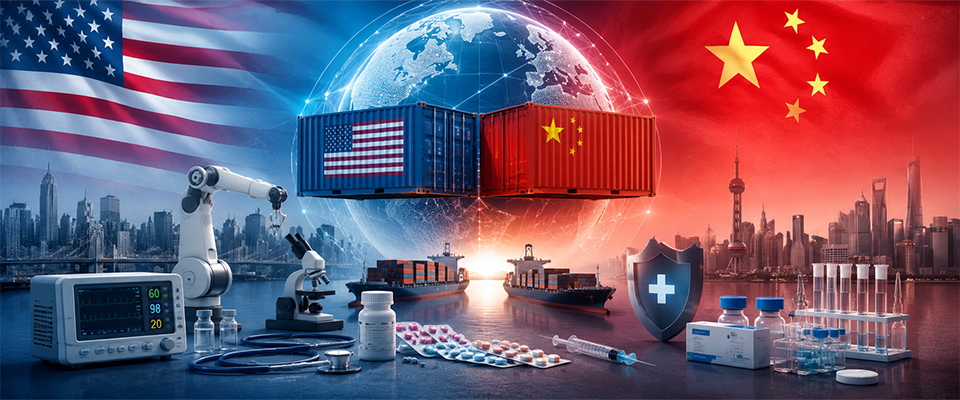 US and China Trade Policies Are Reshaping the Healthcare Industry
Published on July 23, 2026 | Category: Healthcare
When Politics Changes the
Prescription
The
hospital purchasing MRI
equipment from Texas, the pharmaceutical company producing the antibiotic in
India, and the medical
devices provider based in Germany may seem completely unrelated at
first glance. However, there is one thing that unites all these firms and
influences them increasingly: international trade policies.
It
used to be easy for the healthcare industry to produce and invest anywhere
where it was cheaper and where the know-how was available. However, all of that
has changed because tariffs, export controls, and changing trade policies
between the US and China are dictating the new terms for the health care
industry.
The
discussion no longer revolves around whether trade relations impact the health
care industry. Instead, it revolves around how fast these companies can adapt
before the disruption becomes a disadvantage.
Healthcare's
Global Web Is More Fragile Than It Looks
The healthcare industry runs on one of the most
connected global supply
chains. An individual drug may pass through several countries before it
arrives at the end recipient. The active ingredient used in production may come
from one country, its formulation from another, packaging from another
location, and delivery through an altogether separate supply chain.
Even more intricate is the supply chain of medical
devices, which consists of multiple parts that have been manufactured by
various suppliers around the globe.
Ways
Trade Policies Are Transforming Healthcare
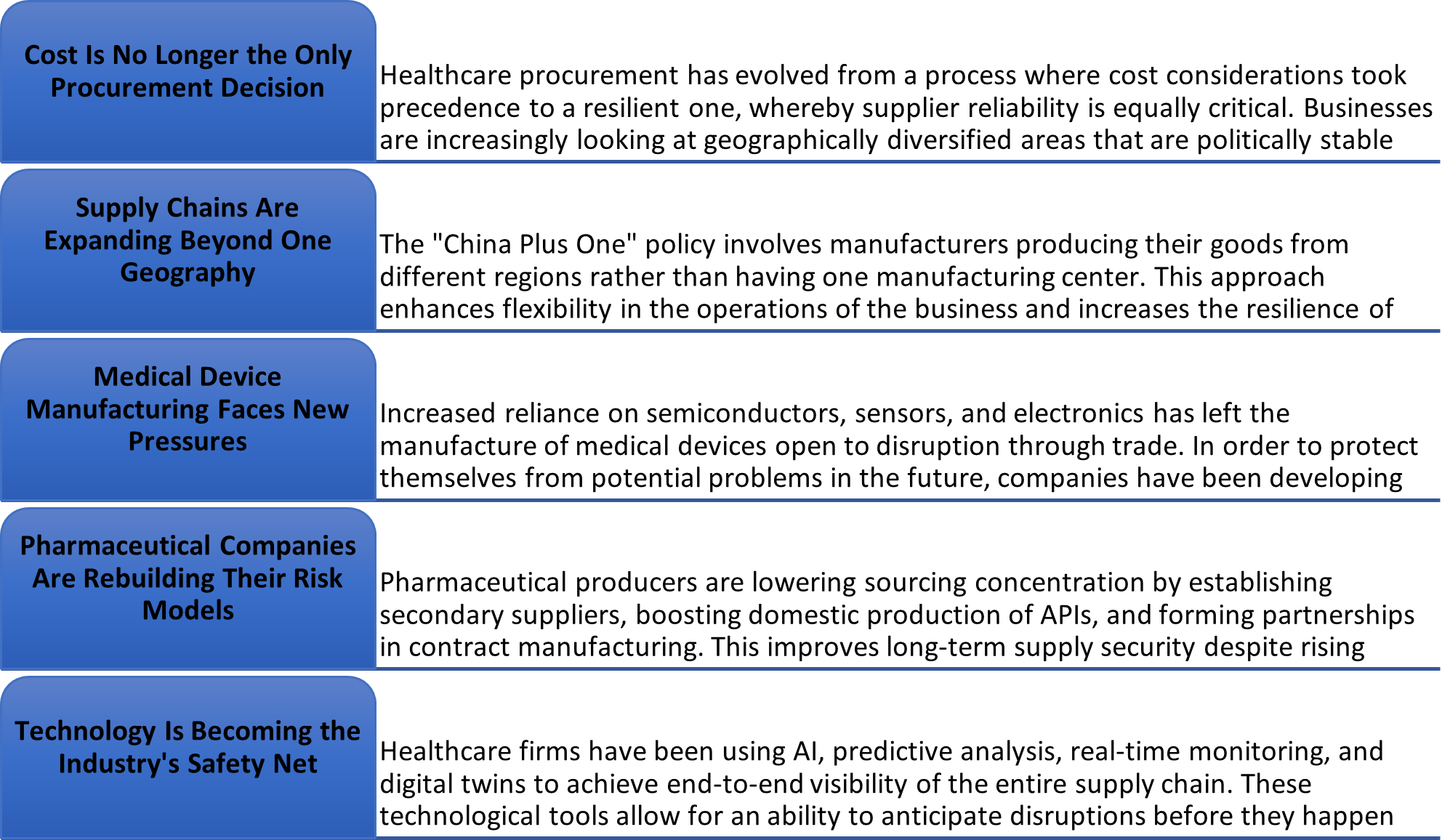
The
Ripple Effect Reaches Every Stakeholder
Healthcare
trade policies influence the whole spectrum of the healthcare industry and go
far beyond manufacturing alone. Healthcare providers can be forced to incur
higher costs of procurement, while pharmaceutical and medical device
manufacturing companies have to manage production efficiency versus
geopolitical risks and change their sourcing strategy accordingly.
Domestic
manufacturing is becoming a priority for governments to ensure healthcare
security and reduce their dependence on imported supplies. Ultimately, patients
will suffer from higher healthcare costs and fewer innovations introduced
faster than they used to.
What
This Means for Healthcare Leaders
Companies
that still manage their supply chains by adopting a cost-driven model are
likely going to be more susceptible to geopolitical and operational
disruptions. The leading companies within the healthcare industry are instead
considering their sourcing risks, supplier diversity, production resilience,
policy preparedness, and the use of digital technologies in enhancing
end-to-end visibility of their supply chains.
As
the dynamics of global trade keep changing, the capacity to develop agile and
resilient supply chains is as strategic as research, innovation, and
development.
Looking
Beyond the Headlines
When
the emphasis is generally placed on tariffs and geopolitics, the real story
remains hidden.
There
is currently a large restructuring taking place within the healthcare industry
that has not been publicly recognized. There is a shift towards regional supply
chains, diverse manufacturing plans, and digital intelligence over reactionary
planning.
This
is not simply a temporary adaptation but rather represents a transformation
that is taking place in the way healthcare products will be created,
manufactured, and distributed in the future.
Those
companies that adopt this new reality will have gained a permanent competitive
advantage through resilience. Those who don't adapt, however, may find
themselves at risk not due to tariffs but due to an inability to adapt to a new
healthcare landscape.
Related Reports –
Clinical
Trials Outsourcing Market Size and Forecast to 2034
Pharmaceutical
Supply Chain Management Market Size to 2033
Supply
Chain Security Market Size, Share, Trends to 2033
Dermatology Devices Market Size,
Trends, Share, Forecasts to 2034
About M2Square Consultancy
We specialize in decoding complexity. From market forecasting to
customer behavior analysis, our services are designed to bridge the gap between
uncertainty and opportunity. Our offerings span the entire insight lifecycle,
including Consulting, Tailored Research, Syndicated Studies, Trend Tracking,
Competitive Intelligence, Pricing and Channel analysis, GTM Strategy, and more.
Using a blend of qualitative expertise and data science, we deliver bespoke
solutions that inform bold business moves.
Contact:
Website:https://m2squareconsultancy.com/
Email:sales@m2squareconsultancy.com
Phone (IN): +91 80978 74280
Phone (US): +1 929 447 0100
Enquiry Form
Latest Blogs

The Future of Personalized Vaccines
Vaccines have been following a standard paradigm for decade...
July 24, 2026

The Strategic Shift from Globalization to Regionalization in Pharmaceutical Manufacturing
The past emphasis on centralizing efficiency could not addr...
July 24, 2026

Robotics in Healthcare: From Surgery to Pharmacy Automation
Medical robots, when mentioned, often come to mind in relat...
July 24, 2026
Related Blogs
The Future of Personalized Vaccines
Vaccines have been following a standard paradigm for decade...
July 24, 2026
Read More
The Strategic Shift from Globalization to Regionalization in Pharmaceutical Manufacturing
The past emphasis on centralizing efficiency could not addr...
July 24, 2026
Read More
Robotics in Healthcare: From Surgery to Pharmacy Automation
Medical robots, when mentioned, often come to mind in relat...
July 24, 2026
Read More